
Reviewed · MOROCCAN COOKING CLASSES
Old local Market visit+Moroccan cooking class with a local family
The best part of this Casablanca experience happens before the cooking begins: you shop for dinner in a real neighborhood souk, choosing fresh ingredients with Inas or her brother. Then you carry those ingredients home and prepare a Moroccan meal with the family, using recipes passed down through Inas’s mother and grandmother.
I like two things especially. First, you take an active role in every step instead of watching a chef work from across a counter. Second, the home setting brings in the ordinary details of Moroccan life, from family conversation and music videos to mint tea and sweets while the food cooks. The main consideration is that the market is closed on Friday, so you need to choose another day if the market visit matters to you.
In This Review
- Key points to know
- A Casablanca food experience that begins at the market
- What the souk adds to the cooking class
- Choosing between tagine, couscous, and pastilla
- Learning family recipes in a Casablanca home
- Mint tea, sweets, and the waiting time
- Sitting down to a family-style meal
- Is $59 a fair price in Casablanca?
- Timing, transport, and practical planning
- Who will enjoy this most?
- Should you book Old Local Market Visit and Moroccan Cooking Class?
- FAQ
- How long does the Moroccan cooking experience last?
- Where does the experience start and end?
- What happens during the market visit?
- Is the market open every day?
- Which Moroccan dishes can I learn to prepare?
- Are vegetarian and vegan options available?
- How many people can join the activity?
- Is public transportation available near the meeting point?
- What is the cancellation policy?
Key points to know
- Market shopping comes first: Visit a popular local souk with Inas or her brother and buy the fresh ingredients used in your meal.
- You cook, not just watch: Prepare your chosen dish by hand with traditional methods and family recipes.
- The meal is flexible: You may choose among dishes such as tagine, couscous, or pastilla, with vegetarian and vegan options available.
- The family welcome is central: Meet Inas’s parents and spend time in a private home rather than a standard cooking school.
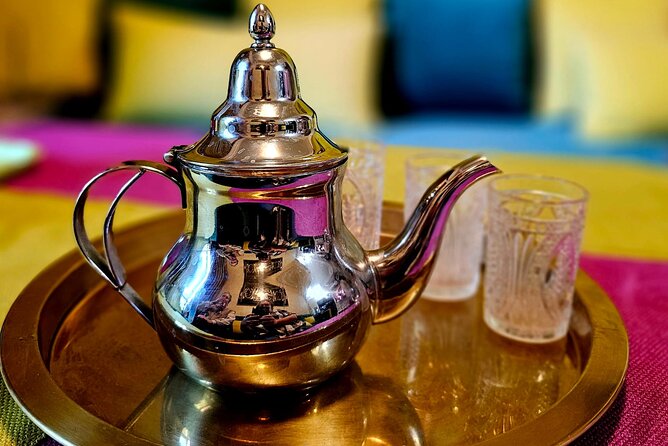
- Mint tea is part of the lesson: Learn the preparation method, then serve tea with Moroccan sweets.
- It is a small-group outing: The stated maximum is six people, making conversation and hands-on help easier.
A Casablanca food experience that begins at the market
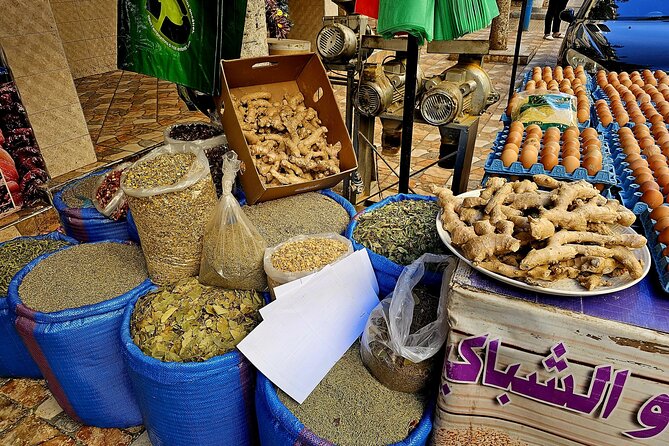
Many Moroccan cooking classes start with ingredients already laid out on a worktable. This one starts earlier, in the neighborhood market. That change matters. You see the produce, spices, meat, and other food being sold, then learn how those items become lunch or dinner in a Moroccan home.
You meet at HFGJ+9RG in Casablanca, with the activity ending back at the same point. Inas or her brother takes you to the market, where you shop for the ingredients included in the experience. The market is not simply a backdrop for photographs. It is part of the lesson, since you can connect each ingredient to the dish you will later prepare.
The market closes only on Friday, so avoid that day. This is the one clear scheduling snag in an otherwise simple plan. If you are arranging your Casablanca sightseeing around mosque visits, a cruise departure, or a tight rail schedule, confirm the start time and allow room for the full four-hour experience.
More Casablanca trips worth a second look
- Private Casablanca Market Tour and Cooking Class with Chamsi
★ 5.0 · 33 reviews - Casablanca : Traditional Moroccan Cooking Class with Locals
★ 5.0 · 22 reviews - Private Market Tour & Cooking Class in Casablanca with Transfers
★ 5.0 · 20 reviews
What the souk adds to the cooking class
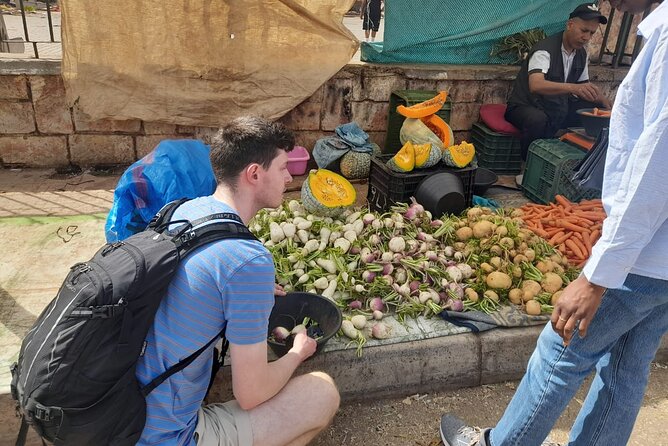
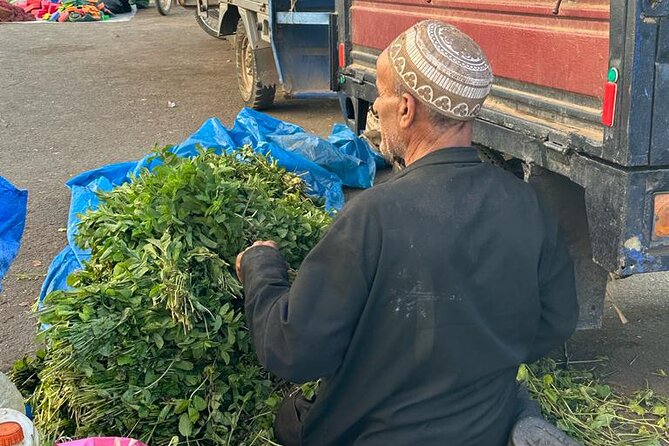
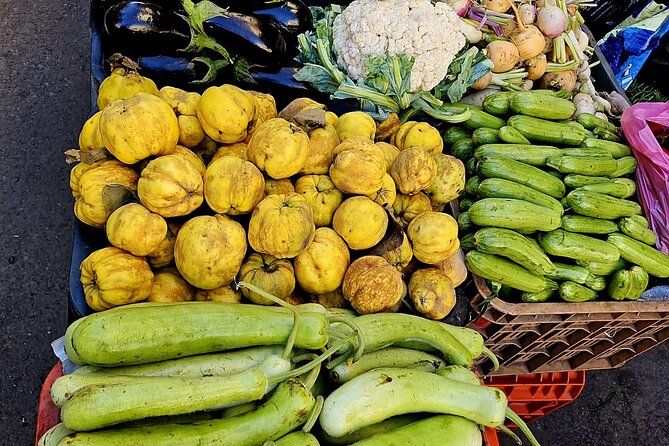
The local souk gives you a useful look at daily shopping. You can expect displays of produce, spices, and meat, with Inas helping you understand what to buy and how the ingredients fit into Moroccan cooking. The value is not in collecting a checklist of sights. It is in seeing food as local people see it: something selected, discussed, prepared, and shared.
That is also where the experience feels most different from a restaurant meal. At a restaurant, you taste the final tagine. Here, you can see the ingredients before they are seasoned and cooked. You also have a chance to ask about spices, preparation, and the small decisions that shape the final dish.
Several people specifically found the market a highlight, but you should keep your expectations sensible. This is a working neighborhood souk, not a polished culinary attraction. It may feel informal, crowded, or less arranged for visitors than a cooking school market. That is precisely the point, but people who prefer a tidy, highly scripted class may find the setting less comfortable.
Choosing between tagine, couscous, and pastilla
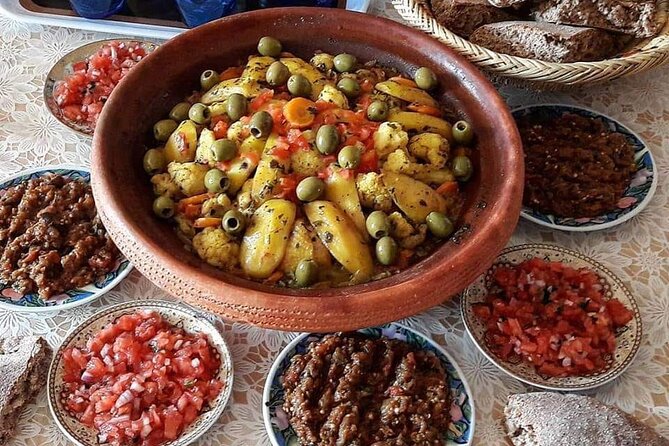
Once you return to the family home, the cooking begins. The available choices include tagine, couscous, and pastilla, and the host can work around dietary intolerances. Vegetarian and vegan cooking is welcome, but you should state your needs clearly when arranging the experience so the menu can be planned properly.
Tagine is a natural choice if you want to learn a classic Moroccan cooking method. You work through the preparation and seasoning, then wait while the dish cooks. Couscous offers a different lesson, with its own preparation and serving traditions. Pastilla gives you another option if you want to learn something beyond the dish most commonly associated with Morocco.
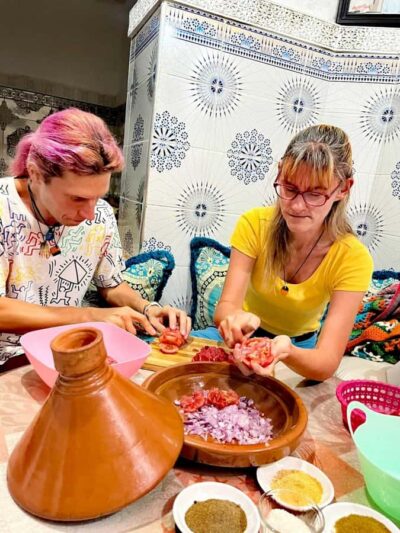
You are not there merely to watch Inas demonstrate. The description says that all the steps are done by you, with guidance from the host. That hands-on format makes the class useful after you leave Casablanca. You can show off the dish to family and friends later, rather than remembering only how it tasted at the table.
The exact dish depends on your choice and the arrangements made for the session. Do not expect a fixed menu presented without discussion. The flexibility is a strength, especially for people with food restrictions or for returning visitors who have already eaten several tagines during a Moroccan trip.
Learning family recipes in a Casablanca home
The home setting gives the afternoon its character. Inas welcomes you with her family, and the cooking takes place in their apartment rather than in a commercial classroom. You may meet her parents, and the time between cooking steps can include conversation, Moroccan music videos, and questions about traditions and ordinary life.
This is where the experience offers something a standard food tour cannot. You are not only learning how to season a dish. You are seeing how food connects with family, hospitality, and time spent together. Several accounts describe the atmosphere as similar to visiting a relative or being invited to a friend’s home for dinner.
That warmth is a major reason to book, but it also means you should arrive ready to be social. The experience is built around conversation and shared time. If you want a quick class where you cook for 45 minutes and leave with a recipe card, this may feel slow. If you enjoy sitting with a family, asking questions, and letting a meal take shape at its own pace, the format works well.
Inas learned her cooking skills from her mother and grandmother, and that family connection gives the lesson a personal link to Moroccan culinary tradition. You get practical instruction, but you also hear how food knowledge moves from one generation to the next.
A different kind of day out, same corner of Morocco:
- From Marrakech: Casablanca Tour with Hassan II Mosque Visit
★ 4.7 · 4,756 reviews - Casablanca: Hassan II Mosque Premium Tour with Entry Ticket
★ 4.5 · 2,971 reviews - Casablanca City Tour with Hassan II mosque ticket
★ 5.0 · 2,480 reviews - Casablanca: City Tour with Hassan II Mosque Entry Ticket
★ 4.6 · 1,137 reviews
Mint tea, sweets, and the waiting time
Moroccan tea is not an extra thrown in at the end. You learn the steps for making mint tea, then drink it with Moroccan sweets. This gives the class a second practical skill, and tea also creates a natural pause while the main dish cooks.
The waiting period is handled in a relaxed way. You may drink tea, eat sweets, watch Moroccan music videos, and talk with the family. That may sound simple, but it is one of the details that makes the experience feel like home hospitality rather than a production line.
Mint tea also helps you understand the rhythm of the meal. Moroccan food is not only about the finished plate. Preparation, serving, tea, and conversation all belong to the occasion. You leave with more than one recipe lesson, since you also learn how tea fits into social life.
Sitting down to a family-style meal
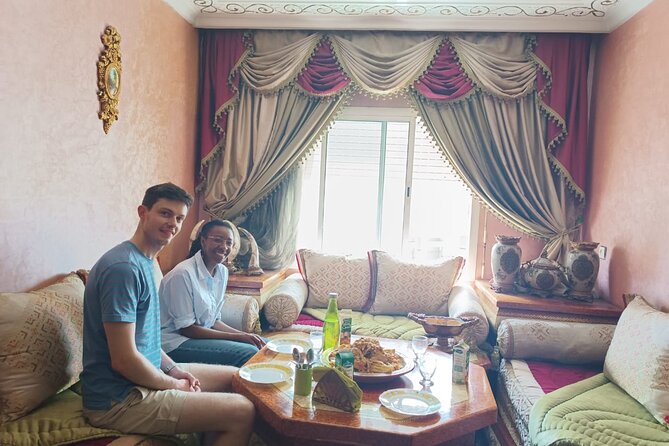
After the preparation and cooking, you eat the meal together in a joyful family setting. Depending on the dish you select, this may be tagine, couscous, pastilla, or a vegetarian or vegan alternative. The ingredients for the meal are included, so the $59 price covers both the market purchases and the food you prepare.
The meal is the payoff, but not the only value. You have already handled the ingredients, practiced the techniques, and watched the dish develop. That makes the final serving more satisfying than a meal ordered from a menu, even if you are not an experienced cook.
Past accounts also describe families being especially welcoming, with one group invited to share an Iftar meal. That kind of hospitality cannot be promised for every date, and religious or family occasions will vary. Still, it shows the personal nature of the setting and why you should treat this as a cultural visit as much as a food lesson.
Is $59 a fair price in Casablanca?
At $59 per person, this is not the cheapest way to eat in Casablanca. You could buy a meal for much less. But the comparison is not really between this experience and a restaurant bill.
Your fee includes about four hours of hosting, a local market visit, fresh ingredients, instruction, tea, sweets, and a shared meal in a private home. You are also paying for access to a part of Casablanca that is difficult to arrange on your own: shopping with a local family and cooking in their kitchen.
The value is strongest if you want personal contact and practical skills. It is weaker if you mainly want a meal or if your schedule allows only a short stop. With an average booking lead time of 46 days, planning ahead is sensible, especially if you want a particular date during a busy Casablanca stay.
The small-group limit of six is another point in its favor. A smaller group should give you more time at the cutting board and more chances to ask questions. One account describes a group of eight, but the stated maximum for the activity is six, so rely on the published limit when deciding how intimate the class will be.
Timing, transport, and practical planning
The experience lasts about four hours and begins and ends at HFGJ+9RG, Casablanca 20250, Morocco. It is near public transportation, and one person found the tram especially easy, getting off close to the home. That makes the meeting point more manageable than an out-of-the-way private residence, though you should still follow the host’s directions carefully.
Inas has been praised for clear communication, including directions and helpful pictures. That matters because home-based activities can be harder to find than a hotel lobby or a large attraction. Keep the confirmation on your phone, since the activity provides a mobile ticket and confirmation is received when you book.
If you are arriving from a cruise ship, leave extra time for transport and port formalities. The experience has worked for cruise visitors, but a four-hour activity with market shopping and a meal is not a good match for a tight return-to-ship schedule. I would choose it when you have a comfortable block of time in Casablanca.
Service animals are allowed, and the activity is near public transportation. Those details are useful, but the provided information does not explain kitchen layout or other accessibility features. If you have mobility, food allergy, or seating concerns, ask Inas before booking.
Who will enjoy this most?
I would recommend this experience to you if food is your way into a culture. You do not need to be a skilled cook. The value comes from taking part, asking questions, and sharing the finished meal.
It is especially well suited to:
- Couples who want a personal evening rather than another restaurant meal
- Families looking for an activity children or adults can take part in
- Solo visitors who enjoy conversation in a small group
- Vegetarians and vegans who want menu flexibility
- People at the beginning of a Moroccan trip who want early guidance on food and customs
- Returning visitors who want a different dish after eating tagine elsewhere
It may not suit you if you dislike home visits, prefer a formal culinary school, or have only a narrow gap between Casablanca transport connections. The class is also not ideal for someone who wants a silent demonstration and a quick exit. The family welcome is the core of the experience, not a side feature.
Should you book Old Local Market Visit and Moroccan Cooking Class?
I would book it if you want to understand Moroccan food through the people who prepare it every day. The market visit, flexible menu, hands-on cooking, tea lesson, and family meal make this a fuller experience than a restaurant outing or a standard demonstration.
Book early if your dates are fixed, and do not choose Friday if you want to visit the souk. Tell Inas about dietary needs in advance, and allow the full four hours, plus transport time to and from the meeting point.
Skip it if you want a polished cooking studio, a fixed menu, or a short activity centered only on eating. For everyone else, $59 buys a useful lesson and a genuine afternoon of Moroccan hospitality, with enough practical detail to carry the experience into your own kitchen.
FAQ
How long does the Moroccan cooking experience last?
The activity lasts approximately four hours.
Where does the experience start and end?
It starts at HFGJ+9RG, Casablanca 20250, Morocco, and ends back at the same meeting point.
What happens during the market visit?
Inas or her brother takes you to a popular local souk to buy fresh ingredients included in the experience. You can see local produce, spices, and meat before returning home to cook.
Is the market open every day?
The local market closes on Friday. Choose another day if you want the market visit included.
Which Moroccan dishes can I learn to prepare?
The available choices include tagine, couscous, and pastilla. The menu can also accommodate vegetarian and vegan cooking.
Are vegetarian and vegan options available?
Yes. Vegetarian and vegan participants are welcome, and the host can work around dietary intolerances.
How many people can join the activity?
The stated maximum is six people.
Is public transportation available near the meeting point?
Yes. The meeting point is near public transportation, and the tram has been used to reach the host’s home.
What is the cancellation policy?
You can cancel at least 24 hours before the local start time for a full refund. Cancellations or changes made less than 24 hours before the start time are not accepted for a refund.
More Workshops in Casablanca
- Marrakech: Moroccan Cooking Class with Pickup
★ 4.6 · 1,862 reviews - Marrakesh: Moroccan Dishes Cooking Class with a Local Chef
★ 5.0 · 1,615 reviews - Moroccan Cooking Class & Marrakech Market Visit with Chef Khmisa
★ 5.0 · 1,504 reviews - Half-Day Cooking Class with Local Chef Laila in Marrakech
★ 5.0 · 952 reviews
More Shopping Tours in Casablanca
- Traditional Souks Shopping Private Tour in Casablanca
★ 5.0 · 64 reviews - Casablanca: Traditional Souks Shopping Private Tour
★ 4.4 · 29 reviews - Market Tour & Moroccan Cooking Class in Casablanca with Transfers
★ 5.0 · 18 reviews - Marrakech: Traditional Moroccan Cooking Class & Market Visit
★ 4.8 · 1,861 reviews
Recently reviewed around Casablanca
- Casablanca Airport Transfer from hotel in Casablanca★ 5.0 · 18 reviews
- Amazing airport pickup/ drop off in Casablanca/ safe&easy★ 5.0 · 218 reviews
- Your Private Casablanca Transfer★ 5.0 · 52 reviews
- Chefchaouen the Blue City Full-Day Trip from Casablanca★ 4.5 · 79 reviews
- Sunset Camel Ride in the Palm Grove Of Marrakech★ 5.0 · 34 reviews
- Exclusive tour of Casablanca with access to the Hassan II Mosque★ 5.0 · 205 reviews
- Private full day trip to chefchaouen from Casablanca with lunch★ 5.0 · 20 reviews
- 14 Days From Casablanca- Morocco Grand Tour★ 5.0 · 24 reviews
Moroccan Cooking Classes, compared.
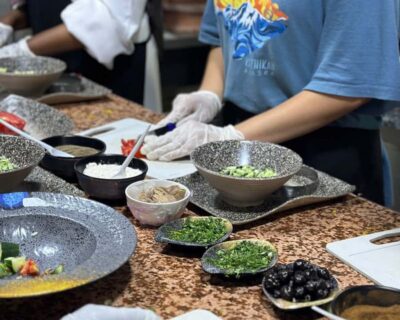
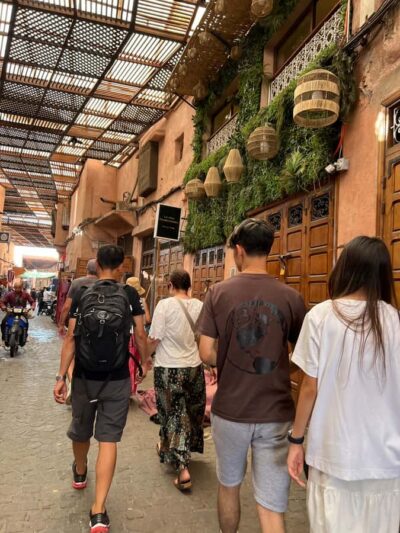
Traditional Moroccan Cooking Class & Market Visit
Read our review →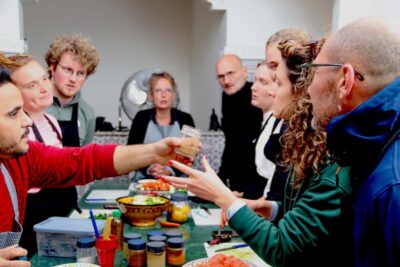
Moroccan Dishes Cooking Class with a Local Chef
Read our review →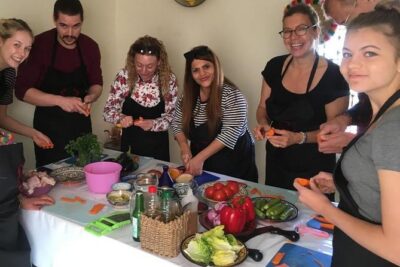
Moroccan Cooking Class & Marrakech Market Visit with Chef Khmisa
Read our review →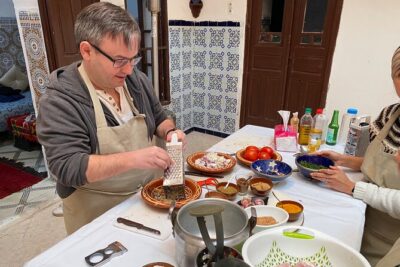
Half-Day Cooking Class with Local Chef Laila in Marrakech
Read our review →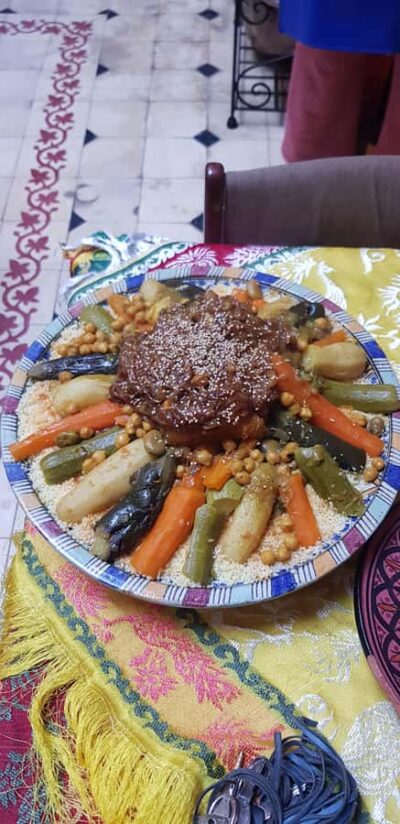
Browse the lists this tour appears in