
Reviewed · MOROCCAN COOKING CLASSES
Casablanca : Traditional Moroccan Cooking Class with Locals
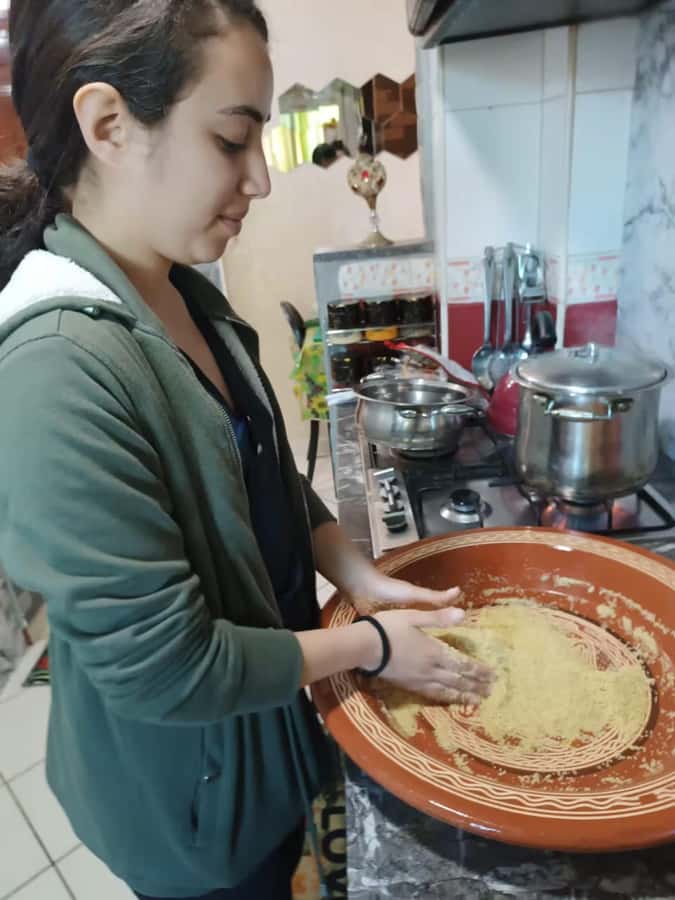
The best part of this Casablanca class is that you cook in a real Moroccan family home, not a polished demonstration kitchen. Inas welcomes you into her family kitchen, teaches recipes passed down by her grandmother and mother, and ends the lesson with everyone seated together over the food.
I like two things right away: you get your hands on classic dishes such as tagine and couscous, and the class includes the stories, customs, and table manners that give those dishes meaning. The main thing to consider is location. Transportation is not included, and the meeting point at Résidence El Fath, near BIM Attacharok, takes you into a local residential community rather than Casablanca’s main sightseeing zone.
In This Review
- Key points to know before booking
- Entering a Casablanca family home
- Four hours of cooking, conversation, and food
- Learning tagine from Inas
- Couscous, pastilla, and Moroccan salads
- The family meal is part of the lesson
- What makes the $60 price worthwhile
- Language, group size, and practical planning
- Who will enjoy this class most
- Should you book the Casablanca cooking class?
- FAQ
- Where does the cooking class take place?
- How long does the cooking class last?
- How much does the class cost?
- Which dishes might I learn to prepare?
- Is the meal included?
- What languages does Inas teach in?
- How many people can join the class?
Key points to know before booking
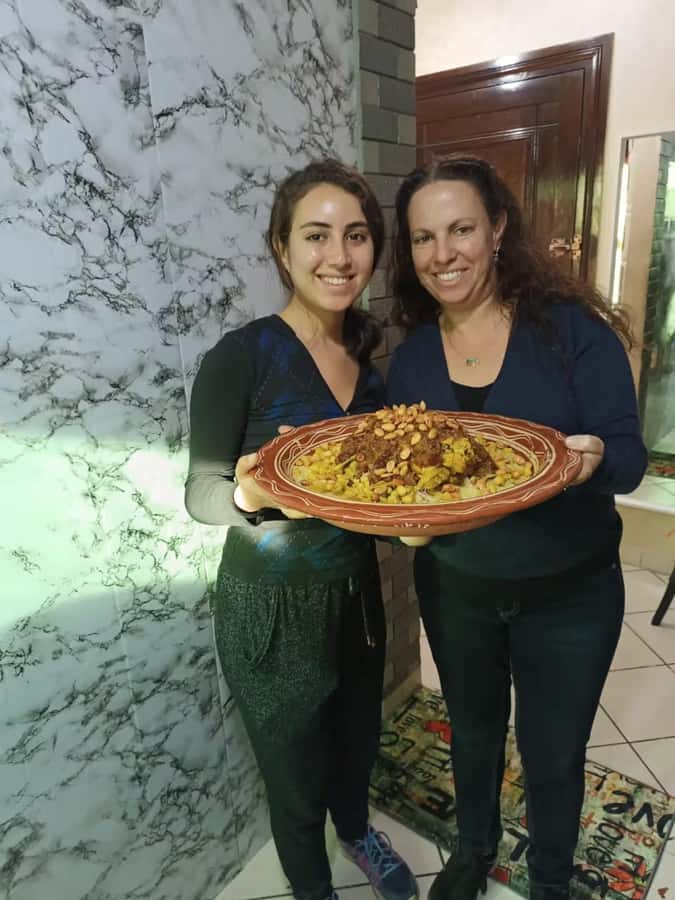
- A family kitchen, not a tourist cooking studio: You enter Inas’s home and cook alongside her family.
- Four hours at a useful pace: There is time to prepare food, ask questions, share stories, and eat together.
- Classic Moroccan dishes: The menu can include tagine, couscous, pastilla, and Moroccan salads.
- Small groups: The class is limited to 10 people, with instruction available in Arabic, French, and English.
- Generational cooking tips: Inas learned from her mother and grandmother, each with more than 40 years of experience with Moroccan cuisine.
- Good value for food lovers: At $60 per person, the price covers the class, ingredients, cultural exchange, and a shared family meal.
Entering a Casablanca family home
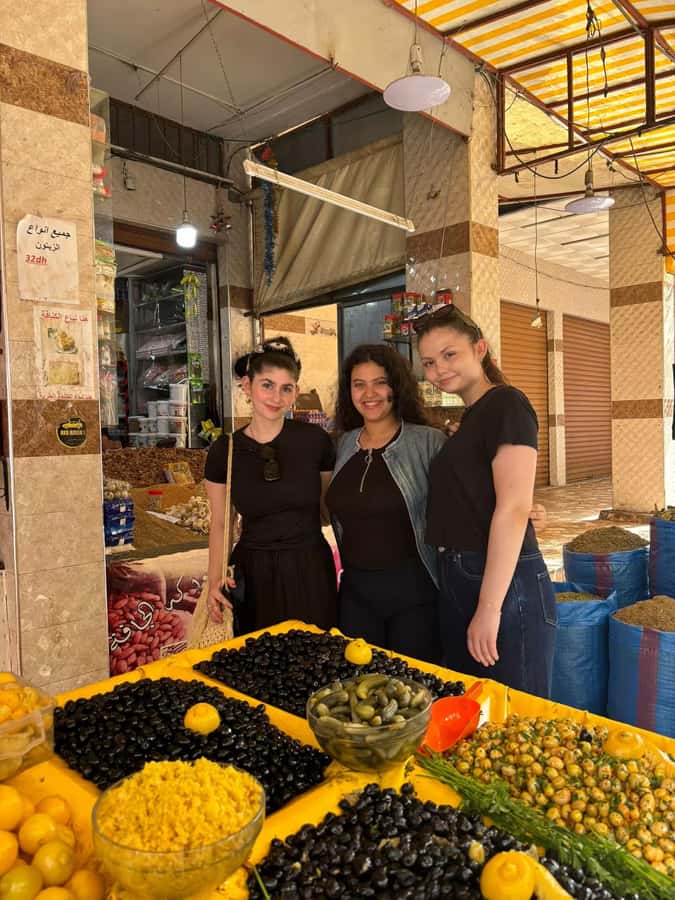
Casablanca can feel broad, modern, and busy, so this class gives you a different view of the city. Instead of simply looking at Moroccan food on a restaurant menu, you see how a local family prepares it and why certain steps matter.
The setting is a traditional home in a local community. That makes the outing feel personal from the start, but it also means you should expect a home environment rather than the layout of a professional cooking school. You will meet at Résidence El Fath on Abdellah Ibrahim Street, by BIM Attacharok. Since rides are not included, plan your route before class and allow enough time to find the residence.
Inas is the main host. She learned Moroccan cooking from her mother and grandmother, and her teaching style is described as patient and clear. That matters in a dish such as tagine, where the basic ingredient list is not the hard part. The skill lies in building flavor, managing moisture, and knowing when the food is ready.
You are not just handed a recipe and left to copy it. The class is built around doing the work yourself, with Inas guiding each step. That makes it a good choice if you want to repeat the dishes at home after your holiday.
More Casablanca trips worth a second look
- Old local Market visit+Moroccan cooking class with a local family
★ 5.0 · 84 reviews - Private Casablanca Market Tour and Cooking Class with Chamsi
★ 5.0 · 33 reviews - Private Market Tour & Cooking Class in Casablanca with Transfers
★ 5.0 · 20 reviews
Four hours of cooking, conversation, and food
The four-hour length is one of the class’s strengths. Moroccan dishes often reward patience, and a rushed lesson would turn into a quick demonstration followed by lunch. Here, you have time to take part, listen, make mistakes, and ask why a particular method is used.
The exact menu may vary, but the food can include tagine, couscous, pastilla, and Moroccan salads. That gives you a useful spread of Moroccan cooking styles. Tagine introduces slow cooking and careful seasoning. Couscous shows how a familiar staple becomes a full meal when paired with vegetables and other ingredients. Pastilla brings a different combination of textures and flavors, while salads add fresh, seasoned dishes to the table.
A class with several dishes can also reveal how a Moroccan meal is balanced. You are likely to see that the cooking is not only about a single centerpiece. Salads, grains, sauces, and shared plates all play a part.
The order depends on what you prepare, so do not treat the schedule as a strict restaurant-style course. The practical point is simple: you will spend much of the four hours cooking, then sit down to eat what the group has made.
Learning tagine from Inas
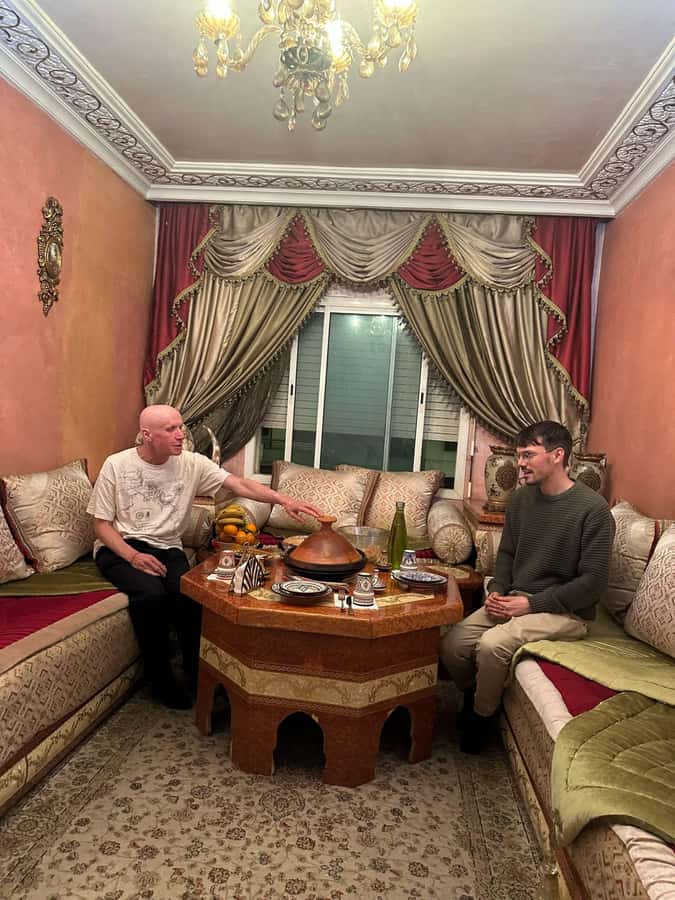
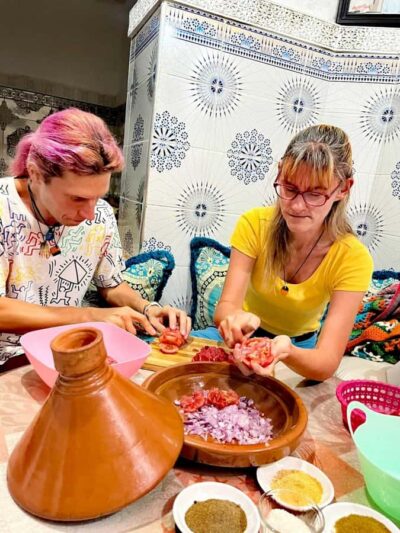
Tagine is the dish most closely linked with this class, and it is a useful starting point for understanding Moroccan home cooking. The name refers both to the clay cooking vessel and to the dish prepared inside it. The food is cooked slowly, allowing meat, vegetables, fruit, spices, or preserved ingredients to share their flavors.
One class menu included chicken tagine with preserved lemon. That detail is worth noting because preserved lemon gives the dish a sharp, salty flavor that is hard to copy if you only follow a basic recipe. Inas can show you how that ingredient fits into the dish rather than leaving you to guess at home.
The lesson also gives you a chance to see the difference between adding spices and using them well. Moroccan cooking is not simply a matter of making food hot. Timing, proportions, and the way ingredients are combined all count. The family techniques passed down to Inas are the part you cannot easily pick up from a generic cookbook.
If tagine is your main reason for booking, ask about the planned menu in advance. The description allows for tagine or other dishes, so the exact combination is not fixed in the information provided.
Couscous, pastilla, and Moroccan salads
Couscous is another likely highlight, especially for anyone who has eaten it abroad and wants to understand the Moroccan version. One class prepared couscous with vegetables. The value here is not just learning what goes into the bowl. You also see how the dish fits into a shared family meal.
Pastilla offers a different lesson. It is a celebratory Moroccan dish with a pastry exterior and a carefully seasoned filling. The description lists it among the possible dishes, but it does not promise it at every session. If pastilla is a priority, confirm before booking.
Moroccan salads can seem modest beside a large tagine, yet they help explain the rhythm of the meal. They bring freshness, seasoning, and variety to the table. Preparing them also gives you a practical dish to make at home, since salads are usually easier to repeat than a long-cooked main course.
The mix of dishes makes this more useful than a single-recipe workshop. You get several ideas to take away, along with a better sense of how Moroccan meals are assembled.
A different kind of day out, same corner of Morocco:
- From Marrakech: Casablanca Tour with Hassan II Mosque Visit
★ 4.7 · 4,756 reviews - Casablanca: Hassan II Mosque Premium Tour with Entry Ticket
★ 4.5 · 2,971 reviews - Casablanca City Tour with Hassan II mosque ticket
★ 5.0 · 2,480 reviews - Casablanca: City Tour with Hassan II Mosque Entry Ticket
★ 4.6 · 1,137 reviews
The family meal is part of the lesson
After the preparation, you eat with the family. This is not an extra snack tacked onto the end of the class. It is the moment when the cooking turns into a social meal, with time for conversation and stories about Moroccan customs and everyday life.
That shared table is likely to be the most memorable part for people who want contact with local life. You are not only learning how to season a dish. You are seeing how food creates a reason to sit together, talk, and welcome new people into the home.
The warm welcome is a repeated theme in the supplied feedback. Inas and her family have been described as treating participants like friends and making them feel at home quickly. Several people valued the hospitality as much as the food. That makes this a particularly good pick if you want a personal cultural exchange, not just a practical recipe lesson.
Small groups help here. With a maximum of 10 participants, the gathering is intimate enough for questions and conversation, though the feel will depend on the final group size. One session brought together people from different countries, including Australia, which added a social side to the meal.
What makes the $60 price worthwhile
At $60 per person, this is not the cheapest way to eat in Casablanca. A restaurant meal will cost less, and a market visit may offer more sightseeing for your money. The comparison is not quite fair, though, because the class includes food, instruction, a four-hour visit, and time with a local family.
I see the value in three parts. First, you take part in preparing the meal instead of simply receiving it. Second, Inas explains family methods and cooking tips that are difficult to get from a standard recipe. Third, you share the finished food in the home, where the social setting is part of what you paid for.
The price works best for visitors who care about food and people more than polished facilities. If you only want to taste Moroccan dishes, spend the money at a good restaurant. If you want to learn how they are made and enjoy a relaxed afternoon or evening with a family, $60 is reasonable.
Dietary needs are another point to raise before you arrive. Inas has accommodated dietary requests, but the information does not spell out which diets can be handled or how much notice is needed. Contact the provider before booking if this matters to you.
Language, group size, and practical planning
Instruction is available in Arabic, French, and English. That makes the class workable for many international visitors, and clear teaching is important when you are learning unfamiliar techniques.
The group limit is 10 people. That is small enough to support hands-on participation, but do not assume you will receive a private lesson. If you want the most personal attention, ask how many places are booked for your date.
The class lasts four hours, with starting times depending on availability. It can fit well into a day in Casablanca, but you should avoid placing another tightly scheduled activity immediately afterward. The meal and conversation are part of the visit, and rushing away would undercut the whole point.
Transportation is not included. The meeting point is Résidence El Fath on Abdellah Ibrahim Street at BIM Attacharok. A participant with a car received indoor protected parking from Inas, but that should be treated as a helpful arrangement rather than a guaranteed inclusion. Ask ahead if you are driving.
You can cancel up to 24 hours before the activity for a full refund, and the reserve-now, pay-later option keeps your plans flexible. Those terms are useful if your Casablanca schedule is still shifting.
Who will enjoy this class most
I would recommend this to home cooks, food lovers, and curious first-time visitors who want more than a restaurant meal. It also suits couples, friends, and solo visitors who like meeting people in a relaxed setting.
Families can find it appealing if children are comfortable taking part in kitchen tasks, though the provided details do not specify a minimum age. Ask before booking if you are bringing young children.
This is less suitable if you dislike group activities, prefer a formal cooking school, or need a fixed menu confirmed far in advance. It may also disappoint you if your main goal is sightseeing. The class stays focused on cooking and cultural sharing, not on visiting Casablanca landmarks.
The strongest reason to choose it is Inas herself. She combines family knowledge with a patient teaching style, and her family’s welcome gives the class a human side that a standard food workshop may not have.
Should you book the Casablanca cooking class?
Book it if you want to cook Moroccan food in a real home, learn from Inas, and share a meal with the people who prepared it. The combination of tagine, couscous, family recipes, and conversation gives you a better feel for Moroccan food than a quick restaurant stop.
Before paying, confirm the menu if you specifically want pastilla or a particular tagine. Check the route to Résidence El Fath, arrange your own transportation, and mention dietary needs in advance.
At $60, the class is a good value for a four-hour cultural and culinary visit, especially because the group is capped at 10 and the meal is included. Skip it only if you want a purely sightseeing-focused outing or a formal studio kitchen. For an up-close taste of Casablanca home life, this is one of the city’s more personal choices.
FAQ
Where does the cooking class take place?
The class takes place in a local family’s home at Résidence El Fath on Abdellah Ibrahim Street, at BIM Attacharok, in Casablanca.
How long does the cooking class last?
The activity lasts four hours. Starting times depend on availability.
How much does the class cost?
The listed price is $60 per person.
Which dishes might I learn to prepare?
The class can include Moroccan dishes such as tagine, couscous, pastilla, and Moroccan salads. The exact menu may vary.
Is the meal included?
Yes. After cooking, you share the prepared meal with the local family.
What languages does Inas teach in?
Instruction is available in Arabic, French, and English.
How many people can join the class?
The activity is limited to 10 participants, making it a small-group class rather than a large workshop.
Recently reviewed around Casablanca
- Casablanca Airport Transfer from hotel in Casablanca★ 5.0 · 18 reviews
- Amazing airport pickup/ drop off in Casablanca/ safe&easy★ 5.0 · 218 reviews
- Your Private Casablanca Transfer★ 5.0 · 52 reviews
- Chefchaouen the Blue City Full-Day Trip from Casablanca★ 4.5 · 79 reviews
- Sunset Camel Ride in the Palm Grove Of Marrakech★ 5.0 · 34 reviews
- Exclusive tour of Casablanca with access to the Hassan II Mosque★ 5.0 · 205 reviews
- Private full day trip to chefchaouen from Casablanca with lunch★ 5.0 · 20 reviews
- 14 Days From Casablanca- Morocco Grand Tour★ 5.0 · 24 reviews
Moroccan Cooking Classes, compared.
Traditional Moroccan Cooking Class & Market Visit
Read our review →
Moroccan Dishes Cooking Class with a Local Chef
Read our review →
Moroccan Cooking Class & Marrakech Market Visit with Chef Khmisa
Read our review →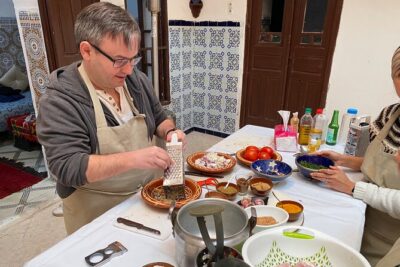
Half-Day Cooking Class with Local Chef Laila in Marrakech
Read our review →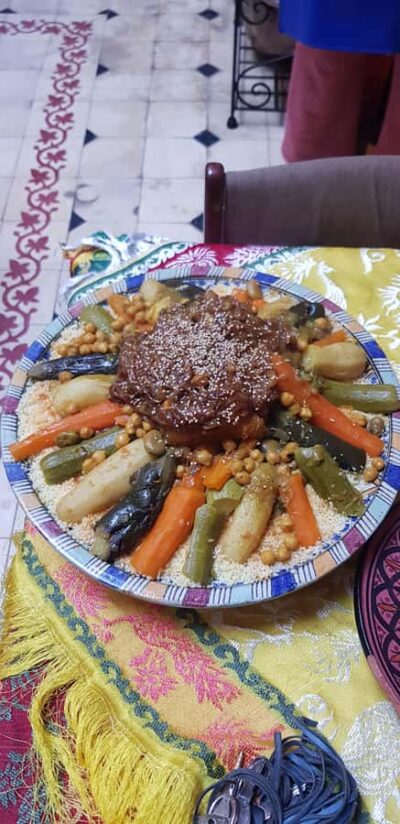
Browse the lists this tour appears in