
Reviewed · MOROCCAN COOKING CLASSES
Marrakesh: Moroccan Dishes Cooking Class with a Local Chef
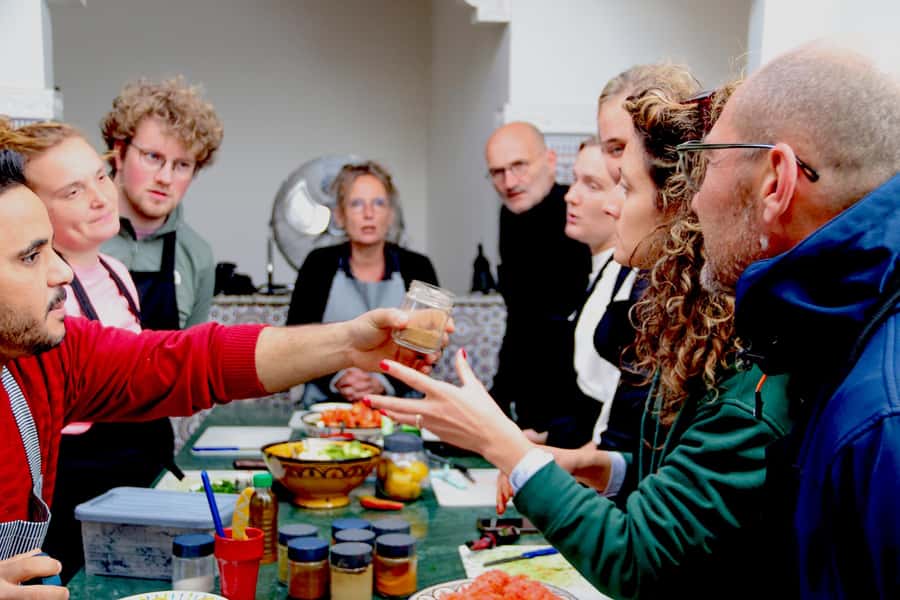
The best part of this Marrakesh cooking class is that it begins before you reach the kitchen. You meet near Pharmacie Bab Doukkala, visit a local market to help choose fresh ingredients, then return to a home-style cooking space where Chef Hassan and Ahmed guide you through a Moroccan feast.
I like the shared format, since you help prepare several dishes instead of spending four hours on just one recipe. I also like the tea ceremony, which gives you a useful look at Moroccan hospitality before the chopping starts. The main consideration is that the food is prepared collectively, so this is not the class for someone who wants complete control over one dish or who cannot eat onion or garlic.
In This Review
- Key points to know before booking
- A Marrakesh cooking class that starts in the market
- Mint tea before the knives come out
- Three hours of tagines, salads, and kitchen teamwork
- What the cultural explanations add
- The final buffet is the reward
- Recipes you can actually use at home
- Is $47 a fair price?
- Who will enjoy this class most?
- Useful timing and language advice
- Should you book the Marrakesh Moroccan cooking class?
- FAQ
- Where does the cooking class meet?
- How long does the activity last?
- What happens during the market visit?
- Is Moroccan mint tea included?
- Which dishes might I prepare?
- Do I cook one dish or several dishes?
- Are vegetarian, vegan, or gluten-free dishes available?
- Is the class taught in English?
- Are recipes provided after the class?
- What is included in the price?
Key points to know before booking
- Shop first, cook second: A short market visit near Bab Doukkala lets you help select vegetables and other ingredients.
- Learn several dishes: The group may prepare up to four tagines and two salads or side dishes in one session.
- Hassan leads the cooking: He assigns tasks, explains techniques, answers questions, and keeps the mood relaxed.
- Mint tea gets its own lesson: You learn the traditional preparation before drinking tea together.
- A real shared meal follows: The finished food is served buffet-style with bread, water, and tea.
- Small but social group: The usual maximum is nine people, with ten possible for a private group or unexpected overbooking.
A Marrakesh cooking class that starts in the market
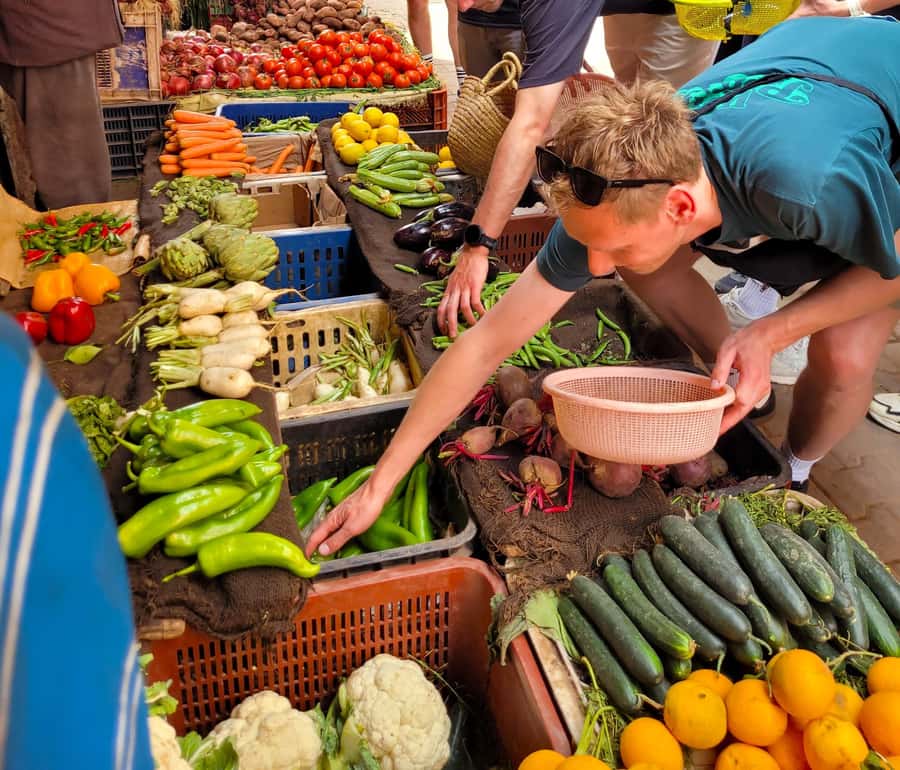
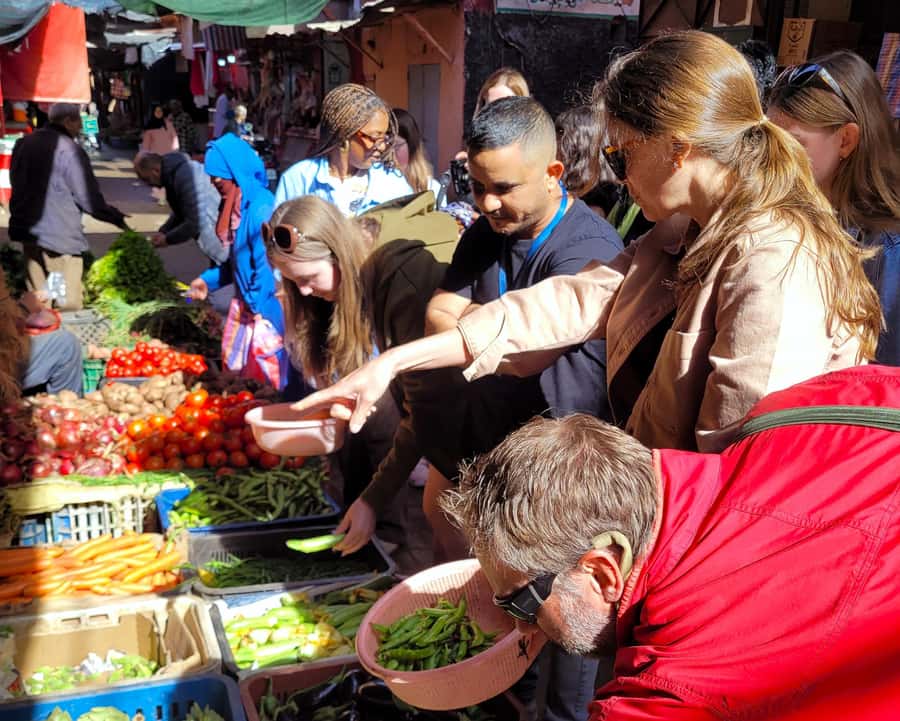
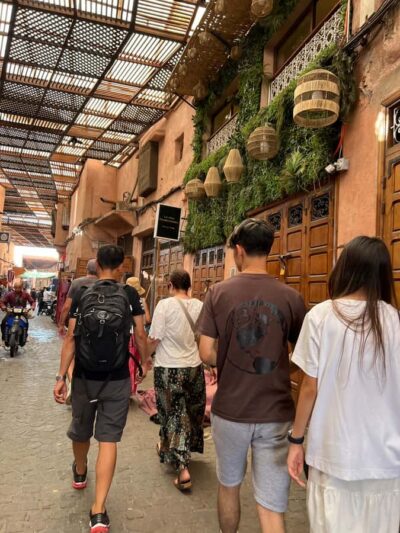
This four-hour experience makes Moroccan food easier to understand because you see the ingredients before they become lunch or dinner. After meeting at Pharmacie Bab Doukkala, you take a short walk through a nearby food market, spending about 15 minutes picking up vegetables and the other supplies needed for the class.
That short stop matters. Moroccan cooking depends on the relationship between fresh produce, spices, preserved ingredients, and slow cooking. You do not simply arrive at a prepared kitchen and follow a printed recipe. You get a small lesson in how a local cook shops, with participants helping choose what goes into the meal.
The market visit is brief, so do not expect a full food tour or a long explanation at every stall. Its purpose is practical: gather the ingredients, see a local shopping area, and begin thinking about the meal before you start cooking.
The meeting point is easy to identify in principle, but Marrakesh’s medina streets can confuse even confident walkers. Search Google Maps for the exact name Pharmacie Bab Doukkala. Hotel pickup and drop-off are not included, so allow extra time to reach the pharmacy.
More Cooking Classes in Marrakech
- Marrakech: Moroccan Cooking Class with Pickup
★ 4.6 · 1,862 reviews - Marrakech: Traditional Moroccan Cooking Class & Market Visit
★ 4.8 · 1,861 reviews - Moroccan Cooking Class & Marrakech Market Visit with Chef Khmisa
★ 5.0 · 1,504 reviews
Mint tea before the knives come out
Back at the cooking space, the class begins with a Moroccan tea ceremony lasting about 30 minutes. You learn the traditional way to prepare mint tea, then drink it while getting acquainted with the other people in the group.
This is more than a drink break. Tea is part of daily life and social custom in Morocco, and the ceremony gives the cooking class a cultural starting point. It also slows the pace before the busy kitchen work begins. Several hours of chopping and seasoning are easier when the class opens with conversation rather than instructions shouted across a counter.
Ahmed often leads the tea explanation, while Hassan takes charge of the cooking. The guides use English and French. If everyone speaks the same language, the session is held in that language. If the group is mixed, expect a bilingual class, which may make some explanations take a little longer.
The tea portion is a good reason to book this class even if you are not an experienced cook. You learn a specific Moroccan custom and get time to settle in. The class is social, but the hosts make an effort to include each person, including younger participants over the age of six.
Three hours of tagines, salads, and kitchen teamwork
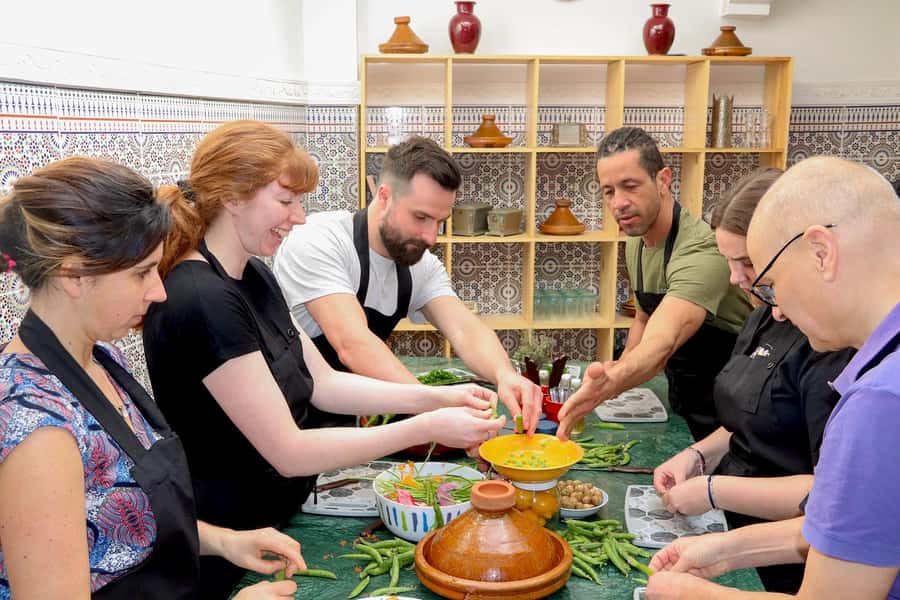
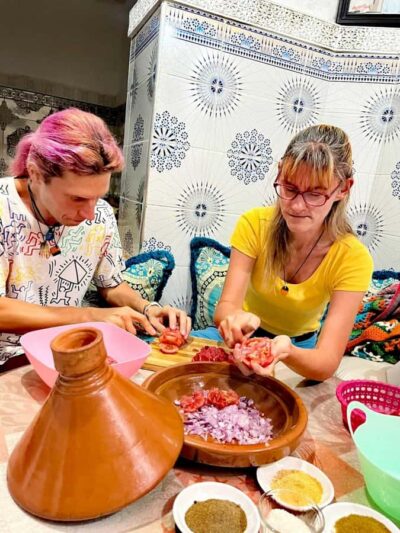
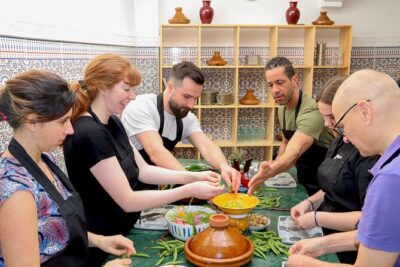
The cooking portion takes about three hours and 15 minutes. Hassan demonstrates the basic methods, then divides the work among the group. You may peel, chop, season, prepare sauces, or help assemble a tagine.
The class focuses on home cooking rather than restaurant theatrics. You learn how to use Moroccan spices, how to season tagines, and how local cooks approach familiar ingredients. The exact number of dishes depends on group size and dietary needs, but the usual menu can include:
- Beef with prunes tagine
- Chicken with preserved lemon tagine
- Vegetable tagine
- Kefta meatballs with tomato sauce and eggs
- Shakshouka with sweet peppers
- Zaalouk, made with fried or grilled aubergine
You may prepare four tagines and two salads or side dishes. Sometimes one or two extra side dishes are added. If the group is smaller, the menu can be reduced, but the class is planned so there is enough food for everyone.
The group cooks as one team. That has a clear advantage: you learn the flavor base and method for several dishes in one afternoon. The tradeoff is that you may not personally handle every stage of every recipe. If you want a highly technical lesson focused on knife skills, exact measurements, or one signature tagine, this format may feel broad rather than intensive.
For most people, the variety is the point. You leave with a better sense of how Moroccan cooking changes from sweet and savory beef with prunes to bright chicken with preserved lemon, hearty meatballs, vegetable dishes, and smoky aubergine salad.
What the cultural explanations add
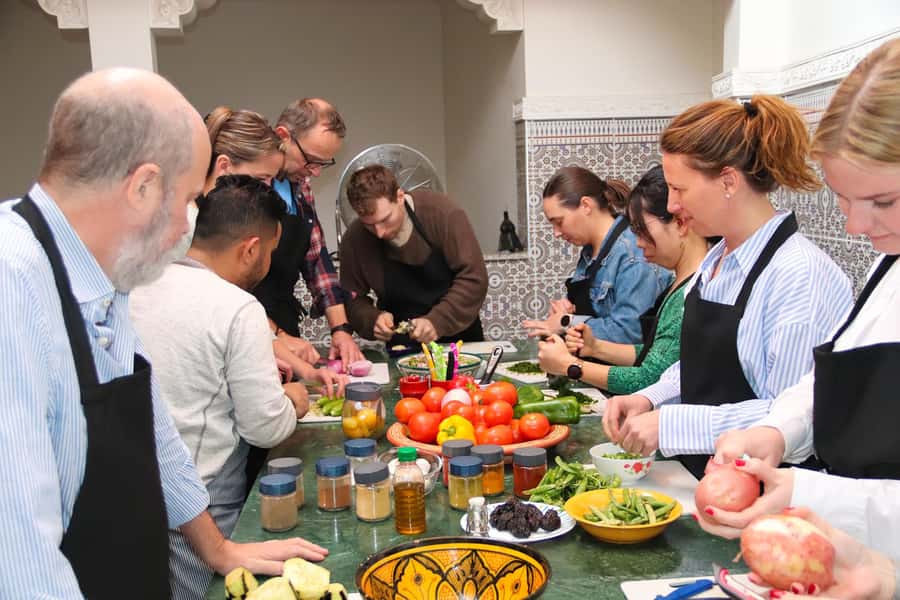
Hassan and Ahmed talk about Moroccan customs, food traditions, and the role dishes play in everyday life and special occasions as you cook. These explanations make the recipes more useful because you learn not only what to add, but also how the food fits into Moroccan home life.
The class also gives you a chance to ask questions as the meal develops. Hassan is described as patient, funny, and careful to include everyone. That matters in a shared kitchen, where confident cooks can easily take over and quieter people can end up watching.
The strongest feature here is the tone. This is designed to feel relaxed and home-like, not rushed. The class lasts four hours from the meeting point through the meal, but the hosts do not treat it like a race against a stopwatch.
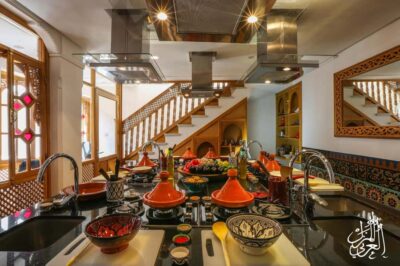
An air-conditioned cooking area is provided, which is useful during hot Marrakesh weather. One practical warning comes from the cooler season: the room can feel cold at times, so I would bring a sweater even though the space has air conditioning.
More Marrakech trips worth a second look
- Half-Day Cooking Class with Local Chef Laila in Marrakech
★ 5.0 · 952 reviews - Marrakech: Moroccan Cooking Class with a Local Family
★ 4.9 · 668 reviews - Marrakech: Moroccan Cuisine Cooking Class in Local Home
★ 4.8 · 508 reviews - Marrakech: Moroccan Cooking Workshop at La Maison Arabe
★ 5.0 · 446 reviews
The final buffet is the reward
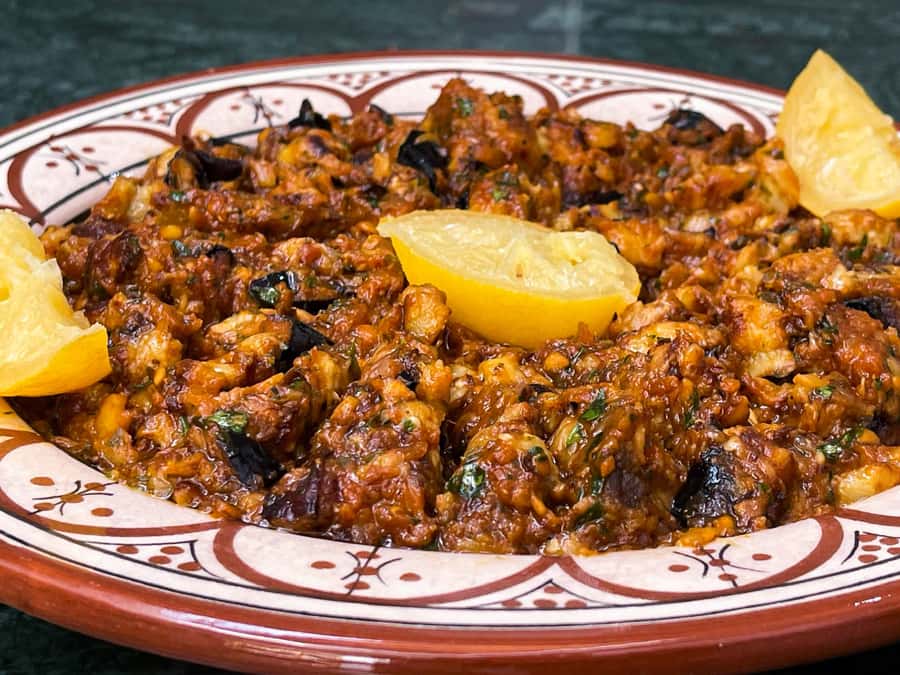
At the end, everything you have prepared is served as a buffet. You can taste the different tagines, salads, and side dishes rather than choosing only one plate.
This is where the group format pays off. A standard restaurant order might give you one tagine and perhaps a salad. Here, you sample several styles of Moroccan cooking in one meal, with the added satisfaction of knowing what went into each dish.
Bread, water, and tea are included. Additional drinks are not included, and alcohol is not permitted. The food is designed to include vegan, vegetarian, and gluten-free options, but you should contact the provider before booking if you have dietary restrictions. The class is not suitable for people with onion or garlic allergies.
The meal is also substantial enough to function as the main food event of the day. Plan around it rather than treating it as a quick snack between sightseeing stops. Depending on the start time, it can work as lunch or dinner.
Recipes you can actually use at home
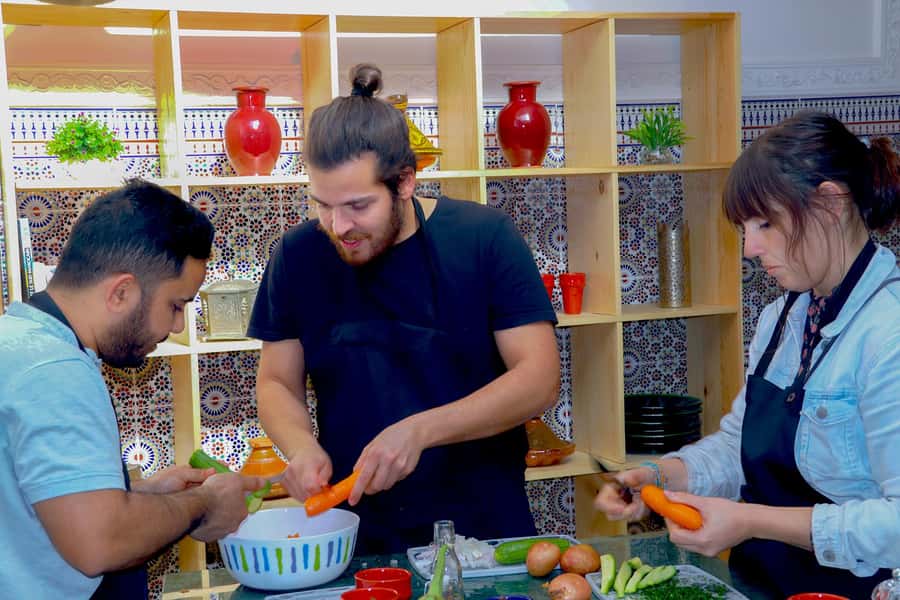
A cooking class is only good value if you can repeat some of it afterward. Recipes for the dishes prepared in class are sent through a website link later in the day, along with recipes for other Moroccan dishes.
That follow-up is one of the practical strengths of this experience. You do not have to rely on memory after a long afternoon of chopping and tasting. You can try the dishes at home and adjust them to suit your own kitchen.
The lessons are especially useful if you have never cooked with Moroccan spices or used a tagine. You learn several seasoning combinations rather than one fixed formula. One participant even bought a tagine to continue practicing at home, though buying one is entirely optional and not part of the class.
There is also an opportunity to buy spices from the workshop at the end. This can be handy if you want to recreate the flavors without searching through shops after the class. The spice purchase is an extra cost, so consider it a souvenir and cooking supply rather than part of the $47 fee.
Is $47 a fair price?
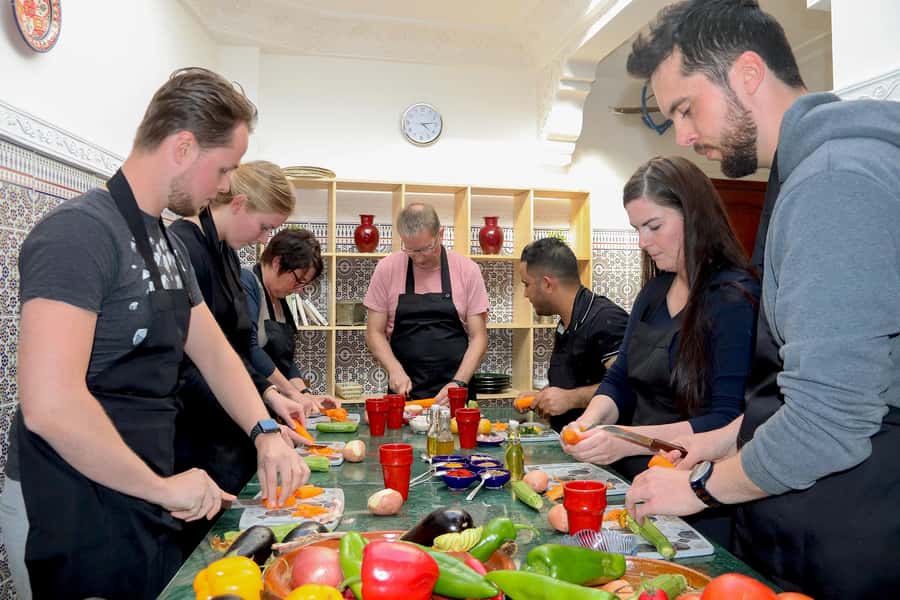
At $47 per person, the price is strong for a four-hour activity that includes a market visit, instruction, tea, a full meal, bread, water, an apron, and recipes afterward.
The value comes from the range of the experience. You are not paying only for a meal or only for a demonstration. You get a local market stop, a tea lesson, hands-on preparation, cultural discussion, and a multi-dish dinner.
The class also works well for people who want a social activity. The maximum group is normally nine, though it can reach ten for a private group or an unexpected overbooking. That is small enough for direct contact with the instructors, but large enough to create a lively shared meal.
The price is less attractive if you dislike group cooking, have a long list of food allergies, or want an advanced professional lesson. It is also worth remembering that transport and extra drinks are not included. Still, for a half-day activity with this much food and instruction, I consider it good value.
Who will enjoy this class most?
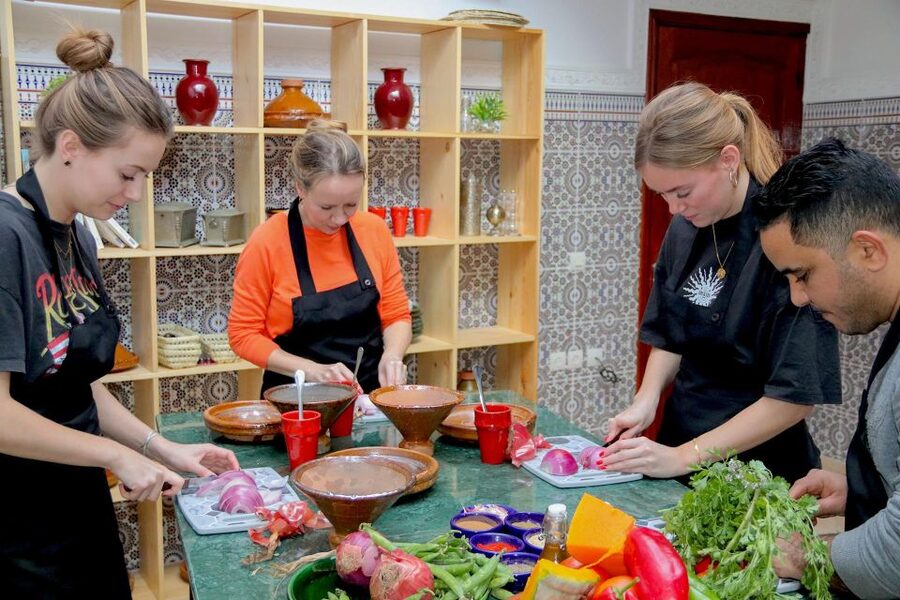
I would recommend this experience to first-time visitors who want a quick introduction to Moroccan food and customs. It is also a smart choice early in your stay because it can help you understand the tagines, salads, tea, and spices you see elsewhere in Marrakesh.
Food lovers will appreciate the variety, while casual cooks can take part without needing advanced skills. The hosts assign jobs so everyone contributes, and children aged six and older are allowed. A family group with an 11-year-old found the format engaging, but remember that younger children may need supervision around knives, heat, and crowded work surfaces.
It suits solo visitors only if at least two people are booked for that date. If you are traveling alone, contact the provider before reserving so they can check whether another participant is already scheduled.
This is not suitable for children under six, wheelchair users, or people with back problems. The cooking area is air-conditioned, but the class still requires standing, walking through a market, and working at kitchen surfaces for much of the session.
Useful timing and language advice
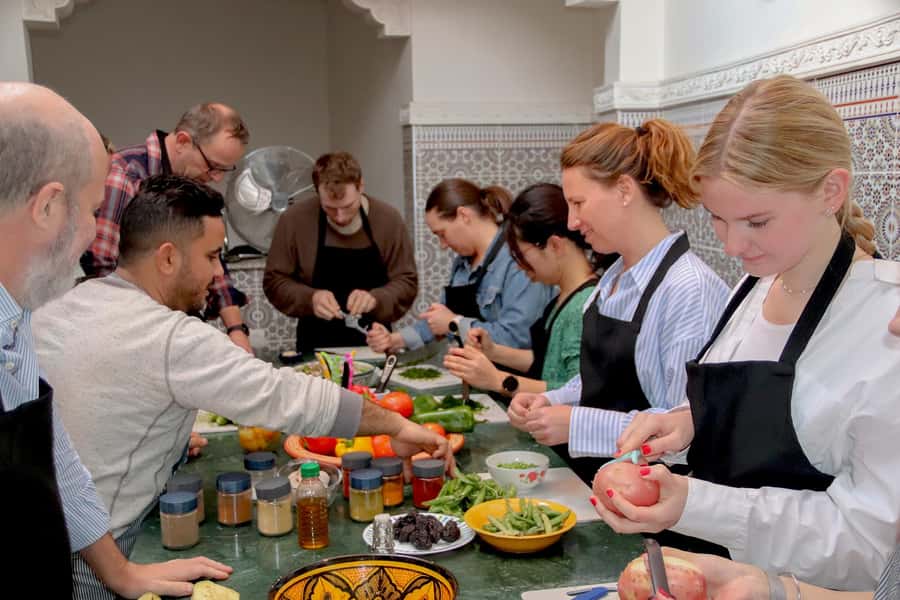
The activity lasts four hours from meeting at the pharmacy until the shared meal ends. Starting times vary, so check availability when booking. A morning class will usually lead into lunch, while a later session can become dinner.
The class operates during Ramadan as well. Because the experience includes tea and a meal, you may want to confirm the timing and arrangements if your visit falls during the fasting month.
English and French are the available languages. A mixed-language group means explanations may alternate between the two. If clear, detailed instruction in one language is essential for you, ask about the language mix before booking.
Wear clothing that is comfortable for cooking, and bring a sweater in cooler weather. An apron is provided, but the class remains a hands-on kitchen session, so avoid wearing anything you would be upset to splash with sauce or oil.
Should you book the Marrakesh Moroccan cooking class?
Book it if you want more than a restaurant meal and like the idea of preparing several dishes with a small international group. The market visit, mint tea ceremony, relaxed instruction from Hassan and Ahmed, and generous shared buffet make this a well-rounded way to spend four hours.
I would especially choose it near the beginning of a Marrakesh visit, when the food lessons can sharpen your understanding of the rest of your meals. It also works nicely near the end of a trip if you want recipes and spices to take home.
Skip it if you need a private, highly technical lesson, cannot eat onion or garlic, or find group preparation frustrating. For everyone else, $47 buys a useful cooking lesson, a cultural introduction, and a filling Moroccan feast you helped make yourself.
FAQ
Where does the cooking class meet?
Meet at Pharmacie Bab Doukkala in Marrakesh. Search Google Maps using the exact name of the pharmacy.
How long does the activity last?
The full experience lasts four hours, including the market visit, tea ceremony, cooking, and meal.
What happens during the market visit?
You take a short, approximately 15-minute tour of a local food market and help buy vegetables and other ingredients for the class.
Is Moroccan mint tea included?
Yes. You learn the traditional preparation during a 30-minute tea ceremony, and water and tea are included.
Which dishes might I prepare?
Possible dishes include beef with prunes tagine, chicken with preserved lemon tagine, vegetable tagine, kefta meatballs, shakshouka, and zaalouk. The final menu depends on group size and dietary needs.
Do I cook one dish or several dishes?
The group works together on several dishes. A typical session may include four tagines and two salads or side dishes.
Are vegetarian, vegan, or gluten-free dishes available?
The class can prepare vegan, vegetarian, and gluten-free food. Contact the provider before booking to discuss your dietary needs.
Is the class taught in English?
The instructors speak English and French. If the group includes both languages, the class is bilingual. If everyone speaks the same language, it is held in that language.
Are recipes provided after the class?
Yes. A link to recipes for the dishes made during the class and additional Moroccan recipes is sent after the workshop.
What is included in the price?
The price includes the guide, cooking class, meal, bread, water, tea, apron, and recipes sent after the workshop. Hotel transport and additional drinks are not included.
More Workshops in Marrakech
- Marrakech: Pottery Workshop with Moroccan Tea
★ 4.8 · 756 reviews - Marrakesh cooking class with chef Hassan – Local dishes
★ 5.0 · 425 reviews - Marrakech: Tajine Cooking Class in a Traditional Riad
★ 4.8 · 424 reviews - Moroccan Cooking Workshop in Marrakech
★ 5.0 · 407 reviews
Recently reviewed around Marrakech
- 4-Days Marrakech to Marrakech Désert Tour★ 5.0 · 17 reviews
- Camel ride at sunset in Marrakech palm grove★ 5.0 · 17 reviews
- Agafay camel ride★ 5.0 · 20 reviews
- Camel riding in marrakech★ 4.5 · 17 reviews
- Marrakech to Atlas Mountains and 4 Valleys Day Trip★ 5.0 · 17 reviews
- Agafay Desert Adventure, Culture, and Relaxation, From Marrakech★ 5.0 · 25 reviews
- Quad excursion to the Agafay desert near Marrakech★ 5.0 · 44 reviews
- Camel ride and dinner Agafay desert★ 5.0 · 25 reviews
Moroccan Cooking Classes, compared.
Traditional Moroccan Cooking Class & Market Visit
Read our review →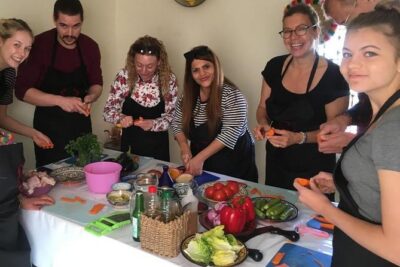
Moroccan Cooking Class & Marrakech Market Visit with Chef Khmisa
Read our review →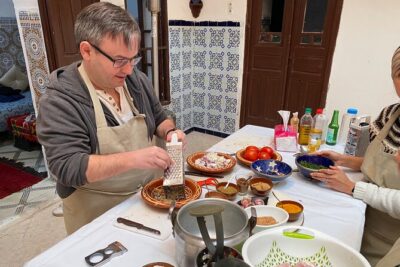
Half-Day Cooking Class with Local Chef Laila in Marrakech
Read our review →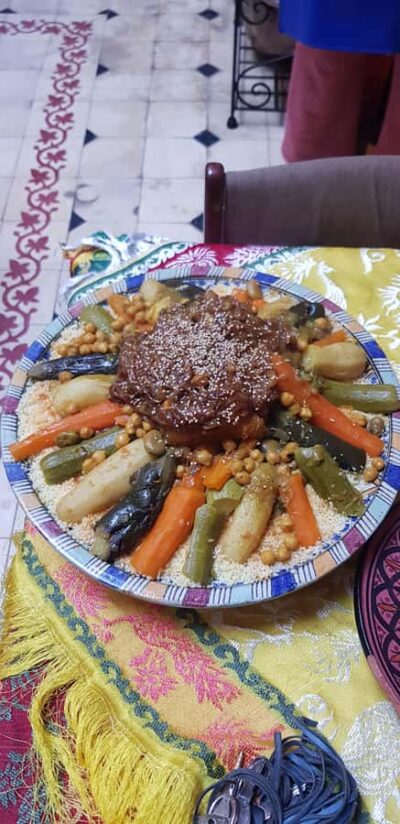
Marrakesh cooking class with chef Hassan – Local dishes
Read our review →Browse the lists this tour appears in