
Reviewed · MOROCCAN COOKING CLASSES
Half-Day Cooking Class with Local Chef Laila in Marrakech
The best part of this Marrakech cooking class is the mix of market know-how and family hospitality. Chef Laila first helps you choose herbs, spices, and produce, then brings you into the kitchen for Moroccan tea and a three-course meal. You do not need cooking experience, and the menu can be adjusted for allergies, vegetarians, and vegans.
I like two things here. First, you learn useful details, such as how to judge fresh produce and how Ras El Hanout shapes a Moroccan dish. Second, Laila’s family often joins the class, which gives the meal a warm, social feel. One point to check before booking: the market visit has not been included on every scheduled class, so confirm that part if it matters to you.
In This Review
- Key points at a glance
- Starting at 3 Rue Riad Zitoun el Jdid
- Choosing produce in a Marrakech market
- Moroccan tea before the cooking begins
- Making the main course with Ras El Hanout
- Finishing with dessert and a three-course meal
- What the teaching style is really like
- Why $34.76 is a strong value
- Who will enjoy this Marrakech cooking class
- Timing, weather, and cancellation advice
- Should you book Chef Laila’s class?
- FAQ
- How long does the cooking class last?
- Where does the class begin?
- Where does the activity finish?
- Can I choose a morning or afternoon session?
- Is the menu suitable for vegetarians and vegans?
- Will Chef Laila teach the class personally?
- What is the cancellation policy?
Key points at a glance
- Market shopping with Chef Laila: Learn how to choose fresh produce, herbs, and spices before cooking.
- Moroccan tea and a full meal: The class includes tea-making and a three-course lunch or dinner.
- Hands-on preparation: You help chop, prepare, season, and assemble traditional dishes.
- Flexible menus: Food allergies and vegetarian or vegan preferences can be discussed at the start.
- Family-led teaching: Laila may lead the class, or her son Hamza and other family members may teach when needed.
- Good value for a half-day: At $34.76 per person, you receive instruction, food, and a cultural experience lasting about four and a half hours.
Starting at 3 Rue Riad Zitoun el Jdid
The class begins at 3 Rue Riad Zitoun el Jdid, Marrakesh 40000, and finishes back at the same meeting point. That return to the starting place is useful in Marrakech, where an afternoon activity can otherwise leave you guessing how to get back to your riad.
You receive confirmation when you book, and the activity is available with a mobile ticket. The meeting point is near public transportation, though you should still allow time to find it. Marrakech’s old streets can be confusing, so keep the address ready on your phone and arrive with enough time to spare.
The class lasts about four hours and 30 minutes. You can choose a morning session that leads to lunch or an afternoon session that leads to dinner. Think of this as a substantial half-day plan, not a quick demonstration squeezed between sightseeing stops.
The maximum group size is 20 people. That is large enough to create a social mood, but it can also mean less individual time with the chef. Some sessions are smaller, and the kitchen is described as having enough room for people to cook and then sit down together. If you prefer quiet, one-on-one instruction, a group of up to 20 may feel busy.
More Cooking Classes in Marrakech
- Marrakech: Moroccan Cooking Class with Pickup
★ 4.6 · 1,862 reviews - Marrakech: Traditional Moroccan Cooking Class & Market Visit
★ 4.8 · 1,861 reviews - Marrakesh: Moroccan Dishes Cooking Class with a Local Chef
★ 5.0 · 1,615 reviews
Choosing produce in a Marrakech market
When the market portion runs as planned, it gives the class a useful beginning. You meet Laila and learn how she looks at the ingredients before they reach the cooking table. Instead of treating Moroccan food as a list of exotic seasonings, she connects the finished dish to the quality of its vegetables, herbs, and spices.
This is one of the more practical parts of the experience. You learn how to select fresh produce and get a closer look at the ingredients used in Moroccan home cooking. The focus is not just on buying food. It is on understanding how a cook makes decisions.
The market stop is also a good way to place the cooking in the setting of Marrakech. Moroccan food can seem mysterious when you encounter it only on a restaurant plate. Seeing the raw ingredients first helps you understand how simple produce, careful seasoning, and slow cooking come together.
There is an important qualification. The market visit did not happen in at least one reported class, even though it is part of the planned experience. If shopping for ingredients is a major reason you want to book, ask the provider in advance whether it will be included on your date.
Moroccan tea before the cooking begins
After choosing ingredients, the group heads to the cooking location. The session includes a lesson in making Moroccan tea, which gives you a small but meaningful cultural skill before the main work begins.
The tea lesson helps set the tone. You are not simply watching someone prepare a recipe while standing at the edge of a kitchen. You take part, learn a familiar Moroccan custom, and settle into the shared meal that follows.
The wording of the schedule refers to having breakfast at the cooking location, but the main format is a morning class with lunch or an afternoon class with dinner. I would treat the tea and shared meal as the clear focus rather than expect a separate breakfast service.
Making the main course with Ras El Hanout
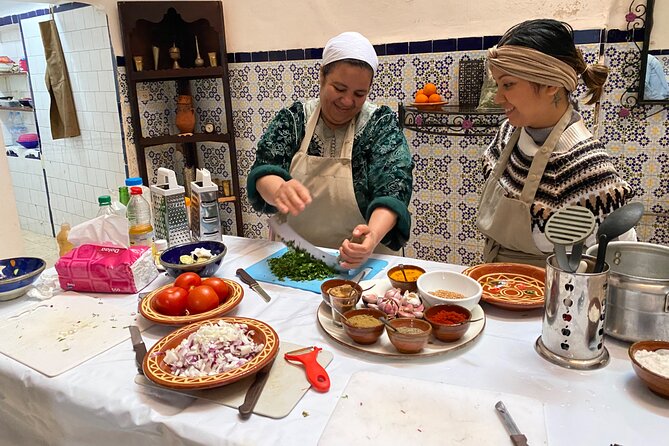
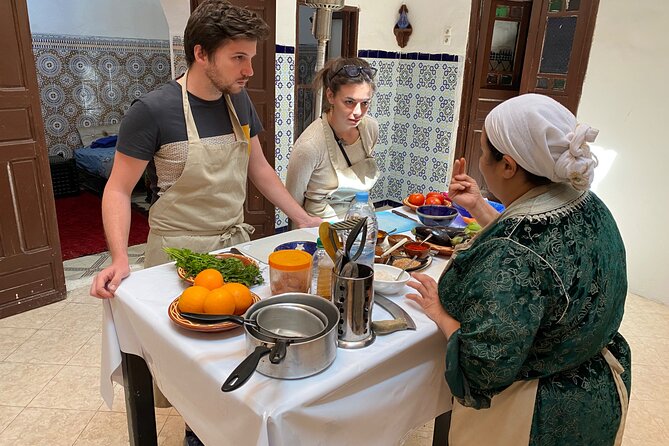
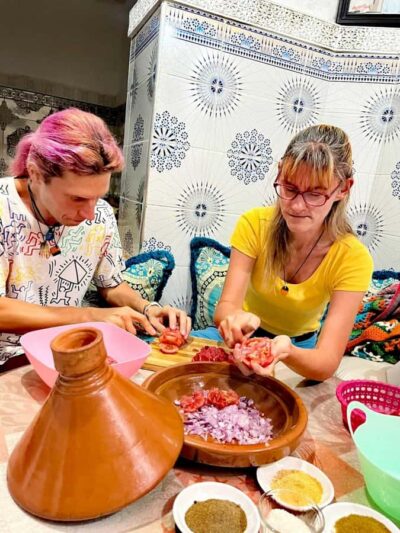
The class moves into the main cooking session with Ras El Hanout, the Moroccan spice blend used to season the principal dish. Laila explains the ingredients and the process, then guides you through the preparation.
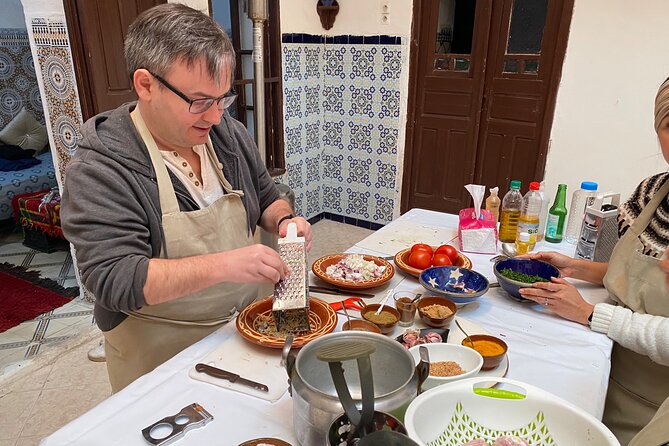
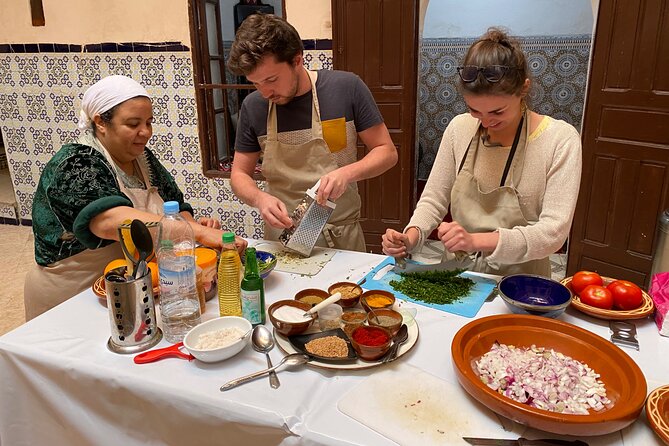
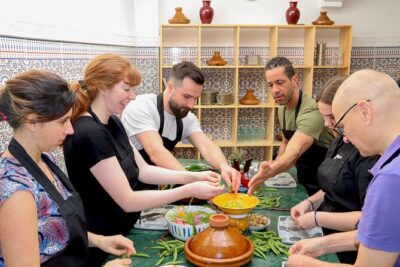
You should expect real participation, but not the structure of a professional culinary school. Previous class details describe plenty of chopping and preparation, with the group working through the recipe under direction. That is ideal if you want to handle ingredients and learn a dish you can repeat at home. It may disappoint you if you expect to cook every part from start to finish by yourself.
The menu is chosen after the group meets and discusses food allergies and preferences. Depending on the group, the meal can include Moroccan salads, a chicken tagine, a vegetarian tagine, and dessert. The exact dishes can vary, since the suitable menu is selected for the people attending.
That flexibility is helpful for mixed groups. One person can eat meat while another needs a vegetarian or vegan meal, and the class can be adapted. Still, discuss serious allergies clearly at the beginning. The available information confirms that the class can adapt for allergies, but it does not promise a separate kitchen or an allergen-free environment.
More Marrakech trips worth a second look
- Moroccan Cooking Class & Marrakech Market Visit with Chef Khmisa
★ 5.0 · 1,504 reviews - Marrakech: Moroccan Cooking Class with a Local Family
★ 4.9 · 668 reviews - Marrakech: Moroccan Cuisine Cooking Class in Local Home
★ 4.8 · 508 reviews - Marrakech: Moroccan Cooking Workshop at La Maison Arabe
★ 5.0 · 446 reviews
Finishing with dessert and a three-course meal
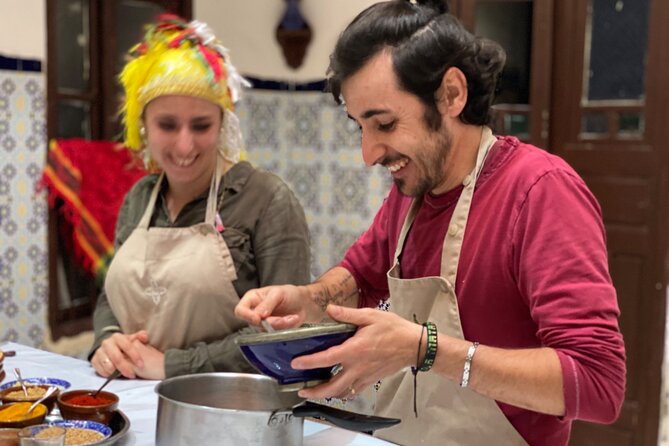
After the main course, you prepare dessert and complete the meal. The class is designed around an appetizer, main course, and dessert, so you are not left with a single dish and a short tasting.
This final stage matters because Moroccan cooking is built for sharing. You can see how the dishes work together rather than learning one isolated recipe. The meal may include several salads and tagines, and the portions can be generous. Bring an appetite.
The food is served after the preparation, with the group sitting down together. This is where the class shifts from instruction to a social meal. Laila and her family are involved in the hosting, and the atmosphere is often lively and informal. You can expect conversation, jokes, and encouragement to take part.
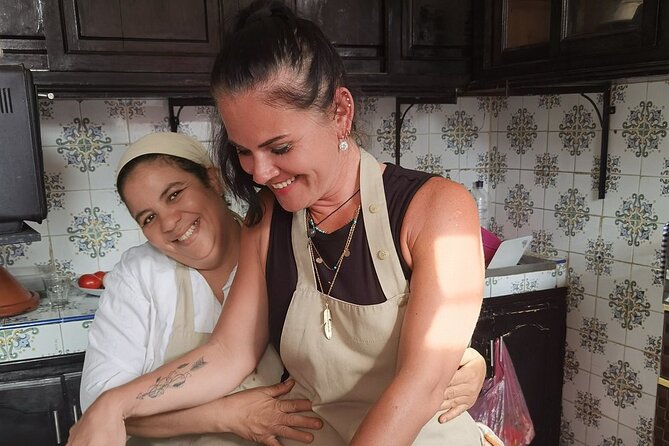
The family setting is a major reason this activity feels different from a standard cooking demonstration. Laila is described as warm, funny, and attentive to the people in the group. When she is unavailable, her son Hamza has led the class, sometimes teaching in both English and French. Her daughter, son, and other family members may also help with the cooking and meal.
That family involvement is a strength, though it also means the class may not feel identical every time. You are booking a family-run experience rather than a rigid, hotel-style course with one fixed instructor and a printed script.
What the teaching style is really like
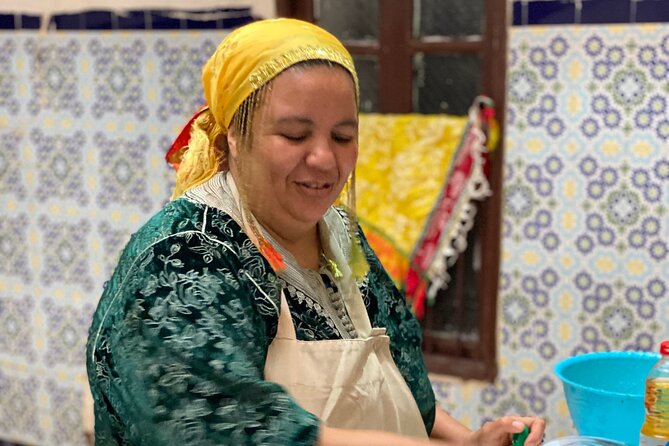
You do not need cooking skills for this class. The instruction is meant for ordinary home cooks, and the focus is on clear guidance, useful spice tips, and group participation.
I would describe the teaching style as friendly and practical. You will likely learn how ingredients are selected, how Moroccan spices are used, and how each preparation fits into the meal. The hosts encourage everyone to join in, so solo visitors, couples, families, and groups of friends can all take part.
The class is not likely to satisfy someone seeking advanced knife work, technical pastry instruction, or a certificate. One description of the experience notes that there was not much cooking in the strict sense, since much of the work involved chopping and preparation. That is not a flaw for most holidaymakers. It simply tells you what you are buying: a relaxed introduction to Moroccan home cooking, with hands-on work and a shared meal.
The language arrangement can vary. Hamza has taught in English and French, while the available details do not promise a specific language for every session. If you need instruction in one particular language, ask before booking.
Why $34.76 is a strong value
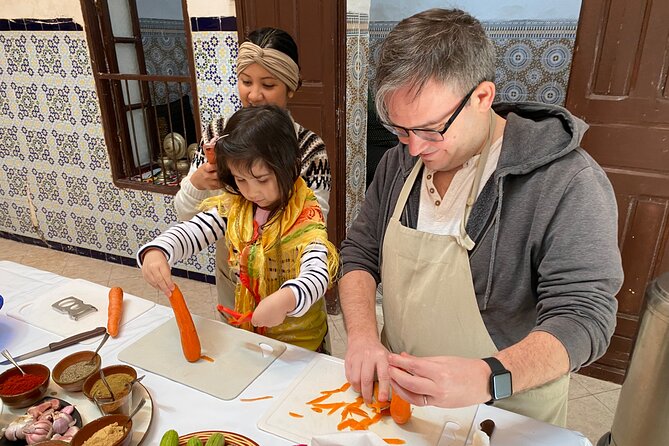
At $34.76 per person, this is inexpensive for a four-and-a-half-hour activity that includes food, instruction, and a cultural exchange. A meal in Marrakech may cost less or more depending on where you eat, but a restaurant meal will not usually include market guidance, tea-making, cooking practice, and recipes you can try again.
The value is strongest if you treat the class as both a meal and an activity. You are not paying only for a plate of tagine. You are using half a day to learn how Moroccan dishes are built, then eating what you helped prepare.
The price is less compelling if you mainly want a polished culinary lesson with lots of personal attention. With a maximum of 20 people, the experience can have a large-group feel. Your hands-on time may depend on the group size and how the kitchen work is shared.
The class is booked an average of 16 days ahead, which suggests you should not leave it until the last moment if your Marrakech dates are fixed. The published 98 percent recommendation rate and 4.9 rating from 953 reviews point to a consistently well-liked activity, but the practical details still matter more than the numbers. Check the market visit, language, menu, and instructor for your date.
Who will enjoy this Marrakech cooking class
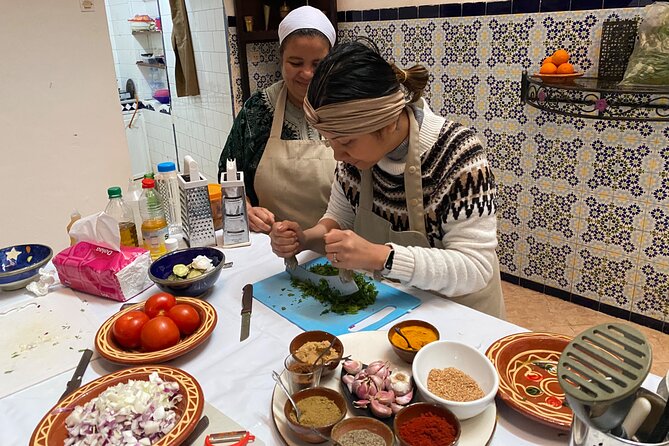
I would recommend it most strongly to you if you want to connect food with daily life in Morocco. It suits curious home cooks, families, couples, solo visitors who enjoy meeting people, and anyone who wants a break from monuments and restaurant tables.
Families can benefit from the relaxed approach and the family-led setting. No special skills are required, and younger participants can take part in simple preparation, though the supplied information does not state a minimum age.
It also works well for vegetarians and vegans because the menu can be adjusted. You should state your needs at the start, not assume the kitchen will know them automatically.
You may want a different activity if you want a small private lesson, a guaranteed market tour, or advanced culinary training. The group may be as large as 20, the market stop has not appeared in every session, and the work includes preparation as much as cooking.
Timing, weather, and cancellation advice
You can select a morning class for lunch or an afternoon class for dinner. Choose the morning if you want your main cultural activity finished early and prefer a substantial midday meal. Choose the afternoon if you want to spend the first part of the day sightseeing and cook later.
The experience requires good weather. If poor weather cancels the class, you are offered another date or a full refund. For your own cancellation, you receive a full refund if you cancel at least 24 hours before the start time. Cancellations or changes made within 24 hours are not refunded or accepted.
That 24-hour rule is worth noting if your Marrakech plans are flexible. Give yourself a buffer around arrival day, since a delayed flight or change of accommodation could otherwise cost you the booking.
Should you book Chef Laila’s class?
Yes, if you want good food, direct participation, and a warm family setting at a reasonable price. The strongest reasons to book are the produce lesson, Moroccan tea, Ras El Hanout, adaptable menus, and the chance to eat a full meal prepared by the group.
Go in expecting a social half-day rather than a formal chef school. You may chop more than you cook, the group may be sizable, and the market visit should be confirmed before you rely on it. With those points clear, this is a practical and enjoyable way to understand Moroccan food beyond the menu.
FAQ
How long does the cooking class last?
The experience lasts approximately four hours and 30 minutes.
Where does the class begin?
It begins at 3 Rue Riad Zitoun el Jdid, Marrakesh 40000, Morocco.
Where does the activity finish?
The class ends back at the meeting point.
Can I choose a morning or afternoon session?
Yes. You can choose a morning tour that leads to lunch or an afternoon tour that leads to dinner.
Is the menu suitable for vegetarians and vegans?
Yes. The menu can be adapted for vegetarian and vegan participants. Food allergies can also be discussed at the start of the class.
Will Chef Laila teach the class personally?
Chef Laila may lead the class, but her son Hamza or other family members may teach when she is unavailable.
What is the cancellation policy?
You can receive a full refund by canceling at least 24 hours before the experience start time. Cancellations and changes within 24 hours are not accepted, and the amount paid is not refunded.
More Half-Day in Marrakech
- Marrakech: Half-Day Desert Quad Tour with Camel Ride
★ 4.5 · 2,398 reviews - Marrakech: Half-Day Camel Ride in Palm Grove
★ 4.6 · 1,257 reviews - Marrakech: Private Guided Half-Day City Tour
★ 5.0 · 1,249 reviews - From Marrakech: Premium Agafay Desert Half-Day Quad Biking
★ 4.9 · 570 reviews
More Workshops in Marrakech
- Marrakech: Pottery Workshop with Moroccan Tea
★ 4.8 · 756 reviews - Marrakesh cooking class with chef Hassan – Local dishes
★ 5.0 · 425 reviews - Marrakech: Tajine Cooking Class in a Traditional Riad
★ 4.8 · 424 reviews - Moroccan Cooking Workshop in Marrakech
★ 5.0 · 407 reviews
Recently reviewed around Marrakech
- 4-Days Marrakech to Marrakech Désert Tour★ 5.0 · 17 reviews
- Camel ride at sunset in Marrakech palm grove★ 5.0 · 17 reviews
- Agafay camel ride★ 5.0 · 20 reviews
- Camel riding in marrakech★ 4.5 · 17 reviews
- Marrakech to Atlas Mountains and 4 Valleys Day Trip★ 5.0 · 17 reviews
- Agafay Desert Adventure, Culture, and Relaxation, From Marrakech★ 5.0 · 25 reviews
- Dinner Show & camel ride with sunset views★ 5.0 · 192 reviews
- Quad excursion to the Agafay desert near Marrakech★ 5.0 · 44 reviews
Moroccan Cooking Classes, compared.
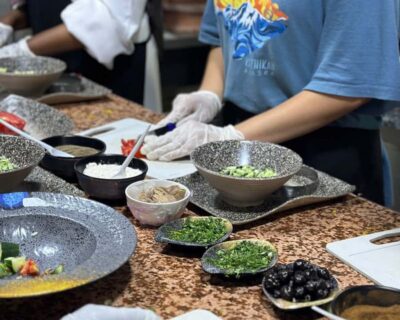
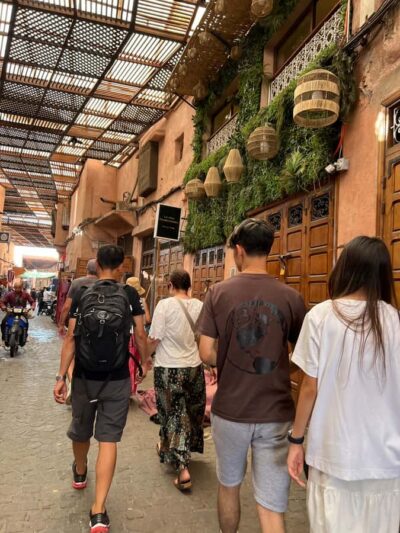
Traditional Moroccan Cooking Class & Market Visit
Read our review →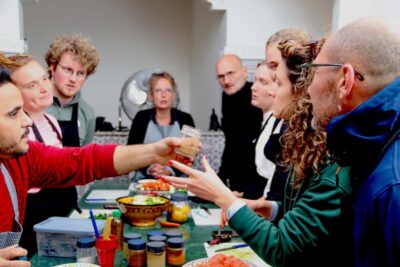
Moroccan Dishes Cooking Class with a Local Chef
Read our review →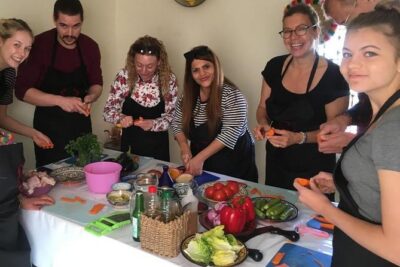
Moroccan Cooking Class & Marrakech Market Visit with Chef Khmisa
Read our review →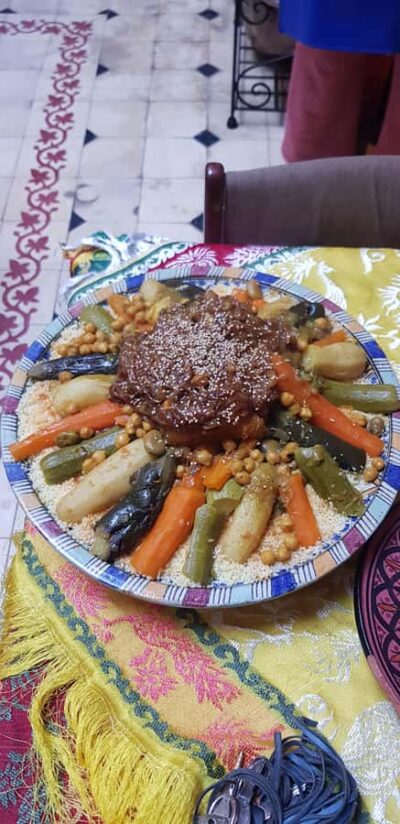
Marrakesh cooking class with chef Hassan – Local dishes
Read our review →Browse the lists this tour appears in