
Reviewed · MOROCCAN COOKING CLASSES
Marrakech: Moroccan Cooking Class with a Local Family
Moroccan cooking makes more sense once you understand the spices, the slow cooking, and the habit of building a meal from many small dishes. This four-hour class takes you into a family home or riad in the Medina, where you prepare Moroccan salads, briwat, tagine, couscous, or dessert before sitting down to eat it together.
I like the hands-on format, since everyone gets a turn with chopping, seasoning, and preparing the dishes. I also like the easy cultural exchange over tea, coffee, or juice, especially with teachers such as Fatima and Yasser, who make room for questions and conversation. The main consideration is that you do not always visit a market, despite what some descriptions may suggest. The time is usually spent cooking instead.
In This Review
- Key points to know before booking
- Why this cooking class feels different from a restaurant meal
- Meeting Fatima or Yasser in the Medina
- Learning Moroccan spices before you cook
- Preparing the starter, main course, and dessert
- A truly hands-on lesson, with room for every skill level
- The shared meal is the reward
- Recipes that make the class worth more than four hours
- Who should book this Marrakech cooking class?
- Should you book it?
- FAQ
- Where does the Marrakech cooking class meet?
- How long does the cooking class last?
- What food will I prepare?
- Is the meal included?
- Are cooking equipment and ingredients included?
- Can I join if I am vegetarian or vegan?
- Is the class offered in English?
- Is transport included?
- Can I cancel or pay later?
Key points to know before booking
- The class takes place in a Moroccan home or riad: You get a look at family life, not just a restaurant kitchen.
- You cook several parts of the meal: Expect a starter, main dish, and dessert, with everyone involved.
- Fatima and Yasser are the main teachers: Both are described as warm, patient, funny, and good at including children and quieter participants.
- Spice instruction is practical: You learn what common Moroccan spices taste like and how to choose them in the souks.
- The final meal is part of the lesson: You eat the food you helped prepare, along with drinks and cookies.
- Recipes are sent afterward: You can try the dishes at home, and some bookings also include preparation videos.
Why this cooking class feels different from a restaurant meal
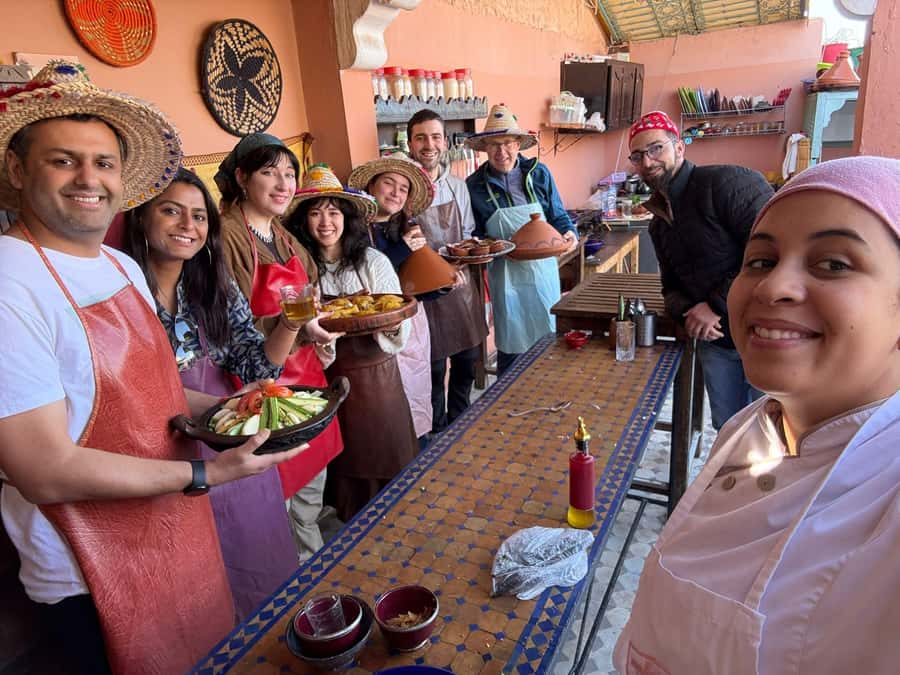
A restaurant lets you taste Moroccan food. This class shows you how the meal comes together, and that difference matters.
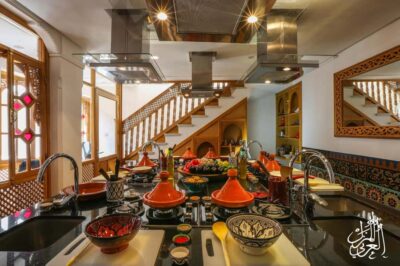
You begin at the meeting point in front of Andalusia Restaurant, next to Mohamed 5 High School. From there, the chef or greeter takes you to an authentic Moroccan house in the heart of the Medina. The exact cooking room may be a family home, a riad, or a rooftop area within the riad. One useful tip: bring a light jacket in the cooler months, since some sessions take place outdoors on a terrace.
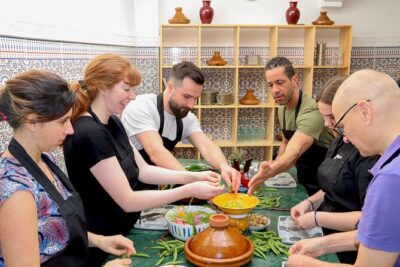
The welcome is informal. You are offered Moroccan tea, coffee, juice, or cookies, and the conversation starts before the knives come out. This opening gives you time to meet the family and the other people in your group. Groups can include couples, families, children, and people from several countries, so the mood is social rather than formal.
That family setting is the heart of the experience. You are not simply shown a polished dish by a chef who does everything while you watch. The aim is to have you involved from the start. If you have basic cooking skills, you can follow along. If you cook often, you will still pick up Moroccan methods, knife tips, spice combinations, and ideas about avoiding food waste.
More Cooking Classes in Marrakech
- Marrakech: Moroccan Cooking Class with Pickup
★ 4.6 · 1,862 reviews - Marrakech: Traditional Moroccan Cooking Class & Market Visit
★ 4.8 · 1,861 reviews - Marrakesh: Moroccan Dishes Cooking Class with a Local Chef
★ 5.0 · 1,615 reviews
Meeting Fatima or Yasser in the Medina
The teacher may be Chef Fatima, Yasser, or another member of the cooking team. Fatima is especially praised for her patience and for getting children involved. Yasser is known for keeping the class moving, explaining techniques clearly, and using humor to create a relaxed group.
Both teaching styles suit a mixed group. You do not need to arrive as an experienced cook. Instructions are broken into manageable tasks, and the chef makes sure people are not left standing at the edge of the room. This is important in a group class, where one confident cook can otherwise take over.
The meeting point is easy enough to identify, but Medina directions can still be confusing. The instruction is to meet in front of Andalusia Restaurant, beside Mohamed 5 High School. Transport is not included, so you make your own way there. Allow extra time if you are walking through unfamiliar lanes, and keep the meeting details available on your phone.
The class is listed as wheelchair accessible. Since the experience may use a riad or rooftop space, it is sensible to confirm the exact setup when booking if you have specific mobility needs.
Learning Moroccan spices before you cook
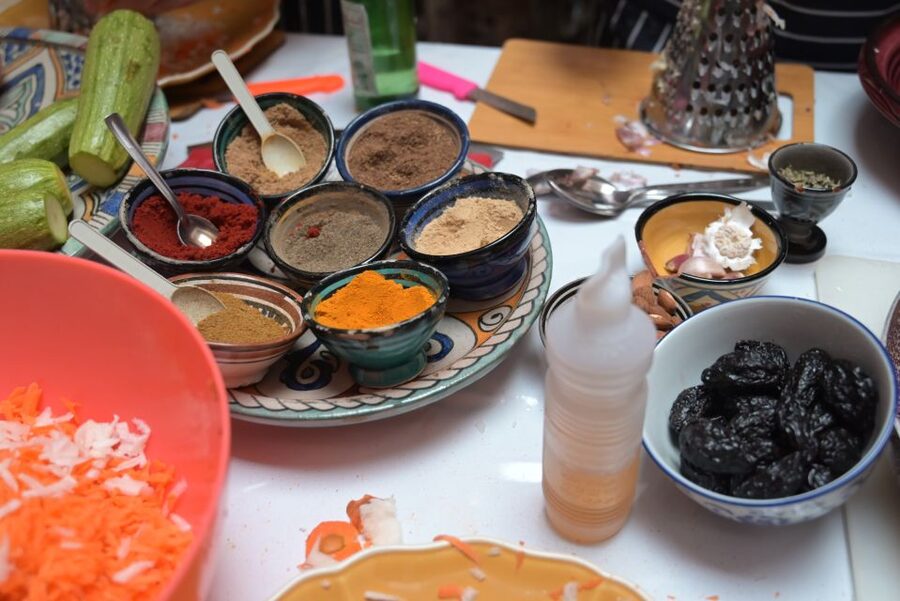
The first teaching section focuses on spices and ingredients. This is more useful than it may sound. Moroccan food often depends on balance rather than heat alone, and it helps to understand the difference between the earthy, sweet, floral, and savory notes in the spice box.
You are shown spices commonly used in Moroccan cooking and can taste them as part of the explanation. The chef also discusses vegetables and other ingredients used in the region. If you plan to shop in the souks, this lesson gives you a better basis for choosing ingredients and avoiding poor-quality or overpriced purchases.
The practical shopping advice is one of the class’s strongest extras. You learn what the spices should smell and taste like, rather than buying them based only on color or a shopkeeper’s suggestion. One participant even received freshly milled spices to take home, although that should not be treated as a standard inclusion.
This is also the point where you can discuss the menu. The chef suggests dishes based on the available ingredients and the group’s needs. Vegetarian, vegan, and allergy-friendly menus can be arranged, so mention restrictions before cooking begins.
Preparing the starter, main course, and dessert
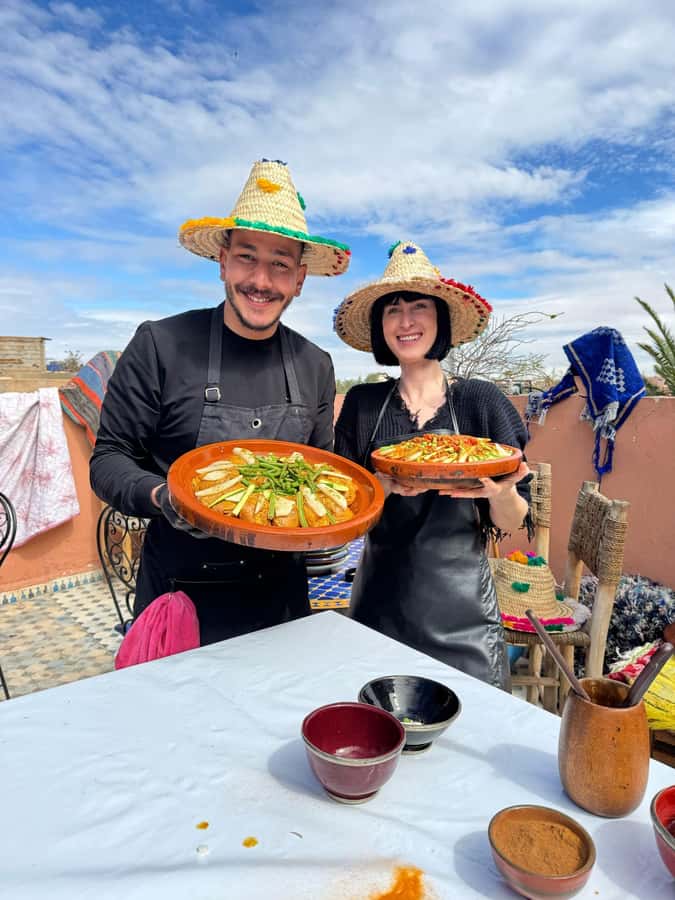
The class generally builds a full Moroccan meal in stages. The exact menu can change, but the format is clear: you prepare a starter, a main dish, and a dessert.
The starter may be Moroccan salads or briwat. Moroccan salads are often served as several small preparations, giving you practice with seasoning and presentation. Briwat adds a different skill, since the pastry needs careful handling and can be filled with savory or sweet mixtures.
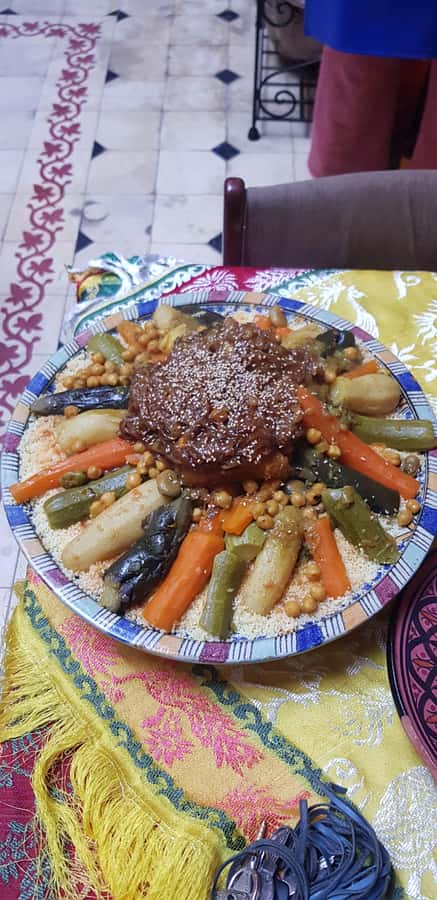
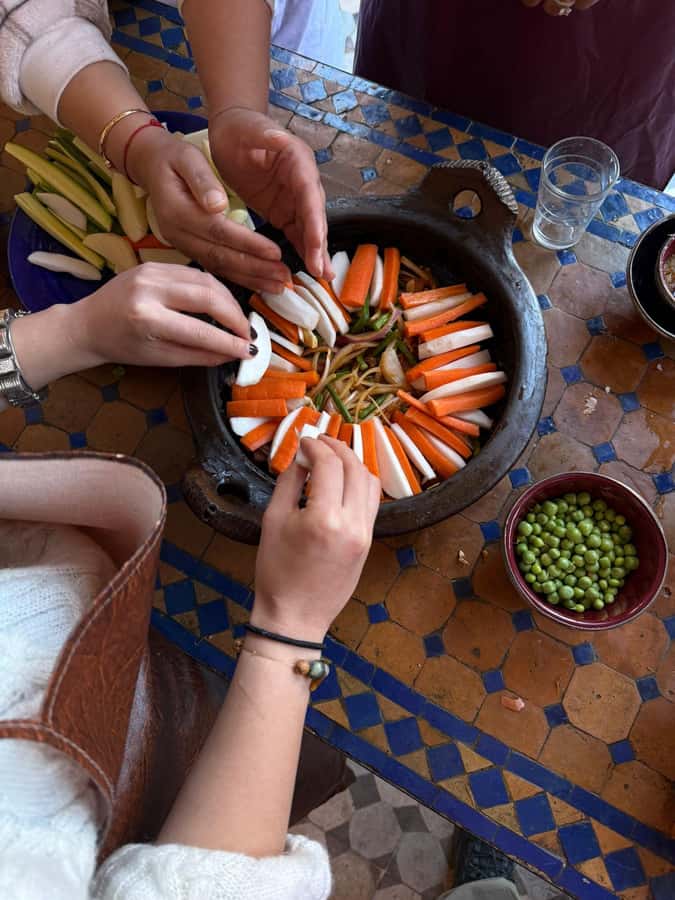
The main dish may be tagine, couscous, or tanjia. Tagine is the most frequently mentioned choice, and the class gives you useful instruction on how to layer ingredients and work with the distinctive cooking vessel. You learn more than a list of ingredients. The chef explains the order of preparation, the spice balance, and the methods that help the food cook slowly and stay flavorful.
Couscous brings a different rhythm to the meal, while tanjia offers a glimpse of another Moroccan specialty. The class description lists all three, but it does not promise that every dish will be prepared in every session. Ask about the day’s menu if one particular dish is your main reason for booking.
The dessert completes the meal. It is described as light in at least one menu, but the precise recipe may vary. Since the class is built around shared preparation, you may not personally handle every step. One participant noted that assisting staff took care of cleaning the chicken and heating some dishes. That is a small limitation if you want a fully professional-kitchen-style lesson, but it also keeps the class moving and the cooking area manageable.
More Marrakech trips worth a second look
- Moroccan Cooking Class & Marrakech Market Visit with Chef Khmisa
★ 5.0 · 1,504 reviews - Half-Day Cooking Class with Local Chef Laila in Marrakech
★ 5.0 · 952 reviews - Marrakech: Moroccan Cuisine Cooking Class in Local Home
★ 4.8 · 508 reviews - Marrakech: Moroccan Cooking Workshop at La Maison Arabe
★ 5.0 · 446 reviews
A truly hands-on lesson, with room for every skill level
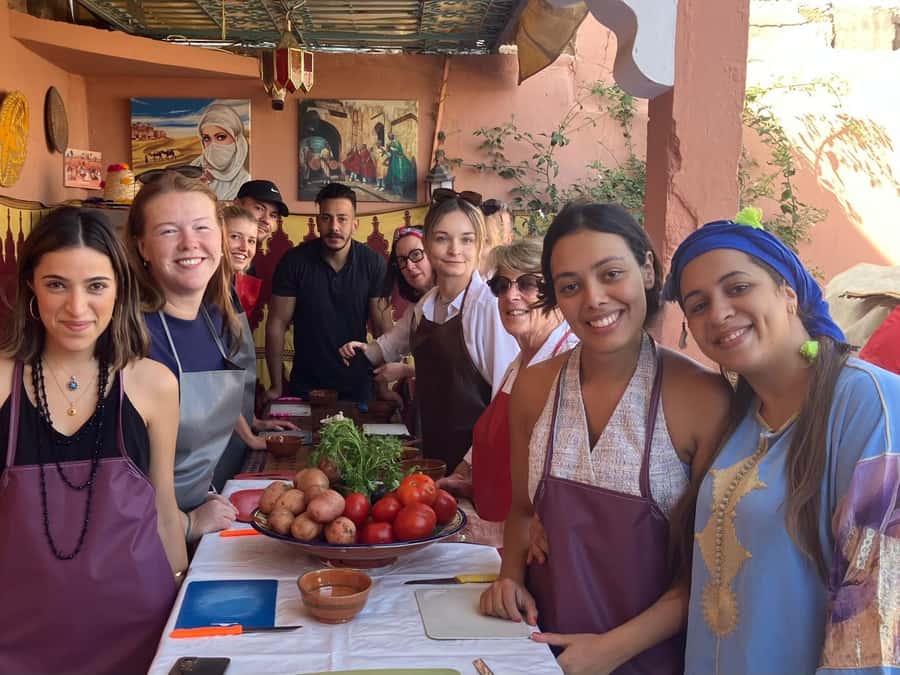
The best part of the class is the division of work. You might chop vegetables, prepare side dishes, season a tagine, work with pastry, or help with dessert. The cooking team tries to give each person a task, and several families found that children could take part as well.
Knife skills receive special attention. You learn different ways to cut ingredients and how to work neatly without wasting food. These are simple lessons, but they travel well. They are the kind of small techniques you can use in your own kitchen long after the holiday ends.
The class also works for mixed groups. One family described having cooks ranging from beginner to experienced, with everyone finding something useful to learn. That is a good sign for parents or groups of friends who do not all cook at the same level.
Still, do not expect a private lesson with the chef focused only on you. The atmosphere is communal, and the teacher has to share time among the participants. If the group is larger, you may spend part of the session watching another person complete a task. Smaller groups offer more direct contact, but group size can vary.
The shared meal is the reward
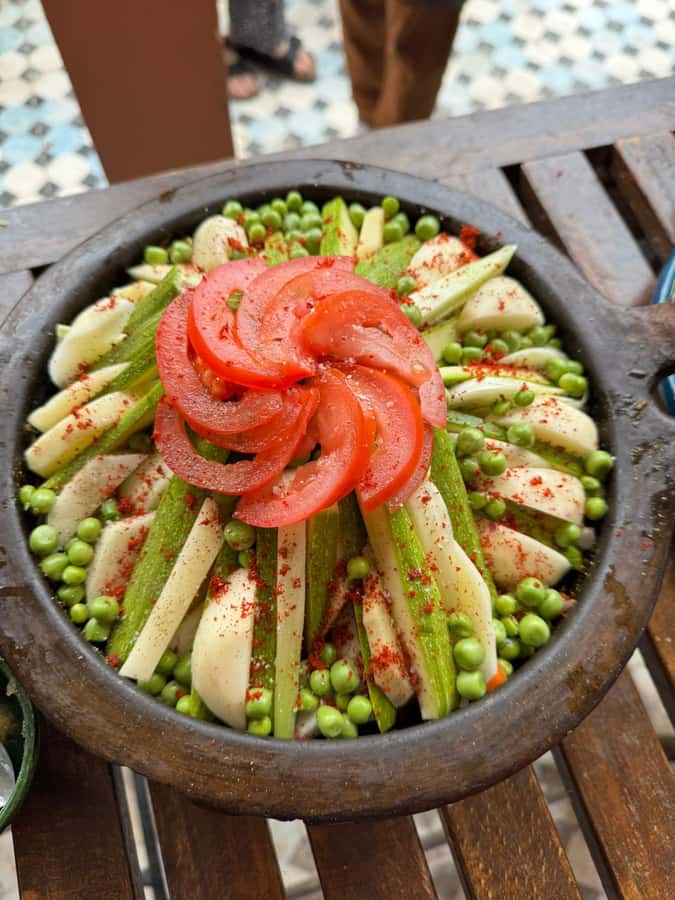
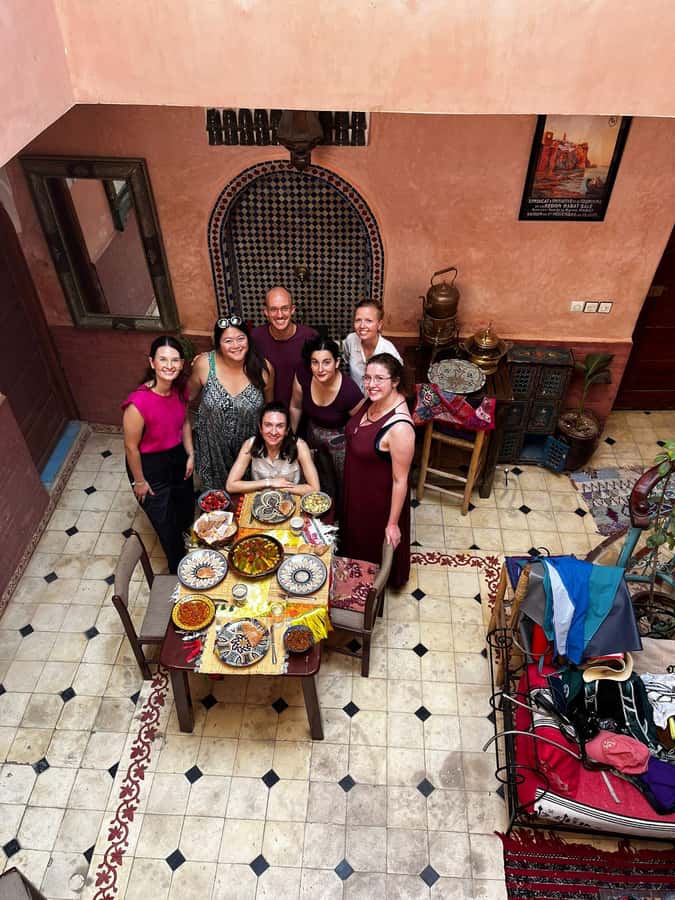
After the cooking, you sit down with the family and eat what the group prepared. Drinks and the meal are included, and Moroccan tea, coffee, juice, and cookies are part of the welcome and refreshment service.
There is real satisfaction in eating a tagine or plate of salads that you helped make. You understand the ingredients better, and you can compare how the separate dishes work together. A meal built from several side dishes also gives you a clearer sense of Moroccan table customs than ordering one main course in a restaurant.
Many people consider this the best meal of their Marrakech stay. That is subjective, of course, and restaurant quality varies widely. The fair point is that freshness, shared effort, and the chance to adjust seasoning make the food especially memorable.
The setting adds to the meal. Some sessions take place on a cozy riad rooftop, and the family atmosphere makes the final sitting feel less like a class and more like a home meal. The Andalusian restaurant downstairs is also part of the setting around the meeting area, though eating there is not the stated purpose of this activity.
Recipes that make the class worth more than four hours
A cooking class has lasting value only if you can repeat the dishes at home. Recipes are provided after the experience, usually as PDFs, and some participants also received videos showing how to make the food.
That follow-up material changes the value calculation. At $33 per person, you are paying not just for four hours of instruction, but also for a meal, drinks, equipment, cultural conversation, and a set of recipes you can use later. Transport is not included, but the meeting point is central enough for you to arrange your own way there.
The class is particularly good early in your Marrakech visit. The spice lesson can help you shop more wisely in the souks, and the chef may offer useful suggestions about ingredients, tajines, and local food. It also gives you a friendly way to meet other people and exchange practical tips about the city.
You should not book it mainly as a market tour. Some sessions use fresh vegetables bought in the morning, and the afternoon class may go directly into cooking. If shopping for ingredients is essential to you, ask before booking. If you would rather spend the time learning knife skills and preparing food, the cooking-heavy format is a benefit.
Who should book this Marrakech cooking class?
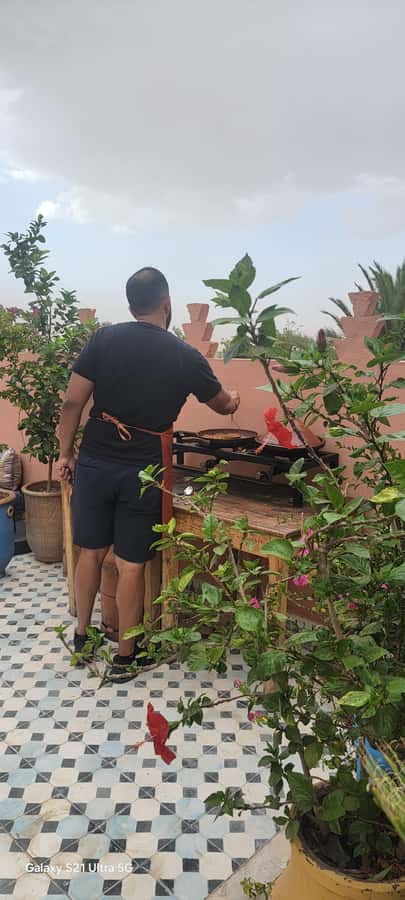
I would recommend it to families, couples, solo visitors who enjoy meeting people, and anyone who wants more than a standard food tasting. Children can take part, and the chefs are used to mixed abilities. The class also works well for vegetarians, vegans, and people with food allergies, provided you communicate those needs in advance.
It is less suitable if you want a quiet, private meal or a tightly scripted professional demonstration. The class depends on group participation and conversation. You may also find the setting less polished than a cooking school, although that is part of its local character.
The language support is strong. The host or greeter can speak English, French, and Arabic, which helps when discussing ingredients and cooking methods. The tone is friendly and practical, not academic.
Cancellation is flexible: you can cancel up to 24 hours ahead for a full refund, and reserve now while paying later. Starting times depend on availability, so check the schedule that fits your day.
Should you book it?
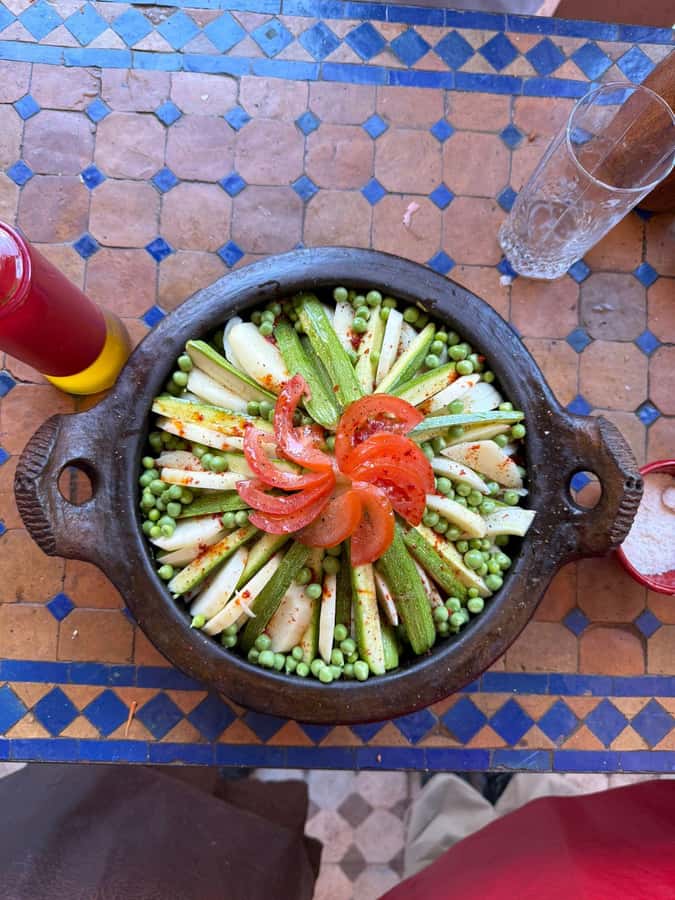
Book this class if you want to cook a real Moroccan meal, learn what you are buying in the souks, and spend an afternoon with a local family. The $33 price is excellent value for four hours that include instruction, equipment, drinks, and the meal itself, especially with recipes sent afterward.
Go in expecting a social cooking session, not a market excursion or private chef lesson. Choose it early in your stay, tell the host about dietary needs, wear comfortable clothes, and bring a jacket in cooler weather. If those details suit you, this is one of the more useful and personal food experiences you can add to a Marrakech visit.
FAQ
Where does the Marrakech cooking class meet?
The meeting point is in front of Andalusia Restaurant, next to Mohamed 5 High School.
How long does the cooking class last?
The activity lasts four hours.
What food will I prepare?
The class includes a starter, a main dish, and a Moroccan dessert. Depending on the menu, you may prepare Moroccan salads, briwat, tagine, couscous, or tanjia.
Is the meal included?
Yes. The meal you prepare is included, along with drinks. Drinks and cookies are also provided.
Are cooking equipment and ingredients included?
Cooking equipment and the cooking lesson are included. The chef explains the ingredients and spices used during the class.
Can I join if I am vegetarian or vegan?
Yes. Vegetarian and vegan menus are available, and allergies are not described as a problem. Tell the host about your needs before the class.
Is the class offered in English?
Yes. The host or greeter can speak English, French, and Arabic.
Is transport included?
No. Transport to and from the meeting point is not included.
Can I cancel or pay later?
You can cancel up to 24 hours in advance for a full refund. The activity also allows you to reserve now and pay later.
More Workshops in Marrakech
- Marrakech: Pottery Workshop with Moroccan Tea
★ 4.8 · 756 reviews - Marrakesh cooking class with chef Hassan – Local dishes
★ 5.0 · 425 reviews - Marrakech: Tajine Cooking Class in a Traditional Riad
★ 4.8 · 424 reviews - Moroccan Cooking Workshop in Marrakech
★ 5.0 · 407 reviews
Recently reviewed around Marrakech
- 4-Days Marrakech to Marrakech Désert Tour★ 5.0 · 17 reviews
- Camel ride at sunset in Marrakech palm grove★ 5.0 · 17 reviews
- Agafay camel ride★ 5.0 · 20 reviews
- Camel riding in marrakech★ 4.5 · 17 reviews
- Marrakech to Atlas Mountains and 4 Valleys Day Trip★ 5.0 · 17 reviews
- Agafay Desert Adventure, Culture, and Relaxation, From Marrakech★ 5.0 · 25 reviews
- Quad excursion to the Agafay desert near Marrakech★ 5.0 · 44 reviews
- Camel ride and dinner Agafay desert★ 5.0 · 25 reviews
Moroccan Cooking Classes, compared.
Traditional Moroccan Cooking Class & Market Visit
Read our review →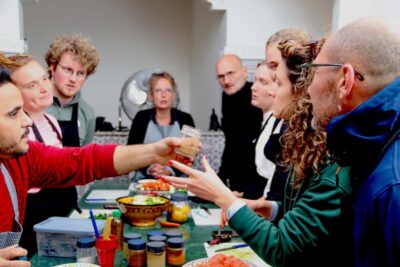
Moroccan Dishes Cooking Class with a Local Chef
Read our review →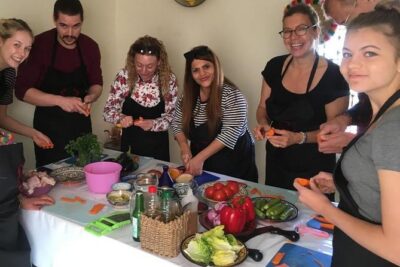
Moroccan Cooking Class & Marrakech Market Visit with Chef Khmisa
Read our review →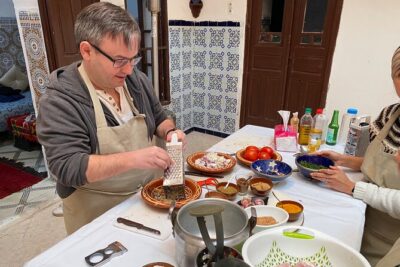
Half-Day Cooking Class with Local Chef Laila in Marrakech
Read our review →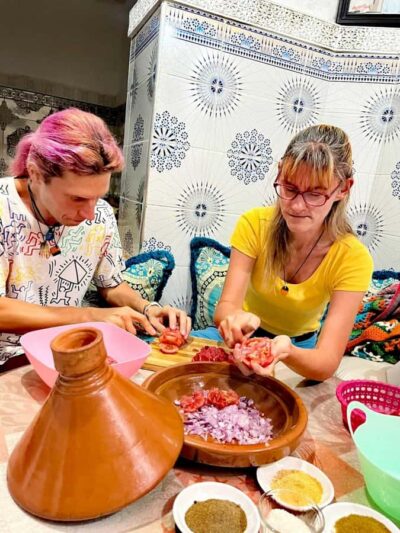
Marrakesh cooking class with chef Hassan – Local dishes
Read our review →Browse the lists this tour appears in