
Reviewed · MOROCCAN COOKING CLASSES
Traditional Moroccan Cooking Class
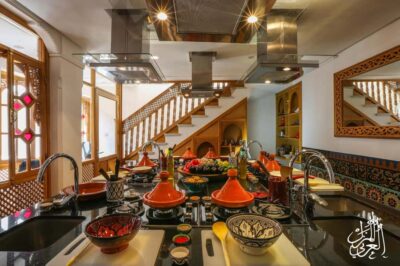
The best part of this Essaouira cooking class starts before you reach the kitchen. Fatima takes you through local markets to choose vegetables, spices, meat, fish, or poultry, then brings you home for a Moroccan meal made from those ingredients. I like the market visit and the chance to cook in a real home, rather than a purpose-built classroom.
I also like the personal touch: Fatima shares recipes from her grandmother, explains how to use a tagine, and serves mint tea during the visit. The main consideration is that this may feel more like a shared home meal with guided preparation than a formal, hands-on culinary school class. One past participant found they prepared vegetables more than they cooked, so expectations matter.
In This Review
- Key points to know
- From Bab Marrakech to Essaouira’s food markets
- Mint tea and a welcome inside Fatima’s home
- Learning tagine, couscous, and Moroccan basics
- What the four-hour schedule feels like
- Eating the food you helped prepare
- Is $39 a fair price in Essaouira?
- Who should book this Essaouira cooking class?
- Booking, cancellation, and small practical details
- FAQ
- How long is the Traditional Moroccan Cooking Class?
- What time does the cooking class start?
- Where does the activity begin?
- Where does the activity end?
- What dishes can I learn to cook?
- Is pastilla included?
- Is this a private activity?
- Can I cancel for a full refund?
- Should you book it?
Key points to know
- Market shopping comes first: Choose fresh ingredients with Fatima in Essaouira’s local markets, including a Sunday market when available.
- Fatima hosts you at home: The setting is personal, relaxed, and closely tied to everyday Moroccan life.
- Dishes can vary: Tagine, couscous, Harira soup, Moroccan bread, zaalouk, aubergine salad, and sardine tagine have all featured.
- Pastilla is excluded: This elaborate pastry takes too long for the four-hour format.
- You eat what you prepare: The class ends around a shared meal with Berber mint tea.
- Good value at $39: For four hours of food shopping, instruction, cooking, and lunch, the price is modest.
From Bab Marrakech to Essaouira’s food markets
Your morning begins at 9:30 am at Parking Bab Marrakech, Place Bab Marrakech, in Essaouira. The market area is a useful starting point because you can meet Fatima before heading into the food stalls and shops.
The tour description also refers to meeting in Place de l’Horloge, so I would confirm the exact meeting spot with Fatima before the day begins. The formal meeting point is listed as Bab Marrakech, but a quick message can prevent a needless search around the medina.
The shopping is not a quick stop for a preselected basket of ingredients. Fatima takes you through the market and helps choose what will go into the meal. Depending on the menu, that may mean vegetables, spices, bread ingredients, fish, or poultry. One especially local detail is the chance to see spices ground for your own meal. You may also help select a chicken or other main ingredient rather than simply receiving something already prepared.
That matters because Moroccan cooking depends on small choices. Fresh produce, the right spice blend, and the condition of the main ingredient all affect the finished dish. At $39 per person, the market visit adds real value. You are not just paying for a demonstration. You are seeing how food is bought and selected in Essaouira.
The market portion can also be the liveliest part of the morning. It gives you a chance to ask about ingredients before you handle them in the kitchen. If you are curious about Moroccan food but do not know the names of the spices or vegetables, this is where the class begins to make sense.
The pace may be relaxed rather than tightly timed. Shopping for a shared meal depends on what is available and how much explanation you want. That is good for people who enjoy conversation, but less ideal if you want a quick, highly structured itinerary.
More Essaouira trips worth a second look
- l’Atelier – Moroccan Cooking Workshop in Essaouira
★ 5.0 · 110 reviews - Essaouira: Traditional Family Style Moroccan Cooking Class
★ 5.0 · 58 reviews - Traditional Moroccan and Berber cooking classes
★ 5.0 · 40 reviews
Mint tea and a welcome inside Fatima’s home
After shopping, Fatima welcomes you into her home with Moroccan mint tea. This transition is part of the experience, not just a short pause before the cooking begins. You move from the public market into a family setting, where food preparation feels connected to hospitality.
Fatima’s husband has also helped welcome participants, and the home setting gives the activity a warm, personal tone. You can ask questions about ingredients, preparation, and local food customs while the meal takes shape. The atmosphere is described as friendly and relaxed, with time for conversation as well as cooking.
I would choose this class if you want to see a side of Essaouira that a restaurant meal cannot provide. A restaurant can serve you a good tagine. Here, you get a look at the kitchen, the shopping choices, and the small steps that lead to the meal.
The trade-off is that a private home is not a professional teaching kitchen. You should expect a comfortable, informal setting rather than individual workstations, printed lesson plans, or a chef demonstrating every technique in silence. The focus is on sharing food and learning practical family methods.
The experience is advertised as a private activity, with only your group participating. The information does not state a maximum group size, so ask about the number of places if that affects your decision. Some descriptions of the day refer to cooking alongside other people, which suggests the social feel can vary. Confirming the group arrangement in advance is sensible.
Learning tagine, couscous, and Moroccan basics
The central lesson focuses on familiar Moroccan dishes. Fatima teaches tagine and couscous step by step, and she may also include Harira soup or Moroccan bread. Other dishes associated with the class include zaalouk, aubergine salad, vegetable tagine, and fresh sardine tagine.
This flexibility is one of the class’s strengths. If sardines are fresh and appealing, you may cook a fish tagine. If you prefer vegetables, the menu can include a vegetable tagine and zaalouk. One couple was able to choose what they wanted to cook, but menu choice is not formally guaranteed, so discuss preferences when booking.
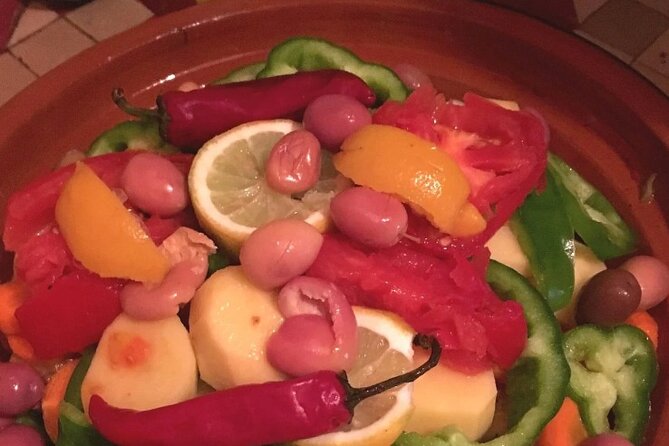
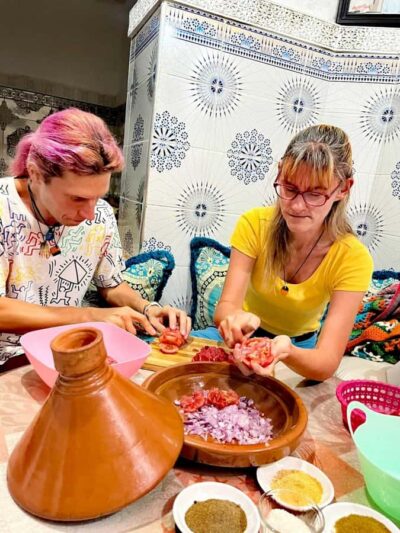
A tagine lesson is especially useful because the dish is more than a pot with a pointed lid. You learn how ingredients are layered, how spices are used, and how a slow cooking method builds flavor. Fatima also gives advice about buying good spices, which is useful if you plan to recreate the meal at home.
Couscous receives step-by-step attention in the description. That is worth noting because couscous preparation can involve more care than simply pouring hot water over grains. The exact method taught may depend on the menu and the time available, but Fatima’s family recipes give the lesson a personal connection.
Moroccan bread can be another practical addition. Bread is not only something to eat with a meal. It is part of how the meal is enjoyed, especially alongside sauces and salads. Harira, the traditional Moroccan soup, offers a different lesson in seasoning and texture.
The experience is not built around showy chef techniques. It is about learning dishes that you could reasonably try again at home. Fatima is patient and encouraging, and she explains where ingredients come from and how to use them. That makes the class suitable for beginners.
Still, do not book this expecting four hours of constant knife work. The preparation is shared, and Fatima may handle some steps herself. One less satisfied participant felt the activity was mainly a meal with vegetable preparation and some explanation. I see that as the clearest warning: this is a home cooking experience first, and a technical cooking course second.
What the four-hour schedule feels like
The activity lasts about four hours, starting at 9:30 am. A likely rhythm is market shopping in the morning, tea and preparation at home, cooking, and a meal before returning to the meeting point.
The schedule has enough room for a proper lunch and conversation. It is not just a one-hour demonstration squeezed between sightseeing stops. That longer format gives you time to ask about recipes, taste the food, and understand the connection between shopping and cooking.
The end point is back at the meeting point. Since the activity begins near Bab Marrakech and returns there, it is easy to fit into a day of exploring Essaouira. You might schedule it on a morning when you do not have another fixed tour immediately afterward. Market shopping and a shared meal can take longer if the group is enjoying the conversation.
The 9:30 am start is practical for a cooking day. You see the markets while shopping for the main meal, then eat around lunchtime. If you are staying in the medina, Bab Marrakech is a clear place to begin, though you should allow time to find the exact meeting location.
The tour has a mobile ticket, and confirmation is provided at booking. Public transportation is nearby. The supplied information says all can attend, but it does not explain specific arrangements for wheelchairs, dietary restrictions, or kitchen access, so ask Fatima directly if you need those details.
A different kind of day out, same corner of Morocco:
- From Marrakech: Essaouira & Atlantic Coast Full-Day Trip
★ 4.4 · 1,100 reviews - Big dunes and atlantic coast tour 2 HOURS
★ 5.0 · 439 reviews - Essaouira: Surf Lessons
★ 4.9 · 412 reviews - 3 hours ride on camel at sunset
★ 5.0 · 326 reviews
Eating the food you helped prepare
The meal is the payoff, but it is also part of the lesson. You sit down with the food made during the session and finish with Berber mint tea. Depending on the day’s menu, you might eat tagine with couscous, Moroccan bread, zaalouk, aubergine salad, soup, or sardines.
The food is repeatedly described as flavorful and satisfying, with particular praise for tagine, aubergine salad, and vegetable dishes. That makes sense: Moroccan cooking gets much of its character from spice balance, slow cooking, fresh produce, and sauces that are meant to be shared.
Mint tea appears at more than one point in the experience. It is served on arrival and again with the finished meal, sometimes with biscuits. This gives the class an unhurried social rhythm. You are not expected to cook, eat, and leave at once.
If you enjoy food photography, the market ingredients and finished tagine provide natural subjects. More important, you leave with recipes and methods you can try at home. One useful feature is the chance to ask questions while the dish is being made, instead of trying to remember a demonstration afterward.
The menu is not a fixed list of every classic Moroccan dish. Pastilla is specifically not included because it takes too much time. That is a reasonable limit for a four-hour session, but it is worth knowing if pastilla is the dish you most want to learn.
Is $39 a fair price in Essaouira?
At $39 per person, this is a good-value food experience if you want more than a restaurant lunch. The price covers roughly four hours, market shopping, ingredients, instruction, tea, and the meal. It also pays for the time involved in welcoming you into a home and cooking with you.
The value is strongest for a first visit to Morocco. You get a practical introduction to local shopping, common dishes, spices, and hospitality in one outing. A private format can also make the price attractive for couples, families, or small groups who want a more personal session.
The value is weaker if your main goal is advanced technique. You may not spend equal time cooking every dish yourself, and the menu can vary. Someone seeking a professional certificate, precise measurements, or intensive knife and stove practice should choose a formal culinary school instead.
For most visitors, the combination of food, company, and local context makes the cost reasonable. You are paying for a shared afternoon or morning as much as for a recipe lesson. That distinction helps explain why the activity appeals so strongly to people who want a real connection with Essaouira.
Who should book this Essaouira cooking class?
I would recommend it to first-time visitors who want a break from sightseeing and a direct introduction to Moroccan food. It is also a good fit for couples, families, and friends who enjoy cooking together without needing a strict class structure.
Beginners should feel comfortable. Fatima explains the process, answers questions, and encourages participation. You do not need to arrive with cooking experience.
This class suits you especially well if you like:
- Shopping for ingredients instead of receiving a prepared kit
- Learning family recipes and everyday cooking methods
- Eating lunch in a Moroccan home
- Asking questions about spices and local produce
- Trying several possible dishes, including tagine, couscous, bread, soup, or salads
You may want another type of activity if you need guaranteed dishes, intensive hands-on work, or a lesson devoted to pastilla. The same is true if you dislike flexible schedules or prefer a polished restaurant-style setting.
Tell Fatima about food allergies, religious requirements, or dietary needs before the date. The information provided does not promise a specific dietary menu, so do not wait until the market visit to raise an important restriction.
Booking, cancellation, and small practical details
The activity is free to cancel up to 24 hours before the start time for a full refund. Cancellations or changes made within 24 hours are not accepted for a refund. The cut-off uses Essaouira local time.
A minimum number of participants is required. If the activity is canceled because that minimum is not reached, you are offered another date or experience, or a full refund.
The activity is near public transportation, and it begins and ends at the listed meeting point. Because the description also mentions Place de l’Horloge, confirm whether Fatima wants you at Bab Marrakech or another nearby spot.
The class is private for your group, but the exact group capacity is not stated. Ask if you are booking for a large family or need a quieter session.
FAQ
How long is the Traditional Moroccan Cooking Class?
The activity lasts approximately four hours.
What time does the cooking class start?
The listed start time is 9:30 am.
Where does the activity begin?
The formal meeting point is Parking Bab Marrakech, Place Bab Marrakech, Essaouira 44000, Morocco. The description also refers to Place de l’Horloge, so confirm the exact location with Fatima before starting.
Where does the activity end?
The activity ends back at the meeting point.
What dishes can I learn to cook?
The class can include tagine, couscous, Harira soup, Moroccan bread, zaalouk, aubergine salad, vegetable tagine, or sardine tagine. The exact menu may vary.
Is pastilla included?
No. Pastilla is not included because it takes too much time to prepare within the experience.
Is this a private activity?
Yes. The activity is described as private, with only your group participating. The maximum group size is not stated.
Can I cancel for a full refund?
Yes. You can cancel at least 24 hours before the start time for a full refund. Cancellations or changes made less than 24 hours before the start time are not refundable.
Should you book it?
Book this experience if you want to shop for Moroccan ingredients, cook in Fatima’s home, and share a relaxed meal rather than attend a formal chef’s course. The market visit, family recipes, mint tea, and chance to choose from dishes such as tagine, couscous, zaalouk, and sardines give the four hours real substance.
Go in expecting guided preparation, not nonstop individual cooking. If that sounds right, $39 is a sensible price for a personal food experience in Essaouira. Confirm the meeting point, menu, group size, and any dietary needs before you go, then arrive ready to shop, chop, eat, and ask plenty of questions.
Recently reviewed around Essaouira
- Individual Lessons of Kite Surf in Essaouira★ 5.0 · 113 reviews
- Private Kitesurf Lesson in Essaouira Morocco★ 5.0 · 38 reviews
- Group Kitesurfing lesson with a Local in Essaouira Morocco★ 5.0 · 175 reviews
- The Sunday Market in Had Draa & Local Food Tasting.★ 5.0 · 33 reviews
- How To Be A Real Moroccan Chef★ 5.0 · 101 reviews
- Traditional Moroccan and Berber cooking classes★ 5.0 · 40 reviews
- Surf Rental★ 5.0 · 31 reviews
- Private Surf Lessons★ 5.0 · 28 reviews
Moroccan Cooking Classes, compared.
Traditional Moroccan Cooking Class & Market Visit
Read our review →
Moroccan Dishes Cooking Class with a Local Chef
Read our review →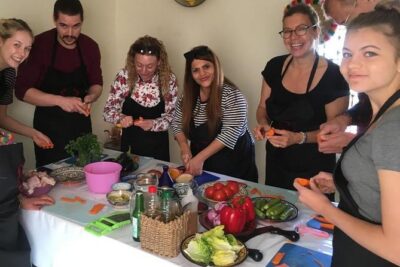
Moroccan Cooking Class & Marrakech Market Visit with Chef Khmisa
Read our review →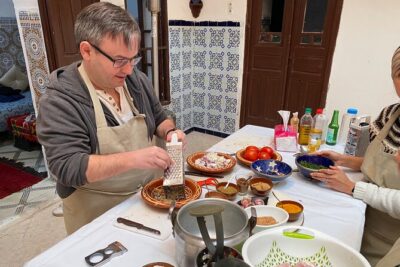
Half-Day Cooking Class with Local Chef Laila in Marrakech
Read our review →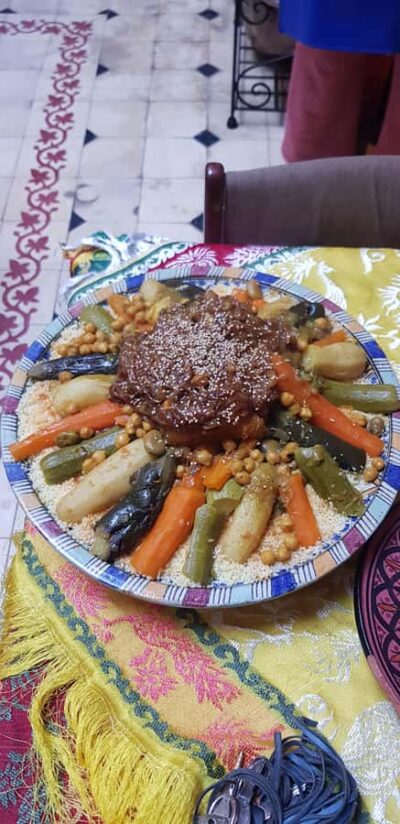
Browse the lists this tour appears in