
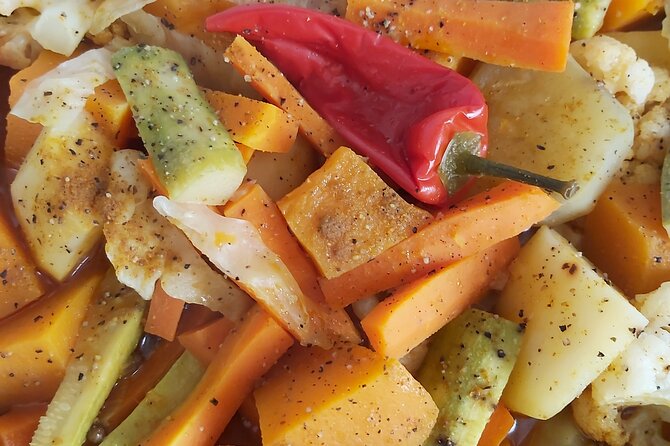
Reviewed · BERBER VILLAGE TOURS
Traditional Moroccan and Berber cooking classes
The best part of this Essaouira cooking class is that you do not simply watch someone prepare Moroccan food. Khadija welcomes you into her home, explains the food traditions behind each recipe, and puts you to work from the first cut of a vegetable to the final seasoning. The meal becomes both a lesson and a shared table.
I like the careful use of fresh, mostly local produce, and I like the clear attention to cleanliness. The class is also unusually personal: it is a private activity for your own group, with instruction in French, English, Arabic, or Berber. The main consideration is that three hours passes quickly, especially if you want a long meal and plenty of conversation afterward.
In This Review
- Key points to know
- Starting with mint tea and Moroccan cakes
- Reading Moroccan cuisine through its spices
- Choosing between tagine, couscous, pastilla, and salads
- Getting your hands into the preparation
- Sharing the meal around a Moroccan table
- What the $58.31 price buys you
- Who will enjoy this Essaouira cooking class
- Booking, timing, and cancellation details
- Should you book it?
- FAQ
- Where does the cooking class begin?
- Where does the activity end?
- How long does the cooking class last?
- Is transportation included?
- Is the class private?
- Which languages does the host speak?
- What food might I prepare?
- Can I cancel for a full refund?
Key points to know
- A private home setting: You cook and eat with only your own group at 21 Av. Princesse Lalla Amina.
- Khadija leads the class: She speaks French, English, Arabic, and Berber, making the lesson accessible to many visitors.
- You take part in every stage: Cutting, seasoning, and recipe-specific cooking are part of the class.
- The menu can vary: Expect dishes such as tagine, couscous, pastilla, Moroccan salads, and homemade desserts.
- Spices get proper attention: Ras el hanout, cumin, saffron, cinnamon, preserved lemon, and olives are explained in context.
- The meal is included: Mint tea or spiced coffee, Moroccan cakes, bottled water, and the food you prepare are provided.
Starting with mint tea and Moroccan cakes
The class begins in a Moroccan setting with mint tea or spiced coffee and small Moroccan cakes. This is more than a polite welcome. It gives Khadija time to outline the session and gives you a first look at the customs that shape Moroccan food.
Mint tea is closely tied to hospitality in Morocco, and learning how it is prepared gives the opening minutes a useful cultural focus. You are not rushed straight to a chopping board. Instead, the introduction sets the tone for a class based on sharing, conversation, and respect.
The pace should suit you if you enjoy learning through questions. Khadija speaks several languages, so you can ask about ingredients, cooking methods, or local habits in French, English, Arabic, or Berber. That language range is particularly useful for a private class, where the discussion can follow your interests rather than a fixed script.
The opening also helps if you are new to Moroccan food. You will have a chance to hear what you will prepare before deciding how involved you want to be with each step. Since the menu changes, the opening explanation is the best time to clarify what is planned and mention any food preferences.
More Essaouira trips worth a second look
- l’Atelier – Moroccan Cooking Workshop in Essaouira
★ 5.0 · 110 reviews - Traditional Moroccan Cooking Class
★ 5.0 · 81 reviews - Essaouira: Traditional Family Style Moroccan Cooking Class
★ 5.0 · 58 reviews
Reading Moroccan cuisine through its spices
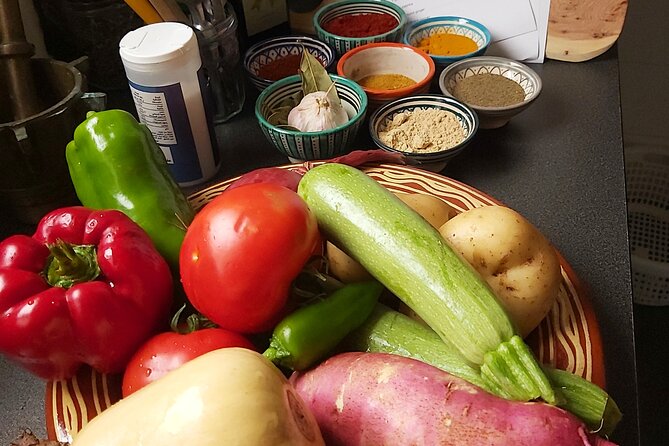
Moroccan cooking often depends on balance rather than heat alone. A spice may provide warmth, perfume, earthiness, sweetness, or color, and the amount used can change the character of a dish. This class gives those seasonings a proper place in the lesson.
You will be introduced to ras el hanout, cumin, saffron, cinnamon, preserved lemon, and olives. That list covers several of the flavors that make Moroccan food so recognizable, but the useful part is learning how they work in a recipe.
Ras el hanout is a blended seasoning rather than a single spice, so it can vary from one cook to another. Cumin brings a savory, earthy note. Cinnamon can work in both sweet and savory dishes, while preserved lemon adds a sharp, salty brightness that fresh lemon cannot quite copy.
The class also connects condiments to technique. Preserved lemon and olives may shape the flavor of a tagine, while chermoula gives a fresh, herbed edge to a salad. I value this part because it helps you cook the food again at home instead of simply trying to remember a list of ingredients.
Choosing between tagine, couscous, pastilla, and salads
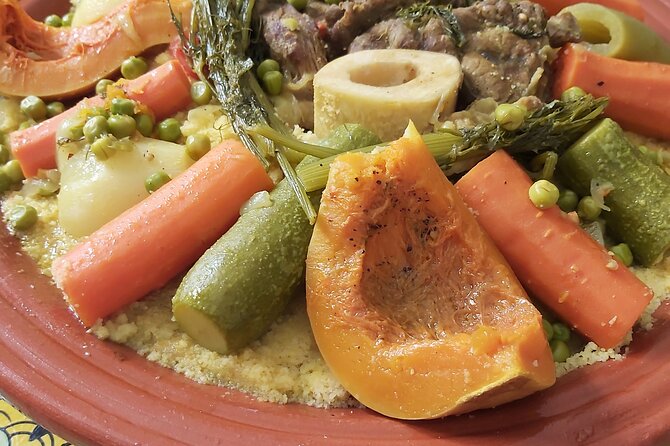
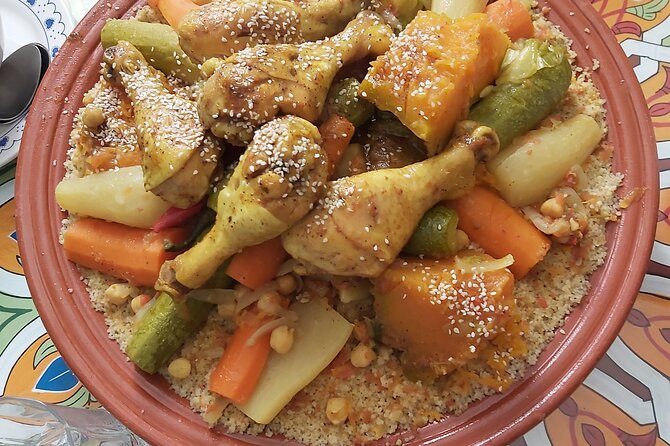
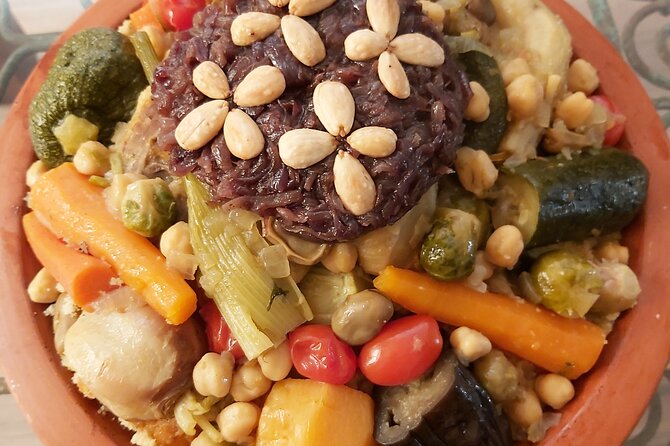
The menu is varied. Depending on the day, you might prepare a tagine, couscous, pastilla, Moroccan salads, or a homemade dessert. This variety is a strength, though it also means you should not book expecting one guaranteed dish unless the provider confirms it in advance.
A tagine offers a lesson in slow cooking. Ingredients are seasoned and simmered so that the flavors develop together. The method is not about rushing the pot. It is about controlling heat, layering ingredients, and allowing time to do some of the work.
Couscous introduces a different technique. The grains are steamed, and the process shows how texture matters as much as seasoning. Properly prepared couscous should feel light rather than heavy, so this is a useful class choice if you want to understand one of Morocco’s best-known dishes beyond the restaurant plate.
Pastilla brings another set of skills. Its appeal comes from a crisp pastry shell and a carefully balanced filling. The class explains the techniques needed to create that contrast, although the exact preparation will depend on the chosen recipe and the time available.
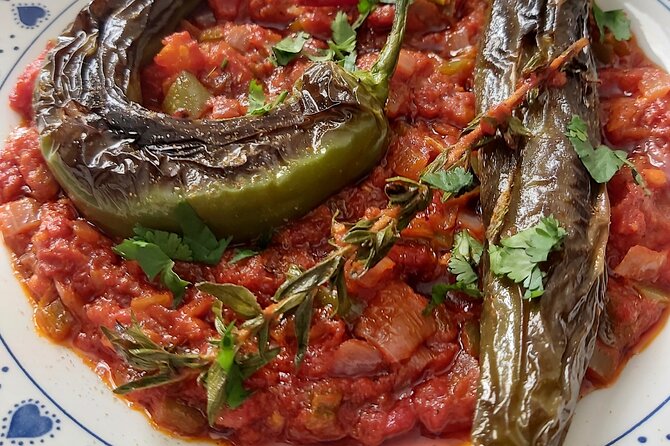
Moroccan salads add freshness and color to the meal. You might prepare carrot salad with chermoula, aubergine zaalouk, or taktouka. These are not mere side dishes. They show how cooked vegetables, herbs, spices, and preserved ingredients can create distinct flavors without relying on heavy sauces.
Getting your hands into the preparation
The practical work is central to the class. You take part in cutting ingredients, seasoning them, and preparing the dish through each major stage. That makes this a better fit for you if you want to cook rather than sit at a demonstration.
Khadija explains the recipe as you work, so the process should feel approachable even if your kitchen skills are basic. The private format also matters here. You do not need to compete for a place at the work surface or wait for a large group to finish a task.
Cleanliness and hygiene receive particular attention. That is reassuring in any cooking class, especially one held in a private home. The focus is practical rather than showy: clean preparation, careful handling, and an organized working area help you feel comfortable while handling fresh ingredients.
The class uses fresh, quality produce, with most ingredients sourced locally. That choice gives the food a stronger connection to Essaouira and the surrounding region, while also reducing the distance ingredients need to travel. It is a small detail, but it tells you something about the host’s approach to cooking.
One point to keep in mind is timing. A three-hour class must balance instruction, food preparation, cooking, and the final meal. If your group asks many questions or prepares a dish with several stages, the schedule may feel full. That is not a flaw, but you should arrive ready to take part rather than expect a long, leisurely cooking demonstration.
A different kind of day out, same corner of Morocco:
- From Marrakech: Essaouira & Atlantic Coast Full-Day Trip
★ 4.4 · 1,100 reviews - Big dunes and atlantic coast tour 2 HOURS
★ 5.0 · 439 reviews - Essaouira: Surf Lessons
★ 4.9 · 412 reviews - 3 hours ride on camel at sunset
★ 5.0 · 326 reviews
Sharing the meal around a Moroccan table
Once the food is ready, you sit down and eat together. This shared meal is an important part of the class, since Moroccan cooking is closely linked to hospitality and social time.
The meal gives you a chance to taste the results of your own work while the details are still fresh. You can compare the flavors of the salads, notice how the spices changed during cooking, and ask final questions about serving or adapting the recipes.
The home setting adds warmth that a formal school kitchen may lack. One French-language account describes feeling at home in Khadija’s house and sharing the prepared meal around a beautiful table. Another highlights the welcoming atmosphere and the chance to talk at length after cooking. That makes this class appealing if you value personal contact as much as the food itself.
Still, a home setting is not the same as a restaurant. The mood is informal and personal, not polished or theatrical. If you prefer a large professional kitchen, fast demonstrations, or a tightly scripted food tour, this may feel too intimate. If you want to meet a local host and share a meal in a private setting, the format is likely a good match.
What the $58.31 price buys you
At $58.31 per person, the price is reasonable for a private, three-hour activity that includes instruction, ingredients, refreshments, and the meal you prepare. You also receive bottled water, Moroccan cakes, and mint tea or spiced coffee.
The strongest value comes from the private format. You are paying for time with Khadija and your own group, not simply for a seat in a large class. The lesson can be conducted in your preferred language, and the cooking work is hands-on rather than limited to watching.
Recipe cards are distributed at the end. This improves the value because you leave with a way to repeat the dishes at home. A cooking class is much more useful when it gives you a practical record of the method, not only a pleasant meal that disappears after the last bite.
The price does not include private transportation. You need to make your own way to 21 Av. Princesse Lalla Amina in Essaouira, and the activity ends at the same address. The meeting point is near public transportation, so check your route before setting out and allow enough time to arrive without hurrying.
Who will enjoy this Essaouira cooking class
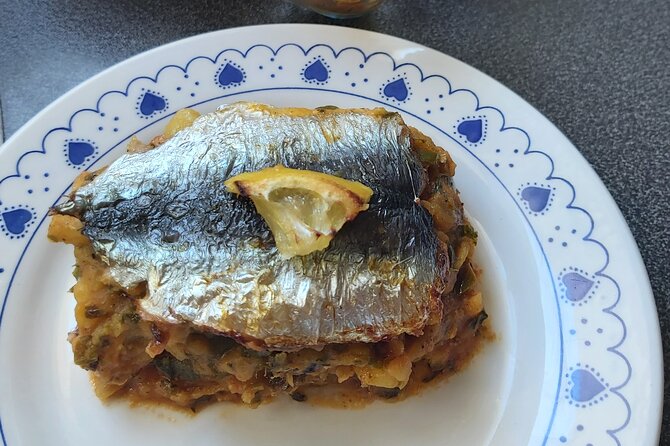
I would recommend this class to couples, families, and small groups who want an activity they can share. Because only your group participates, it also suits people who prefer a quieter setting or who want to ask many questions.
It is a good choice for food-minded visitors who want to understand Moroccan cooking at home, not just order a tagine in a restaurant. The spice introduction, salad preparation, and recipe cards give you useful details that can carry into your own kitchen.
The class should also work well for mixed-language groups. Khadija speaks French, English, Arabic, and Berber, which removes a common barrier in practical lessons.
People with food preferences should raise them before or at the start of the session. The menu is varied and the provider has accommodated food wishes in at least one private booking, but no specific dietary menu is guaranteed in the information provided.
This is not the right pick if you want a market visit, a restaurant crawl, or private transportation. The meeting point is fixed, and the focus stays on cooking, eating, and cultural exchange in one place.
Booking, timing, and cancellation details
The activity lasts about three hours and is often booked around 13 days ahead. That advance pattern suggests you should avoid leaving it until the final day of your Essaouira stay, especially if your schedule is short.
You receive confirmation at booking, and the ticket is mobile. Service animals are allowed, and the location is near public transportation.
Free cancellation is available up to 24 hours before the local start time for a full refund. Changes or cancellations made inside that 24-hour window are not accepted for a refund. Poor weather or failure to reach the minimum number of participants can lead to a cancellation, in which case you are offered another date or experience, or a full refund.
The activity is private, but the weather clause still matters. Keep a little flexibility in your itinerary if this class is one of the main events of your visit.
Should you book it?
Book this class if you want personal instruction, a home-cooked meal, and a real role in preparing Moroccan food. Khadija’s language skills, careful hygiene, local produce, and welcoming table make the experience more than a standard recipe lesson.
The main trade-off is its close, home-based format. You will not get transport, a fixed menu, or a large professional cooking studio. But at $58.31, the private instruction, included food, refreshments, and recipe cards make it a solid value for a three-hour Essaouira activity.
FAQ
Where does the cooking class begin?
The class begins at 21 Av. Princesse Lalla Amina, Essaouira 44000, Morocco.
Where does the activity end?
It ends back at the same meeting point where the class begins.
How long does the cooking class last?
The class lasts approximately three hours.
Is transportation included?
No. Private transportation is not included. The meeting point is near public transportation.
Is the class private?
Yes. Only your group participates in the activity.
Which languages does the host speak?
Khadija speaks French, English, Arabic, and Berber.
What food might I prepare?
The menu may include tagine, couscous, pastilla, Moroccan salads, and homemade desserts. Examples of salads include carrot salad with chermoula, aubergine zaalouk, and taktouka.
Can I cancel for a full refund?
Yes. You can cancel at least 24 hours before the local start time for a full refund. Cancellations or changes made less than 24 hours before the start are not refunded.
Recently reviewed around Essaouira
- Individual Lessons of Kite Surf in Essaouira★ 5.0 · 113 reviews
- Private Kitesurf Lesson in Essaouira Morocco★ 5.0 · 38 reviews
- Group Kitesurfing lesson with a Local in Essaouira Morocco★ 5.0 · 175 reviews
- The Sunday Market in Had Draa & Local Food Tasting.★ 5.0 · 33 reviews
- How To Be A Real Moroccan Chef★ 5.0 · 101 reviews
- Private Surf Lessons★ 5.0 · 28 reviews
- Surf Rental★ 5.0 · 31 reviews
- Essaouira: Private Transfer from or to Essaouira Airport★ 5.0 · 17 reviews
Berber Village Tours, compared.

Berber villages : Atlas Mountains Day Hike from Marrakech
Read our review →
Balloon Flight, Berber Breakfast & Certificate
Read our review →
Majorelle Garden, YSL, and Berber Museum Entry
Read our review →
Hot Air Balloon Flight with Berber Breakfast
Read our review →
Atlas Mountains, Berber Villages and Three Valleys all inclusive
Read our review →
Atlas Mountains Hot Air Balloon Ride from Marrakech with Berber Breakfast and Desert Camel Experience
Read our review →
Atlas Mountains, Berber Villages, Agafay & Camel Ride
Read our review →
Balloon Flight, Berber Breakfast, and Camel Ride
Read our review →Browse the lists this tour appears in