
Reviewed · MOROCCAN COOKING CLASSES
Rabat: Cooking Class in a Family Home
Rabat’s best food lesson may begin before you reach the kitchen. You stroll through a neighborhood market, choose fresh ingredients with your host, then cook them in a family home. I especially like the market-to-table format and the chance to help shape the menu. You are not just watching a demonstration.
I also like the personal scale. Groups are limited to eight, and hosts such as Imane and her mother-in-law make the meal feel like a family visit rather than a restaurant class. The one thing to consider is that transportation is not included, so you need to reach the Hopital Moulay Youssef tram station yourself.
In This Review
- Key points at a glance
- Why the market is the right place to begin
- From Tramway Station Hopital Moulay Youssef to the family home
- Choosing your three-course Moroccan menu
- Learning beside a Moroccan home cook
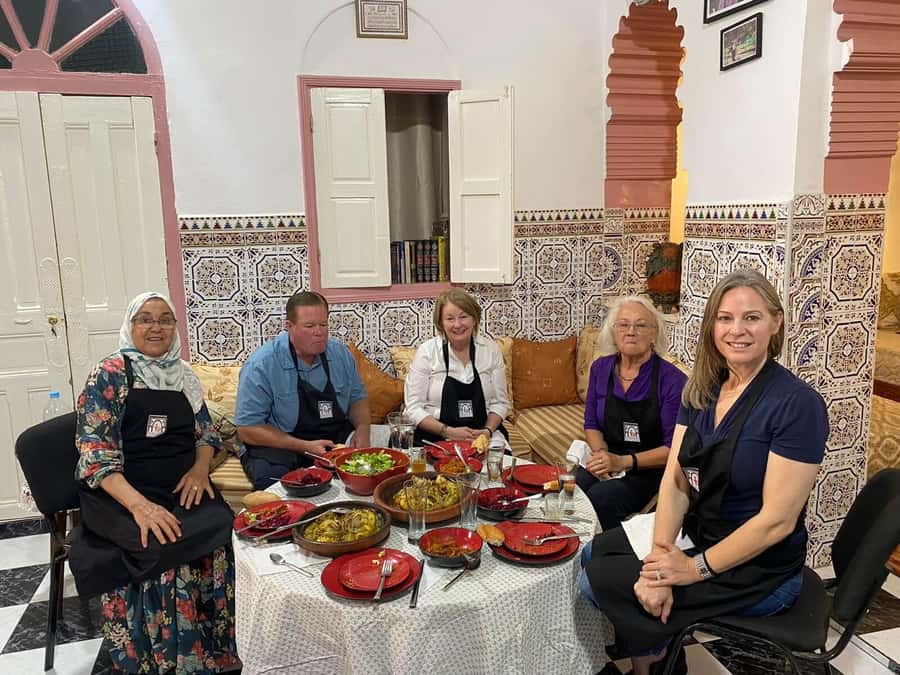
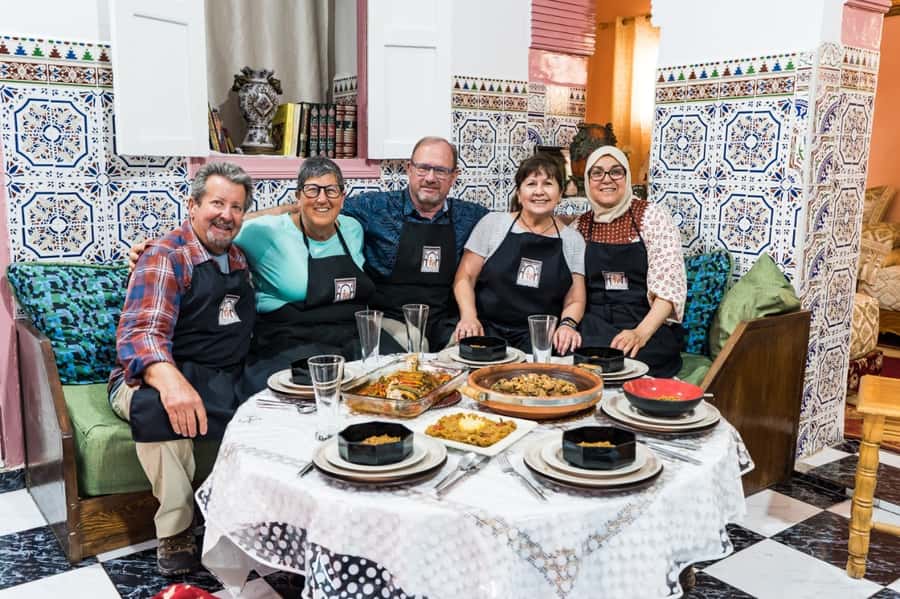
- Sitting down to the meal you made
- What the $72 price really covers
- Who will get the most from this class
- Smart planning before you book
- Should you book the Rabat family cooking class?
- FAQ
- Where does the cooking class meet?
- How long does the experience last?
- What is included in the price?
- Is transportation included?
- What languages are available?
- How many people can join the class?
- Can friends join only for the meal?
Key points at a glance
- A market visit comes first: Choose ingredients with your host and learn how local produce fits Moroccan cooking.
- The menu can reflect your wishes: Past sessions have included Friday-style couscous, chicken tajine, eggplant, peeled peppers, fruit salad, and Moroccan millefeuille.
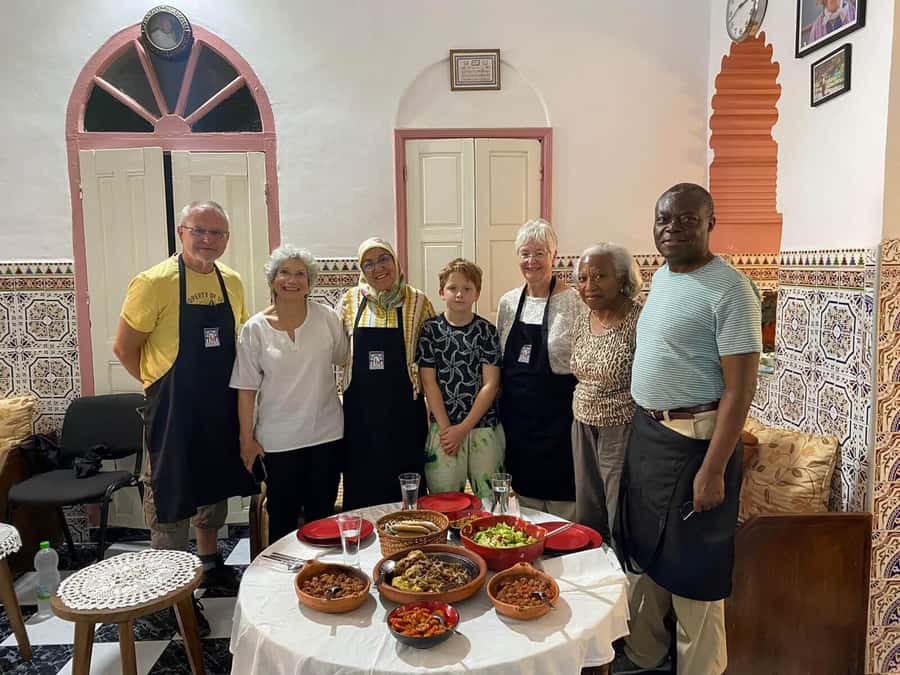
- You cook in a real family kitchen: The setting is a historic family-owned Moroccan home, not a purpose-built cooking school.
- The meal is part of the lesson: You sit down to eat the complete three-course menu you helped prepare.
- Small groups keep it personal: No more than eight people take part, with French and English available.
- Plan about four hours: The price is $72 per person, including the market visit, class, food, tea or coffee, and bottled water.
Why the market is the right place to begin
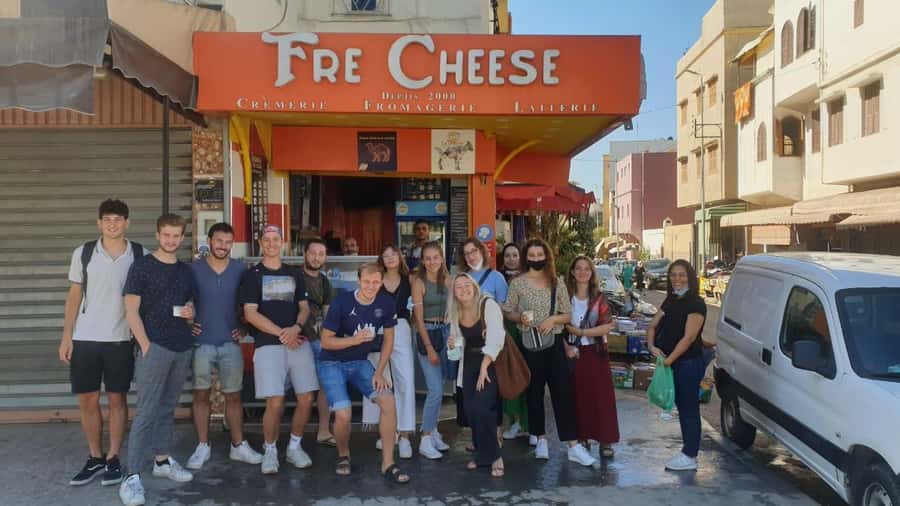
The first useful choice here is the decision to start with shopping. Before you chop, stir, or season, you see the raw materials that give Moroccan food its character. Your host guides you through a local neighborhood market and explains ingredients, customs, and food traditions as you go.
This is more helpful than being handed a fixed box of ingredients. You can ask questions, point out foods you know, and discuss what you would like to eat. Your host recommends a menu based on your preferences, then you shop for the needed produce and other ingredients together.
That flexibility matters. A Moroccan cooking class can mean many things, from a formal lesson with a set recipe to a relaxed family meal where the menu changes with the group. This experience leans toward the second kind. The market visit gives the food a local setting, and the shopping helps you understand that Moroccan cooking begins with choosing the right ingredients.
You should also expect the pace to be practical rather than rushed. The four-hour duration includes the market, the cooking, and the meal, so the opening walk is not a quick photo stop. It is part of the class itself.
More Morocco trips worth a second look
- Marrakech: Moroccan Cooking Class with Pickup
★ 4.6 · 1,862 reviews - Marrakech: Traditional Moroccan Cooking Class & Market Visit
★ 4.8 · 1,861 reviews - Marrakesh: Moroccan Dishes Cooking Class with a Local Chef
★ 5.0 · 1,615 reviews
From Tramway Station Hopital Moulay Youssef to the family home
The meeting point is Tramway station Hopital Moulay Youssef. You are responsible for getting there, since transportation is not included. Check the start time when booking, and allow enough time to find the correct station and meet the host without a last-minute dash.
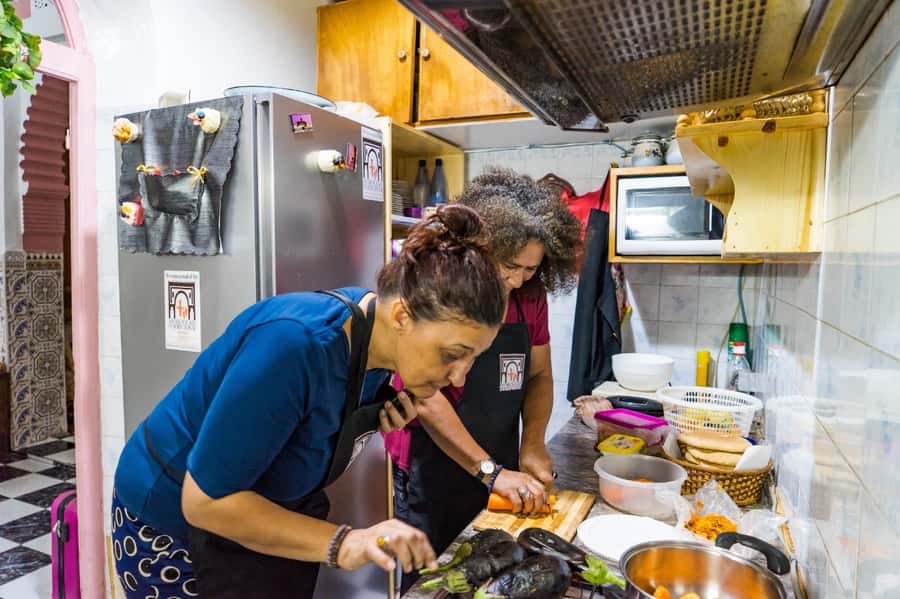
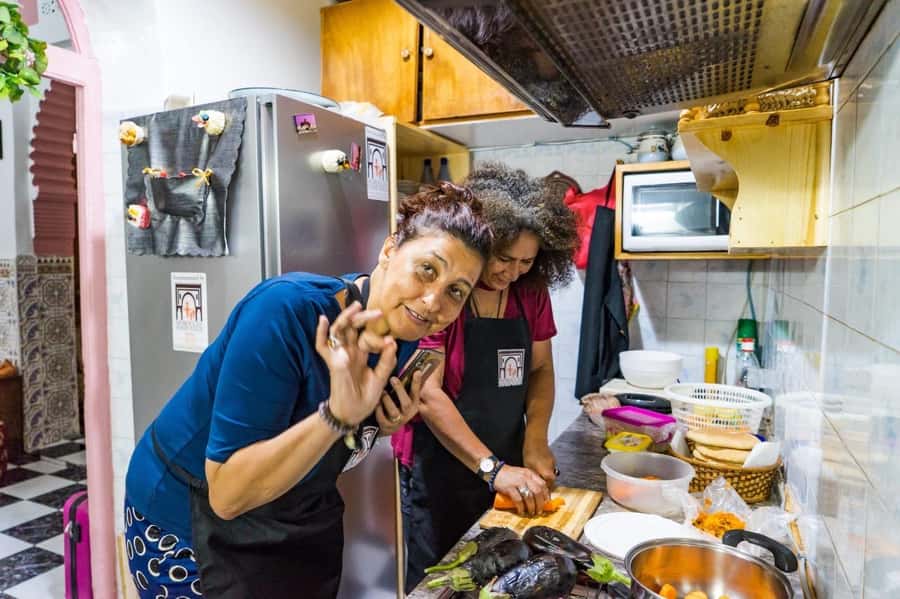
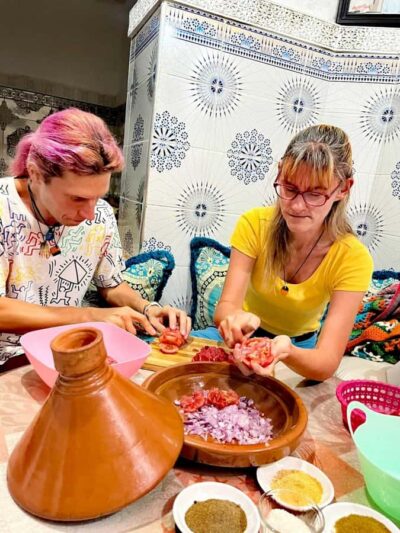
From there, the host takes you to the nearby market and later to the family home. The home is described as a historic, family-owned Moroccan house, which gives the class a different feel from a commercial kitchen. You are cooking in the setting where hospitality and family food naturally belong.
Imane has hosted the class, and one session also included her mother-in-law, a former chef for ambassadors. That detail helps explain the balance of the experience: you get a professional standard of instruction, but the welcome remains personal and domestic.
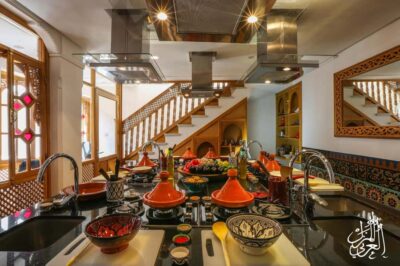
Do not expect a sleek cooking studio with rows of identical workstations. The appeal is the opposite. You join the household kitchen, work alongside the host, and see how recipes are handled in a real family setting. For me, that is a major part of the value, though anyone who prefers a polished classroom with a fixed format may find it less predictable.
Choosing your three-course Moroccan menu
The host asks about your preferences before the shopping is finished. You may help decide what to cook, rather than simply following a menu selected weeks in advance.
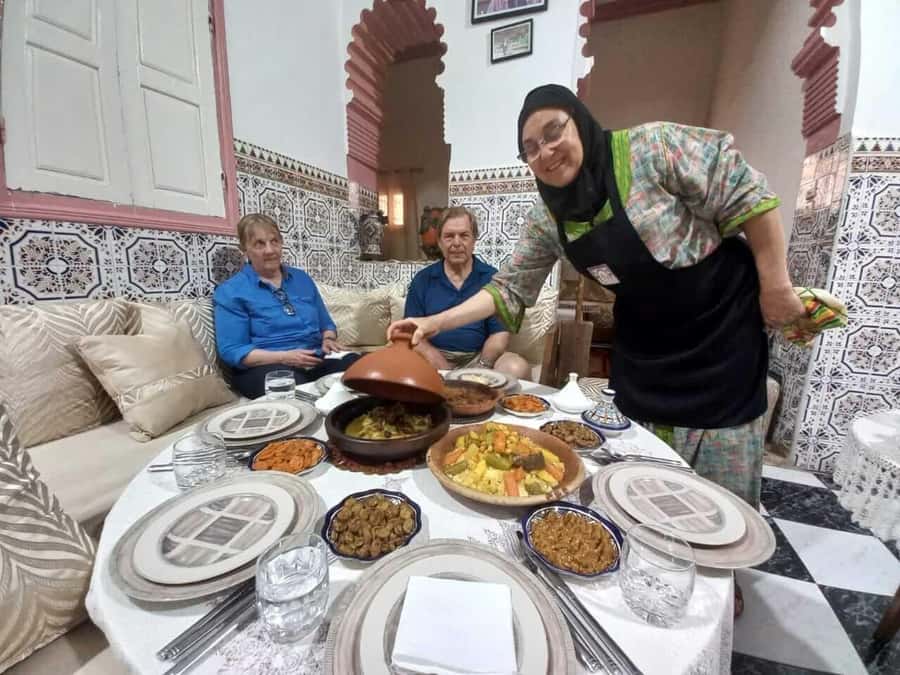
The available examples show a broad range of Moroccan home cooking. One class prepared a traditional couscous meal, connected with the Moroccan custom of eating couscous on Fridays. Another included chicken tajine as the main dish, with eggplant and peeled peppers seasoned with spices and served with bread as the opening course.
Dessert can be just as instructive. One menu included a Moroccan millefeuille made with pastry sheets bought at the market. The dough was prepared before your eyes from flour, water, and salt, then rolled into extremely thin sheets, fried, cut into rounds, and layered with homemade pastry cream flavored with orange blossom and saffron.
That example is worth noting because it shows what makes the class more than a standard recipe lesson. You learn about a finished dish, but also about the work behind it. Thin pastry, spice blends, bread, fruit, and fresh juice all become part of the meal’s story.
The exact menu is not fixed in the information provided, so you should not book expecting couscous, tajine, or millefeuille on every date. The clear promise is a full three-course menu chosen with your host. If a particular dish matters to you, mention it when discussing your preferences.
Learning beside a Moroccan home cook
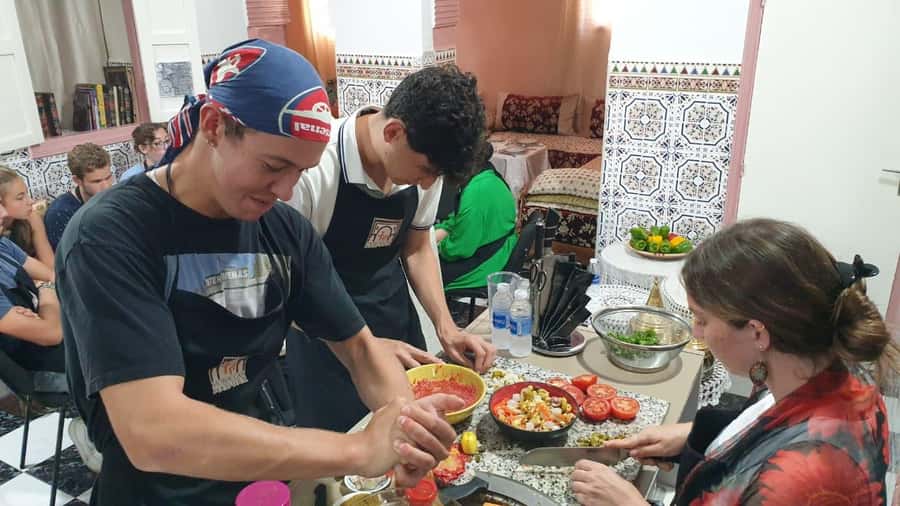
Once you arrive at the house, you join the cooking session. The host demonstrates Moroccan methods and guides you through the preparation. You are expected to participate, not simply sit at the side and take notes.
The lessons appear to mix clear instruction with the loose judgment that makes home cooking taste like home cooking. One participant described the chef adding a bit of this and a bit of that while also providing full recipes. That is a useful combination. You get written guidance for later, but you also see how an experienced cook adjusts a dish by sight, smell, and taste.
You can photograph the process and write down the recipes. That makes the class more useful after your holiday. Moroccan cooking often depends on proportion, timing, and seasoning, and seeing those choices made in front of you is easier to remember than reading a recipe alone.
The format also leaves room for conversation. The host and guide can speak French or English, and the small group size gives you a better chance to ask questions. With a maximum of eight participants, this is not a private class, but it is small enough to keep the discussion moving.
I would still keep your expectations sensible. Language support is listed as French and English, not a wider range of languages. If you need detailed explanations of every step, confirm that your preferred language works for you before booking.
A different kind of day out, same corner of Morocco:
- Marrakech: Agafay Desert Sunset, Camel Ride, and Dinner Show
★ 4.6 · 35,119 reviews - From Marrakech: Ouzoud Waterfalls Guided Hike and Boat Trip
★ 4.7 · 33,630 reviews - Marrakech: Agafay Desert Quad & Camel Rides with Dinner Show
★ 4.8 · 27,382 reviews - Marrakech: Agafay Desert Quad Biking Tour with Dinner-Show
★ 4.8 · 16,569 reviews
Sitting down to the meal you made
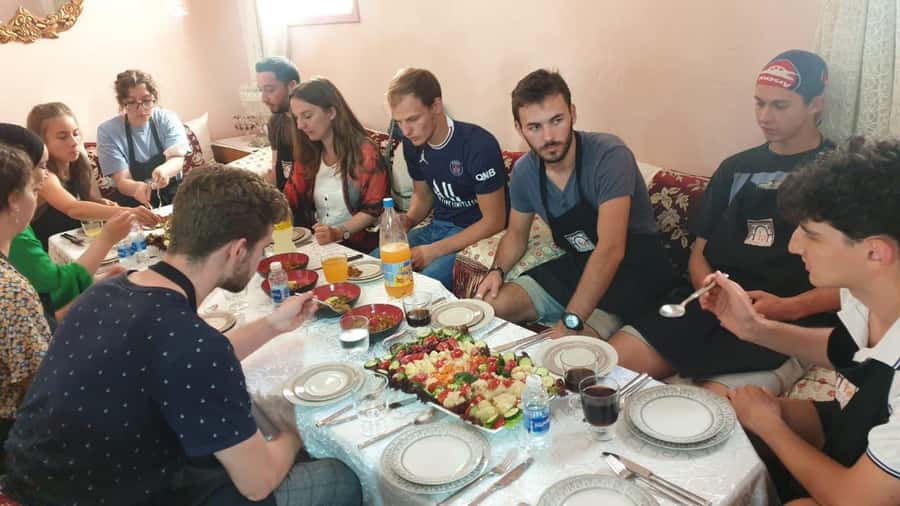
The payoff arrives at the table. After the cooking, you eat the complete menu, from the first course through dessert, with drinks included. Tea or coffee and bottled water are provided, and Moroccan tea finishes the experience.
This shared meal is important. A cooking class can feel like work if the food is packed away once the lesson ends. Here, you eat what you prepared and have time for conversation with the host and the rest of the group. The meal also lets you judge the difference between seeing a recipe prepared and tasting the finished dish.
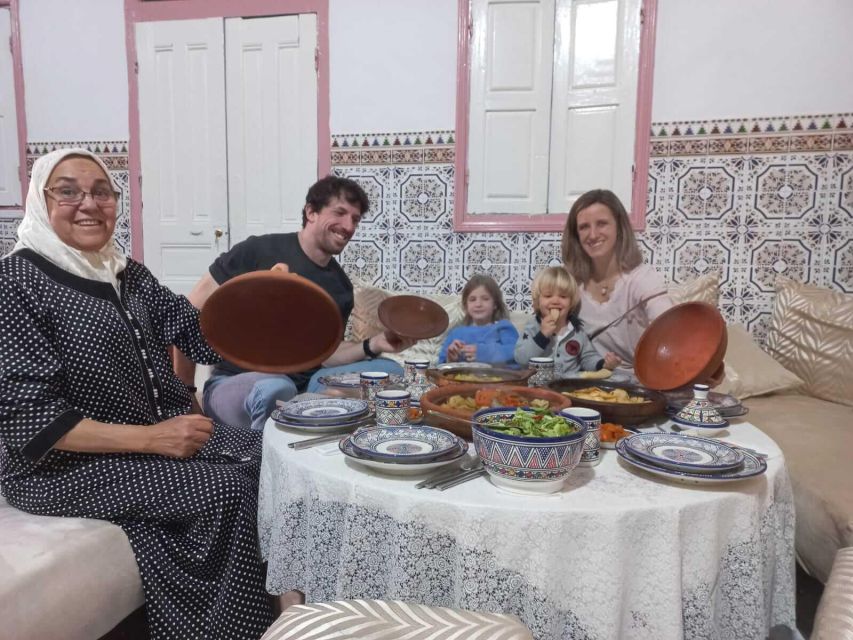
The family setting adds warmth to this final part. A class has included eating with the family and a young granddaughter, which gives you an idea of the informal atmosphere you may encounter. That is not a guaranteed part of every session, but the experience is designed around Moroccan hospitality rather than a quick plate served at the end.
Friends who are not taking the class may join the meal for an additional €15. That can be useful if part of your group wants the home-cooked experience but not the market visit and cooking session. Confirm the arrangement in advance so the host can plan the meal.
What the $72 price really covers
At $72 per person, this is not the cheapest way to eat in Rabat. You can find a less expensive meal elsewhere. The price makes more sense when you count the market visit, four-hour duration, cooking instruction, three-course meal, drinks, and small-group setting.
You are paying for access as much as for food. The market gives you a local orientation, the family home offers a personal setting, and the chef’s guidance turns lunch or dinner into a lesson. If you want only a meal, this is more than you need. If you want to understand how the meal comes together, the cost is easier to justify.
The class also has value for people who cook at home. You can photograph and record the process, receive full recipes, and take home methods rather than just memories. The examples of couscous, tajine, vegetable starters, and Moroccan pastry give you plenty of useful material for later cooking.
Drinks are included, but transportation is not. Add the cost and time of reaching the meeting point when comparing this with other food activities. Free cancellation up to 24 hours before the start and the option to reserve now and pay later also make the booking less rigid, especially if your Rabat plans are still shifting.
Who will get the most from this class
I would recommend this for anyone who wants food to open a door into Moroccan daily life. It suits couples, solo participants, families with older children, and small groups who enjoy talking as much as eating.
It is a particularly good choice if you want to:
- Learn several dishes in one session
- See ingredients before they reach the kitchen
- Ask about Moroccan customs while cooking
- Eat in a family home instead of a formal restaurant
- Leave with recipes and practical techniques
- Share a meal with a small international group
The activity may be less suitable if you want a tightly timed professional workshop, a guaranteed dish, or transport from your hotel. The menu is shaped around preferences, and the home setting suggests a more relaxed rhythm.
You should also consider the four-hour commitment. This is not a short add-on between major sights. It takes a good part of the day, but that length is what allows the market, preparation, meal, and tea to fit without being hurried.
Smart planning before you book
Start by deciding what you want from the experience. If your main goal is couscous, tajine, or a certain dessert, ask whether it can be included. The host does take preferences into account, but the exact menu is not promised.
Next, plan your route to the tram station. Since the meeting point is specific and transportation is excluded, this is one place where a little preparation will make the morning or afternoon easier. You should also check the available starting times for your date.
Wear something practical for a cooking session. The supplied information does not specify a dress code or equipment, so I would avoid clothing you would worry about around food and spices. Bring your phone or a small notebook if you want to record recipes and techniques.
Finally, remember that the experience is offered in French and English. If several people are booking together, decide whether everyone is comfortable with one of those languages before committing.
Should you book the Rabat family cooking class?
I would book this if you want a personal food experience with real participation. The strongest features are the market shopping, the adaptable menu, the family kitchen, and the chance to eat a three-course meal you helped make. The former ambassador chef mentioned in the experience adds an unusual professional touch to an otherwise intimate setting.
I would skip it if you only want a quick meal, need hotel transport, or prefer a fixed menu with restaurant-style service. At $72, the value comes from the full four-hour encounter, not just the food on the plate.
For most food-minded visitors to Rabat, this is a sensible choice. You leave with a meal in your memory, recipes in your notes, and a clearer feel for how Moroccan cooking works at home.
FAQ
Where does the cooking class meet?
The meeting point is Tramway station Hopital Moulay Youssef in Rabat.
How long does the experience last?
The activity lasts four hours, including the market visit, cooking session, meal, and Moroccan tea.
What is included in the price?
The price includes the market visit, cooking session, three-course menu, tea or coffee, and bottled water.
Is transportation included?
No. Transportation is not included, so you need to reach the meeting point yourself.
What languages are available?
The host or greeter speaks French and English.
How many people can join the class?
The class is a small-group experience with a maximum of eight participants.
Can friends join only for the meal?
Yes. Friends can join the meal after the cooking class for an additional €15.
Recently reviewed around Morocco
- 4-Days Marrakech to Marrakech Désert Tour★ 5.0 · 17 reviews
- Camel ride at sunset in Marrakech palm grove★ 5.0 · 17 reviews
- Agafay camel ride★ 5.0 · 20 reviews
- Camel riding in marrakech★ 4.5 · 17 reviews
- Marrakech to Atlas Mountains and 4 Valleys Day Trip★ 5.0 · 17 reviews
- Agafay Desert Adventure, Culture, and Relaxation, From Marrakech★ 5.0 · 25 reviews
- Quad excursion to the Agafay desert near Marrakech★ 5.0 · 44 reviews
- Camel ride and dinner Agafay desert★ 5.0 · 25 reviews
Moroccan Cooking Classes, compared.
Traditional Moroccan Cooking Class & Market Visit
Read our review →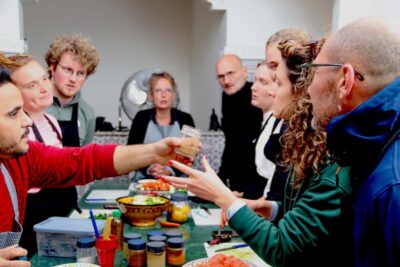
Moroccan Dishes Cooking Class with a Local Chef
Read our review →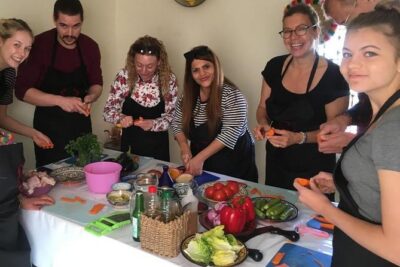
Moroccan Cooking Class & Marrakech Market Visit with Chef Khmisa
Read our review →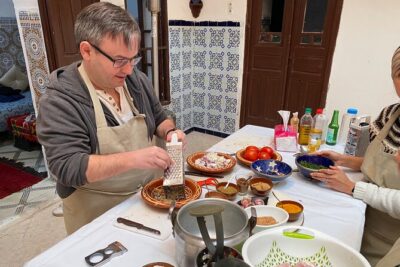
Half-Day Cooking Class with Local Chef Laila in Marrakech
Read our review →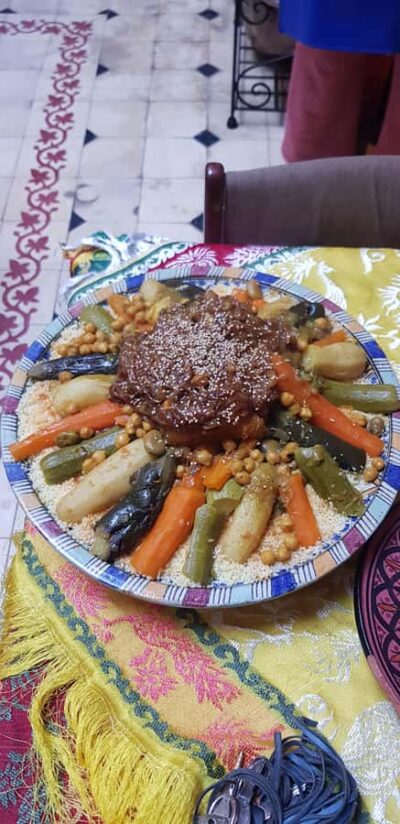
Browse the lists this tour appears in