
Reviewed · MOROCCAN COOKING CLASSES
Rabat: Authentic Moroccan Cooking Class with Expert Chefs
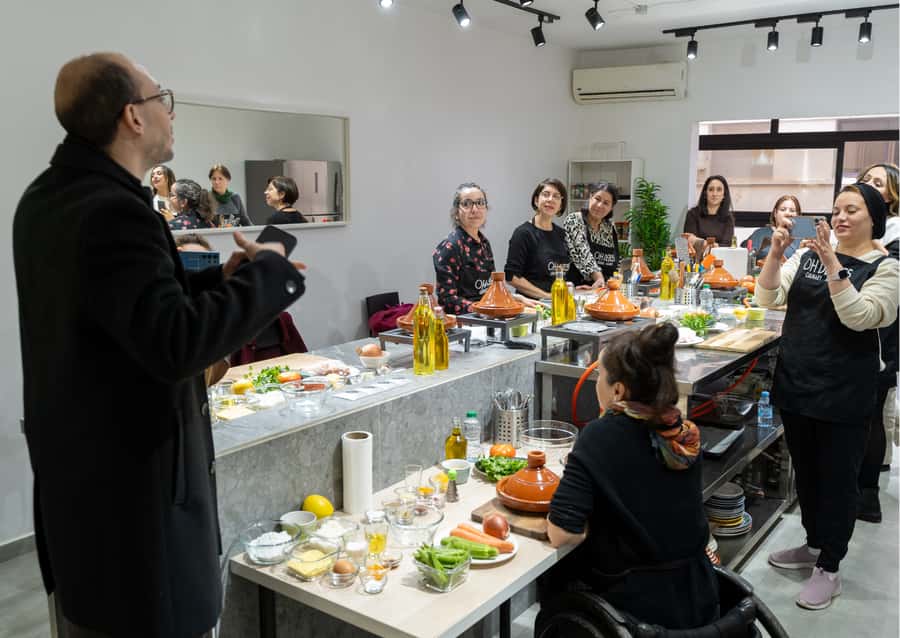
Moroccan cooking is built on small details, and this class lets you handle them yourself. You may work with preserved lemon and fermented butter, make a tagine or pastilla, and learn why a few well-used spices can carry an entire dish. The meal is prepared from starter to dessert, not just demonstrated from the sidelines.
I like the class for two clear reasons: you get practical recipes to take home, and the group is capped at 10 people, so the chefs can give real help. I also like the relaxed cultural side, with mint tea and stories shared over the food.
The main consideration is language. The chefs may teach in French, with an assistant translating into English, so explanations can take a little longer. Also, your clothes may hold onto the spice aromas for hours, a small nuisance if this is one of your first nights in Rabat.
In This Review
- Key points
- A Moroccan meal built from scratch
- Spices, preserved lemon, and the details you miss at home
- From appetizer to tagine, the class has a clear rhythm
- Pastilla and Moroccan sweets add a festive finish
- Expert chefs, friendly support, and translation
- Sitting down to eat changes the class
- What the $65 price includes
- Practical advice before you arrive
- Who will enjoy this Rabat cooking class
- Should you book it?
- FAQ
- How long does the cooking class last?
- How much does the class cost?
- Where does the class take place?
- What dishes might I prepare?
- Is a meal included?
- Are ingredients and cooking equipment provided?
- Is the class available in English?
- Can I tell the organizers about dietary restrictions?
- How many people can join the class?
Key points
- Three hours of hands-on cooking: Prepare a full Moroccan meal, from appetizer through dessert.
- Real Moroccan ingredients: Learn to use preserved lemon, fermented butter, spices, and seasonal produce.
- Personal guidance: Chefs including Loubna, Najat, Hannane, and Fatimah lead the class, with translation support when needed.
- Small-group setting: The class accepts up to 10 participants, making it easier to ask questions and get help.
- Eat what you prepare: Finish with your own meal, Moroccan mint tea, and conversation.
- Flexible menu choices: You may be asked what you want to cook, though the final menu can change with the group.
A Moroccan meal built from scratch
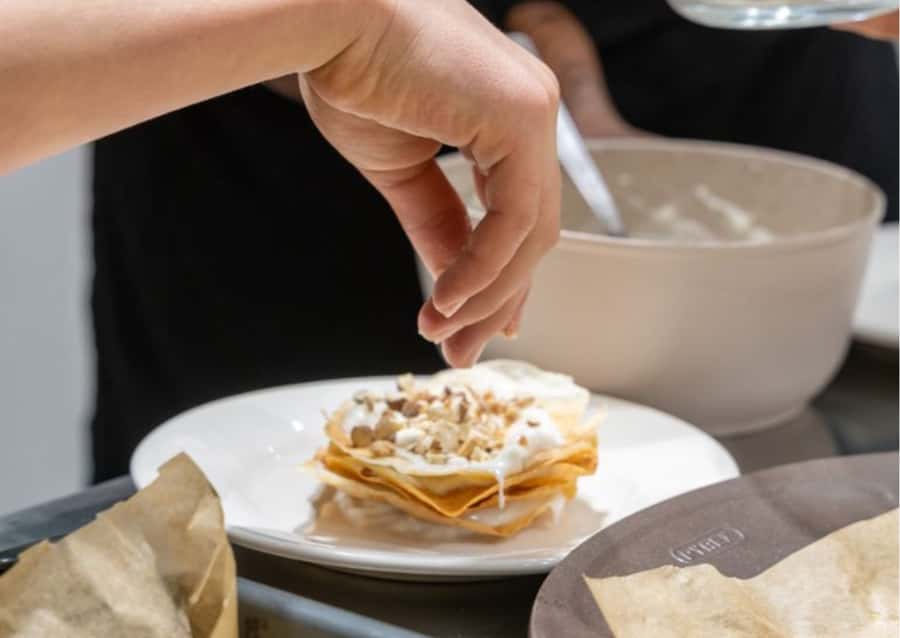
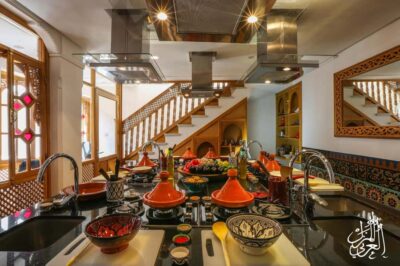
At OhDelices Culinary Academy, you do not simply watch a chef make a tagine. You take part in the work, learning how the ingredients are handled and how the separate parts of a meal fit together.
The three-hour session covers a complete traditional menu. That can include a starter, a main dish, bread, and dessert. Tagine, couscous, msemen, pastilla, eggplant starters, sweet pastries, and Moroccan breads are all part of the cooking repertoire described for the class, though the exact menu can vary.
This matters because Moroccan food is more than a list of famous dishes. A tagine teaches slow cooking and balance. Msemen shows you how dough becomes flaky and layered. A sweet pastry reveals how Morocco combines nuts, spices, sugar, and delicate pastry without making every dessert taste the same.
You may be asked what you would like to cook before the class begins. That gives you a chance to name a preferred dish, although the final plan can change depending on the other people in the group and the ingredients being used that day.
More Morocco trips worth a second look
- Marrakech: Moroccan Cooking Class with Pickup
★ 4.6 · 1,862 reviews - Marrakech: Traditional Moroccan Cooking Class & Market Visit
★ 4.8 · 1,861 reviews - Marrakesh: Moroccan Dishes Cooking Class with a Local Chef
★ 5.0 · 1,615 reviews
Spices, preserved lemon, and the details you miss at home
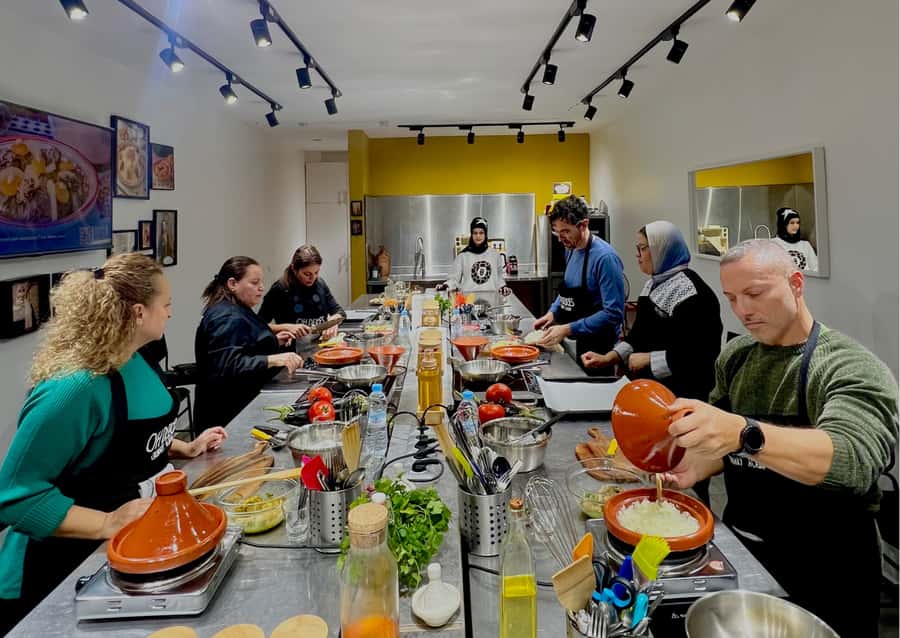
The most useful part of the class may be the ingredient lesson. Moroccan cooking often looks simple on paper, but its character comes from products that are not always easy to find or use correctly outside Morocco.
Preserved lemon is a good example. It brings a salty, fermented citrus flavor to dishes such as chicken tagine. You learn how it is used as part of the dish rather than treated like an ordinary fresh lemon.
Fermented butter is another ingredient that can be unfamiliar. It adds a particular savory note, and handling it in a local kitchen gives you a better sense of its purpose than reading about it in a cookbook.
The chefs also explain how spices work together. The point is not to bury food under seasoning. You learn how Moroccan cooks build a balanced flavor, using spices as part of the structure of the dish.
That practical focus is valuable if you want to repeat the recipes at home. You leave with recipes, but you also gain a better idea of what to look for when shopping and how the finished food should taste.
From appetizer to tagine, the class has a clear rhythm
The class begins with preparation. You work with the ingredients, follow the chef’s instructions, and share tasks with the rest of the group. Since the session is designed for beginners as well as experienced cooks, you do not need advanced kitchen skills to take part.
The starter may feature vegetables such as eggplant, depending on the menu. This gives you a useful introduction to Moroccan seasoning before moving on to the main course.
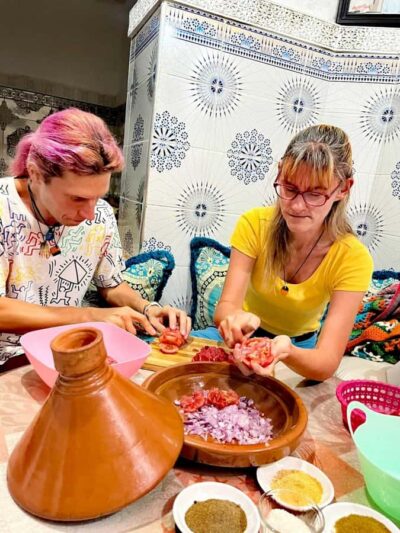
The main dish can be a meat or vegetable tagine. One menu described by the cooking team includes beef tagine, while another includes chicken with preserved lemon. The tagine is a good teaching dish because the method is central to the result. You see how the ingredients are combined and how the spices support the meat or vegetables.
Couscous may also be included. It is one of Morocco’s best-known dishes, but the class gives you more than a restaurant serving. You get to see the preparation steps and ask questions as the dish comes together.
Bread is part of the experience too. Msemen, a layered Moroccan flatbread, is especially useful for anyone who enjoys working with dough. It takes more handling than simply placing bread in an oven, and the process gives you a feel for the texture and folding technique.
Pastilla and Moroccan sweets add a festive finish
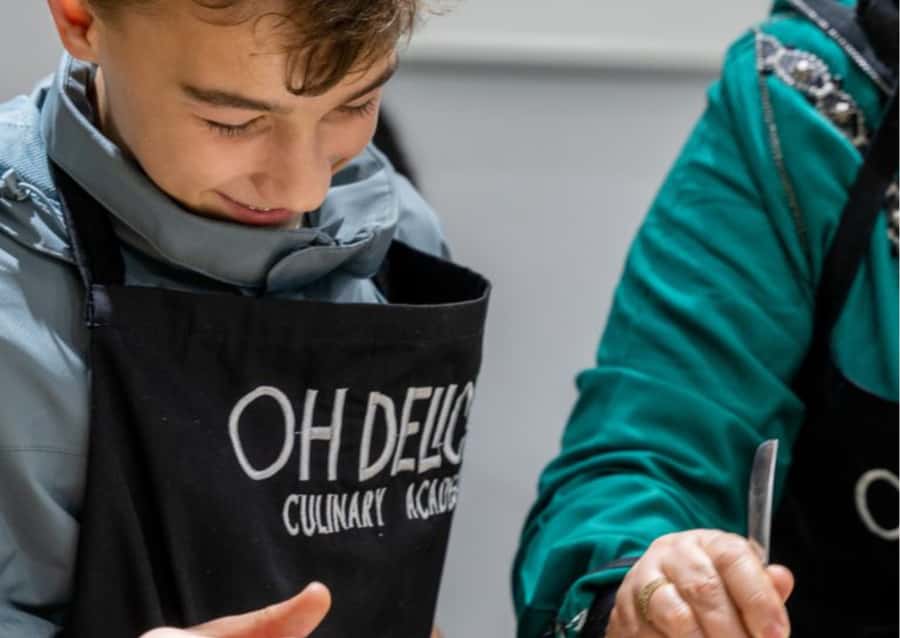
Pastilla brings a different set of skills to the table. Its thin pastry and filling make it more delicate than a simple stew, and its sweet and savory character is closely tied to Moroccan cooking.
Dessert follows the savory dishes. The class may include a pastry or another traditional Moroccan sweet, with recipes changing according to the menu. You do not just taste the dessert at the end. You help prepare it, which makes the final meal feel like the payoff for the work done during the session.
This full-menu approach is one reason the class feels more useful than a short lesson focused on one dish. You see how Moroccan meals move from a small opening course to a substantial main dish, then finish with sweets and tea.
Keep in mind that the menu is not guaranteed to match a personal wish list. The organizers may adjust it for the other participants. If a particular dish matters to you, mention it in advance and be ready for a practical compromise.
A different kind of day out, same corner of Morocco:
- Marrakech: Agafay Desert Sunset, Camel Ride, and Dinner Show
★ 4.6 · 35,119 reviews - From Marrakech: Ouzoud Waterfalls Guided Hike and Boat Trip
★ 4.7 · 33,630 reviews - Marrakech: Agafay Desert Quad & Camel Rides with Dinner Show
★ 4.8 · 27,382 reviews - Marrakech: Agafay Desert Quad Biking Tour with Dinner-Show
★ 4.8 · 16,569 reviews
Expert chefs, friendly support, and translation
The teaching team includes Moroccan chefs and experienced local cooks, including Chef Loubna and Chef Najat. Hannane and Fatimah are also involved in guiding the session and keeping the class moving.
Chef Loubna is described as a respected Moroccan cook who teaches with enthusiasm. Chef Najat has led sessions featuring eggplant starter, beef tagine, and a pastry dessert. These details matter because the class is not only a cooking demonstration. You are learning directly from people who work with these recipes as part of their culinary tradition.
English and French are available, with a translator when needed. Arabic is also listed as an available language. If you speak English and the chef is teaching in French, the translation may come through an assistant such as Malak or Oumaima.
That arrangement has a benefit: you can still ask questions and follow the instructions. The tradeoff is that the pace may include pauses for translation. I would treat that as part of the class rather than expect the rapid back-and-forth of a lesson taught entirely in your first language.
The small group size helps. With no more than 10 people, you have a better chance of getting help with dough, chopping, seasoning, or assembling a dish. Some sessions may be smaller, which can make the experience feel more personal.
Sitting down to eat changes the class
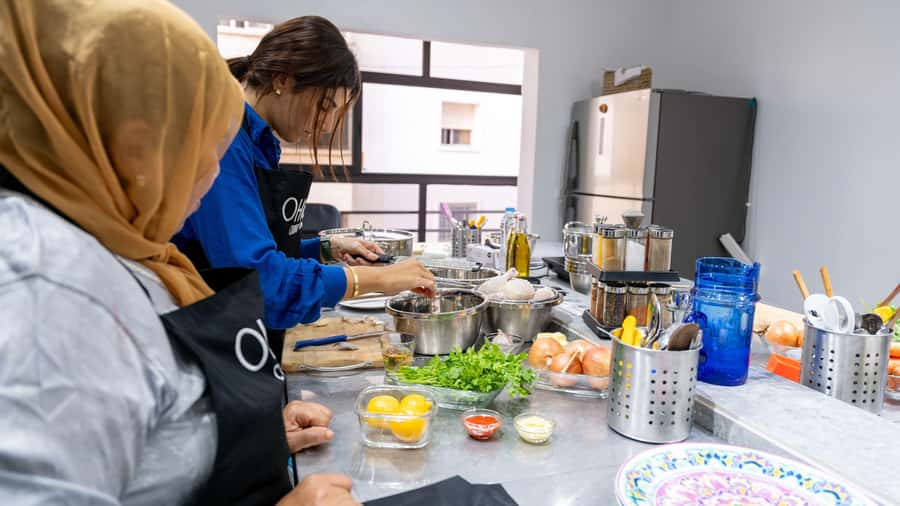
After the cooking, you sit down to eat the meal you prepared. That moment is important. You can see which techniques made a difference, compare results with the rest of the group, and ask final questions while the food is fresh.
Moroccan mint tea is included. Tea is not merely an add-on here. It gives the meal a natural ending and creates time for conversation and stories about the food.
The class also works well as a social activity. You cook alongside couples, families, individuals, or small groups, then share the meal together. If you are visiting Rabat alone, this is an easy way to meet people without signing up for a formal group sightseeing tour.
The food can be filling. A starter, main dish, bread, dessert, and tea make this a substantial three-hour activity rather than a quick tasting. Plan it as a meal, not as something to squeeze between lunch and dinner.
What the $65 price includes
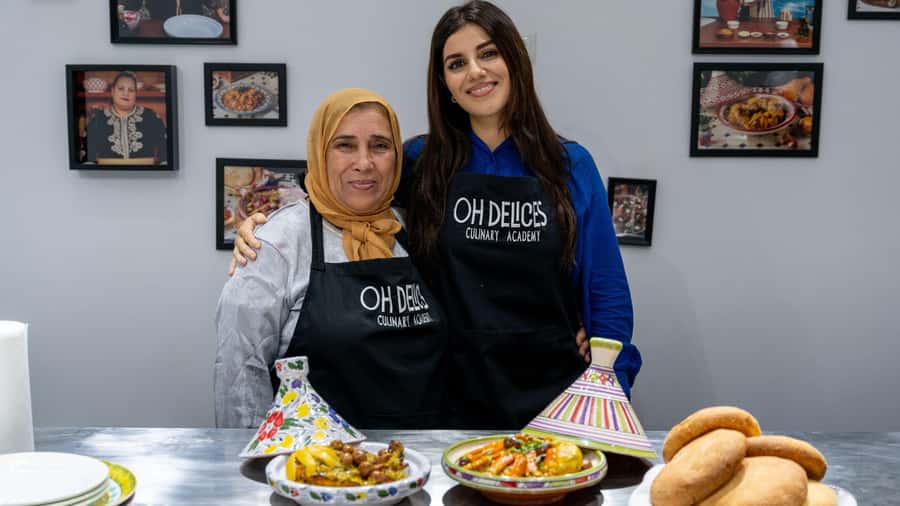
At $65 per person, the value depends on how much use you will make of the class. The fee includes all ingredients, cooking equipment, professional instruction, the meal afterward, tea, and recipes to take home.
That is a fair package for a three-hour activity. You are paying for food you would otherwise need to buy, a kitchen set up for instruction, guidance from local chefs, and a full meal at the end. The recipes add value if you plan to cook Moroccan food after returning home.
The class is less compelling if you only want to eat Moroccan food and do not care about preparing it. In that case, a restaurant meal will usually be simpler. But if you like learning by doing, the combination of instruction and dinner makes the price easier to justify.
Transportation is not included. You need to make your own way to the culinary studio, which is next to the Goethe Center building. Check the starting time when booking and allow enough time to find the building without rushing.
The class offers free cancellation up to 24 hours in advance, and you can reserve now and pay later. Those terms are useful if your Rabat plans are still shifting.
Practical advice before you arrive
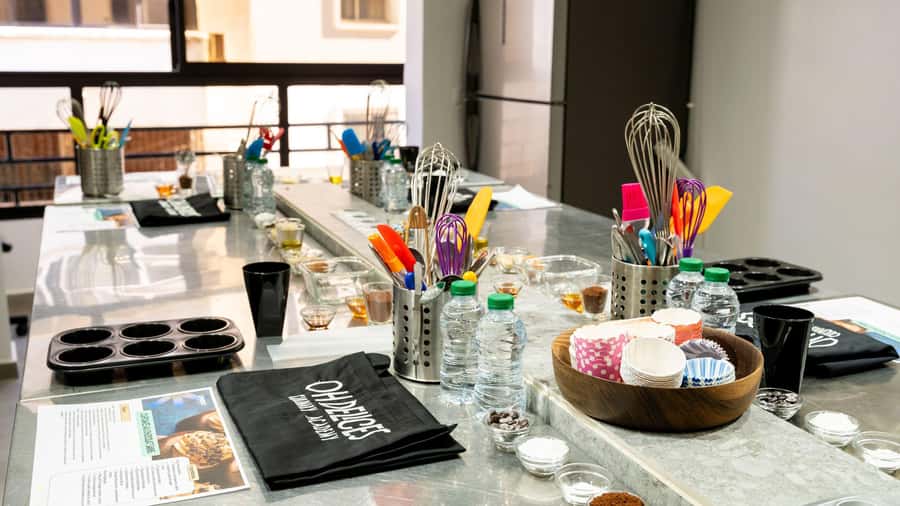
Wear comfortable clothing suitable for cooking. Comfortable shoes are specifically recommended, since you may spend much of the session standing and moving around the kitchen.
Avoid wearing anything you want to keep completely odor-free. Spices can cling to clothing, and one participant still noticed the aroma several days later. Bringing a light outer layer that can be aired out is a sensible idea, especially if the class takes place early in your stay.
Tell the organizers about dietary restrictions or food preferences in advance. The class can adjust what is prepared only if the team knows what you need before the session.
The studio is wheelchair accessible. Smoking, vaping, alcohol, drugs, weapons, and sharp objects not needed for the class are not allowed. Bare feet are also prohibited, so wear proper shoes.
Who will enjoy this Rabat cooking class
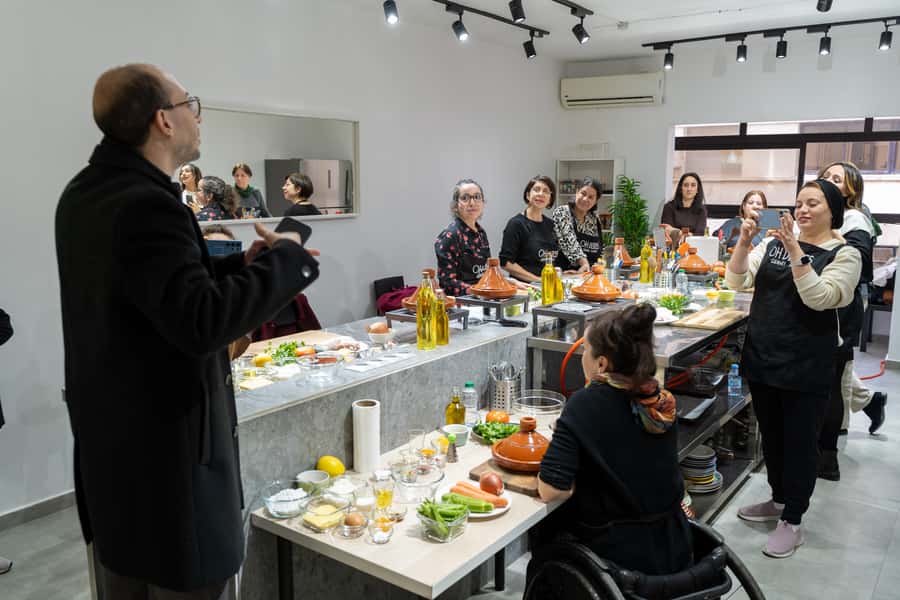
I would recommend this experience to anyone who wants more than a standard sightseeing stop. It suits beginners because the chefs provide support, but experienced home cooks can still learn about ingredients and techniques that are hard to copy from a recipe alone.
Couples can treat it as a shared evening activity. Families and groups can divide the work and enjoy the meal together. Solo visitors may appreciate the social setting, especially since the class is small enough for conversation.
It is also a good early activity in Rabat. You learn about Moroccan flavors near the beginning of your stay, then have a better idea of what to order in restaurants and markets afterward.
The class may be less suitable if you dislike cooking, have a very short schedule, or need a fully fixed menu. The pace includes preparation, translation, and group decisions, so it is not designed for someone who wants a fast, tightly scripted demonstration.
Should you book it?
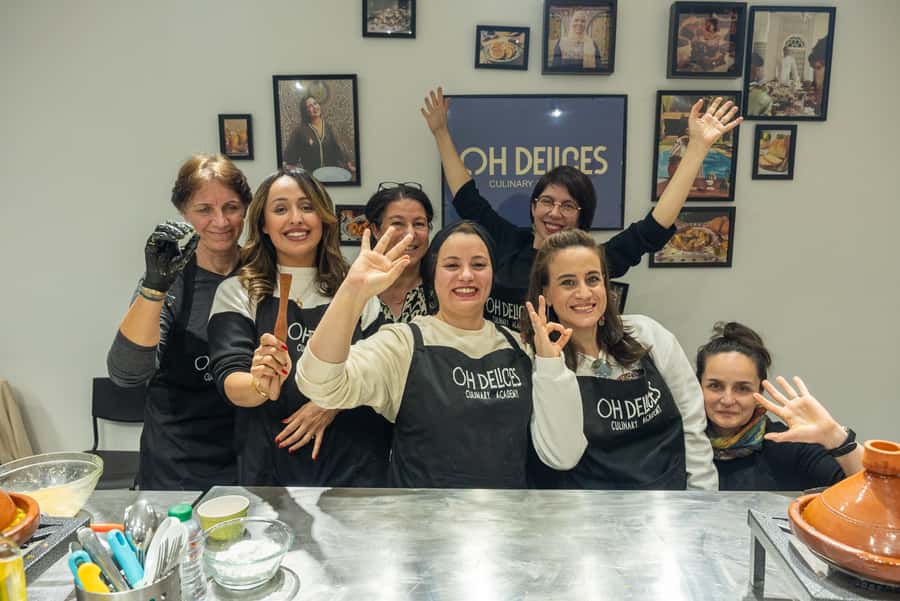
Book this class if you want to understand Moroccan food by making it yourself. The strongest reasons are the hands-on format, the chance to work with ingredients such as preserved lemon and fermented butter, the small group, and the full meal at the end.
I would especially choose it for a first visit to Rabat, for a rainy afternoon, or for a couple looking for an activity that feels local without requiring a long trip outside the city. Just wear comfortable clothes, expect some spice scent afterward, and tell the organizers about dietary needs before you arrive.
If you want only a meal, choose a restaurant. If you want recipes, conversation, and a better feel for how Moroccan dishes are built, the $65 fee buys a useful three hours.
FAQ
How long does the cooking class last?
The class lasts three hours, including the cooking session and the meal afterward.
How much does the class cost?
The price is $65 per person.
Where does the class take place?
The class takes place at OhDelices Culinary Academy in Rabat. The building is next to the Goethe Center building.
What dishes might I prepare?
The class can include tagine, couscous, msemen, pastilla, traditional breads, Moroccan starters, and sweet desserts. The exact menu may change according to the group.
Is a meal included?
Yes. You eat the meal prepared during the class, and Moroccan mint tea is included.
Are ingredients and cooking equipment provided?
Yes. All ingredients and cooking equipment are included.
Is the class available in English?
Yes. Arabic, English, and French are available. Classes in English and French can include a translator.
Can I tell the organizers about dietary restrictions?
Yes. You should inform the organizers of dietary restrictions or food preferences in advance.
How many people can join the class?
The class is a small-group experience with a maximum of 10 participants.
Recently reviewed around Morocco
- 4-Days Marrakech to Marrakech Désert Tour★ 5.0 · 17 reviews
- Camel ride at sunset in Marrakech palm grove★ 5.0 · 17 reviews
- Agafay camel ride★ 5.0 · 20 reviews
- Camel riding in marrakech★ 4.5 · 17 reviews
- Marrakech to Atlas Mountains and 4 Valleys Day Trip★ 5.0 · 17 reviews
- Agafay Desert Adventure, Culture, and Relaxation, From Marrakech★ 5.0 · 25 reviews
- Quad excursion to the Agafay desert near Marrakech★ 5.0 · 44 reviews
- Camel ride and dinner Agafay desert★ 5.0 · 25 reviews
Moroccan Cooking Classes, compared.
Traditional Moroccan Cooking Class & Market Visit
Read our review →
Moroccan Dishes Cooking Class with a Local Chef
Read our review →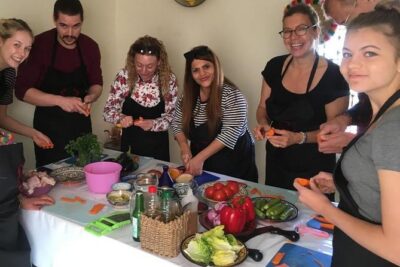
Moroccan Cooking Class & Marrakech Market Visit with Chef Khmisa
Read our review →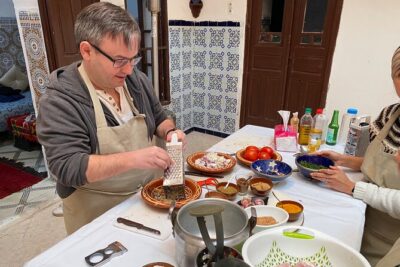
Half-Day Cooking Class with Local Chef Laila in Marrakech
Read our review →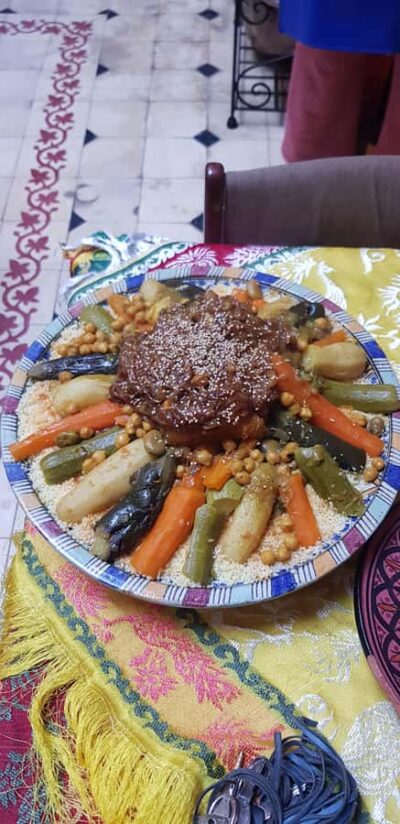
Browse the lists this tour appears in