
Reviewed · MOROCCAN COOKING CLASSES
Moroccan Cooking Workshop in Marrakech
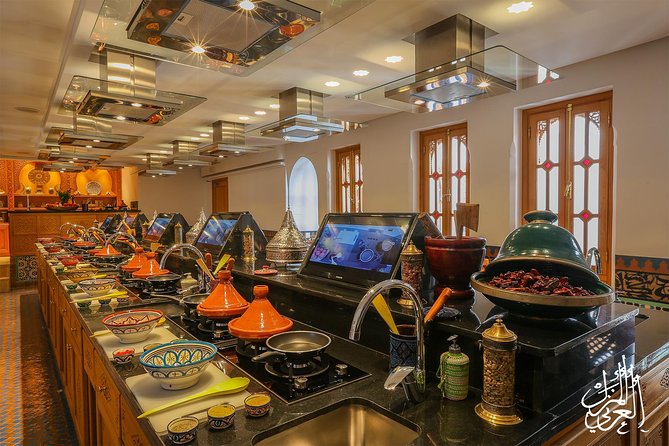
The best part of this Marrakech experience is that you do not just eat Moroccan food, you learn how to make it. At La Maison Arabe, a traditional Moroccan cook known as a Dada leads you through local recipes, while you work at your own station and eat the finished meal afterward.
I like the one-hour format, which fits neatly into a busy Marrakech day, and the chance to adjust the food to your taste. I also like the cultural touches: ceremonial mint tea, Moroccan bread, spice guidance, and the option to discover Moroccan wine with the meal.
The main consideration is time. One hour gives you a useful introduction, but not a leisurely, from-scratch culinary course. Children under 12 are not permitted, and drinks are not included unless you choose the optional wine tasting.
In This Review
- Key points to know before you book
- Cooking Moroccan food at La Maison Arabe
- Tea, bread, and the first taste of Morocco
- The Dada’s kitchen lesson
- What fits into one hour
- Eating what you have prepared
- The value of $34.76
- Who should take this class
- Group size, language, and age rules
- Planning the rest of your Marrakech day
- Is this Marrakech cooking workshop worth booking?
- FAQ
- Where does the Moroccan cooking workshop begin?
- Where does the activity finish?
- How long is the cooking class?
- What food activities are included?
- Is lunch included?
- Are drinks included?
- Is tea included?
- Are children allowed to join?
- Is transportation provided?
- What is the cancellation policy?
Key points to know before you book
- Cook at your own workstation: La Maison Arabe provides individual cooking spaces, giving you room to work without crowding around one counter.
- Learn from a Moroccan Dada: A local cook demonstrates the dishes and helps you through each stage, with French and English interpretation available.
- Expect more than tagine: The program includes Moroccan tea, bread-making, a starter, a main dish, and a side, while dessert is prepared for you.
- The one-hour class moves quickly: It suits a short Marrakech itinerary, but the longer class is better if you want more time at the stove.
- Your meal ends with a tasting: You sit down to eat what you prepared, with Moroccan wine available as an optional addition.
- The class is small by design: The booking information lists a maximum of two people, although one class account describes a larger group, so confirm the format when booking.
Cooking Moroccan food at La Maison Arabe
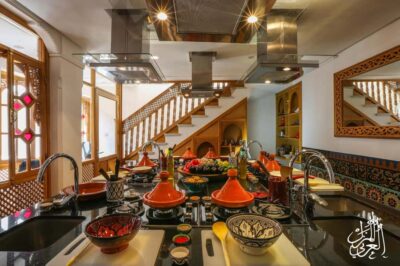
La Maison Arabe is at 1 Derb Assehbi in Marrakech. The activity begins and ends there, so you do not need to arrange a separate transfer between the kitchen and a restaurant.
That simple setup matters in Marrakech. You can reach the venue near public transportation, take part in the class, and finish back at the same address. Transportation to or from other attractions is not included, so plan your own route and allow time to find the riad-style hotel entrance in the medina.
The setting is part of the appeal. The hotel is described as beautiful, and the cooking school has a polished, comfortable setup. If you arrive early, you can stop for a coffee, tea, or cold drink at the hotel before the class begins. Drinks are not part of the standard price, so budget separately for that pause.
The cooking spaces are individual rather than one shared worktable. I see this as a real advantage for solo participants and couples. You can concentrate on your own knife work, seasoning, and preparation, while the instructors move around to help when needed.
That privacy does not mean you are left alone. The Dada demonstrates the cooking, and an interpreter in French and/or English introduces the class and helps explain the process. Names associated with the teaching team include Mohammad, Wafa, Fatiha, Hasna, Hasina, and Dada Habiba. The exact staff member may vary because the class can be operated by a multilingual guide.
More Cooking Classes in Marrakech
- Marrakech: Moroccan Cooking Class with Pickup
★ 4.6 · 1,862 reviews - Marrakech: Traditional Moroccan Cooking Class & Market Visit
★ 4.8 · 1,861 reviews - Marrakesh: Moroccan Dishes Cooking Class with a Local Chef
★ 5.0 · 1,615 reviews
Tea, bread, and the first taste of Morocco
The class opens with an introduction and a Moroccan tea ceremony. This is not just a drink before cooking. Mint tea has a formal place in Moroccan hospitality, and the ceremony gives you a quick lesson in how food and welcome fit together.
You also watch a demonstration of Moroccan bread-making. The supplied details do not specify the exact bread style, so you should not expect a particular recipe every time. Still, the demonstration helps place the cooking in a daily Moroccan context rather than treating tagine as an isolated tourist dish.
The tea and bread sections are especially useful if you have already eaten at Marrakech restaurants and want to understand what happens behind the plate. You get a glimpse of the gestures, ingredients, and customs that make a meal feel Moroccan.
The class includes afternoon tea and food tasting. The meal is also listed as lunch, although the timing depends on the departure you select. Check your booking time if you are planning this around a separate lunch reservation.
The Dada’s kitchen lesson
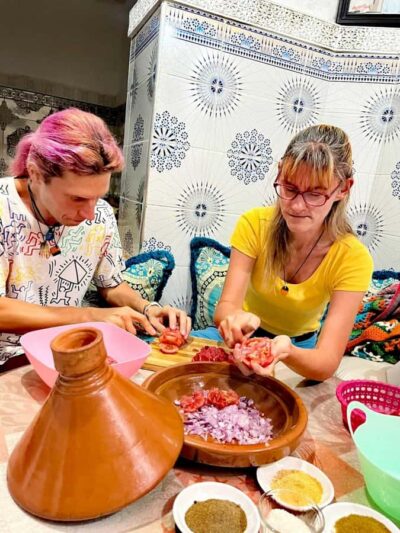
After the introduction, the Dada leads the practical cooking session. In Moroccan homes, Dada is a respectful term for a traditional cook, and the role here is more than simply showing you a printed recipe. You follow the demonstration, prepare ingredients at your personal workstation, and receive help with steps that cause trouble.
The most repeated praise goes to the teaching. You can expect patient instruction, friendly assistance, and explanations about spices and Moroccan food customs. Mohammad is specifically associated with clear guidance about spices, while Hasna is described as helping with interpretation and cultural explanations. Other instructors, including Wafa, Fatiha, and Dada Habiba, are also connected with warm, attentive teaching.
You may prepare a starter, a main dish, and a side dish. The exact menu can vary, but tagine is a central example. One class included chicken tagine, and the meal was praised for its flavor. You may also be able to adjust the seasoning to suit your taste, which is useful if you want extra garlic or prefer a different balance of spices.
Do not expect a restaurant chef to take over every task. The point is to do the preparation yourself. That makes the class more rewarding, but it also means the one-hour option can feel brisk. Instructors assist when you need help, yet you still need to pay attention and keep moving.
What fits into one hour
The one-hour workshop is designed as a compact introduction. In that time, you can learn about Moroccan spices, see how tagine is prepared, take part in the tea tradition, and cook enough food for a proper tasting.
That is a lot for 60 minutes. The class works best if you want a practical holiday activity rather than a full culinary school session. It also suits a solo visitor with limited time, a couple fitting an experience between sightseeing stops, or a family with a child aged 12 or older.
The short format has limits. You may not spend long discussing every ingredient, and some preparation steps are likely to be demonstrated rather than handled slowly by each participant. If you want time to ask many questions, repeat techniques, or prepare a broader menu, choose the longer option if it is available for your date.
The experience offers different class lengths, including a three-hour lesson. One participant enjoyed the one-hour version enough to book the three-hour course later in the same Marrakech stay. That tells you how to think about the choices: one hour is a quick, satisfying taste, while three hours should give you more breathing room for the cooking itself.
More Marrakech trips worth a second look
- Moroccan Cooking Class & Marrakech Market Visit with Chef Khmisa
★ 5.0 · 1,504 reviews - Half-Day Cooking Class with Local Chef Laila in Marrakech
★ 5.0 · 952 reviews - Marrakech: Moroccan Cooking Class with a Local Family
★ 4.9 · 668 reviews - Marrakech: Moroccan Cuisine Cooking Class in Local Home
★ 4.8 · 508 reviews
Eating what you have prepared
The meal at the end is not an afterthought. You sit down and taste the dishes you have worked on, which gives the lesson a clear payoff. A tagine you have seasoned and prepared yourself is more memorable than one served without explanation.
Dessert is prepared for you rather than necessarily cooked by you. This keeps the short workshop manageable and rounds out the meal. Depending on the class arrangement, you may prepare a starter, main course, and side, then enjoy a dessert made by the kitchen team.
Moroccan wine is available as an optional discovery with the tasting. Since drinks are not included in the standard experience, ask about the wine option before you begin if it matters to you. You can still enjoy the meal without it.
The food is the strongest practical souvenir. The class is intended to teach recipes you can make again at home, and a recipe book may be available for purchase. If you want to recreate the meal after returning home, buying the book is a sensible extra, especially since spice proportions and cooking times can be easy to forget.
The value of $34.76
At $34.76 per person, this is priced above a simple restaurant lunch but below many long cooking courses. The value comes from combining instruction, local food, a cultural introduction, a prepared meal, and the use of a personal workstation.
I think the price works best for you if you are already planning to spend money on lunch. Instead of paying only to eat, you receive a lesson and then eat the result. The private station also gives the class a more personal feel than a demonstration where you simply watch a chef work.
The one-hour length keeps the cost reasonable, though it also means you are paying for a concentrated session. If you mainly want to learn several techniques in detail, the longer class may offer better value, provided you have the time and the price fits your budget.
The class has an average booking lead time of 21 days. That is a useful planning signal, especially if your Marrakech dates are fixed. Confirmation is sent within 48 hours, subject to availability, so do not leave this until the last moment if the class is important to your itinerary.
Who should take this class
I would choose this for someone who wants food to be part of a Morocco trip, not just fuel between sights. It suits curious cooks, couples, solo visitors, and parents with teenagers aged 12 or older.
It is also a good choice if you want a controlled introduction to Moroccan cuisine. You work in a professional kitchen setting, receive help as you go, and do not need advanced cooking skills. The instructors are there to guide you through the steps.
The class may be less suitable if you dislike structured activities or want a long, relaxed meal with no timetable. The one-hour session covers a lot, so it is not the place for an unhurried afternoon of conversation and experimentation.
It is a particularly practical pick for your last day if you have a flight later, since the one-hour option can fit where the three-hour course cannot. Still, leave enough time for your own transportation and airport plans. The activity does not provide transfers.
Group size, language, and age rules
The experience is presented as having a maximum of two participants, which makes the individual workstations especially appealing. One class description refers to a group of 14, so the actual group format may differ by departure or booking arrangement. If a very small class is essential to you, confirm the number before paying.
The class may be conducted by a multilingual guide. The schedule begins with an interpreter in French and/or English, so you should have language support in one of those languages. If you need another language, ask before booking rather than assuming it will be available.
Children under 12 are not permitted for security reasons. A 14-year-old has taken part successfully, so older children and teenagers can be a good fit, particularly if they enjoy food and hands-on activities.
The experience includes live commentary and live entertainment in the supplied inclusions, though the detailed schedule focuses mainly on the interpreter, tea ceremony, bread demonstration, cooking lesson, and tasting. Treat the cooking program as the core experience.
Planning the rest of your Marrakech day
Because the class starts and ends at La Maison Arabe, it is easy to pair with other medina activities. Keep your schedule flexible enough to find the meeting point and settle in before the introduction.
Arriving early is worthwhile. The hotel provides a pleasant place for a coffee, tea, or cold drink, though those purchases are separate. This also gives you a calm start before handling ingredients and following the cooking demonstration.
The one-hour session is the easiest to fit around sightseeing. The three-hour option needs more space in your day, and it may not work before a flight or a tightly timed excursion. Confirm the length you have selected, since the experience offers more than one format.
Cancellation is free if you cancel at least 24 hours before the local start time. Within 24 hours, you will not receive a refund, and changes made inside that period are not accepted. That rule is worth noting before you place the booking, particularly if your Marrakech plans are still shifting.
Is this Marrakech cooking workshop worth booking?
Yes, if you want a short, hands-on introduction to Moroccan food with a meal at the end. The strongest reasons to book are the personal workstation, patient instruction, tea and bread traditions, and the chance to take a tagine recipe home.
Choose the one-hour class if your schedule is tight or you want a first taste of Moroccan cooking. Choose the longer class if your main goal is technique and you want more time with the Dada.
I would skip it only if you want a completely unstructured meal or if you cannot spare the time for a scheduled activity. For most food-focused visits to Marrakech, $34.76 is a fair price for an experience that feeds you once and may help you cook Moroccan food many times afterward.
FAQ
Where does the Moroccan cooking workshop begin?
The class begins at Hotel La Maison Arabe, 1 Derb Assehbi, Marrakesh 40000, Morocco.
Where does the activity finish?
The activity ends back at the meeting point at Hotel La Maison Arabe.
How long is the cooking class?
The listed workshop lasts approximately one hour. Longer class options are also available, including a three-hour lesson.
What food activities are included?
The schedule includes a Moroccan tea ceremony, a demonstration of Moroccan bread-making, a cooking lesson with a Dada, and a tasting of the dishes prepared.
Is lunch included?
Yes. Lunch and food tasting are listed as included, although the exact timing depends on the class departure you select.
Are drinks included?
No. Drinks are not included. Moroccan wine may be available as an optional addition during the meal.
Is tea included?
Yes. Afternoon tea is included, and the class begins with a Moroccan tea ceremony.
Are children allowed to join?
Children under 12 are not permitted in the cooking classes for security reasons.
Is transportation provided?
No. Transportation to and from attractions is not included. You must make your own way to and from La Maison Arabe.
What is the cancellation policy?
You can cancel at least 24 hours before the experience start time for a full refund. Cancellations or changes made less than 24 hours before the local start time are not accepted and are not refunded.
More Workshops in Marrakech
- Marrakech: Pottery Workshop with Moroccan Tea
★ 4.8 · 756 reviews - Marrakech: Moroccan Cooking Workshop at La Maison Arabe
★ 5.0 · 446 reviews - Marrakesh cooking class with chef Hassan – Local dishes
★ 5.0 · 425 reviews - Marrakech: Tajine Cooking Class in a Traditional Riad
★ 4.8 · 424 reviews
Recently reviewed around Marrakech
- 4-Days Marrakech to Marrakech Désert Tour★ 5.0 · 17 reviews
- Camel ride at sunset in Marrakech palm grove★ 5.0 · 17 reviews
- Agafay camel ride★ 5.0 · 20 reviews
- Camel riding in marrakech★ 4.5 · 17 reviews
- Marrakech to Atlas Mountains and 4 Valleys Day Trip★ 5.0 · 17 reviews
- Agafay Desert Adventure, Culture, and Relaxation, From Marrakech★ 5.0 · 25 reviews
- Quad excursion to the Agafay desert near Marrakech★ 5.0 · 44 reviews
- Camel ride and dinner Agafay desert★ 5.0 · 25 reviews
Moroccan Cooking Classes, compared.
Traditional Moroccan Cooking Class & Market Visit
Read our review →
Moroccan Dishes Cooking Class with a Local Chef
Read our review →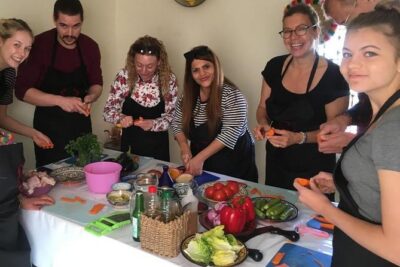
Moroccan Cooking Class & Marrakech Market Visit with Chef Khmisa
Read our review →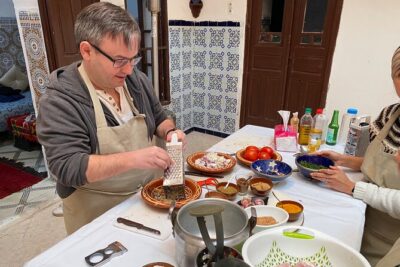
Half-Day Cooking Class with Local Chef Laila in Marrakech
Read our review →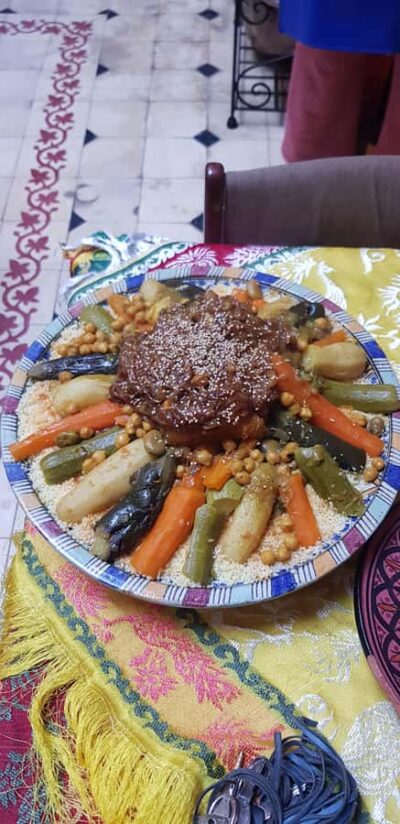
Browse the lists this tour appears in