
Reviewed · MOROCCAN COOKING CLASSES
Marrakech: Traditional Moroccan Crepes & Bread Cooking Class
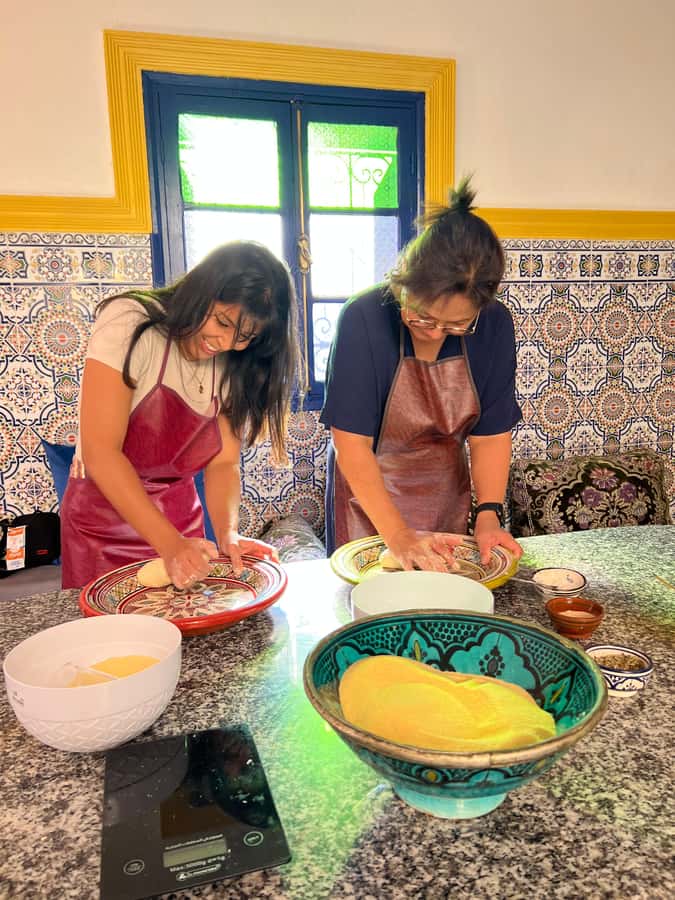
Marrakech has no shortage of food tours, but this one puts your hands in the dough. In two hours, you make msemen, harcha, and batbout, three Moroccan breads with different textures and cooking methods, then sit down with mint tea to eat what you made.
I like the small groups, capped at 10, and the fact that you work from start to finish instead of watching a chef do all the work. I also like the practical payoff: you receive the recipes, and several participants have found the techniques simple enough to repeat at home. The main consideration is communication. English, French, and Arabic are offered, but the person demonstrating may not always speak your language directly.
In This Review
- Key points to know before booking
- Three Moroccan breads, three different lessons
- Arriving at 44 Der Hajra near Bab Doukkala
- The first lesson: handling the dough
- Msemen: the flaky crepe worth learning
- Harcha and batbout add useful variety
- Mint tea is more than a drink at the end
- Tasting, leftovers, and the useful take-home value
- Why the small group matters
- The price and what you actually receive
- Who should book this Marrakech bread class?
- Practical details before you reserve
- Should you book it?
- FAQ
- Where is the Moroccan crepes and bread class held?
- How long does the cooking class last?
- Which Moroccan breads will I make?
- Is mint tea included?
- Are ingredients and cooking equipment provided?
- What languages are available?
- Is the class suitable for children or people with gluten intolerance?
Key points to know before booking
- Three breads in two hours: Make flaky msemen, semolina-based harcha, and soft batbout, each using a different technique.
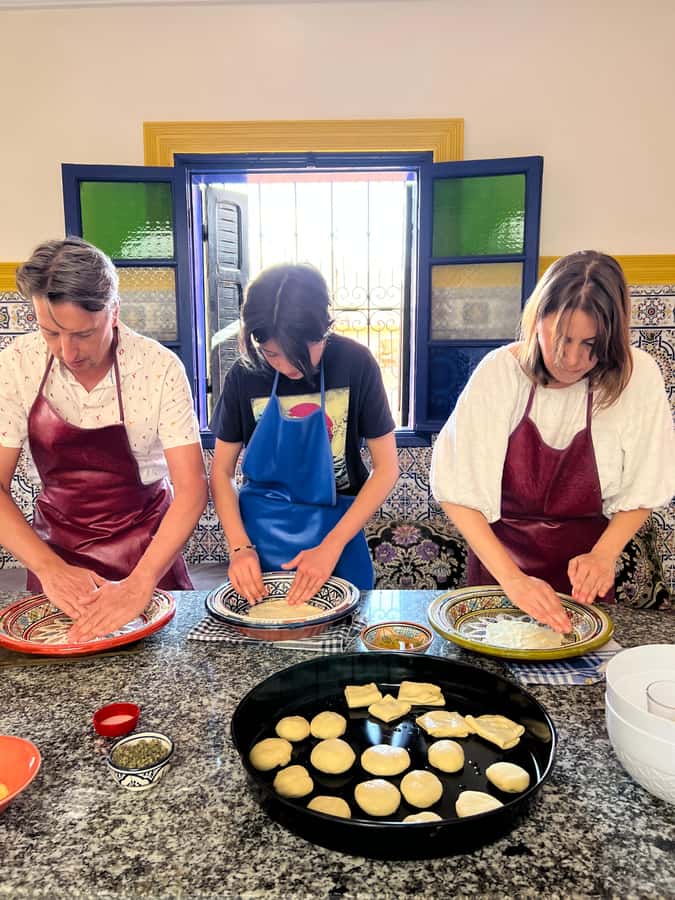
- A real hands-on class: An apron, utensils, ingredients, and step-by-step guidance are supplied, so you do not need cooking experience.
- Mint tea is part of the lesson: You help prepare and pour traditional Moroccan mint tea, then serve it with your bread.
- Small groups help: The class is limited to 10 people, and some sessions have been much smaller.
- Near Bab Doukkala: The workshop is at 44 Der Hajra, in an area reached through local food markets rather than a polished tourist setting.
- Good value at $37: You get two hours of instruction, a full tasting, tea, recipes, and sometimes enough leftovers to take away.
Three Moroccan breads, three different lessons
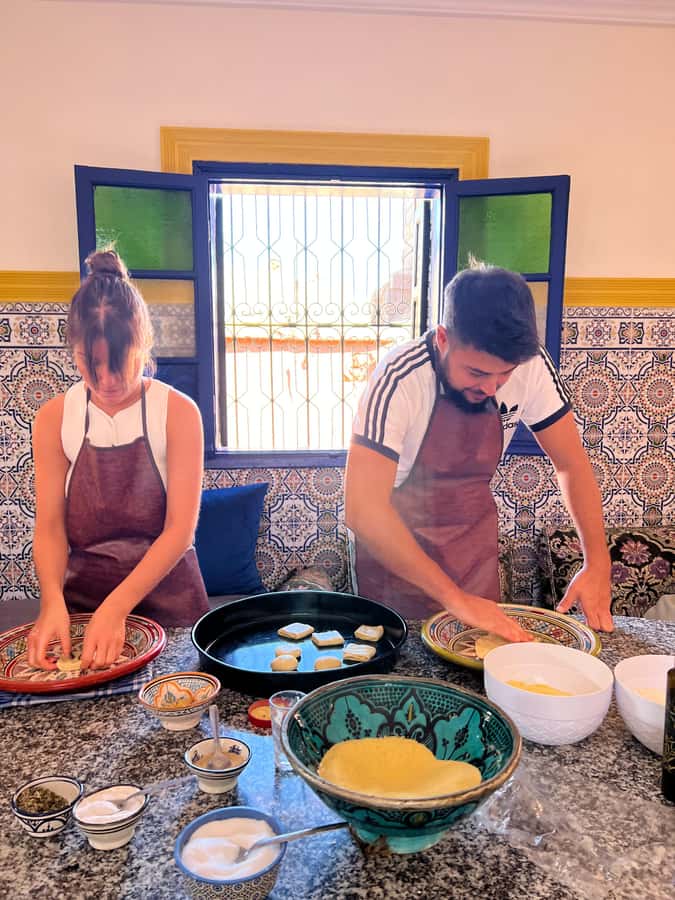
The appeal here is simple: you do not just sample Moroccan bread, you learn why the breads feel and cook so differently. The class focuses on three familiar staples.
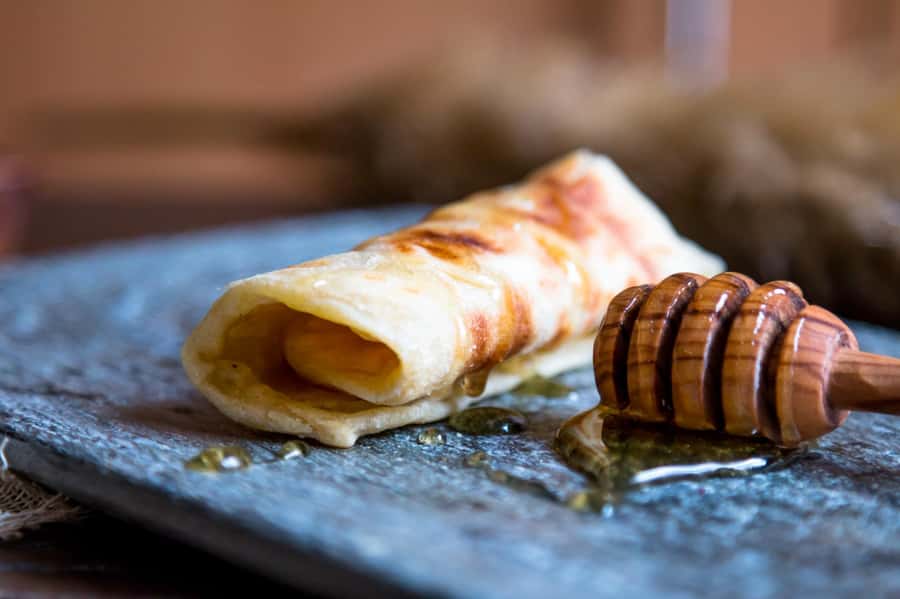
Msemen is the square Moroccan crepe you may have seen at breakfast tables across the country. Its dough is stretched, folded, and cooked until it develops thin layers and a lightly crisp surface. The folding takes practice, but that is exactly why it is useful to learn with someone nearby.
Harcha is a round semolina pancake or galette. It has a more crumbly, tender texture than msemen and uses a different approach to shaping and cooking. Making it alongside the other two breads gives you a clear lesson in how a few basic ingredients can produce very different results.
Batbout is a soft, pita-like Moroccan bread. It is cooked as a small round flatbread and has a lighter, more pillowy character. You may know it as the bread used for sandwiches or served alongside savory foods, but here you get to shape and cook it yourself.
The class is less about fancy equipment and more about touch. You learn how a dough feels when it is ready, how thin to stretch it, and how to handle it without tearing. Those small details are hard to pick up from a recipe alone.
More Cooking Classes in Marrakech
- Marrakech: Moroccan Cooking Class with Pickup
★ 4.6 · 1,862 reviews - Marrakech: Traditional Moroccan Cooking Class & Market Visit
★ 4.8 · 1,861 reviews - Marrakesh: Moroccan Dishes Cooking Class with a Local Chef
★ 5.0 · 1,615 reviews
Arriving at 44 Der Hajra near Bab Doukkala
The workshop address is 44 Der Hajra, Bab Doukkala, Marrakech. You are responsible for getting there, since transportation is not included.
This is worth planning for. Directions have been sent by WhatsApp before some sessions, which can make the location easier to find. The walk toward the workshop may take you through food markets used more by local residents than by sightseeing groups. That setting is part of the charm, but you should allow enough time to locate the address rather than arriving at the last minute.
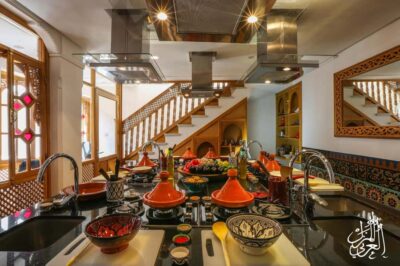
The workshop is described as a beautiful Moroccan home, with a relaxed, home-kitchen feel. Do not expect a formal culinary school with rows of stainless-steel workstations. The setting is more personal and domestic, which suits a class about everyday Moroccan breads.
Wear comfortable clothes suitable for baking. Bring water, an appetite, and a willingness to work with flour and dough. All cooking ingredients and utensils are provided, as is an apron.
The first lesson: handling the dough
The class begins with an introduction to the ingredients and the basic techniques for each bread. Your host demonstrates the process, then you take over with the dough in front of you.
This format matters. Moroccan flatbreads can look easy when someone experienced makes them quickly. The difficult parts are often the small movements: stretching without tearing, spreading ingredients evenly, folding into layers, and shaping the dough to the right thickness.
You receive guidance as you go, rather than being left to compare your dough with someone else’s finished product. Fatima is named in the class feedback, and Jamila has also led sessions. Their teaching style appears practical and hands-on, with demonstrations followed by direct help at the work surface.
Language may shape the class a little. Instruction is available in Arabic, French, and English, but one session had a demonstrator who spoke no English, leaving a participant unable to ask every question. Another class used a translator successfully. If detailed verbal explanation is important to you, check the language arrangement when you book.
Still, baking has its own vocabulary. A hand gesture, demonstration, and a quick correction can often explain more than a long speech. The class is designed for participation, not for advanced culinary theory.
Msemen: the flaky crepe worth learning
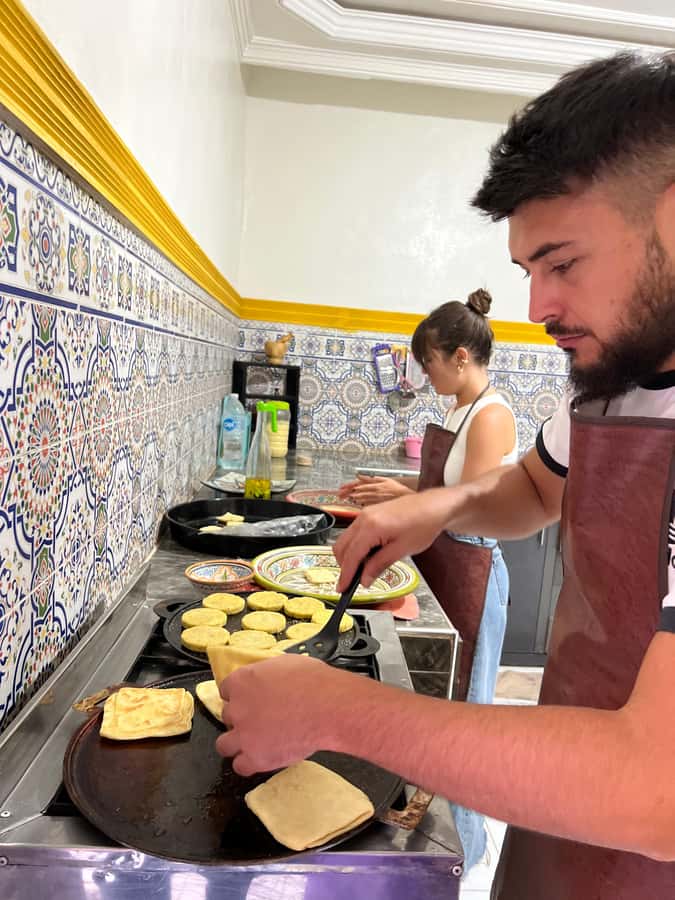
Msemen is likely to be the bread you remember most clearly from the class. It is folded into layers and cooked on a hot surface, giving you a crisp outside and a soft, layered center.
The work is tactile and a little messy. You spread and fold the dough, then cook it under guidance. You will probably notice that the finished bread looks more polished than your first attempt. That is normal, and it is part of the fun.
This lesson has a practical benefit for anyone who has been eating Moroccan breakfasts during a stay in Marrakech. One participant specifically appreciated learning to make the pancakes served at the hotel. The recipe lets you take that memory home instead of leaving it on the breakfast buffet.
Msemen is also a good test of the teaching style. You need to see the technique clearly, and you benefit from someone showing you how much pressure to use. A small group makes it easier to ask for help when your dough does not behave as planned.
More Marrakech trips worth a second look
- Moroccan Cooking Class & Marrakech Market Visit with Chef Khmisa
★ 5.0 · 1,504 reviews - Half-Day Cooking Class with Local Chef Laila in Marrakech
★ 5.0 · 952 reviews - Marrakech: Moroccan Cooking Class with a Local Family
★ 4.9 · 668 reviews - Marrakech: Moroccan Cuisine Cooking Class in Local Home
★ 4.8 · 508 reviews
Harcha and batbout add useful variety
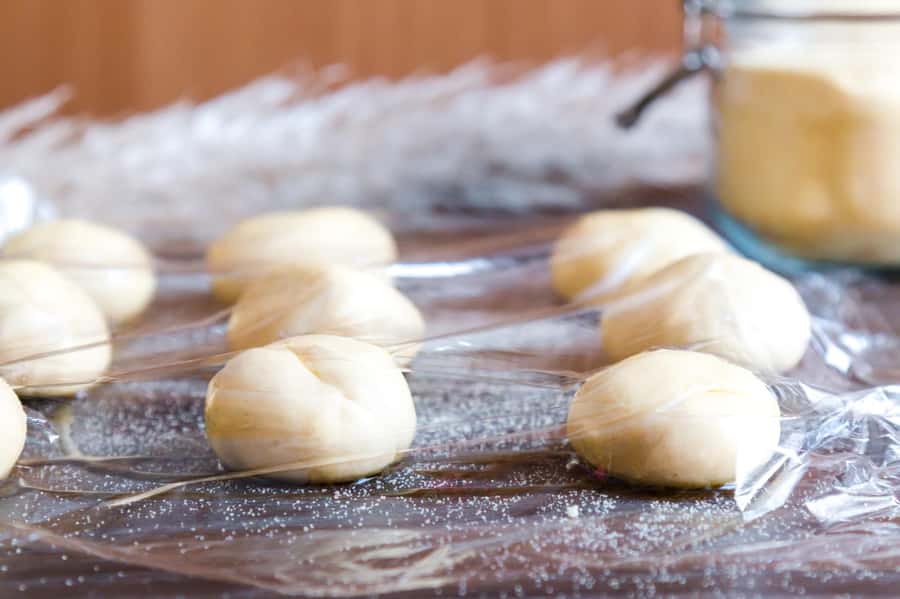
The class would be less useful if it taught three versions of the same flatbread. Harcha and batbout prevent that.
Harcha introduces you to a semolina-based pancake with a different texture and method. It is less about building delicate layers and more about shaping a tender, substantial round. You can compare it directly with msemen while both are fresh.
Batbout teaches another basic Moroccan bread style. Its soft, pita-like form gives you a useful option for serving with fillings or alongside a meal. The three recipes cover a fair range of Moroccan everyday baking without turning the class into an all-day course.
The two-hour length works well for this selection. You have time to prepare, cook, and taste the breads, but the schedule remains manageable for a morning or afternoon in Marrakech. You will not get an exhaustive course in Moroccan cuisine, and that is not the promise. This is a focused bread lesson with enough variety to keep it interesting.
Mint tea is more than a drink at the end
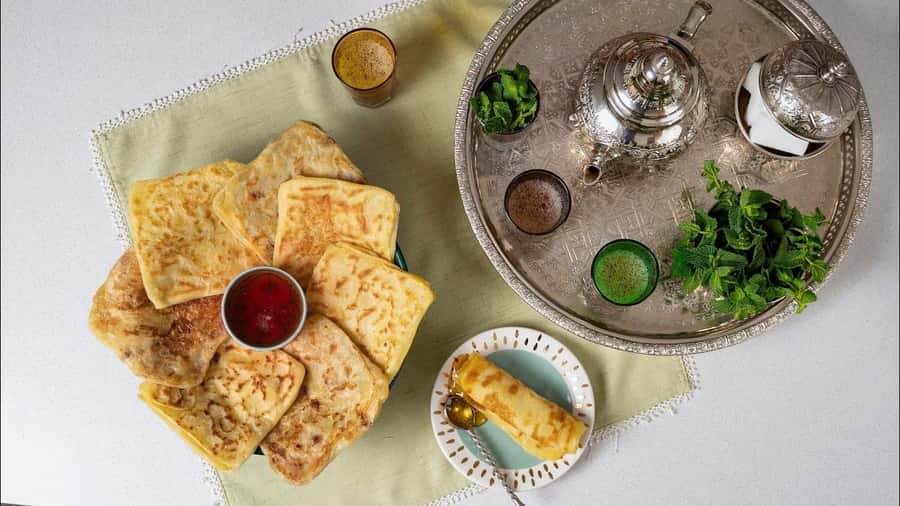
Once the breads are prepared and cooked, you help make Moroccan mint tea. This is not simply a cup placed on the table as a final extra. The traditional tea ritual is included as part of the activity.
You learn how the tea is prepared and poured, then serve it with your baked creations. That pairing makes sense: warm bread, olives, honey, jam, and mint tea turn the final tasting into a small Moroccan snack rather than a quick sample.
The tea ritual also slows the class down. After handling dough and standing near the cooking area, you sit and talk about your trip to Morocco. This social finish is one of the better features for couples, friends, and solo participants who want an activity with conversation built in.
The accompaniments can include items such as olives and jam, though the exact serving details may vary. What is consistent is that you taste the bread you made yourself, which gives the class a satisfying finish.
Tasting, leftovers, and the useful take-home value
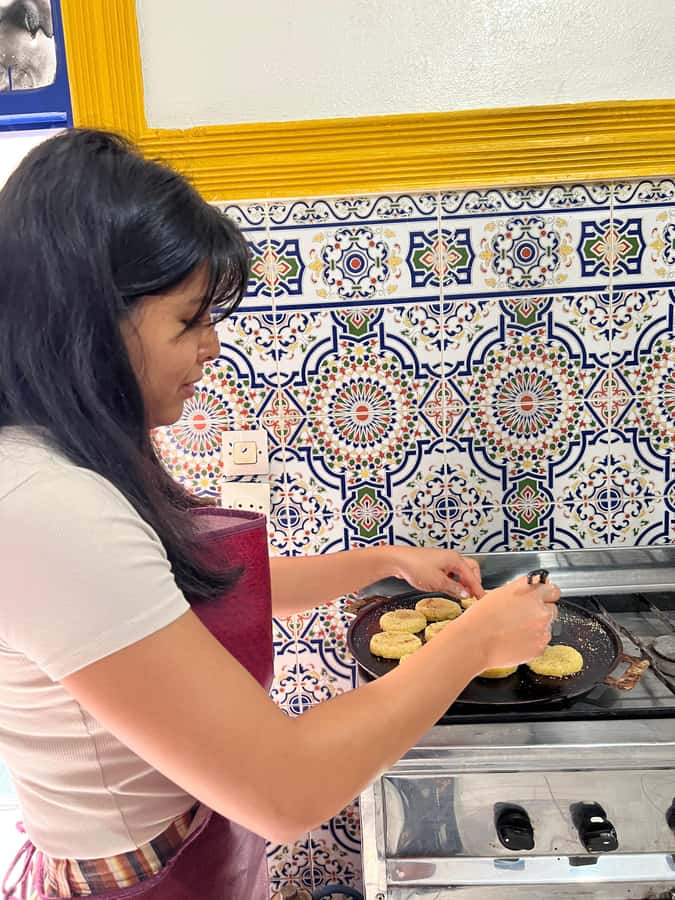
You are expected to eat your finished breads during the class. Portions can be generous. One participant had more bread than expected to take away, while a smaller class of two allowed the pair to bring home the leftovers.
A box has been provided in some sessions for unfinished bread. This is a nice practical touch, but do not assume the amount of food or take-home packaging will be identical every time. It depends partly on the number of participants and how much you produce.
The electronic recipes are included. They are an important part of the value because the class is short and the techniques are easy to forget once you return to your hotel. One participant had not yet received the recipes and needed to follow up, so keep an eye on your messages after the class.
The recipes make this more than a one-time holiday activity. You can try msemen, harcha, and batbout at home, then adjust your technique with practice. That repeat value helps justify the $37 price.
Why the small group matters
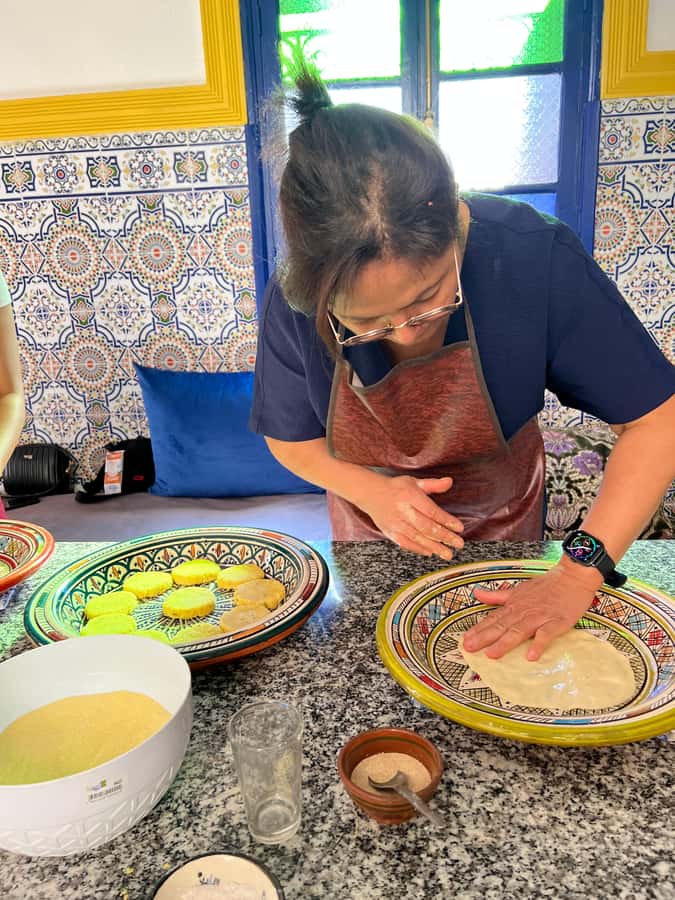
The maximum group size is 10. That is small enough for the instructor to watch your technique, especially during dough stretching and shaping.
Some sessions have had nine participants, and others have been private or nearly private because only two or three people booked. A group of three was described as a personal class, while a group of nine still allowed participants to ask for help.
The tradeoff is that group size can vary. A fuller class may feel more social, while a tiny session gives you more direct attention. Neither format changes the basic activity, but it can affect how much time you receive at the work surface.
This is a good choice if you want to meet other people without joining a large coach-style food tour. You can cook together, compare results, and chat while the breads cool.
The price and what you actually receive
At $37 per person, the class is fairly priced for a two-hour activity that includes ingredients, equipment, an apron, instruction, tasting, mint tea, and electronic recipes.
The value is strongest if you care about learning a repeatable skill. You are not paying only for food. You are paying for a guided introduction to three recipes, help with techniques that are difficult to judge alone, and a chance to eat a full snack or light meal afterward.
It is less compelling if you only want to taste Moroccan bread. You can find msemen and other breads elsewhere in Marrakech without taking a class. Book this for the making, not just the eating.
The included recipes also help the price. If you use them at home, the experience continues after your holiday. Just remember that the recipe delivery may require a polite follow-up if it does not arrive promptly.
Who should book this Marrakech bread class?
I would choose this for anyone who enjoys food as a way to understand daily life. You do not need professional cooking skills. The teaching is built around demonstration and practice, and the class welcomes beginners.
It suits couples, friends, and families with children aged four and older. A family of four had an enjoyable session together, but children under four are not suitable for the activity. Young participants should also be comfortable around baking equipment and able to take part in a two-hour lesson.
It is a good option for a rainy day, a break from sightseeing, or a quieter counterpoint to the noise of the medina. The home setting and local market walk give it a more ordinary feel than a staged show kitchen.
I would be more cautious about booking if you have food allergies or gluten intolerance. The activity is specifically based on wheat and semolina breads, and people with food allergies or gluten intolerance are listed as unsuitable.
Practical details before you reserve
The class lasts two hours, with starting times dependent on availability. Arabic, French, and English are the listed languages.
You do not need to bring ingredients, utensils, or an apron. Bring water and wear clothes you can bake in comfortably. Transportation and personal expenses are not included.
The activity allows cancellation up to 24 hours before the start for a full refund, and a reserve-now, pay-later option is available. Those terms are useful if your Marrakech schedule is still shifting.
The overall rating is 4.8 from 135 ratings, with especially strong praise for the hands-on teaching, friendly welcome, small groups, fresh food, and value. The less positive point is clear too: language support and recipe delivery may not be perfect in every case.
Should you book it?
Book this class if you want to learn three classic Moroccan breads, eat a satisfying homemade snack, and spend time in a local-style setting near Bab Doukkala. The small group, included equipment, mint tea ritual, and take-home recipes give it more substance than a quick cooking demonstration.
Skip it if you have a serious food restriction, dislike hands-on kitchen work, or only want a tasting. Also confirm the teaching language if you need detailed explanations in English.
For most food-curious visitors, $37 buys a useful and enjoyable afternoon or morning. You leave with full stomach, new techniques, and a better understanding of the breads that appear throughout Morocco.
FAQ
Where is the Moroccan crepes and bread class held?
The workshop is at 44 Der Hajra, Bab Doukkala, Marrakech.
How long does the cooking class last?
The class lasts two hours. Starting times depend on availability.
Which Moroccan breads will I make?
You will make msemen, harcha, and batbout, which is a Moroccan pita-style flatbread.
Is mint tea included?
Yes. You help prepare traditional Moroccan mint tea, learn about the tea ritual, and taste it with your baked creations.
Are ingredients and cooking equipment provided?
Yes. Ingredients, utensils, and an apron are provided for the interactive class.
What languages are available?
The listed languages are Arabic, French, and English. In some sessions, a translator may assist if the demonstrator does not speak your preferred language.
Is the class suitable for children or people with gluten intolerance?
Children under four are not suitable for the activity. People with food allergies or gluten intolerance are also listed as unsuitable.
More Workshops in Marrakech
- Marrakech: Pottery Workshop with Moroccan Tea
★ 4.8 · 756 reviews - Marrakech: Moroccan Cooking Workshop at La Maison Arabe
★ 5.0 · 446 reviews - Marrakesh cooking class with chef Hassan – Local dishes
★ 5.0 · 425 reviews - Marrakech: Tajine Cooking Class in a Traditional Riad
★ 4.8 · 424 reviews
Recently reviewed around Marrakech
- 4-Days Marrakech to Marrakech Désert Tour★ 5.0 · 17 reviews
- Camel ride at sunset in Marrakech palm grove★ 5.0 · 17 reviews
- Agafay camel ride★ 5.0 · 20 reviews
- Camel riding in marrakech★ 4.5 · 17 reviews
- Marrakech to Atlas Mountains and 4 Valleys Day Trip★ 5.0 · 17 reviews
- Agafay Desert Adventure, Culture, and Relaxation, From Marrakech★ 5.0 · 25 reviews
- Quad excursion to the Agafay desert near Marrakech★ 5.0 · 44 reviews
- Camel ride and dinner Agafay desert★ 5.0 · 25 reviews
Moroccan Cooking Classes, compared.
Traditional Moroccan Cooking Class & Market Visit
Read our review →
Moroccan Dishes Cooking Class with a Local Chef
Read our review →
Moroccan Cooking Class & Marrakech Market Visit with Chef Khmisa
Read our review →
Half-Day Cooking Class with Local Chef Laila in Marrakech
Read our review →
Browse the lists this tour appears in