
Reviewed · MOROCCAN COOKING CLASSES
Marrakech: Moroccan Cooking Class with Local Chef
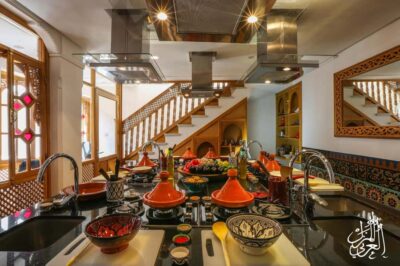
The best part of this Marrakech experience happens before the cooking begins: you walk through a local food market, choose fresh ingredients, and see the everyday side of Moroccan food shopping. Back at Riad Black Doors, Marouane and Abdou guide you through tagine, salads, spices, and tea in a friendly home-style setting.
I like the market visit because it gives the meal a sense of place, and I like the hands-on format because you do more than watch a chef work. The main thing to consider is time: tagine cooks slowly, and one past session included a long wait after the preparation was finished.
In This Review
- Key points to know before booking
- From Café de France to a Marrakech food market
- Meeting Moroccan chefs at Riad Black Doors
- Mint tea before the cooking begins
- Preparing salads, tagine, and dessert
- The slow part: waiting for the tagine
- Sharing the meal you prepared
- Is $35 a fair price?
- Who will enjoy this class most?
- Practical details that affect your afternoon
- Should you book it?
- FAQ
- Where does the cooking class meet?
- Is hotel pickup included?
- How long does the experience last?
- What languages are available?
- Does the experience include a market visit?
- What food is included?
- Can dietary restrictions be discussed?
- Who leads the class?
- Can I cancel or pay later?
Key points to know before booking
- Market shopping comes first: You help select ingredients in a souq away from the most tourist-focused areas.
- Berber cooking hosts: Marouane and Abdou share Moroccan and Amazir culinary traditions, while other sessions may be led by Khalid.
- You prepare the meal yourself: Expect practical work with Moroccan spices, salads, a main dish, and dessert.
- Tea has its own ritual: Mint tea is prepared and explained before the meal.
- Good value at $35: The fee includes the guide, class, tea, and meal across a five-hour experience.
- Market timing matters: The souq visit is not included on Fridays or during Ramadan.
From Café de France to a Marrakech food market
You meet in front of the main door of Café de France on Jemaa el Fna Square. This is a sensible landmark in the Medina, but the square can be noisy and crowded, so arrive with enough time to find the exact meeting spot.
From there, the group walks for about five minutes. There is no hotel pickup, so you need to make your own way to the square. That short walk leads into the cooking workshop at Riad Black Doors, located in the heart of the Medina.
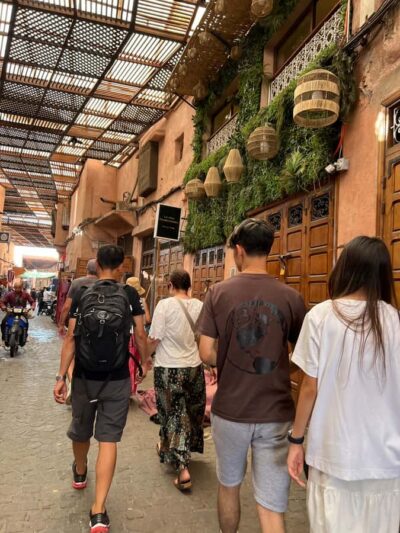
The first stop is a local souq away from the main tourist areas. This is not just a quick photo stop. You help buy the vegetables, spices, and other products needed for the meal. That small task changes how you understand Moroccan cooking. You see the ingredients before they are cleaned, chopped, and combined, and you get a better sense of how fresh produce shapes the menu.
The market visit is also one of the most useful parts for anyone hoping to cook at home. You can ask about unfamiliar ingredients and see how Moroccan cooks shop for a meal rather than relying on a fixed supermarket list.
The shopping portion is not offered on Friday or during Ramadan. If this market visit is a major reason for booking, check the date carefully. The cooking class still provides value without it, but the experience loses its food-shopping component on those days.
More Cooking Classes in Marrakech
- Marrakech: Moroccan Cooking Class with Pickup
★ 4.6 · 1,862 reviews - Marrakech: Traditional Moroccan Cooking Class & Market Visit
★ 4.8 · 1,861 reviews - Marrakesh: Moroccan Dishes Cooking Class with a Local Chef
★ 5.0 · 1,615 reviews
Meeting Moroccan chefs at Riad Black Doors
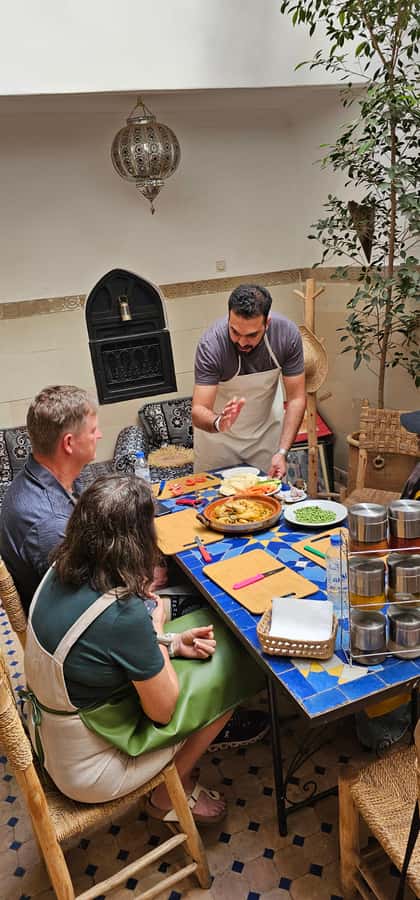
Marouane and Abdou are Moroccan Berber chefs with experience in hotels and restaurants in Morocco and abroad. They also work with Moroccan pastries, so the class is not limited to one basic tagine lesson.
The atmosphere is intended to be warm and family-friendly rather than formal. That matters because Moroccan food often depends on small judgments: how much spice to use, when vegetables are ready, and how long a dish should cook. A relaxed class gives you room to ask questions and take part without feeling as if you are in a professional kitchen exam.
Some sessions are led by Khalid, who has shared personal stories about being Amazir and living in Marrakech. The guide can add a cultural layer to the food, with conversation about Moroccan traditions, family, architecture, and Berber origins. Guide assignments may vary, so you should not book expecting one particular host unless the provider confirms it.
Before cooking begins, discuss food allergies and dietary restrictions. This is especially useful because the menu can include meat, and one session prepared both a chicken version and a vegetarian version. The supplied information does not promise that every dietary request can be met, so explain your needs before shopping and ask what substitutions are possible.
Mint tea before the cooking begins
The class includes tea preparation, and this is more than pouring hot water into a glass. You learn about the Moroccan mint tea ritual and watch the process before moving on to food preparation.
Tea helps set the pace of the afternoon. Instead of rushing straight from the market to chopping boards, you have time to settle into the riad and meet the people in your group. One reported menu included tea served on the terrace, with conversation about culture and family. The official experience centers on Moroccan mint tea, while the exact tea served can vary by session.
This is also a good moment to ask questions. If you want to understand the role of tea in Moroccan hospitality, ask your guide to explain the steps as they work. The class is offered in English, French, or Arabic, which makes it easier to discuss both cooking methods and cultural details.
Preparing salads, tagine, and dessert
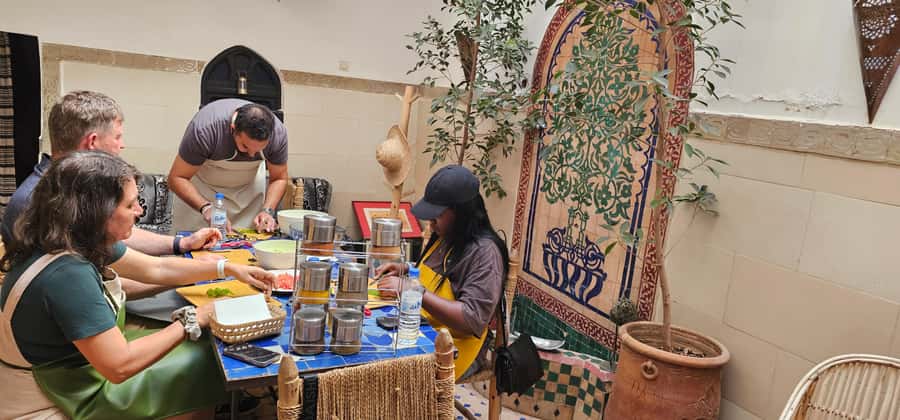
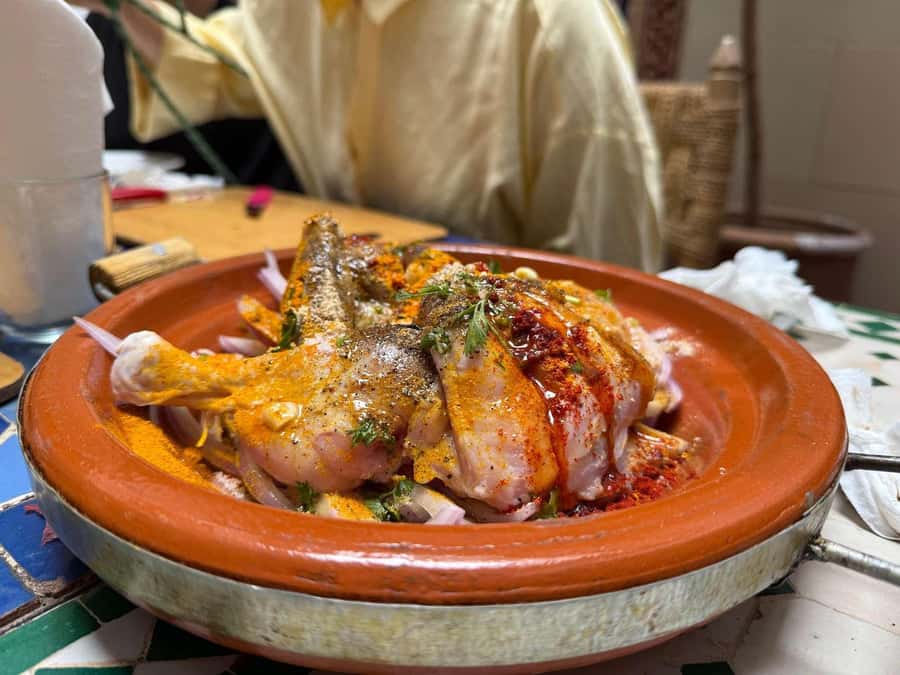
The cooking session lasts about an hour and a half in the listed itinerary, though the full activity is described as five hours. You prepare a traditional meal with starters, a main course, and dessert. The exact dishes can change, but examples include Moroccan salad, zaalouk made with eggplant, and chicken tagine.
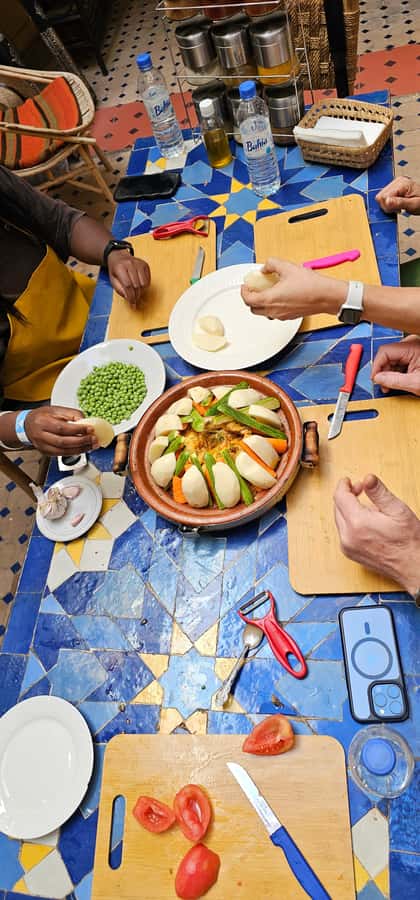
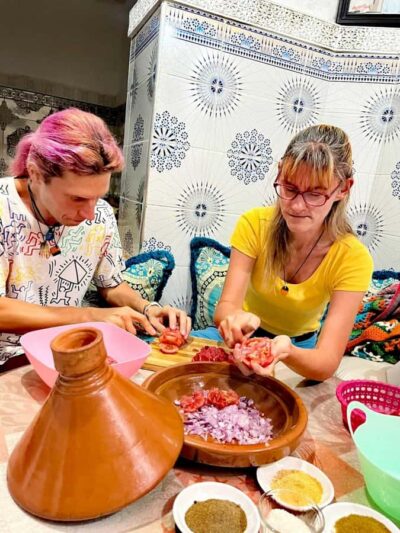
The value here comes from doing the work yourself. You learn how ingredients are cut, seasoned, and cooked rather than simply receiving a recipe at the end. The chefs explain the spices and cooking methods as you go, and the group works together on the different parts of the meal.
A typical session may include several preparations at once. Moroccan salad and zaalouk provide contrast to a slow-cooked tagine, while dessert completes the meal. The cooking format also makes it possible to see how Moroccan cooks build a table with several small dishes instead of treating the main course as the entire meal.
The recipes are intended to be useful back home. Still, keep your expectations sensible. You will learn techniques and dishes, but this is a shared group class, not a private culinary school course. If you want more individual attention, private sessions can be arranged on request.
More Marrakech trips worth a second look
- Moroccan Cooking Class & Marrakech Market Visit with Chef Khmisa
★ 5.0 · 1,504 reviews - Half-Day Cooking Class with Local Chef Laila in Marrakech
★ 5.0 · 952 reviews - Marrakech: Moroccan Cooking Class with a Local Family
★ 4.9 · 668 reviews - Marrakech: Moroccan Cuisine Cooking Class in Local Home
★ 4.8 · 508 reviews
The slow part: waiting for the tagine
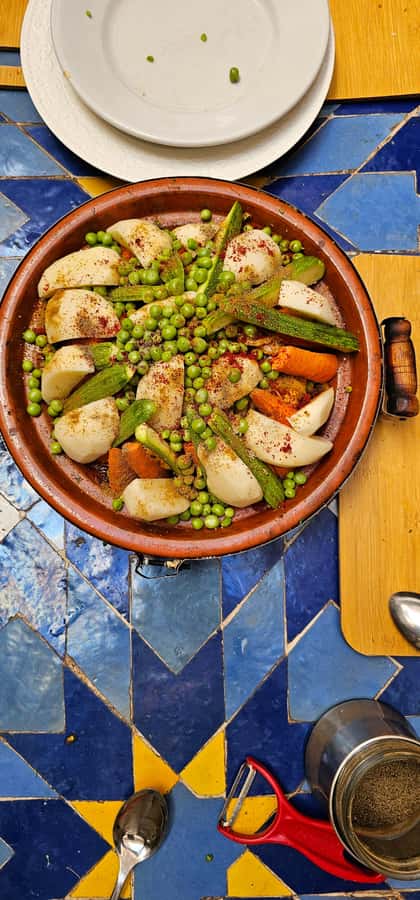
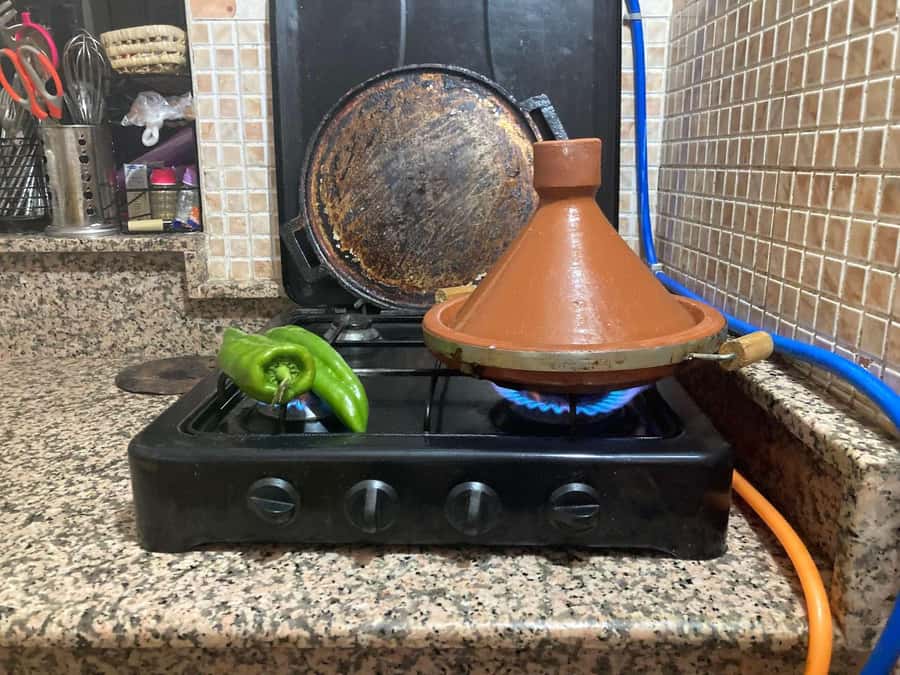
Tagine is a practical lesson in patience. After the vegetables, meat, spices, and other ingredients are prepared, the dish needs time to cook. In one session, the preparation ended well before the tagine was ready, leaving about an hour to an hour and a half with little planned activity.
That pause is the clearest weakness of the experience. You may enjoy talking, drinking tea, and meeting people in the group, but anyone expecting five continuous hours of cooking should know that this is not how the class works. Slow cooking is part of the food tradition, yet the activity could feel better paced if an extra dish or pastry lesson filled the wait.
You can make the most of the pause by asking for more detail about the recipes, discussing Moroccan food traditions, or taking time on the terrace if that is part of your session. Still, I would not choose this class if you need a tightly scheduled activity with constant instruction.
Sharing the meal you prepared
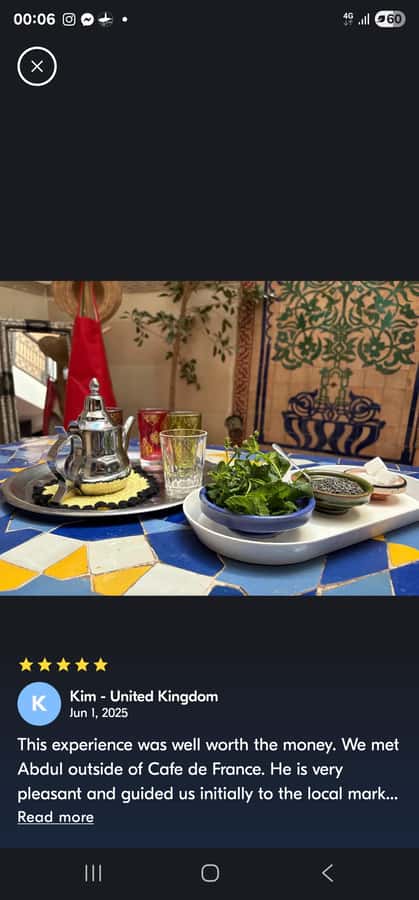
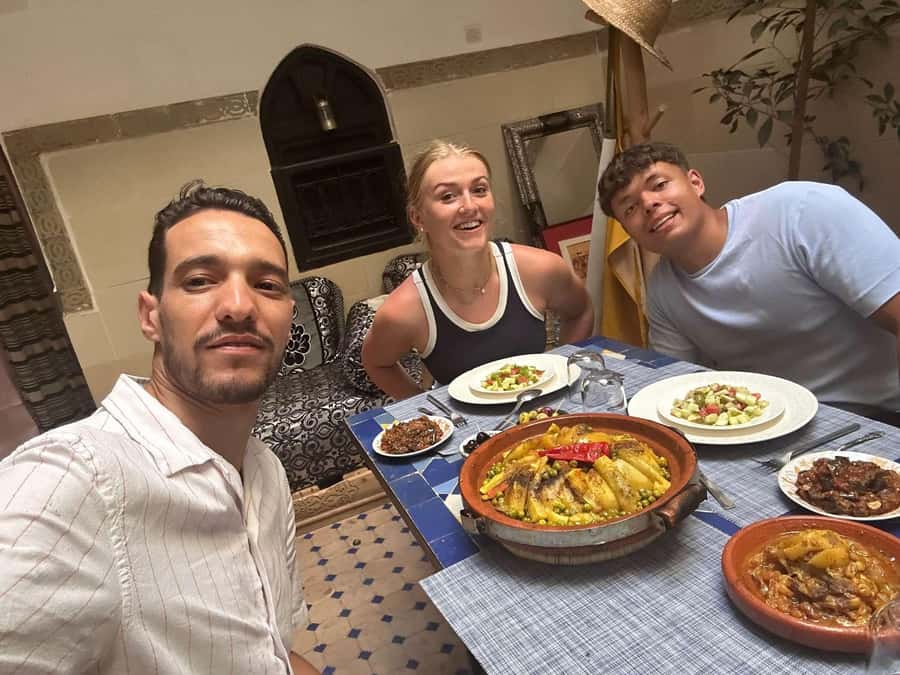
After the cooking and waiting comes the best reward: you sit down and eat the meal made by the group. The food portion is listed as about one hour, and it gives you time to taste the dishes while discussing the cooking with the chef.
This shared meal is an important part of the experience. You can compare the finished dishes with the ingredients you saw at the market, and you get a clearer sense of how the spices work together. It also gives the class a social feel. The group can talk with the host and with one another, rather than leaving as soon as the last pan is removed from the heat.
The meal may include chicken tagine, vegetarian preparations, Moroccan salad, and zaalouk, but the exact menu is not fixed in the details provided. Ask about the day’s dishes if you have strong preferences or dietary limits.
The activity ends back at Café de France. Since no pickup is included, plan your next stop from Jemaa el Fna Square rather than from the riad.
Is $35 a fair price?
At $35 per person, this is a strong value if you want several parts of Moroccan food culture in one outing. The fee includes a guide, the cooking class, tea, and the meal. It also covers the market component on days when that visit operates.
The price compares well with the amount of time involved. You receive a five-hour experience, not just a short demonstration, and the market walk adds a local shopping element that many cooking classes skip. You also leave with recipes and techniques you can try at home.
The value is less clear if you dislike group activities or do not want to wait for a slow-cooked dish. You may spend a substantial part of the afternoon sitting between preparation and eating. Private sessions are available on request, but the supplied price is for the standard experience, so confirm the private rate before booking.
Free cancellation is available up to 24 hours before the start time, and you can reserve now and pay later. Those terms help if your Marrakech plans are still shifting.
Who will enjoy this class most?
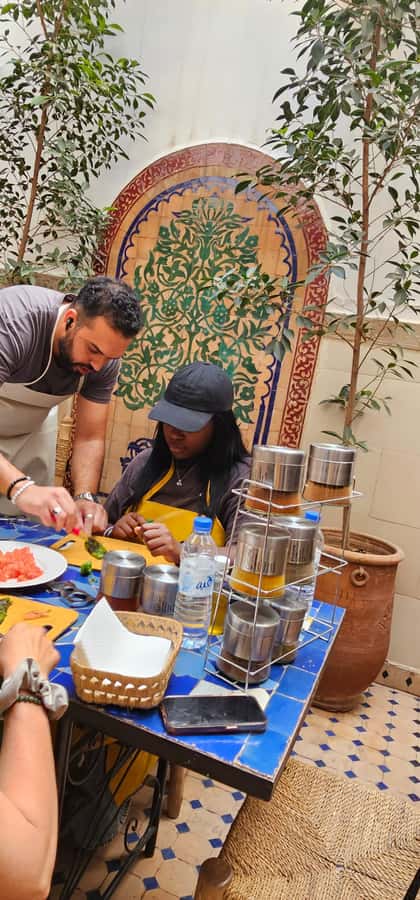
I would recommend this experience to you if you want food, conversation, and local context in equal measure. It suits first-time visitors who want help understanding Moroccan ingredients, as well as confident home cooks looking for recipes to take away.
It is a good choice for couples, small groups, and solo participants who enjoy meeting people. The setting is family-friendly, and the shared meal gives individuals an easy way to join the group.
Vegetarians should speak up before the market visit. The class has accommodated a vegetarian version alongside chicken in one session, but the provider does not give a full dietary guarantee.
This may not be the right fit if you want a fast, tightly organized class with no idle time. It is also less suitable on Friday or during Ramadan if the local market is the feature you care about most.
Practical details that affect your afternoon
The experience lasts five hours, though the listed activity segments add up to less than that. That extra time likely allows for walking, shopping, preparation, cooking, and the shared meal, but you should keep the afternoon open rather than scheduling a tight appointment afterward.
Live guidance is available in English, French, and Arabic. The meeting point is Café de France on Jemaa el Fna Square, and pickup is not included.
The standard booking includes:
- A guide
- The cooking class
- Tea
- The meal
Bring any allergy information with you and explain it before ingredients are purchased. If you want a private class, request that option in advance.
Should you book it?
Book this class if you want to understand Moroccan food through the full chain of events: buying produce, preparing it, waiting for it to cook, and eating it with the person who taught you. The warm approach of chefs such as Marouane, Abdou, and Khalid gives the experience more personality than a simple demonstration.
The key caution is the slow tagine wait. If you can accept a quiet stretch in the middle of the afternoon, $35 buys a generous mix of food, instruction, tea, and cultural conversation. If you need nonstop activity, choose a shorter class or confirm whether an additional dish can be added.
FAQ
Where does the cooking class meet?
Meet in front of the main door of Café de France on Jemaa el Fna Square in Marrakech.
Is hotel pickup included?
No. Pickup is not included, so you need to reach Café de France yourself.
How long does the experience last?
The full experience lasts five hours. The listed schedule includes a five-minute walk, about 1.5 hours of cooking, 30 minutes for tea, and about one hour for food tasting.
What languages are available?
The live tour guide can provide the experience in English, French, or Arabic.
Does the experience include a market visit?
Yes, the experience begins with a visit to a local food market where you help purchase fresh ingredients. The market visit is not included on Fridays or during Ramadan.
What food is included?
The experience includes the meal you prepare, along with tea. The menu features traditional Moroccan starters, a main course, and dessert. Examples include Moroccan salad, zaalouk, and chicken tagine.
Can dietary restrictions be discussed?
Yes. Food allergies and dietary restrictions are discussed before shopping. A vegetarian version has been prepared in a session, but you should explain your needs in advance and confirm suitable options.
Who leads the class?
The experience is hosted by Moroccan Berber chefs Marouane and Abdou. Some sessions may be led by Khalid, so the guide can vary.
Can I cancel or pay later?
You can cancel up to 24 hours in advance for a full refund. You can also reserve now and pay later.
More Workshops in Marrakech
- Marrakech: Pottery Workshop with Moroccan Tea
★ 4.8 · 756 reviews - Marrakech: Moroccan Cooking Workshop at La Maison Arabe
★ 5.0 · 446 reviews - Marrakesh cooking class with chef Hassan – Local dishes
★ 5.0 · 425 reviews - Marrakech: Tajine Cooking Class in a Traditional Riad
★ 4.8 · 424 reviews
Recently reviewed around Marrakech
- 4-Days Marrakech to Marrakech Désert Tour★ 5.0 · 17 reviews
- Camel ride at sunset in Marrakech palm grove★ 5.0 · 17 reviews
- Agafay camel ride★ 5.0 · 20 reviews
- Camel riding in marrakech★ 4.5 · 17 reviews
- Marrakech to Atlas Mountains and 4 Valleys Day Trip★ 5.0 · 17 reviews
- Agafay Desert Adventure, Culture, and Relaxation, From Marrakech★ 5.0 · 25 reviews
- Quad excursion to the Agafay desert near Marrakech★ 5.0 · 44 reviews
- Camel ride and dinner Agafay desert★ 5.0 · 25 reviews
Moroccan Cooking Classes, compared.
Traditional Moroccan Cooking Class & Market Visit
Read our review →
Moroccan Dishes Cooking Class with a Local Chef
Read our review →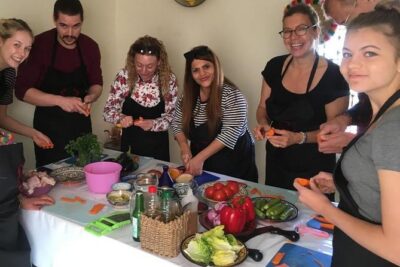
Moroccan Cooking Class & Marrakech Market Visit with Chef Khmisa
Read our review →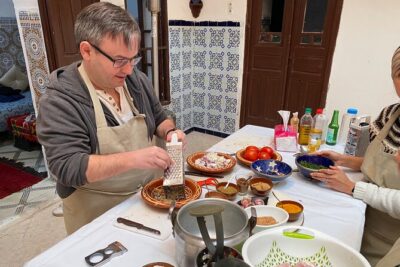
Half-Day Cooking Class with Local Chef Laila in Marrakech
Read our review →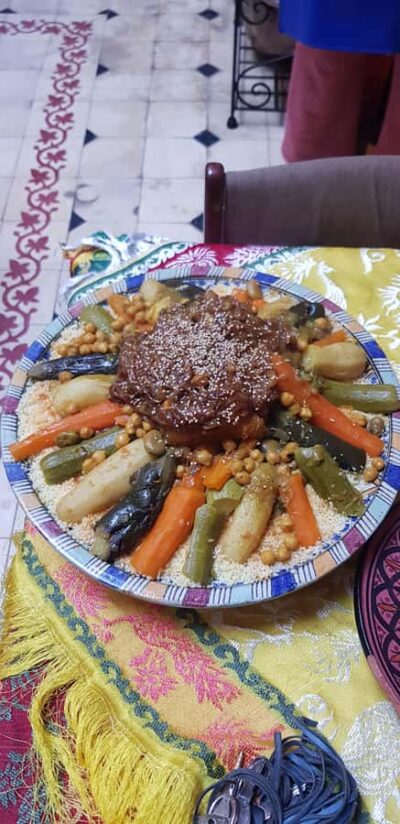
Browse the lists this tour appears in