
Reviewed · MOROCCAN COOKING CLASSES
Cooking class with Chef Najla
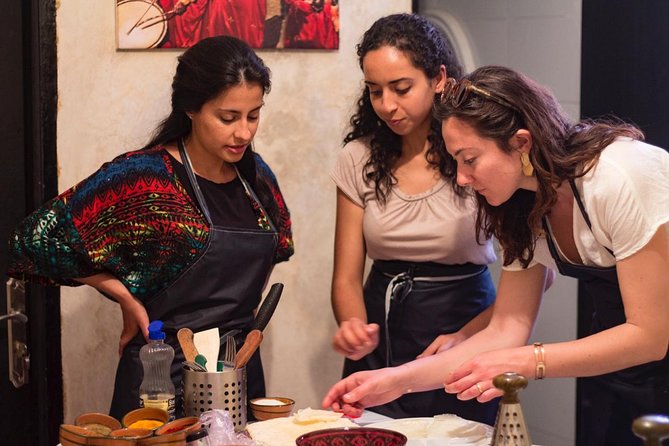
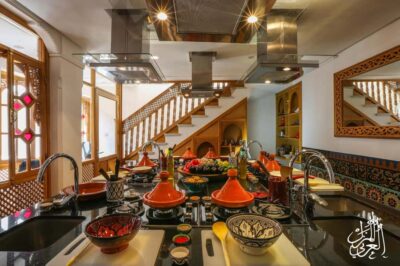
The best part of Chef Najla’s class is that it connects shopping, cooking, and Moroccan home life in one easy morning. You begin near Pharmacie El Badii, visit nearby shops for ingredients, then walk to Najla’s home to make tea, prepare a shared meal, and learn how herbs and spices shape Moroccan food.
I like the fresh-produce shopping and the relaxed tea welcome. Najla also explains her own cooking methods, shares tips about spices, ceramics, soaps, and places to shop, and keeps the mood light. The main consideration is that this is a shared-group class, so each person may handle only a small part of each dish.
In This Review
- Key points to know before booking
- Starting near Pharmacie El Badii
- Why the morning session is the better choice
- Moroccan tea sets the tone
- Cooking several dishes as one team
- What makes Najla’s teaching effective
- The meal is the reward
- How much value do you get for $39.39?
- Who should book this class?
- Practical tips for a smoother morning
- FAQ
- Where does Chef Najla’s cooking class begin?
- What time does the class start?
- How long does the cooking class last?
- Does the class include shopping for ingredients?
- What food will I prepare?
- Is transportation included?
- Should you book Chef Najla’s cooking class?
Key points to know before booking
- Morning shopping adds real value: You help choose vegetables and other ingredients at nearby shops before cooking.
- Tea comes first: Najla teaches Moroccan tea-making, then serves tea with Moroccan cookies and cakes.
- The meal is shared: The group prepares several dishes together, often including tagine, salads, side dishes, and vegan options.
- Chef Najla leads from her home: Her personal stories, spice tips, and practical advice are a major part of the experience.
- Afternoon classes skip shopping: Book the 9:30 a.m. session if choosing ingredients matters to you.
- Good value at $39.39: For about four and a half hours of instruction, food, tea, and cultural context, the price is modest.
Starting near Pharmacie El Badii
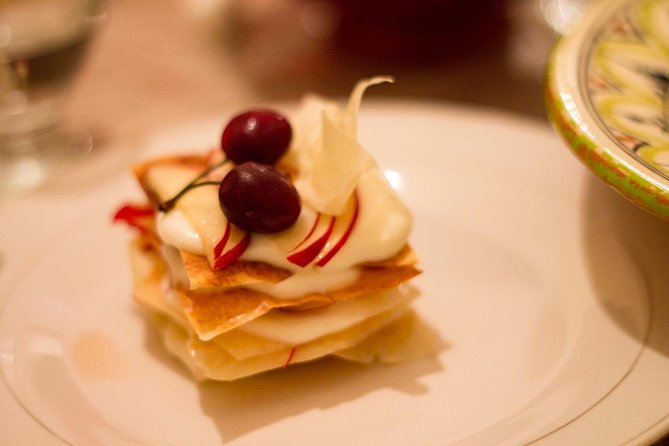
The class begins at Pharmacie El Badii, 198 Bis Rue de Berrima, in Marrakech. The listed start time is 9:30 a.m., and the activity ends back at the same meeting point.
This location matters because the class is built around nearby shopping rather than a formal market tour. You are not spending the morning crossing the city or touring a large market with a long sales pitch. Instead, Najla takes you to local shops close to her home and helps choose what the group will cook.
That keeps the schedule practical. You can see the ingredients, ask how to select them, and then use them soon afterward. It also gives you a small window into everyday food shopping in Marrakech without turning the class into a sightseeing walk.
The meeting point is near public transportation, but private transportation is not included. You will need to make your own way there. Since the class returns to the starting point, the arrangement is simple enough for planning the rest of your day.
More Cooking Classes in Marrakech
- Marrakech: Moroccan Cooking Class with Pickup
★ 4.6 · 1,862 reviews - Marrakech: Traditional Moroccan Cooking Class & Market Visit
★ 4.8 · 1,861 reviews - Marrakesh: Moroccan Dishes Cooking Class with a Local Chef
★ 5.0 · 1,615 reviews
Why the morning session is the better choice
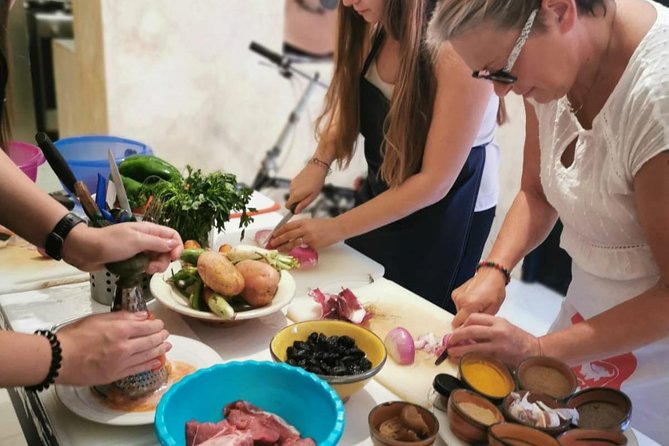
The morning class is the version to book if you want the full experience. Fresh vegetables and other ingredients are purchased before heading to Najla’s home, so you see the buying process and learn how the cooking menu takes shape.
Najla helps with practical choices, such as selecting local vegetables and buying fresh chicken. That is more useful than simply watching someone cook. You begin to understand what good produce looks like and which ingredients matter for a Moroccan dish.
There is an important timing note. Afternoon lessons do not include shopping because fresh vegetables may no longer be available, so Najla buys the ingredients in advance. The cooking still takes place, but you lose the market-side portion. If shopping is one of your main reasons for booking, choose the morning start.
The shopping is also fairly focused. This is not presented as a grand market expedition, and that can be a benefit. You get the ingredient lesson without using much of your four-and-a-half-hour session on walking from stall to stall.
Moroccan tea sets the tone
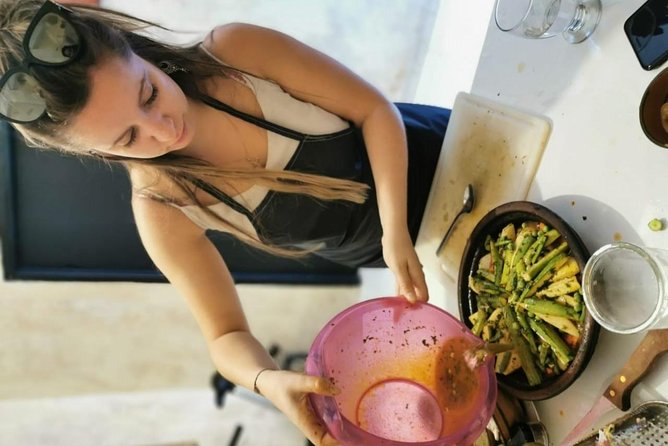
Back at Najla’s home, the class begins with Moroccan tea. Najla shows you how to prepare it before everyone sits down with tea, Moroccan cookies, and cakes.
This opening is not just a snack break. It gives the group time to settle in and get acquainted before the cooking begins. For many people, it becomes the cultural heart of the morning because tea is treated as part of hospitality, not simply as something to drink while waiting for lunch.
You also get a chance to ask questions before the kitchen work starts. Najla uses this time to talk about Moroccan food, spices, and local customs. Her stories are part of what makes the class feel personal rather than like a standard demonstration.
If you prefer to start cooking immediately, this slower beginning may feel lengthy. I see it as a sensible pace, especially for a group. A little time around the tea table helps everyone understand the plan and find a role.
Cooking several dishes as one team
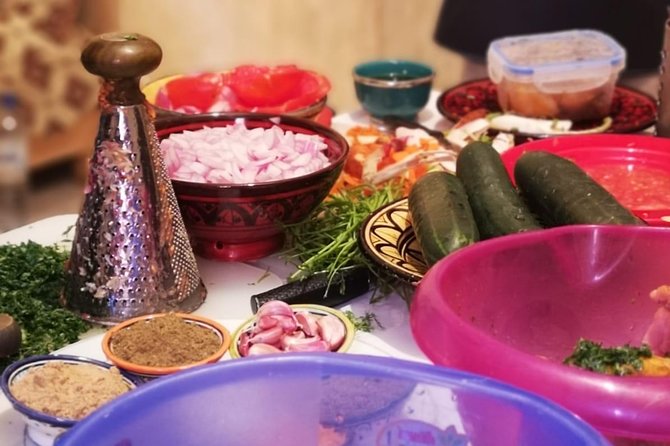
The menu includes starters and main courses, with several dishes prepared for the group to share. The dishes described in the class experience include tagines, Moroccan salads, side dishes, and vegan preparations. Some groups have made five or six different dishes, creating a full meal rather than one single recipe.
Najla walks you through each stage. You may chop vegetables, mix meatballs, prepare a tagine, or work on a salad. The exact menu can vary, since it depends on the ingredients bought that day and the group’s cooking plan.
The shared format has a clear advantage: you get to taste a broad range of Moroccan food. One person may work on a tagine while another prepares a salad or vegetable dish, so lunch has variety. It is a good way to see how Moroccan meals combine several small plates and sides around a central dish.
The trade-off is hands-on time. In a group of up to 15, you cannot expect to prepare every dish from start to finish yourself. A group of 10 or 12 may work in teams, with each person assigned a manageable task. If you only do your own step and then step away, you may miss how the other dishes come together.
My advice is simple: stay close, watch every stage, and ask questions even when someone else is holding the knife or stirring the pot. Recipes are provided afterward, according to the class information, but your understanding will be much stronger if you pay attention to the full process.
More Marrakech trips worth a second look
- Moroccan Cooking Class & Marrakech Market Visit with Chef Khmisa
★ 5.0 · 1,504 reviews - Half-Day Cooking Class with Local Chef Laila in Marrakech
★ 5.0 · 952 reviews - Marrakech: Moroccan Cooking Class with a Local Family
★ 4.9 · 668 reviews - Marrakech: Moroccan Cuisine Cooking Class in Local Home
★ 4.8 · 508 reviews
What makes Najla’s teaching effective
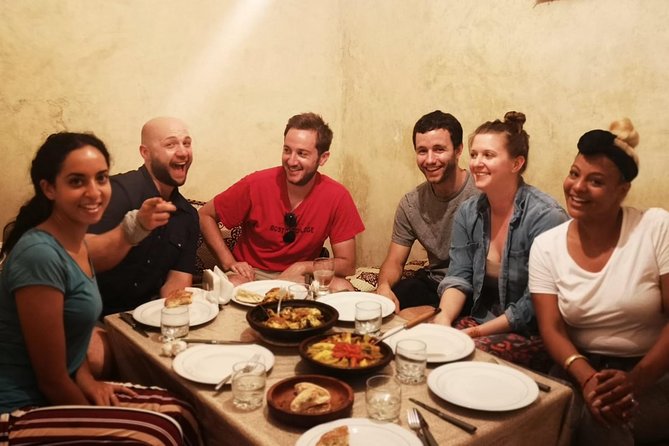
Najla’s strength is her mix of practical instruction and lively conversation. She explains her personal cooking technique and her choice of herbs and spices, rather than treating Moroccan food as a fixed list of recipes.
That approach is useful because Moroccan cooking depends heavily on balance. The point is not only to add spices, but to understand how they work with vegetables, meat, sauces, and slow cooking. Najla’s explanations help you think about the reason behind each step.
She also shares information beyond the kitchen. You may get suggestions for buying spices, ceramics, soaps, and other local goods. Those tips can help you shop more sensibly during the rest of your stay, particularly if you want to avoid buying the first attractive item you see in a tourist-oriented shop.
Her background adds interest, too. She has cooked with the Housewives of Beverly Hills, an unusual detail that gives the class a little extra character. Still, the more important point is that she keeps the focus on Moroccan food and her own experience as a chef.
The atmosphere is friendly and informal. Najla welcomes the group into her home, tells entertaining stories, and keeps people involved. That works especially well for people who want cultural contact along with a recipe lesson.
The meal is the reward
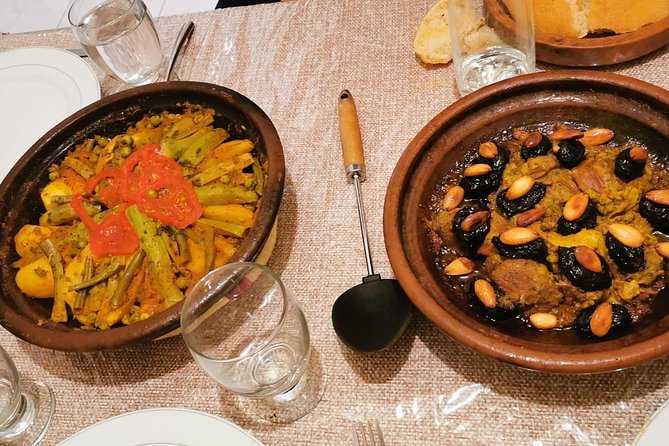
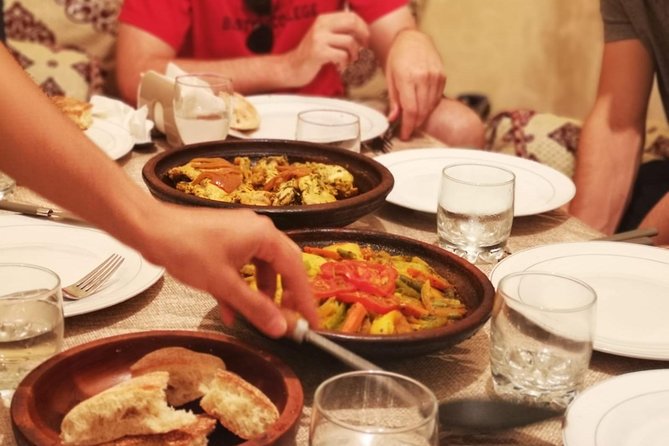
After the preparation, everyone sits down to eat the food made during the class. This is when the separate tasks make sense. The tagine, salads, vegetable dishes, and other sides become one Moroccan meal.
Tagine is often the dish people most want to learn, and this class gives you a chance to make one rather than simply order it at a restaurant. The meal also offers a useful comparison with restaurant food because you see the ingredients and methods from the beginning.
The class places special attention on herbs and spices. That helps explain why a simple plate of vegetables or a meat dish can taste so different from an ordinary home meal. The Moroccan salads are not just decoration beside the main course. They add color, texture, acidity, and contrast to the richer dishes.
I also like that the menu can include vegan food. That gives plant-based diners more than a token side dish, although the exact selection should not be assumed in advance. If you have dietary restrictions, it is sensible to contact the provider before booking rather than rely on the standard menu.
Bottled water is included. Tea, cookies, cakes, and the cooked meal are part of the class experience, while private transportation is not included.
How much value do you get for $39.39?
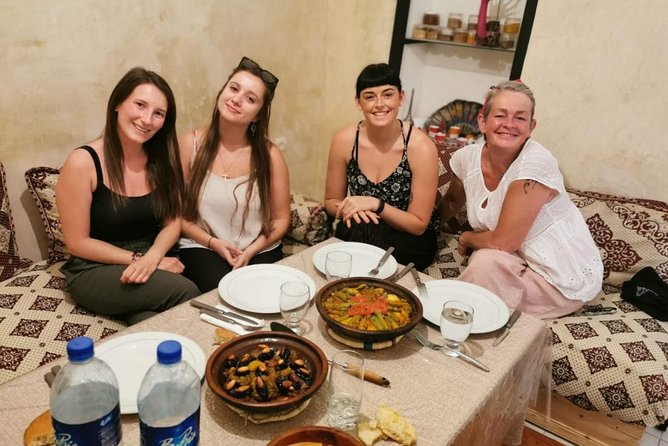
At $39.39 per person, this is a strong value for a four-hour-30-minute activity. You receive instruction, ingredient shopping in the morning, tea and pastries, a substantial meal, and a personal introduction to Moroccan cooking.
A restaurant meal at a similar price would give you food, but not the method behind it. A market tour might show you ingredients, but not what to do with them. This class combines both parts and adds time in a Moroccan home.
The value is strongest for people who enjoy participation. If you want a private chef lesson where you prepare your own individual menu, this is not that format. The group shares the meal and divides the work, which keeps the price down but limits the amount of individual practice.
The maximum group size is 15. That is not a tiny class, so the experience may feel social rather than intimate. At the same time, the class has been comfortable for groups of 10 and 12, and the work can be divided among several cooking stations or tasks. Your experience will depend partly on how actively you join in.
The activity is commonly booked about 19 days ahead, so advance planning is sensible. Confirmation is provided at booking, and free cancellation is available when you cancel at least 24 hours before the local start time.
Who should book this class?
I would choose this class for a first visit to Marrakech, especially if you want food to help explain the culture. It suits couples, friends, and solo visitors who do not mind cooking with other people.
It is also a good fit for mixed groups. Some people can take the chopping and cooking seriously, while others can join at a lighter level and still enjoy tea, conversation, and lunch. Najla’s easy manner helps bridge that gap.
Families and larger groups should note the maximum of 15 people. The shared format can be fun, but anyone hoping for constant one-to-one instruction may prefer a smaller private lesson.
You should also book it if you like taking practical ideas home. The class gives you recipes, spice guidance, shopping suggestions, and a clearer sense of how Moroccan dishes are assembled. It is more useful than simply tasting a meal because you leave with techniques you can try again.
The class may be less suitable if you dislike group cooking, have limited mobility for the nearby shopping walk, or need a tightly controlled dietary menu. The available information confirms nearby public transportation, but it does not describe special accessibility arrangements or a private transfer.
Practical tips for a smoother morning
Arrive at the Pharmacie El Badii meeting point with enough time to find it. The activity starts at 9:30 a.m., and the first shopping stop is part of the schedule.
Wear comfortable clothing suitable for kitchen work. You will be moving between shops and the home, then chopping, mixing, and preparing food for several hours.
Book the morning if you want to choose fresh ingredients. An afternoon booking keeps the cooking class but skips the shopping section.
Stay engaged even when another person has been assigned the task. In a shared class, watching Najla season, explain, and correct each stage is the best way to learn the whole menu.
If you want to buy spices, soaps, or ceramics, ask Najla about her recommendations. Her local shopping advice is one of the useful extras built into the morning.
FAQ
Where does Chef Najla’s cooking class begin?
The class begins at Pharmacie El Badii, 198 Bis Rue de Berrima, Marrakech 40000, Morocco.
What time does the class start?
The listed start time is 9:30 a.m.
How long does the cooking class last?
The activity lasts approximately four hours and 30 minutes.
Does the class include shopping for ingredients?
Morning classes include shopping at nearby shops for the ingredients used in the cooking class. Afternoon classes do not include shopping because Najla buys the ingredients in advance.
What food will I prepare?
The menu includes starters and main courses. The dishes can include tagines, Moroccan salads, side dishes, and vegan preparations, with the exact selection based on the day’s ingredients and group plan.
Is transportation included?
Private transportation is not included. The meeting point is near public transportation, and the activity ends back at the starting point.
Should you book Chef Najla’s cooking class?
Yes, if you want a friendly, practical introduction to Moroccan food rather than a simple meal out. The combination of local shopping, tea preparation, spice lessons, shared cooking, and lunch gives you a lot for the price.
Choose the morning session for the complete experience. Go in expecting to share the work, not to cook every dish alone. If that sounds like a fair trade for a personal welcome into Najla’s home and a full Moroccan meal, this is one of the better-value food activities in Marrakech.
More Workshops in Marrakech
- Marrakech: Pottery Workshop with Moroccan Tea
★ 4.8 · 756 reviews - Marrakech: Moroccan Cooking Workshop at La Maison Arabe
★ 5.0 · 446 reviews - Marrakesh cooking class with chef Hassan – Local dishes
★ 5.0 · 425 reviews - Marrakech: Tajine Cooking Class in a Traditional Riad
★ 4.8 · 424 reviews
Recently reviewed around Marrakech
- 4-Days Marrakech to Marrakech Désert Tour★ 5.0 · 17 reviews
- Camel ride at sunset in Marrakech palm grove★ 5.0 · 17 reviews
- Agafay camel ride★ 5.0 · 20 reviews
- Camel riding in marrakech★ 4.5 · 17 reviews
- Marrakech to Atlas Mountains and 4 Valleys Day Trip★ 5.0 · 17 reviews
- Agafay Desert Adventure, Culture, and Relaxation, From Marrakech★ 5.0 · 25 reviews
- Quad excursion to the Agafay desert near Marrakech★ 5.0 · 44 reviews
- Camel ride and dinner Agafay desert★ 5.0 · 25 reviews
Moroccan Cooking Classes, compared.
Traditional Moroccan Cooking Class & Market Visit
Read our review →
Moroccan Dishes Cooking Class with a Local Chef
Read our review →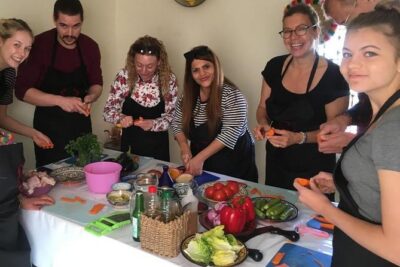
Moroccan Cooking Class & Marrakech Market Visit with Chef Khmisa
Read our review →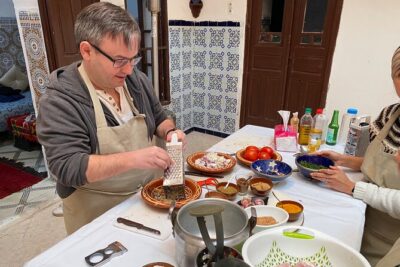
Half-Day Cooking Class with Local Chef Laila in Marrakech
Read our review →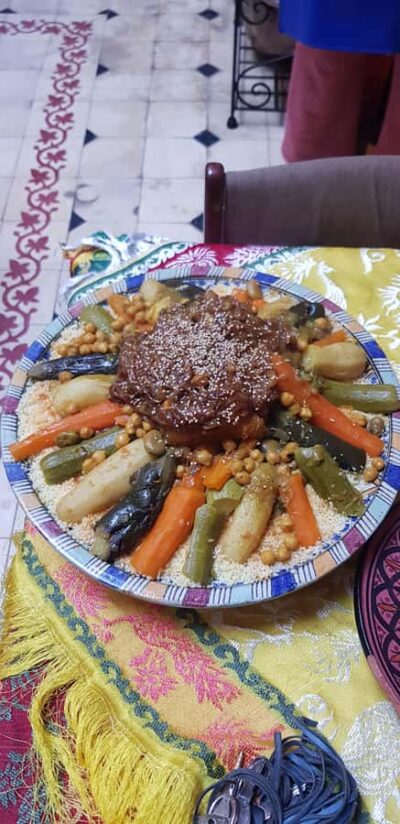
Browse the lists this tour appears in