
Reviewed · WORKSHOPS
Marrakech: Pottery Workshop
A lump of Moroccan clay becomes your afternoon project in this hands-on workshop near Marrakech. You learn both traditional wheel throwing and molding, then see how artisans prepare, fire, and glaze their work.
I like the way the class covers the whole pottery process, not just the few minutes at the wheel. I also like the relaxed tea break with Moroccan cakes, plus patient help from craftsmen such as Tariq and translation support from Wiam.
The main caution is price. At $93 per person, this is not a cheap craft class, especially if you mainly want to make one small object. You are paying for private instruction, cultural context, refreshments, and a close look at Moroccan workshop methods.
In This Review
- Key points to know before booking
- From Jemaa el Fna to a working pottery studio
- Learning the clay before touching the wheel
- Taking a turn on the traditional potter’s wheel
- Trying molding, a different way to build pottery
- Seeing firing and glazing without skipping the hard parts
- Tea, Moroccan pastries, and a pause from the clay
- The people who shape the quality of the class
- Is $93 a fair price for four hours?
- Who will get the most from this workshop?
- Practical details that affect your day
- Should you book the Marrakech pottery workshop?
- FAQ
- Where does the pottery workshop meet?
- How long does the activity last?
- How much does the workshop cost?
- Is the group private?
- Which pottery techniques will I learn?
- Will I see how pottery is fired and glazed?
- Is tea included?
- Which languages are available?
- What should I wear?
Key points to know before booking
- Two Moroccan shaping methods: Try the traditional potter’s wheel and the molding technique used in local craft work.
- A full workshop view: Follow the process from clay preparation through firing and glazing.
- Patient personal instruction: Tariq is praised for his humor and calm teaching, while Wiam has provided fluent English translation.
- A proper Moroccan break: Tea, water, and Moroccan pastries are included halfway through the four-hour session.
- Private group setting: You receive a more personal class than you would in a large shared demonstration.
- Easy Medina meeting point: Start at the post office in Jemaa el Fna Square, a familiar place to find your guide.
From Jemaa el Fna to a working pottery studio
Your meeting point is the front of the post office at Medina Jemaa el Fna Square. This is useful if you are staying in or near the old city, but remember that the workshop itself is near Marrakech, not in the middle of the square. The meeting details do not specify the transport arrangement, so confirm the onward plan when you book.
The square is a noisy, crowded place with many possible meeting points. Go by the post office, not simply by the general name of Jemaa el Fna. Arrive with a little extra time, and keep your phone available in case your guide needs to locate you.
The experience lasts four hours. That gives the class enough time to move beyond a quick tourist demonstration. You get an introduction to clay, practical shaping, an explanation of the workshop’s stages, and a break. Still, four hours can pass quickly once you begin working, so do not expect a large finished collection of pottery.
The group is private, which matters here. Clay work is physical and often awkward at first. In a private setting, the craftsman can correct your hand position, help steady the clay, and answer questions without rushing through a crowd. The tradeoff is that a private class often costs more, and this one is priced at $93 per person.
More Marrakech trips worth a second look
- Marrakech: Moroccan Cooking Class with Pickup
★ 4.6 · 1,862 reviews - Marrakech: Traditional Moroccan Cooking Class & Market Visit
★ 4.8 · 1,861 reviews - Marrakesh: Moroccan Dishes Cooking Class with a Local Chef
★ 5.0 · 1,615 reviews
Learning the clay before touching the wheel
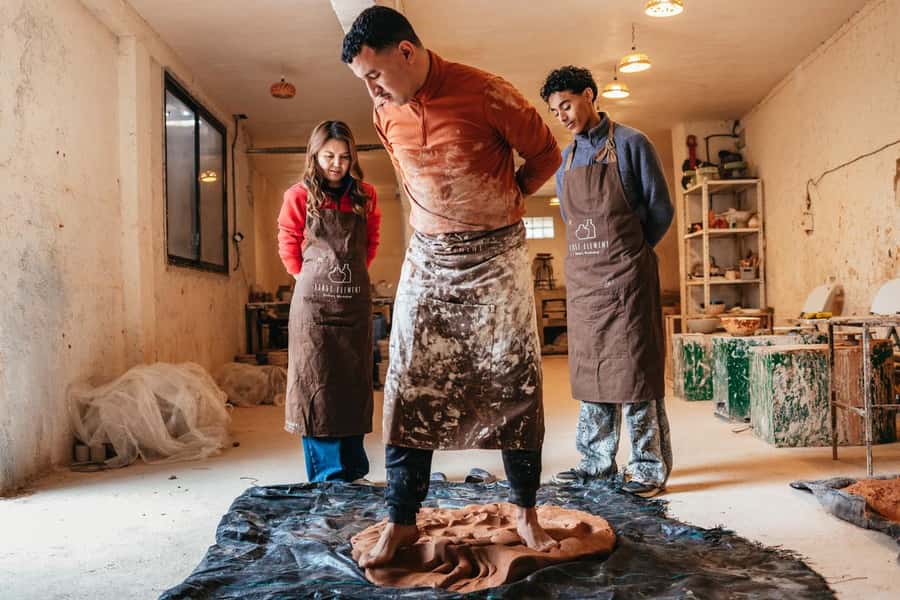
The first useful lesson is not the glamorous one. Before clay can become a bowl, cup, or other object, it has to be prepared. This class gives you a look at that early stage and explains the materials used by Moroccan artisans.
You will work with clay soil and learn how it is handled before shaping. The point is not simply to produce a souvenir. You begin to see why pottery depends on patience, moisture, pressure, and timing. A clay body that feels too wet or too dry will not respond well, and a form that looks fine at first still has to survive drying and firing.
That wider view is one of the strongest parts of the experience. Many craft activities let you make something and stop there. Here, you are shown how the workshop is organized from the first preparation of the clay to the final glazing. You may not perform every stage yourself, but you can watch how each part connects.
I would pay attention during this introduction, even if you are eager to start shaping. It gives meaning to the later work. When your own piece begins to wobble or crack, you have a better sense of what the craftsman is trying to fix.
Taking a turn on the traditional potter’s wheel
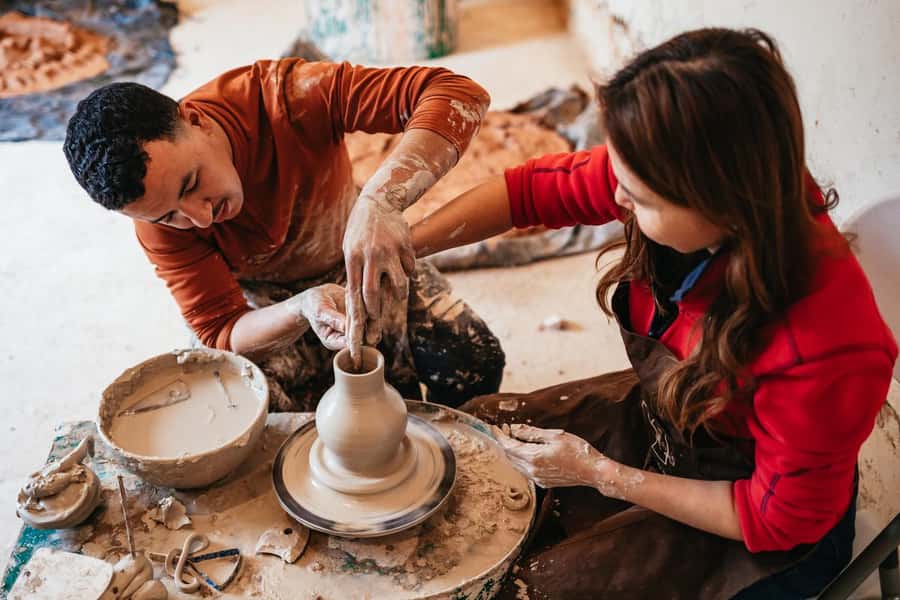
The famous traditional potter’s wheel is the hands-on centerpiece. You place the prepared clay on the wheel and use turning, pressure, and your fingers to form it. The basic motion sounds simple. In practice, keeping the clay centered and upright takes control.
An experienced craftsman helps you through the process. The available feedback gives special credit to Tariq, who is described as both an excellent artist and an effective tutor. Another visitor specifically valued a patient craftsman who used humor while guiding the session. That combination is important because first attempts at pottery can feel clumsy.
Do not judge your skill by the first shape you make. The wheel is sensitive to small movements, and the clay changes quickly under your hands. The useful goal is to feel the material and understand the technique, not to produce a perfect vessel on your first try.
The activity description says you shape an object before it is baked. It does not promise that your piece will be fired, glazed, shipped, or ready to take home during the same session. Ask about the fate of your pottery if having a finished souvenir is important to you. That detail can affect how you measure the $93 price.
Trying molding, a different way to build pottery
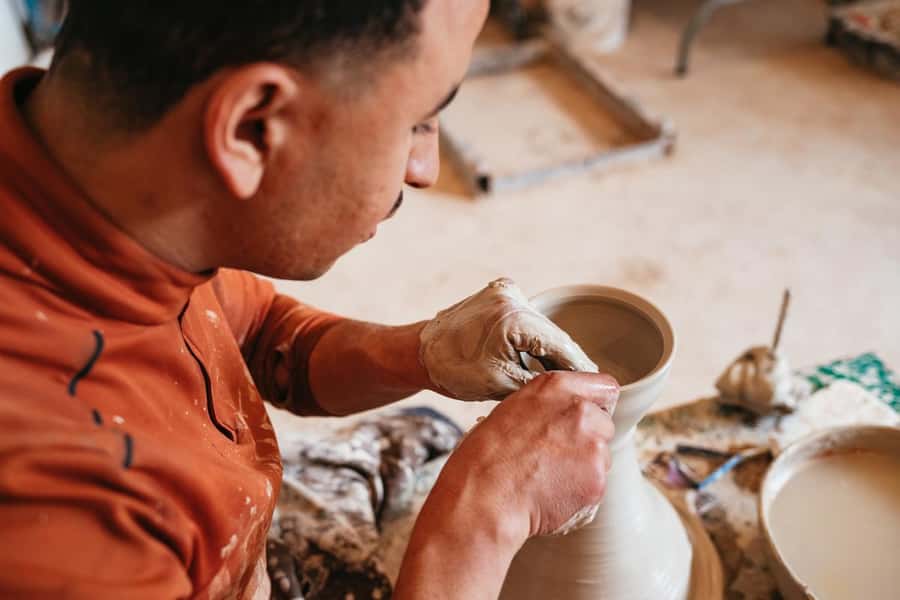
The second technique is molding. Instead of relying on a spinning wheel, you form clay with a mold. This shows you two different answers to the same craft problem: the wheel depends on turning and hand control, while molding offers a more structured form.
I like this contrast because it keeps the class from becoming only a lesson in wheel throwing. You can compare the feel of clay under your hands and see why artisans choose different methods for different objects. The workshop is also a good place to ask how these techniques fit into Moroccan pottery production, since the craftsman can explain the working process directly.
The molding section may appeal to you if the wheel feels frustrating. It gives you another route into the material. Families, couples, and friends with different levels of hand skill can also find a better balance when the class includes more than one method.
The supplied details do not name the exact object you will make or promise a particular mold. Keep your expectations open. You are booking a lesson in Moroccan pottery methods, not a fixed project with a guaranteed shape.
A different kind of day out, same corner of Morocco:
- Marrakech: Agafay Desert Sunset, Camel Ride, and Dinner Show
★ 4.6 · 35,119 reviews - From Marrakech: Ouzoud Waterfalls Guided Hike and Boat Trip
★ 4.7 · 33,630 reviews - Marrakech: Agafay Desert Quad & Camel Rides with Dinner Show
★ 4.8 · 27,382 reviews - Marrakech: Agafay Desert Quad Biking Tour with Dinner-Show
★ 4.8 · 16,569 reviews
Seeing firing and glazing without skipping the hard parts
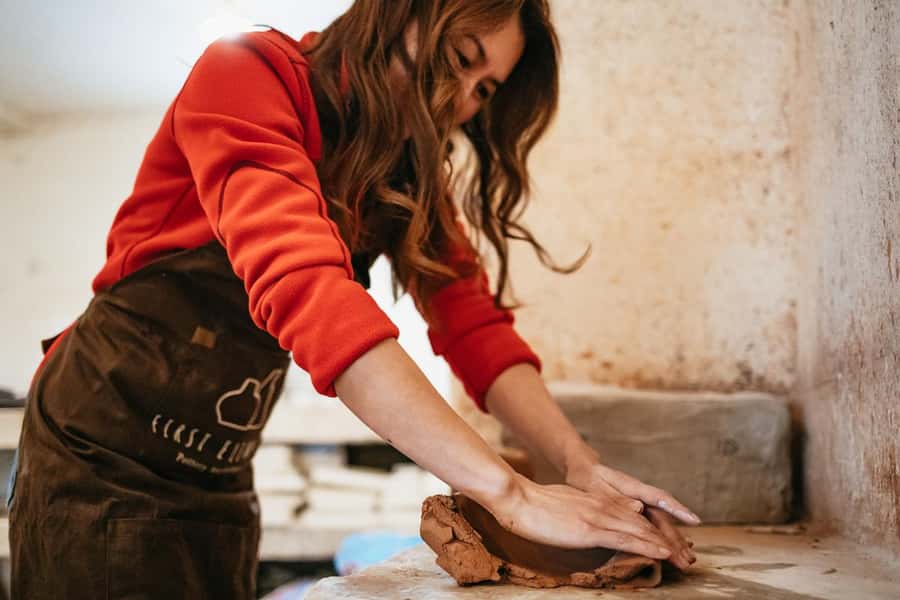
After forming, pottery needs time and heat. The class lets you observe the stages that follow shaping, including firing and glazing. These steps are easy to ignore when buying a finished Moroccan bowl in a shop, but they explain why handmade ceramics take time and why not every piece survives.
Firing changes the clay from a soft material into a durable ceramic. Glazing adds color or a finished surface, but it also requires care. The workshop gives you a view of that sequence, from raw clay to a finished piece, rather than treating pottery as a single act at the wheel.
This is also where the four-hour format earns some of its value. You are not only sitting down for a short craft demonstration. You can see how a working studio is organized and how the stages depend on one another. That context makes the activity more useful for anyone interested in Moroccan art, design, or traditional production.
You should still be clear about what you will personally complete. Watching firing and glazing is not the same as having your own item fired and finished. The information provided confirms that you observe these stages, but it does not confirm collection, delivery, or same-day completion of your piece.
Tea, Moroccan pastries, and a pause from the clay
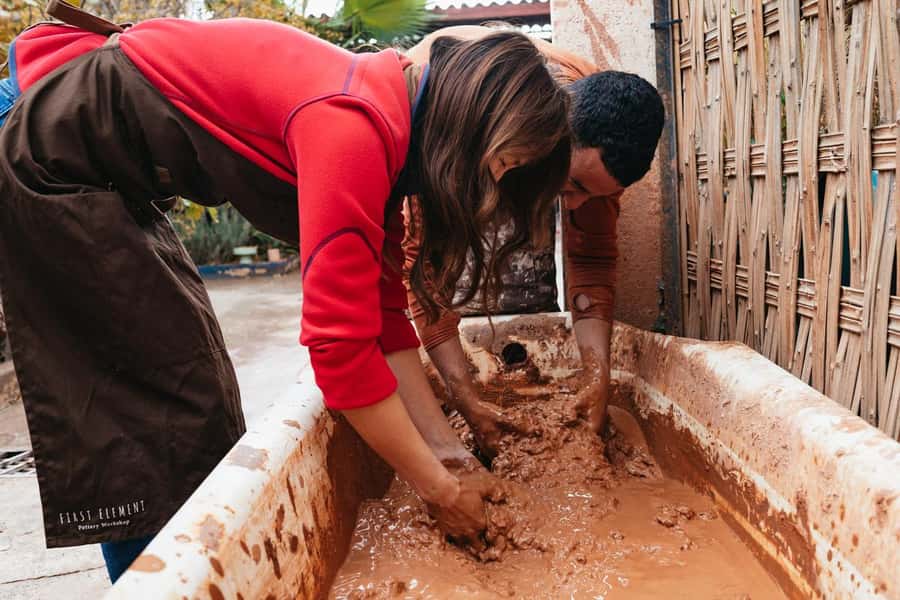
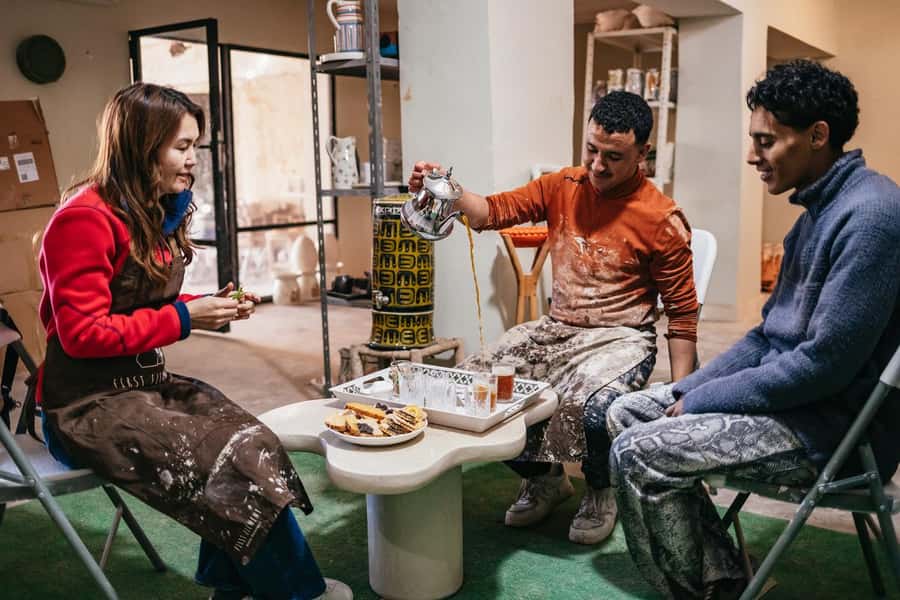
Halfway through, you get a tea break with local herbal tea and Moroccan pastries. Water is also included. This is more than a snack added to the booking. A pause gives you time to look at the work around you, discuss what you have made, and reset your hands before the next technique.
Moroccan tea is part of everyday hospitality, and the break adds a social side to the class. You are not moving from one instruction to the next without a breath. You can talk with the craftsman and guide, ask about materials, and enjoy a quieter exchange.
The pastries are a small but welcome part of the price. They do not transform the class into a food tour, and you should not book it for the refreshments alone. Still, tea, cakes, and water help make the four-hour session feel like a hosted cultural activity rather than a bare practical lesson.
If you have food allergies or dietary needs, the supplied information does not give details about the pastry ingredients. Ask before the break if that matters to you.
The people who shape the quality of the class
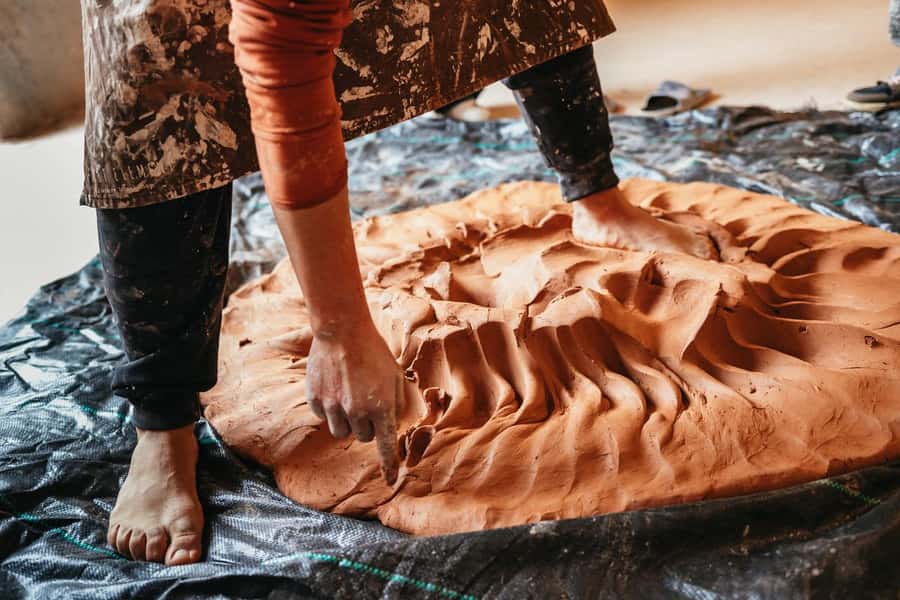
The quality of a pottery lesson depends heavily on the instructor. Clay is not self-explanatory, and a poor teacher can leave you confused or embarrassed. Here, the strongest personal details point to patient, friendly instruction.
Tariq is singled out as an excellent tutor and artist. His role appears to be the main hands-on teaching position, and his calm approach suits beginners. Wiam has also provided fluent English translation, which can make a real difference when technical instructions need to be clear.
The listed teaching languages are English, French, and Arabic. That gives you useful flexibility, but the exact language support may depend on the staff assigned to your date. If you need detailed instruction in one particular language, confirm it when booking.
Another name, Imman, is associated with strong thanks for the experience, though the supplied details do not spell out the exact role. The safest expectation is a guided class with an experienced craftsman and language help arranged as needed, rather than a single guaranteed instructor by name.
Photography is included. That means the activity can record parts of your workshop, though the details do not specify how many photographs you receive or how they are delivered. Ask if those images matter to you.
Is $93 a fair price for four hours?
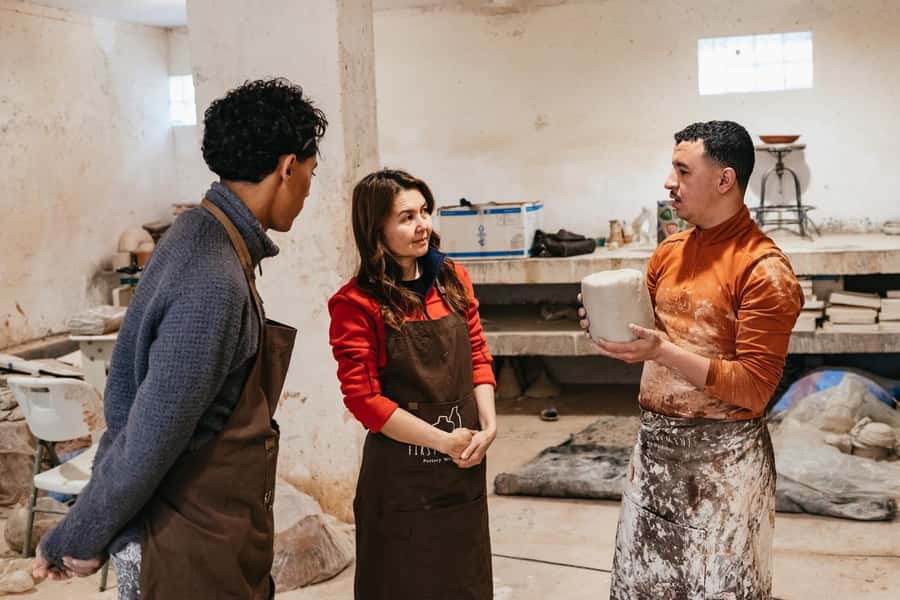
At $93 per person, this workshop sits in the treat-yourself range. It is more expensive than a casual drop-in craft lesson, but it includes four hours, a private group, instruction in two methods, a view of the full pottery process, tea, pastries, water, and photography.
I would see the value in three parts. First, you get direct help from an artisan instead of only watching a show. Second, the class explains production from clay preparation through glazing. Third, a private format can make the teaching more relaxed and personal.
The price is less convincing if your only goal is to make a small object quickly. One person found it a little pricey for what was received, and that is a fair concern. The workshop does not state that your pottery is fired and returned to you, so the finished-object value remains uncertain.
You are paying for time, access, teaching, and cultural contact. If you care about Moroccan craftsmanship and enjoy learning by doing, the price may feel reasonable. If you mainly want a cheap souvenir, buy a finished piece in a souk or pottery shop instead.
Who will get the most from this workshop?
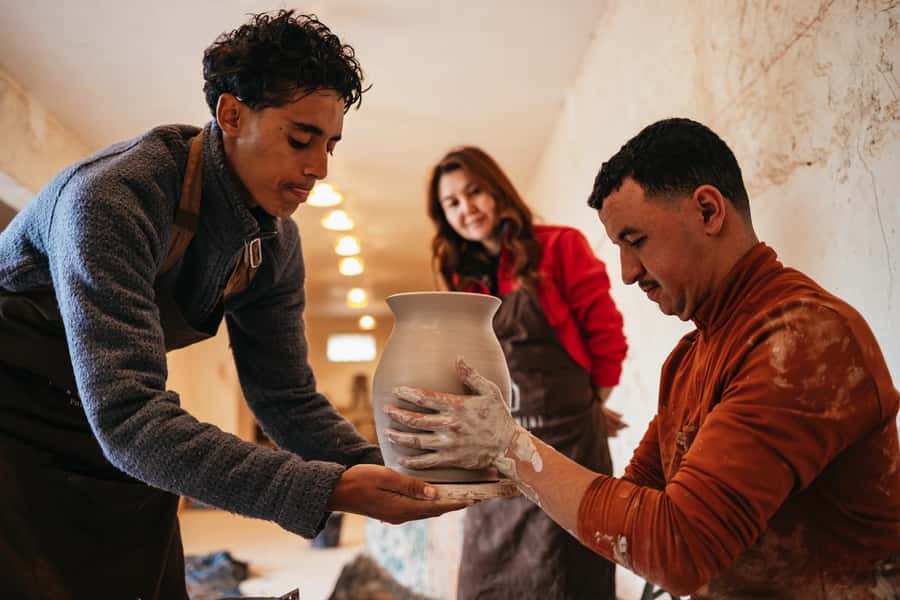
I would recommend this for adults and older children who like hands-on activities, cultural learning, and a little mess. You do not need pottery experience. In fact, beginners are the natural audience because the craftsman provides help throughout the class.
It also suits couples and small private groups who want an activity that feels different from another Medina walk or cooking class. The private format lets you set a more comfortable pace and ask practical questions.
Art students, makers, and anyone interested in Moroccan design will get extra value from watching clay preparation, firing, and glazing. The class connects the finished ceramics you see around Morocco with the work that produces them.
I would think twice if you dislike getting your hands dirty, need a tightly timed itinerary, or want a guaranteed finished object to carry home. Wear comfortable clothes and shoes, as requested. Clay work is not the moment for precious clothing or delicate footwear.
Practical details that affect your day
The meeting point is the post office at Jemaa el Fna Square. The activity is near Marrakech, and the supplied information does not detail the transfer from the square. Confirm that point before the day of the class, especially if you are traveling with children or have a tight schedule afterward.
The duration is four hours, with starting times based on availability. The private group arrangement is a plus, but the number of people in that private group is not specified. Ask if you need to know the maximum size.
You can cancel up to 24 hours before the activity for a full refund. You can also reserve now and pay later, which helps if your Marrakech plans are still shifting. The booking includes skip-the-ticket-line access, though this is a workshop rather than a major ticketed monument.
The class is offered in English, French, and Arabic. Comfortable clothes and shoes are the only stated clothing advice, but I would choose items you do not mind getting clay on.
Should you book the Marrakech pottery workshop?
Book it if you want to meet Moroccan craft through your own hands, not just through photographs or shopping. The two shaping methods, full workshop view, private instruction, tea break, and patient teaching from people such as Tariq and Wiam make this a thoughtful four-hour activity.
Think carefully about the price and the finished pottery. At $93, the class needs to feel like a cultural lesson as well as a craft session, and the available details support that view. If you want a low-cost make-and-take souvenir, it is probably not the best choice.
For a private, beginner-friendly look at how Moroccan pottery is formed, fired, and glazed, I would book it. Before paying, confirm the meeting transfer and ask what happens to the piece you make. Those two answers will tell you if the workshop matches your expectations.
FAQ
Where does the pottery workshop meet?
The meeting point is in front of the post office at Medina Jemaa el Fna Square in Marrakech.
How long does the activity last?
The pottery workshop lasts four hours.
How much does the workshop cost?
The listed price is $93 per person.
Is the group private?
Yes. The activity is offered as a private group experience.
Which pottery techniques will I learn?
You will learn about two common Moroccan shaping techniques: turning clay on a traditional potter’s wheel and molding.
Will I see how pottery is fired and glazed?
Yes. The workshop lets you observe the organization of the work, from initial clay preparation through firing and glazing.
Is tea included?
Yes. A tea break, Moroccan pastry, and water are included.
Which languages are available?
Instruction or language support is listed in English, French, and Arabic.
What should I wear?
Wear comfortable clothes and shoes. The activity involves working with clay, so choose clothing that can handle getting messy.
Recently reviewed around Marrakech
- 4-Days Marrakech to Marrakech Désert Tour★ 5.0 · 17 reviews
- Camel ride at sunset in Marrakech palm grove★ 5.0 · 17 reviews
- Agafay camel ride★ 5.0 · 20 reviews
- Camel riding in marrakech★ 4.5 · 17 reviews
- Marrakech to Atlas Mountains and 4 Valleys Day Trip★ 5.0 · 17 reviews
- Agafay Desert Adventure, Culture, and Relaxation, From Marrakech★ 5.0 · 25 reviews
- Quad excursion to the Agafay desert near Marrakech★ 5.0 · 44 reviews
- Camel ride and dinner Agafay desert★ 5.0 · 25 reviews
Workshops, compared.
Traditional Moroccan Cooking Class & Market Visit
Read our review →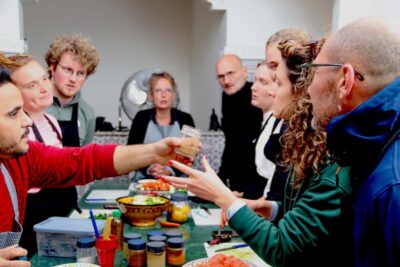
Moroccan Dishes Cooking Class with a Local Chef
Read our review →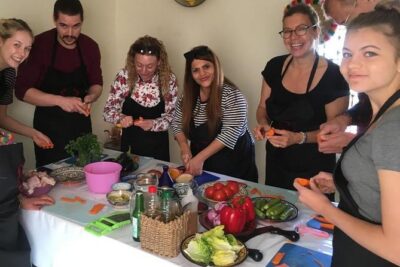
Moroccan Cooking Class & Marrakech Market Visit with Chef Khmisa
Read our review →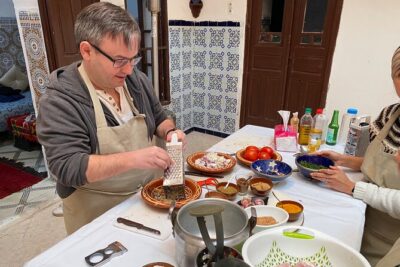
Half-Day Cooking Class with Local Chef Laila in Marrakech
Read our review →
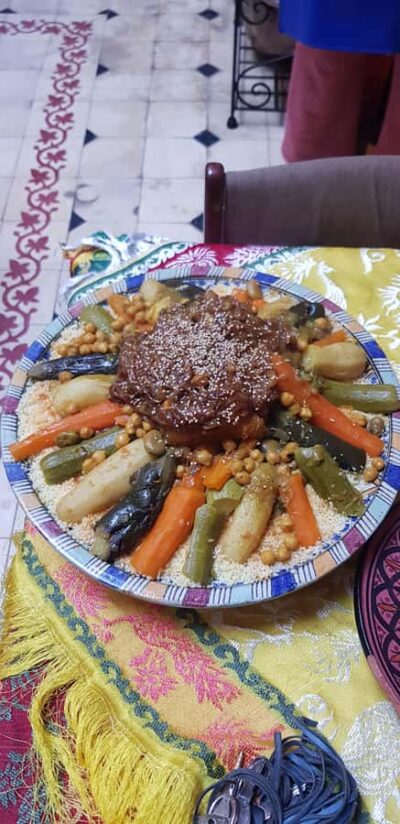
Browse the lists this tour appears in