
Reviewed · MOROCCAN COOKING CLASSES
Marrakech: 3-Hour Open-Air Moroccan Cooking Course
Moroccan cooking makes the most sense when you work with the spices, not just eat the finished dish. At Riyad El Cadi, you prepare tagine and several salads under a chef’s guidance, then sit down to eat in a calm 14th-century riad. Chef Hassan has led the class with humor and patience, and Khatija is also part of the friendly hosting team.
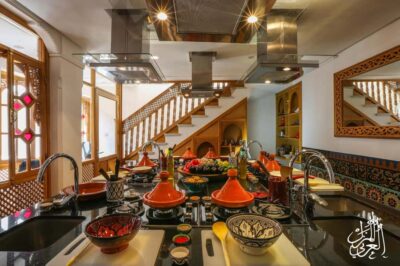
I like the small group of two to eight, which leaves room for questions and hands-on work. I also like the setting: your cooking takes place in a courtyard kitchen, and lunch follows in the garden-like courtyard or on the roof. The main caution is timing. The activity is described as both three hours and four hours, so confirm the exact schedule when you book. The course is also not suitable for wheelchair users.
In This Review
- Key points at a glance
- From Jemaa El Fna to a quiet riad kitchen
- Tagine, salads, and the art of slow cooking
- Working with chef Hassan
- Lunch in the courtyard or on the roof
- What the $88 price buys you
- Timing, seasons, and practical details
- Who will enjoy this cooking course most
- Should you book it?
- FAQ
- Where does the cooking course meet?
- How long does the experience last?
- What time does the class start?
- What food will I prepare?
- Are vegetarian, vegan, or gluten-free menus available?
- Is alcohol included in the price?
- How many people can join the class?
- Is the course wheelchair accessible?
Key points at a glance
- Cook more than one dish: Prepare a tagine plus three Moroccan salads, with the exact menu shaped around the day’s ingredients and dietary needs.
- Learn the logic of Moroccan flavor: Work with preserved lemon, rose water, and ras el hanout while exploring sweet, salty, and aromatic combinations.
- Start at Jemaa El Fna: Pick-up is from Café de France, a practical meeting point in the middle of the square.
- Eat what you prepare: Lunch includes your own cooking, mineral water, and tea or coffee at the end.
- Choose your setting: Enjoy the meal in the quiet courtyard or, if preferred, on the rooftop terrace.
- Leave with recipes: English or German recipes are provided, making it easier to repeat the dishes at home.
From Jemaa El Fna to a quiet riad kitchen
The class begins with pick-up at Café de France between 10:45 and 11:00 in Jemaa El Fna. You should confirm the pick-up time by phone beforehand, since the course depends on availability and the operator may occasionally need to offer another date.
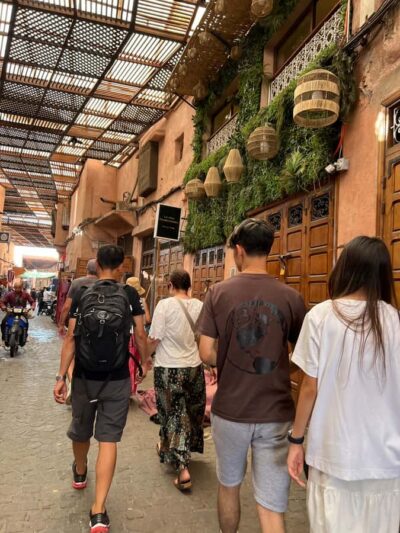
This meeting point is useful if you are staying in the medina and do not want to search for a riad address through narrow lanes. From the square, a staff member guides you to Riyad El Cadi at 87 Derb Moulay Abdul Kader. The transfer is short, but the personal escort matters in this part of Marrakech, where an address on paper does not always tell you which lane or doorway to use.
The destination is a 14th-century riad. A riad is built around an interior courtyard, so the atmosphere changes quickly once you step inside. The noise and movement of the square give way to a more private setting, with the cooking centered in the courtyard kitchen.
You are welcomed with Moroccan mint tea before work begins. That first pause is not filler. It gives the chef time to explain the dishes, introduce the ingredients, and settle the group into the pace of the class.
More Cooking Classes in Marrakech
- Marrakech: Moroccan Cooking Class with Pickup
★ 4.6 · 1,862 reviews - Marrakech: Traditional Moroccan Cooking Class & Market Visit
★ 4.8 · 1,861 reviews - Marrakesh: Moroccan Dishes Cooking Class with a Local Chef
★ 5.0 · 1,615 reviews
Tagine, salads, and the art of slow cooking
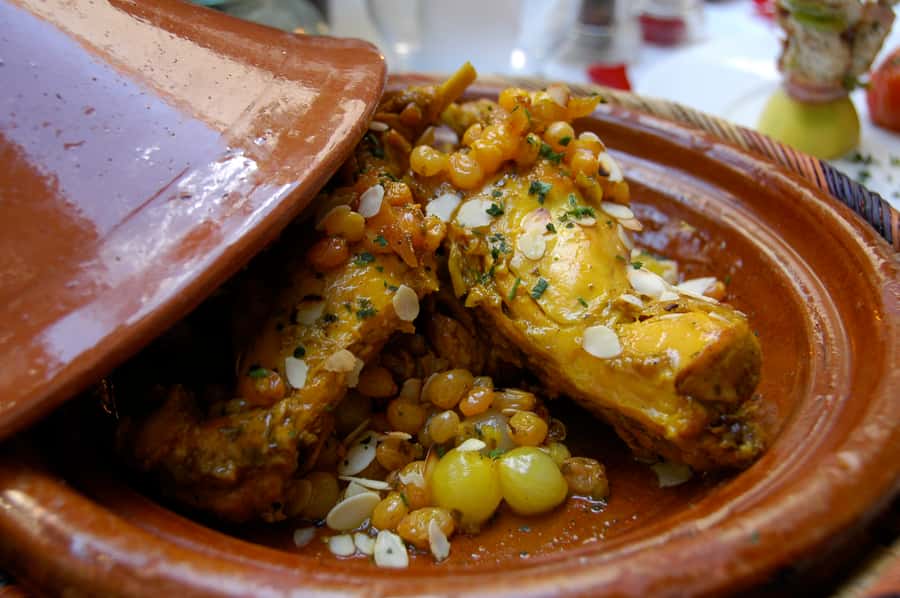
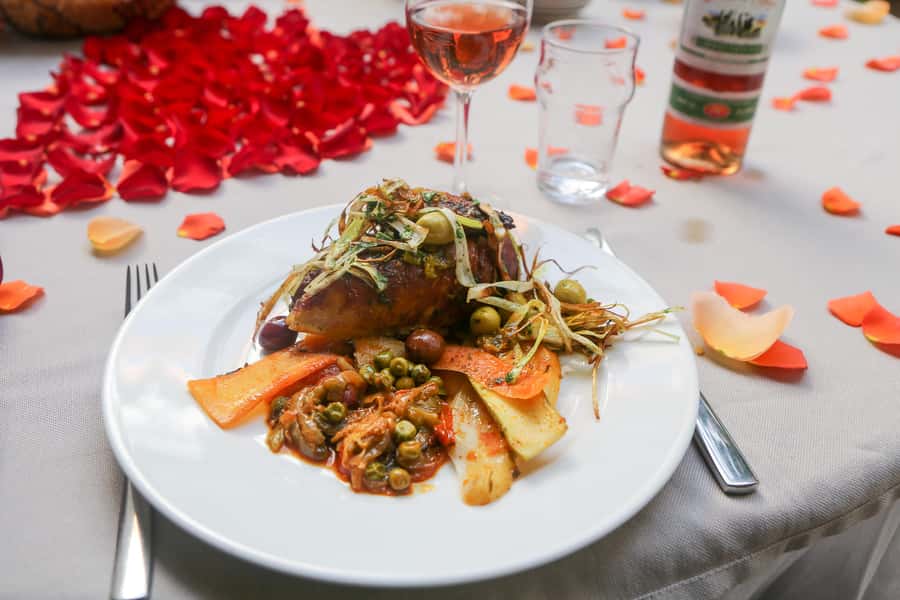
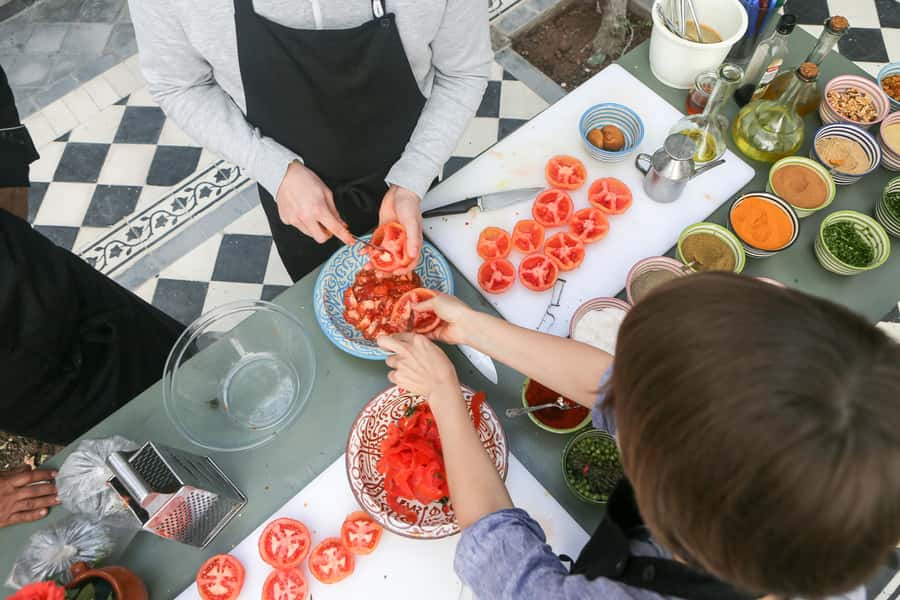
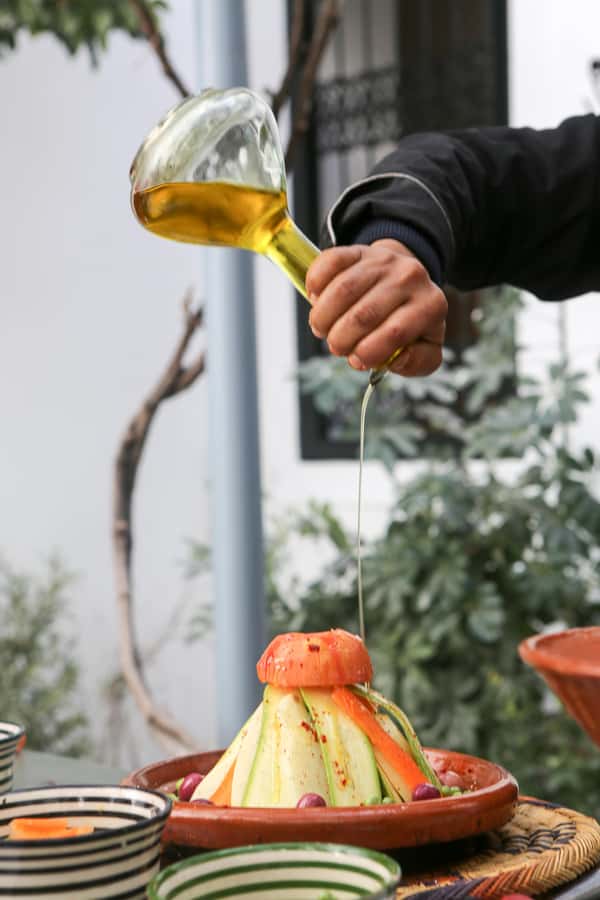
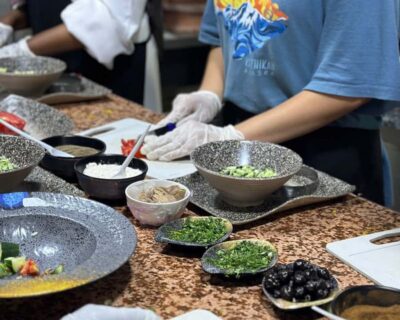
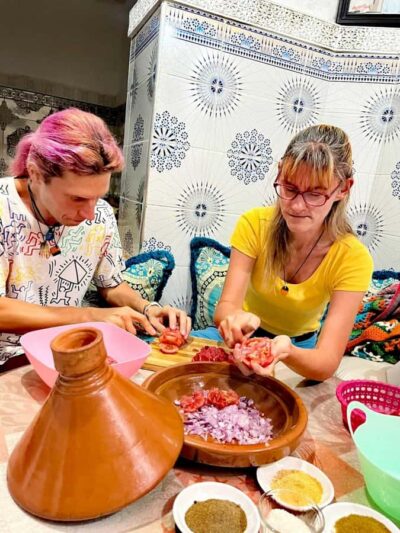
The class focuses on traditional Moroccan recipes rather than a quick demonstration. You chop, add spices, marinate ingredients, and cook under instruction. The meal can include a tagine and three salads, with examples from the class including lamb tagine, chicken with preserved lemon, and a vegetable tagine.
The exact menu may vary, so you should not book expecting one fixed dish every time. That flexibility is useful because Moroccan cooking changes with the ingredients available and because the kitchen can adapt to vegetarian, vegan, and gluten-free diets.
Tagine is more than a named dish. It is also the clay cooking vessel traditionally associated with slow cooking. The point of the class is to understand how the ingredients come together over time, rather than rush through a recipe at high heat. While your tagine cooks over the fire, you turn to the salads and other parts of the meal.
This is where the course earns its place above a simple lunch. You learn how Moroccan meals balance different notes on one table. Preserved lemon brings a sharp, salty edge. Rose water adds fragrance. Ras el hanout contributes a complex spice blend. The cooking shows you how sweet, savory, salty, and aromatic flavors can sit beside one another without becoming muddled.
The preparation may take longer than you expect. One detailed account of the class described surprise at the time needed to prepare the marinated chicken, vegetable tagine, and three side dishes. That is worth knowing in advance. You are not attending a fast recipe lesson with a meal tacked on at the end. This is a slow-food experience, and the pace is part of the lesson.
Working with chef Hassan
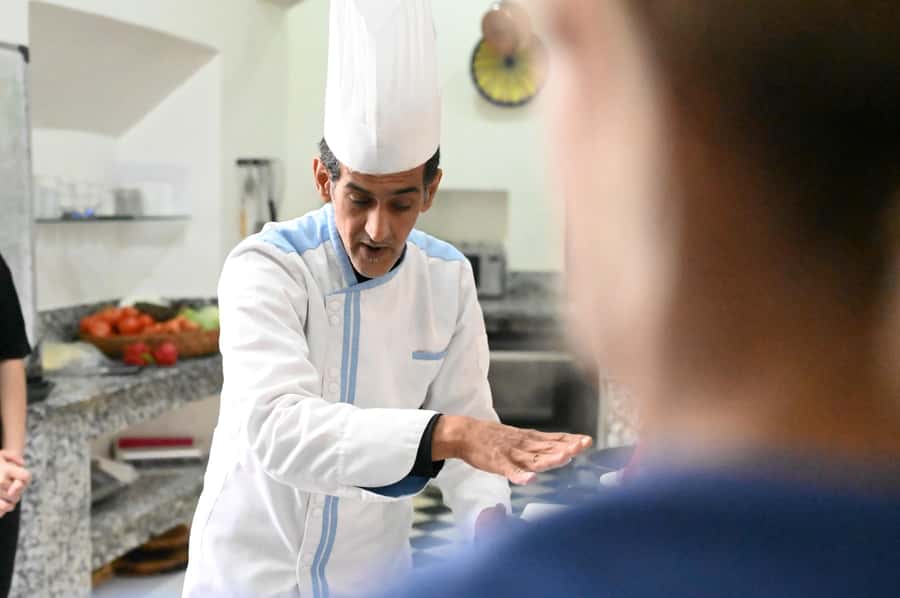
Chef Hassan is the name most closely associated with the cooking instruction. He has been described as experienced, humorous, and enthusiastic, with a style that encourages questions and lets you take part in the actual preparation.
That matters for a hands-on class. You should expect to do more than watch someone cook in front of you. You may chop, season, marinate, and add ingredients while the chef explains what each step does. The small group size helps here. With a maximum of eight people, you have a better chance of getting close to the work and asking about a technique as it happens.
The teaching is practical rather than academic. You learn what an ingredient contributes and how Moroccan cooks use it, then put that lesson into the dish. If you want to know how much spice to use, why preserved lemon is rinsed or added at a certain point, or how a tagine develops flavor while it cooks, this is the time to ask.
You should also keep your expectations realistic. A four-hour class cannot turn you into a Moroccan chef, and the course is designed around a meal rather than a full culinary school curriculum. Its strength is the combination of explanation, participation, and eating. You leave with recipes and a better sense of how the dishes are built.
Lunch in the courtyard or on the roof
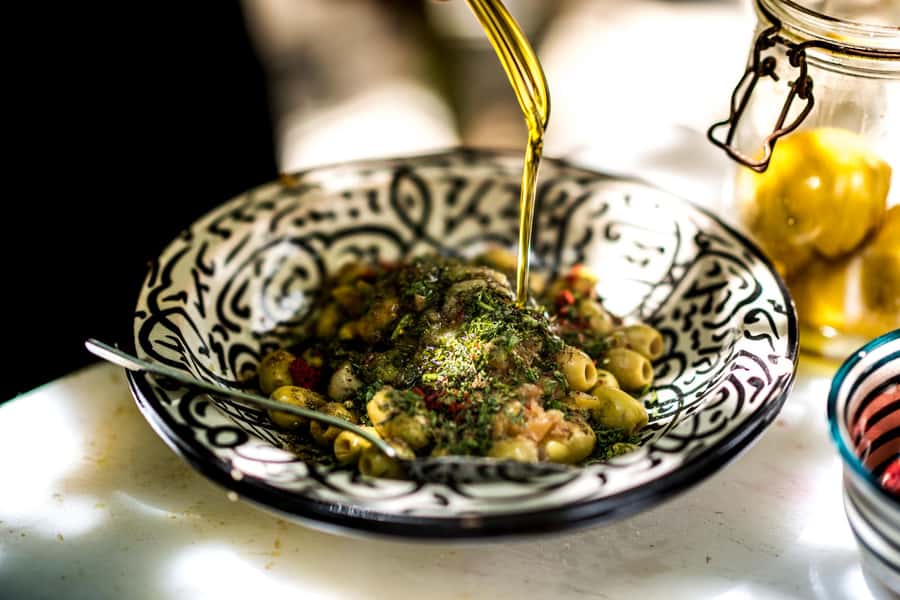
When the cooking is complete, you are escorted to a table in the riad. You can choose between the peaceful courtyard and the rooftop terrace, depending on the setting available and your preference.
The courtyard is the more sheltered choice. It keeps the meal connected to the riad’s architecture and offers a quiet place to enjoy the food you have just prepared. The roof provides a different feel, with an open view over Marrakech. The information provided does not promise a particular city landmark from the roof, so treat the terrace as a pleasant viewpoint rather than a guaranteed postcard panorama.
Lunch includes the dishes prepared during the class, mineral water, and tea or coffee at the end. Moroccan mint tea is central to the experience, both as a welcome and as a closing drink. You can also choose Moroccan wine or another alcoholic drink for an additional charge. Alcohol is not included in the $88 price, so ask about the cost before ordering.
The meal is a key part of the value. You are not paying only for instruction and ingredients. You are also getting a full lunch in a historic riad, with the satisfaction of eating food you helped prepare. If you are comparing this with a standard restaurant meal, the price looks high. If you value a small group, chef instruction, recipes, and several hours of cultural context, it becomes easier to justify.
More Marrakech trips worth a second look
- Moroccan Cooking Class & Marrakech Market Visit with Chef Khmisa
★ 5.0 · 1,504 reviews - Half-Day Cooking Class with Local Chef Laila in Marrakech
★ 5.0 · 952 reviews - Marrakech: Moroccan Cooking Class with a Local Family
★ 4.9 · 668 reviews - Marrakech: Moroccan Cuisine Cooking Class in Local Home
★ 4.8 · 508 reviews
What the $88 price buys you
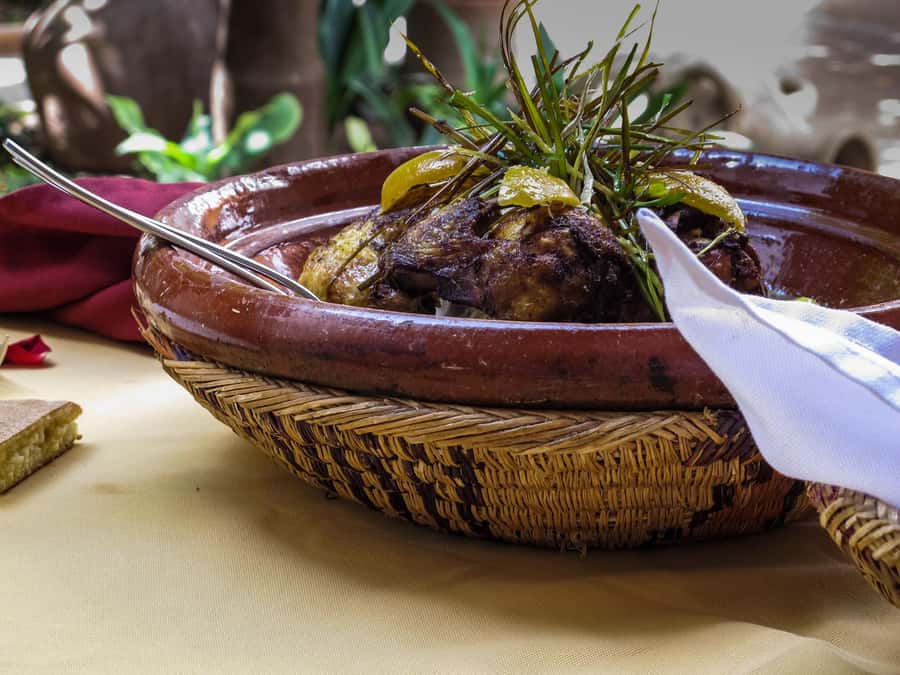
At $88 per person, this is not Marrakech’s budget lunch option. It is best viewed as a half-day activity that combines a cooking lesson, a hosted meal, and a distinctive setting.
The package includes:
- The cooking course
- Lunch
- Mineral water
- Tea or coffee at the end
- Recipes in English or German
- Pick-up from Jemaa El Fna
The package does not include alcoholic drinks or pool time. A pool option is available through a separate cook and swim experience in July, August, and September. Do not assume you can use the pool as part of this booking.
I see the strongest value for couples and small groups who want one substantial cultural activity rather than several short stops. One couple had a private-feeling session with the chef because only two people attended. That is not guaranteed, but the minimum group size is two and the maximum is eight, so the class will not have the feel of a large tour bus activity.
The price is less attractive if you are mainly looking for a cheap meal or if you dislike spending several hours on food preparation. You also need to allow enough time for the slow pace. The supplied details list a four-hour duration, while the title calls it a three-hour course. Since the cooking, meal, tea, and transfer can take much of the day, confirm the current start and finish times.
Timing, seasons, and practical details
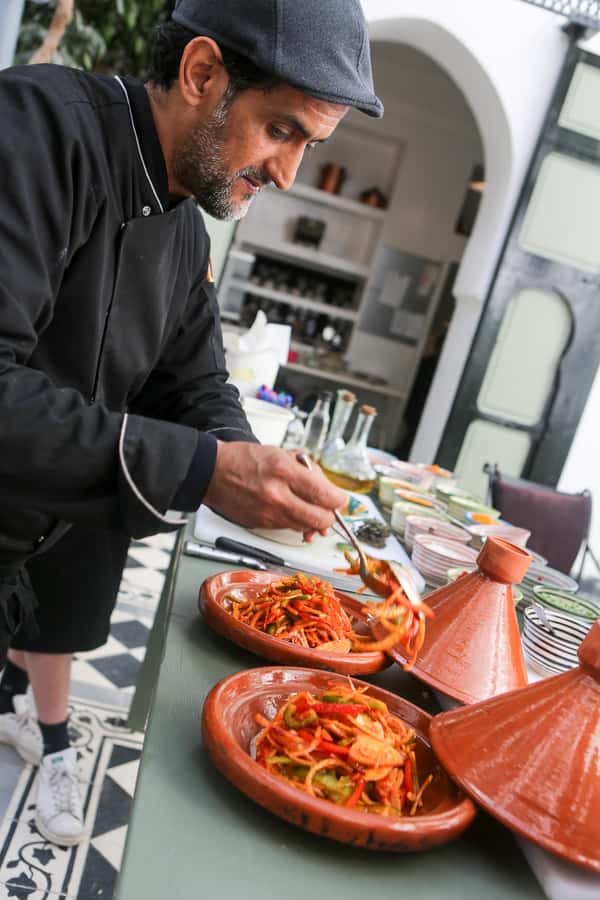
The regular start time is 11:00. During summer, a second start at 16:30 may be available. The morning option leads naturally into lunch, while the later option may work better if you prefer to spend the early day exploring Marrakech.
Availability is not automatic. The operator may contact you to suggest another date and time if the requested session cannot run. This is linked to the small-group format, which requires at least two participants over age 14. Check the date before arranging another fixed activity immediately afterward.
The class is taught in English and French. Recipes are available in English or German. If you need instruction in another language, this course may not be a good fit.
Children up to age 13 are welcome at a reduced price if they are interested in cooking. The general minimum is two participants over age 14, so families should confirm how the child rate and group rules apply to their booking.
The meeting point is Café de France, not the riad entrance. This distinction is important. The provided address for Riyad El Cadi is useful, but the included pick-up is from Jemaa El Fna. Confirm the meeting time before you go, and arrive ready to be escorted through the medina.
The experience is not suitable for wheelchair users. The riad setting and medina access can involve constraints that make the class impractical for wheelchair access.
Free cancellation is available up to 24 hours before the activity for a full refund. You can also reserve and pay later, which helps if your Marrakech schedule is still changing.
Who will enjoy this cooking course most
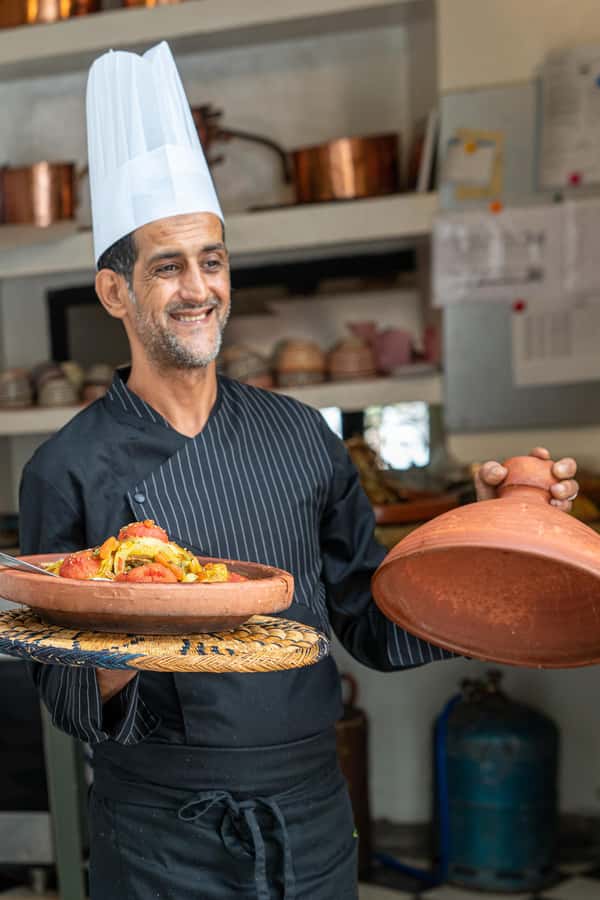
I would recommend this class to you if food is one of the best ways you learn about a place. You get to handle the ingredients, ask questions, and understand why Moroccan meals use several dishes and contrasting flavors rather than one large main course.
It is especially good for couples, friends, and solo cooks who like small groups. The two-person minimum means a couple may receive plenty of direct attention, while the eight-person maximum keeps the class from feeling crowded.
Vegetarians, vegans, and people avoiding gluten can request an adjusted menu. Tell the operator about your needs in advance, since the usefulness of any dietary adaptation depends on planning.
Families can also consider it, since children up to 13 are welcome at a lower price. The class is still a serious cooking session, not a children’s entertainment program, so it suits young people who genuinely want to take part.
I would think twice if you have limited mobility, want a short activity, or prefer to eat without participating in preparation. I would also skip it if your main goal is a rooftop sightseeing tour. The roof is one possible dining setting, but the heart of the experience is the kitchen.
Should you book it?
Book this course if you want to understand Moroccan food by preparing it yourself, then eating it in a peaceful riad. The best parts are the small group, chef-led instruction, several dishes, and the chance to work with ingredients such as preserved lemon, rose water, and ras el hanout.
The $88 cost makes sense when you count the cooking lesson, lunch, recipes, drinks without alcohol, and pick-up from Jemaa El Fna. Confirm the four-hour timing, dietary arrangements, exact meeting time, and whether you want the morning or summer afternoon start.
Skip it if you only want a quick meal or if wheelchair access is essential. For everyone else, this is a thoughtful way to spend part of a Marrakech day, with food you can try again long after you leave Morocco.
FAQ
Where does the cooking course meet?
Pick-up is from Café de France in Jemaa El Fna. The cooking course takes place at Riyad El Cadi, 87 Derb Moulay Abdul Kader, Marrakesh 40000, Morocco.
How long does the experience last?
The supplied activity details list a duration of four hours, although the title describes it as a three-hour course. Confirm the current timing when you book.
What time does the class start?
The regular start time is 11:00, with pick-up listed between 10:45 and 11:00. During summer, a 16:30 start may also be available.
What food will I prepare?
The class includes a tagine and a selection of Moroccan salads. Examples include lamb tagine, chicken with preserved lemon, and vegetable tagine. The exact dishes may vary.
Are vegetarian, vegan, or gluten-free menus available?
Yes. The course can be tailored with vegetarian, vegan, and gluten-free options.
Is alcohol included in the price?
No. Moroccan wine, beer, and other alcoholic drinks are available at an additional cost. Mineral water and tea or coffee at the end are included.
How many people can join the class?
The group has between two and eight participants. The minimum requirement is two participants over age 14.
Is the course wheelchair accessible?
No. The activity is listed as unsuitable for wheelchair users.
More 3-Hour Experiences in Marrakech
- Marrakech Monuments & Souks 3-Hour Tour
★ 3.8 · 1,540 reviews - Marrakech: 3H Traditional Hammam & Massage & Hotel Transfer
★ 3.9 · 1,262 reviews - 3h Private Sidecar Ride / Secrets of Marrakech
★ 5.0 · 478 reviews - Marrakech: 3H Traditional Hammam, Massage & Hotel Transfer
★ 4.6 · 133 reviews
Recently reviewed around Marrakech
- 4-Days Marrakech to Marrakech Désert Tour★ 5.0 · 17 reviews
- Camel ride at sunset in Marrakech palm grove★ 5.0 · 17 reviews
- Agafay camel ride★ 5.0 · 20 reviews
- Camel riding in marrakech★ 4.5 · 17 reviews
- Marrakech to Atlas Mountains and 4 Valleys Day Trip★ 5.0 · 17 reviews
- Agafay Desert Adventure, Culture, and Relaxation, From Marrakech★ 5.0 · 25 reviews
- Quad excursion to the Agafay desert near Marrakech★ 5.0 · 44 reviews
- Camel ride and dinner Agafay desert★ 5.0 · 25 reviews
Moroccan Cooking Classes, compared.
Traditional Moroccan Cooking Class & Market Visit
Read our review →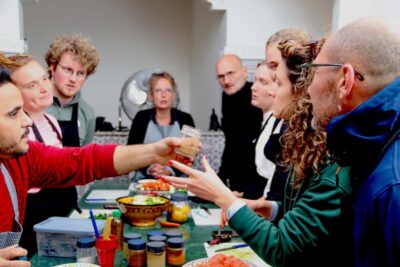
Moroccan Dishes Cooking Class with a Local Chef
Read our review →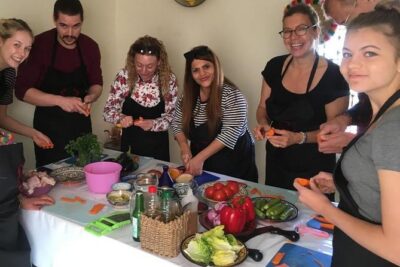
Moroccan Cooking Class & Marrakech Market Visit with Chef Khmisa
Read our review →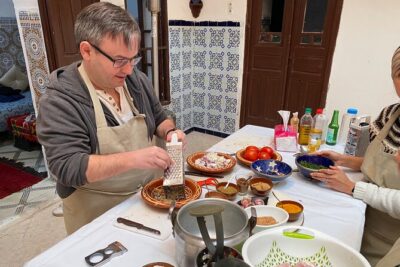
Half-Day Cooking Class with Local Chef Laila in Marrakech
Read our review →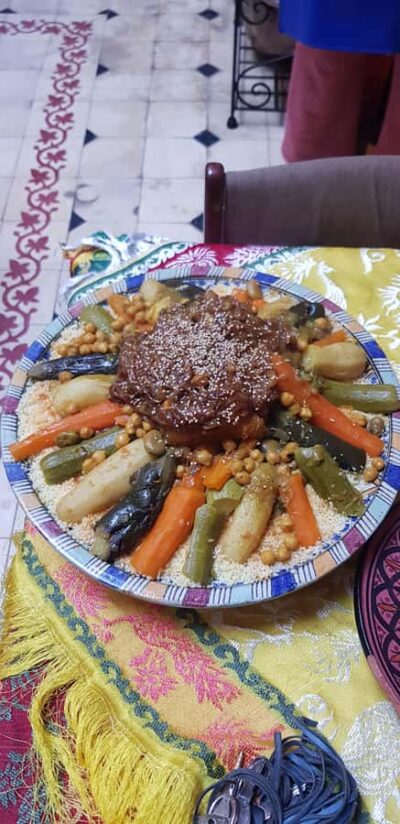
Browse the lists this tour appears in