
Reviewed · FOOD & DRINK
Rabat: Walking Food Tour
Rabat’s best food experience may be the one that gets you away from a restaurant menu. This three-hour walk leads from Rabat Ville station through the Medina and ends near the Kasbah des Oudayas, using street stalls, markets, pastry shops, and a sit-down meal to explain how people in the city actually eat.
I like two things right away: you get a full meal plus six tasting stops, and the food comes with useful context about Rabat’s history, religion, architecture, and daily life. Guides such as Mohammed, Imane, and Sarra have also been praised for making the walk easy to follow and personal. The one catch is simple: this is a lot of food. Come hungry, but not so hungry that you rush through the first half.
In This Review
- Rabat Food Tour at a Glance
- Why This Food Walk Works So Well in Rabat
- Starting at Rabat Ville Station
- Through the Medina, One Bite at a Time
- Sardines, Dates, Chebakia, and Moroccan Sweets
- The Full Moroccan Meal
- History, Religion, and Daily Life Along the Route
- How Much Food Should You Expect?
- Is the $72 Price Fair?
- Families, Vegetarians, and Curious Eaters
- Practical Details That Matter
- Should You Book the Rabat Walking Food Tour?
- FAQ
- Where does the Rabat Walking Food Tour begin?
- Where does the tour finish?
- How long does the experience last?
- What food is included?
- Is transportation included?
- Is the tour offered in English?
- Can dietary restrictions be accommodated?
- Should I eat before the tour?
Rabat Food Tour at a Glance
- Six tasting stops and a full meal: This is not a few token samples. Plan for a serious lunch or dinner-sized experience.
- A walk through Rabat’s Medina: Narrow lanes, food sellers, artisans, fresh produce, and community life form the backdrop.
- Classic Moroccan flavors: Expect items such as sardines, stuffed dates, chebakia, pastries, juices, tagine, couscous, and mint tea.
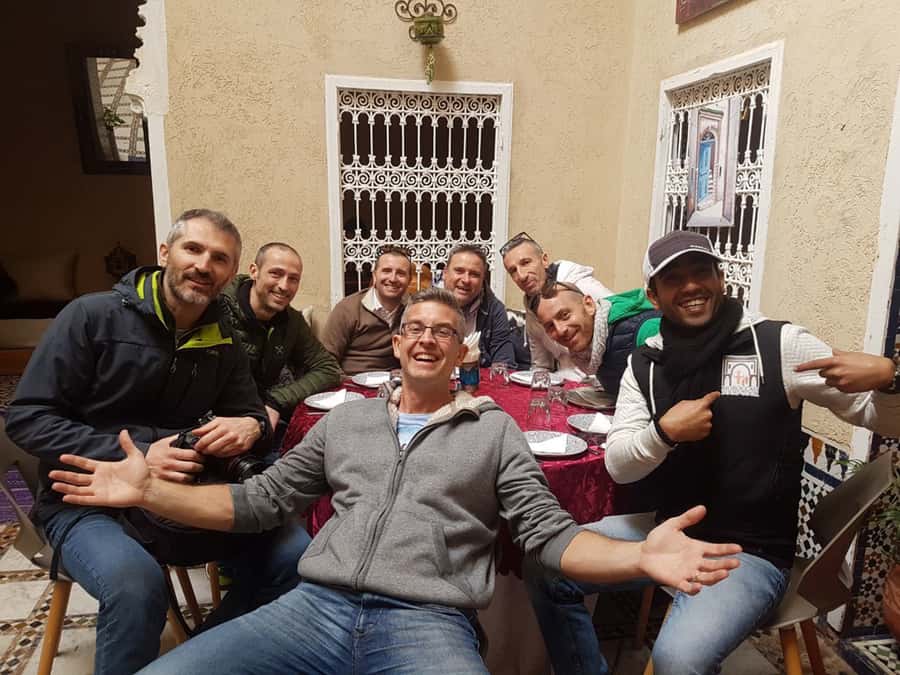
- A guide who explains the food: Mohammed, Imane, and Sarra are among the guides praised for clear explanations and a friendly manner.
- A useful starting and finishing route: Meet at Rabat Ville station and finish at the Kasbah des Oudayas, with no transport included.
- Good dietary flexibility: Vegetarian, gluten-free, and lactose-free needs can be discussed in advance.
Why This Food Walk Works So Well in Rabat
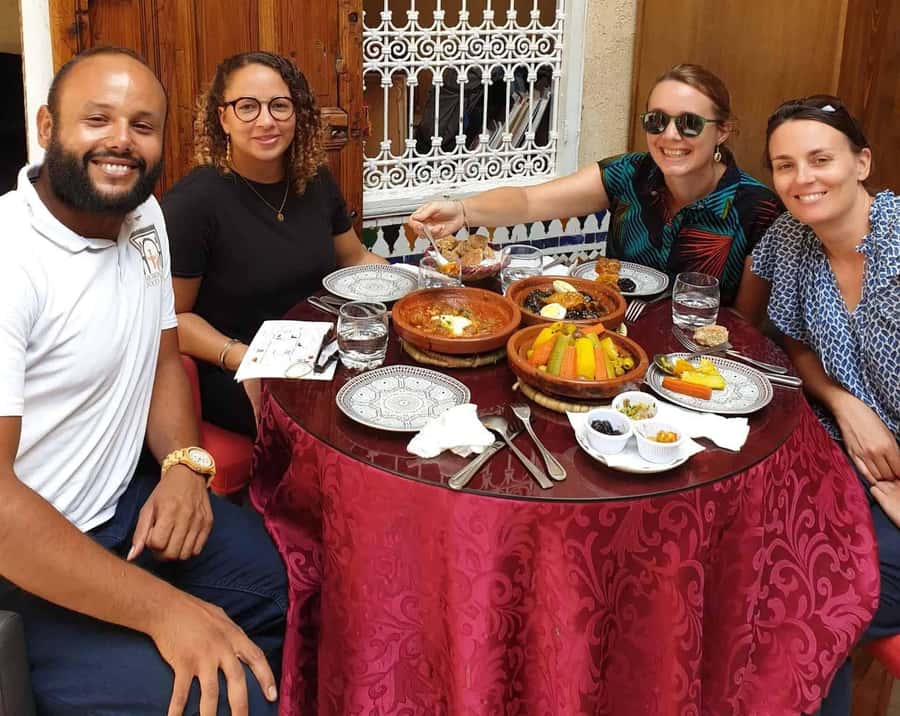
Many food tours give you a plate, name the dish, and move on. This one aims to explain the place behind the food. As you walk through the Medina, your guide connects what you taste with Moroccan customs, local trade, family meals, and the way Rabat’s old center functions today.
That matters because Moroccan food is not just a collection of recipes. A pastry, a date, a bowl of soup, or a tagine can tell you something about hospitality, religious celebrations, daily shopping, or regional cooking. A good guide turns those links into something you can understand without needing a lecture.
The setting helps. Rabat’s Medina has traditional buildings, narrow alleyways, shops, food counters, fresh produce stalls, and working streets. You are not simply being driven between restaurants. You are walking through the city at street level, stopping where food is made, displayed, or sold.
The tour is conducted in English, and the guide is there for questions. Ask about ingredients, eating customs, bread, tea, markets, or other places in Morocco. One especially useful feature is the local advice you can gather along the way. A strong guide can help you make better choices for the rest of your time in Rabat and nearby cities.
More Morocco food and drink outings:
- From Marrakech: Merzouga 3-Day Desert Safari with Food
★ 4.7 · 12,232 reviews - Marrakech: Street Food Tour with a Local Guide
★ 4.9 · 3,119 reviews - Marrakech: Street Food Tour by Night
★ 4.8 · 2,838 reviews
Starting at Rabat Ville Station
The meeting point is in front of the main door of Gare Rabat Ville on Avenue Mohammed V. This is a practical place to begin because it is easy to identify, and the route then carries you toward the old city.
Arrive ready to walk and ready to eat. Transportation is not included, so you need to get to the station on your own and arrange your own return from the Kasbah des Oudayas. Since the tour ends in a different part of the city, think of it as a useful sightseeing route rather than a loop back to the start.
The three-hour length is well judged for a food walk. It gives your guide time to explain the city and gives you enough stops to sample a broad range of food without turning the outing into an all-day event. Still, the portions can add up quickly. Several dishes are generous, and the final meal is not merely a small plate.
Through the Medina, One Bite at a Time
The main part of the experience takes place in Rabat’s Medina. This is where the tour feels most useful, especially if you are new to Morocco and do not yet know which stalls or shops are worth trying.
Your guide may point out fresh produce vendors, artisans, sweets, juices, and prepared food. The value is not only in the tasting. You also get a look at the routines of the neighborhood, including the community ovens that have been part of local life. These small details help explain how food moves from market to kitchen to table.
Street food can be hard to order on your own when you do not know the names, ingredients, or usual way of eating a dish. A guide removes much of that guesswork. You can try things you might otherwise pass by, including unfamiliar savory items and sweets.
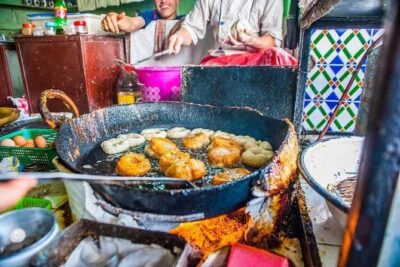
The food list varies, but the experience has included sardines, stuffed dates, chebakia, Moroccan pastries, smoothies or juices, and other local products. One particularly adventurous tasting has included cow’s head. You should not assume every person will receive exactly the same items, but you can expect a broad sampling rather than one narrow theme.
That variety is a major strength. You are not spending three hours on tagine alone. You get salty, sweet, crisp, soft, hot, and refreshing tastes, along with the chance to notice how Moroccan cooks balance spice, sweetness, herbs, dried fruit, and slow-cooked meat.
Sardines, Dates, Chebakia, and Moroccan Sweets
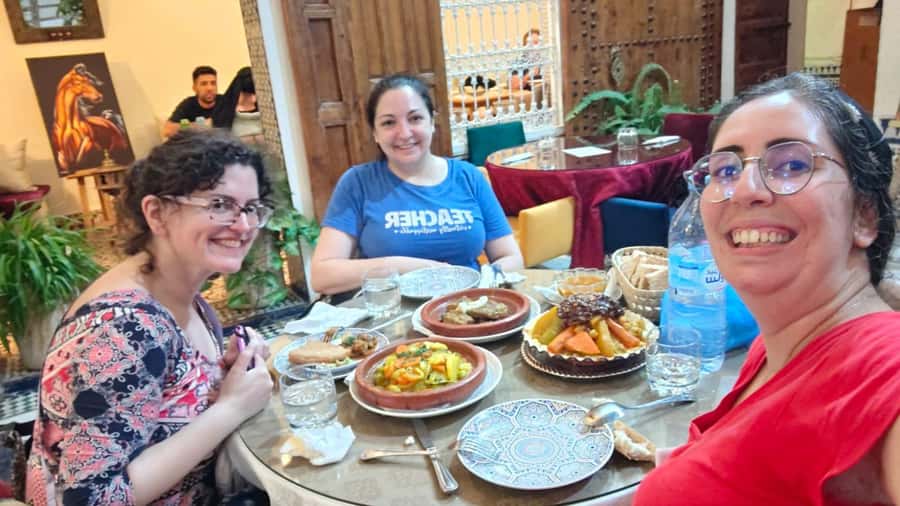
The early tastings are likely to be the part that opens your eyes fastest. Sardines show the connection between Moroccan cooking and the Atlantic coast, while stuffed dates and chebakia introduce the sweet side of the table.
Chebakia is a particularly good food to try with a guide because its shape, texture, and honeyed finish are unlike ordinary Western pastries. Moroccan sweets can be dense and very rich, so small portions are welcome. The same is true of stuffed dates, which are easy to underestimate when you are still at the start of the tour.
Pastry shops and sweet stalls also give you a window into Moroccan hospitality. Tea and sweets are closely linked with welcoming visitors, celebrations, and pauses in the day. Your guide can explain those customs as you eat instead of leaving you to guess from a display case.
Juices and smoothies provide a useful break between heavier bites. They also keep the route from feeling like one long procession of fried or sugary food. Still, pacing is important. Do not treat every early sample as a full serving, because the meal later is substantial.
More Morocco trips worth a second look
- 3-Day Tour to Merzouga Erg Chebbi with Food & Camel Trek
★ 5.0 · 1,770 reviews - Authentic Moroccan Food Tour in Marrakech with Dinner
★ 5.0 · 1,423 reviews - From Marrakech: Zagora 2-Day Desert Safari with Food & Camp
★ 4.5 · 1,137 reviews - Marrakech: Jemma El Fnaa Food Tour with Dinner
★ 4.7 · 394 reviews
The Full Moroccan Meal
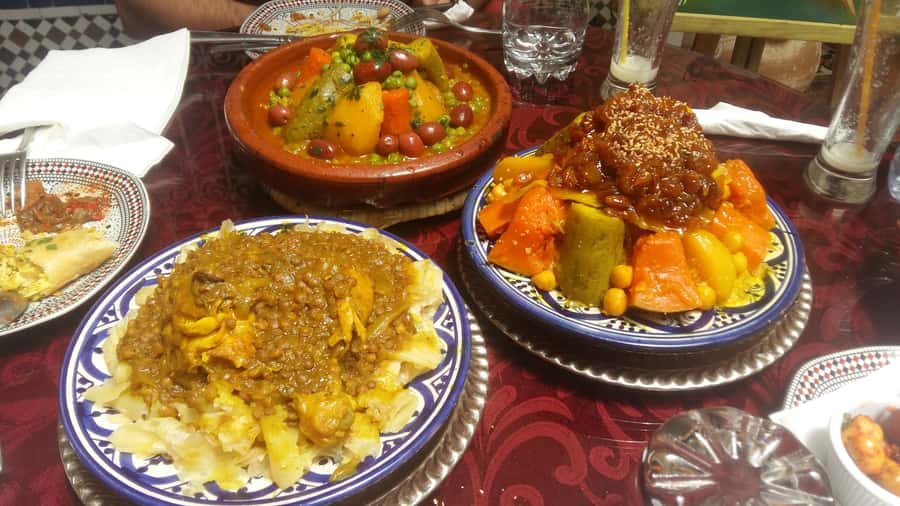
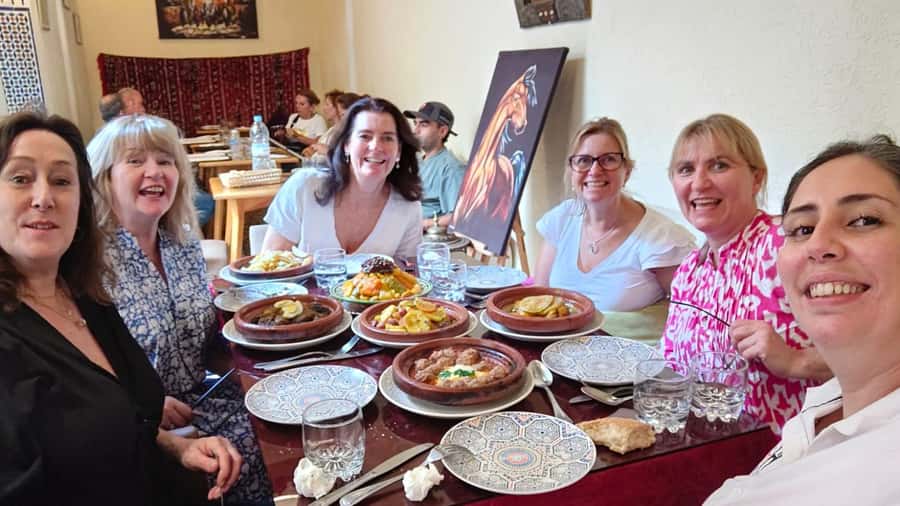
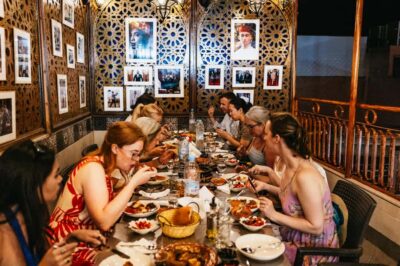
The tour includes a full meal, and this is where the food walk shifts from grazing to sitting down and eating in a more traditional way. Past meals have featured Moroccan salads and other small plates, followed by tagine and couscous. Some tours have ended with mint tea and Moroccan pastries, including almond cookies.
This meal gives you a chance to understand the structure of Moroccan dining. Instead of ordering one main course and leaving, you may receive several dishes meant to be shared or tasted together. The salads and small plates set up the meal, while tagine brings the familiar slow-cooked centerpiece and couscous adds one of Morocco’s best-known staples.
Do not book this expecting a light lunch. The full meal follows the market tastings, and quantities have sometimes felt too generous. That is good news if you want a filling introduction to Moroccan cooking, but less ideal if you dislike overeating or wasting food.
The sit-down portion also slows the pace. After walking through the Medina, you can ask more questions and compare the dishes you have already tried. One past tour included lunch at Dar Medina, while other descriptions place the final tea or cafe stop near the river. The exact restaurant or ending arrangement may vary, but the purpose is the same: finish with a proper meal and a calm place to talk.
History, Religion, and Daily Life Along the Route
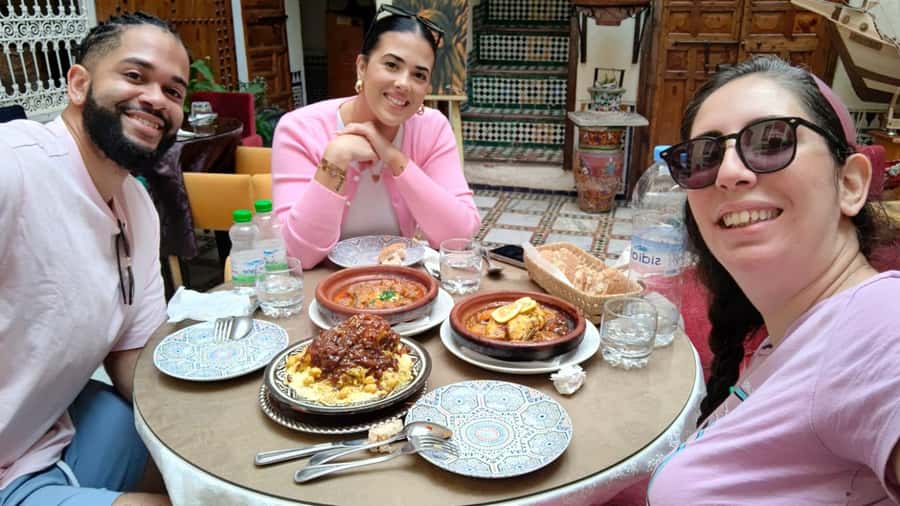
The strongest guides do more than name ingredients. Mohammed has been praised for explaining the city clearly and adding humor, while Imane and Sarra have been noted for their enthusiasm and ability to discuss Moroccan food and culture.
Expect the conversation to cover more than cuisine. The tour can touch on Rabat’s history, architecture, religion, traditions, and everyday lifestyle. That wider view makes the food easier to place. You learn not just what is on the plate, but why certain foods matter and how they fit into local life.
The Medina also supplies plenty of photo opportunities. You will see traditional architecture, narrow lanes, market displays, and views toward the city’s historic waterfront areas. Be respectful when photographing people and working vendors, and stay aware of the group as the streets narrow.
I especially like this style of sightseeing because it gives you something to do with your eyes and ears between bites. You are not waiting for the next restaurant reservation. You are watching a neighborhood work.
How Much Food Should You Expect?
The honest answer is a great deal. The combination of six stops and a full meal makes the advice to arrive on an empty stomach more than a polite suggestion.
A typical rhythm may include small market samples, sweets, drinks, and prepared food before the main meal. Even if each individual tasting is modest, the total can be considerable. Several people have found themselves very full by the end, and one family with children enjoyed the tour while still needing to manage the portions.
For that reason, this experience suits people who enjoy trying many foods and sharing a long meal. It is less suited to someone who wants a quick snack tour or prefers to eat only one familiar dish.
If you have dietary restrictions, tell the provider ahead of time. Vegetarian, gluten-free, and lactose-free needs can be accommodated as long as you communicate them. Vegetarian options have worked well on past tours, but the guide needs the information before the walk.
Is the $72 Price Fair?
At $72 per person, this is not the cheapest way to eat in Rabat. You could buy individual snacks and a local meal for much less. The question is what you want the money to cover.
The price includes six tasting stops, a full meal, and an English-speaking guide for three hours. You are also paying for the guide’s local judgment, the explanation of unfamiliar foods, and the time saved by not having to search for suitable stalls yourself.
I think the value is strongest if you are new to Rabat, nervous about ordering street food, or interested in the link between cuisine and culture. It is also a sensible choice for a short stay because the route combines eating and sightseeing in one outing.
The value is weaker if you already know Rabat well, speak enough French or Arabic to order comfortably, or mainly want a cheap meal. You may also feel the price more sharply if you do not eat large quantities. Still, for a visitor who wants a guided introduction rather than a simple restaurant lunch, the amount of food and instruction make the cost easier to justify.
Families, Vegetarians, and Curious Eaters
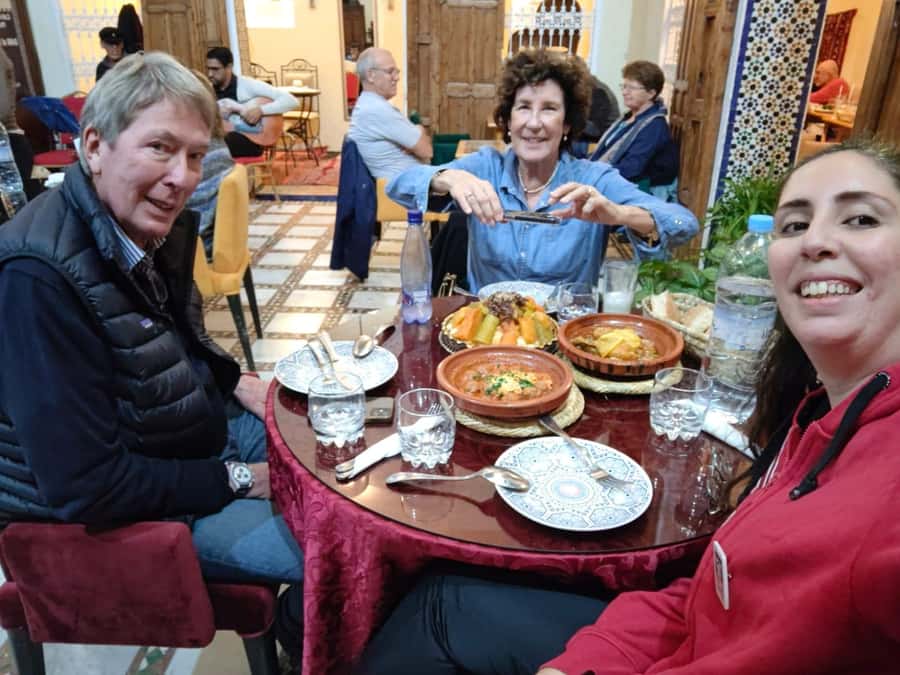
This tour can work for families. A six-year-old and a thirteen-year-old have both enjoyed the food and conversation on the route, though parents should be ready for a long meal and unfamiliar flavors.
Vegetarians should ask for suitable choices before booking. The tour has provided vegetarian alternatives, so avoiding meat does not automatically rule it out. Gluten-free and lactose-free requests can also be raised in advance.
The best match is someone who likes variety, asks questions, and does not mind walking between stops. You will get more from the experience if you are willing to try a pastry you cannot identify or a savory dish you would not order alone.
The less suitable match is a very selective eater, someone looking for a short tasting with tiny portions, or anyone who wants to control every dish in advance. This is a guided food adventure through a working Medina, not a fixed restaurant tasting menu.
Practical Details That Matter
The tour lasts three hours and begins at Rabat Ville station. It finishes at the Kasbah des Oudayas, so plan your day around that route and remember that transportation is not included.
Wear comfortable shoes for the Medina’s narrow streets and bring room in your schedule after the tour. You may be too full for another meal soon afterward.
The activity is offered with free cancellation up to 24 hours before the start time, and you can reserve now while paying later. Starting times depend on availability, so check the schedule that fits your day.
Should You Book the Rabat Walking Food Tour?
Book it if you want a guided introduction to Rabat that combines street food, local markets, and a substantial Moroccan meal. The best parts are the range of tastings, the walk through the Medina, and the chance to ask a local guide about food, customs, and city life in one sitting.
I would especially recommend it near the start of your stay. You can use the guide’s advice for later meals, understand menus more easily, and recognize foods you see elsewhere in Morocco.
Skip it if you want a very light outing, dislike eating unfamiliar foods, or are focused only on keeping costs low. For everyone else, the $72 price buys more than lunch. It buys orientation, conversation, and a generous first look at Rabat through what its people cook and eat.
FAQ
Where does the Rabat Walking Food Tour begin?
Meet your English-speaking guide at Gare Rabat Ville, on Avenue Mohammed V, in front of the main door of the station.
Where does the tour finish?
The walk finishes at the Kasbah des Oudayas.
How long does the experience last?
The tour lasts three hours.
What food is included?
The experience includes six tasting stops and a full meal. Foods associated with the tour include sardines, stuffed dates, chebakia, Moroccan pastries, juices, tagine, couscous, salads, and mint tea.
Is transportation included?
No. Transportation is not included, so you must arrange your own way to the starting point and from the ending point.
Is the tour offered in English?
Yes. The tour includes a live English-speaking guide.
Can dietary restrictions be accommodated?
Vegetarian, gluten-free, and lactose-free preferences can be accommodated. Tell the provider about your needs in advance.
Should I eat before the tour?
No. Come on an empty stomach because the six tastings and full meal provide a large amount of food.
More Walking Tours in Morocco
- Marrakech: Ben Youssef, Secret Garden, & Souks Walking Tour
★ 4.6 · 2,802 reviews - Marrakech: Colorful Medina Souks Guided Walking Tour
★ 4.7 · 2,470 reviews - Explore Fes: Unforgettable Guided Walking Tour of the Medina
★ 4.7 · 1,339 reviews - Marrakech: Medina by Night Walking Tour with Moroccan Tea
★ 4.6 · 586 reviews
Recently reviewed around Morocco
- 4-Days Marrakech to Marrakech Désert Tour★ 5.0 · 17 reviews
- Camel ride at sunset in Marrakech palm grove★ 5.0 · 17 reviews
- Agafay camel ride★ 5.0 · 20 reviews
- Camel riding in marrakech★ 4.5 · 17 reviews
- Marrakech to Atlas Mountains and 4 Valleys Day Trip★ 5.0 · 17 reviews
- Agafay Desert Adventure, Culture, and Relaxation, From Marrakech★ 5.0 · 25 reviews
- Quad excursion to the Agafay desert near Marrakech★ 5.0 · 44 reviews
- Camel ride and dinner Agafay desert★ 5.0 · 25 reviews
Food & Drink, compared.

3-Day Tour to Merzouga Erg Chebbi with Food & Camel Trek
Read our review →
Authentic Moroccan Food Tour in Marrakech with Dinner
Read our review →

Browse the lists this tour appears in