
Reviewed · FOOD & DRINK
Marrakech: Authentic Moroccan Food Walking Tour & Dinner
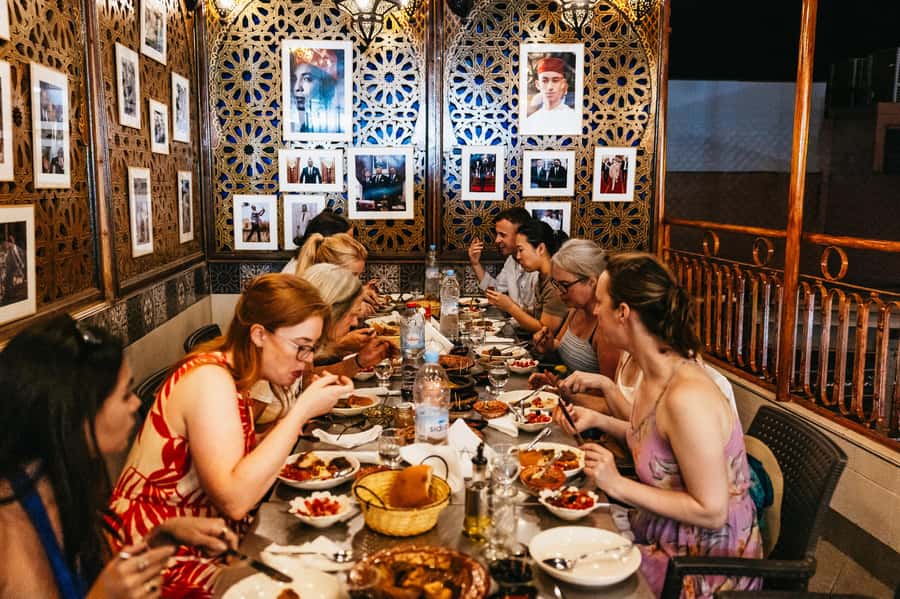
Marrakech is easiest to understand with something tasty in your hand. This three-hour evening walk takes you through the Old Medina for local snacks, sweets, tea, and a full Moroccan dinner, with possible stops for snails, sheep’s head, cactus fruit, and grilled meats.
I like the wide range of food, from Harira and Msemmen to Kaab Ghzal pastries and Moroccan barbecue. I also like the guides’ local touch. Names that come up often include Yahya, also called Yaya, as well as Ali, Rachid, Mohammad, and Mehdi, all praised for humor, cultural insight, and friendly help in the souks.
The main consideration is simple: this is a lot of food. Several stops come before dinner, so arrive hungry and keep lunch light. You’ll also walk through crowded Medina lanes, and some dishes are adventurous rather than familiar.
In This Review
- Key points to know before booking
- Starting near the Medina post office
- The first route: Harira, pastries, olives, and Tajine
- The second route: Msemen Amer, Sfenj, and open-air grilling
- The herbalist stop and what it adds
- Why the guides matter so much
- Is $52 good value?
- Timing, Ramadan, and the evening atmosphere
- Who will enjoy this food walk most?
- Practical advice for a better evening
- Should you book this Marrakech food tour?
- FAQ
- Where does the Marrakech food tour start?
- How long does the activity last?
- Is hotel pickup included?
- What food might I taste?
- Is dinner included?
- Is the tour suitable for vegetarians?
- What should I bring?
Key points to know before booking
- Expect 13 or more tastings: Snacks, sweets, drinks, and dinner make this much more than a quick food crawl.
- The route changes: Your guide may follow one of two food-focused paths, based on the season, guide, and evening schedule.
- Adventurous dishes are part of the fun: Babouche, steamed sheep’s head, liver, and local herbal drinks may appear.
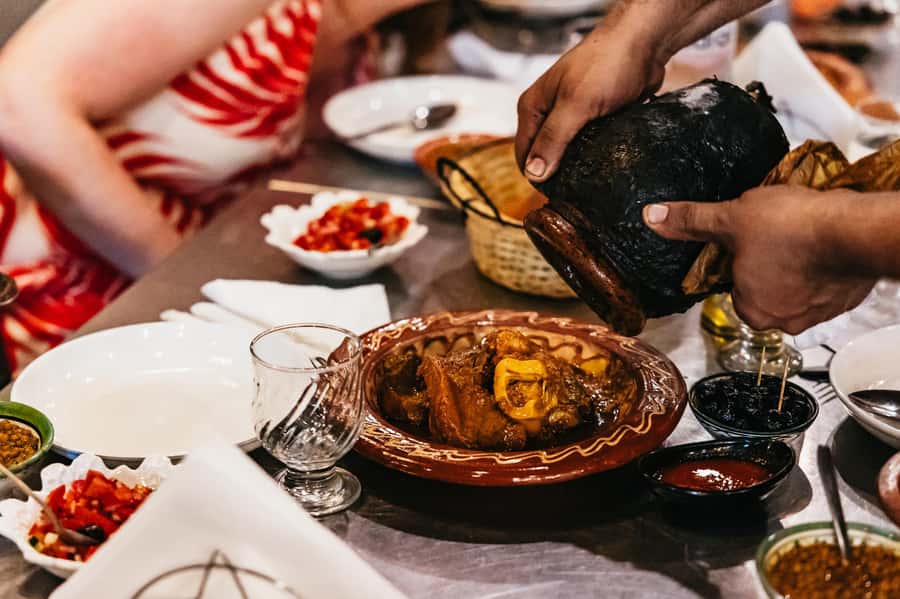
- Dinner is included: Depending on the route, you’ll finish with Tajine at a local restaurant or grilled meats at an open-air Chwa setting.
- Best early in your stay: The walk helps you get comfortable with Medina food stalls, souks, local customs, and evening crowds.
- Wear comfortable shoes: The tour lasts three hours and takes place on foot, starting and ending near the central post office.
Starting near the Medina post office
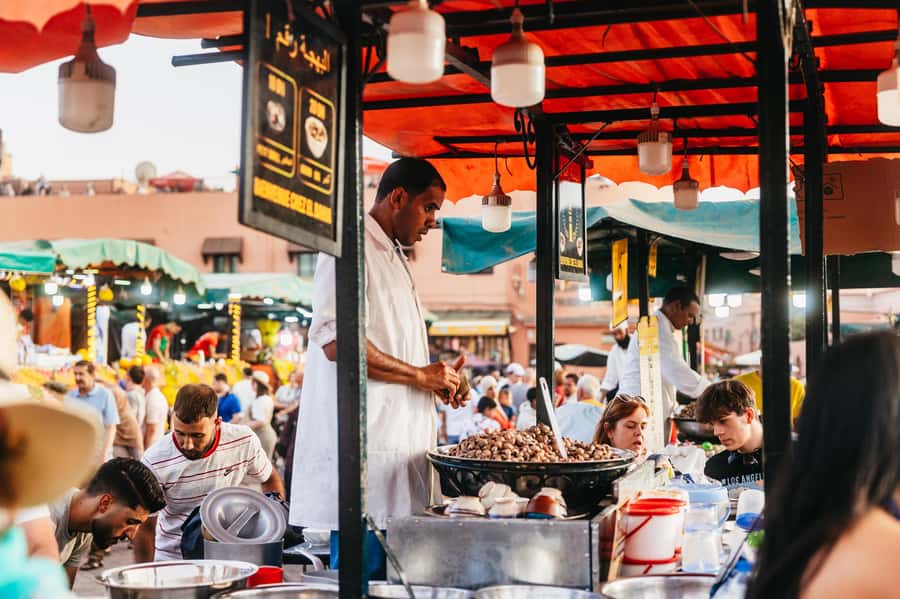
The meeting point is in front of Poste du Maroc on Rue Beni Marine. From there, you’ll enter the Medina on foot and move between food stalls, small eateries, market lanes, and local restaurants.
This is a useful starting point for a first evening in Marrakech. The Medina can feel confusing at first, with narrow streets, changing foot traffic, scooters, and a constant stream of shops and stalls. A guide who knows the area can help you focus on the food instead of spending the evening guessing where to stop.
The tour lasts three hours, but the pace is not just a march from one snack to the next. Guides such as Yaya have been praised for slowing down to explain the food, answer questions, and point out details in the souks. You’ll get tips about Marrakech beyond the menu, too.
The group size is not specified, so do not book expecting a private tour. Some groups have been large enough to feel social, which can be a plus if you enjoy meeting people from different countries. It can also mean that the pace and seating arrangements are less personal than on a private food walk.
More Food Tours in Marrakech
- From Marrakech: Merzouga 3-Day Desert Safari with Food
★ 4.7 · 12,232 reviews - Marrakech: Street Food Tour with a Local Guide
★ 4.9 · 3,119 reviews - Marrakech: Street Food Tour by Night
★ 4.8 · 2,838 reviews
The first route: Harira, pastries, olives, and Tajine
The first possible route begins with Moroccan coconut macaroons, a sweet, chewy snack that is especially popular with children. It is a gentle introduction before the food becomes more unusual.
Next may come Kaab Ghzal, often translated as gazelle ankles. These crescent-shaped pastries contain almond paste scented with orange blossom water. The texture is dense and delicate, and the floral note gives you a quick lesson in how Moroccan sweets differ from ordinary Western pastries.
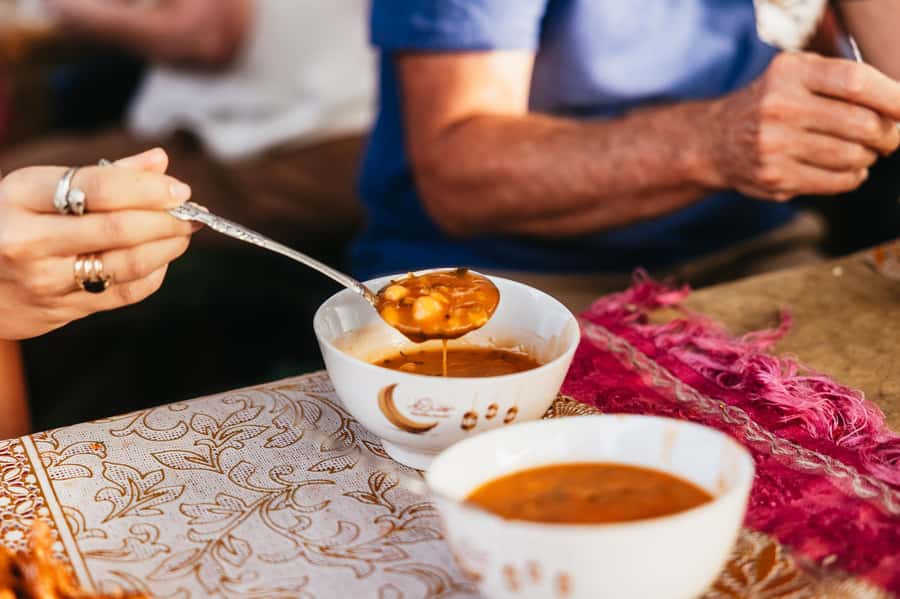
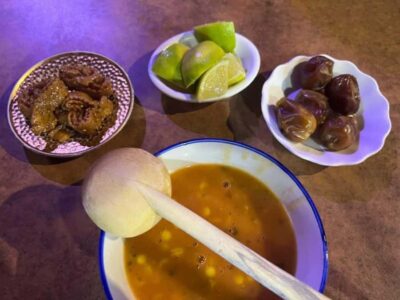
Harira is one of the most meaningful stops. This tomato-based soup is traditionally served with dates and Chebakia, a sesame-coated pastry soaked in honey. The combination is closely linked with breaking the fast during Ramadan, so it offers more than a taste. It shows how food fits into religious practice, family life, and the rhythm of the evening.
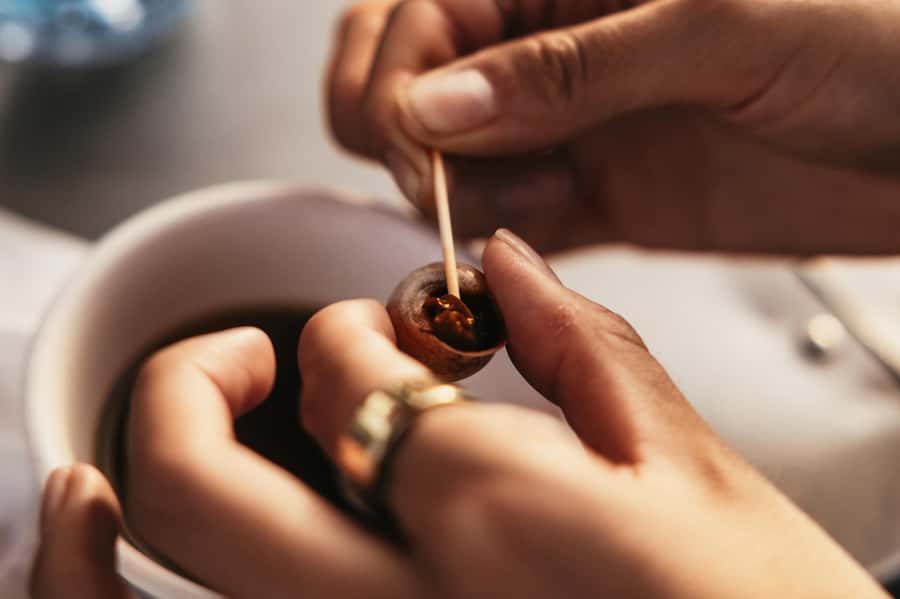
Babouche, or Moroccan snails, is the route’s first real test for cautious eaters. The snails are slowly cooked in an aromatic herbal broth. You do not need to love the idea of snails, but this is exactly the sort of dish you might skip if you wandered through the Medina alone. A guide can explain how it is eaten and help you decide how adventurous you want to be.
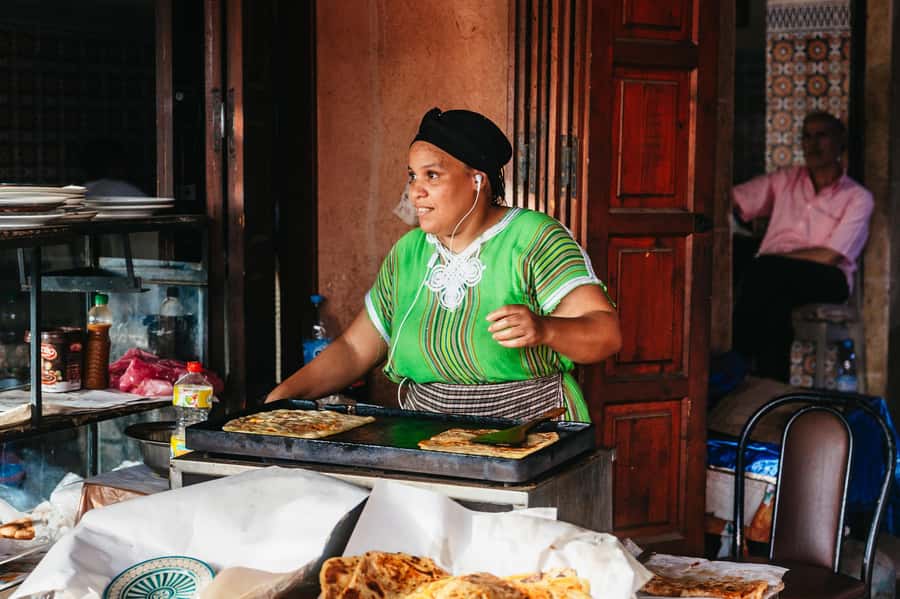
At a tea stop, you may try authentic mint tea with Msemmen. These pan-fried Moroccan pancakes can be served with honey and cheese, giving you a savory-sweet pause in the middle of the walk. The tea stop also gives the group a chance to sit, regroup, and avoid rushing through every bite.
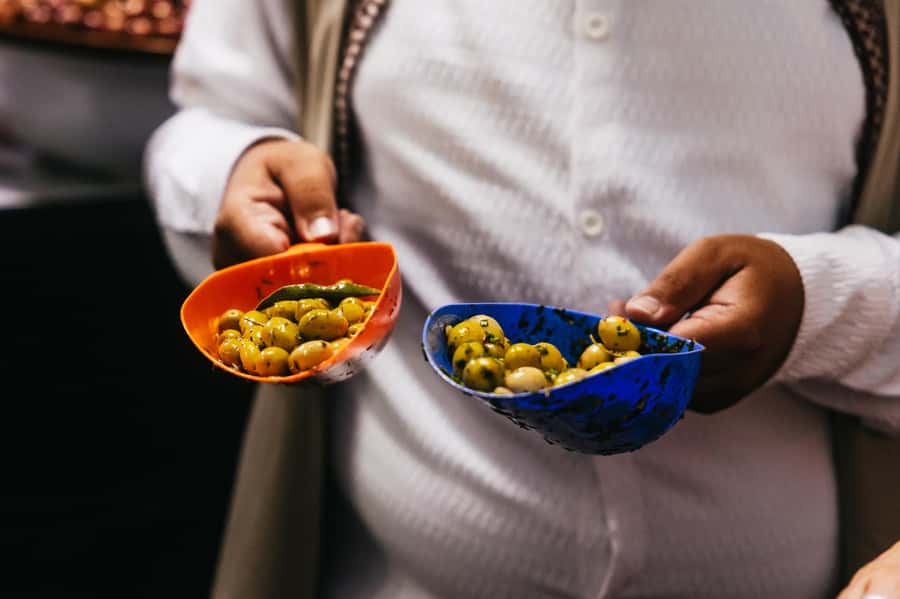
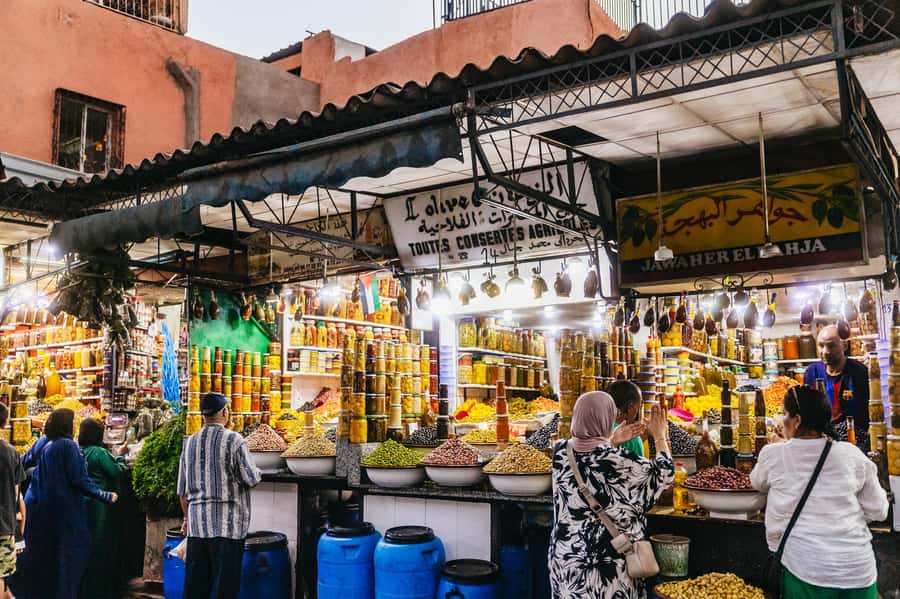
Fakya follows, a festive mix of dried fruit and nuts commonly shared during celebrations. You may also sample Moroccan olives, including smooth green varieties and red olives tossed with parsley and cilantro. These are small tastings, but together they show how Moroccan meals move between sweet, salty, fresh, and spiced flavors.
Dinner on this route is served at a cozy local restaurant. You can expect a fresh Moroccan salad followed by a hearty Tajine. The final sweet course is Raïb, a homemade yogurt with a creamy texture. By this point, the yogurt is welcome. The full meal turns the tour from a snack crawl into a proper dinner.
The second route: Msemen Amer, Sfenj, and open-air grilling
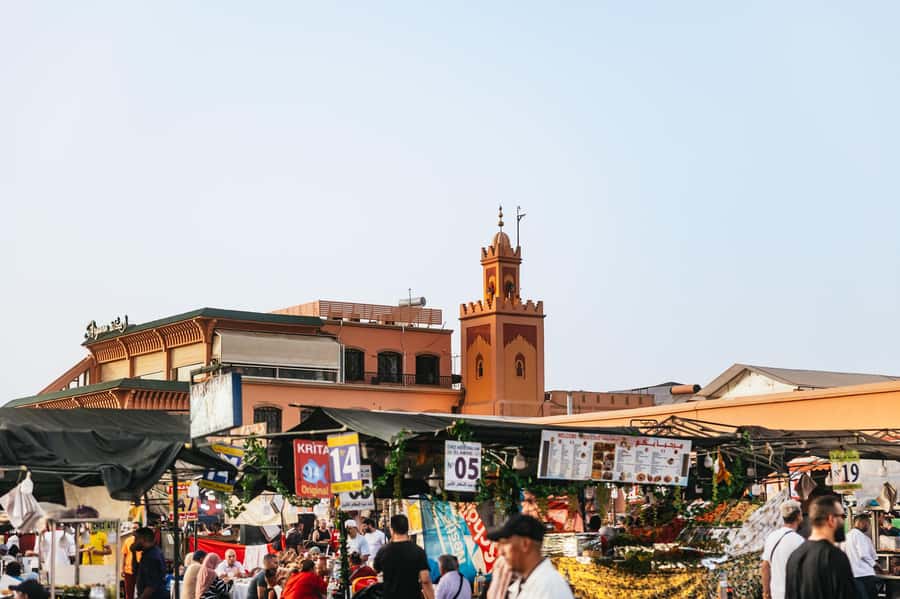
The second route begins with Msemen Amer, a version of the Moroccan pancake filled with savory ingredients, often spiced vegetables. It is a popular teatime food and a good example of how simple dough becomes a filling, portable meal.
Harira and Chebakia may appear here too, linking this route to the first one. The soup and pastry pairing is one of the clearest food traditions on the tour, especially if your evening falls during Ramadan.
Makkla bel Kefta offers a Moroccan answer to the familiar idea of Shakshuka. Eggs, tomatoes, spices, and kefta create a dish that feels both recognizable and distinctly local. This is one of the more approachable tastings for anyone who prefers cooked, familiar ingredients.
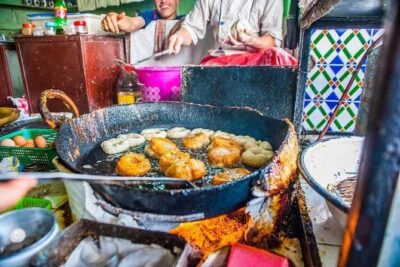
Then comes Sfenj, a Moroccan doughnut that is crisp outside and airy inside. It is street food at its best: hot, simple, and easy to eat while moving through the Medina. If you have a sweet tooth, this may be one of the evening’s highlights.
Lhindiya, or cactus fruit, provides a cool and refreshing change. It is especially welcome in hot weather, when a long series of warm dishes and pastries can feel heavy. The fruit is also a reminder that the tour is not only about fried foods and meat.
One of the more unusual possible tastings is Rass Mbekher, delicately steamed sheep’s head seasoned with cumin. The tour sometimes replaces this with local Chawarma, made with chicken or crispy falafel. This substitution matters if you are not comfortable with sheep’s head, but you should ask your guide what is being served before the stop.
Panaché is a colorful smoothie made with seasonal fruit. Khoudenjal, a hot herbal infusion made from galangal root, may follow. It is traditionally enjoyed for digestion and as a comforting drink in cooler weather. These drinks help break up the heavier food and give the guide another opening to discuss Moroccan herbs and home remedies.
Dinner on this route is an open-air Chwa experience, with grilled beef, turkey, and liver. The barbecue offers a different finish from Tajine: smokier, more direct, and centered on freshly grilled meat. If you prefer vegetables or do not eat meat, ask about available alternatives before booking, since the listed dinner focuses heavily on grilled meats.
The herbalist stop and what it adds
Depending on the pace of the evening, your guide may stop at a traditional herbalist’s shop. This is not the main purpose of the tour, but it can be a useful pause.
You may learn about Moroccan spices, sample mint tea, and use the restroom. The stop gives you a chance to ask about ingredients you have tasted, such as galangal, herbs, olives, or spice blends.
Keep your expectations in check. This is a short cultural stop, not a separate cooking class or market tour. Still, it adds context to the food. Instead of seeing spices as colorful jars in a shop, you can ask how they are used in drinks, soups, grilled dishes, and family cooking.
More Walking Tours in Marrakech
- Marrakech: Ben Youssef, Secret Garden, & Souks Walking Tour
★ 4.6 · 2,802 reviews - Marrakech: Colorful Medina Souks Guided Walking Tour
★ 4.7 · 2,470 reviews - Marrakech: Medina by Night Walking Tour with Moroccan Tea
★ 4.6 · 586 reviews - Marrakech: Medina Souks Guided Walking Tour
★ 4.5 · 381 reviews
Why the guides matter so much
The food is the hook, but the guide determines how useful the evening feels. The strongest guides on this experience are described as warm, funny, and good at making a group feel at ease.
Yahya and Yaya are the names most often associated with the tour. They are praised for knowing the Medina well, explaining food traditions clearly, and sharing practical advice about Marrakech. Ali is also described as a welcoming host with strong knowledge of local food and customs. Rachid has been praised for explaining each tasting and helping the evening come alive after sunset, while Mehdi is noted for being informative, kind, and entertaining.
That range matters because the stops are not self-explanatory. A bowl of Harira tells you little without context. A plate of olives can seem ordinary until someone explains the different preparations. Sheep’s head or snails can be intimidating if no one explains how locals eat them.
The guide also helps with social details. Vegetarian guests have received substitutions during tastings, but you should still state your dietary needs when booking or at the start. The provided information does not promise a fully vegetarian dinner, so do not assume every course can be changed.
Is $52 good value?
At $52 per person, this tour costs more than simply buying individual snacks in the Medina. That comparison misses the main value, though.
You are paying for a certified English-speaking local guide, food at multiple stops, mint tea, a full dinner, and help finding places you may not try alone. The tour can include more than a dozen tastings before the final meal. Several people have found themselves too full by the end, which suggests the food quantity is generous.
I see this as good value if you are curious about food and want an easy first introduction to Marrakech. It is less appealing if you prefer to choose every dish yourself, eat slowly at one restaurant, or avoid group activities.
The tour may also save you from spending money on disappointing food simply because a stall is easy to find. The guides take you to local spots they know, including small eateries and stalls away from the obvious tourist path. That does not guarantee every bite will suit you, but it gives you a better chance of tasting everyday food rather than only polished restaurant fare.
Timing, Ramadan, and the evening atmosphere
The tour takes place in the evening, and the mood can change as the day cools and the Medina fills with people. During Ramadan, Harira, dates, and Chebakia have special meaning because they are tied to the breaking of the fast.
One group experienced the tour around sunset during Ramadan and found it especially interesting to see the evening meal begin as fasting ended. If cultural timing is important to you, ask about the exact start time and route before booking.
There is one practical warning: the activity details say the included dinner is not available during Ramadan, even though the route may include food connected with breaking the fast. Confirm what will be served during your dates. This is the sort of detail that can affect the value of the booking.
Outside Ramadan, the evening offers a lively look at Marrakech’s food culture without requiring you to plan a route through unfamiliar lanes. The tour starts and ends at the same post office meeting point, and hotel pickup is not included, so allow time to reach Rue Beni Marine on your own.
Who will enjoy this food walk most?
I would recommend it to first-time visitors who want to get comfortable with Marrakech quickly. Several people found it useful as one of their first activities because it introduced them to local dishes, helped them understand the souks, and reduced the uncertainty of ordering food alone.
It also suits curious eaters who want more than Tajine and couscous. You may taste coconut macaroons, almond pastries, soup, snails, pancakes, olives, cactus fruit, herbal tea, and grilled meats in one evening.
Families can enjoy it, too. Children have liked the sweets and pancakes, though parents should be ready for unfamiliar dishes and a three-hour walk. The food volume may be too much for small appetites.
Vegetarians can join, but you need to communicate clearly. One vegetarian guest received substitutions, yet the second dinner route is centered on beef, turkey, and liver, and the first route ends with Tajine. The supplied details do not identify the exact vegetarian dinner options.
This is not the best pick for anyone with serious food allergies unless the operator confirms suitable substitutions in advance. The tour includes many ingredients across several stalls, and the exact route can change.
Practical advice for a better evening
Eat a small lunch and avoid a large afternoon snack. The combination of tastings and dinner is substantial, and you will enjoy the later courses more if you have some room left.
Wear comfortable walking shoes. The Medina route uses streets and lanes rather than a vehicle, and you will be on your feet for about three hours.
Bring an open mind, but do not force yourself to eat something you cannot manage. Trying a small portion of babouche or sheep’s head can be a memorable part of the evening, but the point is to learn about Moroccan food, not to win an eating contest.
Tell the guide about vegetarian needs, food restrictions, and strong dislikes at the start. The team has made substitutions for vegetarian guests, but the exact menu depends on the route and season.
I would also book this near the beginning of your Marrakech stay if you want practical food advice. You may find places worth returning to later, and you will have a better sense of what you are seeing as you explore the Medina on your own.
Cancellation is free up to 24 hours before the activity, and you can reserve now and pay later. Those terms are useful if your Marrakech schedule is still shifting.
Should you book this Marrakech food tour?
Book it if you want a generous, social introduction to Moroccan food, especially if navigating the Medina feels daunting. The combination of local stalls, cultural explanation, adventurous dishes, and a full dinner gives you far more than a standard restaurant meal.
I would choose it early in a Marrakech visit, arrive hungry, and confirm the Ramadan dinner arrangement if relevant. If you need a private, quiet, highly controlled meal, this is not the right fit. For most curious eaters, though, $52 buys a useful evening of food, orientation, and local company.
FAQ
Where does the Marrakech food tour start?
Meet your English-speaking guide in front of Poste du Maroc on Rue Beni Marine.
How long does the activity last?
The walking tour lasts three hours.
Is hotel pickup included?
No. Hotel pickup and drop-off are not included, so you must make your own way to the meeting point.
What food might I taste?
Possible tastings include Harira, Chebakia, Msemmen, coconut macaroons, Kaab Ghzal, Moroccan snails, olives, dried fruits, nuts, Sfenj, Makkla bel Kefta, cactus fruit, Panaché, and Moroccan herbal drinks. The exact route can vary.
Is dinner included?
Yes. Depending on the route, dinner is either Tajine with salad at a local restaurant or an open-air Chwa barbecue with grilled beef, turkey, and liver. The activity details say the included dinner is not available during Ramadan, so confirm the arrangements for your dates.
Is the tour suitable for vegetarians?
Vegetarian substitutions have been provided during tastings, but the exact dinner alternatives are not specified. Tell the guide about your dietary needs before the tour.
What should I bring?
Wear comfortable walking shoes. The activity takes place on foot through the Medina and includes several food stops over three hours.
More Dining Experiences in Marrakech
- Marrakech: Agafay Desert Quad, Camel Ride & Dinner Show
★ 4.7 · 10,209 reviews - Marrakech: Agafay Desert Retreat, Tent, Dinner, Show & Pool
★ 4.8 · 5,616 reviews - Marrakech: Agafay Desert Dinner Show with Quad Bike & Camel
★ 4.9 · 5,058 reviews - Agafay Desert Package, Quad Bike, Camel Ride and Dinner Show
★ 5.0 · 4,244 reviews
More Dinner Experiences in Marrakech
- Marrakech: Agafay Desert Sunset, Camel Ride, and Dinner Show
★ 4.6 · 35,119 reviews - Marrakech: Agafay Desert Quad & Camel Rides with Dinner Show
★ 4.8 · 27,382 reviews - Marrakech: Agafay Desert Quad Biking Tour with Dinner-Show
★ 4.8 · 16,569 reviews - Marrakech: Agafay Desert Quad & Camel Rides with Dinner Show
★ 4.9 · 10,771 reviews
Recently reviewed around Marrakech
- 4-Days Marrakech to Marrakech Désert Tour★ 5.0 · 17 reviews
- Camel ride at sunset in Marrakech palm grove★ 5.0 · 17 reviews
- Agafay camel ride★ 5.0 · 20 reviews
- Camel riding in marrakech★ 4.5 · 17 reviews
- Marrakech to Atlas Mountains and 4 Valleys Day Trip★ 5.0 · 17 reviews
- Agafay Desert Adventure, Culture, and Relaxation, From Marrakech★ 5.0 · 25 reviews
- Quad excursion to the Agafay desert near Marrakech★ 5.0 · 44 reviews
- Camel ride and dinner Agafay desert★ 5.0 · 25 reviews
Food & Drink, compared.

3-Day Tour to Merzouga Erg Chebbi with Food & Camel Trek
Read our review →
Authentic Moroccan Food Tour in Marrakech with Dinner
Read our review →

Cook Moroccan Food & Try on Traditional Clothes like a local
Read our review →Browse the lists this tour appears in