
Reviewed · FOOD & DRINK
Marrakech: Jemma El Fnaa Food Tour with Dinner
Marrakech’s best food lesson happens after sunset, when Jemaa El Fnaa fills with cooking smoke, spice, chatter, and food stalls. This three-and-a-half-hour walk takes you from the square into the souks, the spice market, Mellah, and Riad Zitoun Jdid before returning for dinner at Chez Lamine Hadj Mustapha.
I like the way the tour gets you past the obvious tourist menus and into everyday food traditions, including communal ovens, local bakeries, olives, pastries, harira, and tangia. I also like having a guide such as Ayoub, Omar, Atika, or Brahim to explain what you are eating and help you move through the Medina with confidence.
The main consideration is that this is a food-heavy walking tour, not a light tasting stroll. You should arrive very hungry, wear covered clothing, and know that the tour can accommodate vegetarian and vegan diets but not gluten intolerance.
In This Review
- Key points to know before booking
- Starting at Jemaa El Fnaa after sunset
- Olives, nuts, pastries, and the small shops of the souks
- The spice market and Morocco’s essential flavors
- Through Mellah, Riad Zitoun Jdid, and the food traditions of the Medina
- What the food can include before dinner
- Dinner at Chez Lamine in Jemaa El Fnaa
- The guides make the difference
- Price, pace, and who gets the best value
- Practical advice for a better evening
- Should you book the Jemaa El Fnaa food tour?
- FAQ
- How long does the Marrakech food tour last?
- Where does the tour start?
- Where does the tour finish?
- What food is included?
- Can vegetarians and vegans join?
- Is the tour suitable for children?
- What should I wear and bring?
Key points to know before booking
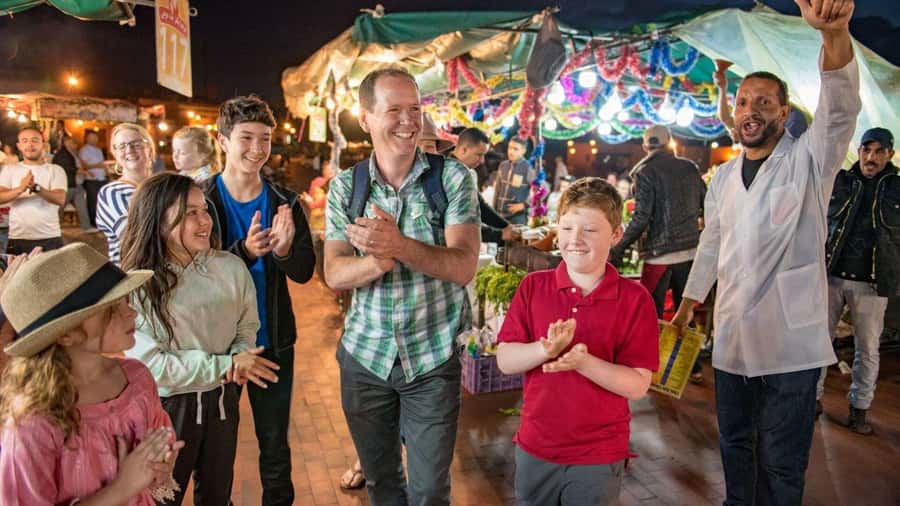
- Dinner in Jemaa El Fnaa: Finish with a Moroccan meal at Chez Lamine, an established food stop on the famous square.
- More than a standard restaurant meal: Expect small tastes of olives, dried fruit, nuts, pastries, bread, soup, spices, and traditional savory dishes.
- A useful first-night activity: The route helps you get your bearings in the Medina while giving you practical advice about food stalls and bargaining.
- Small groups up to 12: The group size allows time for questions, with private bookings also available.
- Vegetarian-friendly, not gluten-free: Vegetarian and vegan needs can be handled, but gluten intolerance cannot be accommodated.
- Dress for local customs: Cover your shoulders, cleavage, and knees, and bring a light jumper for the cooler evening.
Starting at Jemaa El Fnaa after sunset
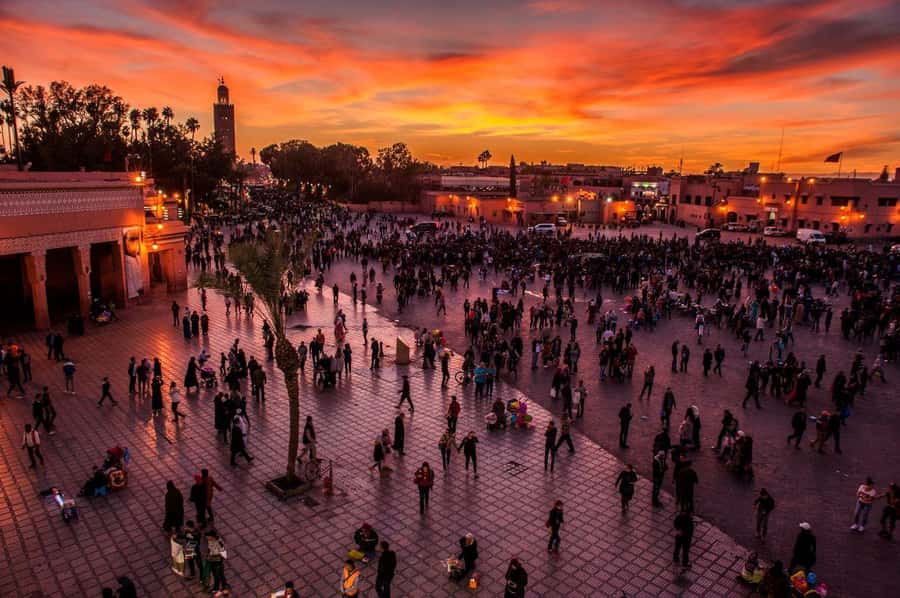
The tour begins at Jemaa El Fnaa, usually near the listed meeting point, with the exact place depending on the option you book. Confirm the meeting details before setting out, since a crowded square can make a vague meeting point frustrating.
Jemaa El Fnaa is not simply a plaza with restaurants. It has served as a place for trade, food, bargaining, and social life for close to a thousand years. By evening, the open space changes character as food stalls appear and locals gather for dinner.
Your guide uses the square as a starting lesson in Marrakech food culture. You learn why the area matters, how food is sold in the Medina, and how the evening market works before stepping into the narrow streets that lead away from the main crowd.
This is one of the tour’s strongest features. On your own, it is easy to follow the most obvious signs and choose a stall based on its menu pictures or persistent invitations. With a local guide, you have a better chance of understanding what you are seeing and trying foods you might otherwise pass by.
The square can be noisy and packed, especially at peak dinner time. That energy is part of the appeal, but it also means you should stay close to the guide and expect uneven walking surfaces, tight passages, and frequent stops.
More Food Tours in Marrakech
- From Marrakech: Merzouga 3-Day Desert Safari with Food
★ 4.7 · 12,232 reviews - Marrakech: Street Food Tour with a Local Guide
★ 4.9 · 3,119 reviews - Marrakech: Street Food Tour by Night
★ 4.8 · 2,838 reviews
Olives, nuts, pastries, and the small shops of the souks
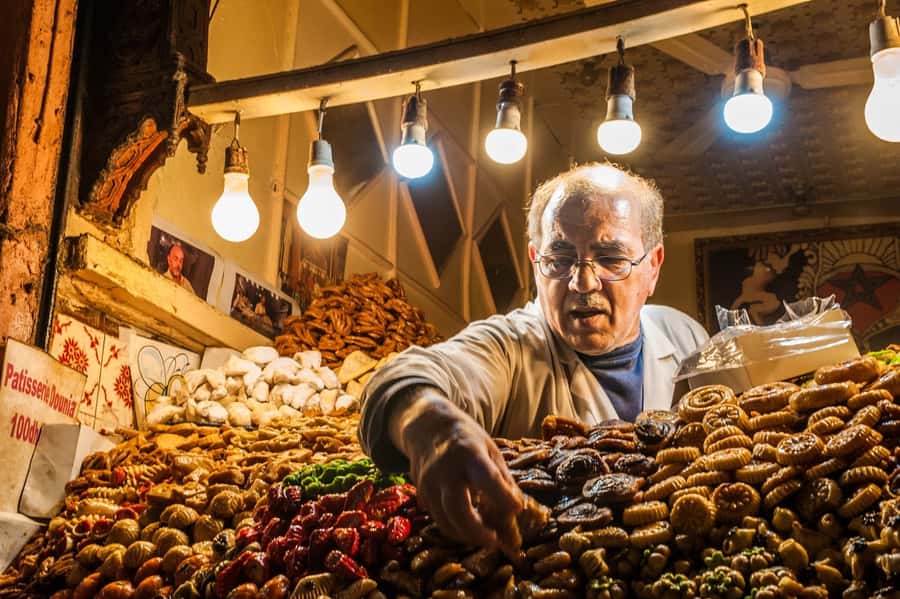
From Jemaa El Fnaa, the route moves into the souks and nearby lanes. You stop at local shops to try different olives, dried fruits, nuts, and Moroccan pastries.
These early samples are useful because they show how much variety can sit behind a simple food category. Olives may differ in color, texture, seasoning, and preparation. Nuts and dried fruit are common market foods, while pastries introduce the sweet side of Moroccan cooking without requiring a full dessert course.
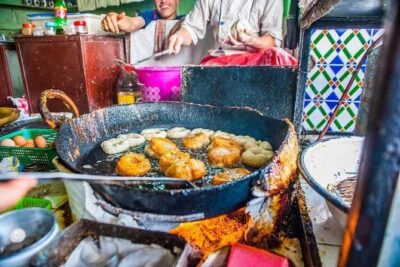
Some tour accounts describe stops for Jewish-style doughnuts, mint tea, cakes, and other sweets. The exact food selection can change, so treat those examples as possibilities rather than a fixed menu. The included plan promises three tastings, followed by a Moroccan dinner, while the actual evening may offer extra small bites depending on the route and vendors.
I like this part because the food is tied to a place. You are not sitting in a restaurant while someone gives a general talk about Morocco. You are standing in the market, seeing the ingredients around you, and learning how they fit into daily life.
The shops are also part of the lesson in navigating Marrakech. The souks can feel confusing at first, and a guide can point out details you may miss, including how goods are displayed and where local people shop. You should still use normal care with your belongings and keep your group in sight.
The spice market and Morocco’s essential flavors
The spice market is one of the more colorful stops. You can expect to smell and learn about cumin, saffron, ginger, pepper, and turmeric.
The value here is not only the chance to take photographs of colorful piles. Your guide explains how these spices affect Moroccan cooking and helps separate familiar names from the actual flavor of a dish. Cumin, ginger, pepper, and turmeric each bring a different balance of warmth, earthiness, and sharpness.
Saffron receives plenty of attention because of its price and importance, though the tour is not presented as a shopping trip. If you want to buy spices afterward, the guide may offer useful advice about the market, but your priority here is understanding the ingredients before tasting the finished food.
The market can be busy and the aromas strong. If you are sensitive to crowds, smoke, or intense smells, take that into account. For most people, this is a short but memorable change of pace from the sweeter market stops.
Through Mellah, Riad Zitoun Jdid, and the food traditions of the Medina
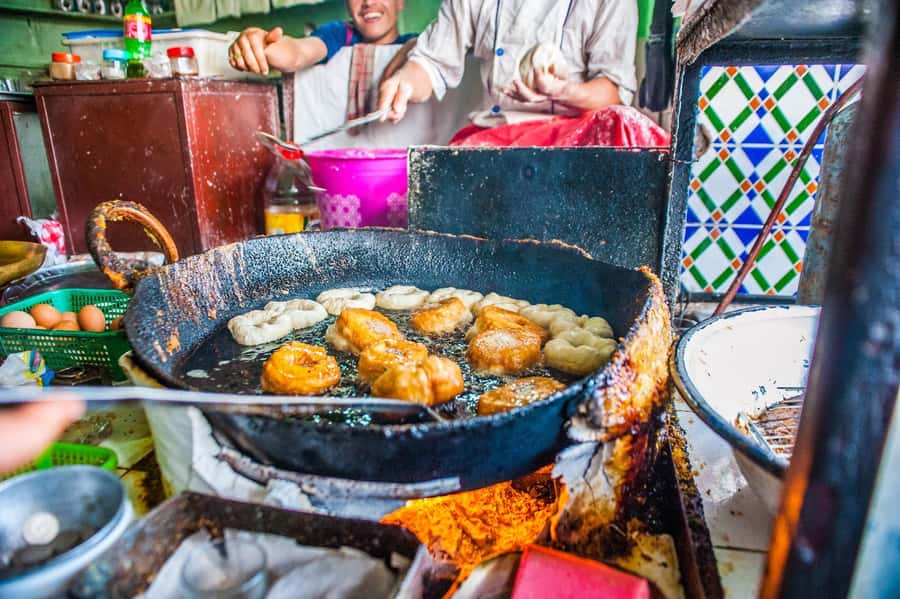
The route includes Mellah and Riad Zitoun Jdid, areas that help place the food within Marrakech’s older neighborhoods. You continue through the souks, with the route including Souk Semmarine, one of the main market passages.
The tour does not treat the Medina as a backdrop. Food traditions are explained as you walk, including the importance of bread and the role of shared ovens and local bakeries. One earlier tour description recalls a communal oven and a bakery supplying local families and restaurants, while another mentions a bakery that would be difficult to find without a guide.
You may also encounter foods that are less familiar to many visitors. Cow hoof and sheep’s head are specifically mentioned as possibilities, and several tour accounts describe unusual dishes or offal-based foods. These are not forced challenges. Your guide can explain what is being offered, and you can decide how far you want to go.
That flexibility matters. A good food walk should expand your choices without turning dinner into a dare. If you are open-minded, you may find some of the most interesting lessons come from foods you would never have ordered by yourself.
The route is also a practical introduction to Medina etiquette. Dress should cover your shoulders, cleavage, and knees. Long, light trousers, long skirts, and lightweight long-sleeved shirts are sensible in the heat and respectful in conservative settings. Men and women should avoid shorts, low-cut tops, and exposed midriffs.
More Marrakech trips worth a second look
- Marrakech: Agafay Desert Sunset, Camel Ride, and Dinner Show
★ 4.6 · 35,119 reviews - Marrakech: Agafay Desert Quad & Camel Rides with Dinner Show
★ 4.8 · 27,382 reviews - Marrakech: Agafay Desert Quad Biking Tour with Dinner-Show
★ 4.8 · 16,569 reviews - Marrakech: Agafay Desert Quad & Camel Rides with Dinner Show
★ 4.9 · 10,771 reviews
What the food can include before dinner
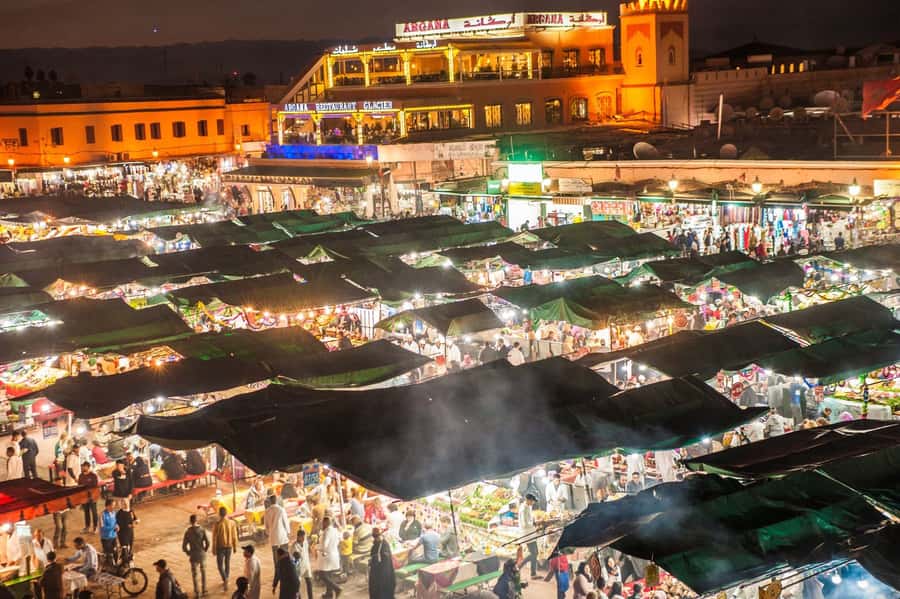
The tastings are designed to build toward a meal rather than replace one. Depending on the evening, you might try doughnuts, olives, nuts, pastries, bread, mint tea, harira soup, or other local snacks.
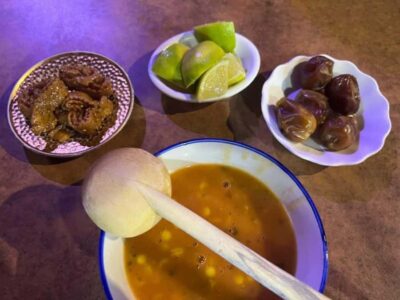
Harira is a Moroccan soup often served with legumes and spices, and it gives you a savory taste before the main meal. Some tour accounts also describe wraps, sweet treats, spiced tea, and unusual drinks made with boiled water, peppers, and other spices.
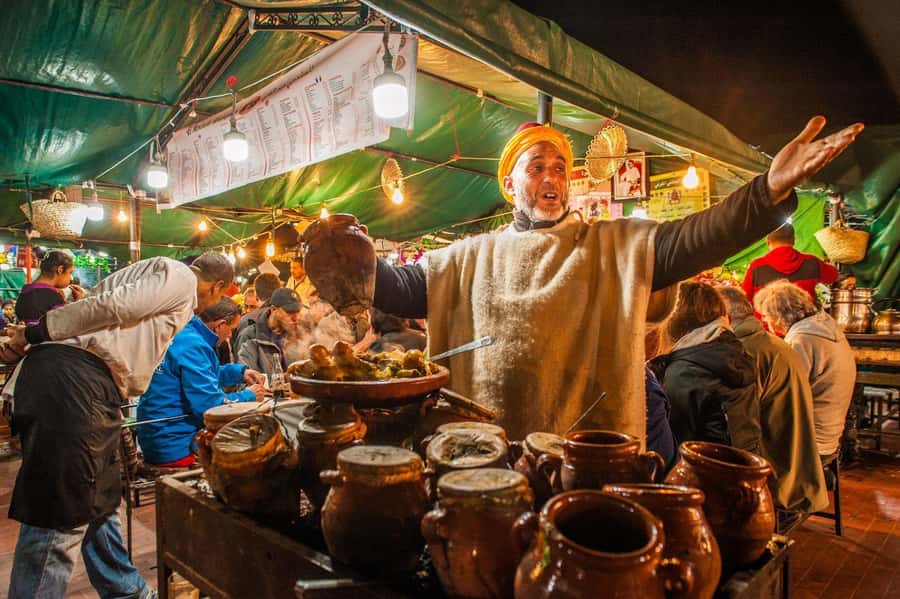
Tangia is another important possibility. It is associated with slow cooking in a traditional pot, and the food has a particular connection to Marrakech. Several people found the tangia especially memorable, including versions prepared in traditional pots placed in a furnace.
Tagine may appear in some versions of the meal, but it is not the only dish on offer. One useful point is that some evenings include plenty of foods beyond tagine, which helps if you have already eaten that dish elsewhere in Morocco.
The tour information lists three tastings, but the food can feel more generous than that wording suggests. You may receive several small portions as you move through the Medina, followed by soup, a main dish, sweets, or other foods at the final stops. Skip lunch or eat only a light midday meal if you want to sample everything comfortably.
Dinner at Chez Lamine in Jemaa El Fnaa
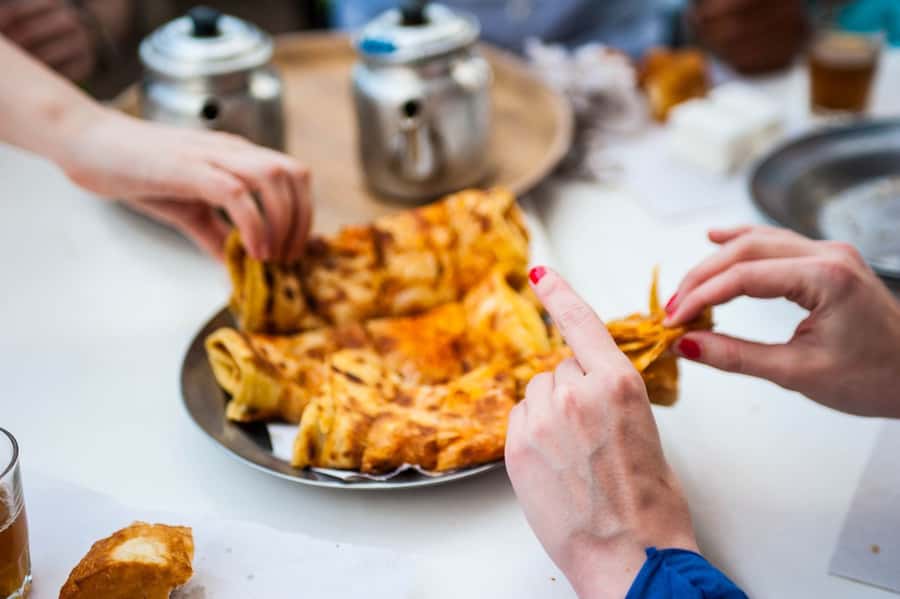
The evening ends with dinner at Chez Lamine Hadj Mustapha Jemaa El Fna. The setting places you back in the square at its busiest food hour, surrounded by cooking stalls, local diners, noise, and the unusual street activity for which Jemaa El Fnaa is known.
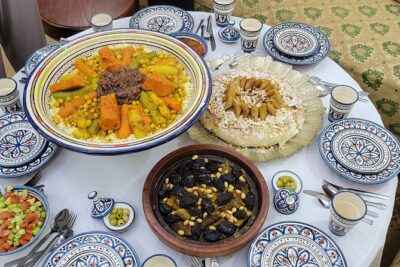
The meal is a chance to sit down after several hours of walking. You may be served traditional Moroccan dishes such as tangia, tagine, harira, and accompaniments, though the exact dinner should be confirmed as menus can vary.
The setting is not quiet or polished in the conventional restaurant sense. You are eating in one of Marrakech’s central public spaces, so expect crowds and distractions. Snakes and monkeys may be present around the square, and the lively atmosphere is not suited to anyone seeking a calm, private dinner.
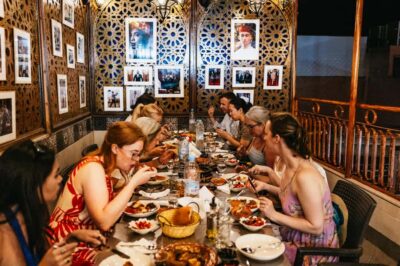
For me, that is also what makes the finale work. You have just seen spices, bread, market foods, and cooking practices, then you sit down to eat in the place where Marrakech’s evening food culture is on full display. The meal has context rather than arriving as an isolated restaurant stop.
Additional food beyond the listed tastings and dinner is not included. Bring money if you want to buy extra snacks, drinks, or market goods.
The guides make the difference
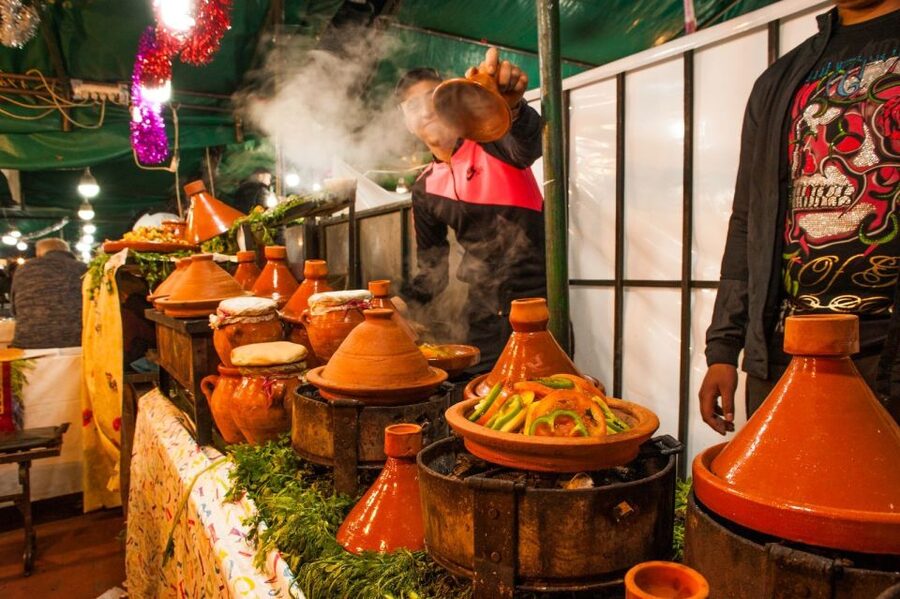
The tour is offered in English and is built around a live local guide. The most useful guide qualities here are clear explanations, good crowd management, and a willingness to answer questions.
Several guides are named in the available feedback, including Omar, Ayoub, Youssef, Atika, Brahim, Najib, Ibrahim, Mustafa, Anicta, and Aeyup. Guide assignments can change, so you cannot select a particular person unless the booking option specifically allows it.
Omar is repeatedly associated with food explanations, humor, practical city advice, and taking groups to places they would not easily find alone. Atika is described as warm, well informed about Marrakech, and happy to answer questions. Ayoub is noted for helping people through the Medina and offering advice about bargaining.
Brahim Abouamou is praised for making groups comfortable in the crowds, explaining the food, and keeping the route friendly and easy to follow. Najib is noted for showing less obvious corners of the Medina and giving context for the food.
The group limit is 12 people, which is small enough for questions without promising a private experience. A private group option is available if you want more control over the pace or prefer not to share the food stops with other people.
Price, pace, and who gets the best value
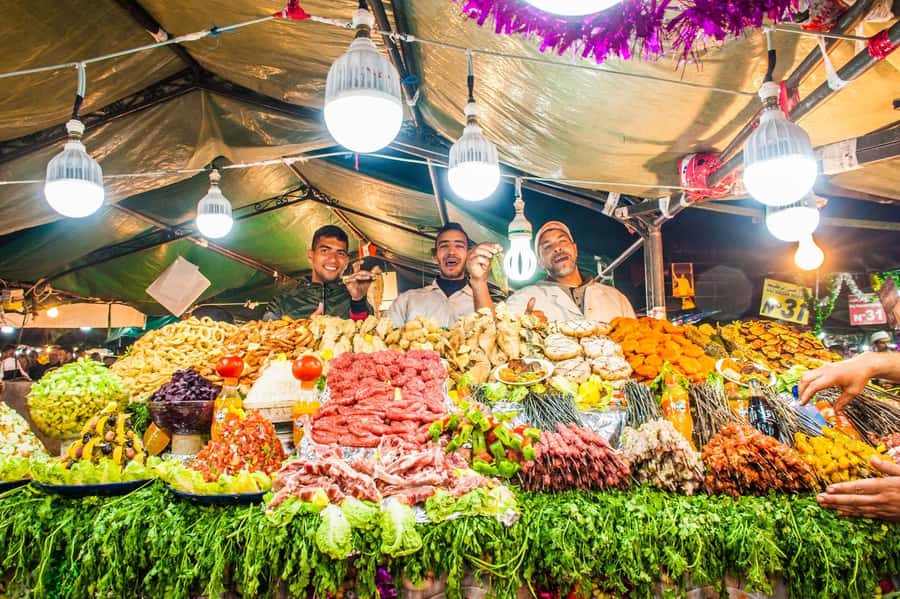
At $46 per person, the tour is fairly priced if you value the guide, the food, and the route through the Medina. You are paying for about 210 minutes of guided walking, three tastings, and a Moroccan dinner, not merely for a plate of food.
The value rises if this is your first evening in Marrakech. You get an introduction to Jemaa El Fnaa, a guided route through the souks, basic food knowledge, and practical help with the city’s crowds and market habits. That can save you from spending your first night guessing at food stalls.
The value is lower if you already know the Medina well, dislike group walking, or want a formal culinary class. This is a street-food and market tour with a dinner stop, not a cooking lesson and not a quiet restaurant crawl.
Families can book, and infants from age 0 to 5 are free. Tell the operator if you have a child under 12. The food and walking may be a lot for very young children, but the child-friendly format and flexible tasting approach help.
Vegetarians and vegans can be accommodated. Gluten intolerance cannot be handled, so this tour is not a suitable choice if you must avoid gluten. Food allergies should be discussed clearly with the guide at the start.
The tour is listed as carbon neutral and is operated by a B Corp certified company. That may matter to you if you prefer booking with a company that has formal environmental and social commitments, though the walk itself remains a standard food and culture outing.
Free cancellation is available up to 24 hours before the start, and you can reserve now and pay later. Those terms give you useful flexibility while planning a Marrakech stay.
Practical advice for a better evening
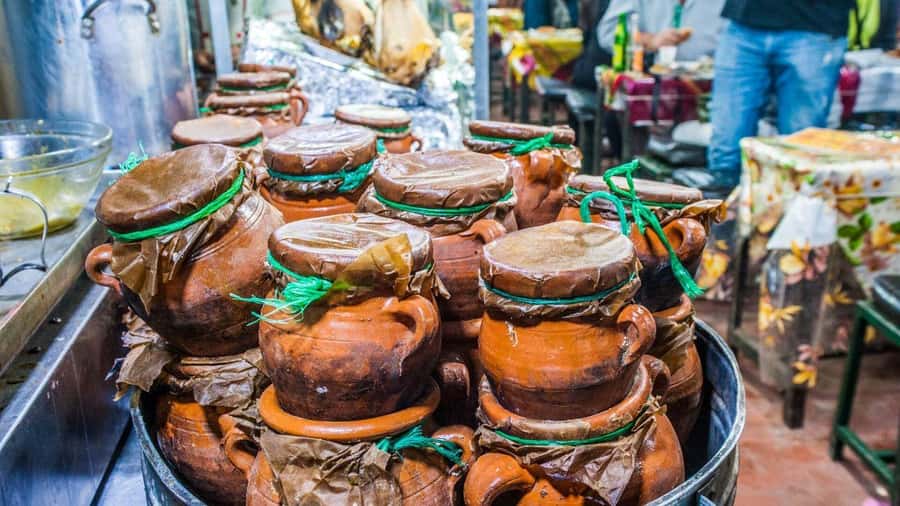
- Arrive hungry: The food can add up quickly, with several tastings and a full dinner.
- Wear comfortable shoes: The experience is entirely on foot and includes souks, lanes, and crowded passages.
- Dress modestly: Cover shoulders, cleavage, and knees. Light, loose, long clothing works well in warm weather.
- Bring a jumper: Evening temperatures can drop after dark.
- Keep expectations flexible: Food stops may vary, and the precise selection is not a fixed restaurant menu.
- Ask questions: The cultural explanations are a major part of the value, especially if you are new to Moroccan food.
- Stay near the guide: Jemaa El Fnaa and the souks can become crowded at night.
- Consider booking early in your stay: The route gives you useful bearings and may help you feel more at ease exploring later.
Should you book the Jemaa El Fnaa food tour?
Book it if you want a generous introduction to Marrakech food, prefer local market stops to a formal tasting menu, and would like help finding your way through the Medina at night. It is especially useful on your first evening, when the guide can explain the square, the souks, the food, and basic visitor etiquette in one outing.
Skip it if you need a gluten-free meal, dislike crowded public spaces, or want a quiet dinner with a fixed menu. For everyone else, the combination of market tastings, spice knowledge, unusual foods, and dinner at Jemaa El Fnaa gives the $46 price solid value.
FAQ
How long does the Marrakech food tour last?
The tour lasts 210 minutes, or about three and a half hours.
Where does the tour start?
There are two listed starting options at 11 Derb Zaari. The meeting point may vary depending on the option booked, so check your booking details.
Where does the tour finish?
The listed drop-off options are also at 11 Derb Zaari.
What food is included?
The experience includes three tastings and a Moroccan dinner at a local restaurant. Possible foods mentioned for the route include olives, dried fruit, nuts, pastries, bread, spices, harira, tangia, tagine, and sweets.
Can vegetarians and vegans join?
Yes. The tour can accommodate vegetarian and vegan diets. It cannot accommodate gluten intolerance.
Is the tour suitable for children?
Yes, it is described as child-friendly. Infants from 0 to 5 years old are free, and you should notify the operator if you have a child under 12.
What should I wear and bring?
Wear a long-sleeved shirt and long pants, or similarly modest clothing that covers your shoulders, cleavage, and knees. Bring comfortable walking shoes and a jumper in case it gets cool after dark.
More Food in Marrakech
- 3-Day Tour to Merzouga Erg Chebbi with Food & Camel Trek
★ 5.0 · 1,770 reviews - Authentic Moroccan Food Tour in Marrakech with Dinner
★ 5.0 · 1,423 reviews - From Marrakech: Zagora 2-Day Desert Safari with Food & Camp
★ 4.5 · 1,137 reviews - Marrakech: Authentic Moroccan Food Walking Tour & Dinner
★ 4.8 · 261 reviews
More Dining Experiences in Marrakech
- Marrakech: Agafay Desert Quad, Camel Ride & Dinner Show
★ 4.7 · 10,209 reviews - Marrakech: Agafay Desert Retreat, Tent, Dinner, Show & Pool
★ 4.8 · 5,616 reviews - Marrakech: Agafay Desert Dinner Show with Quad Bike & Camel
★ 4.9 · 5,058 reviews - Agafay Desert Package, Quad Bike, Camel Ride and Dinner Show
★ 5.0 · 4,244 reviews
Recently reviewed around Marrakech
- 4-Days Marrakech to Marrakech Désert Tour★ 5.0 · 17 reviews
- Camel ride at sunset in Marrakech palm grove★ 5.0 · 17 reviews
- Agafay camel ride★ 5.0 · 20 reviews
- Camel riding in marrakech★ 4.5 · 17 reviews
- Marrakech to Atlas Mountains and 4 Valleys Day Trip★ 5.0 · 17 reviews
- Agafay Desert Adventure, Culture, and Relaxation, From Marrakech★ 5.0 · 25 reviews
- Quad excursion to the Agafay desert near Marrakech★ 5.0 · 44 reviews
- Camel ride and dinner Agafay desert★ 5.0 · 25 reviews
Food & Drink, compared.
3-Day Tour to Merzouga Erg Chebbi with Food & Camel Trek
Read our review →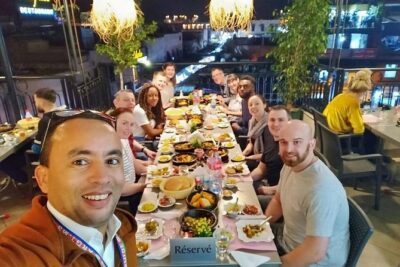
Authentic Moroccan Food Tour in Marrakech with Dinner
Read our review →
Cook Moroccan Food & Try on Traditional Clothes like a local
Read our review →Browse the lists this tour appears in