
Reviewed · FOOD & DRINK
Authentic Moroccan Food Tour in Marrakech with Dinner
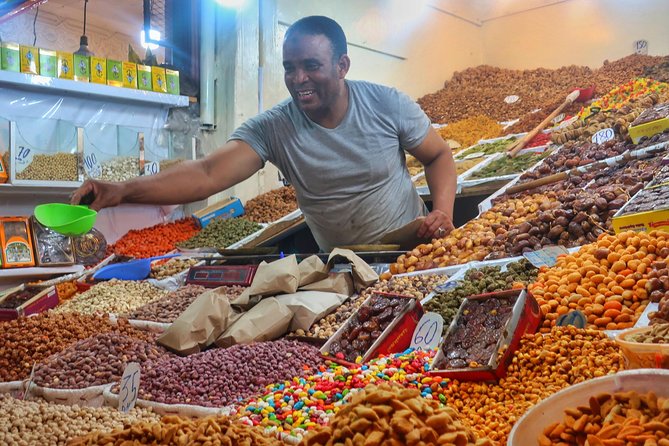
The best part of this Marrakech food tour is its route through the medina around Jemaa el-Fna. Instead of simply sitting down for one tagine, you taste your way through small food stops, market stalls, bakeries, and local snack counters. The menu can include Moroccan snails, sheep’s head, harira soup, stuffed msemen, cactus fruit, olives, pastries, and mint tea.
I like two things especially. First, the guide gives each bite some context, so you learn why harira is served with dates and chebakia during Ramadan, or why fakya appears at family celebrations. Second, the tour finishes with a proper three-course rooftop dinner, not just a few samples in the square. The main caution is that the route and guide can vary, and a few bookings have had delays or an unwanted stop at a herbalist shop.
In This Review
- Key points at a glance
- Starting at Poste du Maroc in the Marrakech medina
- Two routes, both built around local snacks
- Route one: pastries, harira, snails, and mint tea
- Route two: Jemaa el-Fna specialties
- What the food stops reveal about Moroccan cooking
- The herbalist stop deserves a clear warning
- Ending with a rooftop Moroccan dinner
- Is $54.45 a fair price?
- Who will enjoy this evening most?
- Practical tips for a smoother evening
- Should you book the Authentic Moroccan Food Tour?
- FAQ
- Where does the food tour begin?
- Where does the activity end?
- How long does the tour last?
- How much does the tour cost?
- Is dinner included?
- How many people can join the group?
- What foods might I taste?
- Is mint tea included?
- Can vegetarians or people with dietary needs join?
- Is hotel pickup included?
- Can I cancel for a full refund?
- Is the tour available by mobile ticket?
Key points at a glance
- Ten small food stops: Try Moroccan snacks and dishes that are easy to miss when exploring the medina alone.
- Two possible tasting routes: Your guide may follow a pastry-and-snail route or a Jemaa el-Fna route with Moroccan pizza, sfenj, sheep’s head, and fruit drinks.
- Dinner is included: The evening ends at a rooftop restaurant with several menu choices and a three-course Moroccan meal.
- A strong guide can make the tour: Guides including Hamza, Mehdi, Houssaine, Ali, Mohamed, and Mo have been praised for their warmth and explanations.
- Small group format: The maximum is 15 people, though one poor experience involved a group that felt too large for cramped stalls.
- Come very hungry: The tastings add up quickly, and you may be taking dessert away at the end.
Starting at Poste du Maroc in the Marrakech medina
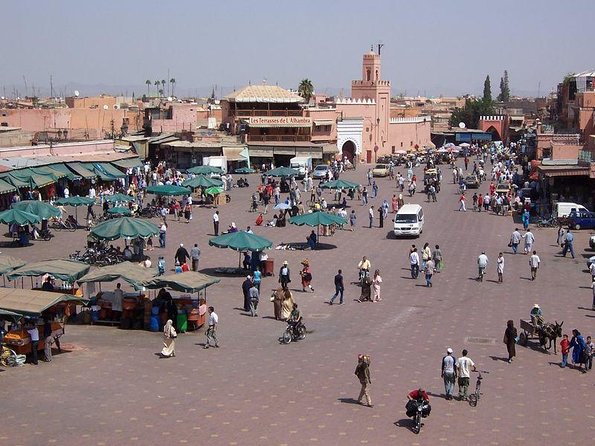
The meeting point is Poste du Maroc on Rue Beni Marine, in the heart of the old medina. This is a sensible starting place because the tour quickly moves into the narrow lanes around Jemaa el-Fna, where a guide is useful for finding food spots and keeping the group together.
The advertised duration is about three hours. In practice, the evening has several moving parts: the initial meeting, roughly an hour of food stops, a second hour on another possible route, a short pause in the old medina, and the sit-down meal. The pace can feel full and quick, especially if your group gathers around tiny counters.
I would arrive early and keep your phone available. One group had a delayed start after a guide change, although the replacement guide, Mohamed, worked to reunite the group and saved food from the first stop. Another group was notified about a 30-minute delay and found it manageable. Delays are not the normal point of the experience, but the medina is not a place where finding a late-arriving group is easy.
More Food Tours in Marrakech
- From Marrakech: Merzouga 3-Day Desert Safari with Food
★ 4.7 · 12,232 reviews - Marrakech: Street Food Tour with a Local Guide
★ 4.9 · 3,119 reviews - Marrakech: Street Food Tour by Night
★ 4.8 · 2,838 reviews
Two routes, both built around local snacks
The operator uses two tasting routes. The exact path depends on the guide, season, and the way the evening develops. That means you should not expect every item below on every departure, but the choices show the range of food you may encounter.
Route one: pastries, harira, snails, and mint tea
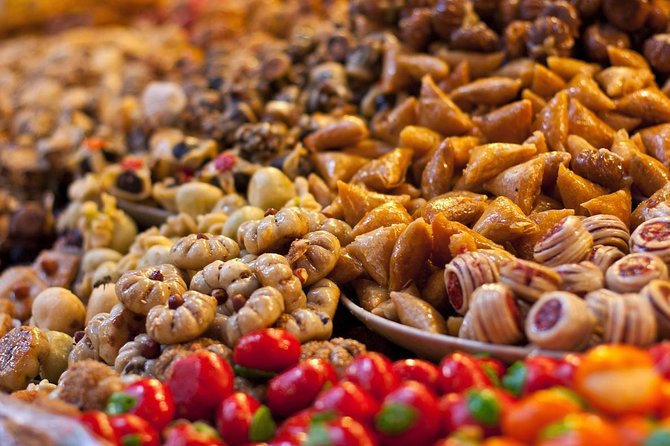
The first route begins with sweets. Moroccan coconut macaroons are a simple, soft treat that children often enjoy. Kaab ghzal, sometimes translated as gazelle ankles, is more distinctive: a delicate pastry filled with almond paste and scented with orange blossom water.
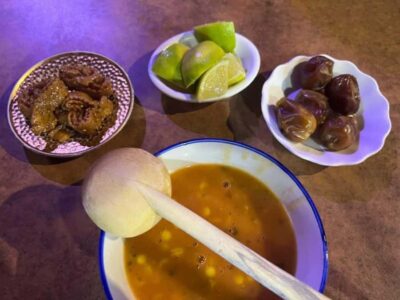
Then comes harira with dates and chebakia. Harira is a comforting tomato and legume soup, while chebakia is a sticky, sesame-coated pastry. Together, they are closely linked with the meal that breaks the fast during Ramadan. This pairing gives you more than a taste. It shows how Moroccan food connects to the calendar and to family customs.
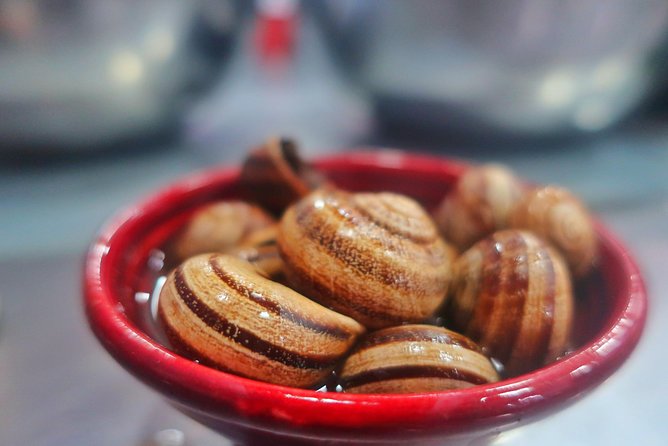
Babbouche, or Moroccan snails, is one of the more memorable stops. The snails cook slowly in an aromatic herbal broth. If you are unsure about trying them, this is a good setting to take a small portion and decide for yourself. The dish is not presented as a dare. It is a regular local food with a fragrant broth that may be more appealing than the ingredient sounds.
Mint tea and msemmen follow. Msemmen is a pan-fried Moroccan pancake, often folded or layered, and served here with honey and cheese. It is a useful contrast to the sweeter pastries. The meal moves between crisp, soft, salty, fragrant, and sweet tastes rather than giving you five versions of the same snack.
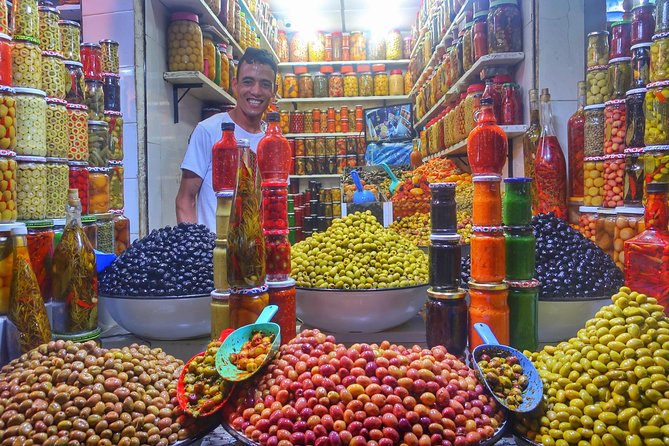
Fakya is a festive mixture of dried fruit and nuts, commonly prepared for celebrations and shared among relatives and friends. You will also sample Moroccan olives, which can range from green and creamy to darker, saltier varieties. These stops help explain why Moroccan meals often include small shared items before the main dish.
Route two: Jemaa el-Fna specialties
The second route leans more heavily on the food around Jemaa el-Fna. Msemen Amer is a stuffed version of the Moroccan pancake, with savory fillings such as spiced vegetables. It is a useful introduction to the difference between a plain tea-time pancake and one that works as a small meal.
The harira and chebakia pairing appears here as well. Repeating a classic combination is not a problem if you want cultural context, but it does mean the two routes are not entirely separate menus.
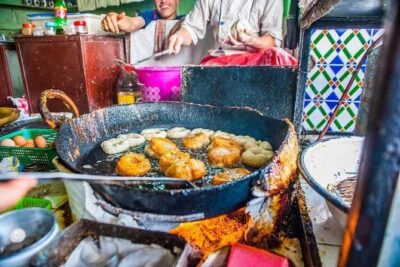
Makkla bel kefta is described as a Moroccan take on shakshuka. It combines spiced meat with eggs in a sauce, giving you a heartier sample than the pastries and fruit. Sfenj, a traditional Moroccan doughnut, is crisp on the outside and airy and chewy inside. It is a street snack best eaten fresh.
Lhindiya, or cactus fruit, offers a cool, juicy break from fried foods and warm spices. Panaché is a colorful smoothie made with seasonal fruits. These fruit-based items matter because the tour is not just a parade of meat and bread. You get sweet, tart, fresh, hot, and savory notes across the evening.
The more adventurous stops are rass mbekher, delicately steamed sheep’s head seasoned with cumin, and khoudenjal, a hot Moroccan drink. The sheep’s head may be a stretch for cautious eaters, but you can usually decide how much to try. If you have strong food limits, tell the operator after booking rather than waiting until the group reaches a stall.
More Marrakech trips worth a second look
- Marrakech: Agafay Desert Sunset, Camel Ride, and Dinner Show
★ 4.6 · 35,119 reviews - Marrakech: Agafay Desert Quad & Camel Rides with Dinner Show
★ 4.8 · 27,382 reviews - Marrakech: Agafay Desert Quad Biking Tour with Dinner-Show
★ 4.8 · 16,569 reviews - Marrakech: Agafay Desert Quad & Camel Rides with Dinner Show
★ 4.9 · 10,771 reviews
What the food stops reveal about Moroccan cooking
A good food tour helps you notice patterns. Moroccan eating is not limited to the familiar tagine and couscous found on standard restaurant menus. Here, pancakes appear in sweet and savory forms, soup is paired with pastry, nuts and dried fruit carry social meaning, and street food ranges from doughnuts to snails.
The guide’s explanation is an important part of the price. Guides such as Hamza, Mehdi, Houssaine, Ali, Mohamed, and Mo have been praised for explaining both the food and the wider culture. The strongest guides keep the evening moving while pausing before each bite to explain what you are eating.
This is also a practical way to get your bearings in the medina. A guide can take you through small lanes and show you corners where local workers eat, places you might simply pass without understanding. You will still need to watch your footing and stay near the group, but you do not have to spend the evening studying a map.
The herbalist stop deserves a clear warning
Depending on the pace of the tour, the group may stop at a traditional herbalist’s shop. This can be a useful short break, with information about Moroccan spices and teas, a mint tea, and access to a restroom.
It can also feel like a sales presentation. One person found the stop too long and objected to a staff member making broad claims about herbs and treatments. Another enjoyed it but still felt it was unexpected because it was not a food stop.
My advice is simple: treat this as an optional cultural pause, not a central part of the tour. If you are keen to spend every minute tasting food, you may find the stop frustrating. If you want to learn about spices and do not mind browsing, it may be pleasant. Do not feel pressured to buy anything.
Ending with a rooftop Moroccan dinner
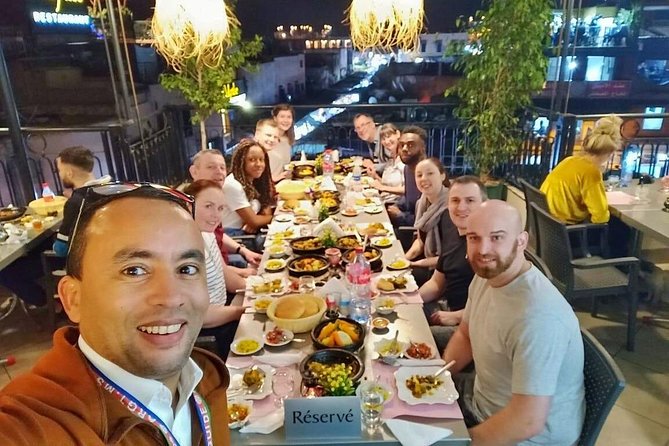
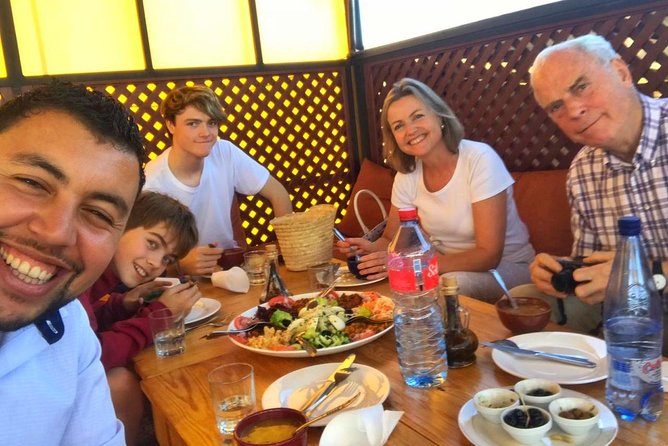
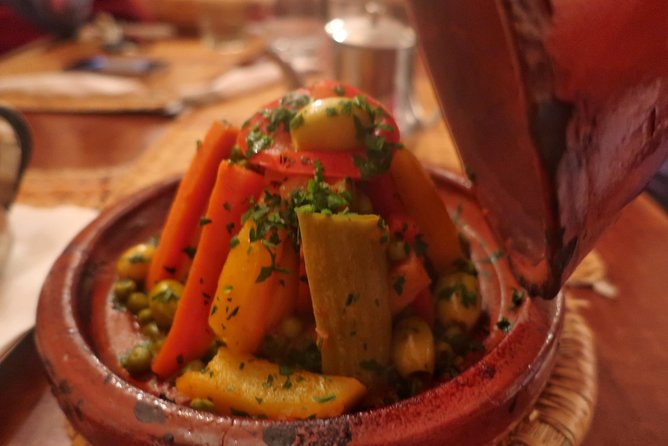
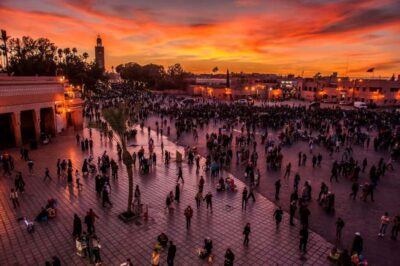
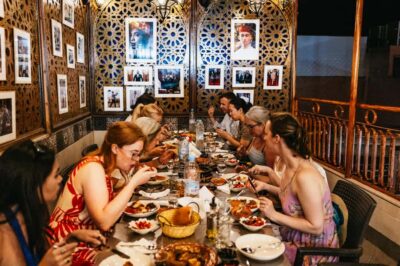
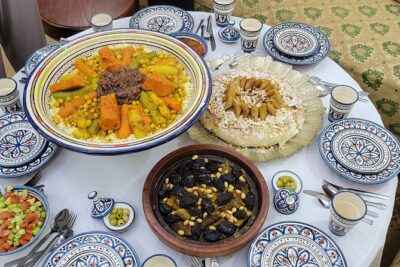
The final meal is the part that turns this from a snack walk into a full evening. You sit at a rooftop restaurant near the main square and receive a three-course Moroccan dinner, with different menu options available.
The rooftop setting gives you a chance to slow down after an hour or two of standing around food counters. You can take in the evening atmosphere around Jemaa el-Fna while eating a proper meal. One particularly positive account singled out the rooftop view, while another described leaving full after the dinner and dessert.
The meal is not guaranteed to feel like the finest restaurant dinner in Marrakech. One account found it merely acceptable compared with other restaurants. That is fair. The value is in the complete evening: guided tastings, local explanation, a walk through the medina, and a seated meal. If you are booking mainly for a top-end dining experience, spend the $54.45 elsewhere. If you want variety and a social introduction to Moroccan food, the dinner adds real value.
There is one important point to clarify before you pay. The experience is sold as including dinner, and many accounts clearly describe a sit-down meal with three dishes and dessert. One poor experience involved only food stalls and no dinner. Because routes and substitute guides can affect the evening, confirm at the start that the rooftop meal is part of your departure.
Is $54.45 a fair price?
At $54.45 per person, this is not the cheapest way to eat in Marrakech. You could buy individual snacks in the square for much less. But the comparison is not really snack prices versus tour price.
You are paying for a certified local guide, several tastings, mint tea, the work of organizing multiple stops, and dinner. You also receive help navigating the old medina and a running explanation of what each food means. For a first evening in Marrakech, that package can be good value.
The value drops if you already know the medina well, prefer choosing every restaurant yourself, or dislike eating in short stops. It also drops if the dinner is omitted or if the group is too large for the narrow stalls. The stated maximum is 15 people, which is reasonable for this setting, but even 15 people can crowd a tiny counter.
Group discounts are available, and mobile tickets make the booking simple. Hotel pickup and drop-off are not included, so you need to reach Poste du Maroc and return from the meeting point at the end. The activity ends back where it begins.
Who will enjoy this evening most?
I would choose this tour for a first or second night in Marrakech. You get an early introduction to the medina, a list of foods to seek out later, and a guide who can help make the old city feel less confusing.
It also suits solo visitors. The group setup gives you a natural way to share a meal and talk with other people while still having a structured evening. Families can enjoy it too, but a stroller may be difficult on narrow lanes and stairways. One difficult experience involved a parent carrying a stroller up and down stairs, so mention mobility needs and children when booking.
Adventurous eaters will get the most from the route. Snails and sheep’s head are not compulsory, but they are part of the point. Vegetarians and people with specific dietary needs should contact the operator after booking. The company says it will take care of these requests, but the sooner you explain your needs, the easier it is to adjust the tastings.
Practical tips for a smoother evening
Come hungry. The samples are not tiny in total, and the dinner follows them. Several stops involve bread, pastry, soup, fried food, fruit, and sweets, so pace yourself early if you want to enjoy the final meal.
Wear shoes suited to uneven medina lanes and keep your belongings close in crowded areas. The experience is on foot through the old city, and the group may pause in tight spaces.
Bring an open mind, but do not force yourself to eat something you cannot handle. The guide can explain the dish and you can take a small taste. This is a food tour, not an eating contest.
If timing matters, confirm the meeting time and dinner plan by message. A 30-minute change has happened before, and one guide substitution caused a late start. Free cancellation is available up to 24 hours before the start time, but changes made within 24 hours are not accepted.
Should you book the Authentic Moroccan Food Tour?
Yes, if you want a lively introduction to Marrakech food and prefer tasting ten different things to ordering one safe dish. The strongest version of this evening has a friendly guide such as Hamza, Mehdi, Ali, Mohamed, or Mo, a manageable group, generous tastings, and a rooftop dinner overlooking the square.
Book with two checks in mind: confirm that dinner is included on your departure, and tell the operator about dietary or mobility needs. Skip it if you want a quiet gourmet meal, dislike market food, or do not enjoy walking through crowded lanes.
For most first-time visitors, the combination of local snacks, medina navigation, cultural explanation, and a full dinner makes the $54.45 worthwhile. Just arrive hungry, allow some flexibility, and regard the herbalist stop as a possible extra rather than the main event.
FAQ
Where does the food tour begin?
It begins at Poste du Maroc on Rue Beni Marine in Marrakech’s medina.
Where does the activity end?
The tour ends back at the meeting point.
How long does the tour last?
The experience lasts approximately three hours.
How much does the tour cost?
The listed price is $54.45 per person.
Is dinner included?
Yes. Dinner is listed as included, and the planned ending is a three-course Moroccan meal at a rooftop restaurant. Because one account reported missing the dinner, confirm the meal with the operator when you meet.
How many people can join the group?
The maximum group size is 15 people.
What foods might I taste?
Possible tastings include Moroccan pastries, harira, chebakia, olives, msemmen, Moroccan snails, sfenj, stuffed pancakes, fruit smoothies, cactus fruit, sheep’s head, and other local specialties.
Is mint tea included?
Yes. Authentic Moroccan mint tea is included, although one account reported that mint tea was not served on that particular departure.
Can vegetarians or people with dietary needs join?
Yes. You should tell the operator about vegetarian requirements or other dietary needs after booking so the food stops can be handled appropriately.
Is hotel pickup included?
No. Hotel pickup and drop-off are not included. You make your own way to the Poste du Maroc meeting point.
Can I cancel for a full refund?
Yes, if you cancel at least 24 hours before the experience start time. Cancellations or changes made less than 24 hours beforehand are not accepted for a refund.
Is the tour available by mobile ticket?
Yes. A mobile ticket is available, and booking confirmation is provided at the time of booking.
More Food in Marrakech
- 3-Day Tour to Merzouga Erg Chebbi with Food & Camel Trek
★ 5.0 · 1,770 reviews - From Marrakech: Zagora 2-Day Desert Safari with Food & Camp
★ 4.5 · 1,137 reviews - Marrakech: Jemma El Fnaa Food Tour with Dinner
★ 4.7 · 394 reviews - Marrakech: Authentic Moroccan Food Walking Tour & Dinner
★ 4.8 · 261 reviews
More Dining Experiences in Marrakech
- Marrakech: Agafay Desert Quad, Camel Ride & Dinner Show
★ 4.7 · 10,209 reviews - Marrakech: Agafay Desert Retreat, Tent, Dinner, Show & Pool
★ 4.8 · 5,616 reviews - Marrakech: Agafay Desert Dinner Show with Quad Bike & Camel
★ 4.9 · 5,058 reviews - Agafay Desert Package, Quad Bike, Camel Ride and Dinner Show
★ 5.0 · 4,244 reviews
Recently reviewed around Marrakech
- 4-Days Marrakech to Marrakech Désert Tour★ 5.0 · 17 reviews
- Camel ride at sunset in Marrakech palm grove★ 5.0 · 17 reviews
- Agafay camel ride★ 5.0 · 20 reviews
- Camel riding in marrakech★ 4.5 · 17 reviews
- Marrakech to Atlas Mountains and 4 Valleys Day Trip★ 5.0 · 17 reviews
- Agafay Desert Adventure, Culture, and Relaxation, From Marrakech★ 5.0 · 25 reviews
- Dinner Show & camel ride with sunset views★ 5.0 · 192 reviews
- Quad excursion to the Agafay desert near Marrakech★ 5.0 · 44 reviews
Food & Drink, compared.

3-Day Tour to Merzouga Erg Chebbi with Food & Camel Trek
Read our review →
Cook Moroccan Food & Try on Traditional Clothes like a local
Read our review →Browse the lists this tour appears in