
Reviewed · 3-DAY EXPERIENCES
From Fes: 3 Days and 2 Nights Desert Trip to Marrakech
The Sahara camp at Erg Chebbi is the heart of this three-day journey. You arrive near Merzouga, trade the vehicle for a camel, cross the golden dunes at sunset, then eat tagine and listen to Amazigh music around a fire beneath a sky full of stars. It is a memorable way to turn a long transfer from Fes to Marrakech into a proper Moroccan road trip.
I like two things especially. First, you see far more than just the desert: cedar forests, macaques near Azrou, Atlas mountain roads, the Ziz Valley, Todra Gorge, Dades Valley, Ouarzazate, and Ait Ben Haddou all fit into the route. Second, drivers such as Hassan, Hamza, Said, Moha, and Zaki have been praised for safe driving, kindness, and helping groups enjoy the journey.
The catch is simple: three days means many hours in the car. The route covers a huge stretch of Morocco, so this is not a slow, restful tour. Stops can feel rushed, and the second-night hotel may be basic compared with the desert camp. At $188 per person, though, it packs a great deal into a short schedule.
In This Review
- Key points to know before booking
- Why this route works so well
- From Fes through Ifrane and the cedar forest
- Crossing the Atlas toward the Sahara
- Sunset on the Erg Chebbi dunes
- Dinner, music, and a night in a Berber camp
- The Road of a Thousand Kasbahs
- Todra Gorge and the Dades Valley
- Ouarzazate, Taourirt, and Atlas Studios
- Ait Ben Haddou before Marrakech
- Guides, vehicles, and the pace of the road
- What the $188 price really covers
- Who should book this Fes to Marrakech trip?
- Should you book it?
- FAQ
- How long does the tour last?
- What is included in the price?
- Is the camel ride included?
- Are lunches included?
- What type of desert accommodation is available?
- Where is the second night spent?
- Does the tour visit Ait Ben Haddou?
- Can I cancel the booking?
Key points to know before booking
- Sunset camel ride: Cross the Erg Chebbi dunes by camel on the way to camp, with a sunrise camel ride sometimes included in the morning transfer.
- Cedar forest macaques: Stop near Azrou to see Barbary macaques among the cedar trees before the road drops toward the desert.
- Two very different nights: Spend one night in a standard, deluxe, or luxury desert tent, then sleep at a hotel in the Dades area or Ouarzazate.
- Film country: Visit Ouarzazate, the Atlas Studios, and the UNESCO-listed Ksar of Ait Ben Haddou, both linked with major film productions.
- Long but scenic drives: The journey includes winding mountain roads, wide desert views, palm-filled valleys, and frequent stops for food, photos, and short walks.
- Good value for a point-to-point trip: Transport, two breakfasts, two dinners, the camel ride, accommodation, and pickup are included, while lunches, drinks, and entrance fees cost extra.
Why this route works so well
A direct trip from Fes to Marrakech would get you there faster, but it would miss one of Morocco’s best changes of scenery. This route takes you from the cooler Middle Atlas through dry valleys and enormous mountain ranges before reaching the Sahara and the red-earth country south of the High Atlas.
That variety gives the tour its real value. You are not simply visiting one attraction and spending the rest of the time on a motorway. The road itself is part of the experience, with small towns, palm groves, cliffs, kasbahs, and broad views appearing one after another.
The price of $188 per person is particularly attractive if you want a practical transfer between Fes and Marrakech. You would otherwise need to arrange transport, two nights of lodging, desert logistics, a camel ride, and visits to the same major sights. The tradeoff is comfort and pace. You pay little, but you spend a lot of time moving.
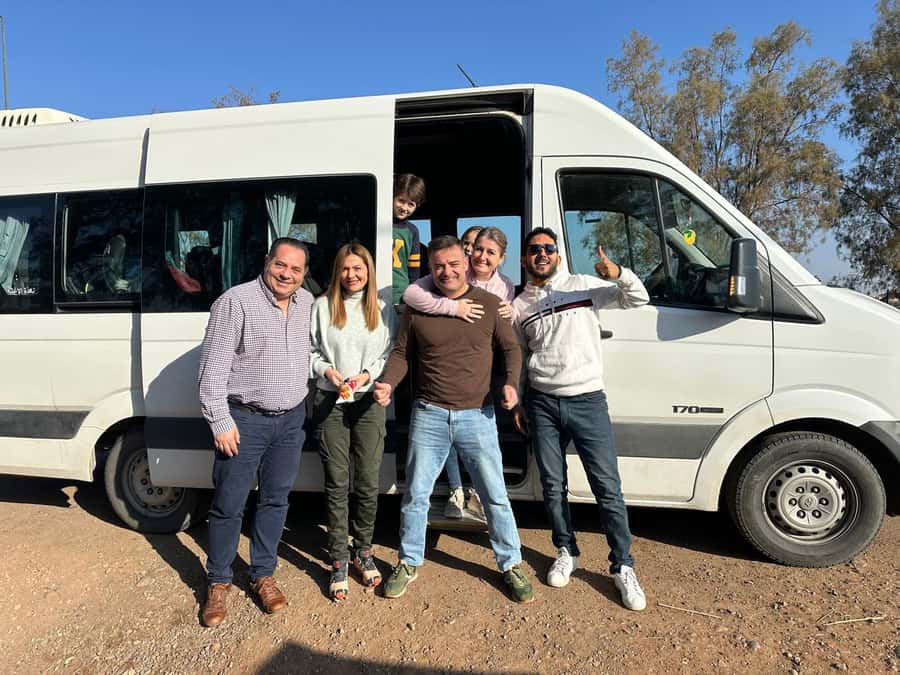
The trip can run as a private outing or a small group experience. Group size affects the feel of the journey. A tiny group can be relaxed and flexible, while a fuller vehicle brings more conversation and often a pleasant international mix. The exact vehicle also varies. Some groups have reported a clean, modern minibus, while one account described an older Mercedes vehicle near Merzouga. It is sensible to confirm the transport type and group size when booking.
More Fez trips worth a second look
- Majestic Desert: 3-Day Luxury Journey from Marrakech to Fes
★ 4.9 · 1,437 reviews - From Fes to Marrakech: 3-Day Sahara Desert Discovery Tour
★ 4.7 · 1,158 reviews - Fes: Best Fez to Marrakech via Merzouga Desert Dunes, 3 Days Tour
★ 5.0 · 959 reviews
From Fes through Ifrane and the cedar forest
Pickup takes place at your Fes accommodation, or at a nearby meeting point if the vehicle cannot reach your address. The first major change comes as you leave the medina and head toward the Middle Atlas.
Ifrane is known for its tidy, European-looking architecture and mountain setting. It feels strikingly different from Fes, with its old city lanes and busy souks. Soon after, the road reaches the cedar forest around Azrou, where Barbary macaques live. This is one of the most distinctive early stops, especially if you have not seen wild monkeys before.
You may have time to watch the macaques and take photographs, but remember that this is a roadside stop, not a wildlife expedition. Keep food secure and follow your driver’s advice. After the forest, the road climbs and bends through the Atlas mountains before the scenery becomes drier and more open.
This first section also sets the pattern for the rest of the tour. You will stop at viewpoints and towns, but you will also spend long stretches seated in the vehicle. Guides such as Hassan, Hamza, and Said have been praised for smooth driving and regular explanations, which matter a great deal on winding roads.
Crossing the Atlas toward the Sahara
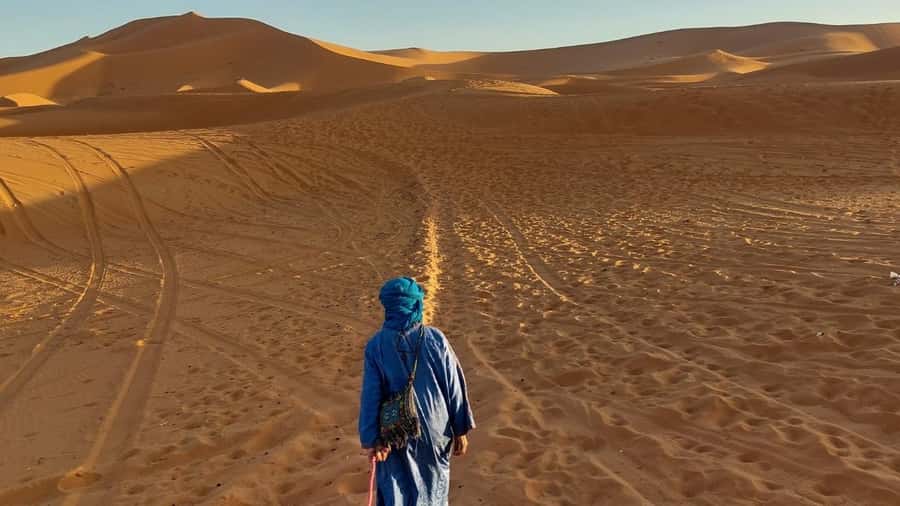
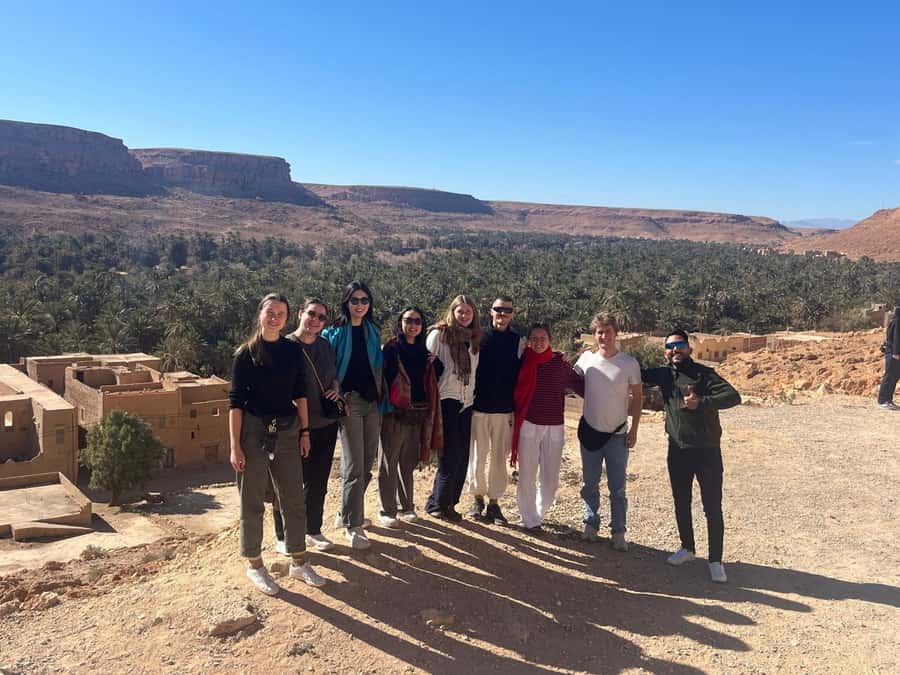
The road toward Merzouga crosses a broad sweep of southeastern Morocco. The Ziz Valley is a major visual reward, with palm groves running through otherwise dry country. From higher viewpoints, the green strip of palms can look almost improbable against the surrounding rock and sand.
You may also stop for desert scarves before reaching the dunes. This is a useful purchase because a head covering protects you from sun and wind during the camel ride. Lunch is not included, so you will need to pay for meals along the way. Drinks are also extra, and carrying some Moroccan dirhams is helpful for small purchases.
The hours can be demanding. Many people enjoy the scenery and conversation, but this is not the right trip if you dislike road travel. You should also expect the schedule to be fast paced. One stop may involve a short walk, another a panorama, and another a guided visit, with little time to linger.
Still, the route gives you a clear sense of how Morocco changes from north to south. The cedar trees disappear, the valleys widen, and the air feels increasingly dry. By the time you approach Merzouga, the dunes seem like a dramatic final act.
Sunset on the Erg Chebbi dunes
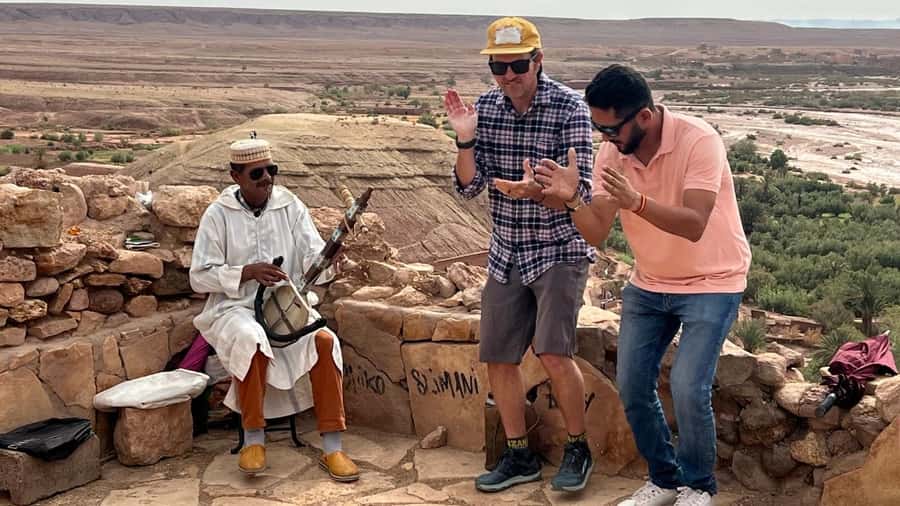
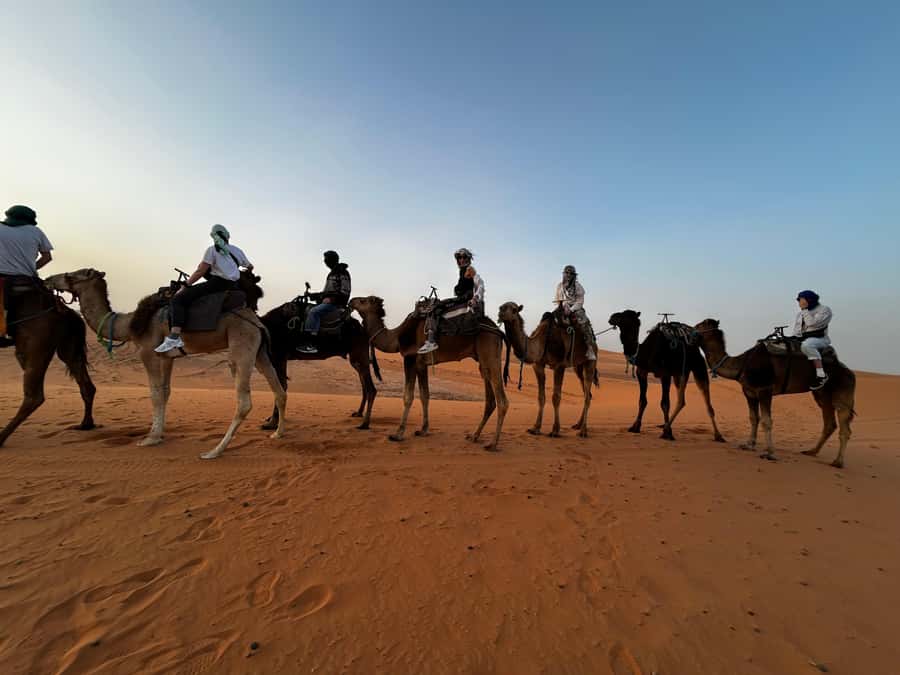
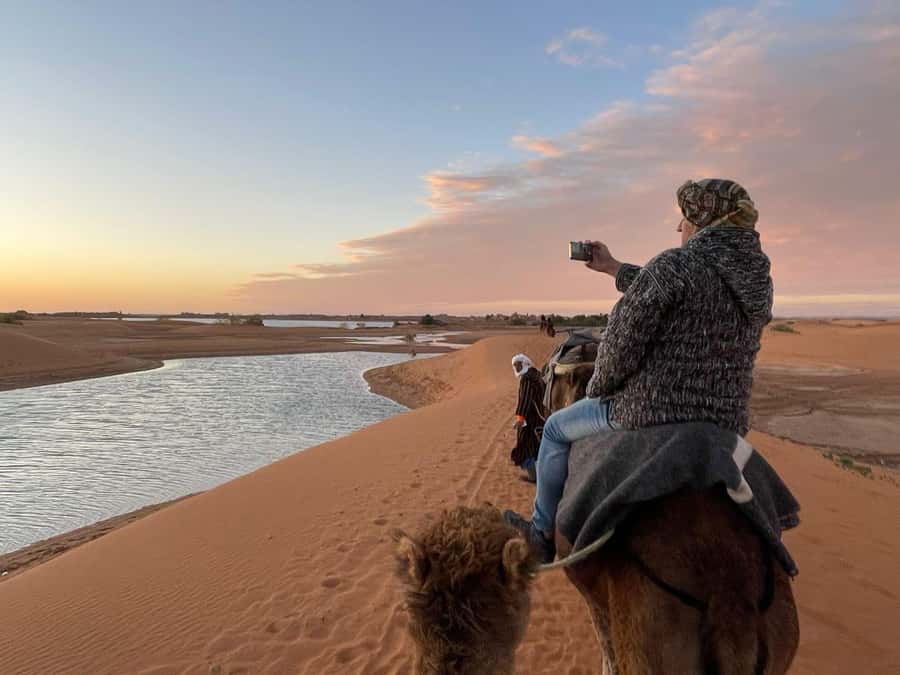
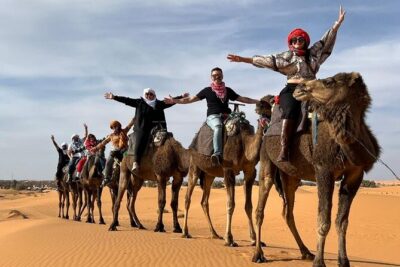
At the edge of the Erg Chebbi dunes, you leave the vehicle and mount a camel. The ride takes you across the sand toward the camp, usually timed for sunset.
Camel riding is not graceful in the way photographs suggest. The animal rises in stages, and the rocking motion can surprise you. The ride is usually manageable, but you should wear trousers or loose clothing, bring water, and hold on when the camel stands or sits.
The reward is the changing color of the dunes. As the sun drops, the sand shifts from bright gold to warmer orange and brown. The silence also feels different from the noise of Moroccan cities. Even if you have seen desert photographs before, the scale of Erg Chebbi is easier to understand from the top of a moving camel.
Some programs also offer quad biking at extra cost, and sandboarding may be available on request. These are optional add-ons, not part of the base price. The camel ride is enough for most people, particularly if you want the slower, traditional approach to camp.
A different kind of day out, same corner of Morocco:
- Chefchaouen Day Trip from Fez (Shared Group Tour)
★ 4.6 · 2,394 reviews - Fes: Volubilis Roman Ruins, Mouly Idriss, & Meknes Day Trip
★ 4.6 · 2,375 reviews - Fez Medina Guided Tour
★ 4.6 · 2,079 reviews - Blue City magic: Affordable Day Trip from Fez to Chefchaouen
★ 4.6 · 1,960 reviews
Dinner, music, and a night in a Berber camp
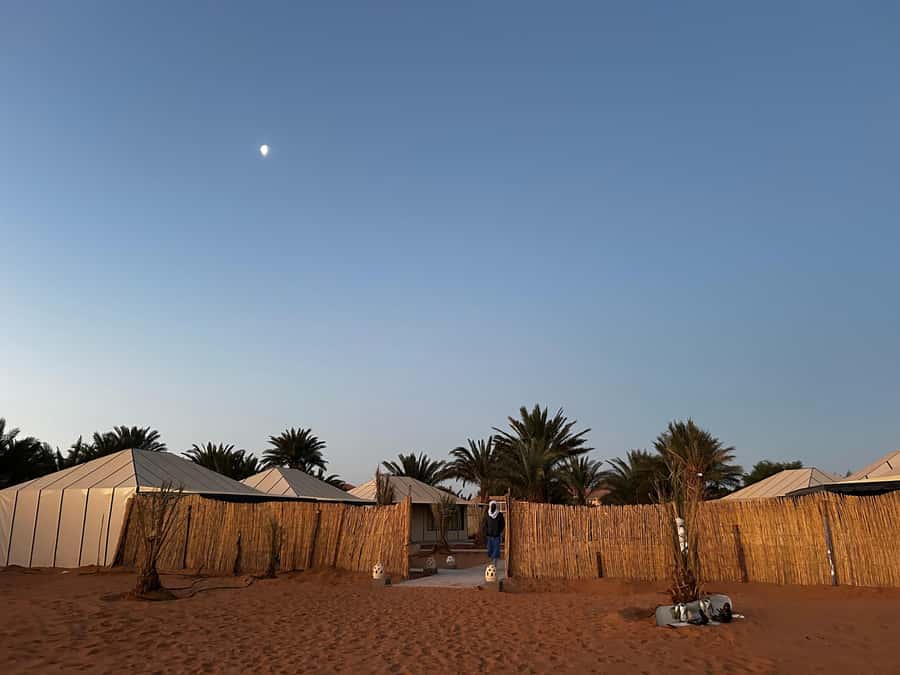
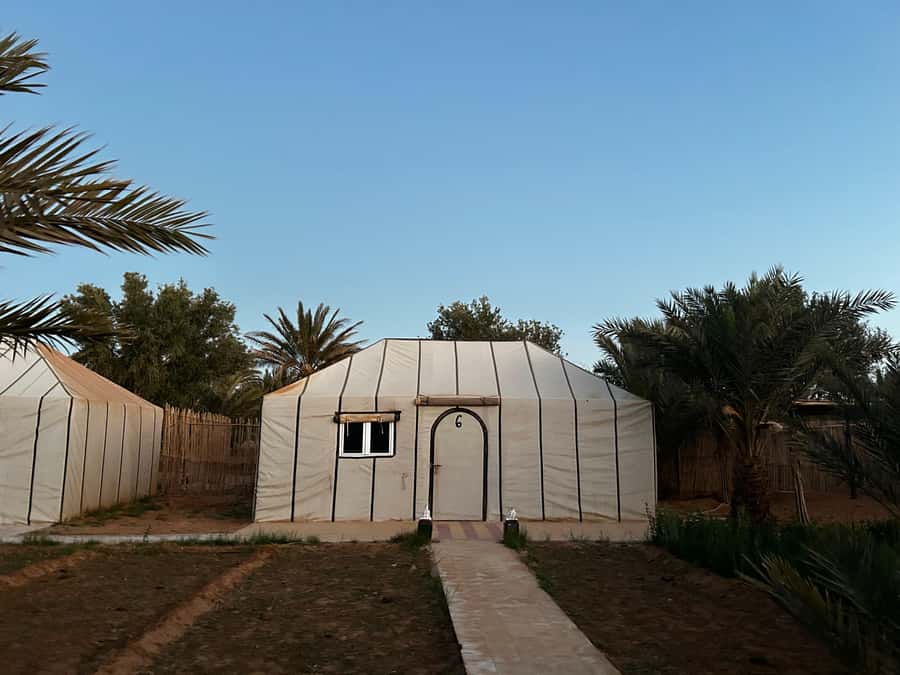
After the camel ride, you reach a desert camp for dinner and an overnight stay. The accommodation depends on the option you select. Standard, deluxe, and luxury tents are available, so check the exact category before paying.
Camp quality can vary by option, but the basic pattern is clear: dinner, time around the fire, music, and a night in the dunes. Tagine is commonly served, and Amazigh musicians may play drums and qraqeb, metal castanets used in North African music. This is a social evening rather than a private wilderness retreat.
The best part comes after dinner. Step away from the fire and look up. The desert’s low light pollution can reveal far more stars than you are likely to see from Fes or Marrakech. If the weather is clear, give yourself time to sit quietly instead of treating the camp only as an evening show.
Conditions depend on the season. Summer can be very hot, while winter nights can feel cold. Some tents have air conditioning, but not every option does, so ask before booking if this matters to you. The camp is the strongest reason to choose the tour, but it is important to understand that even a luxury tent is part of a desert camp, not a city hotel.
The Road of a Thousand Kasbahs
After breakfast, the route turns west along the ancient caravan corridor often called the Road of a Thousand Kasbahs. The name refers to the many fortified houses and villages scattered through the valleys, not to a single road lined with exactly one thousand buildings.
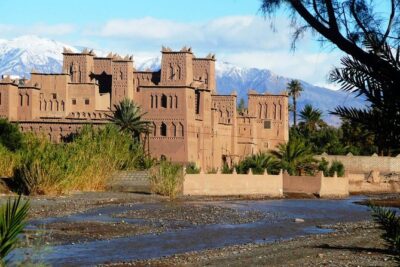
This is a fine stretch for watching Morocco’s architecture change. Earth-colored kasbahs blend with the surrounding rock, while date palms mark the water sources. The route has also been used for film productions, including The Last Temptation of Christ and Jewel of the Nile.
You may stop in Rissani, a historic market town near the desert. A local walk or guide can add useful context, though the timing may not suit everyone. After a late camel evening, an early walking tour can feel tiring. A rug shop may also be included. The history lesson can be interesting, but shopping pressure is possible, so do not feel obliged to buy.
This is one point where you should keep your expectations clear. The tour includes cultural stops, but some are also commercial. Ask your guide how much time is planned and whether you can skip a shop if you are not interested.
Todra Gorge and the Dades Valley
The Todra Gorge is one of the route’s most striking natural stops. Sheer rock walls rise on both sides of the narrow passage, creating a powerful sense of scale. You usually have time for a walk, not a long hike, so wear shoes that are comfortable on uneven ground.
The gorge is also a welcome break from the vehicle. After hours on the road, even a short walk helps. Bring water, especially in warm weather, and keep your camera ready for the changing light on the rock.
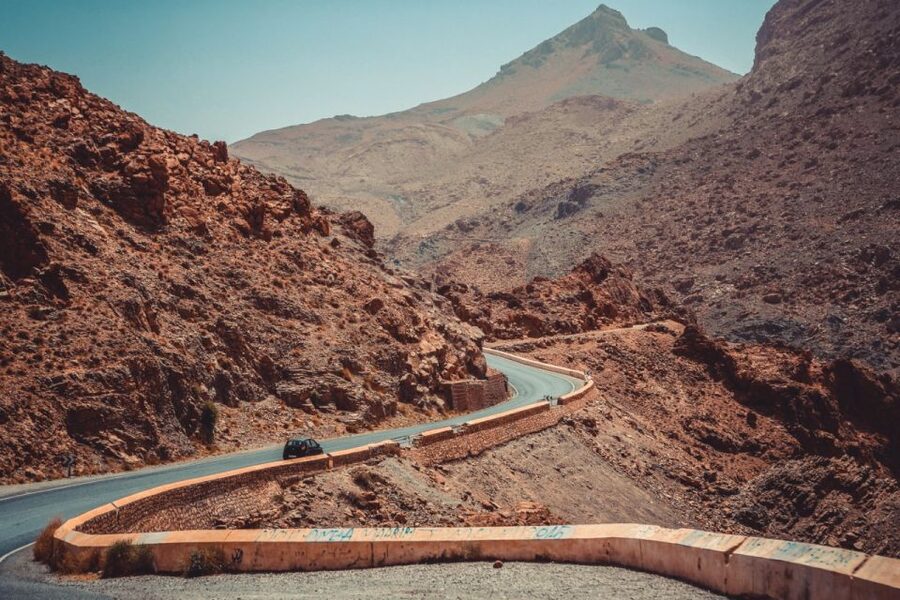
From Todra, the road continues through the Dades Valley, where dramatic escarpments and winding roads create some of the trip’s best views. The scenery here is more rugged than the palm valleys near the Ziz River. You may spend the night at a hotel in the gorge or in Ouarzazate, depending on the arrangement.
The second hotel is usually practical rather than luxurious. Some people find it comfortable, clean, and equipped with hot showers, while others find it plain and poorly located. Dinner is included, but lunch and drinks are not. If comfort is important to you, ask which hotel category and location apply to your booking.
Ouarzazate, Taourirt, and Atlas Studios
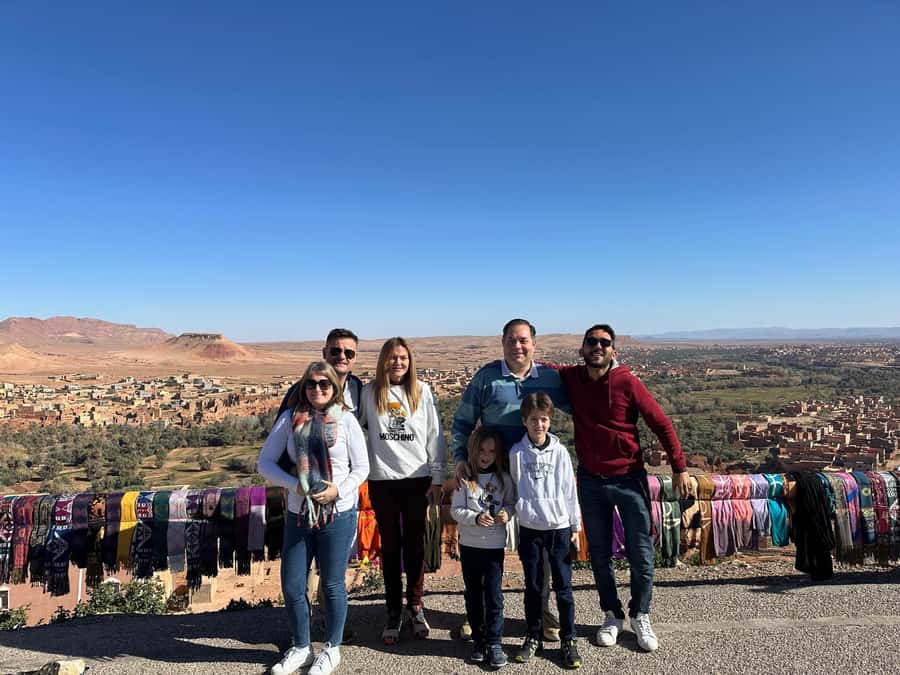
On the final morning, breakfast is followed by time in Ouarzazate. The town is often called Morocco’s film capital because of its desert setting, nearby kasbahs, and large production facilities.
The Kasbah of Taourirt gives you a look at one of the area’s major fortified buildings. Its earth walls and interior passages help explain how local settlements were built and protected. Entrance fees are not included, so carry extra money for visits.
Atlas Studios is another highlight. It is described as the largest and most famous film studio in Africa, and its sets show how filmmakers have used Morocco to represent distant places and past eras. This stop is especially enjoyable if you like cinema, but it also gives you a practical sense of how much scenery can be built for the camera.
Allow enough time to enjoy the studios and Taourirt without rushing. One group wished for more time at Ait Ben Haddou, and the same issue can apply here. The schedule covers a lot, but it cannot give every sight a full afternoon.
Ait Ben Haddou before Marrakech
Ait Ben Haddou is the cultural high point of the final day. This UNESCO-listed ksar is a fortified village made of earthen buildings, linked by narrow lanes and stairways. Its position beside the old caravan route helps explain why it became such an important stop and why filmmakers have returned to it so often.
A local guide may lead you through the site, explaining its construction and film connections. Wear shoes with a firm grip because the ground is uneven and the route includes climbs. The views from higher points are worth the effort.
The visit may feel short because Marrakech is still several hours away. If Ait Ben Haddou is your main interest, consider asking about the planned length of the stop before departure. This is not a tour for getting lost in every alley. It is a well-chosen introduction.
The final drive crosses the High Atlas toward Marrakech. You will see another shift in scenery before being dropped near Jamma El Fna. Drop-off is usually arranged as close as possible to your accommodation, but one account noted a drop-off about a 15-minute walk from a hotel. Confirm the exact point if you have heavy bags or a hard-to-reach riad.
Guides, vehicles, and the pace of the road
The driver can shape the entire experience. Hassan, Hamza, Said, Moha, Zaki, Soufiane, and Mahfoudh have all been praised for safe driving, warmth, and practical help. Some drivers also explain Moroccan culture and history in detail, while others are quieter unless you ask questions.
The listed languages are English, French, Arabic, and Spanish. Communication is generally workable, but the level of guiding can differ. If you want detailed commentary, tell the operator when booking and ask questions during the drive.
You should also prepare for long road days. The vehicle is air-conditioned, and many groups find the minibus or car comfortable, but comfort cannot remove the distance. Bring a neck pillow, water, snacks, sun protection, and something to listen to. Breaks for food, bathrooms, and viewpoints help, but your legs will still appreciate the walking stops.
The group atmosphere can be a real bonus. Solo visitors may meet companions from several countries, and couples or friends can enjoy a shared road-trip feel. Private trips offer more control, but small-group travel usually gives you the best price.
What the $188 price really covers
At $188 per person, the package includes three days of air-conditioned transport, hotel pickup and drop-off, an English or French-speaking driver, breakfasts, dinners, two nights of accommodation, and the camel ride. Arabic and Spanish support may also be available.
That is strong value for a point-to-point journey covering Fes, the Sahara, Ouarzazate, Ait Ben Haddou, and Marrakech. You are paying for transport across a large part of Morocco as well as the main desert arrangements.
Budget for the extras. Lunches, drinks, attraction entrance fees, travel insurance, quad biking, and possible sandboarding are excluded. You should also check whether you have booked a standard, deluxe, or luxury tent, since accommodation quality is tied to the option selected.
Free cancellation is available up to 24 hours before departure, and you can reserve now and pay later. Pickup details are confirmed after booking, including a nearby meeting point if needed.
Who should book this Fes to Marrakech trip?
I would choose this tour if you want to see the Sahara but have limited time, or if you need to move between Fes and Marrakech without arranging several separate trips. It suits first-time visitors, solo travelers, couples, and friends who enjoy a packed schedule and shared experiences.
It is less suitable if you want long museum visits, slow meals, or several quiet days in one place. The itinerary is intense, and some stops may feel too brief. The desert night is the payoff, while the road days are the price you pay for reaching it.
Should you book it?
Book it if the thought of riding a camel into Erg Chebbi at sunset, sleeping under desert stars, and seeing Ait Ben Haddou matters more to you than having a relaxed schedule. The tour gives you an impressive slice of Morocco for $188, with the strongest praise reserved for the camp, the scenery, and careful drivers such as Hassan, Hamza, Said, Moha, and Zaki.
Before booking, confirm your tent category, vehicle type, group size, second-night hotel, and the time allowed at Ait Ben Haddou. Pack for heat and cold, keep money aside for lunches and entrance fees, and expect a lot of sitting. If you accept those limits, this is an efficient and memorable way to cross Morocco from Fes to Marrakech.
FAQ
How long does the tour last?
The experience lasts three days and two nights. You travel from Fes to Marrakech, spending one night at a desert camp and one night at a hotel in the Dades area or Ouarzazate.
What is included in the price?
The price includes air-conditioned transport, an English and French-speaking driver, hotel pickup and drop-off, breakfasts, dinners, two nights of accommodation, and a camel ride. Arabic and Spanish language support may also be available.
Is the camel ride included?
Yes. The camel ride across the Erg Chebbi dunes is included, with the main ride planned around sunset on arrival at the desert camp.
Are lunches included?
No. Lunches and drinks are not included, so you should budget for them during the road days.
What type of desert accommodation is available?
You can select a standard, deluxe, or luxury desert camp option. The exact facilities depend on the category booked, so check the accommodation details before choosing.
Where is the second night spent?
The second night is at a hotel in the Dades Gorges area or in Ouarzazate, depending on the booking arrangement.
Does the tour visit Ait Ben Haddou?
Yes. The route includes a visit to the UNESCO-listed Ksar of Ait Ben Haddou before continuing to Marrakech.
Can I cancel the booking?
You can cancel up to 24 hours in advance for a full refund. The activity also offers a reserve now and pay later option.
Recently reviewed around Fez
- day trip from fez to middle atlas mountain★ 5.0 · 17 reviews
- Discover the city of Fes on foot with the best guides★ 5.0 · 27 reviews
- VIP TOUR OF FES- Medina by local guide & Rempart by car-FULL Day★ 5.0 · 74 reviews
- Private Fes Medina Walking Tour★ 5.0 · 25 reviews
- Fes to Chefchaouen Day Trip★ 5.0 · 20 reviews
- fes medina guided tour★ 4.5 · 60 reviews
- Fes to Middle Atlas Private Day Trip★ 5.0 · 48 reviews
- Fes to Volubilis, Moulay Idriss and Meknes Private Day Trip★ 4.5 · 26 reviews
3-Day Experiences, compared.
3 Days Desert Tour From Marrakech To Merzouga Dunes & Camel Trek
Read our review →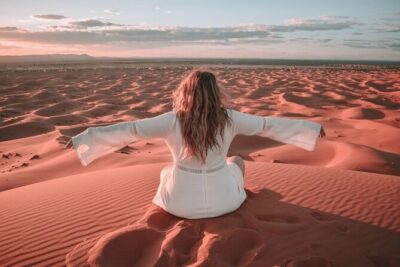
3-Day Marrakech to Merzouga Desert Tour: Camel Rides & Overnights
Read our review →
3-Day Marrakech to Fes Sahara Desert Tour via Merzouga
Read our review →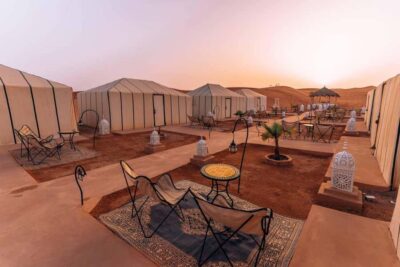
3-Day Merzouga Desert Experience Camel & Meals
Read our review →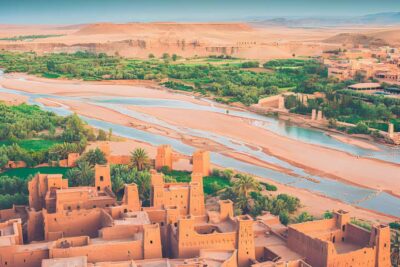
3-Day Tour to Merzouga Erg Chebbi with Food & Camel Trek
Read our review →Browse the lists this tour appears in