
Reviewed · BERBER VILLAGE TOURS
Berber Cooking Class at a Farm in the Countryside & shopping at a rural Souk.
The best part of this day happens before lunch: you help buy its ingredients at a rural souk, then prepare them in a real Berber kitchen. Barley is roasted over a fire, ground in a stone mill, baked into flat bread, and steamed into couscous. It is a cooking class with a strong sense of place, not a polished studio lesson.
I like the direct contact with local food producers, and I like that the meal uses olive oil from the farm itself. The hosts, Khadija and Khadija, bring the cooking to life, while a guide such as Nicole can make the day especially easy for German-speaking visitors. The main drawback is the long seven-hour commitment and rural setting, so this will not suit anyone seeking a quick Essaouira activity or a highly structured kitchen workshop.
In This Review
- Key points to know before booking
- From Essaouira to the Haha countryside
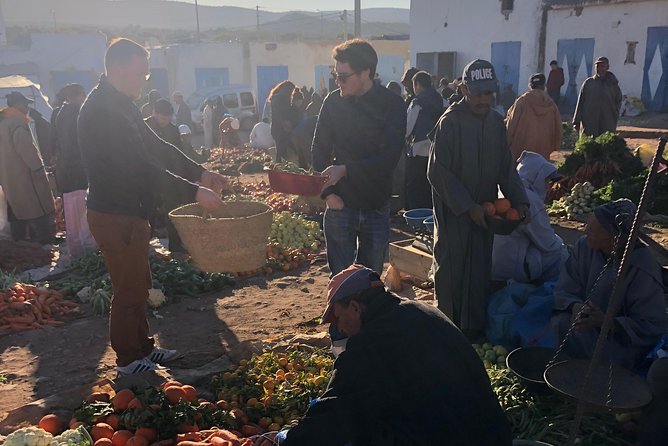
- Buying ingredients at a rural souk
- Inside the farm’s traditional kitchen
- Making couscous and goat tagine
- Lunch under the olive trees
- The optional argan oil stop
- Goats in the argan trees
- Why the small group matters
- Who will get the most from this day
- Is this Berber cooking class worth $98.76?
- Should you book it?
- FAQ
- Where does the cooking class take place?
- What time does the experience start?
- Where is the meeting point?
- Where does the activity end?
- How long does the experience last?
- What food will you prepare?
- Is an argan oil cooperative visit included?
- How large is the group?
- Can I cancel for a full refund?
Key points to know before booking
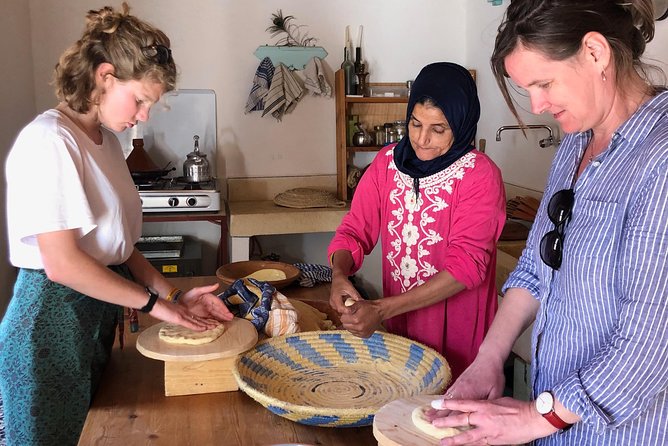
- Shop first at a local souk: Choose fruit, vegetables, meat, eggs, honey, and other staples before cooking with them.
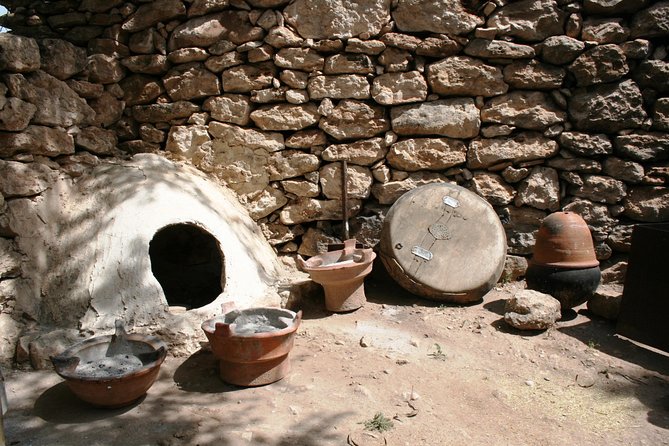
- Cook in an authentic Berber kitchen: Use a clay oven, traditional clay pot, open fire, and stone mill.
- Meet local hosts Khadija and Khadija: They demonstrate barley preparation, flat bread, couscous, and tagine.
- Eat on an ecological farm: Lunch may be served outdoors among olive trees and quiet countryside.
- Optional argan oil stop: Learn how this regional product is made and taste items produced with it.
- Keep watch for tree-climbing goats: The route south of Essaouira passes through Morocco’s argan zone.
From Essaouira to the Haha countryside
The day starts at 9:00 a.m. at Labo Abdelkrim Khatabi d’Analyses Médicales, 287 Rue Oued El Makhazine, Essaouira. That address is a practical meeting point rather than a sightseeing stop, so arrive ready to leave town. The activity returns to the same place at the end.
About 35 kilometers south of Essaouira, the route enters the Haha region. This is Berber country, where farming and animal keeping remain central to daily life. Goats and sheep are common, and olive and argan trees shape the countryside you pass through.
I like this setting because the food lesson begins with the place that produces the food. You are not simply handed premeasured ingredients in a city kitchen. You see the rural setting, visit a market, and then follow those ingredients through preparation and lunch.
The drive also gives the day a useful rhythm. The souk comes first, the farm follows, and the meal arrives only after you have helped make it. Seven hours is a large block of time, but the schedule makes sense for anyone who wants more than a quick demonstration.
More Essaouira trips worth a second look
- l’Atelier – Moroccan Cooking Workshop in Essaouira
★ 5.0 · 110 reviews - Traditional Moroccan Cooking Class
★ 5.0 · 81 reviews - Essaouira: Traditional Family Style Moroccan Cooking Class
★ 5.0 · 58 reviews
Buying ingredients at a rural souk
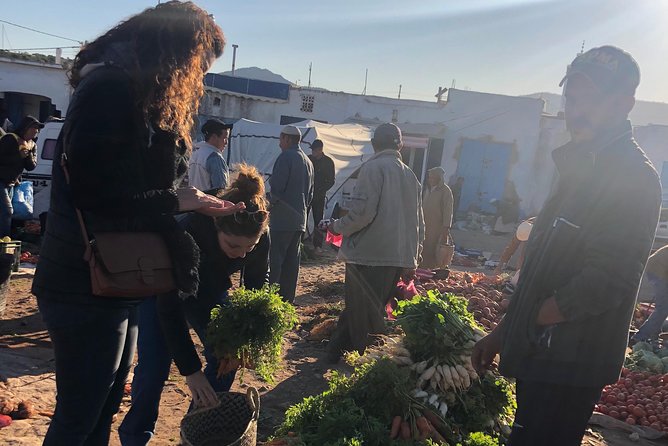
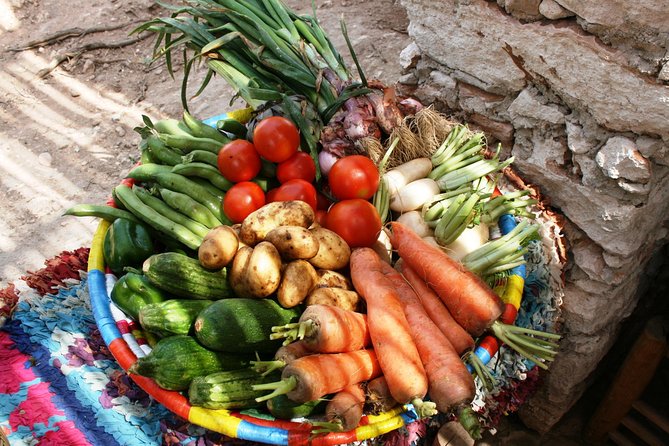
The souk is one of the most valuable parts of the experience. It offers freshly harvested fruit and vegetables, along with meat, eggs, honey, and other basics used in everyday cooking. The market is not presented as a theatrical show. It is a place where local people buy the food they need.
You can expect the shopping stop to add context to the later cooking. A tomato, onion, herb, or piece of meat has a clearer story after you have seen it sold in the countryside. The souk also shows how much of Moroccan cooking begins with ordinary, seasonal staples rather than complicated equipment.
This is a good place to pay attention to your guide. The market may feel unfamiliar, and the useful details often concern what the cooks need, how ingredients are selected, and which items will go into the meal. The German-language experience with Nicole received especially warm praise for combining a smooth day with a real introduction to country cooking.
There is one practical limitation. The available information does not promise a set menu or a fixed list of purchases, so you should not book this expecting to choose from several cooking projects. The focus is on the traditional Berber dishes described for the day, shaped by the ingredients available and the farm setting.
Inside the farm’s traditional kitchen
The class takes place at an ecological farm built around an authentic Berber kitchen. Traditional tools are part of the lesson, and that changes the feel of the cooking. You are learning how a process works with fire, clay, and hand tools, not simply how to follow a recipe in a modern kitchen.
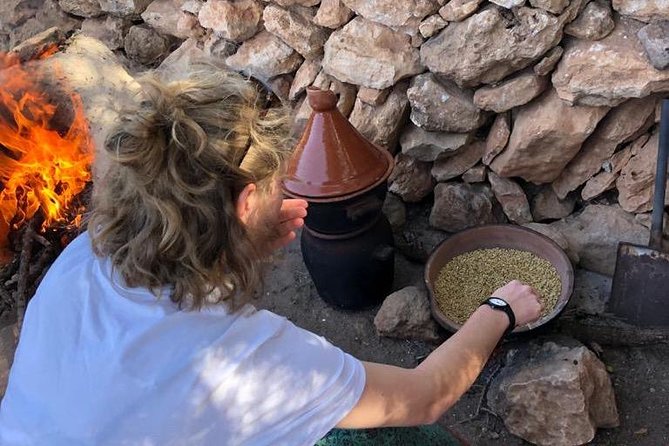
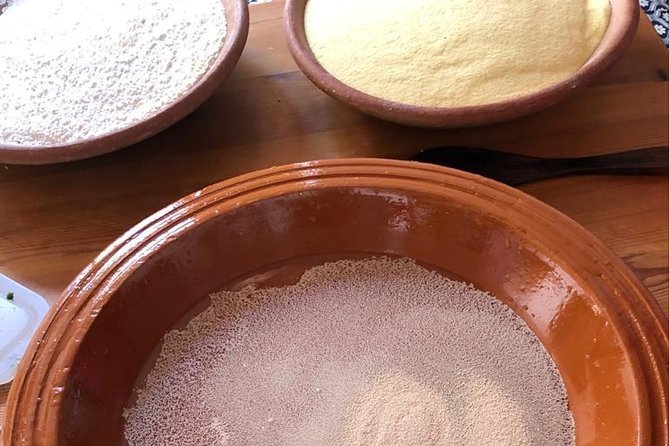
Khadija and Khadija lead the demonstrations. Their work begins with barley grains, which they roast over a fire. The roasted grains are then ground in a stone mill to make the flour and semolina used for flat bread and couscous.
That sequence is a small lesson in food production as well as cooking. The grain does not arrive as a bag of finished flour. You see the heat, the grinding, and the transformation before the meal takes shape. For anyone interested in Moroccan food beyond restaurant menus, this is the heart of the experience.
You will also bake flat bread in a clay oven. The clay oven gives the activity a strong rural character, though it may require more patience than a modern kitchen appliance. Cooking over fire and working with traditional tools can be less predictable, which is part of the appeal, but it also means this is not a fast, technical class designed for perfect results every time.
Making couscous and goat tagine
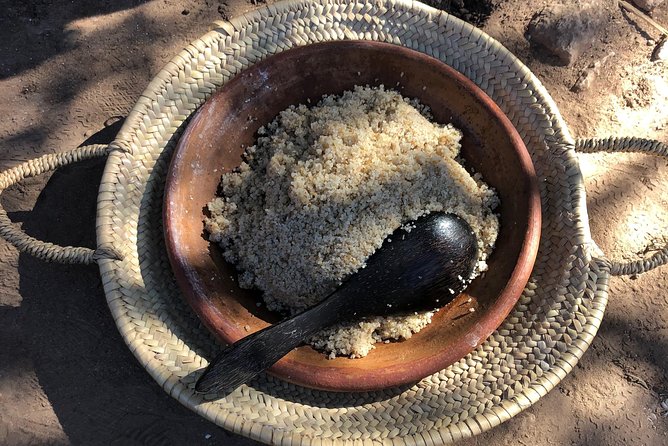
Couscous is steamed in a traditional clay pot, one of the day’s most useful demonstrations. It shows the difference between a dish made from a packet and a dish built through several careful stages. You can follow how the semolina is prepared and how steam does the work.
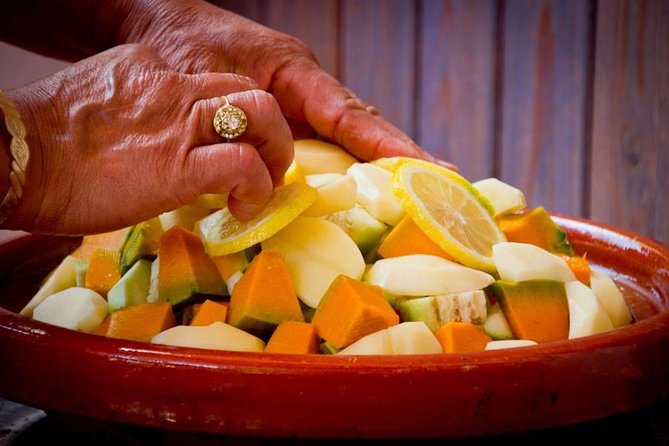
The main dish is a traditional tagine of vegetables and goat meat. Moroccan spices and olive oil provide the seasoning, with the oil coming from olive trees on the farm. That detail matters. The meal connects the cooking lesson to the soil and trees around you.
Goat is a familiar meat in the Haha hills, where local families keep goats and sheep. If goat is outside your usual diet, this is worth considering before booking. The provided information does not describe an alternative main course, so ask the operator in advance if you need a substitute.
I like the balance of the menu. Bread, couscous, vegetables, and tagine cover the basic structure of a Moroccan meal, while the barley and goat add a specifically rural Berber touch. You are not only learning a famous dish. You are seeing how grain, livestock, herbs, oil, and fire fit together.
More Essaouira shopping runs:
- Essaouira: Sqala du Port, Medina Ramparts & Fish Market Tour
★ 4.7 · 212 reviews - Essaouira: Sqala du Port, Citadel, Fish Market & Medina Tour
★ 4.6 · 73 reviews - The Sunday Market in Had Draa & Local Food Tasting.
★ 5.0 · 33 reviews - Marrakech: Traditional Moroccan Cooking Class & Market Visit
★ 4.8 · 1,861 reviews
Lunch under the olive trees
Depending on the weather, lunch is served outside. The calm farm setting is a major part of the meal, especially after the work of grinding, baking, steaming, and cooking. Fresh air and open space make the food feel like the final stage of the lesson rather than a separate restaurant stop.
Outdoor dining is also the part most affected by conditions. On a poor-weather day, the meal may need to be served indoors, and the experience itself requires good weather. That is not a flaw in the farm concept, but it is a consideration when you are planning tightly around your Essaouira stay.
After lunch, tea is infused with fresh herbs from the garden. This is a quiet finish, and a good one. Moroccan tea is often treated as a social pause, and garden herbs tie the drink back to the farm rather than making it just another beverage at the end of a tour.
The meal is included in the value of the day, but the real worth comes from the full chain of activity. You shop, prepare, cook, and eat in the same rural setting. At $98.76 per person, that is a fair proposition for someone who values a small-group outing and a substantial meal, though it is more expensive than simply ordering a tagine in Essaouira.
The optional argan oil stop
The route passes through the argan zone, and you may have the option to visit an argan oil cooperative. Argan oil is strongly tied to this part of Morocco and is made from the fruit of the argan tree. At the cooperative, you can learn about production and taste products made with the oil.
This stop adds a useful second food story to the day. The cooking class focuses on grain, bread, couscous, meat, spices, and olive oil. The cooperative shows how another local product is processed and sold.
Because the visit is described as optional, do not assume it will be the main feature or a guaranteed long stop. The class and farm lunch are the core of the day. If the argan cooperative matters most to you, confirm how the stop is handled when you book.
Goats in the argan trees
The southern route is known for goats climbing argan trees. You are very likely to see them, although no wildlife sighting can be guaranteed. Keep your camera ready, but do not treat the goats as the purpose of the tour.
They are part of the region’s character and make the drive more memorable. The same countryside supports argan trees, livestock, farming, and the rural market you visit earlier. Seeing the animals helps connect those parts of the day.
This is also a good reminder to keep expectations sensible. The experience is not a wildlife safari, and the tour does not promise a specific number of goats or a special viewing stop. Think of them as an entertaining bonus on the way to the farm.
Why the small group matters
The maximum group size is eight people. That is a strong advantage for a hands-on class. A smaller group should make it easier to watch the grinding, bread baking, and clay-pot cooking without standing far from the action.
A small group also fits the personal nature of the day. You are visiting a local souk, entering a family-style kitchen, and sharing a meal on a working ecological farm. The setting would lose some of its charm if it were crowded with a large coach group.
The information does not specify the vehicle type or exact driving time, so you should not assume a particular level of road comfort. The activity lasts about seven hours, begins at 9:00 a.m., and returns to the Essaouira meeting point. Most people can participate, and service animals are allowed.
Confirmation is sent within 48 hours of booking, subject to availability. The operator also needs a minimum number of participants, so the activity can be rescheduled or canceled if that minimum is not reached. Free cancellation is available up to 24 hours before the start time, while later cancellations and changes are not accepted.
Who will get the most from this day
I would choose this experience if you want to understand Moroccan food through local life rather than through a formal restaurant lesson. It suits couples, families, and small groups who enjoy markets, rural scenery, and shared meals.
It is particularly good for you if:
- You want a full-day outing beyond Essaouira’s medina.
- You enjoy hands-on work more than watching a chef perform.
- You are curious about Berber traditions and everyday farm food.
- You like small groups, with no more than eight participants.
- You want to combine cooking with a souk, an argan stop, and countryside views.
- You are comfortable eating the stated menu, including goat meat.
I would be more cautious if you have limited time, dislike rural drives, need a guaranteed outdoor lunch, or want a class focused on restaurant-style technique. The pace is likely to feel leisurely because the food starts with grain, fire, and market shopping.
Is this Berber cooking class worth $98.76?
For the right person, yes. The price covers roughly seven hours, transport from a central Essaouira meeting point and back, a small group, market shopping, a farm-based cooking lesson, lunch, and tea. It also includes access to a setting and food traditions you cannot recreate by ordering a meal in town.
The strongest value comes from the personal and practical side of the experience. Khadija and Khadija teach the methods, while a guide such as Nicole can help explain the day in German. The open-fire cooking, stone mill, clay oven, and farm-grown olive oil give the class substance.
My main reservation is that the price may feel high if you judge it only as a meal. You are paying for time, transport, instruction, and access to the countryside. If those elements matter to you, the cost is reasonable. If you only want to taste couscous and tagine, Essaouira offers cheaper options.
Should you book it?
Book this day if you want a genuine rural food experience with a clear connection between market, farm, kitchen, and table. The best features are the small group, the two local cooking hosts, the traditional tools, and the chance to see how Berber food is made from basic ingredients.
Skip it if your schedule is tight or you need a predictable indoor program. For everyone else, this is one of the better ways to spend a day south of Essaouira, especially if the idea of roasting barley, baking bread in clay, and eating fresh tagine outdoors sounds more appealing than another city tour.
FAQ
Where does the cooking class take place?
The class takes place at an ecological farm in the Haha region, about 35 kilometers south of Essaouira.
What time does the experience start?
It starts at 9:00 a.m.
Where is the meeting point?
The meeting point is Labo Abdelkrim Khatabi d’Analyses Médicales, 287 Rue Oued El Makhazine, Essaouira 44000, Morocco.
Where does the activity end?
The activity ends back at the same meeting point in Essaouira.
How long does the experience last?
The experience lasts approximately seven hours.
What food will you prepare?
You will prepare traditional flat bread, couscous, and a tagine made with vegetables, goat meat, Moroccan spices, and olive oil.
Is an argan oil cooperative visit included?
You have the option to visit an argan oil cooperative while driving through the argan zone. The visit is described as optional.
How large is the group?
The activity has a maximum of eight participants.
Can I cancel for a full refund?
Yes. You can cancel at least 24 hours before the local start time for a full refund. Poor weather or failure to meet the minimum number of participants can also lead to a different date or a full refund.
More Workshops in Essaouira
- Essaouira: Surf Lessons
★ 4.9 · 412 reviews - Kitesurfing Lessons in Essaouira Beach
★ 5.0 · 206 reviews - Surf Lesson in Essaouira
★ 5.0 · 179 reviews - Group Kitesurfing lesson with a Local in Essaouira Morocco
★ 5.0 · 175 reviews
More Farms in Essaouira
- Moroccan Cooking Class: Farm-to-Table Tagine
★ 5.0 · 50 reviews
Recently reviewed around Essaouira
- Individual Lessons of Kite Surf in Essaouira★ 5.0 · 113 reviews
- Private Kitesurf Lesson in Essaouira Morocco★ 5.0 · 38 reviews
- Group Kitesurfing lesson with a Local in Essaouira Morocco★ 5.0 · 175 reviews
- The Sunday Market in Had Draa & Local Food Tasting.★ 5.0 · 33 reviews
- How To Be A Real Moroccan Chef★ 5.0 · 101 reviews
- Private Surf Lessons★ 5.0 · 28 reviews
- Traditional Moroccan and Berber cooking classes★ 5.0 · 40 reviews
- Surf Rental★ 5.0 · 31 reviews
Berber Village Tours, compared.
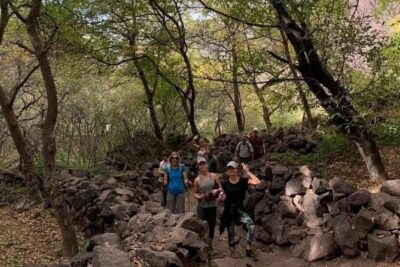
Berber villages : Atlas Mountains Day Hike from Marrakech
Read our review →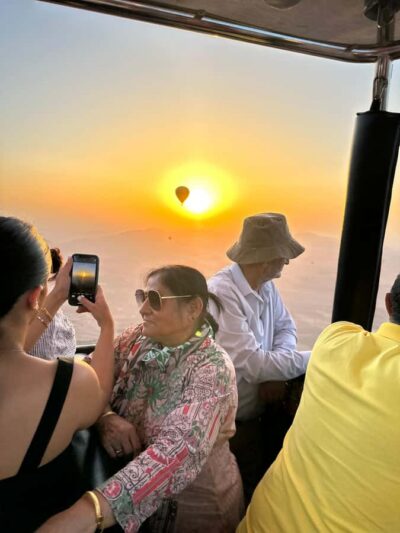
Balloon Flight, Berber Breakfast & Certificate
Read our review →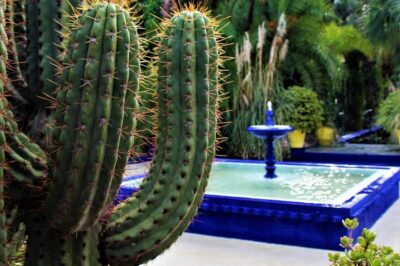
Majorelle Garden, YSL, and Berber Museum Entry
Read our review →
Hot Air Balloon Flight with Berber Breakfast
Read our review →
Atlas Mountains, Berber Villages and Three Valleys all inclusive
Read our review →
Atlas Mountains Hot Air Balloon Ride from Marrakech with Berber Breakfast and Desert Camel Experience
Read our review →
Atlas Mountains, Berber Villages, Agafay & Camel Ride
Read our review →
Balloon Flight, Berber Breakfast, and Camel Ride
Read our review →Browse the lists this tour appears in