
Reviewed · VIP
12 Days Private Luxury Sightseeing Tour in Morocco
Morocco’s great trick is how quickly the scenery changes. In 12 days, you move from Casablanca’s Atlantic coast to the alleys of Fes, cedar forests, Sahara dunes, kasbahs, Marrakech, and the fishing port of Essaouira. A private driver and guide handle the long roads, while you decide how much time to spend at each stop.
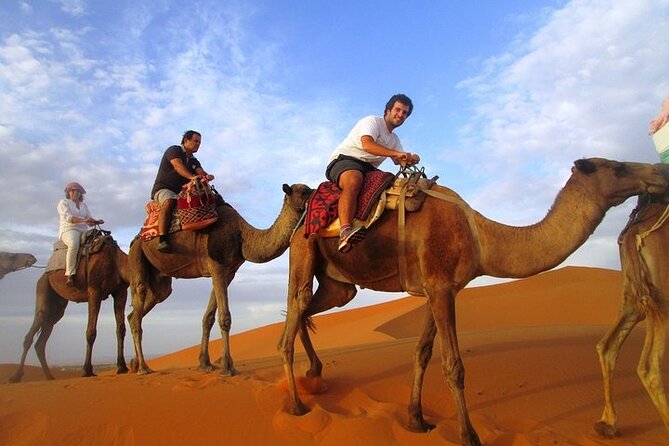
I especially like the private format, which lets your family or friends pause for photos, stretch a sightseeing day, or adjust the opening and closing points. The other strong point is the mix of comfort and tradition: five-star accommodation, air-conditioned transport, and one night in a nomad-style desert tent, with camel riding included.
The main consideration is the pace. You cover a huge part of Morocco, so several days involve long drives and many scheduled visits. At $4,548.23 per person, the value is strongest for a small group that wants high comfort and full planning, not for a solo visitor seeking a low-cost trip.
In This Review
- Key details that shape the experience
- From Casablanca’s mosque to the old movie bar
- Meknes, wine country, and the road to Fes
- Fes, with time for the labyrinth
- Cedar forests and the long approach to Merzouga
- Todra Gorge, the Dades Valley, and the kasbah route
- Two full looks at Marrakech
- Essaouira and El Jadida on the Atlantic
- What the $4,548 price really covers
- Who should book this Morocco tour?
- FAQ
- Is this a private tour?
- What accommodation is included?
- Is the camel ride included?
- Are entrance fees included?
- Are meals included?
- Can I cancel for a full refund?
Key details that shape the experience
- Casablanca to the Sahara and back to the Atlantic: The route covers Morocco’s biggest sights, from Hassan II Mosque to the dunes of Merzouga.
- One private vehicle for the full journey: You travel in air-conditioned comfort with a permanent guide rather than changing transport for each region.
- Luxury hotels plus one desert night: Breakfast is included each morning, along with a luxury nomad tent in the desert camp.
- Fes and Marrakech receive proper time: Each city has guided sightseeing, with extra free time in Marrakech on Day 9.
- The desert is more than a camel ride: You watch sunset from the dunes, drink tea on arrival, and can add quad-bike activities.
- Many admission fees remain separate: The listed entrance charges total about 78 euros per person, before meals, drinks, and optional activities.
From Casablanca’s mosque to the old movie bar
The tour opens at Casablanca Mohammed V International Airport, where a guide meets you and takes you into the city. The arrival day can be adjusted, which is useful if your flight lands late or you want to begin elsewhere.
Your first major sight is Hassan II Mosque, built beside the Atlantic. Non-Muslims can visit with a guided tour, making this one of the rare chances to see a working Moroccan mosque from inside. Allow two hours, and budget 13 euros for admission. The scale is the point, but your guide’s explanation of Muslim prayer and religious customs gives the visit more meaning than a quick photo stop.
Dinner at Rick’s Café is optional and requires advance booking. The restaurant recreates the mood of the film Casablanca with arches, balconies, brass lighting, plants, and a piano bar inside an old courtyard-style building near the medina walls. It is clearly a themed stop, so film fans will get the most from it. It is not included in the tour price, and you should reserve before arrival.
Casablanca itself is modern and busy, so this first day works best as a gentle introduction rather than a full city study. You get a famous building, a cinematic evening, and a chance to settle in before the road days begin.
More Casablanca trips worth a second look
- Private Tour of Casablanca with Hassan II Mosque Entry Ticket
★ 5.0 · 1,102 reviews - Private Guided Tour of Casablanca Including Mosque Entrance
★ 5.0 · 395 reviews - Casablanca: Private Guided Tour
★ 4.7 · 384 reviews
Meknes, wine country, and the road to Fes
Day 2 begins around Meknes, where the itinerary takes an unusual turn with a wine tasting at a farmhouse. Meknes is Morocco’s only controlled denomination of origin region for wine, and the local climate produces fuller, sweeter wines than many French examples. You can spend time at the farm, have lunch, sample wines, or enjoy a picnic.
This is a pleasant change from the usual palace-and-medina schedule. It also gives you a slower afternoon after the airport arrival and before the more intense sightseeing in Fes. Lunch is not included, so check the price before ordering.
In Meknes, you can visit Dar Jamai Museum, housed in a former palace with a mosque, hammam, and gardens. Its displays include painting, jewelry, pottery, and tapestry. Admission is listed at 1 euro. The tour also includes Bab Mansour, the grand gate opposite Place el Hedim, and the Mausoleum of Moulay Ismail.
Non-Muslims cannot enter the hall containing the sultan’s remains, but the courtyard and decorative details still make the mausoleum worthwhile. Dar Jamai and the mausoleum each take about an hour, while Bab Mansour needs only 20 minutes. After the sightseeing, you continue to Fes for a panoramic view and perhaps a café stop above the city.
This is a full day with several short visits. The advantage is variety. The tradeoff is that you may wish for more unhurried time in Meknes, especially if you enjoy architecture and local museums.
Fes, with time for the labyrinth
Fes receives one of the tour’s best sightseeing days. A private city guide leads you through the old medina for about five hours, covering palaces, the Jewish quarter, madrasas, traditions, and the city’s long role as a center of learning.
The medina is famous for its maze of more than 9,000 streets. That sounds impressive, but it also explains why a dedicated guide matters. Without help, you can easily spend your time finding your way instead of understanding what you are seeing. Wear shoes suited to uneven streets, and keep your day bag small.
Chouara Tannery is a quick but memorable stop. From an overlook, you see rows of colored dye pools and the workers handling leather much as generations did before them. The surrounding shops are aimed at visitors and prices can be high, so treat the tannery as a craft demonstration, not an obligation to buy leather.
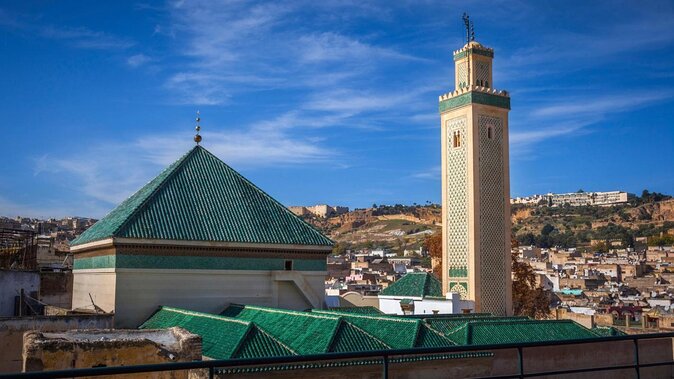
Medersa Attarine is one of the finest architectural stops in the medina. Its tilework, carved cedar, and careful proportions show why the building is often called a pearl of medieval Moorish design. Admission is listed at 2 euros.
You also see the Karaouine Mosque from outside. Non-Muslims cannot enter, but the open doors allow a limited view inward. Bou Inania Medersa, an old religious school and prayer site, adds another 2 euros to the admission list and takes about 40 minutes.
Fes is where the private guide arrangement matters most. Ask for time to stop, listen, and look upward at the carved plaster and wood. The schedule is packed, but the medina rewards patience more than speed.
Cedar forests and the long approach to Merzouga
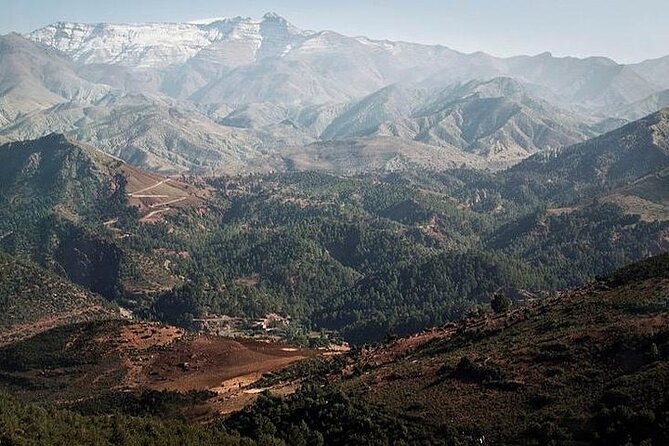
Day 4 shifts from cities to the Middle Atlas. The route passes through Ifrane and the cedar forests near Azrou, with mountain villages, springs, and waterfalls along the way. You may also visit a farm producing homemade cheese and organic honey.
I like this day because it breaks up the steady procession of monuments. The forest air and mountain roads offer a different view of Morocco, and the possibility of snow in the Atlas has been part of past Siroco itineraries. Still, the exact conditions depend on the season, and the schedule allows about five hours for the Ifrane area, not a full mountain trek.
The next day brings another long road day. You stop briefly in Midelt, located between the Middle and High Atlas, then continue through the Ziz Valley. The valley’s palms and fertile soil make a sharp contrast with the desert ahead.
Erfoud is known for fossils, including trilobites, and the area’s ancient seabed tells you that the Sahara was once covered by ocean. The listed stop is only 15 minutes, so this is more of a roadside introduction than a full fossil visit.
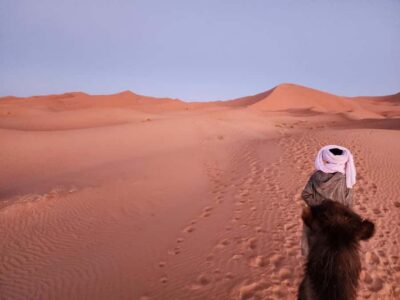
You reach Merzouga for tea before heading toward the dunes. The included camel ride lasts about an hour and takes you toward desert oases and the dunes. Sunset is the emotional high point: the sand changes color as the light drops, and the open horizon gives you one of the trip’s best photo opportunities.
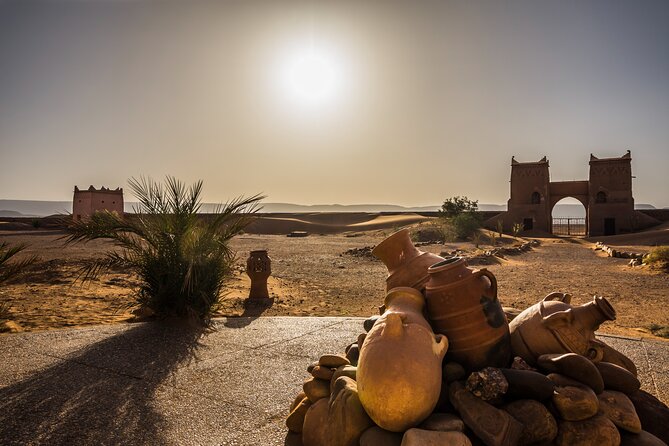
Quad bikes and other challenges are available for an additional adventure, but they are not included. Your night is in a luxury nomad tent, giving you a traditional setting with more comfort than basic camping. The temperature can fall sharply after dark, so bring a warm layer even if the afternoon feels hot.
A different kind of day out, same corner of Morocco:
- From Marrakech: Casablanca Tour with Hassan II Mosque Visit
★ 4.7 · 4,756 reviews - Casablanca: Hassan II Mosque Premium Tour with Entry Ticket
★ 4.5 · 2,971 reviews - Casablanca City Tour with Hassan II mosque ticket
★ 5.0 · 2,480 reviews - Casablanca: City Tour with Hassan II Mosque Entry Ticket
★ 4.6 · 1,137 reviews
Todra Gorge, the Dades Valley, and the kasbah route
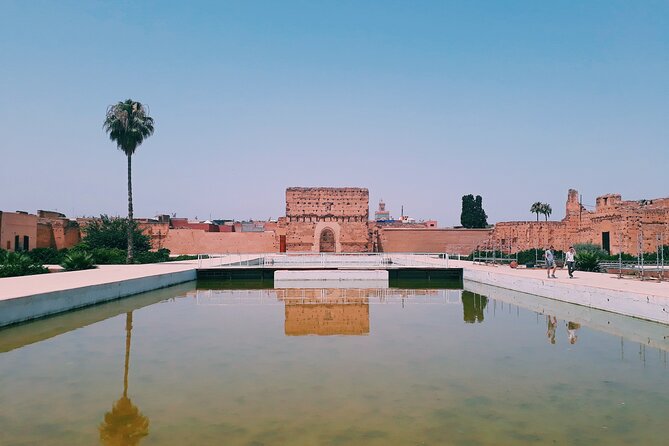
After the desert, Day 6 begins early. You can climb a dune as the morning light reaches the sand, then leave for Todra Gorge and the High Atlas. The gorge has rock walls reported at up to 600 meters high, with some sections only about 10 meters apart.
Two hours here gives you time to appreciate the scale and take a short walk. The road then passes through the Dades Valley, where green fields and birds replace the bare desert. Afterward, you continue toward Kalaat Mgouna, known as the City of Roses, and the palm oasis of Skoura.
Skoura is a good overnight setting because it slows the trip after the desert transfer. Its palms and traditional villages give you a chance to see how water supports settlement in an otherwise dry region. Rose products are common around Kalaat Mgouna, but shopping is optional.
Day 7 follows the Route of the Thousand Kasbahs to Ouarzazate and Ait Benhaddou. In Ouarzazate, you can see Kasbah Taourirt and the old walls. The town is linked with film production, but its value is not limited to movie sets. It is also a useful place to understand the old trade roads crossing the Atlas.
Ait Benhaddou is the day’s main prize. This fortified village once helped protect trade caravans moving between the Sahara and Marrakech. It remains inhabited and has appeared in films such as Gladiator and Game of Thrones. The two-hour visit is enough to cross the lanes, study the earthen buildings, and climb for a wide view.
You finish in Marrakech with dinner at Jemaa el-Fna. Food stalls serve tagine, couscous, sandwiches, tea, and other local dishes. This is a lively public square, but use normal care with prices and food choices. Dinner is one of the three included dinners, while extra drinks and meals are not.
Two full looks at Marrakech
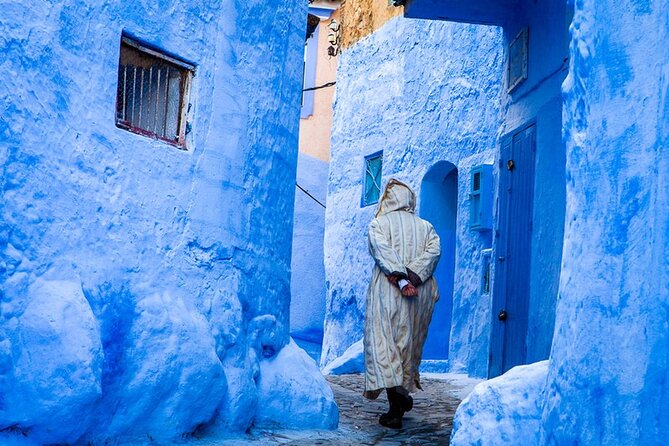
Day 8 is a guided introduction to Marrakech, often called the Red City. A city guide or historian takes you to the main sights, including the Bahia Palace, Ben Youssef Medersa, Koutoubia Mosque, Jardin Majorelle, and the Yves Saint Laurent Museum.
Ben Youssef Medersa is a former Islamic college with finely decorated interiors. Admission is listed at 6 euros. Bahia Palace, built in the 19th century, has courtyards, gardens, and rooms decorated by artisans from Fes. Its admission is 7 euros.
Koutoubia Mosque is free to view from outside and takes only about 20 minutes. Its minaret is one of Marrakech’s key reference points, useful when you are trying to orient yourself around the medina.
Jardin Majorelle takes about two hours and costs 15 euros. The botanical garden was designed by Jacques Majorelle and later acquired by Yves Saint Laurent and Pierre Bergé. The nearby Yves Saint Laurent Museum costs 13 euros and takes about 40 minutes. These are popular, tightly managed attractions, so confirm the day’s entry arrangements with your guide.
Day 9 gives you more control. You can arrange a hot-air balloon ride over Marrakech and its palm grove, but it requires advance booking and is not included. Otherwise, use the day to explore at a slower speed.
The Saadian Tombs cost 7 euros and show the burial place of about 60 members of the Saadian dynasty. Menara Gardens are free and offer an easier, quieter contrast to the medina. The Almoravid Koubba, an unusual 12th-century building with a former water reservoir, costs 6 euros.
Dar El Bacha, now the Museum of Confluences, costs 6 euros. Its café is known for coffees from around the world, making it a good pause between monuments. The strength of this second Marrakech day is flexibility, though the itinerary still lists several stops. You should agree with your guide which ones matter most to you.
Essaouira and El Jadida on the Atlantic
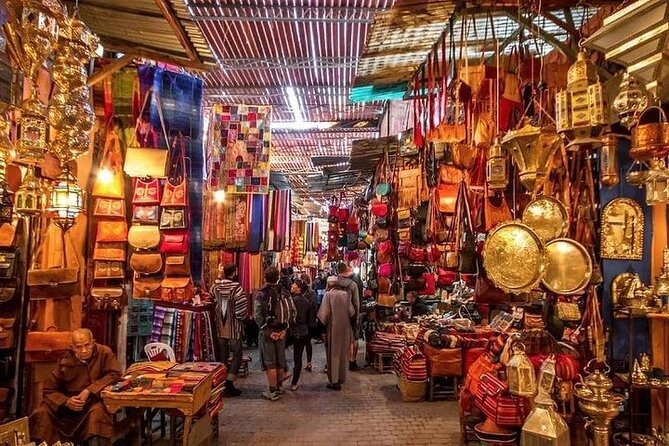
Day 10 heads to Essaouira, an artistic port city with a salty sea breeze, fresh fish, and argan oil. The medina, harbor, and coastal setting feel very different from Marrakech, and the city’s connection with musicians and artists adds a bohemian note without taking away from its working-port character.
The six-hour visit is enough for a substantial look, but it is also a long transfer day. Fresh fish is a natural choice for lunch, though lunch is not included. Argan oil is used in cooking and comes from the region, so it is worth asking how a product is intended to be used before buying a bottle.
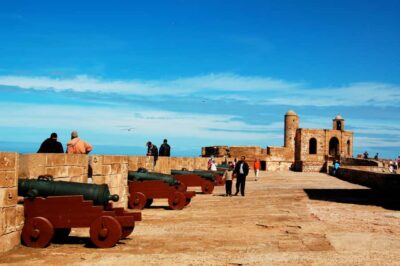
You have a relaxed morning on the beach before continuing to El Jadida on Day 11. This former Portuguese port is a UNESCO World Heritage site, best known for its Manueline cistern built in 1514. You can also see the Chapel of Saint Sebastian and the restored facade of Our Lady of the Assumption Church.
El Jadida is a fitting final stop because it links Morocco’s Atlantic coast with its European colonial past. The six-hour allocation gives you room for a calmer day, but the final road back to Casablanca means you should keep your departure plans in view.
What the $4,548 price really covers
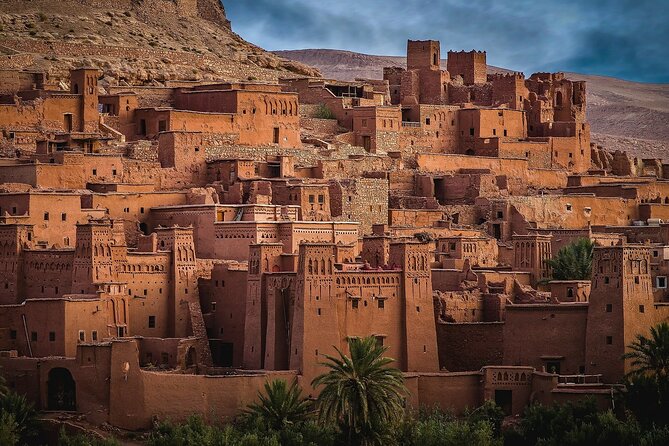
The price is $4,548.23 per person. It includes 11 breakfasts, three dinners, airport pickup and drop-off, private air-conditioned transport, a permanent guide, a camel ride, five-star accommodation, and the luxury desert camp.
That is a substantial fare, but the comparison is not simply with a budget hotel and a rental car. You are paying for a private vehicle, route planning, airport transfers, guided city visits, and the ability to travel only with your own group. For a family or group of friends, the cost can make more sense than booking separate transfers and guides.
You still need to budget for lunches, drinks, snacks, three dinners beyond the included meals, flights, and admissions. The listed entrance charges add up to about 78 euros per person if you visit every paid site named in the plan. Add extra money for Rick’s Café, quad bikes, a hot-air balloon ride, and shopping.
The accommodations are described as five-star, but individual hotel names are not provided. Ask for the full hotel list before paying if location, pool facilities, room style, or accessibility matter to you.
Who should book this Morocco tour?
Book it if you want Morocco’s major regions in one organized trip and value having the same private transport and guide throughout. It suits couples, families, and friend groups who prefer comfort, easy airport transfers, and a schedule that can be adjusted to their interests.
I would be cautious if you dislike long drives, prefer to stay several nights in each place, or want every meal and attraction included in one price. You should also ask how much freedom you will have at shopping stops and which local guides will lead the medina visits.
Siroco’s past touring team has included guides and drivers such as Radouan, Momo, Abdel, Hassan, Idir, Rachid, and Aissa, with several language options represented in the touring staff. Your assigned team can differ, so request names and languages in advance. The company permits free cancellation up to 24 hours before the start time, subject to the stated weather and minimum-group conditions.
FAQ
Is this a private tour?
Yes. Only your own group participates, and the itinerary is operated with private transport and a permanent guide.
What accommodation is included?
The package includes five-star accommodation with breakfast and one night in a luxury nomad tent at a desert camp.
Is the camel ride included?
Yes. A camel ride in the Merzouga Desert is included. The listed ride lasts about one hour.
Are entrance fees included?
No. Entrance fees are separate. Named charges include 13 euros for Hassan II Mosque, 15 euros for Jardin Majorelle, 13 euros for the Yves Saint Laurent Museum, and smaller fees for several museums, palaces, tombs, and madrasas.
Are meals included?
Eleven breakfasts and three dinners are included. Lunches, drinks, snacks, and other dinners are not included.
Can I cancel for a full refund?
You can cancel at least 24 hours before the local start time for a full refund. Cancellations or changes made less than 24 hours before the start time are not accepted for a refund.
Recently reviewed around Casablanca
- Casablanca Airport Transfer from hotel in Casablanca★ 5.0 · 18 reviews
- Amazing airport pickup/ drop off in Casablanca/ safe&easy★ 5.0 · 218 reviews
- Your Private Casablanca Transfer★ 5.0 · 52 reviews
- Exclusive tour of Casablanca with access to the Hassan II Mosque★ 5.0 · 205 reviews
- Chefchaouen the Blue City Full-Day Trip from Casablanca★ 4.5 · 79 reviews
- Sunset Camel Ride in the Palm Grove Of Marrakech★ 5.0 · 34 reviews
- Private full day trip to chefchaouen from Casablanca with lunch★ 5.0 · 20 reviews
- 14 Days From Casablanca- Morocco Grand Tour★ 5.0 · 24 reviews
VIP, compared.
Majestic Desert: 3-Day Luxury Journey from Marrakech to Fes
Read our review →
2-Day Merzouga Desert Trip w/Luxury Tent & Dinner
Read our review →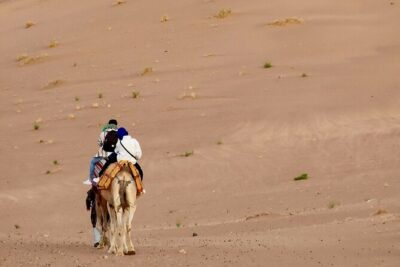
Experience Luxury in Zagora: 2-Day Desert Adventure
Read our review →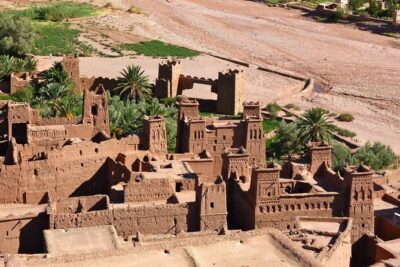
3-Day Tour from Marrakech to Merzouga Luxury Camp with Camel
Read our review →
Browse the lists this tour appears in