
Reviewed · SAHARA DESERT TOURS
10-days Private tour in Morocco: Sahara Desert + Imperial Cities
Morocco gives you a remarkable amount in 10 days: Atlantic cities, Roman ruins, blue-painted lanes, cedar forests, Berber villages, desert dunes, old caravan towns, and Marrakech’s famous square. The most memorable stretch is the passage from Fez across the Atlas region to Merzouga, where you ride a camel into the dunes and sleep under desert skies.
I like the private format, which lets your group adjust the pace, and I like the mix of guided sights and open time. Hassan is named as a guide in one detailed account, with Achmed handling the driving, and the tour is designed to pair city specialists with long scenic drives. You also get a useful level of choice at mealtimes, since only three dinners are included.
The main consideration is the pace. You cover a great deal of Morocco, and several days involve long road journeys. Entrance fees are not included, and the advertised price of $2,954.46 per person is a serious commitment, though it covers private transport, nine breakfasts, selected dinners, city guides, hotels or riads, a desert camp, and a camel ride.
In This Review
- Key points to know before booking
- Casablanca to Rabat, Morocco’s grand opening
- Rabat’s monuments and the blue lanes of Chefchaouen
- Volubilis, Meknes, and the first look at Fez
- Five hours inside the Fez medina
- Across the cedar forests, Atlas towns, and Ziz Valley
- Merzouga, Rissani, and a night under the stars
- Todra Gorge and the Dades Valley
- The Thousand Kasbahs route and Ait Benhaddou
- Six hours among Marrakech’s palaces and gardens
- What the $2,954.46 price really covers
- Who should book this Morocco route?
- Should you book it?
- FAQ
- How long is the private Morocco tour?
- What cities and regions does the tour visit?
- Is transportation included?
- Are hotels and desert accommodation included?
- Is the camel ride included?
- Are meals included?
- Is this a group tour?
- Can I cancel for a full refund?
Key points to know before booking
- Sleep in the Sahara: Ride a camel through the Merzouga dunes, watch sunset from the sand, and spend the night in a luxury desert tent.
- See Morocco’s major city centers: The route includes Casablanca, Rabat, Chefchaouen, Meknes, Fez, and Marrakech.
- Travel privately: Your own group travels in an air-conditioned vehicle, with the pace and some arrangements adjustable.
- Cross several regions: The route moves from the Atlantic coast through Roman ruins, the Rif and Atlas mountains, the Ziz Valley, desert towns, and the Dades region.
- Balance included and optional meals: Breakfast is covered each morning, while three dinners are included and many other meals remain your choice.
- Expect extra admission costs: Museums and monuments, including several major Marrakech sights, are not included in the tour price.
Casablanca to Rabat, Morocco’s grand opening
Your first day begins with airport pickup in Casablanca. The schedule is flexible enough that the starting point, ending point, and first-day arrangements can be adjusted, which is useful if your flights do not fit a standard touring pattern.
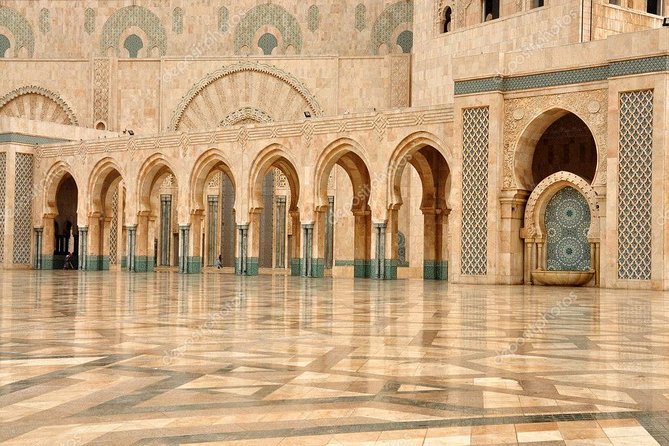
The first major stop is Hassan II Mosque, one of Casablanca’s defining sights. It is known for its scale and for being one of the few mosques in Morocco open to non-Muslim visitors. Your guide explains Muslim customs and religious practice during the visit, giving the building more meaning than a quick photo stop.
Admission is not included, so check the current fee when you book. The planned visit lasts about an hour, followed by the drive to Rabat. If Casablanca’s film history interests you, you can also consider Rick’s Café, a restaurant and piano bar built to recall the setting made famous by the classic film. It is a recreation rather than the original movie location, but the old courtyard-style building, arches, balconies, and decorative details give it a clear sense of place.
Rabat provides a calmer first night than Casablanca. Its broad avenues, green spaces, domes, and minarets set up the historical side of the trip without requiring you to tackle a large medina immediately.
More Sahara Desert Tours in Casablanca
- Morocco Tour from Casablanca to Sahara and Marrakech 5 days
★ 4.5 · 171 reviews - 7-days: Casablanca to Chefchaouen then Fes and Sahara Desert – Camel Trekking
★ 5.0 · 53 reviews - 8-Day Morocco Adventure: Imperial Cities & Sahara Desert Trek
★ 5.0 · 37 reviews
Rabat’s monuments and the blue lanes of Chefchaouen
Day two starts with Rabat’s Hassan Tower and the Mausoleum of Mohammed V. The unfinished tower is tied to a grand mosque project, while the nearby mausoleum is one of the city’s most polished monuments. Guards on horseback at the entrance add ceremony, though your visit here is fairly short at about 30 minutes per stop.
The Kasbah des Oudaias offers a different mood. Its white and blue homes, old defensive walls, garden, orange trees, and flowers make it a pleasant place to walk. This is one of the tour’s better examples of allowing architecture and daily life to share the same stop. You get fortifications, views, and residential streets rather than only formal monuments.
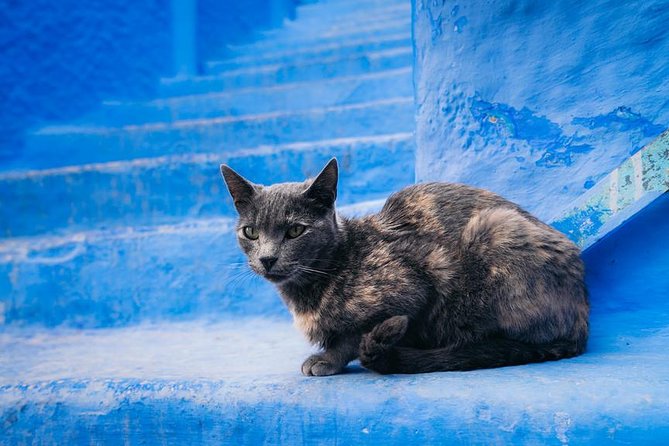
The afternoon drive heads toward Chefchaouen, with about six hours assigned to exploring the blue city. The painted lanes are orderly and easy to photograph, but Chefchaouen is more than a color scheme. It sits between the Rif and Middle Atlas mountains and is known for handicrafts and goat’s cheese.
You should use this time to walk without trying to rush through every lane. The medina leads toward Hammam Square, a gathering point with the city’s main mosque nearby. The schedule gives you a meaningful amount of time here, although the drive from Rabat makes this a full day.
Volubilis, Meknes, and the first look at Fez
The journey to Fez includes two valuable historical stops. Volubilis is one of the best-preserved Roman sites in North Africa, with ruins that show how Rome governed this part of the region outside Egypt. The visit is planned for about two hours, and admission is extra.
The ruins are worth seeing for their scale and mosaics, but bring sensible footwear. The site is open and uneven, and two hours can pass quickly if you stop to study the remains. Your guide can help connect the stones to the wider story of Roman North Africa.
Meknes follows, with another two-hour visit. Sultan Moulay Ismail wanted to make this city the finest in North Africa, earning it the nickname Versailles of the Maghreb. The tour focuses on its main sights and the stories tied to the city’s rulers.
By late afternoon, you reach Fez for a short panoramic introduction. This is a smart preview before the more detailed walking tour on day four. For dinner, the Clock Café is suggested as an option, with Moroccan specialties and unusual choices such as a camel hamburger. It also hosts cultural events, including storytelling, film nights, and Arabic calligraphy workshops.
That recommendation fits the tour’s general approach: you get some direction, but not every meal is dictated. If you want to eat at a different restaurant, you have the freedom to do so.
Five hours inside the Fez medina
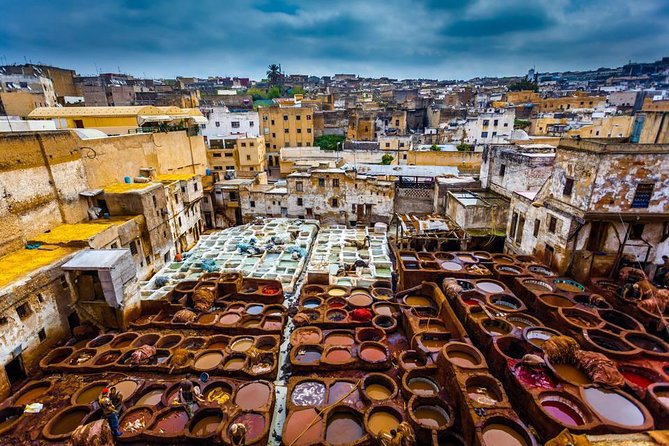
Fez deserves its own long morning and afternoon. The old medina is described as an enchanted labyrinth, and the comparison makes sense once you enter its dense network of lanes. More than 9,000 streets are listed, so a dedicated city guide matters here.
Your Fez guide leads you through key sites, traditions, stories, and history. The planned visit can include palaces, the Jewish quarter, a madrassa, and a Quranic school. Fez reached its peak in the 13th century and became a major center of learning, including one of the world’s oldest universities.
The five-hour visit is one of the strongest parts of the trip because you are not trying to squeeze the city into a quick drive-by. You have time to notice carved details, tiled courtyards, workshops, and the contrast between bright open spaces and narrow shaded passages.
Still, a medina walk can be tiring. Wear shoes suited to uneven streets, and keep your expectations practical. The point is not to see every lane. It is to let a local guide help you make sense of a city that can feel confusing at first.
More Casablanca trips worth a second look
- Private Tour of Casablanca with Hassan II Mosque Entry Ticket
★ 5.0 · 1,102 reviews - Private Guided Tour of Casablanca Including Mosque Entrance
★ 5.0 · 395 reviews - Casablanca: Private Guided Tour
★ 4.7 · 384 reviews - Private Rabat Day Trip from Casablanca
★ 5.0 · 382 reviews
Across the cedar forests, Atlas towns, and Ziz Valley
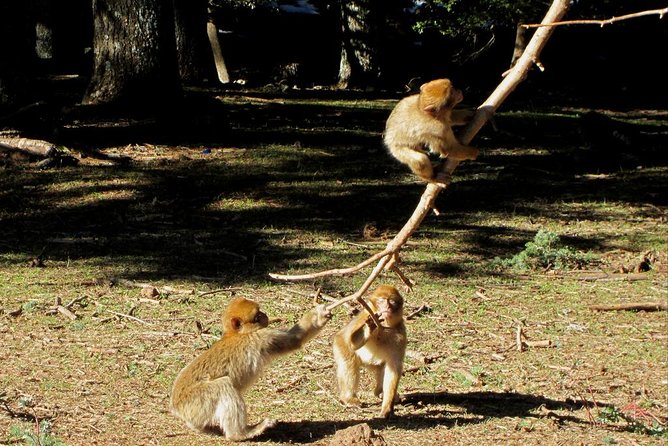
Day five changes the character of the trip. You leave the cities and cross the cedar forests around Azrou and Ifrane, where the air and scenery feel cooler and more wooded. The route may offer chances to see monkeys and other local animals, though wildlife sightings are not guaranteed.
A stop in Midelt breaks up the drive through the High and Middle Atlas region. Later, the road reaches the Ziz Valley, a fertile strip known for its date palms. You can try dates from the area, which are described as unusually large and flavorful.
The route also passes through Erfoud, where fossil excavations reveal that the Sahara was once the floor of an ancient ocean. A fossil workshop may be available, allowing you to find and work with fossils that can eventually become your own. This is an interesting option for families and anyone who prefers a hands-on stop to another viewpoint.
The day ends in Merzouga, with Moroccan tea and a night at a hotel overlooking the dunes. It is a useful transition before the full desert program the following day. Keep in mind that this is a long driving day. The reward is the change in scenery, but you should not expect a leisurely resort-style schedule.
Merzouga, Rissani, and a night under the stars
The Sahara day combines culture, markets, music, and outdoor activity. Merzouga can offer different choices, including extreme sports, Moroccan cooking workshops, and contact with nomadic communities. The exact mix may vary, so ask your operator what is planned for your departure.
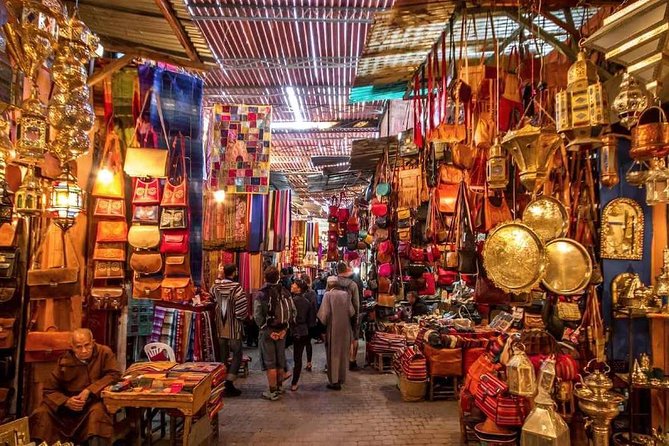
Rissani is a particularly worthwhile stop. It was once a major caravan trading post where gold, spices, fabrics, weapons, and enslaved people changed hands. Today, its market and souk offer a more local setting than the polished shopping areas found in major tourist cities. The donkey market is part of the scene, so this stop may feel rougher and less staged than other parts of the tour.
Khamlia, described as a village associated with the Gnawa people, brings music and cultural exchange into the day. The Gnawa have roots in communities brought from Sudan as slaves, and their traditions remain an important part of Moroccan music. You can hear their music and learn about life in the Sahara.
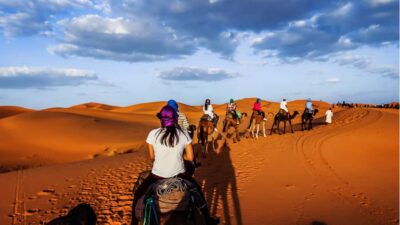
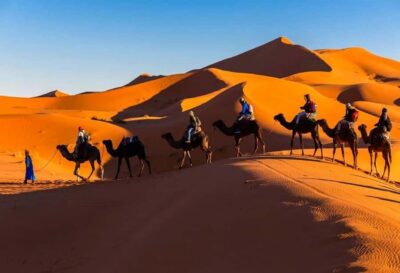
Back in the Merzouga dunes, the desert experience begins in earnest. You can choose quad-bike challenges or other activities, then take a camel ride of about an hour toward the oases and dunes. The late afternoon light is the best time for photographs, and the schedule includes watching sunset from the top of a dune.
The night is spent at a luxury desert camp under the stars. Desert camps vary, so it is sensible to confirm what luxury tent facilities are provided. Even without adding extra activities, the sunset, camel ride, and quiet night give this section real value.
Todra Gorge and the Dades Valley
After sunrise, you can climb a dune while the desert wakes. Early light and cold morning air make this one of the few times you will want an alarm clock on this trip.
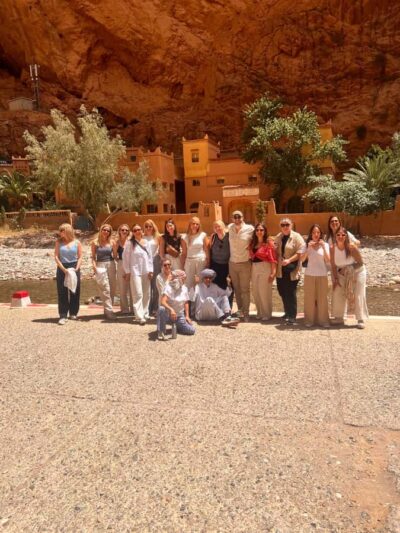
The road then heads toward Todra Gorge and the Dades Valley. Todra’s cliffs rise as high as 600 meters, with the narrowest section only about 10 meters across. A two-hour visit gives you time to walk into the gorge and take in the rock walls, though it is another day of moving from one base to the next.
The night is spent in the Dades Valley near Boumalne Dades. After the desert’s open silence, the green valley and bird sounds provide a sharp change. This contrast is one of the tour’s strengths: Morocco does not settle into one visual style for long.
The Thousand Kasbahs route and Ait Benhaddou
Day eight follows the Route of the Thousand Kasbahs toward Kalaat Mgouna, also called the City of Roses. You pass traditional villages such as Skoura and El Kelaa des M’Gouna, with old kasbahs serving as reminders of caravan travel and local defense.
Ouarzazate brings a closer look at Kasbah Taourirt, its old walls, and the palace of the Pasha. The town is linked to film production, but its older role on trade routes is just as important. This two-hour stop helps you understand why the region became a meeting point between the desert and Marrakech.
Ait Benhaddou is the day’s major sight. The UNESCO-listed fortified village was built along the caravan route between the Sahara and Marrakech and is still inhabited. Its earthen buildings have also appeared in films such as Gladiator and Game of Thrones.
Allow two hours here. You will want time to walk through the lanes, study the defensive form, and look back at the surrounding scenery. Some parts involve walking uphill and over uneven ground, so comfortable shoes matter.
The day ends in Marrakech at Jamaa el Fna. You can eat from the food stalls, choosing among tagines, couscous, sandwiches, and tea. Three dinners are included across the tour, but this meal is presented as your own choice, letting you sample street food at Moroccan prices.
Six hours among Marrakech’s palaces and gardens
Marrakech receives a full guided day, supported by a city guide and historian dedicated to the city. That is helpful because the main sights are spread across a large, busy center, and the city can otherwise become a blur of souks, monuments, and traffic.
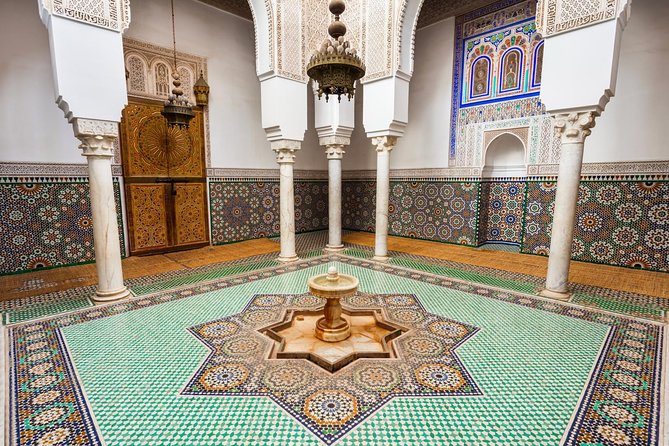
The Bahia Palace is a highlight for tilework, carved wood, courtyards, gardens, and rooms made by artisans from Fez. Admission is not included, so budget for this and the other paid sights.
Ben Youssef Medersa is another major stop. The former Islamic school is now a museum, known for its decorated interior and careful architecture. The visit is listed at about an hour.
Koutoubia Mosque is a shorter stop, with 20 minutes set aside to see Marrakech’s most recognizable monument. Since non-Muslims cannot enter the mosque, this is mainly an exterior visit and photo opportunity. Its 12th-century design influenced later monuments, including Rabat’s Hassan Tower.
Majorelle Garden offers a change from the stone-heavy medina. The botanical garden was designed by Jacques Majorelle and later became associated with Yves Saint-Laurent and Pierre Bergé. You have about two hours here, including time for the plants, color, and paths.
The Yves Saint Laurent Museum takes about 40 minutes. Its permanent and temporary displays focus on the designer, and the building combines modern lines with Moroccan touches. You should plan for admission fees at both the garden and museum.
What the $2,954.46 price really covers
At $2,954.46 per person, this is not a budget Morocco trip. The value depends heavily on the size of your private group. The price includes an air-conditioned vehicle, private transport, 4-star hotels or riads, a luxury desert tent, nine breakfasts, three dinners, and the camel ride.
That is a substantial package for a 10-day route covering much of the country. You are also paying for the convenience of one connected itinerary, rather than arranging separate drivers, hotels, desert transfers, and city guides.
The price does not include flights, museum and monument entrance fees, or most lunches and dinners. Those costs can add up, especially in Marrakech, Fez, Volubilis, and Casablanca. Ask for the final list of included admissions and the exact hotels or riads before paying.
The private format is the biggest value question. A couple may find the cost high, while a family or small group can spread the private vehicle and guiding cost across several people. The tour is booked, on average, 75 days ahead, so popular dates may require planning.
Who should book this Morocco route?
I would choose this trip if you want Morocco’s major sights but do not want to organize a complicated series of transfers. It suits first-time visitors, families, couples, and small groups who value a private vehicle and a guide who can adjust the pace.
You should also enjoy road travel. The route is broad, and the long drives are not a minor detail. If you prefer to spend several nights in one city, a shorter regional tour would be more comfortable.
The plan works especially well for people who want both famous stops and less polished places, such as Rissani’s market, Khamlia, the Ziz Valley, and the villages along the kasbah route. The balance of guided time and free meals also gives you some room to make the trip your own.
Confirmation is provided at booking, pickup is offered, and most people can participate. Free cancellation is available until 24 hours before the start time. Poor weather or failure to meet the minimum number of participants can lead to a new date or a full refund.
Should you book it?
Book this tour if your priority is seeing a wide slice of Morocco in one private trip, with the Sahara at its center. The strongest elements are the dedicated Fez and Marrakech guiding, the desert camp, the camel ride, and the steady progression from imperial cities to mountain roads and caravan towns.
Think twice if the price stretches your budget, if you dislike long drives, or if you want every meal and admission included. Before booking, confirm the accommodation names, the exact desert camp facilities, the guide and driver assigned to your dates, and which optional desert activities cost extra.
For a small group that wants convenience, cultural context, and a full national route, this is a well-balanced choice. The itinerary is busy, but it gives you a clear sense of Morocco’s variety without making you manage every detail yourself.
FAQ
How long is the private Morocco tour?
The tour lasts approximately 10 days, beginning in Casablanca and ending with airport transportation from Marrakech.
What cities and regions does the tour visit?
The route includes Casablanca, Rabat, Chefchaouen, Volubilis, Meknes, Fez, Azrou, Ifrane, Midelt, the Ziz Valley, Erfoud, Merzouga, Rissani, Khamlia, Todra Gorge, Boumalne Dades, Ouarzazate, Ait Benhaddou, and Marrakech.
Is transportation included?
Yes. The tour includes private transportation in an air-conditioned vehicle.
Are hotels and desert accommodation included?
Yes. Accommodation includes 4-star hotels or riads and a luxury tent at the desert camp.
Is the camel ride included?
Yes. A camel ride in the desert is included. The scheduled ride lasts about one hour.
Are meals included?
Nine breakfasts and three dinners are included. Flights, most other meals, and entrance fees for museums and monuments are not included.
Is this a group tour?
No. It is a private activity for your own group.
Can I cancel for a full refund?
Yes, if you cancel at least 24 hours before the experience start time. Cancellations or changes made less than 24 hours in advance are not accepted for a refund.
Recently reviewed around Casablanca
- Casablanca Airport Transfer from hotel in Casablanca★ 5.0 · 18 reviews
- Amazing airport pickup/ drop off in Casablanca/ safe&easy★ 5.0 · 218 reviews
- Your Private Casablanca Transfer★ 5.0 · 52 reviews
- Chefchaouen the Blue City Full-Day Trip from Casablanca★ 4.5 · 79 reviews
- Sunset Camel Ride in the Palm Grove Of Marrakech★ 5.0 · 34 reviews
- Exclusive tour of Casablanca with access to the Hassan II Mosque★ 5.0 · 205 reviews
- Private full day trip to chefchaouen from Casablanca with lunch★ 5.0 · 20 reviews
- 14 Days From Casablanca- Morocco Grand Tour★ 5.0 · 24 reviews
Sahara Desert Tours, compared.
3-Day Marrakech to Fes Sahara Desert Tour via Merzouga
Read our review →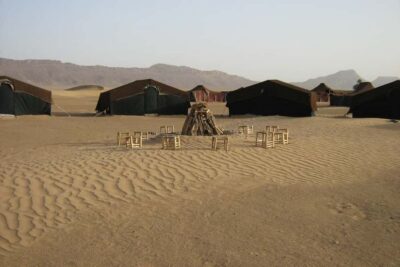
Sahara Desert 2-Day Tour with Merzouga Camp Stay
Read our review →
From Fes to Marrakech: 3-Day Sahara Desert Discovery Tour
Read our review →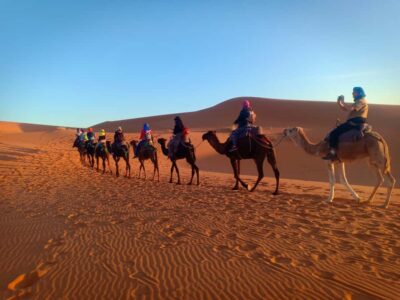
Browse the lists this tour appears in