
Reviewed · MEDINA & SOUK WALKS
Marrakech: Babouch Making Workshop in the Medina
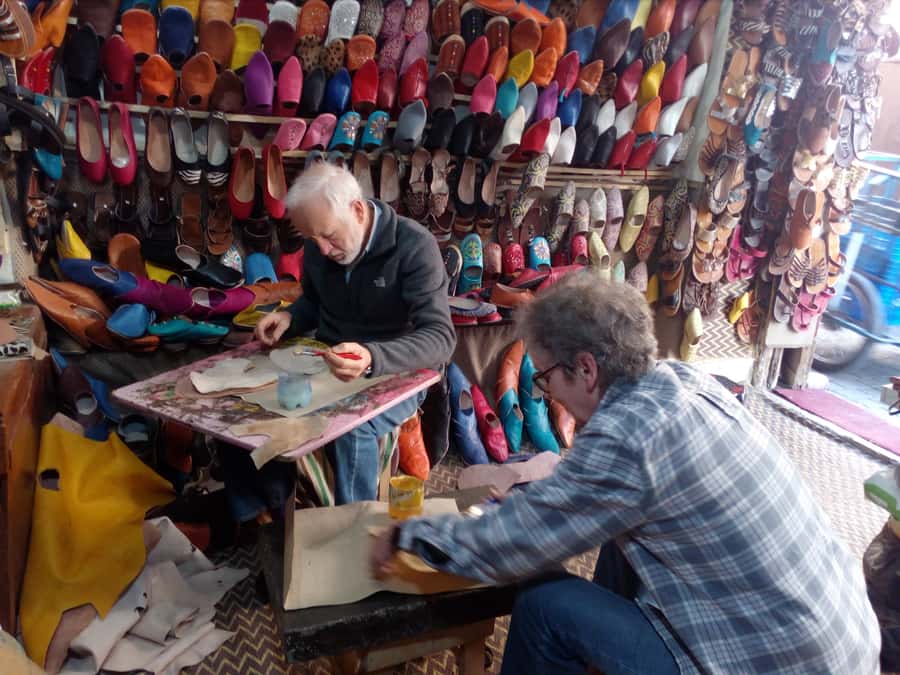
Making a pair of Moroccan babouch slippers is far more interesting than simply haggling for one in a souk. At Youssef’s workshop, you choose leather, cut templates, glue, hammer, stitch, and finish a pair sized for you. The best parts are the hands-on craft and the chance to talk with a local artisan about a family trade.
I also like that this is a private-group experience, so the pace can suit your party rather than a large class. Tea, homemade Moroccan pastries, water, and emailed photographs add warmth and value. The main caution is the meeting point: several visitors have found the directions near the post office and Rue Bani Marine unclear, so confirm the exact spot before setting out.
In This Review
- Key points at a glance
- Why making babouch is better than another souk purchase
- Meeting at Jamaa el Fna, then following the medina lanes
- Choosing leather, color, and style
- Cutting, gluing, and shaping your own slippers
- Mint tea and Moroccan pastries in the middle of the work
- Finishing the pair and taking home a useful souvenir
- What the $81 price really covers
- Who will enjoy this workshop most
- Timing, languages, and booking flexibility
- Small practical tips for a smoother class
- Should you book the Marrakech babouch workshop?
- FAQ
- How long does the babouch workshop last?
- What is included in the price?
- Where do I meet the guide?
- Who teaches the workshop?
- Which languages are available?
- Is the workshop private?
- Can I choose the color and style of my slippers?
- Can I cancel the booking?
Key points at a glance
- Make rather than merely buy: Work through the main stages of creating traditional leather babouch slippers.
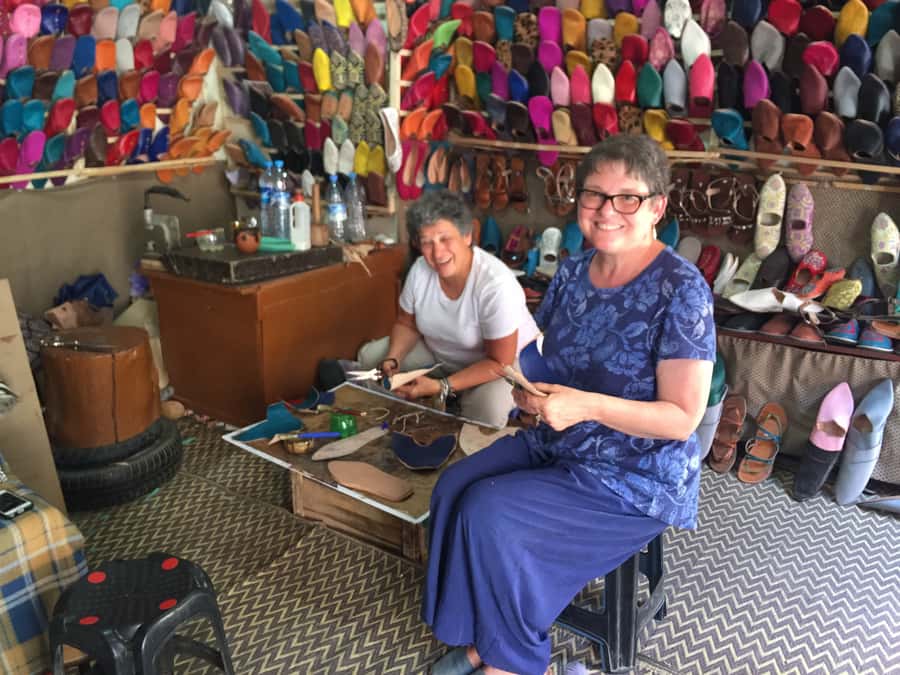
- Learn from Youssef: A local craftsman guides you through leather selection, cutting, assembly, stitching, and finishing.
- Private four-hour format: Your group gets direct help, with a translator or guide available in English, French, or Arabic.
- A calm break in the medina: Mint tea, water, and homemade pastries give the workshop an easy rhythm.
- Take home a fitted souvenir: Each participant leaves with a pair of babouch, plus photographs sent by email.
- Allow time to find the meeting point: Meet in front of the post office at Jamaa el Fna, but clarify the precise entrance beforehand.
Why making babouch is better than another souk purchase
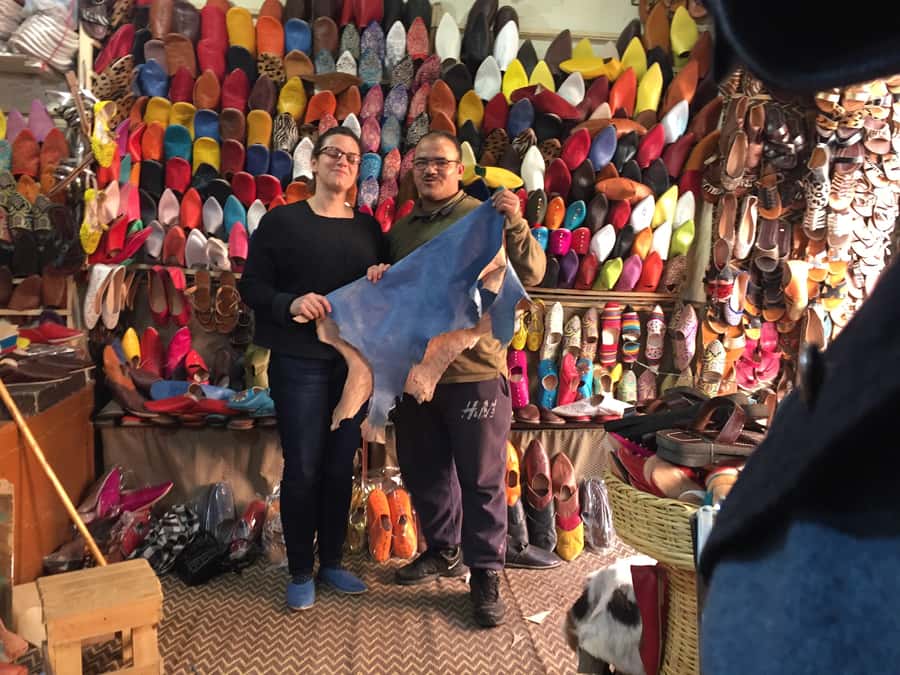
Marrakech gives you no shortage of chances to buy slippers. They hang in rows from stalls, compete for your attention, and come in every color. This workshop gives you something a shop cannot: a working understanding of the time and handwork behind the finished item.
Babouch are traditional Moroccan slippers, usually made from leather with a soft, flexible shape. The workshop turns that familiar souvenir into a small craft project. You do not simply watch Youssef work. You help create your own pair, with his direction at each stage.
That distinction matters. Cutting a simple-looking slipper correctly takes care. The pieces must match, the leather must sit properly, and the final shape needs adjustment for your feet. By the end, you will look at the slippers in the souks with a more realistic sense of the labor involved.
This is not a polished show built around a quick photo opportunity. It is a practical session in a working leather studio, with tools and raw materials supplied. You get a useful souvenir and a closer look at a local trade without committing to a full-day class.
More Medina Walks in Marrakech
- Marrakech: Bahia Palace, Saadian Tombs, Souk and Medina Tour
★ 4.7 · 4,974 reviews - Marrakech: Colorful Medina Souks Guided Walking Tour
★ 4.7 · 2,470 reviews - Marrakech: Saadian Tombs & Bahia Palace, Medina Guided Tour
★ 4.6 · 1,989 reviews
Meeting at Jamaa el Fna, then following the medina lanes
The stated meeting point is in front of the post office at Jamaa el Fna Square. This is a sensible central location, but the wording has caused confusion. The reference to Rue Bani Marine can lead you to look for the wrong entrance or sign.
I suggest arriving with the provider’s contact number ready and confirming exactly where the guide will wait. Guides such as Khaoula, Ouiam, and Yasmine have helped people through the first part of the route, including translation and navigation. That assistance is useful because the workshop lies farther into the souks, away from the easy-to-spot activity around the square.
The walk through the medina is part of the setting, but it is not a formal sightseeing tour. You are being led to a workshop, not taken through a list of monuments. Still, the route helps you move from the tourist-facing edge of the square into the narrower working lanes where shops and artisans carry on their daily business.
One visitor described the approach as a long walk into the souks, while another had a guide solve a meeting mix-up with a bike pickup. Those are reminders to keep your phone available and allow a little breathing room before the start time.
Choosing leather, color, and style
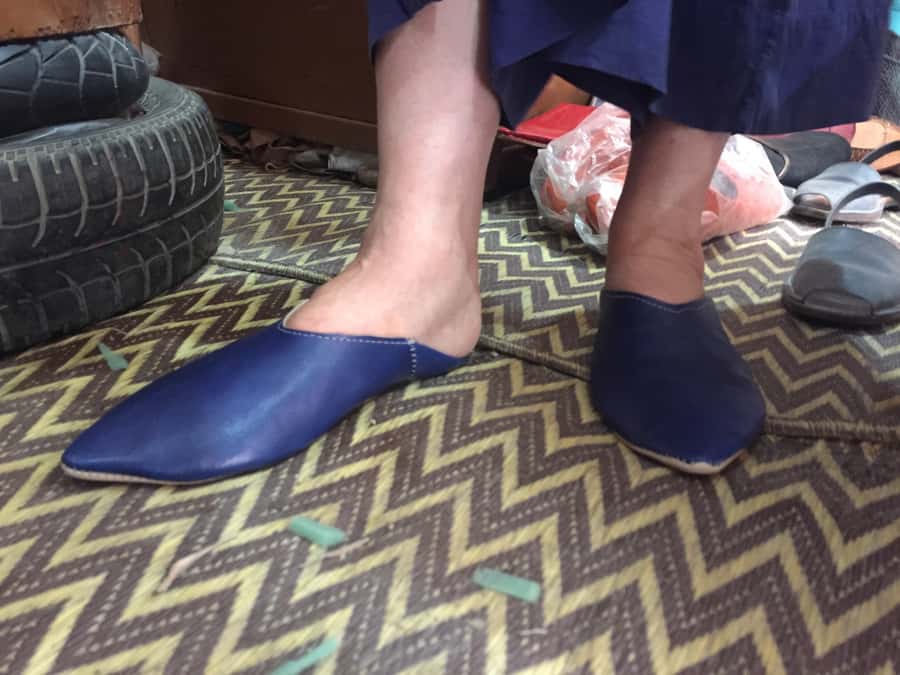
Once inside, you begin with the materials. You learn about different kinds of leather and how they are prepared for Moroccan leather goods. You can choose the color and style of your babouch, then work from templates supplied by the workshop.
This choice gives the activity a personal edge. Your finished slippers are not a generic pair pulled from a shelf. They reflect the color and design you selected, and the size can be adjusted to your feet. One particularly useful detail is that the artisans can make small fitting changes, including adjustments for very small feet.
The guide helps with translation and keeps the process moving, while Youssef or another artisan explains the work. The languages listed are English, French, and Arabic. Youssef has also been described as speaking good English and French, though the guide remains helpful when a technical explanation needs translating.
Do not expect to master Moroccan shoemaking in one sitting. You will be guided through a simplified version of the craft, with the artisan handling or correcting parts that require more experience. That is not a flaw. It lets you participate without turning a holiday activity into a test of hand skills.
Cutting, gluing, and shaping your own slippers
The practical work begins with drawing or tracing the patterns onto leather. You then cut the pieces, glue them, and use simple tools such as a hammer. These steps sound basic, but they make you pay attention to the shape and placement of every piece.
The pace is one of the strongest features. You are not rushed from one station to the next. The class has been described as calm and relaxing, even in the busy medina outside. During pauses in the leatherwork, you can chat, watch the movement around the studio, and ask questions about the process.
The artisan’s speed becomes clear when the stitching and finishing begin. Hand stitching can be surprisingly quick when done by someone who has practiced the same motion for years. You get a useful contrast between your careful beginner’s work and the craftsman’s confident movements.
The guide is not just a translator. Guides have helped with instructions, general assistance, and finding the way through the souks. That makes the activity easier for visitors who do not speak French or Arabic, and it gives you someone to ask when the craft explanation and the medina surroundings compete for your attention.
More Marrakech trips worth a second look
- Marrakech: Moroccan Cooking Class with Pickup
★ 4.6 · 1,862 reviews - Marrakech: Traditional Moroccan Cooking Class & Market Visit
★ 4.8 · 1,861 reviews - Marrakesh: Moroccan Dishes Cooking Class with a Local Chef
★ 5.0 · 1,615 reviews - Moroccan Cooking Class & Marrakech Market Visit with Chef Khmisa
★ 5.0 · 1,504 reviews
Mint tea and Moroccan pastries in the middle of the work
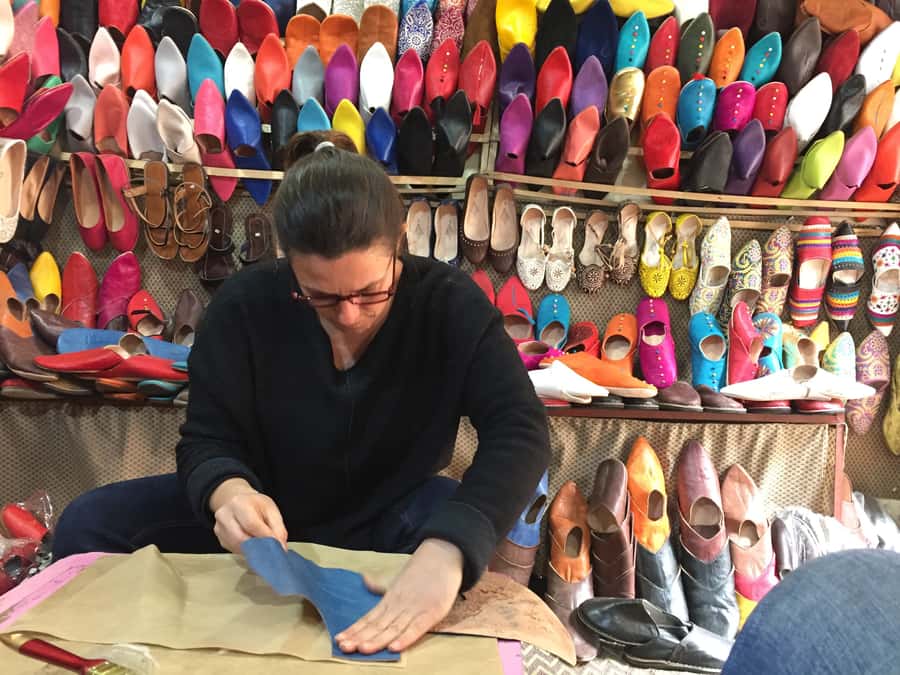
A tea break interrupts the workshop at a welcome point. You receive Moroccan mint tea, water, and homemade snacks or pastries, often described as cookies or local sweets. It is a small part of the booking, but it helps turn the class into a social visit rather than a production line.
The break also gives you time to talk with the artisan. Conversations have covered leather, babouch design, Moroccan customs, and everyday life. One participant even received some informal French lessons from Youssef.
The refreshments are not the reason to book this experience, but they suit the mood. You can set down your tools, look at the leather pieces taking shape, and appreciate the work before returning to the next step. For families, this pause may be especially helpful. An 11-year-old has taken part successfully, though younger children may need more direct help with cutting and tools.
Finishing the pair and taking home a useful souvenir
The final stages include stitching, turning the babouch into its proper shape, and making finishing adjustments. This is where the earlier cutting and assembly start to make sense. You see how separate leather pieces become a flexible slipper.
Each participant receives a pair to take home. Since you choose the style and the size is fitted during the session, the result has more personal meaning than a standard market purchase. It is also compact and easy to pack.
The finished pair may not look exactly like a factory-made shoe, and that is part of its appeal. Small variations show that you took part in the process. The artisan can help correct the fit, and the workshop’s practical guidance keeps the result presentable.
You also receive photographs taken during the session by email. These are useful because leatherwork keeps your hands occupied. You can enjoy the class without stopping constantly to document it yourself.
Some people have also commissioned other leather goods from the workshop, including a bespoke belt collected later. That possibility is worth asking about if you see a design you like, but treat it as an optional extra rather than part of the experience. The included item is your pair of babouch.
What the $81 price really covers
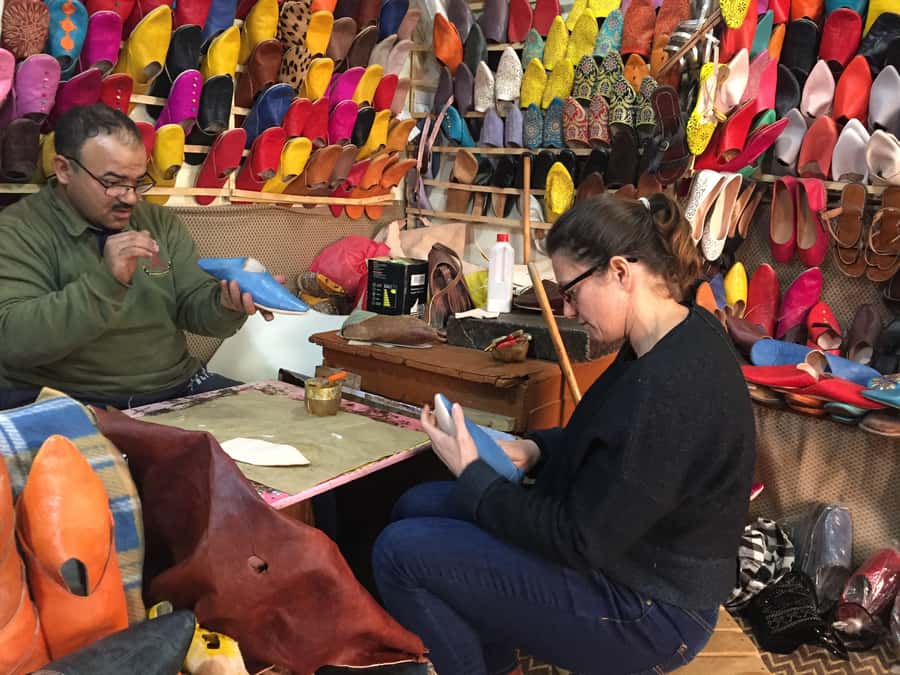
At $81 per person, this costs more than buying a basic pair of slippers in the souk. The comparison is not quite fair. The price includes a private workshop, an artisan-led lesson, leather and other raw materials, tools, a finished pair, a guide, translation help, tea, snacks, water, and photographs.
The value depends on what you want from Marrakech. If your goal is simply the cheapest pair of slippers, shop around the medina. If you want a souvenir tied to something you learned and made, the price is easier to justify.
Private group arrangements improve the value for couples, families, and friends. You receive more direct help than you would in a crowded class, and you can ask questions without waiting for a large group to finish. Solo visitors may find the cost harder to compare with a normal shopping trip, though a private session can offer a very personal introduction to the craft.
The workshop also saves you from spending hours trying to work out the medina route and the technical process alone. For me, the strongest value is the combination of instruction and finished object. You are paying for time with a craftsman, not just for leather.
Who will enjoy this workshop most
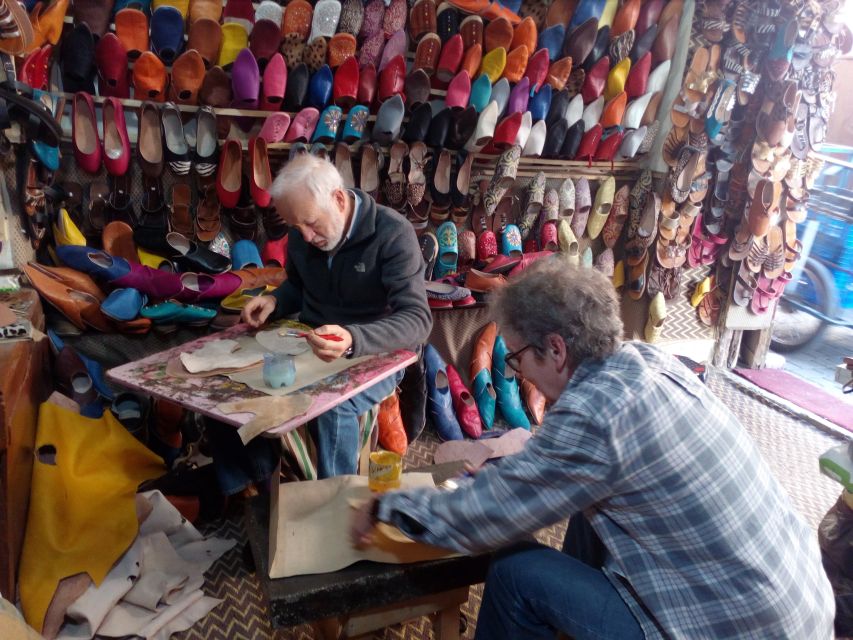
This experience suits you if you like making things, meeting local people, or bringing home a souvenir with a story. It works especially well for couples who want matching slippers, families with older children, and anyone who has already had enough of passive sightseeing.
It is also a good choice for a first morning in Marrakech. The guide helps you enter the souks in a manageable way, and the calm workshop can give you a gentle introduction before you explore the medina on your own.
You should be comfortable spending several hours seated or focused on detailed handwork. The class is wheelchair accessible, but the route from Jamaa el Fna and the exact workshop layout are not described in detail. If accessibility is important for your party, confirm the meeting and workshop arrangements directly before booking.
This is not the best fit if you want a fast activity, a major historical tour, or a guaranteed luxury studio setting. The point is contact with a working craft tradition, with the occasional rough edge that comes with a real medina workshop.
Timing, languages, and booking flexibility
The activity is sold as a four-hour experience, while the hands-on workshop itself is described as about three and a half hours. Check the available starting times when you book, and avoid placing a tight appointment immediately afterward.
Instruction is available in English, French, and Arabic. A guide is present to help with translation and general organization. The group type is private, which means your booking is for your party rather than a large shared class.
You can cancel up to 24 hours before the activity for a full refund, and the reserve-now, pay-later option lets you hold a place without paying immediately. Those terms are useful if your Marrakech plans are still shifting.
Small practical tips for a smoother class
- Confirm the exact meeting spot in front of the post office, not just the street name.
- Keep your phone on and available so the guide can reach you if needed.
- Wear clothes you can work comfortably in, since you will be cutting, gluing, hammering, and stitching leather.
- Bring your preferred color or style ideas, but expect the final choice to depend on the leather available at the workshop.
- Leave room in your schedule after the class if you want to shop in the souks or ask about an additional leather item.
- If you are bringing a child, expect the guide and artisan to provide help with the more precise parts of the work.
Should you book the Marrakech babouch workshop?
I would book this if you want an activity that connects you with Marrakech through work, not just sightseeing. Youssef’s patient instruction, the guide’s help through the medina, the fitted slippers, and the relaxed tea break make this a strong choice for a half-day.
The main weakness is practical rather than cultural: the meeting instructions need extra attention. The $81 price is also too high if you only want inexpensive footwear. But if you value a private lesson, local conversation, and a handmade souvenir you helped create, the cost is fair.
Book it for a morning if possible, confirm the meeting point, and arrive ready to use your hands. You will leave with babouch, photographs, and a clearer sense of why the slippers in Marrakech’s shops are handmade rather than magically produced.
FAQ
How long does the babouch workshop last?
The activity has a listed duration of four hours. The hands-on workshop itself is described as lasting about three and a half hours.
What is included in the price?
The price includes the babouch-making workshop, a pair of babouch for each participant, leather and other required materials, tools, homemade snacks, water, a tea break, and photographs sent by email.
Where do I meet the guide?
The meeting point is in front of the post office at Jamaa el Fna Square. Because the Rue Bani Marine wording has caused confusion, confirm the precise entrance and waiting spot before you go.
Who teaches the workshop?
The workshop is held by Youssef, a Moroccan leather craftsman who works in his studio in the medina. A guide is also available to assist with translation and the general progress of the session.
Which languages are available?
The listed languages are English, French, and Arabic.
Is the workshop private?
Yes. The group type is listed as a private group.
Can I choose the color and style of my slippers?
Yes. You can choose the style and color of the leather, and the slippers can be fitted to your size during the workshop.
Can I cancel the booking?
You can cancel up to 24 hours in advance for a full refund. A reserve-now, pay-later option is also available.
Recently reviewed around Marrakech
- 4-Days Marrakech to Marrakech Désert Tour★ 5.0 · 17 reviews
- Camel ride at sunset in Marrakech palm grove★ 5.0 · 17 reviews
- Agafay camel ride★ 5.0 · 20 reviews
- Camel riding in marrakech★ 4.5 · 17 reviews
- Marrakech to Atlas Mountains and 4 Valleys Day Trip★ 5.0 · 17 reviews
- Agafay Desert Adventure, Culture, and Relaxation, From Marrakech★ 5.0 · 25 reviews
- Quad excursion to the Agafay desert near Marrakech★ 5.0 · 44 reviews
- Camel ride and dinner Agafay desert★ 5.0 · 25 reviews
Medina & Souk Walks, compared.
Bahia Palace, Saadian Tombs, Souk and Medina Tour
Read our review →

Saadian Tombs & Bahia Palace, Medina Guided Tour
Read our review →
Museum, Al Attarine Madrasa & Tannery and Medina Tour
Read our review →
Bahia Palace, Madrasa Ben Youssef and Medina Tour
Read our review →
Explore Fes: Unforgettable Guided Walking Tour of the Medina
Read our review →
Madrassa Ben Youssef, Secret Garden & Medina Tour
Read our review →Browse the lists this tour appears in