
Reviewed · 2-DAY EXPERIENCES
From Marrakesh: 2-Day Desert Zagoura Tour
The most memorable part of this trip is the late-day camel ride into the Zagora dunes, followed by dinner, campfire music, and a night beneath the desert sky. You climb aboard near Zagora for about 1.5 hours, arriving at a nomadic camp in time for the evening. At dawn, you ride out again as the sky changes color.
I like two things especially: Aït Benhaddou, where earthen walls and towers show Morocco’s old fortified architecture, and the careful guiding. Past guides including Lahcen, Youssef, Mahmoud, Hassan, Ali, and Oussama have been praised for answering questions, explaining Moroccan customs, and handling problems calmly. The long drives are broken up by stops, lunch, and views across the Atlas Mountains.
The main drawback is simple: this is not the deep Sahara. Zagora offers a smaller group of dunes and a desert camp reached in two days from Marrakesh, but promotional images can suggest a larger sea of sand. You will spend many hours in the minibus, so this trip works best when you value the route as much as the overnight stay.
In This Review
- Key points to know before booking
- Leaving Marrakesh at 9:00 AM
- Walking through Aït Benhaddou
- Ouarzazate and the Drâa Valley
- The Zagora camel ride at sunset
- Dinner and a night at the nomadic camp
- Sunrise by camel on day two
- The long return to Marrakesh
- How the $159 price holds up
- Who should book this Zagora trip?
- FAQ
- How long is the tour?
- Is pickup from my Marrakesh accommodation included?
- What languages are available?
- What meals are included?
- How long are the camel rides?
- Is this the large Sahara desert shown in some photographs?
- What should I bring?
- Should you book it?
Key points to know before booking
- Camel rides at sunset and sunrise: Each ride lasts about 1.5 hours, giving you two different views of the desert.
- Aït Benhaddou on day one: You visit one of Morocco’s best-known fortified villages and a UNESCO-listed site.
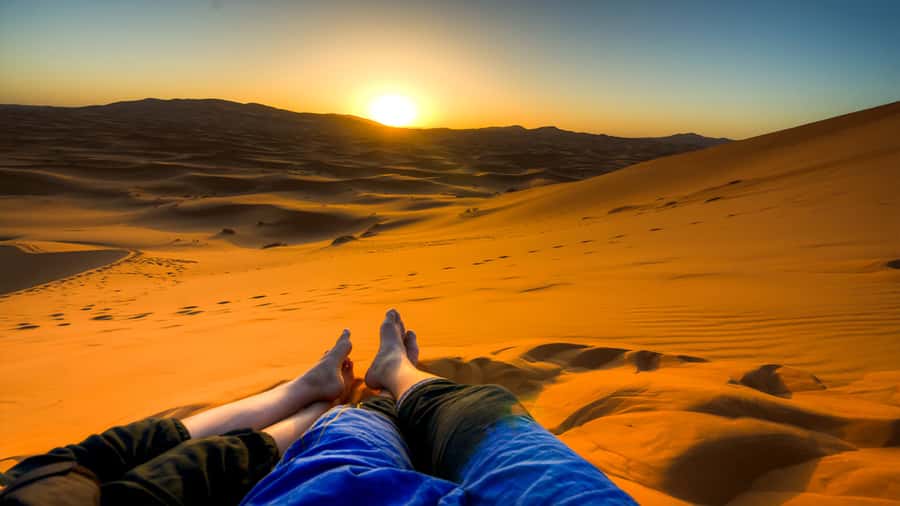
- Zagora instead of the deep Sahara: Expect a few dunes and desert surroundings, not the vast sandy expanse associated with Merzouga or classic Sahara photographs.
- A long but worthwhile road journey: The Atlas crossing and return drive take much of both days, with regular photo and meal stops.
- A comfortable nomadic camp: The overnight stay includes dinner and breakfast, with campfire dancing and a festive Berber setting.
- Useful guide support: English, French, and Arabic are available, and pickup from your Marrakesh accommodation is included.
Leaving Marrakesh at 9:00 AM
Pickup begins at your accommodation in Marrakesh, with departure scheduled for 9:00 AM in a modern, air-conditioned minibus. That vehicle matters. This is a road trip with many hours of driving, and air conditioning makes the Atlas crossing and return journey far easier, especially during hot months.
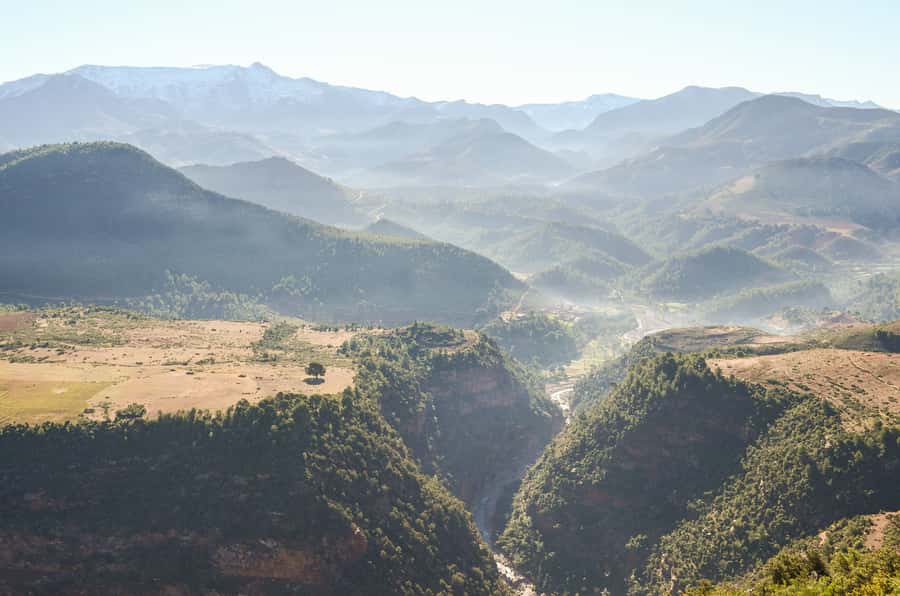
The route heads south through the Atlas Mountains. You get wide views of the countryside, mountain roads, and, when conditions allow, snow on the higher peaks. The exact feel changes with the season. A winter or spring crossing may show snow-capped summits, while a warmer departure may offer clearer roads and dry mountain scenery.
Your driver is more than just the person behind the wheel. The best part of this trip depends on steady driving through mountain roads, sensible breaks, and useful explanations along the way. Past guides named Mahmoud, Hassan, Ali, and Abdul have been singled out for careful driving, flexible pacing, and good communication.
The group size can vary. One departure had only four people in a comfortable car, while another included nine passengers. That difference affects the rhythm of the day. A smaller group can make stops feel more flexible, while a larger minibus may offer a more social ride but less personal space.
More Marrakech trips worth a second look
- From Marrakech: 2-Day Sahara Tour to Zagora & Ait Ben Haddou
★ 4.4 · 1,925 reviews - From Marrakech: 2-Days luxurious experience to Zagora Desert
★ 4.9 · 1,502 reviews - From Marrakech: Zagora 2-Day Desert Safari with Food & Camp
★ 4.5 · 1,137 reviews
Walking through Aït Benhaddou
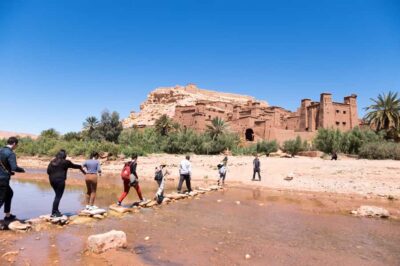
The first major stop is Aït Benhaddou, an ancient fortified village built in Morocco’s traditional earthen-clay style. Its compact walls, towers, and narrow lanes make it one of the most striking stops between Marrakesh and the desert.
This is not just a quick roadside photo stop. The village gives you a visual introduction to southern Morocco, where buildings were shaped from local earth and designed around protection, shade, and community life. You will have a chance to look closely at the construction and take in the views around the settlement.
Aït Benhaddou is also a UNESCO-listed site, so it adds cultural weight to a trip that could otherwise focus only on camels and campfires. I like that balance. You get architecture and history before the desert portion begins.
Still, keep your expectations practical. The visit is part of a packed two-day route, not a full archaeological tour. Your time here will be limited compared with a dedicated day trip from Marrakesh, and the entire day continues onward to Ouarzazate and Zagora.
Ouarzazate and the Drâa Valley
After Aït Benhaddou, the minibus continues to Ouarzazate for lunch at a local café or restaurant. This is a useful pause after the mountain drive and gives you time to eat before the longer run toward Zagora.
Ouarzazate is often linked with Morocco’s film industry, and some departures have included a movie studio tour on the return journey. That stop is not described as fixed for every departure, so treat it as a possible addition rather than a guaranteed part of the program.
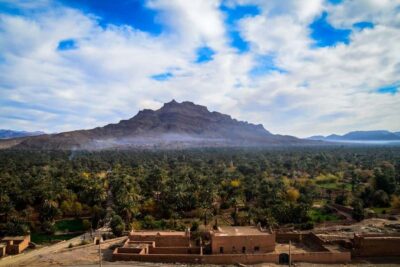
From Ouarzazate, the road follows the Drâa Valley toward Zagora. This is one of the most rewarding stretches of the drive because the scenery changes gradually from mountain country to dry southern terrain. You are not simply being transported to a camel station. The road itself helps explain how Morocco shifts from the north-facing Atlas region into the country’s desert fringe.
There are photo stops along the way, and the return day also includes breaks for lunch and views. One particularly good option described by a past group was lunch at a Moroccan family home rather than a standard tourist stop. That kind of meal can offer a more personal taste of local hospitality, but it may not be included on every departure.
The Zagora camel ride at sunset
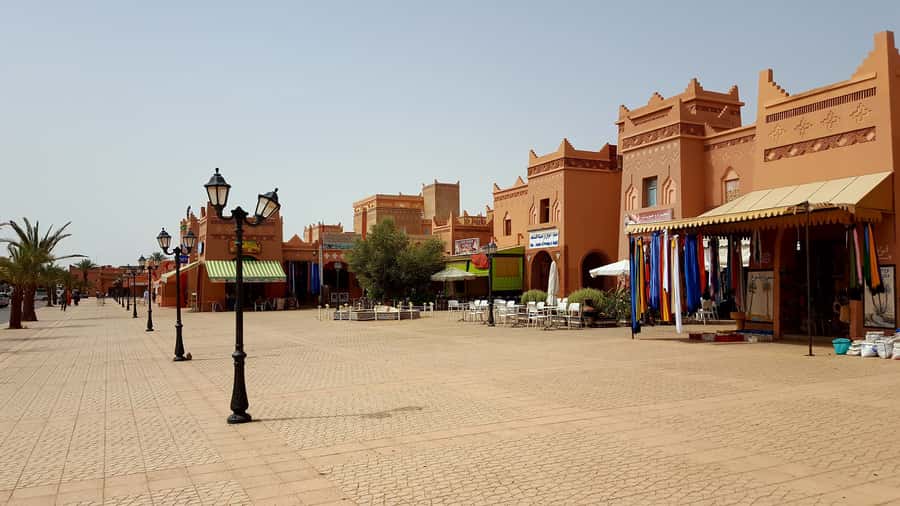
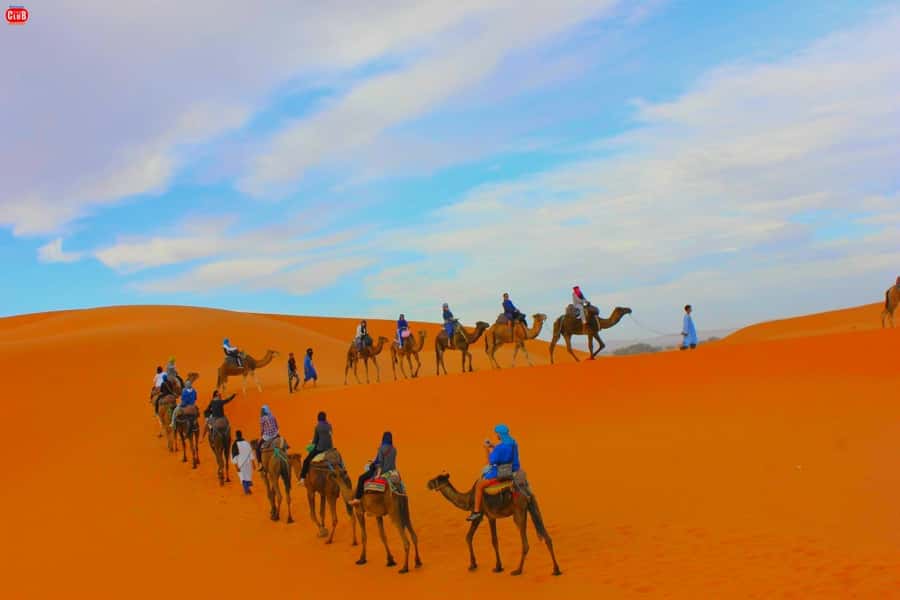
Near Zagora, you meet the camels for the first 1.5-hour ride into the dunes. The timing is the point. You are traveling in the late afternoon, when the light softens and the desert becomes more attractive for photographs.
Mounting a camel can feel awkward for the first few minutes, especially when the animal rises or sits. Once you settle into the rhythm, the ride becomes a slow, steady way to enter camp. It is not a fast excursion, and that is part of the charm.
You should also know exactly what kind of desert you are getting. The Zagora area has dunes, but the ride may pass along the side of a mountain or near a road rather than through a vast, isolated Sahara. Several departures have made this distinction clear. The scenery is still appealing, but the photographs used to sell desert trips often show the larger dunes of a different Moroccan region.
That makes the two-day format both its strength and its limit. Zagora is reachable from Marrakesh in a short trip, while the more dramatic Sahara routes need more time on the road. If you have only two days, this camel ride gives you a real desert experience without committing to a much longer excursion.
A different kind of day out, same corner of Morocco:
- Marrakech: Agafay Desert Sunset, Camel Ride, and Dinner Show
★ 4.6 · 35,119 reviews - From Marrakech: Ouzoud Waterfalls Guided Hike and Boat Trip
★ 4.7 · 33,630 reviews - Marrakech: Agafay Desert Quad & Camel Rides with Dinner Show
★ 4.8 · 27,382 reviews - Marrakech: Agafay Desert Quad Biking Tour with Dinner-Show
★ 4.8 · 16,569 reviews
Dinner and a night at the nomadic camp
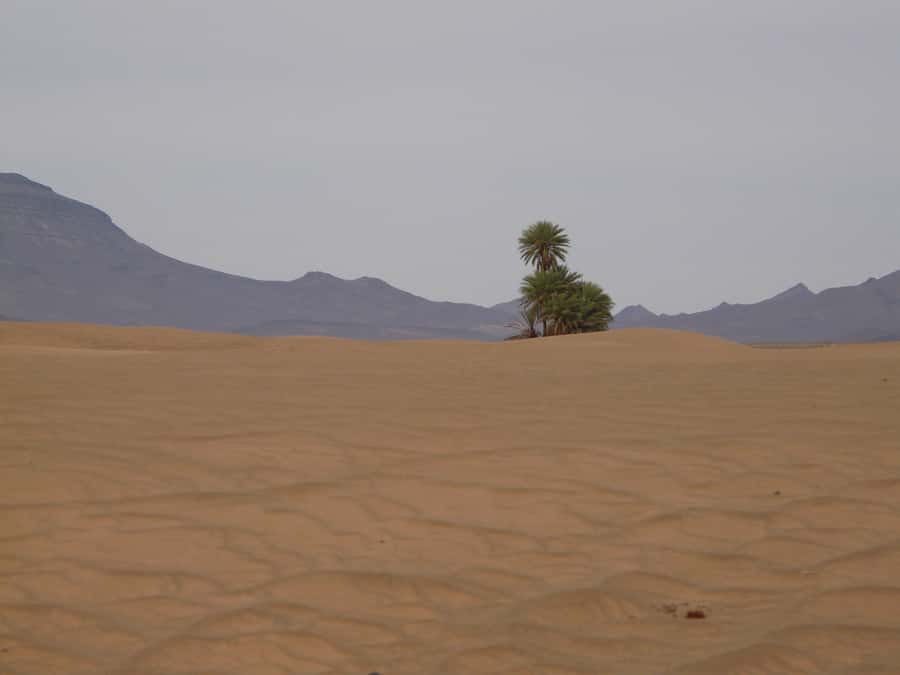
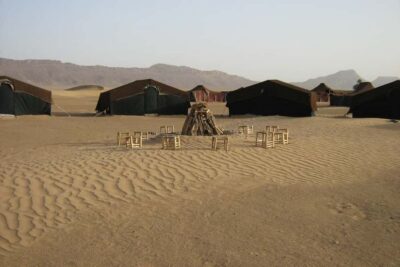
The camp is described as clean, hospitable, and comfortable rather than rugged. Think camp beds and basic desert lodging, not a survival expedition. You spend the night in a nomadic-style camp, with dinner and breakfast included.
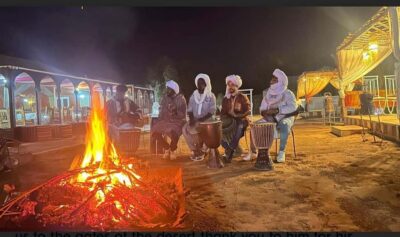
Evening entertainment includes a traditional meal, campfire dancing, and music. This is one of the social highlights of the trip. After a quiet camel ride, the camp gives the night some energy and lets you experience a simple version of Berber hospitality.
Water is included, but you should still bring a passport or ID card as requested for the activity. The supplied details do not promise a luxury tent for every booking. One departure had a mix-up in which guests were first shown to a standard tent instead of the expected luxury accommodation. The guide, Oussama, handled the issue and corrected it, but the delay caused the group to miss sunset at camp.
That story offers useful advice: confirm the accommodation type when booking if the choice matters to you, and tell your guide promptly if the tent does not match your reservation. The camp itself can be pleasant, but expectations should match the package you select.
Sunrise by camel on day two
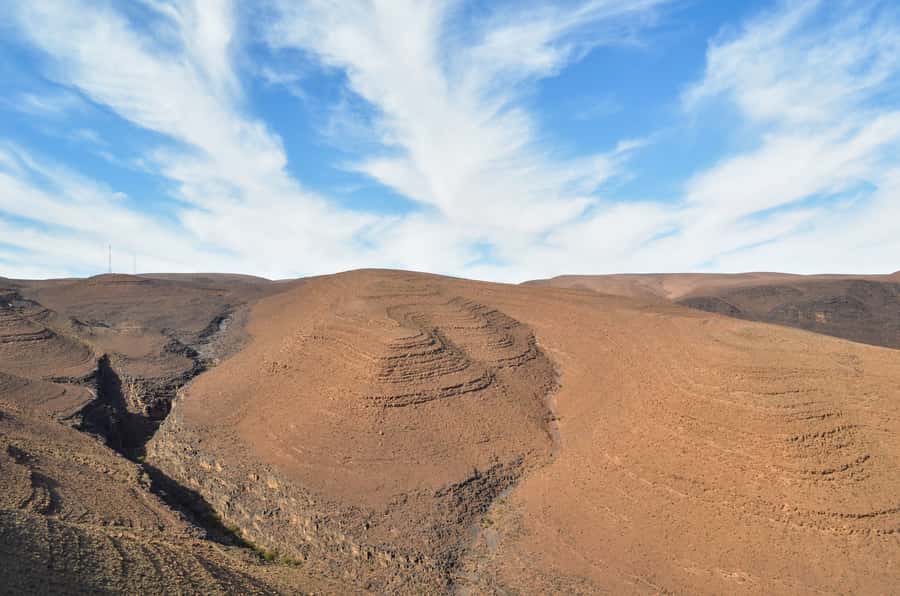
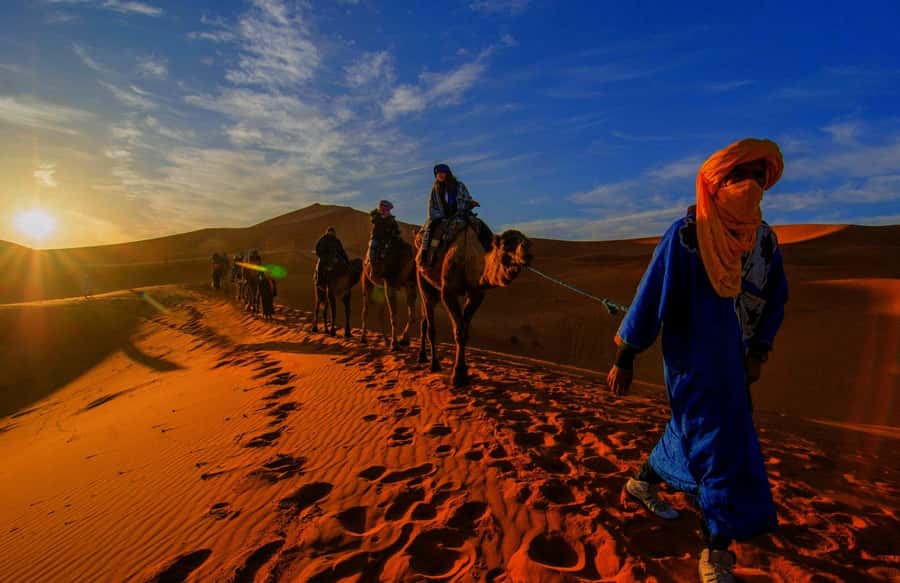
Day two begins with a traditional Berber breakfast, followed by a camel ride shortly before sunrise. You return toward Zagora on camelback, watching the sky shift from dark to pale color over the dunes.
This second ride is not just a repeat of the first. Sunset gives you warm, fading light, while sunrise offers cooler tones and a quieter start. If photography matters to you, the two rides provide different conditions and are among the strongest reasons to choose this tour.
The camel ride again lasts about 1.5 hours. That is long enough to feel like a real desert outing but short enough to reduce the chance of serious saddle discomfort. You may still feel stiff afterward, particularly if you are not used to riding, but the limited duration is a practical advantage.
After saying goodbye to the camel team, you return to Zagora and rejoin the minibus. The second half of the trip is mostly a road journey back through the Atlas Mountains, with lunch and photo stops along the way.
The long return to Marrakesh
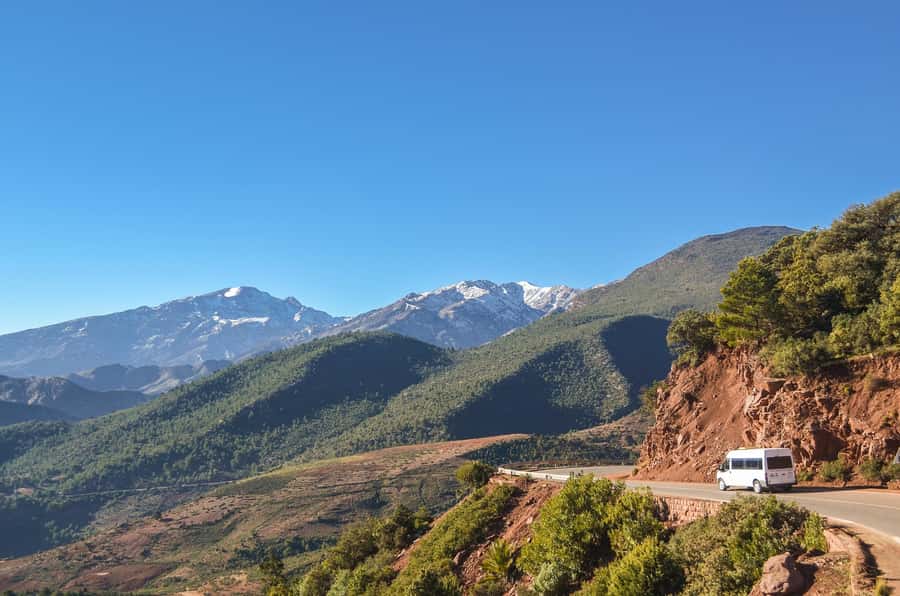
The return drive brings you back to Marrakesh between 5:00 PM and 6:00 PM, followed by transport to your hotel. That timing is useful if you have evening plans, but leave some room for traffic, road conditions, and the number of stops.
Both days involve substantial driving. That is the tradeoff for reaching Zagora in only two days. You will see mountain scenery, the Drâa Valley, historic architecture, and desert terrain, but you will not spend two full days relaxing at the camp.
I like the way the stops break up the drive. A photo pause, a meal, a possible studio visit, and the Aït Benhaddou stop give the journey a sense of progression. Still, if you dislike long road trips, this may feel tiring. Families have managed it well when the driver was careful and the breaks were regular, but young children may find the schedule demanding.
How the $159 price holds up
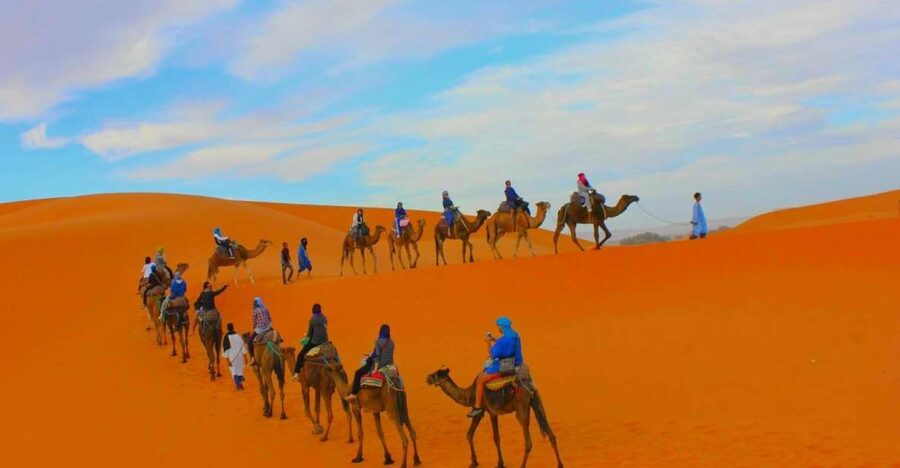
At $159 per person, the value depends on what you want from a desert trip. The price includes round-trip transportation from Marrakesh, an English or French-speaking driver, the overnight nomadic camp, dinner, breakfast, and water. The camel rides and main route experiences are part of the package described here.
That is a useful bundle for anyone who wants to avoid arranging transport, camp lodging, meals, and camel transfers separately. You also get the Atlas crossing and Aït Benhaddou as part of the same journey.
The price is less convincing if your only goal is to spend time among huge dunes. This is a short southern Morocco circuit, not a full Sahara expedition. You pay for a broad sample of the region, including the road experience, rather than for a long stay in remote sand.
Lunch is not listed among the included meals, so plan to pay for lunch at the café or restaurant stops. Other optional visits, such as a movie studio tour, should also be treated as separate possibilities unless your departure confirms otherwise.
You can cancel up to 24 hours before departure for a full refund, and the reserve-now, pay-later option keeps your plans flexible. Availability determines the starting time, although the described departure begins at 9:00 AM.
Who should book this Zagora trip?
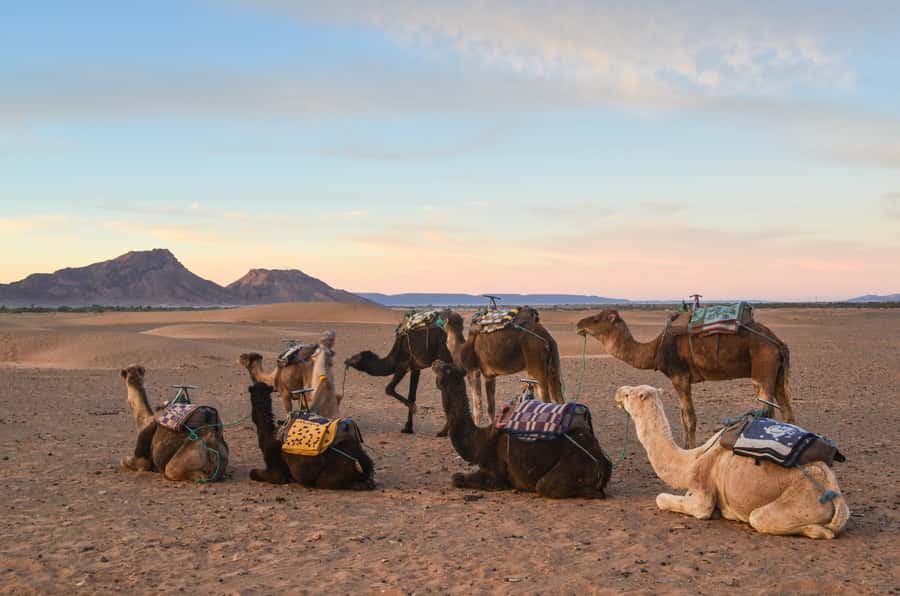
I would choose this tour if you have only two days from Marrakesh and want several parts of southern Morocco in one compact trip. It suits first-time visitors who want mountains, a UNESCO-listed kasbah, a camel ride, a desert meal, and a camp night without planning a complex route.
It is also a good fit if you value a helpful guide. Guides named Lahcen, Youssef, Mahmoud, Hassan, Ali, Redouane, Yassine, and Oussama have handled questions, cultural explanations, road stops, and practical problems well on different departures. Your guide will vary, but English, French, and Arabic are available.
Families can consider it, especially if careful driving and regular stops are important. The road time remains a real factor, and anyone with limited patience for minibus travel should think twice.
I would not choose it if your picture of Morocco means endless Sahara dunes and a remote desert far from roads. For that, you need a longer trip. Zagora gives you a smaller, more accessible desert setting, and the charm comes from combining it with the Atlas route and Aït Benhaddou.
FAQ
How long is the tour?
The experience lasts two days. Departure from Marrakesh is scheduled for 9:00 AM on day one, and arrival back in Marrakesh is expected between 5:00 PM and 6:00 PM on day two.
Is pickup from my Marrakesh accommodation included?
Yes. Pickup from your accommodation in Marrakesh and return transport to your hotel are included.
What languages are available?
The tour offers live guidance in English, French, and Arabic. The driver is described as English or French-speaking.
What meals are included?
Dinner at the desert camp and breakfast the next morning are included. Lunch is taken at a local café or restaurant and is not listed as included.
How long are the camel rides?
You ride camels for about 1.5 hours into the dunes on day one. On day two, you take another camel ride of about 1.5 hours before returning to Zagora.
Is this the large Sahara desert shown in some photographs?
No. The Zagora area has dunes, but the trip does not take you deep into the vast sandy Sahara shown in many desert-tour photographs. You may see only a few dunes or ride near a mountain and road.
What should I bring?
Bring your passport or ID card. Water is included, along with breakfast and dinner.
Should you book it?
Book this Zagora tour if you want a short, well-rounded southern Morocco trip and accept the long drives. The combination of Aït Benhaddou, Atlas Mountain views, sunset and sunrise camel rides, and a camp dinner gives you a lot in two days.
Skip it if you want a vast, isolated Sahara setting or a slow desert holiday. For everyone else, $159 is a fair price for the transport, overnight stay, meals, and guiding, especially when you have limited time in Marrakesh. Just set your expectations correctly: Zagora is the practical two-day desert choice, not the full Sahara experience.
Recently reviewed around Marrakech
- 4-Days Marrakech to Marrakech Désert Tour★ 5.0 · 17 reviews
- Camel ride at sunset in Marrakech palm grove★ 5.0 · 17 reviews
- Agafay camel ride★ 5.0 · 20 reviews
- Camel riding in marrakech★ 4.5 · 17 reviews
- Marrakech to Atlas Mountains and 4 Valleys Day Trip★ 5.0 · 17 reviews
- Agafay Desert Adventure, Culture, and Relaxation, From Marrakech★ 5.0 · 25 reviews
- Quad excursion to the Agafay desert near Marrakech★ 5.0 · 44 reviews
- Camel ride and dinner Agafay desert★ 5.0 · 25 reviews
2-Day Experiences, compared.
Sahara Desert 2-Day Tour with Merzouga Camp Stay
Read our review →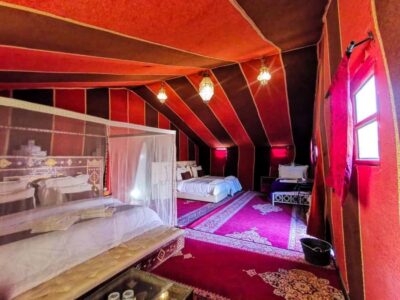
Mt Toubkal Ascent Express Trek 2 Days 1 Nights
Read our review →
2-Day Merzouga Desert Trip w/Luxury Tent & Dinner
Read our review →Browse the lists this tour appears in