
Reviewed · HIKING & TREKKING
Mt Toubkal Ascent Express Trek 2 Days 1 Nights
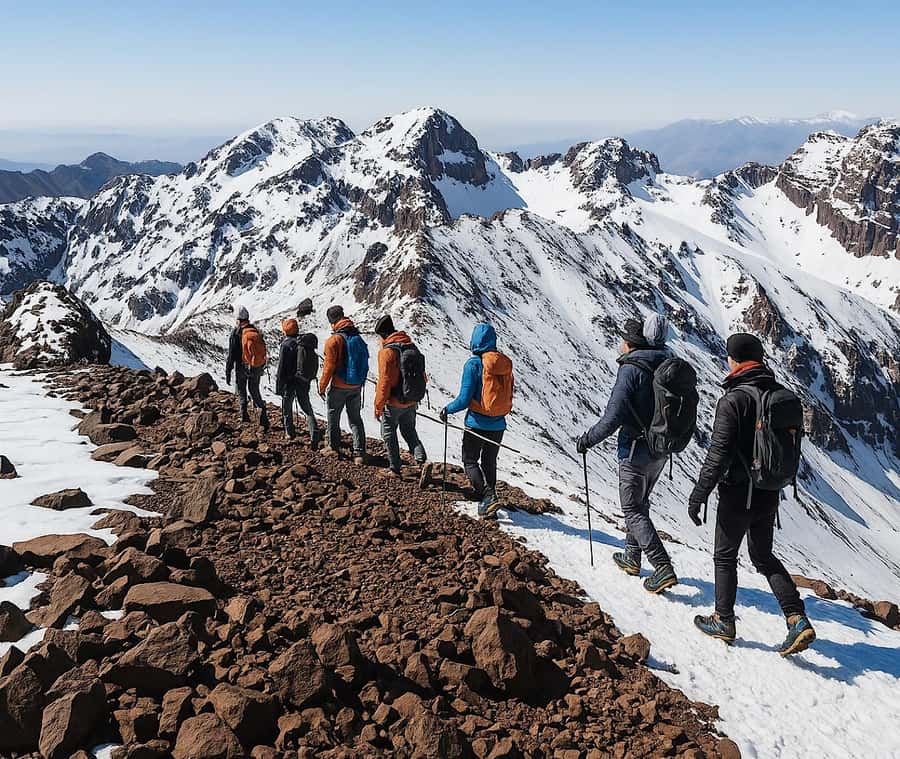
Mount Toubkal reaches 4,167 meters, making it the highest peak in North Africa. This two-day route gets you from Marrakech to the summit and back with just one night at the Toubkal Refuge, so you gain a serious mountain achievement without giving up a week of your holiday.
I like two things right away: the price is remarkably low at $147, and the local guiding is a real strength. Guides such as Mohamed, Omar, Mustafa, and Yassine are repeatedly praised for patient pacing, altitude checks, and helping people who fall behind. The Berber meals and mountain hospitality add much more than a simple walk up and down.
The catch is the schedule. The summit day can last 10 to 12 hours, and the rapid rise from Marrakech to 4,167 meters leaves little time to adjust. Winter conditions may bring deep snow, blizzards, crampons, and a cancelled summit, so this is not a casual sightseeing trip.
In This Review
- Key points before you book
- From Marrakech to Imlil at 1,740 meters
- Walking the Aït Mizane Valley to Sidi Chamharouch
- A night at the Toubkal Refuge
- The pre-dawn climb to 4,167 meters
- Sunrise and the view from Toubkal
- The long descent to Imlil
- What the $147 price really covers
- Who will enjoy this trek most
- The packing list I would use
- Should you book the Mount Toubkal Express Trek?
- FAQ
- How high is Mount Toubkal?
- How long do you walk each day?
- Is Mount Toubkal a technical climb?
- Is accommodation included?
- Can I rent mountain equipment?
- What happens if bad weather stops the summit attempt?
Key points before you book
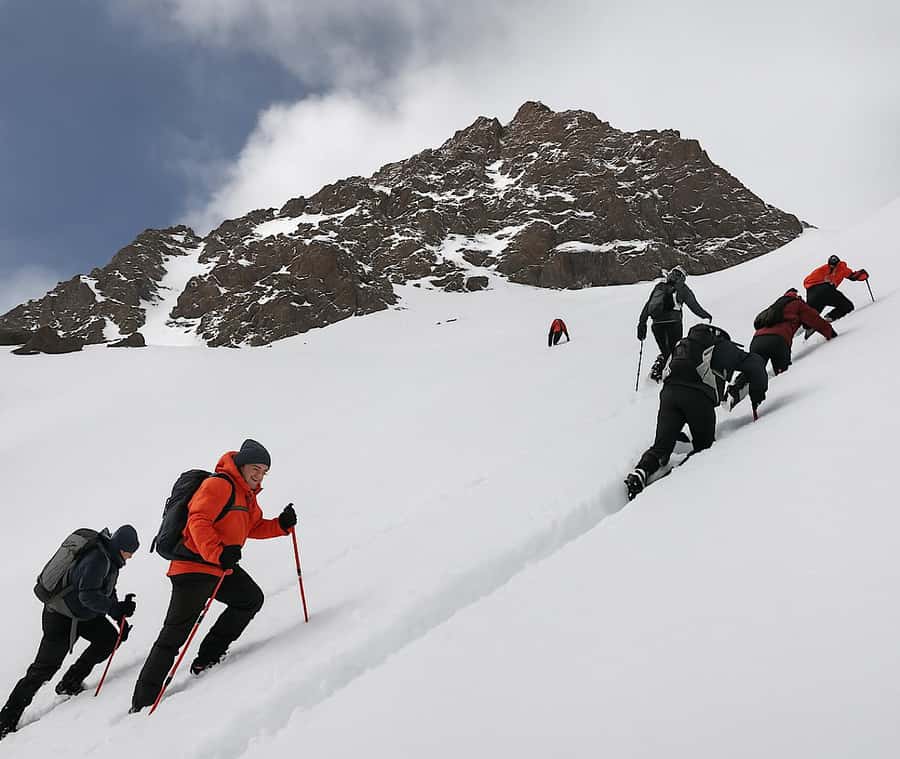
- A true North African high point: You reach Jbel Toubkal at 4,167 meters, with broad views toward Marrakech, the High Atlas, the Anti-Atlas, and the Sahara.
- Two days means a hard push: The first day takes five to six hours to reach the refuge. Summit day combines the ascent and return to Imlil in one very long effort.
- Local guides make the difference: Guides including Mohamed, Omar, Mustafa, Hussein, Kamal, and Yassine are praised for safety, encouragement, and keeping groups together.
- Winter changes the route: From November through April, snow slopes and ice may require crampons or an ice axe. Bad weather can stop the summit attempt.
- The refuge is basic: Shared dormitories, hard bunks, limited sleep, and simple facilities are part of the deal. Bring a sleeping bag, head torch, and extra snacks.
- Excellent value, with extras to budget for: Transport, meals, tea, refuge lodging, and guides are included, but gear rental, drinks, porters, mules, and some food are extra.
From Marrakech to Imlil at 1,740 meters
Your day begins with pickup from your hotel or riad in Marrakech. The provider normally confirms the meeting point directly by email, and communication may also come through WhatsApp. I would choose a clear, central pickup point and keep your phone charged, since a few transport arrangements have been less tidy than the mountain guiding.
The drive takes you out of Marrakech toward the Atlas Mountains and the village of Imlil. At about 1,740 meters, Imlil is the practical starting point for the trek. It is also where you can rent missing equipment, leave unnecessary luggage, and meet the local mountain team.
That pause matters. You may need a sleeping bag, walking poles, a head torch, crampons, an ice axe, or warmer clothing. Sleeping bags, crampons, ice axes, and warm clothes are not included, and the stated price for a mule is 20 euros. Ask about costs before setting off, and carry cash for water, snacks, and equipment.
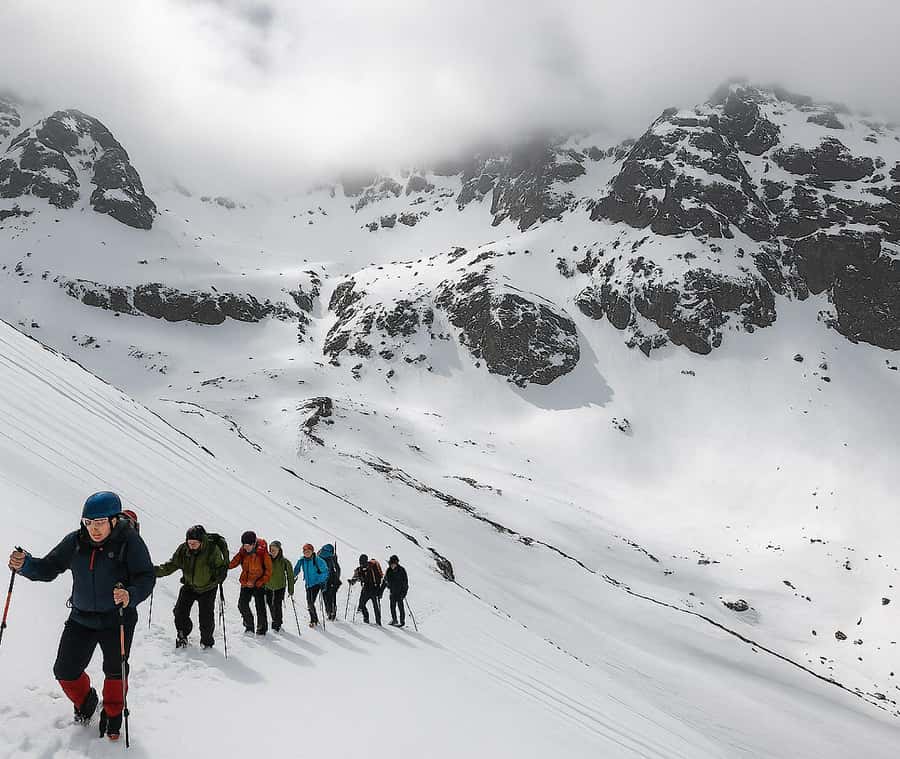
The group limit is 14 people, though some departures may feel smaller. One group had eight participants and two guides, while other departures included several guides for a larger party. That matters on a route where people climb at different speeds. A good guide can keep the stronger walkers from racing ahead while still giving slower walkers the support they need.
Bring your passport. A checkpoint is reported on the way to the mountain, and having the right document avoids a needless delay.
More Hiking Tours in Marrakech
- From Marrakech: Ouzoud Waterfalls Guided Hike and Boat Trip
★ 4.7 · 33,630 reviews - Berber villages : Atlas Mountains Day Hike from Marrakech
★ 5.0 · 14,007 reviews - 3 Days Desert Tour From Marrakech To Merzouga Dunes & Camel Trek
★ 5.0 · 10,125 reviews
Walking the Aït Mizane Valley to Sidi Chamharouch
From Imlil, the route follows the Aït Mizane Valley toward Aremd. This opening section gives you a gentler start, with time to settle into the steady rhythm needed for a high-altitude walk. The route is not a technical climb, but it is still a long uphill trek over rough ground.
Sidi Chamharouch is one of the memorable points on the way. The sanctuary is marked by its white shrine and sits beside a waterfall, giving you a natural place to pause. You also get views back toward the Valley of Imlil as the path gains height.
This is where the value of a local guide becomes clear. Guides often explain the Berber language and culture of the area while managing the pace. Omar, Mohamed, Mustafa, and Yassine are among the guides singled out for combining route knowledge with friendly conversation and regular checks on the group.
Do not treat the first day as an easy warm-up. The total climb from Imlil to the refuge is about 1,467 meters, and the walking time is five to six hours. The route becomes steeper after Sidi Chamharouch, with rocky sections and some easy scrambling.
Food is included and is one of the pleasant surprises of this trek. Meals are generally described as fresh, plentiful, and suitable for vegetarians. Tea and coffee are also included. Still, I would carry high-calorie snacks, especially if you are a large person, eat often, or expect to burn through food on the summit day.
Water and snacks can be purchased along the route, but prices and supplies may vary. Carry enough for the next section rather than relying on every stop being open.
A night at the Toubkal Refuge
After another stretch of steep trail, you reach the Toubkal Refuge at about 3,207 meters. This is your base for the summit attempt and the end of the first day.
The refuge offers warmth, food, and a chance to meet other people attempting the mountain. The social side is part of the charm. Groups share the same simple setting, and the effort of the climb tends to create quick friendships.
Keep your expectations practical. Sleeping arrangements are basic, with shared rooms and large bunk beds. The refuge can be crowded, and several people have found it difficult to sleep. Lights may be turned off, so pack a head torch rather than depending on the building.
Bring your own sleeping bag if possible. It is on the recommended packing list and can also be rented in Imlil. A towel is useful, though facilities are simple. You should also expect the food supply to be less generous at the refuge than on the lower part of the route, particularly after heavy snow prevents mules from bringing supplies up.
The refuge is not a hotel. It is a shelter at altitude, and its value comes from location rather than comfort. You are already high on the mountain, which makes a sunrise summit possible the next morning.
The pre-dawn climb to 4,167 meters
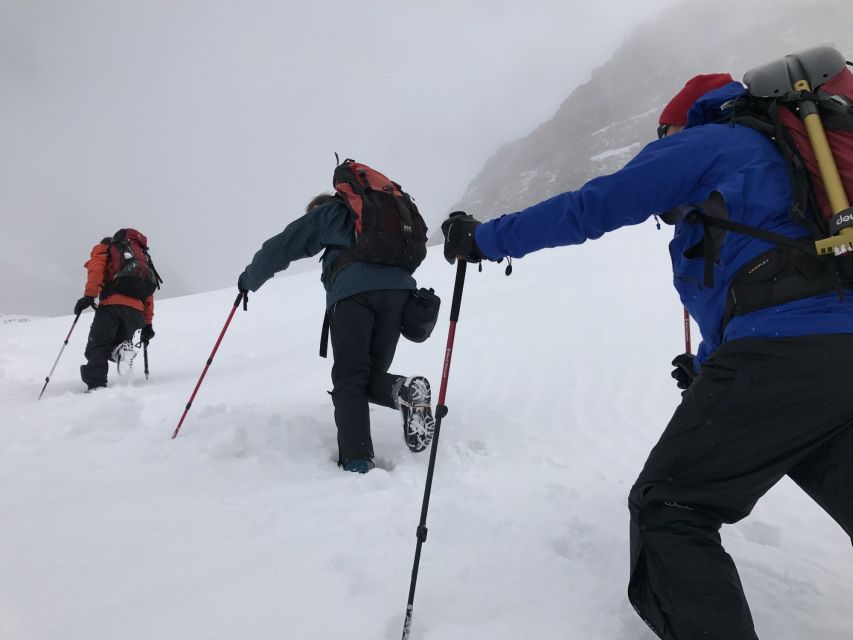
The second day begins early, often around 4 a.m. After breakfast, you start up the mountain in darkness. A head torch is essential, and you need warm layers, a hat, thick gloves, good sunglasses, and sturdy hiking shoes.
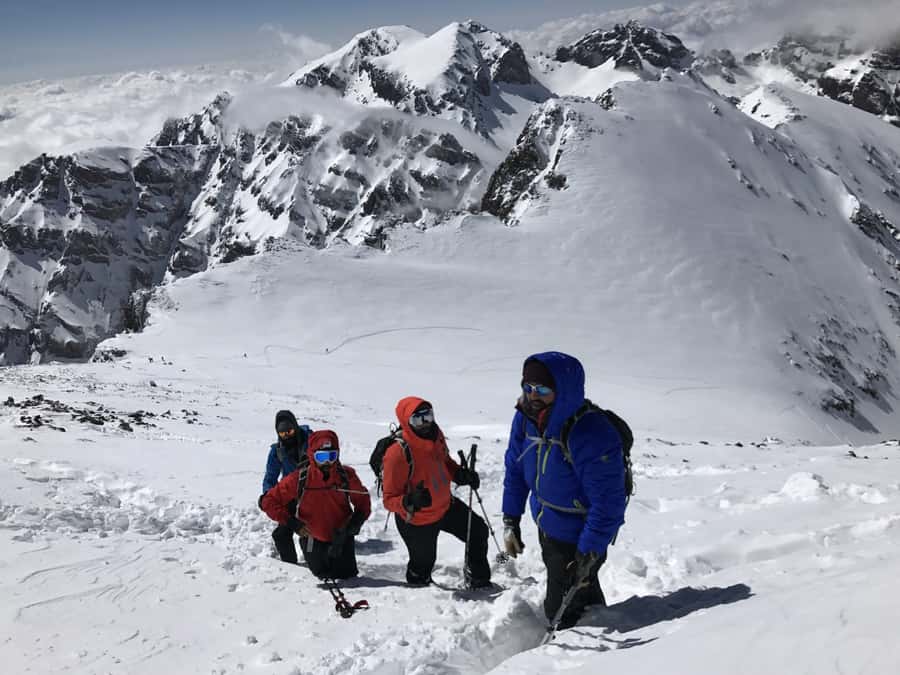
The climb from the refuge to the summit usually takes about two and a half to three hours, depending on the group and conditions. The route crosses rocky ground and streams, then works up toward a plateau before the final section. It involves no planned technical climbing, but loose rock, steep paths, easy scrambling, and snow slopes can make it demanding.
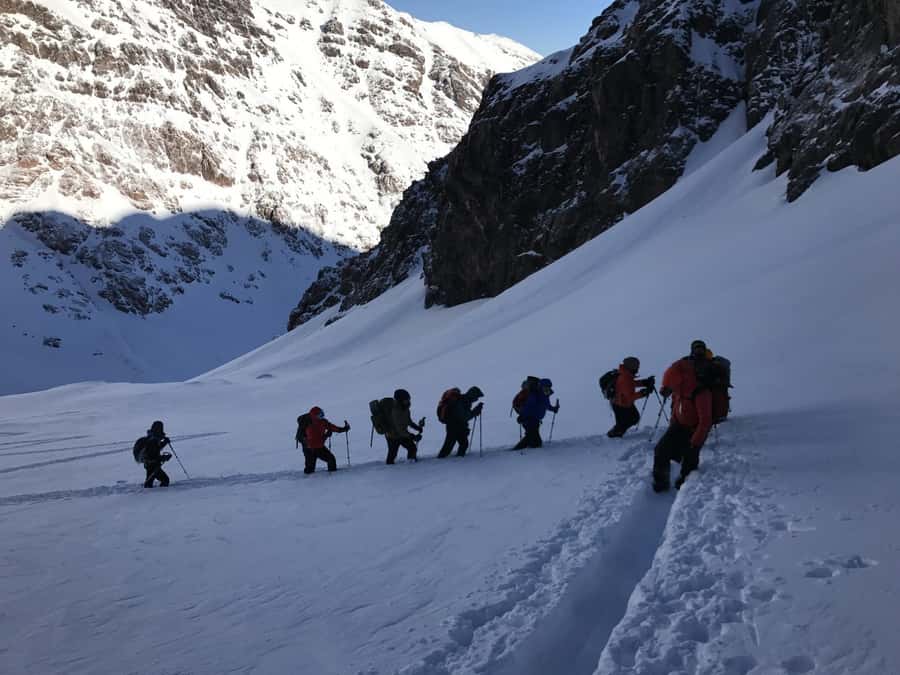
From November through April, you may need crampons or an ice axe for security. These can be rented in Imlil, but do not wait until the final moment to discover that your shoes or clothing are not suitable. Winter weather can change the character of the route completely. Deep snow and blizzards have prevented groups from reaching the summit, even when everyone was fit and motivated.
The guides take safety seriously. Mohamed has helped people dealing with altitude sickness, while other guides have accompanied unwell walkers back down or carried heavy packs for people struggling in bad weather. That support is a major reason I would choose an organized trek instead of trying to arrange every part alone.
Altitude deserves respect. You rise from Marrakech to the refuge and then to 4,167 meters in only two days. If you feel unwell, tell your guide early. Do not hide symptoms because you want to keep up with the group. The summit is optional; getting down safely is not.
More treks around Marrakech:
- From Marrakech: Atlas Mountains Full-Day Hiking Trip w Lunch
★ 4.8 · 7,417 reviews - Marrakech: Ourika Valley Trip with Waterfall Hike
★ 4.6 · 6,792 reviews - Marrakech: Ourika Valley Trip with Waterfall Hike & Lunch
★ 4.9 · 5,303 reviews - Marrakech: ourika valley lunch & guided hike to waterfalls
★ 4.9 · 3,737 reviews
Sunrise and the view from Toubkal
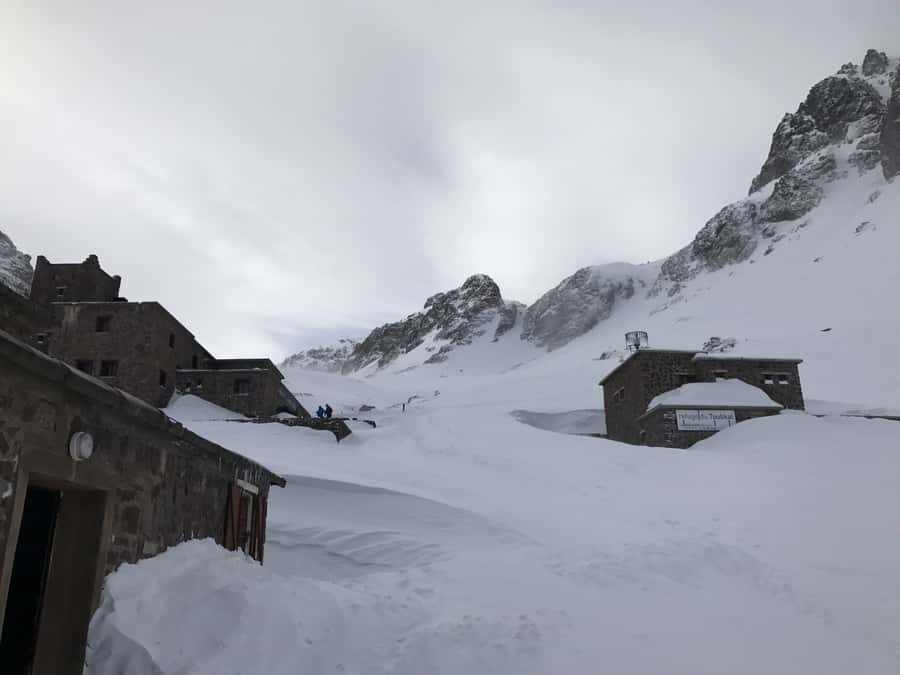
The timing is designed to bring you to the summit near sunrise. On a clear morning, the reward is a wide view over the High Atlas, the plain of Marrakech, and the distant Anti-Atlas and Sahara to the south.
The summit itself is not about a polished visitor facility. It is a high, exposed point marked by achievement, wind, rock, and sky. You may get only a short time to enjoy it, particularly in winter, but that first light over the ranges can be the defining moment of the trip.
Bring a camera, but keep it protected from cold and moisture. Also keep your hands warm enough to use it. Thick gloves, a hat, and several layers matter more than looking stylish in your summit photos.
A summit is never guaranteed. In late December and January, heavy snow and blizzards have stopped groups from continuing. On one departure, the guide substituted another mountain when Toubkal was closed. That is a sensible outcome if conditions are unsafe, but you should book this trek for the mountain journey, not as a promise of a summit photograph.
The long descent to Imlil
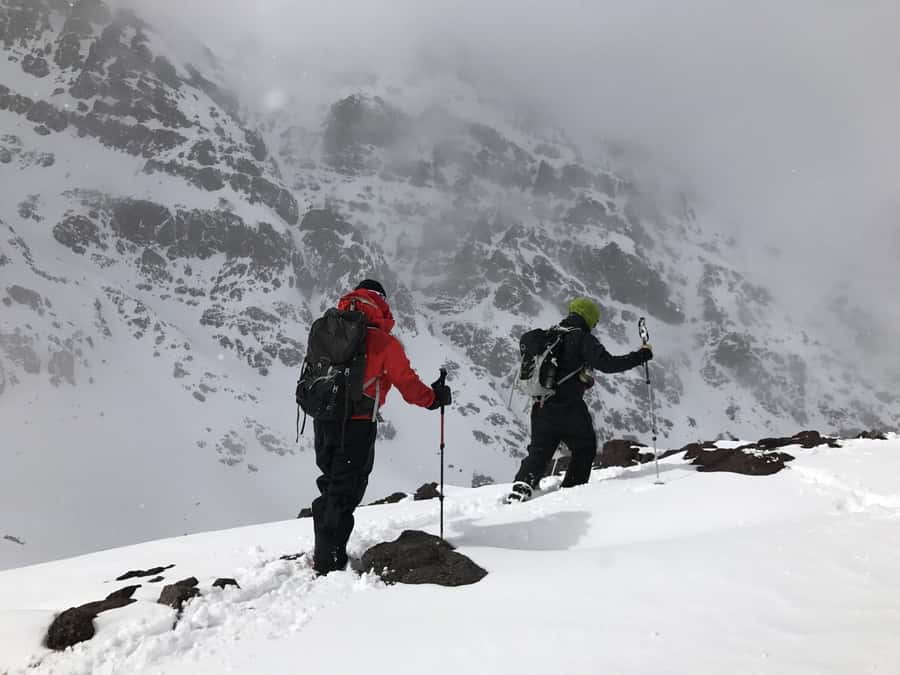
After the summit, you return to the refuge and then descend to Imlil. The stated elevation sequence is refuge, summit, refuge, and Imlil, with the full second day taking 10 to 12 hours.
The descent can be harder than expected. Your legs have already worked for hours, and rocky ground demands concentration. One practical mistake is to save too little food or water for the way down. Carry snacks for the second day, even if the included meals were ample on the first.
If you cannot continue, tell the guides. A participant who had to turn back because of physical pain was taken down by mule, and transport was arranged from Imlil. This does not make the route easy, but it shows why you should stay with the local team and speak up before a small problem becomes serious.
Once back in Imlil, you return to Marrakech by vehicle. Pickup and transport are included, though drop-off arrangements have not always been perfect. Confirm your Marrakech address and do not assume the driver will automatically leave you at the exact starting point. Keep your phone charged, particularly if you are traveling alone.
What the $147 price really covers
At $147 per person, this is strong value if you want a guided Toubkal attempt with transport from Marrakech. The package includes hotel pickup and drop-off, return transport, accommodation at the refuge, meals, tea and coffee, and a local and professional guide.
Arranging all of those pieces separately can cost more, especially once you add transport, food, refuge space, and a guide. The small-group format also gives you a better chance of receiving personal attention than a large coach-style outing.
The headline price is not your complete mountain budget. Plan for:
- Sleeping bag rental if you do not bring one
- Crampons and ice axe in snowy conditions
- Warm clothing and walking poles if needed
- Water, soft drinks, and extra snacks
- Porters or a mule, with a mule listed at 20 euros
The mule option is useful if you want help with luggage, but pack carefully and label your bags. A bag has been misplaced during a descent, so keep valuables, medication, documents, and essential layers with you.
Who will enjoy this trek most
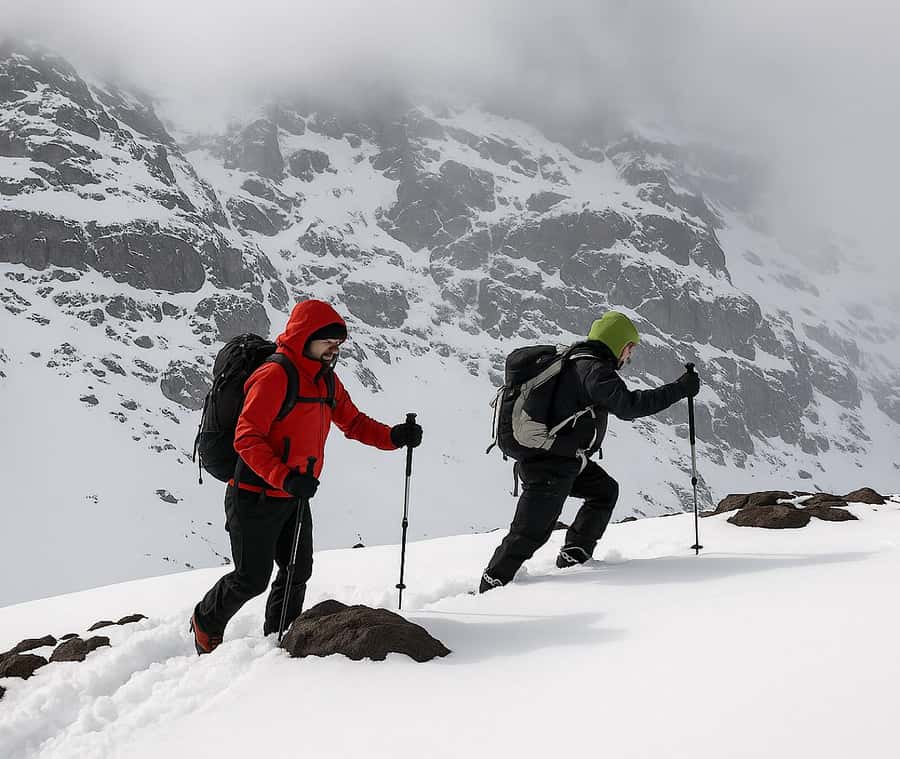
This route suits a fit person who likes a serious physical challenge and wants to reach a 4,000-meter peak without technical climbing. You do not need mountaineering skills, but you do need stamina, sensible footwear, and the determination to walk uphill for hours.
It is not beginner-friendly in the easy holiday sense. A keen walker may find the first day manageable, but the summit day is long, cold, and tiring. If you are not used to long walks, use the time before the trek to improve your fitness rather than relying on enthusiasm alone.
The trip is not suitable for people with mobility impairments or pregnant women. Anyone worried about altitude, cold, or snow should discuss the conditions with the provider before booking.
Families need to think carefully. A 10-year-old has completed the summit with close guide support, but that does not make the trek suitable for every child. The pace, altitude, weather, and long descent require a child who is already a strong walker and a parent prepared for a demanding day.
The packing list I would use
Keep your main luggage in Marrakech if possible and carry only what you need for the mountain. The exact baggage arrangement depends on the local team and mule service, so do not leave essential items in a separate bag.
Pack:
- Broken-in hiking shoes
- Warm layers, including a hat and gloves
- Rain gear
- A sleeping bag
- Head torch and spare batteries
- Sunglasses
- Water bottle
- High-calorie snacks
- Towel
- Passport
- Cash for rentals, drinks, food, and a mule
From November to April, assume snow is possible. Even in autumn, the summit can be windy and very cold. Comfortable shoes alone are not enough for winter conditions.
The best guides are not simply people who know the path. They watch the group, adjust the pace, explain local culture, and respond when someone struggles. The strongest part of this trip is that human support. Guides such as Mohamed, Omar, Mustafa, Hussein, Kamal, and Yassine have been praised for staying with slower walkers, helping with altitude symptoms, and keeping morale up.
Should you book the Mount Toubkal Express Trek?
Book it if you want a high-value, tightly scheduled mountain challenge from Marrakech and you accept that the summit depends on weather. The views, Berber food, local guiding, sunrise timing, and sense of achievement can make this one of the most memorable parts of a Morocco trip.
Skip it if you want a relaxed mountain holiday, private rooms, guaranteed sleep, or a gentle introduction to hiking. The express format leaves little recovery time, especially after the 10 to 12-hour second day.
My practical advice is simple: arrive fit, pack for winter even if the city feels warm, carry snacks and cash, and treat the guide’s safety decision as final. With that mindset, $147 buys far more than transport and a summit attempt. It gives you two intense days in the Atlas Mountains and a direct encounter with Berber mountain life.
FAQ
How high is Mount Toubkal?
Mount Toubkal is 4,167 meters high and is the highest peak in North Africa.
How long do you walk each day?
The first day takes about five to six hours from Imlil to the Toubkal Refuge. The second day, including the summit, return to the refuge, and descent to Imlil, takes about 10 to 12 hours.
Is Mount Toubkal a technical climb?
It is described as a challenging walk rather than a technical climb. The route involves some easy scrambling and snow slopes. From November through April, crampons or an ice axe may be needed for security.
Is accommodation included?
Yes. One night at the Toubkal Refuge is included, along with meals listed in the itinerary. The refuge uses shared rooms and basic bunk accommodation.
Can I rent mountain equipment?
Yes. Sleeping bags, crampons, ice axes, warm clothes, walking poles, and other equipment can be rented in Imlil. These items are not included in the $147 price.
What happens if bad weather stops the summit attempt?
The summit is not guaranteed in unsafe conditions. Groups have been stopped by blizzards and deep snow, and a different mountain may be offered instead. The guides make the final safety decision.
More 2-Day Experiences in Marrakech
- From Marrakech: 2-Day Sahara Tour to Zagora & Ait Ben Haddou
★ 4.4 · 1,925 reviews - From Marrakech: 2-Days luxurious experience to Zagora Desert
★ 4.9 · 1,502 reviews - From Marrakech: Zagora 2-Day Desert Safari with Food & Camp
★ 4.5 · 1,137 reviews - Marrakech/Ouarzazate: 2-Day Desert with Camel, 4×4 & Meals
★ 4.6 · 926 reviews
Recently reviewed around Marrakech
- 4-Days Marrakech to Marrakech Désert Tour★ 5.0 · 17 reviews
- Camel ride at sunset in Marrakech palm grove★ 5.0 · 17 reviews
- Agafay camel ride★ 5.0 · 20 reviews
- Camel riding in marrakech★ 4.5 · 17 reviews
- Marrakech to Atlas Mountains and 4 Valleys Day Trip★ 5.0 · 17 reviews
- Agafay Desert Adventure, Culture, and Relaxation, From Marrakech★ 5.0 · 25 reviews
- Quad excursion to the Agafay desert near Marrakech★ 5.0 · 44 reviews
- Camel ride and dinner Agafay desert★ 5.0 · 25 reviews
Hiking & Trekking, compared.
Berber villages : Atlas Mountains Day Hike from Marrakech
Read our review →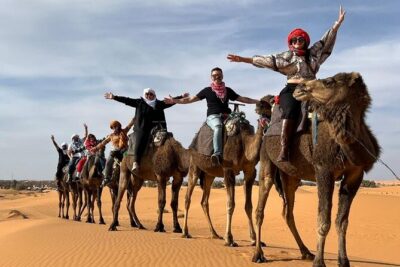
3 Days Desert Tour From Marrakech To Merzouga Dunes & Camel Trek
Read our review →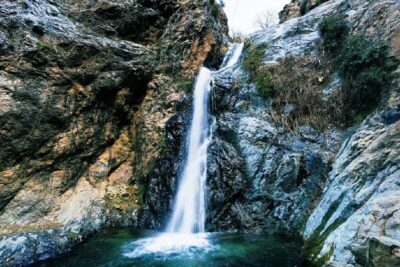
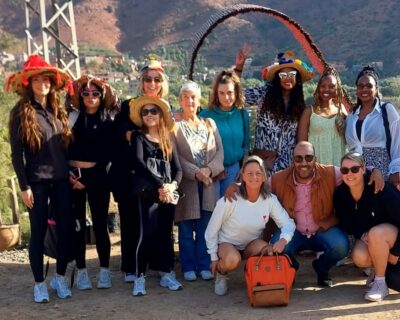
Ourika Valley Trip with Waterfall Hike & Lunch
Read our review →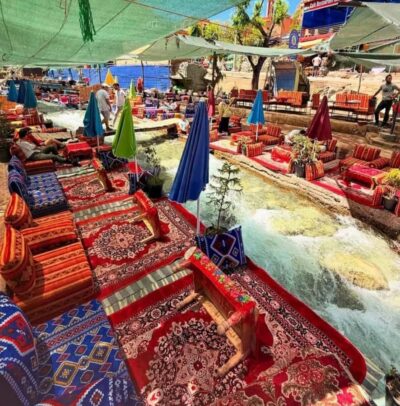
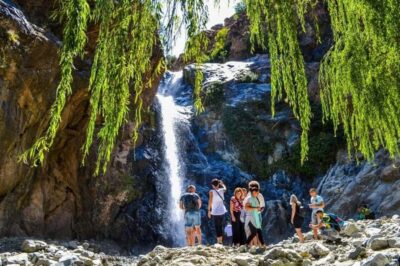
ourika valley lunch & guided hike to waterfalls
Read our review →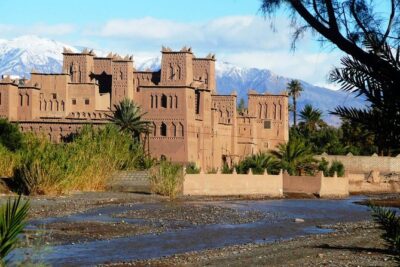
3-Day Tour to Merzouga Erg Chebbi with Food & Camel Trek
Read our review →Browse the lists this tour appears in