
Reviewed · HISTORICAL TOURS
Discovery of Moroccan Culinary Heritage, History and Secrets
The best part of this Marrakech experience is the chance to learn Moroccan food inside a restored riad, not just sample it at a restaurant. A traditional cook, called a dada, teaches you how to season, bake, and cook, while an interpreter provides the introduction in French or English.
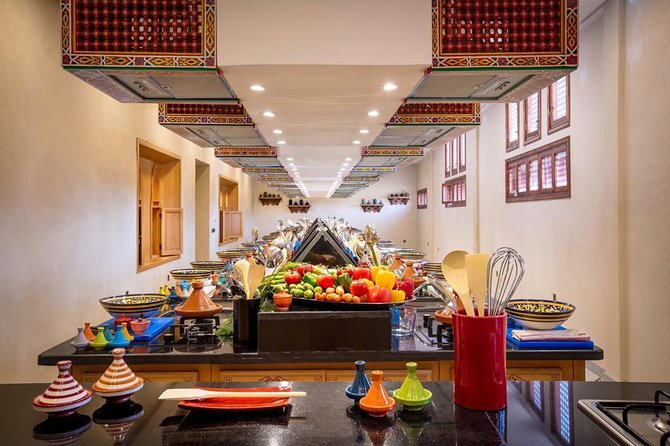
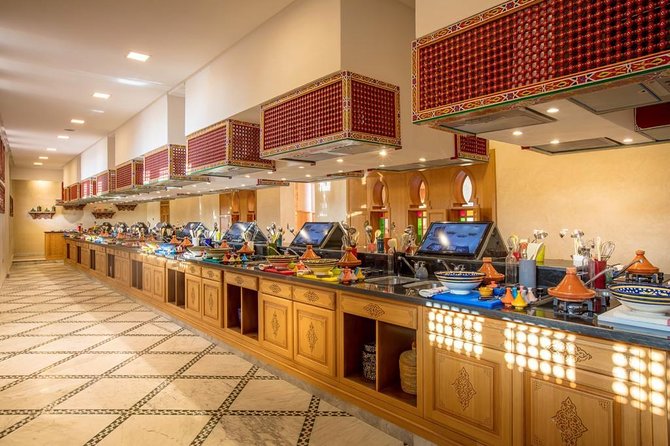
I like the purpose-built kitchen with 34 stations, which gives the class a more orderly feel than a casual demonstration. I also like the visit to the neighborhood bread oven and herbalist, since it connects the food on your plate with the daily life of the medina. The main consideration is timing: the activity is listed at about two hours, while the description also calls it a half-day experience, so confirm the schedule if you have a tight afternoon.
In This Review
- Key points to know before booking
- Starting at the Moroccan Culinary Arts Museum
- What the neighborhood bread oven adds
- Cooking with a traditional dada
- Tea, lunch, and the terrace
- The museum beyond the cooking class
- Is $69.79 a fair price?
- Language, group size, and practical details
- Who will enjoy this Marrakech class?
- Should you book the Moroccan Culinary Arts Museum experience?
- FAQ
- Where does the experience begin and end?
- How long does the experience last?
- What dishes will I learn to prepare?
- Is lunch included?
- Is Moroccan wine available?
- What is the cancellation policy?
Key points to know before booking
- A dada leads the cooking class: Learn traditional methods for tagine, couscous, Moroccan salads, bread, and other dishes.
- The setting is part of the experience: The museum occupies a beautifully restored riad near the Bahia Palace, with a Moroccan living room and terrace.
- You visit local food sources: The program includes a bread oven and a district herbalist where spices are supplied.
- You eat what you prepare: Lunch, bottled water, coffee, and tea are included in the stated package, though one past booking reported having to pay for water and not receiving tea or coffee.
- Moroccan wine is optional: Alcoholic drinks are not included, so budget extra if you want wine with the meal.
- The group can reach 34 people: That is a useful capacity to know if you prefer a quiet, intimate class.
Starting at the Moroccan Culinary Arts Museum
You meet at the Moroccan Culinary Arts Museum on Rue Riad Zitoun el Jdid, Marrakesh 40000. The museum sits only a few metres from the Bahia Palace, making it fairly easy to pair with a visit to one of Marrakech’s best-known palaces.
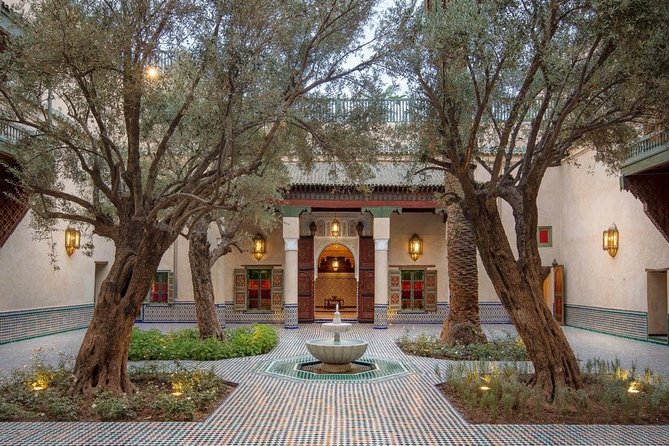
The entrance leads into a restored riad with the traditional inward-facing design that makes Marrakech houses so appealing. The courtyard and decorative rooms provide a calm contrast to the crowded streets outside. The building itself is one of the strongest parts of the experience, and the cooking class makes better use of it than a quick museum visit alone.
At reception, you receive an introduction to the course through a French or English interpreter. This matters because Moroccan cooking often depends on small judgments rather than a strict list of measurements. How much cumin? When should saffron go in? How soft should the onions be? Clear translation helps you follow those details.
The museum has displays about Moroccan food, preparation methods, serving customs, tableware, and regional ingredients. You may see photographs, videos, objects, and food stations explaining how familiar dishes are made. Some sections are modern and well organized, while other displays may feel lighter than the grand building around them.
If you are mainly interested in architecture, the riad can justify part of the visit by itself. If your priority is food, the class and tasting are the better reason to book this particular experience.
More Morocco trips worth a second look
- Marrakech Historical and Cultural Tour – Half Day City Tour
★ 4.5 · 1,180 reviews - Fez: Guided Walking Tour of the Historic Medina
★ 5.0 · 359 reviews - Full-day Historical Meknes Volubilis and Moulay Idriss Tour
★ 4.5 · 196 reviews
What the neighborhood bread oven adds
The bread portion is more than a short cooking trick. Moroccan bread is a daily food, and the visit to a local bread oven shows how dough moves from a household kitchen into the neighborhood’s shared food system.
The class includes a demonstration of Moroccan bread making, followed by a visit to the bread oven and a nearby herbalist. You also learn where some of the spices used in Moroccan cooking come from. That connection is valuable because it gives you a sense of how ingredients are bought, prepared, and used in ordinary life.
The herbalist visit should appeal to anyone who likes to understand spices beyond their names. Moroccan cooking is not simply about adding many seasonings at once. The character of a dish comes from the order, proportion, and cooking time. The dada’s lessons focus on those small choices, including the art of dosing spices.
The available information does not specify how long each outside stop lasts. I would treat the bread oven and herbalist visits as supporting parts of the course, not as long guided tours. Their value comes from context and observation rather than a full market walk.
Cooking with a traditional dada
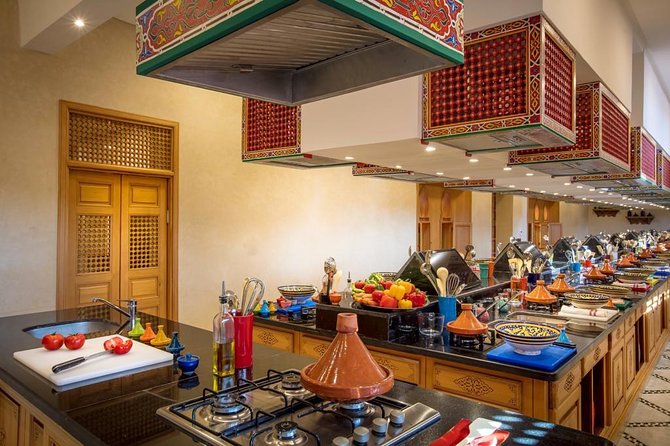
The hands-on class is the heart of the experience. You work in a teaching kitchen with 34 stations, a setup designed for instruction rather than restaurant service. That means you can focus on the process without trying to watch a demonstration from the back of a crowded room.
The cook teaches traditional Moroccan techniques, including bread baking and the preparation of dishes such as tagine and couscous. Past class menus also included two Moroccan salads and a dessert, but the exact menu can vary. The supplied description promises tagines, couscous, and other Moroccan dishes without naming one fixed recipe.
A tagine lesson is especially useful for you as a home cook because the word refers both to the dish and the cone-shaped cooking vessel. You learn how ingredients are layered, how spices are balanced, and how slow cooking brings out flavor. The class can also help clear up the difference between tagine and tangia, two dishes that are often confused by first-time visitors to Marrakech.
Couscous offers a different lesson. Its texture depends on preparation, not only on the vegetables, meat, or sauce served with it. A class gives you a chance to see the work involved instead of treating couscous as a simple side dish.
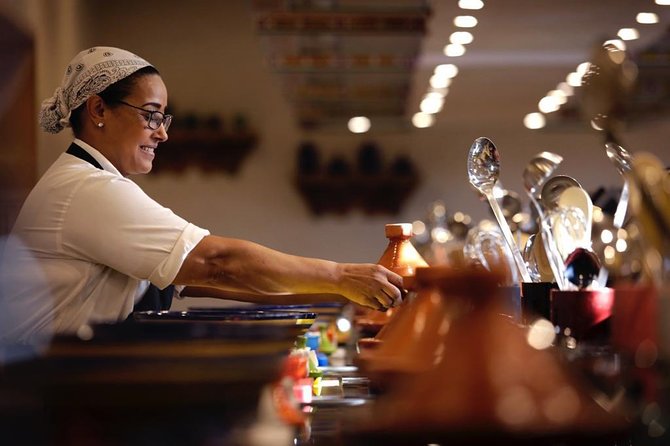
The teaching style appears to include verbal instruction and hands-on help from assistants. That is good news if you are not confident in the kitchen. You do not need to arrive as an expert, though you should expect to participate rather than simply watch.
The group limit of 34 is worth considering. The dedicated stations should make a large class manageable, but this is not the same as a private lesson. If you want long personal conversations with the dada, a smaller cooking school may suit you better. If you like a social class with room to work, the setup is a practical advantage.
Tea, lunch, and the terrace
Once the cooking is finished, you eat the food you helped prepare. Lunch is included in the stated price, along with bottled water and coffee or tea. The meal gives the class a clear payoff: you are not just collecting notes, you are sitting down to taste the results.
The Moroccan tea ceremony is another important part of the experience. Tea in Morocco is tied to welcome and hospitality, and the ceremony gives you a cultural detail that a standard restaurant meal often misses. Pay attention to the serving style, the pouring, and the role tea plays after food.
The meal is served on the terrace, according to the tour description. This should be a pleasant change from the kitchen and museum rooms, especially after working with spices and hot dishes. Moroccan wine is available as an optional discovery, but alcoholic drinks are not included in the price.
There is one practical point to clarify before you begin. One past booking reported that bottled water was charged separately and that tea or coffee was not offered. This conflicts with the stated inclusions, which list both water and coffee or tea. I would politely confirm what is included at reception, especially if the wine option interests you.
A different kind of day out, same corner of Morocco:
- Marrakech: Agafay Desert Sunset, Camel Ride, and Dinner Show
★ 4.6 · 35,119 reviews - From Marrakech: Ouzoud Waterfalls Guided Hike and Boat Trip
★ 4.7 · 33,630 reviews - Marrakech: Agafay Desert Quad & Camel Rides with Dinner Show
★ 4.8 · 27,382 reviews - Marrakech: Agafay Desert Quad Biking Tour with Dinner-Show
★ 4.8 · 16,569 reviews
The museum beyond the cooking class
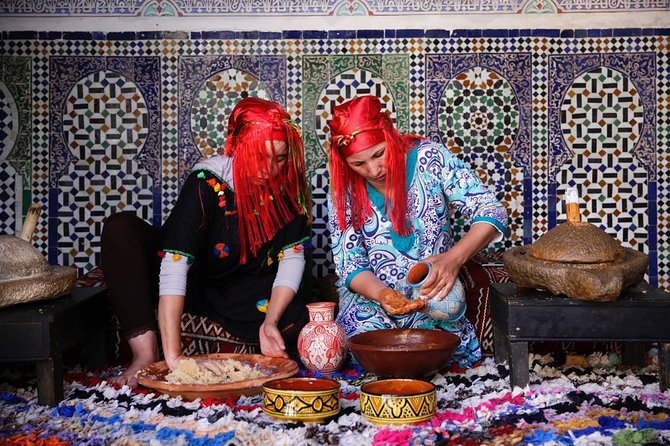
The Culinary Arts Museum can be visited as part of the broader experience, and it helps explain the food before or after you cook it. Exhibits cover Moroccan recipes, food traditions, preparation methods, serving customs, and regional ingredients.
You may find displays showing how bread is made, how pastilla is prepared, and how different foods are presented. The museum also includes dinnerware, tables, and chairs connected to Moroccan dining. These details may seem small, but they show that food is tied to setting and ceremony, not just ingredients.
Some earlier museum descriptions refer to several floors and a terrace. The cooking experience itself takes place on the second floor, where the reception, kitchen stations, and Moroccan living room are located. The museum opened as a newer attraction, so the presentation has a clean, modern quality in parts.
I would set your expectations correctly. This is not a major national museum with a large collection of rare objects. Its displays are compact and food-focused. Some sections may feel a little underwhelming if you are expecting a full historical museum. The appeal is the combination of building, food, videos, demonstrations, and tasting.
That combination makes the museum more useful for a first visit to Marrakech than for someone seeking an academic study of Moroccan cuisine. You get a quick introduction to the country’s food culture, then immediately put some of it into practice.
Is $69.79 a fair price?
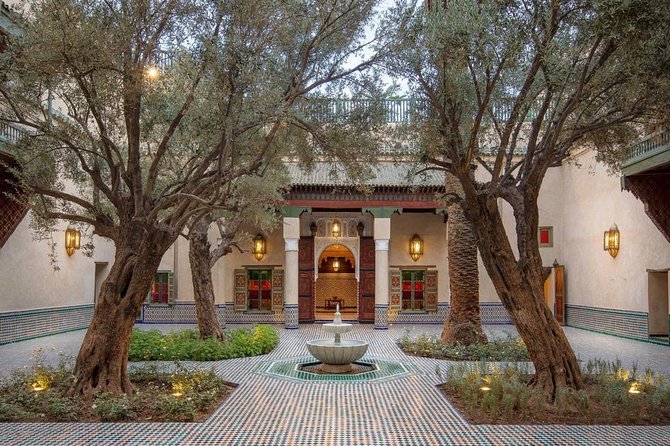
At $69.79 per person, this experience costs more than a simple museum entry or a meal in the medina. The value depends on how much of the program you use.
You are paying for several parts at once: interpretation, a traditional cooking lesson, access to a professional teaching kitchen, a bread-making demonstration, visits to a bread oven and herbalist, the tea ceremony, lunch, and time in the museum. If all elements run as described, the price is reasonable for a combined food and culture activity in Marrakech.
The value is strongest for you if you want to learn techniques you can repeat at home. A restaurant meal gives you flavor, but not the method. Here, you can ask how spices are measured, see how bread is handled, and take away a better understanding of tagine and couscous.
The price is less attractive if you only want a short museum visit or a few tastes. The museum has previously offered lower standalone admission prices, with tasting available as a separate option. If you are not interested in cooking, compare the cost of a museum ticket and tasting before booking the full class.
The optional wine also affects the final cost. Alcohol is not included, and the available information does not state the price. Ask before ordering so the meal does not come with an unexpected addition.
Language, group size, and practical details
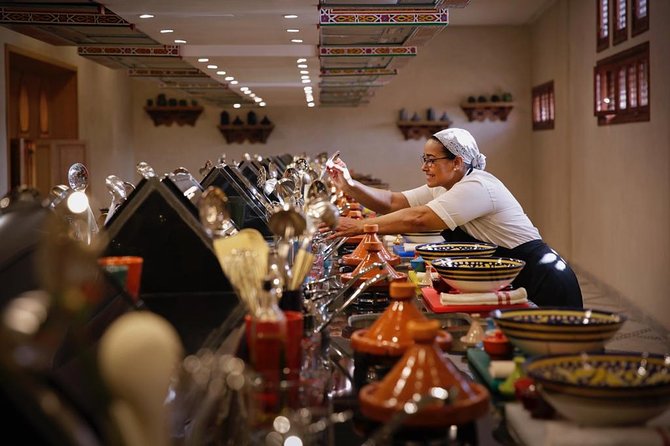
The experience is offered with a French or English interpreter, but language delivery should be confirmed when you book. One past participant booked an English class and received instruction in French instead. That can make a hands-on lesson much harder, especially when the class depends on timing and small cooking instructions.
The maximum group size is 34 people. The purpose-built stations should help, but the class may still feel active and social rather than quiet. Families can find it suitable, and one reported booking included a 12-year-old who took part in the cooking class.
The meeting and return point are the same: the Moroccan Culinary Arts Museum on Rue Riad Zitoun el Jdid. The location is near public transportation, and service animals are allowed. No hotel pickup is listed, so you should plan to reach the museum on your own.
Confirmation is normally sent at booking. If you book within one day of the start time, confirmation is subject to availability and may arrive as soon as possible. Free cancellation applies when you cancel at least 24 hours before the local start time. Cancellations inside 24 hours are not refunded, and late changes are not accepted.
Who will enjoy this Marrakech class?
I would choose this experience if you enjoy food, want some cultural context, and prefer learning by doing. It suits couples, families with older children, and home cooks who want more than a standard restaurant lunch.
It is also a good choice early in a Marrakech stay. After learning the basics of Moroccan spices, bread, and cooking methods, you will notice more when ordering food elsewhere. You may understand why one salad tastes sharper, why another is sweeter, or why a tagine has a different balance of spice and fruit.
The class is less suitable if you need a very precise schedule. The description gives both an approximate two-hour length and half-day wording, and the program contains several parts. Confirm the expected finish time before booking another activity immediately afterward.
I would also think twice if you dislike group classes or want a fully private chef lesson. A group of up to 34 can work well in a kitchen built for teaching, but it will not provide the same personal attention as a small class.
Should you book the Moroccan Culinary Arts Museum experience?
Yes, if you want a practical introduction to Moroccan cuisine in a handsome riad. The strongest reasons are the traditional dada, the teaching kitchen, the bread oven and herbalist visits, and the chance to eat the dishes you prepare.
Book with two checks in mind. Confirm that your selected language is available, and ask exactly what the $69.79 price includes, especially water, tea, and optional wine. Also verify the actual duration, since the published timing is not perfectly consistent.
If you only want to see the museum, buy the simpler museum or tasting option instead. If you want to understand Moroccan food and carry a few useful techniques home, the cooking experience offers better value and a more lasting connection to Marrakech.
FAQ
Where does the experience begin and end?
It begins and ends at the Moroccan Culinary Arts Museum on Rue Riad Zitoun el Jdid, Marrakesh 40000, Morocco.
How long does the experience last?
The stated duration is approximately two hours. The description also refers to the activity as a half-day cooking experience, so confirm the expected schedule when booking.
What dishes will I learn to prepare?
The program includes Moroccan tagines, couscous, bread, and other dishes. Past menus also included Moroccan salads and dessert, but the exact menu is not fixed in the provided information.
Is lunch included?
Yes. Lunch, bottled water, and coffee or tea are listed as included. Alcoholic drinks are not included.
Is Moroccan wine available?
Yes, Moroccan wine is offered as an optional part of the tasting. It costs extra because alcoholic beverages are not included.
What is the cancellation policy?
You can cancel at least 24 hours before the experience’s local start time for a full refund. Cancellations or changes made within 24 hours are not accepted for a refund.
Recently reviewed around Morocco
- 4-Days Marrakech to Marrakech Désert Tour★ 5.0 · 17 reviews
- Camel ride at sunset in Marrakech palm grove★ 5.0 · 17 reviews
- Agafay camel ride★ 5.0 · 20 reviews
- Camel riding in marrakech★ 4.5 · 17 reviews
- Marrakech to Atlas Mountains and 4 Valleys Day Trip★ 5.0 · 17 reviews
- Agafay Desert Adventure, Culture, and Relaxation, From Marrakech★ 5.0 · 25 reviews
- Quad excursion to the Agafay desert near Marrakech★ 5.0 · 44 reviews
- Camel ride and dinner Agafay desert★ 5.0 · 25 reviews
Historical Tours, compared.
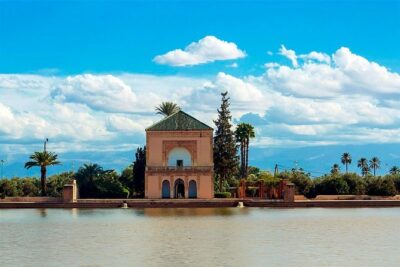
Marrakech Historical and Cultural Tour – Half Day City Tour
Read our review →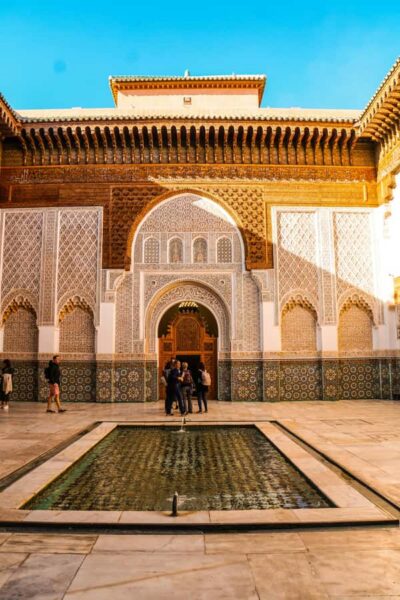
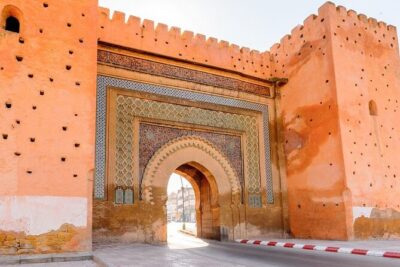
Full-day Historical Meknes Volubilis and Moulay Idriss Tour
Read our review →
Casablanca Cultural Tour: Medina, Views & Local Delights
Read our review →
Casablanca to Fez: Scenic & Historical Day Trip with Lunch
Read our review →
A Guided Walking Tour Through the Historic Medina
Read our review →
Discover the secrets of the Medina of Fez: guided cultural tour (private)
Read our review →Browse the lists this tour appears in