
Reviewed · MERZOUGA DESERT TOURS
4 Days Trip to Merzouga Desert
The best part of this Marrakech to Merzouga trip is the change of scenery. In four days, you move from the High Atlas and fortified villages to palm oases, red rock gorges, and the rolling Erg Chebbi dunes. The sunset camel ride and night at a Berber camp give the journey its big finish.
I like the mix of major sights and smaller cultural stops, especially Ait Ben Haddou and the Todra Gorges. I also like that two riad nights, three breakfasts, three dinners, transport, and a camel for each person are included. The catch is the long time on the road, with up to 10 or 11 hours in the vehicle on several days.
In This Review
- Key points to know before booking
- Why this four-day route works
- Day 1: Crossing the High Atlas to Ait Ben Haddou
- Day 2: Todra Gorge and the Erg Chebbi dunes
- Day 3: Sunrise, oasis life, music, and Rissani
- Day 4: The long road back to Marrakech
- Riads, meals, and what the price covers
- Who will enjoy this desert trip most
- Should you book the 4 Days Trip to Merzouga Desert?
- FAQ
- How long does the tour last?
- What time does the tour depart?
- Where does the tour start?
- Is hotel or riad pickup included?
- What accommodation is included?
- Are meals included?
- Can I choose a premium desert tent?
- Can I skip the camel ride?
- What is the cancellation policy?
Key points to know before booking
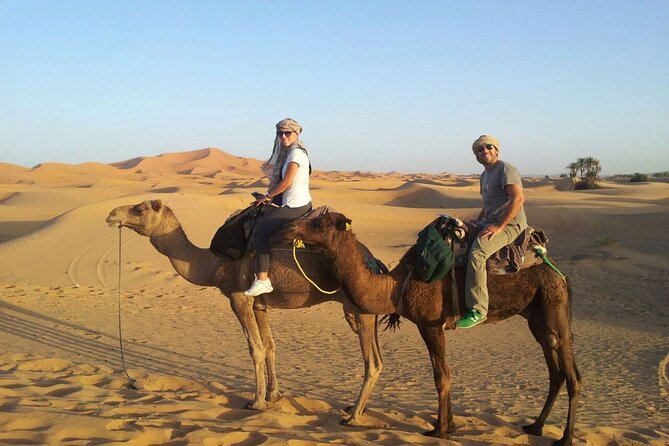
- A camel ride leads to a desert camp: Ride from Erg Chebbi at sunset, or arrange a 4×4 transfer for €65 per vehicle if a camel is not suitable.
- Ait Ben Haddou is a major cultural stop: The UNESCO-listed kasbah has appeared in films including Gladiator and Asterix and Obelix.
- The route is as important as the destination: You cross the High Atlas, Rose Valley, Dades Valley, Tafilalet palm grove, and Anti-Atlas.
- Accommodation includes two riad nights: Half-board means breakfast and dinner are covered, but you pay for lunches, drinks, and water.
- Camp comfort depends on your package: Premium tents have toilets and showers inside, while standard camp facilities are outside.
- This is a small-group road trip: The maximum group size is 17, with an English-speaking driver and a licensed guide available in several languages.
Why this four-day route works
A trip to Merzouga from Marrakech is not a quick side excursion. The desert is far from the city, so the road itself becomes part of the experience. This route gives you time to see the valleys, kasbahs, villages, and mountain passes in between.
At $290.36 per person, the price is reasonable for what is covered. You receive transport, a driver, a guide, three nights of accommodation, three breakfasts, three dinners, and the camel ride. You still need to budget for three lunches, bottled water, drinks, monument and museum tickets, and possibly a local guide at Ait Ben Haddou.
I see the value most clearly if you want one organized trip instead of arranging several hotels, transfers, desert transport, and local visits yourself. The tradeoff is freedom. You will follow a set route, stop according to the day’s timing, and spend a good part of each day in a minibus, minivan, or 4×4.
The group limit of 17 is useful. It is not a private tour, but it is more manageable than a large coach. Guides and drivers associated with the experience include Zakaria Ouaabi, Hassan, Mohamed, and Rachis. Zakaria receives especially strong praise for explaining local customs, history, and daily life, while Hassan is noted for careful organization and warm guiding.
More Merzouga Desert Tours in Marrakech
- From Marrakech: 3-Day Merzouga and Sahara Desert Tour
★ 4.9 · 15,308 reviews - From Marrakech: Merzouga 3-Day Desert Safari with Food
★ 4.7 · 12,232 reviews - 3 Days Desert Tour From Marrakech To Merzouga Dunes & Camel Trek
★ 5.0 · 10,125 reviews
Day 1: Crossing the High Atlas to Ait Ben Haddou
The first day begins at 8:00 AM and runs for about 10 hours. You leave Marrakech and climb toward the High Atlas, crossing the Tizi N’Tichka Pass. The road brings frequent views over mountain valleys and Berber villages, with several stops to look around and take photographs.
The mountain crossing is a good reminder that Morocco changes quickly. Marrakech’s busy ochre streets give way to high, dry slopes and scattered settlements. The stops matter because a long mountain drive is easier when you can get out, stretch, and take in the view.
The day also includes a visit to an argan oil cooperative. You can see how the oil is made and learn why it is used for both food and body care. This is a practical cultural stop, though some people may prefer to spend more time at the historic sites.
The main event is Ait Ben Haddou, a fortified village and UNESCO World Heritage Site. Its earth-colored buildings rise along a hillside, giving you a clear sense of how defensive settlements were built along old trade routes. The site has also served as a film location for Gladiator, Asterix and Obelix, Sahara, and The Jewel of the Nile.
A local guide at Ait Ben Haddou costs €2 per person and is not included. I would consider paying it if you want more than a walk through the lanes. The main group guide may explain the wider region, but the local guide fee covers a more focused visit to the kasbah.
After lunch, the road continues through Ouarzazate toward the Rose Valley and Dades Valley. Lunch is not included, so keep Moroccan dirhams ready for the meal and for water. The day ends at a riad in the Dades area, with dinner and breakfast included.
Day 2: Todra Gorge and the Erg Chebbi dunes
Day two also lasts about 10 hours, but it brings the sharpest change in scenery. You travel along the road of a thousand kasbahs toward Todra Gorge, where limestone walls rise around a narrow route shaped by water over a very long period.
You stop for a walk and time to admire the gorge. This is one of the day’s best breaks because it lets you experience the scale of the rock rather than simply seeing it through a vehicle window. The area is also known for climbing, though climbing is not listed as part of the tour.
The road continues to Touroug for lunch, then heads toward Erg Chebbi. After arriving at the dunes, you have mint tea and around 30 minutes to rest before the camel ride.
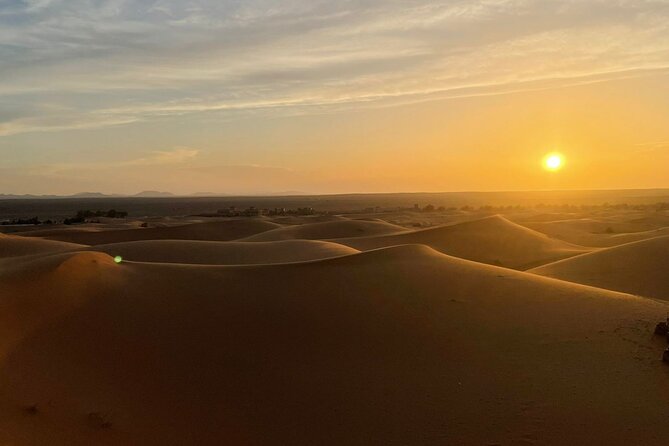
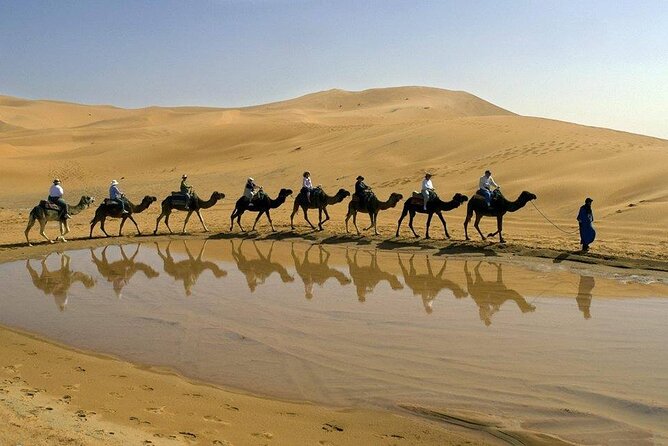
The camel ride lasts about half an hour according to the schedule, taking you from the dunes to the tented camp. Its timing is the real attraction. You are riding as the sun drops, watching the sand shift from pale gold to deeper orange and red. At the camp, dinner is served, followed by a night in the desert.
You receive one camel per person. If back pain makes riding a poor choice, a 4×4 transfer is available for €65 per vehicle. That price is per vehicle, not per person, so it may be a practical option for a small family or group. The camel trek is specifically not recommended for people with back pain.
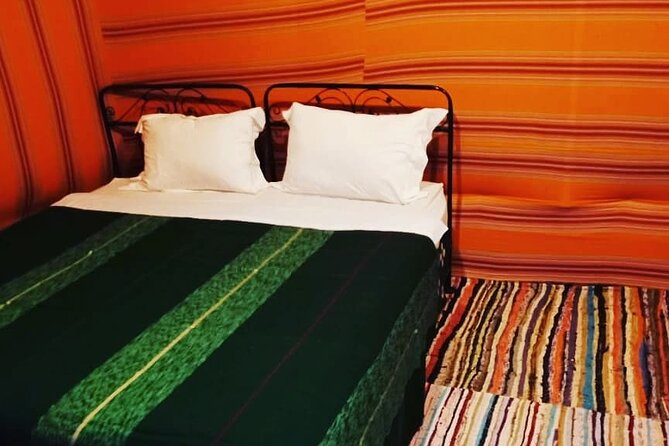
The camp has two levels of comfort. Standard and premium tents are separate areas. Premium tents have the toilet and shower inside the tent, while standard tents have those facilities outside. Food, furnishings, and decoration also differ. Check which package you are booking before you compare prices.
The desert night can be cold, especially in winter. Warm clothing is sensible even if the days are sunny. The camp provides blankets, and common areas may have heating, but you should not treat the desert as warm after dark.
Day 3: Sunrise, oasis life, music, and Rissani
Day three starts with a desert sunrise. This is worth setting an alarm for. The light across the dunes changes quickly, and the quiet makes the morning feel very different from the previous evening’s dinner and camp activity.
After breakfast, you return to Merzouga by camel. You then visit Hassi Labied, including its oasis and the khettara irrigation system. A khettara carries underground water through channels, allowing communities to support agriculture in a dry region. This stop adds useful context to the desert. It shows how people live with limited water instead of treating the dunes as an empty wilderness.
Next comes Khamlia, a village known for residents of Sub-Saharan African descent and their music. The stop offers a look at Morocco’s cultural connections south of the Sahara. The village is also associated with a national music and dance festival.
The afternoon visit is to Rissani, the old economic capital of Morocco. Its market takes place three times a week and includes animals, crafts, clothing, accessories, Berber medicines, and other goods. If your schedule matches a market day, this should be one of the more lively and useful stops on the route.
Rissani is not simply a shopping stop. It helps you understand the trade networks and local economy that connected desert communities for centuries. You will see a more everyday side of the region than you do at the polished camp.
The day is shorter, at about six hours, so it gives you a better chance to slow down. You return to Merzouga for dinner and a second night, this time in a riad rather than the desert camp.
More Marrakech trips worth a second look
- From Marrakech 4 Days Tour To Morocco Sahara Desert
★ 5.0 · 553 reviews - From Marrakech: Merzouga 4 Day Luxury Tour w/ Optional Quad
★ 4.8 · 332 reviews - From Marrakesh: 4-Day Private Atlas Mountains & Desert Tour
★ 4.8 · 197 reviews - 4 Days Desert Tour From Marrakech to Fes via Merzouga Dunes
★ 5.0 · 169 reviews
Day 4: The long road back to Marrakech
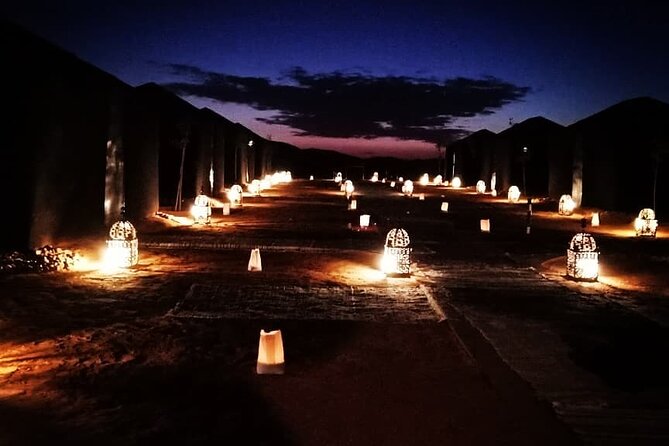
The final day lasts about 11 hours, with arrival in Marrakech expected around 8:30 PM. You leave after breakfast and pass through the Tafilalet palm grove, acacia plateaus, and rocky desert areas before reaching Alnif.
The route then crosses the Anti-Atlas and Tizi N’tfarkhin. These are less famous than the High Atlas, but they help complete the picture of southern Morocco. You are not simply retracing the first day. The return route gives you different mountain and desert views.
Around midday, you stop in Kalaat M’Gouna to rest, stretch, and eat traditional Moroccan food. Lunch remains at your own cost. This pause is important because the final drive is long, and the last section continues through Ouarzazate and back over the High Atlas.
The return to Marrakech is the main drawback of the trip. You will spend much of the last day in the vehicle, and there is no major overnight stop to break up the journey. If you have a late flight or a fixed evening reservation, allow extra time beyond the stated 8:30 PM arrival.
Still, the route gives you one final pass through the changing scenery, from desert rock to mountain roads and then the ochre city. The ride is tiring, but it allows you to reach Merzouga and return to Marrakech within four days.
Riads, meals, and what the price covers
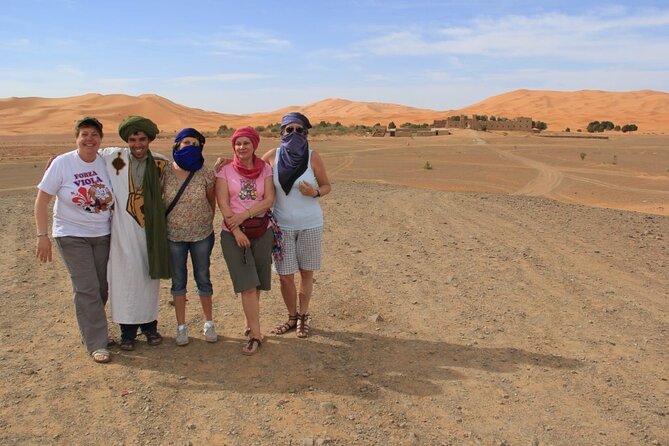
Two nights are in riads with half board, and one night is in the desert camp with half board. In practical terms, breakfast and dinner are included for all three nights. The accommodation is described as clean and comfortable, with some premium options offering more polished rooms and private tent facilities.
The meals included are useful for keeping costs under control. You still pay for lunch each day, mineral water, drinks, and any extra food. A 1.5-liter bottle of water costs roughly €1 to €2, so it is worth carrying some cash.
Dietary requirements such as vegetarian, vegan, and gluten-free meals can be accommodated if you state them at booking. I would mention the requirement clearly and early rather than trying to sort it out during the trip.
The experience includes a mobile ticket and confirmation at booking. The listed meeting point is Argana, at number 18, Znikat Rahba, near Jamâa el-Fnna in Marrakech. Pickup and return to your riad or hotel are optional extras, so confirm the exact meeting arrangement before the morning departure.
Who will enjoy this desert trip most
I would choose this tour if you want to see a large section of southern Morocco without managing the transport yourself. It suits first-time visitors who want a guided route, families who value included dinners and organized lodging, and anyone who wants both cultural stops and a proper desert night.
The tour can also work for people who want comfort without giving up the camp experience. The premium tent option is worth considering if an indoor shower and toilet matter to you. Standard camping is still part of the same desert setting, but the facilities and furnishings are simpler.
I would think twice if you dislike long drives, need a flexible schedule, or want several days in the dunes themselves. The desert portion is memorable, but the tour is a moving journey, not a slow desert retreat.
The camel ride also deserves an honest warning. A camel per person is included, but the ride may be uncomfortable if you have back pain. The 4×4 alternative is helpful, yet it costs extra and should be arranged rather than assumed.
Should you book the 4 Days Trip to Merzouga Desert?
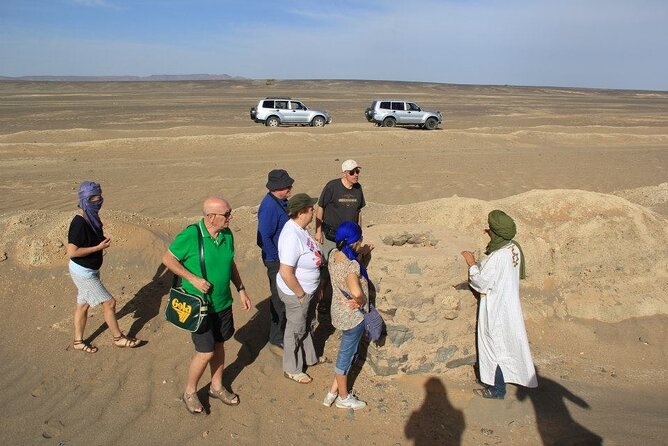
I would book it for the route, the camp night, and the range of stops packed into four days. Ait Ben Haddou, Todra Gorge, the Rissani market, Hassi Labied’s irrigation system, Khamlia, and the Erg Chebbi dunes give you more than a simple Marrakech to desert transfer.
The strongest choice depends on your tolerance for road time. If you can handle long days and want an efficient introduction to southern Morocco, $290.36 is solid value, especially with three dinners, three breakfasts, riad stays, transport, a guide, and the camel ride included.
Before paying, confirm three things: your pickup plan, the standard or premium camp, and whether the assigned guide is Zakaria, Hassan, or another member of the team. If those details suit you, this is a practical and memorable way to reach Merzouga.
FAQ
How long does the tour last?
The experience lasts four days and ends back at the Marrakech meeting point.
What time does the tour depart?
The day one schedule says departure from Marrakech is at 8:00 AM. The general start-time field lists 12:00 AM, so you should confirm the exact meeting time before departure.
Where does the tour start?
The listed meeting point is Argana, J2H6+CPV Jamâa el-Fnna, number 18, Znikat Rahba, Marrakech 40000, Morocco.
Is hotel or riad pickup included?
Pickup and drop-off at your riad or hotel are optional services with an extra charge. The listed start and end point is the Marrakech meeting point.
What accommodation is included?
You receive two nights in riads with half board and one night in a desert camp with half board.
Are meals included?
Three breakfasts and three dinners are included. Lunches, drinks, and mineral water are not included.
Can I choose a premium desert tent?
The experience offers standard and premium tent camps. Premium tents have the toilet and shower inside, while standard camp facilities are outside. Food, furnishings, and decoration can also differ.
Can I skip the camel ride?
Yes. A 4×4 transfer is available for €65 per vehicle. The camel ride is not recommended for people with back pain.
What is the cancellation policy?
You can receive a full refund by canceling at least six full days before the local start time. Canceling two to six days before may provide a 50% refund, while cancellation less than two days before is not refundable.
Recently reviewed around Marrakech
- 4-Days Marrakech to Marrakech Désert Tour★ 5.0 · 17 reviews
- Camel ride at sunset in Marrakech palm grove★ 5.0 · 17 reviews
- Agafay camel ride★ 5.0 · 20 reviews
- Camel riding in marrakech★ 4.5 · 17 reviews
- Marrakech to Atlas Mountains and 4 Valleys Day Trip★ 5.0 · 17 reviews
- Agafay Desert Adventure, Culture, and Relaxation, From Marrakech★ 5.0 · 25 reviews
- Quad excursion to the Agafay desert near Marrakech★ 5.0 · 44 reviews
- Camel ride and dinner Agafay desert★ 5.0 · 25 reviews
Merzouga Desert Tours, compared.
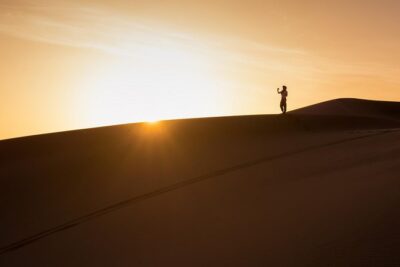
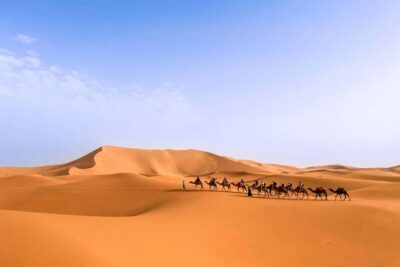
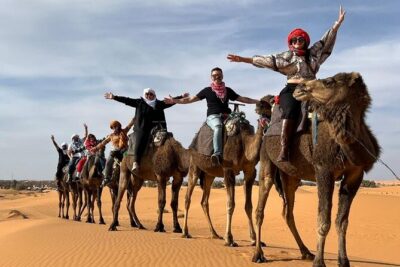
3 Days Desert Tour From Marrakech To Merzouga Dunes & Camel Trek
Read our review →
3-Day Marrakech to Merzouga Desert Tour: Camel Rides & Overnights
Read our review →
3-Day Marrakech to Fes Sahara Desert Tour via Merzouga
Read our review →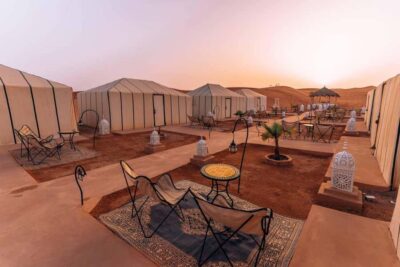
3-Day Merzouga Desert Experience Camel & Meals
Read our review →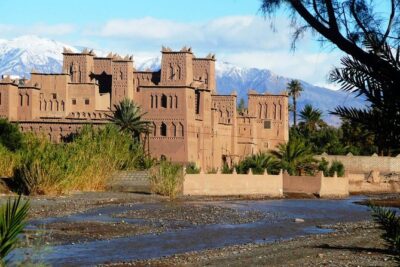
3-Day Tour to Merzouga Erg Chebbi with Food & Camel Trek
Read our review →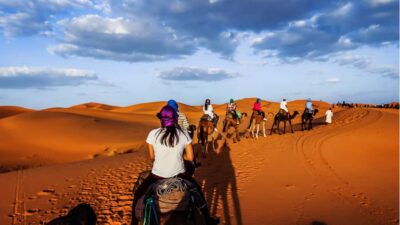
Sahara Desert 2-Day Tour with Merzouga Camp Stay
Read our review →Browse the lists this tour appears in