
Reviewed · MERZOUGA DESERT TOURS
4 Days Desert Tour From Marrakech to Fes via Merzouga Dunes
The best feature here is the route itself. You leave Marrakech behind, cross the High Atlas, pass kasbah villages and oases, sleep near the Merzouga dunes, then continue north to Fes. You do not have to return to Marrakech, which saves a long backtrack.
I like the two nights in the desert, since they give you more than a rushed camel ride and one night under canvas. I also like the mix of big sights and small encounters, from Ait Benhaddou and Todra Gorge to Gnawa music in Khamlia and tea with nomads.
The trade-off is time on the road. Day 1 takes about nine hours and Day 4 about ten, while the desert camp uses shared bathrooms. This is a good choice for seeing a lot of Morocco in one sweep, but not for travelers who want slow mornings and short drives.
In This Review
- Key points at a glance
- Why this Marrakech to Fes route works
- Day 1: Tizi-n-Tichka and Ait Benhaddou before Tinghir
- Day 2: Todra Gorge, oases, and the Merzouga dunes
- Day 3: Khamlia, nomadic tents, and your second desert night
- Day 4: Ziz Valley, Midelt, Azrou, and arrival in Fes
- What the vehicle and group size mean
- Accommodation, meals, and comfort
- The people and cultural stops
- Is $568.78 good value?
- Who should book this experience?
- Should you book the Marrakech to Fes desert tour?
- FAQ
- Where does the tour start?
- Where does the tour end?
- How long is the tour?
- How many nights are spent in the desert?
- Are camel rides included?
- Is sandboarding included?
- Is the 4×4 desert tour included?
- Are meals included?
Key points at a glance
- A one-way route from Marrakech to Fes: You keep moving north instead of returning to Marrakech after the Sahara.
- Two nights near the Merzouga dunes: The extra night allows a fuller desert program, including Khamlia, nomadic tents, and a second evening among the dunes.
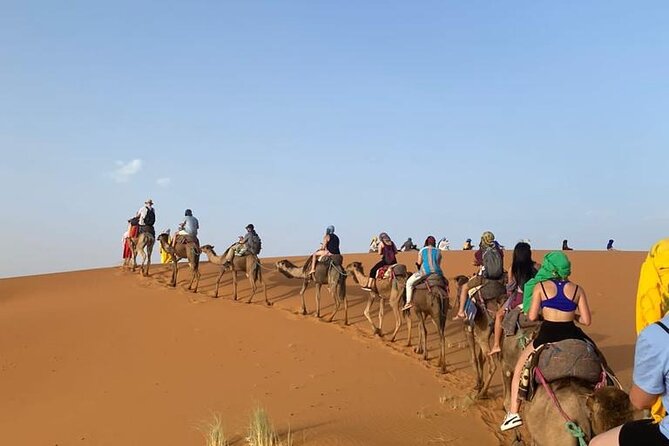
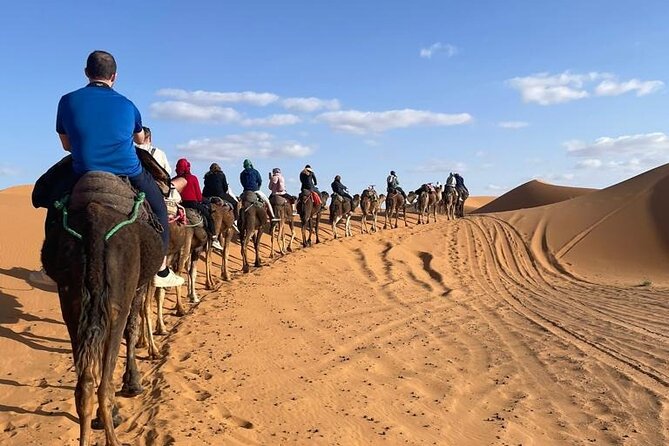
- Sunset and sunrise by camel: A camel ride is included in both directions, with one camel per person.
- Ait Benhaddou and Todra Gorge: The route links two of southern Morocco’s most memorable sights.
- Optional desert activities: Sandboarding is included, while the third-day 4×4 outing is optional and should be clarified before departure.
- Small-group transport: The maximum group size is 15, with an air-conditioned vehicle and pickup offered.
Why this Marrakech to Fes route works
This four-day trip solves a common Morocco problem: the Sahara is far from both Marrakech and Fes. If you visit Merzouga from Marrakech and return the same way, much of your time goes over roads you have already seen. Here, the desert becomes part of a larger crossing.
You begin in Marrakech at about 7 a.m., with pickup from your accommodation or the stated meeting point near Café de France at Jemaa el-Fnaa. The early start matters. The route is long, and the first day includes the Tizi-n-Tichka pass, Ait Benhaddou, Ouarzazate, and the drive to Tinghir.
The price is $568.78 per person. That is not a budget bus transfer, but it covers three nights, three breakfasts, three dinners, fuel, an air-conditioned vehicle, and camel rides for sunset and sunrise. You are paying for the route and the overnight stops, not just transportation.
Lunches, drinks, tips, personal expenses, some entrance fees, and the Ait Benhaddou village guide cost extra. The film studio ticket in Ouarzazate is listed at 5 euros per person. Add these costs before deciding what the package means for your budget.
More Merzouga Desert Tours in Marrakech
- From Marrakech: 3-Day Merzouga and Sahara Desert Tour
★ 4.9 · 15,308 reviews - From Marrakech: Merzouga 3-Day Desert Safari with Food
★ 4.7 · 12,232 reviews - 3 Days Desert Tour From Marrakech To Merzouga Dunes & Camel Trek
★ 5.0 · 10,125 reviews
Day 1: Tizi-n-Tichka and Ait Benhaddou before Tinghir
The first day is a full road day, but it begins with fine mountain scenery. The vehicle climbs across the Tizi-n-Tichka pass, where you get broad views of the High Atlas and traditional Berber villages. Road conditions and stops can affect the pace, so expect a moving day rather than a string of long visits.
Ait Benhaddou is the main stop. This fortified village, or ksar, is a UNESCO World Heritage site built from earthen-colored walls and towers. You have time to walk through the settlement and see why it has become one of Morocco’s most recognizable sights.
Lunch is at Ait Benhaddou and is not included. The village guide is also not included, as is the kasbah entrance fee. You can visit without adding every extra, but a local guide may help explain the layout and construction instead of leaving you to see only the photogenic walls.
The route then reaches Ouarzazate, where the group stops at a supermarket. This is a useful practical pause. Pick up snacks, water, or anything you may need for the next two days, since lunch and drinks are your responsibility.
The final stretch takes you to Tinghir, where you spend the night in a hotel with dinner and breakfast. One particularly useful detail is that the hotel may have a pool, giving you a chance to cool down after the long crossing. Do not expect a sightseeing-heavy evening. Day 1 is mainly about getting from Marrakech into southern Morocco.
Day 2: Todra Gorge, oases, and the Merzouga dunes
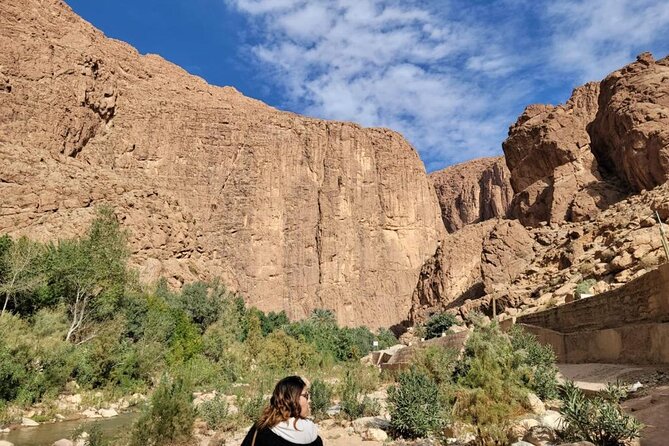
After breakfast, you continue toward Merzouga. The route passes Berber villages and the Todra Gorge, where steep rock walls close around the road and walking area. This is one of the day’s strongest natural stops, especially after the open mountain views of the morning.
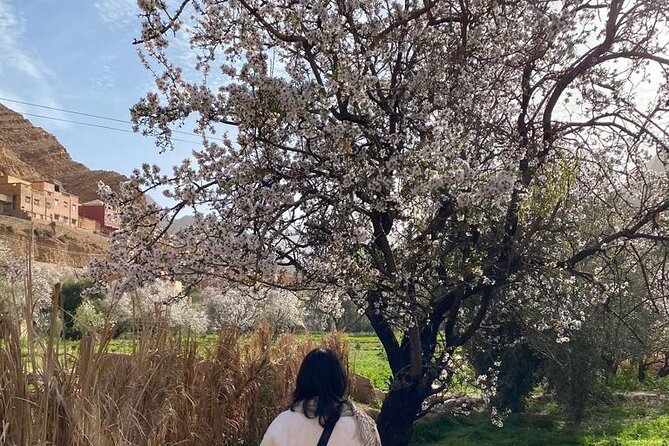
You also pass through oasis areas and towns including Tinjdad, Jorf, and Erfoud. These places mark the gradual change toward the Tafilalet oasis region. The scenery shifts from mountain valleys to palms, dry ground, and broad desert country.
You reach a hotel near Merzouga and pause before the camel ride. Leave most of your luggage there and pack only what you need for the night in a small bag. This is not just a suggestion. A light bag makes the camel ride easier and keeps the camp portion simple.
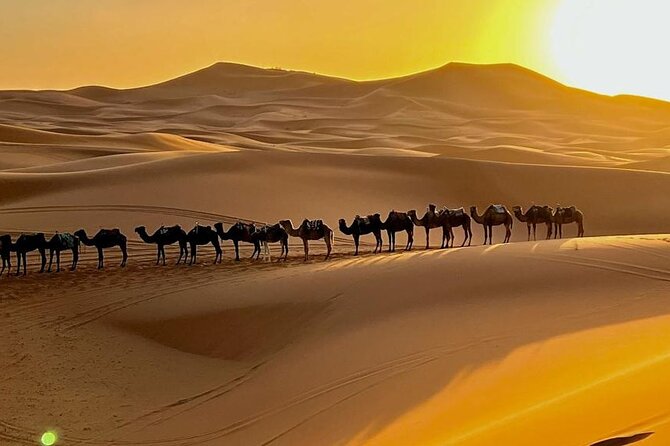
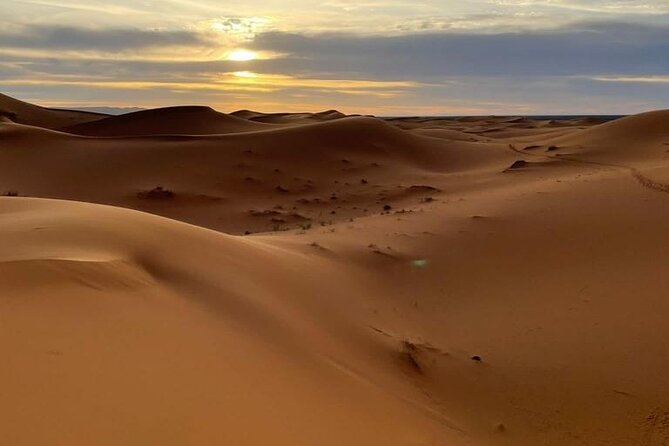
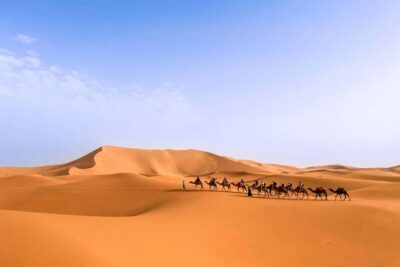
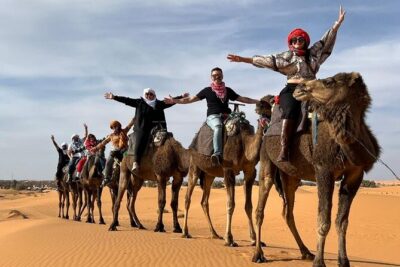
The sunset camel ride is included. You ride one camel per person across the Erg Chebbi dunes, with time to photograph the changing light. The ride ends at the desert camp, where you leave the camels and walk the final stretch.
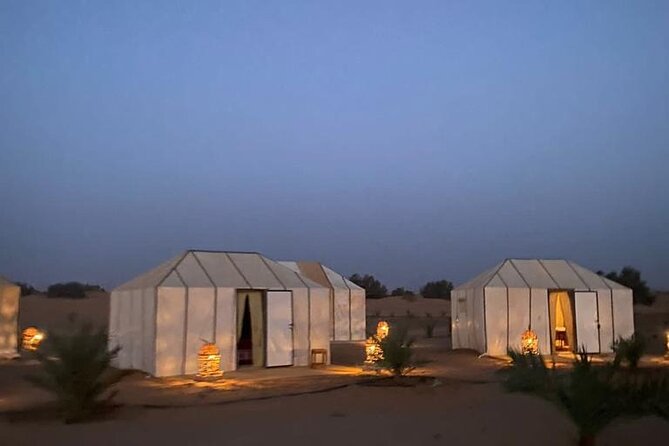
The camp has standard accommodation and shared bathrooms. That is an important distinction. You receive a proper overnight shelter, dinner, and breakfast, but this is not a private hotel room with a private bathroom. If privacy is central to your comfort, ask what camp category is available before booking.
Dinner is included, and the evening takes place among the dunes rather than in a town hotel. The value here is the setting. You have time to watch the sunset, eat at camp, and wake up close to the sand instead of making a quick photo stop and leaving.
Day 3: Khamlia, nomadic tents, and your second desert night
The extra desert day is the reason this trip can feel less rushed than shorter Marrakech to Merzouga programs. You wake early for the sunrise, then take a camel trek back to the hotel area for a quick shower and breakfast arrangements.
After that, the day turns toward the local desert communities. You visit Khamlia to hear live Gnawa music, a strong cultural stop that gives the day more character than another stretch of sand alone. The music is part of the village’s identity, and it offers a different side of the Sahara experience.
The route continues toward nomadic camps. You sit under Berber tents, drink hot tea, and see a way of life very different from the towns along the main road. The program lists a picnic lunch, but lunch arrangements deserve a quick check before departure because meals elsewhere on the tour are generally not included.
The afternoon returns to the dunes. Sandboarding is included, so you can try sliding down the sand if you have the energy. The activity is simple and weather-dependent in comfort, but it gives you something active to do between the camel rides and the long vehicle sections.
A 4×4 excursion is also mentioned as an optional activity, and the information says the 4×4 vehicle is not included. Treat this as an add-on rather than part of the base price. Confirm the cost and exactly what it covers before agreeing.
You spend a second night at the camp with shared bathrooms. This extra night is valuable because you are not forced to pack up immediately after one sunset. It also gives you room for the Khamlia and nomad visits, which are among the most distinctive parts of the program.
More Marrakech trips worth a second look
- From Marrakech 4 Days Tour To Morocco Sahara Desert
★ 5.0 · 553 reviews - From Marrakech: Merzouga 4 Day Luxury Tour w/ Optional Quad
★ 4.8 · 332 reviews - From Marrakesh: 4-Day Private Atlas Mountains & Desert Tour
★ 4.8 · 197 reviews - Marrakech to Merzouga: 4 Day Adventure with 2 Nights in Desert
★ 5.0 · 162 reviews
Day 4: Ziz Valley, Midelt, Azrou, and arrival in Fes
The final day begins with breakfast and another camel ride back to the hotel at the edge of the dunes. You have a quick shower before the long drive toward Fes. This is a practical arrangement, but do not expect a relaxed morning at the camp.
The first scenic pause is over the Ziz Valley. From above, you can see how the oasis cuts through the dry terrain. It is a useful reminder that southern Morocco is not simply one endless field of sand. Water, palms, villages, and rocky valleys shape the region.
You cross the High Atlas again and stop in Midelt for lunch. Lunch is not included, so budget for it. Midelt breaks up the long drive and gives you a chance to eat before the northern part of the route.
The vehicle then passes Azrou and Ifrane, with a stop in the cedar forest to see monkeys. The change is striking. After two nights beside the Sahara, you move into a cooler mountain setting with forested slopes before continuing to Fes.
Day 4 lasts about ten hours. The stop pattern helps, but this is still a transfer day with sightseeing along the way. You arrive in Fes at the end rather than returning to Marrakech, which is the main logistical advantage of the tour.
What the vehicle and group size mean
An air-conditioned vehicle, fuel, and pickup are included. The maximum group size is 15 people, so the trip is not a private tour, but it is also not designed for a huge coach group. Your experience will depend partly on the final group size and the time needed for pickups.
You should be ready for substantial driving. The itinerary gives about nine hours on Day 1, eight on Day 2, five on Day 3, and ten on Day 4. Day 3 is the breathing space. The other days connect distant parts of Morocco and cannot be treated as short excursion days.
Pickup is offered, while the listed starting point is Hôtel Restaurant Café de France by Jemaa el-Fnaa. Confirm your exact pickup details after booking. The mobile ticket and booking confirmation make the start simple, but you still need to be ready early.
A few practical habits will help. Keep water, sun protection, a small overnight bag, and comfortable walking shoes close at hand. Your main luggage remains at the Merzouga hotel while you go to camp, and the road stops are easier when you are not searching through a large suitcase.
Accommodation, meals, and comfort
Three nights of standard accommodation are included, with dinner and breakfast each night. The first night is in Tinghir, while the next two are at the desert camp. The desert nights use shared bathrooms, so pack with basic facilities in mind.
Breakfast and dinner are covered, but lunches and drinks are not. This gives you some choice, though you should keep cash available for meals, snacks, and tips. A supermarket stop in Ouarzazate is well timed for supplies.
The accommodation is functional rather than luxurious. The point is the route, especially the desert nights, not high-end lodging. If a pool is available at the Tinghir hotel, it is a welcome extra, but the supplied details do not promise the same level of comfort at every stop.
The camp setup also means you should pack lightly for the overnight portion. Take only essentials with you on the camel ride. A smaller bag, warm layer, toiletries, and water will be more useful than bringing your full case across the dunes.
The people and cultural stops
The tour is at its best when it moves beyond views. Ait Benhaddou gives you architecture and a famous historic setting. Khamlia adds music, while the visit to nomadic tents brings tea and conversation under Berber shelter.
Guide quality matters on a route like this. Aziz is specifically named in the experience feedback as a helpful, friendly guide, so if he is assigned to your departure, you may appreciate his presence. Guide assignments can vary, so treat the name as a useful detail to confirm rather than a guarantee.
The tour also allows for cultural contact without pretending the desert is only a photo backdrop. Gnawa music, tea, Berber villages, and the nomadic stop each offer a different point of contact. You should still approach these moments with respect and ask before taking close-up photographs.
Is $568.78 good value?
For four days and three nights, the price can make sense if you value convenience. You receive the vehicle, fuel, accommodation, three breakfasts, three dinners, two camel transfers, and a route linking Marrakech, the Sahara, and Fes.
The price is less attractive if you plan to arrange every part yourself or if you dislike group transport. Extra spending is unavoidable for three lunches, drinks, tips, personal purchases, and some entry or guide fees. The optional 4×4 activity may add more.
The tour is also priced around access to remote places. Merzouga is not a quick side trip from Marrakech, and reaching Fes afterward adds another long crossing. For a first visit to Morocco with limited time, the one-way route may be worth more than a cheaper return trip that repeats the road.
The strongest value is the second desert night. A shorter program may get you to the dunes, but this plan gives you time for Khamlia, the nomadic tents, sandboarding, and another evening in camp. If you want the Sahara to be a central part of your Morocco trip, that extra night matters.
Who should book this experience?
I would choose this tour if you want to combine several major southern Morocco stops with a final arrival in Fes. It suits people who prefer a planned route, do not want to arrange remote transport, and can handle long days in a vehicle.
It is also a good match if you want a real desert stay rather than a single camel ride. The second night creates space for cultural visits and optional activities, and the sunrise and sunset rides are already included.
I would hesitate if you need private bathrooms, dislike early starts, or want to spend several hours at each attraction. The road time is part of the deal. You should also confirm how the optional 4×4 activity works, since it is not included in the base package.
Most people can participate, and the group is capped at 15. Free cancellation is available up to 24 hours before the start time, which gives you some flexibility if your Morocco plans change.
Should you book the Marrakech to Fes desert tour?
Book it if you want a practical four-day crossing with two nights near Merzouga, included camel rides, and arrival in Fes instead of a return to Marrakech. The mix of Ait Benhaddou, Todra Gorge, oasis towns, Gnawa music, nomadic tents, and the cedar forest gives you far more than a simple desert transfer.
Skip it if you want a slow, private trip with hotel-level facilities throughout. The long drives, shared camp bathrooms, extra lunch costs, and possible add-ons are real considerations.
For a first Morocco itinerary with limited time, I find the route compelling. Pack light for the camp, bring cash for extras, confirm the 4×4 cost, and prepare for long road days. If those conditions suit you, this is a strong way to connect Marrakech, the Sahara, and Fes in one continuous journey.
FAQ
Where does the tour start?
The listed meeting point is Hôtel Restaurant Café de France near Jemaa el-Fnaa in Marrakech. Pickup from your accommodation or another agreed location is offered. The scheduled start time is 7:00 a.m.
Where does the tour end?
The tour ends in Fes, Morocco, after the drive from Merzouga through the Ziz Valley, Midelt, Azrou, and Ifrane.
How long is the tour?
The experience lasts approximately four days and includes three nights of accommodation.
How many nights are spent in the desert?
Two nights are spent at a desert camp near the Merzouga dunes. Both desert nights use standard accommodation with shared bathrooms.
Are camel rides included?
Yes. Camel rides for sunset and sunrise are included, with one camel per person.
Is sandboarding included?
Yes. Sandboarding is listed among the included features.
Is the 4×4 desert tour included?
The third-day 4×4 activity is optional, and the 4×4 vehicle is not included in the base tour. Confirm the additional price and arrangements before taking part.
Are meals included?
Three breakfasts and three dinners are included. Lunches, drinks, tips, and personal expenses are not included.
Recently reviewed around Marrakech
- 4-Days Marrakech to Marrakech Désert Tour★ 5.0 · 17 reviews
- Camel ride at sunset in Marrakech palm grove★ 5.0 · 17 reviews
- Agafay camel ride★ 5.0 · 20 reviews
- Camel riding in marrakech★ 4.5 · 17 reviews
- Marrakech to Atlas Mountains and 4 Valleys Day Trip★ 5.0 · 17 reviews
- Agafay Desert Adventure, Culture, and Relaxation, From Marrakech★ 5.0 · 25 reviews
- Quad excursion to the Agafay desert near Marrakech★ 5.0 · 44 reviews
- Camel ride and dinner Agafay desert★ 5.0 · 25 reviews
Merzouga Desert Tours, compared.
3 Days Desert Tour From Marrakech To Merzouga Dunes & Camel Trek
Read our review →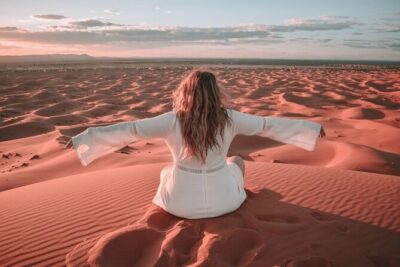
3-Day Marrakech to Merzouga Desert Tour: Camel Rides & Overnights
Read our review →
3-Day Marrakech to Fes Sahara Desert Tour via Merzouga
Read our review →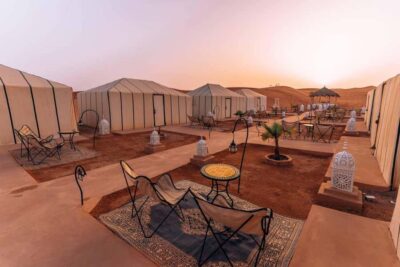
3-Day Merzouga Desert Experience Camel & Meals
Read our review →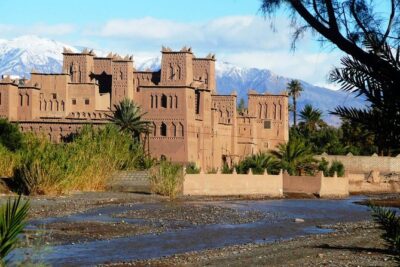
3-Day Tour to Merzouga Erg Chebbi with Food & Camel Trek
Read our review →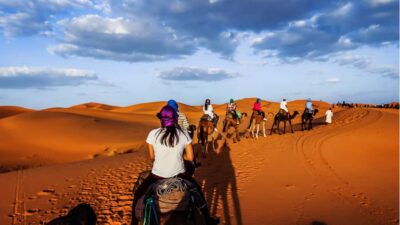
Sahara Desert 2-Day Tour with Merzouga Camp Stay
Read our review →Browse the lists this tour appears in