Reviewed · TOURS
Marrakech: Cultural Bicycle Tour with Pastry and Tea
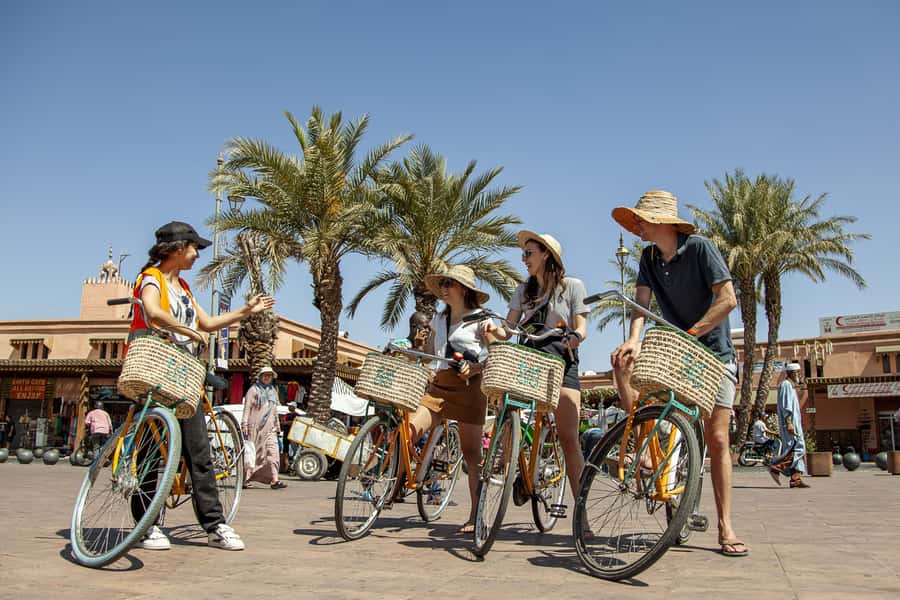
Marrakech’s best stories are often found away from the famous monuments. On this three-hour cultural bike tour, you pedal through narrow medina lanes, pause at a working bakery and tile workshop, then cross into modern Gueliz and Hivernage. The result is less a checklist of sights than a moving lesson in daily Moroccan life.
I like the stop at the community bakery, where bread is baked in a clay oven and treated as a daily necessity, not a fancy food. I also like Pikala’s youth-training program, which gives guides such as Ayoub, Rabab, Hamid, Kenza, and Yassir a chance to share their city in their own words. The catch is the traffic. You need to be a confident cyclist, especially during the first hour among mopeds, donkeys, carts, pedestrians, and other bikes.
In This Review
- Key points before you book
- Why a bicycle is the right way to meet Marrakech
- Starting at Pikala Bikes and entering the medina
- Bread, clay ovens, and the daily life of a neighborhood
- Zellige tiles and the patience of handwork
- Place des Ferblantiers and the palace district
- The hammam as a social institution
- Koutoubia Mosque and the move into modern Marrakech
- Finishing with tea, pastries, and local conversation
- What the price means for your day
- Who should book this bike tour
- Should you book it?
- FAQ
- How long is the Marrakech cultural bicycle tour?
- Where does the tour start and finish?
- Which languages are available?
- Is food and drink included?
- Do I need to be a confident cyclist?
- What happens if I need to cancel?
Key points before you book
- Clay-oven bakery: Watch bread being baked and learn why bread has such an important place in Moroccan households.
- Zellige tile craftsmanship: See the careful work behind the geometric tiles used in Moroccan palaces and mosques.
- Medina and modern city in one ride: The route links narrow souks with the wider boulevards of Gueliz and Hivernage.
- Local guide experience: Pikala trains Moroccan youth, and guides often add personal insight about family life, religion, customs, and the city today.
- Traffic requires confidence: The ride is generally gentle and flat, but navigating busy streets takes attention.
- Tea and pastries at the finish: Water, fruit, Moroccan pastries, and drinks at Pikala Cafe are included.
Why a bicycle is the right way to meet Marrakech
Marrakech can feel confusing on foot. The medina is a maze of alleys, workshops, shops, prayer spaces, homes, and market lanes. A bicycle lets you cover more ground, but it also puts you at eye level with ordinary street life.
That is the real value here. You are not simply riding past a wall and hearing its construction date. You are stopping to understand where bread is made, how tiles are shaped, what a hammam means to a neighborhood, and how the old city connects to the newer districts.
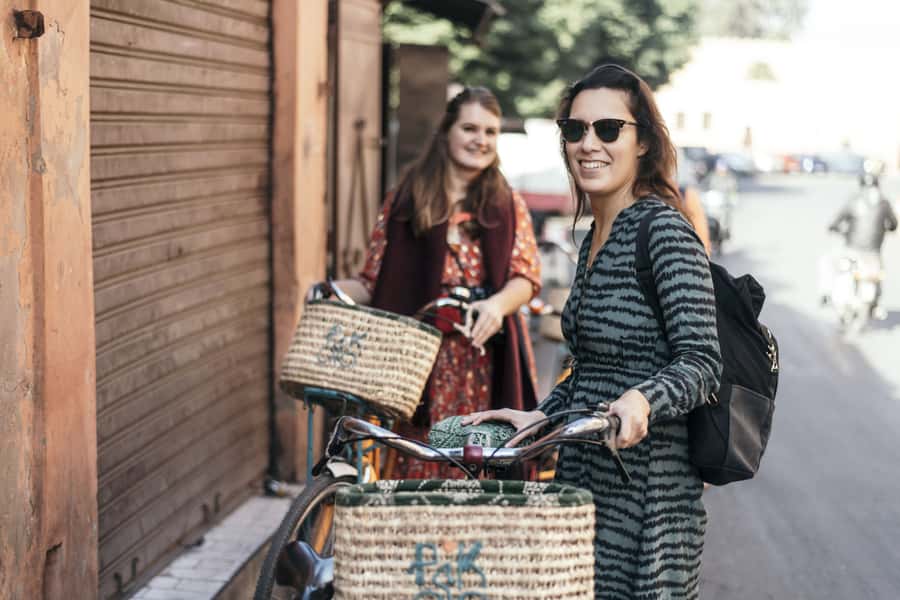
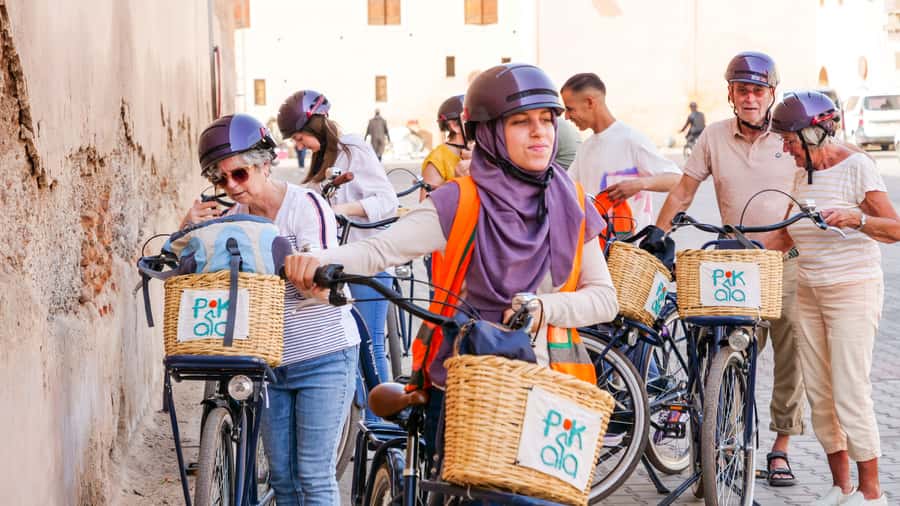
Pikala Bikes is based at its own headquarters, where the tour begins and ends. The bicycles are described in the practical terms that matter: solid bikes with comfortable saddles. Some riders find them a little heavy, so do not expect a sleek road-bike experience. This is a relaxed city ride, not a fitness outing.
The route is mostly flat, and the pace is not fast. There are regular stops, water, and time to listen. Still, you need to control a bike confidently. The challenge comes from the surroundings, not from hills or speed.
Other Marrakech days travellers weigh against this one:
- Marrakech: Agafay Desert Sunset, Camel Ride, and Dinner Show
★ 4.6 · 35,119 reviews - From Marrakech: Ouzoud Waterfalls Guided Hike and Boat Trip
★ 4.7 · 33,630 reviews - Marrakech: Agafay Desert Quad & Camel Rides with Dinner Show
★ 4.8 · 27,382 reviews
Starting at Pikala Bikes and entering the medina
After meeting at Pikala Bikes, the tour heads toward the old city. One early stop is the Zawiya of Sidi Bel Abbas, a religious site connected with one of Marrakech’s important saints. You stop for about 15 minutes, enough to take photographs and hear about the place without turning the visit into a long formal lecture.
The first section introduces you to the rhythm of the medina. Alleys can be narrow, and movement is shared by people walking, mopeds, donkey carts, bicycles, and delivery traffic. You may need to slow down suddenly or put a foot down. Your guide helps the group move together and often checks behind to make sure nobody has been left at a crossing.
This is where the tour demands the most attention. Several riders describe the first hour as nerve-wracking, especially for anyone used to orderly cycling lanes. Marrakech traffic operates by eye contact, patience, and constant adjustment. It can look like chaos, but the traffic is flexible rather than completely lawless.
If you are comfortable riding in a crowded city, you will likely get used to it fairly quickly. If you rarely cycle or feel uneasy around mopeds, this is not the best way to see the city. Ask about a tandem if that option is available for your booking. One older participant managed the ride with a tandem, but the tour still requires active attention.
Bread, clay ovens, and the daily life of a neighborhood
The bakery stop is one of the most useful parts of the morning. You step into a local bakery and see bread being baked in a clay oven. The visit lasts around 10 minutes, but the idea it explains is much larger than the stop itself.
Bread is central to Moroccan daily life. A bakery is not merely a place to buy a loaf. It is tied to household routines, neighborhood services, and the simple economics of feeding a family. Seeing the bread go into the oven gives you a better sense of how the medina works as a living community.
You may taste fresh Moroccan bread, and the guides explain why it matters culturally. This is the sort of stop I value because it connects food with people rather than presenting Moroccan cuisine as a string of restaurant dishes.
The tour then continues through lesser-seen lanes and several short photo stops. These unnamed pauses are part of the charm. You pass places that are easy to miss when you are focused on major monuments or trying to find your way through the souks.
Zellige tiles and the patience of handwork
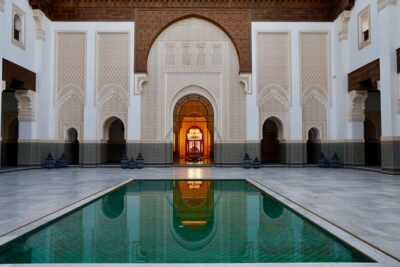
The tile workshop offers a close look at Moroccan zellige, the small geometric tiles used in palaces, mosques, fountains, courtyards, and private homes. You meet artisans and see how the work is made rather than only admiring finished decoration.
Zellige is admired for its pattern and color, but the craft also rewards patience. The geometric effect comes from many individual pieces fitted together. A guide can help you see the skill in the small details, especially when you compare handmade work with the mass-produced tiles found in many modern buildings.
The exact order of the bakery and tile visits can vary with the route and local conditions, so treat the schedule as a framework rather than a minute-by-minute promise. The important point is that you get inside working local businesses, where the subject is not staged only for sightseeing.
This stop is especially good for anyone interested in design, architecture, craft, or Moroccan interiors. It also gives children and teenagers something concrete to watch. Instead of hearing a long explanation about tradition, you see a person turning material into a recognizable part of the city.
A different kind of day out, same corner of Morocco:
- Marrakech: Agafay Desert Quad Biking Tour with Dinner-Show
★ 4.8 · 16,569 reviews - Marrakech: Atlas Mountains, Ourika Valley, Waterfall & Lunch
★ 4.8 · 15,834 reviews - From Marrakech: 3-Day Merzouga and Sahara Desert Tour
★ 4.9 · 15,308 reviews - Berber villages : Atlas Mountains Day Hike from Marrakech
★ 5.0 · 14,007 reviews
Place des Ferblantiers and the palace district
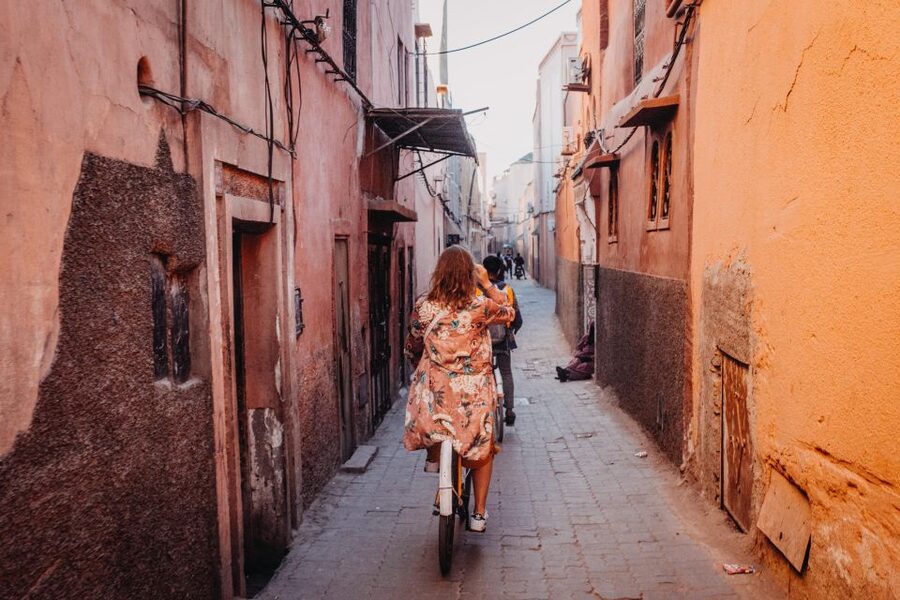
The route reaches Place des Ferblantiers, where you have about 20 minutes for a break, photographs, and free time. The square is associated with metalworkers and sits near several important sights in the southern medina.
This is a useful pause because the ride has already taken you through tight lanes. You can look around, catch your breath, and take in the changing scale of the city. The square also helps connect the craft traditions you have seen with the wider commercial life of Marrakech.
From there, the ride passes through more quiet or less obvious corners before reaching the area around the Royal Palace. The public gardens surrounding Dar El-Makhzen offer views of the palace from outside. You do not enter the palace, so keep your expectations clear. This is an exterior look at Morocco’s monarchy and the architecture connected with it.
The palace stop works best when your guide explains its importance rather than treating it as a photo backdrop. You get a short lesson in royal Marrakech while remaining in a public setting. Around the area known as Mechouar El Barani, there is another pause of roughly 15 minutes for sightseeing and photographs.
The hammam as a social institution
The traditional hammam stop adds a different kind of cultural context. You visit or view a Moroccan public bathhouse and learn about its rituals and role in ordinary life.
A hammam is not simply a spa for tourists. It has long been a place connected with washing, routine, social contact, and community life. The guide explains how people use the space and why it matters, giving you a better understanding of a custom that can otherwise seem mysterious from outside.
This is an educational visit, not a bathing session. You should not expect a scrub, massage, or spa treatment unless your booking specifically says otherwise. The value is in learning how the hammam fits into Moroccan society.
I like this part because it widens the tour beyond architecture. Bread, tiles, and the hammam each show a different side of life: food, craftsmanship, and communal routine. Together they make the city easier to understand.
Koutoubia Mosque and the move into modern Marrakech
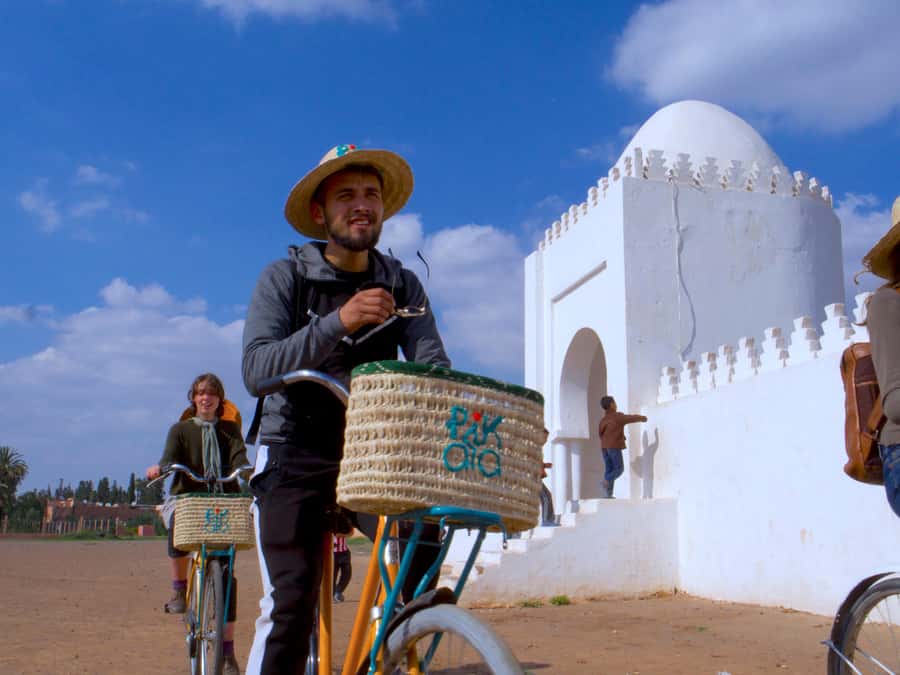
The bicycle passes the Koutoubia Mosque, one of Marrakech’s best-known landmarks. You have about 10 minutes of sightseeing from the route. The mosque’s minaret is a key reference point in the city, and your guide can place it within the religious and visual identity of Marrakech.
The tour does not present the mosque as an isolated monument. You see it as part of the city you have been crossing by bike, with streets, people, businesses, and neighborhoods flowing around it. The contrast is useful. After the close quarters of the medina, the open space around the mosque can feel like a reset.
You then pass the Church of the Holy Martyrs for a photo stop and a little sightseeing. Its presence adds another layer to Marrakech’s religious and architectural story. The stop is brief, but it shows that the city’s history is not limited to one building type or one tradition.
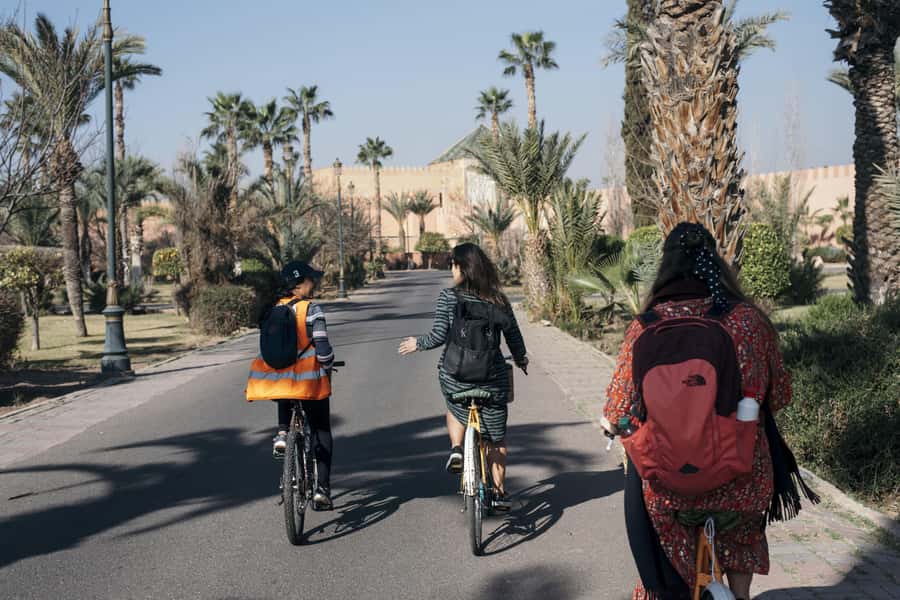
The final riding section moves toward modern Marrakech, especially Gueliz and Hivernage. Here you see wider boulevards, cafes, luxury hotels, and a more contemporary urban style. The change can feel abrupt after the old walls and narrow alleys, which is exactly why it is useful.
Some riders find the new town traffic intimidating at first. The roads feel broader and faster, even though the medina was more cramped. Your guide keeps the group together and helps with crossings, but you still need to ride attentively.
This contrast is one of the tour’s strongest features. Marrakech is not only an ancient medina preserved for visitors. It is also a modern Moroccan city with new districts, cafes, hotels, students, workers, and changing habits. Seeing both sides in three hours gives you a practical sense of how the city fits together.
Finishing with tea, pastries, and local conversation
The ride returns to Pikala Cafe, where you have about 20 minutes for tea, coffee, local snacks, Moroccan pastries, juice, or mint lemonade. Water and fruit are included during the experience, along with suncream and entrance to the local stops.
The cafe is more than a place to hand you a drink at the end. It gives you time to talk with your guide, ask about places you passed, and let the city settle in your mind. Moroccan pastries and spiced cookies are a fitting finish after the bakery and craft stops.
The food selection is simple, but at $34 per person, it adds useful value. You are getting a bicycle, a three-hour guided route, several cultural visits, refreshments, and a local introduction to parts of Marrakech you might not locate alone.
You arrange your own way to Pikala Bikes because hotel pickup and drop-off are not included. The activity is offered with live guides in English or French. You can cancel up to 24 hours ahead for a full refund, and the reserve-now, pay-later option helps if your schedule is still shifting.
What the price means for your day
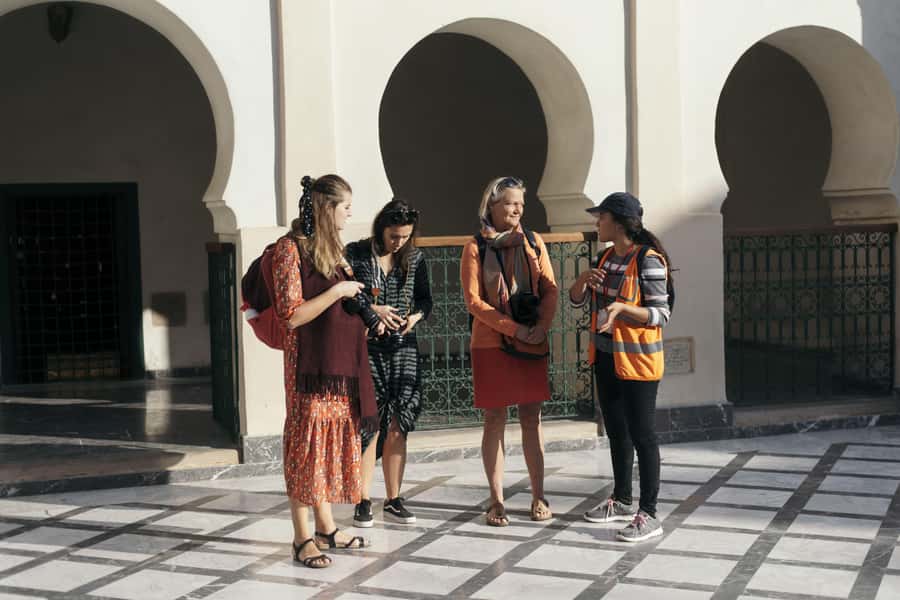
At $34, this is a strong-value introduction to Marrakech, especially if you want more than a standard monument tour. A private guide, several separate stops, refreshments, and bike hire would normally make this a useful half-day purchase even before considering the social purpose of Pikala’s youth-training program.
The price is less attractive if you dislike cycling or plan to spend the entire day inside the souks. You may find walking easier in the tightest lanes, and a dedicated food or architecture tour would offer more depth in one subject.
For most visitors, the value comes from variety. In one outing you see religious sites, working craftspeople, palace gardens, a hammam, the old medina, and modern districts. The guide’s personal stories are important here. Guides such as Rabab, Hamid, Sayid, Yassir, Kenza, Yasmin, and Khalil have been praised for being friendly, patient, clear, and attentive to group safety.
Pikala’s work with Moroccan youth is another reason to consider it. You are not only buying transport around town. You are supporting a program that trains young Moroccans to work with visitors and speak about their own culture.
Who should book this bike tour
I would choose this tour early in a Marrakech visit, ideally near the start of your stay. It helps you understand the medina’s layout and gives you a guide to customs that you can notice again during the rest of your trip.
It suits:
- Confident cyclists who can handle crowded streets
- First-time visitors wanting an overview beyond the main sights
- Families with older children or teens who enjoy active sightseeing
- People interested in food, craft, religion, and daily customs
- Visitors who value locally led and socially minded activities
- Anyone who wants to compare old and modern Marrakech in one morning
I would think twice if you are not comfortable on a bicycle, have trouble reacting quickly in traffic, or want a quiet ride. Long dresses and skirts can also be awkward on a bicycle, so wear casual clothes that let you move freely.
A morning departure may help with traffic. One rider found a 9:30 start calmer, though road conditions can change. Bring a light layer too. Marrakech can feel warm in the sun and cooler when the sun disappears.
Should you book it?
Book it if you want to see Marrakech through everyday details rather than only major monuments. The bakery, tile workshop, hammam, palace district, and modern-city section give the tour a clear purpose, while the friendly young guides make the information feel personal.
Skip it if cycling in busy traffic sounds stressful rather than exciting. For everyone else, this is a lively, fairly priced way to get oriented, eat a little, learn a lot, and see parts of Marrakech that are difficult to find on your own.
FAQ
How long is the Marrakech cultural bicycle tour?
The tour lasts three hours, with stops for sightseeing, cultural visits, breaks, and refreshments.
Where does the tour start and finish?
It starts and finishes at the Pikala Bikes headquarters. Hotel pickup and drop-off are not included.
Which languages are available?
The live tour guide service is available in English and French.
Is food and drink included?
Yes. Water and fruit are included during the ride. The finish at Pikala Cafe includes Moroccan pastries and drinks such as tea, juice, coffee, or local snacks.
Do I need to be a confident cyclist?
Yes. You need to be comfortable riding around mopeds, donkeys, carts, pedestrians, and other cyclists, especially in the medina and souks. The route is generally gentle and flat, but the traffic requires attention.
What happens if I need to cancel?
You can cancel up to 24 hours in advance for a full refund. A reserve-now, pay-later option is also available.
Recently reviewed around Marrakech
- 4-Days Marrakech to Marrakech Désert Tour★ 5.0 · 17 reviews
- Camel ride at sunset in Marrakech palm grove★ 5.0 · 17 reviews
- Agafay camel ride★ 5.0 · 20 reviews
- Camel riding in marrakech★ 4.5 · 17 reviews
- Marrakech to Atlas Mountains and 4 Valleys Day Trip★ 5.0 · 17 reviews
- Agafay Desert Adventure, Culture, and Relaxation, From Marrakech★ 5.0 · 25 reviews
- Quad excursion to the Agafay desert near Marrakech★ 5.0 · 44 reviews
- Camel ride and dinner Agafay desert★ 5.0 · 25 reviews
Tours, compared.
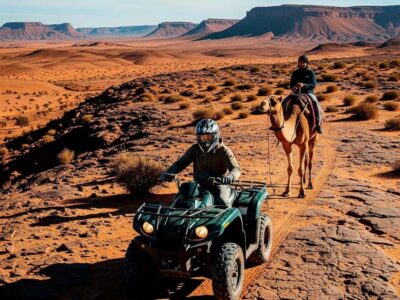
Agafay Desert Quad Biking Tour with Dinner-Show
Read our review →

Quad Bike Tour to Palm Oasis and Jbilat Desert
Read our review →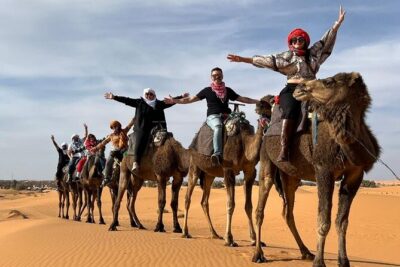
3 Days Desert Tour From Marrakech To Merzouga Dunes & Camel Trek
Read our review →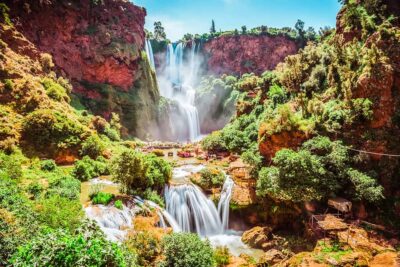

3-Day Marrakech to Merzouga Desert Tour: Camel Rides & Overnights
Read our review →
Desert & Mountain Tour with Camel Ride & Lunch
Read our review →