
Reviewed · ATLAS MOUNTAINS DAY TRIPS
From Marrakech: Atlas Mountains 4-Day Hike with Hotels
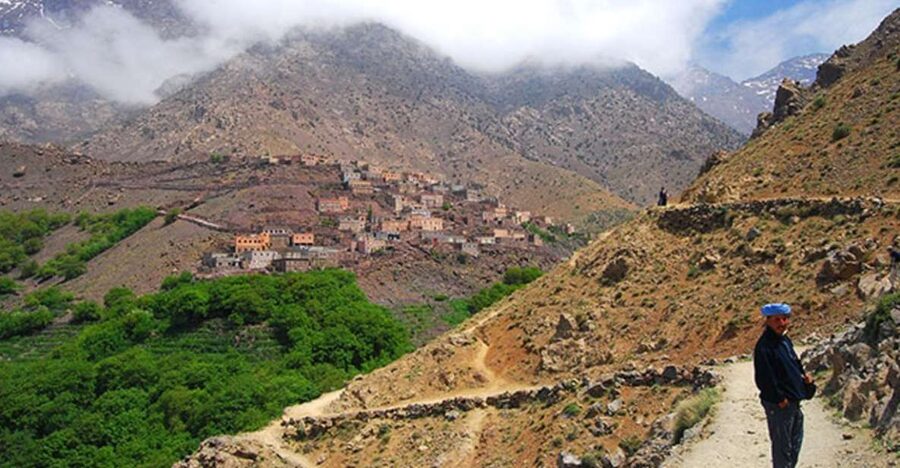
The best part of this four-day Atlas Mountains trek is its steady change of scene. You walk from Imlil through the Imnane Valley, across high passes, into the red-toned Azzaden Valley, and back through juniper forest. Along the way, you sleep in small mountain villages rather than returning to a resort each night. The route feels like rural Morocco, not a staged day trip.
I like two things in particular: the support team, which includes a guide, cook, and mule for luggage, and the chance to eat generous meals in quiet mountain settings. Guides such as Mostafa, Houssain, Mohamed Bewajamor, and Kamal have been praised for adjusting the pace and explaining Amazigh culture. The catch is simple: this is a real hike, with five hours of walking on most days, loose stones, cold nights, and basic guesthouses.
In This Review
- Key points to know before you book
- Why four days is the right length for the Atlas
- Day one: Imlil to Tachdirt by way of Tizi N’tamater
- Day two: Following the Imnane Valley to Imi Oughlad
- Day three: Oak trees and the red Azzaden Valley
- Day four: Tizi Mezik, juniper forest, and the return to Marrakech
- The guide, cook, and mule make a real difference
- What the guesthouses are really like
- Fitness, footwear, and changing weather
- Is $176 good value?
- Who should book this trek?
- Should you book the Atlas Mountains four-day hike?
- FAQ
- How long does the Atlas Mountains hike last?
- How many hours do you walk each day?
- Where does the hike begin?
- Which valleys does the route visit?
- How high are the mountain passes?
- Is luggage transport included?
- Are meals included?
- What languages do the guides speak?
- Is the tour suitable for wheelchair users?
- What should I bring?
Key points to know before you book
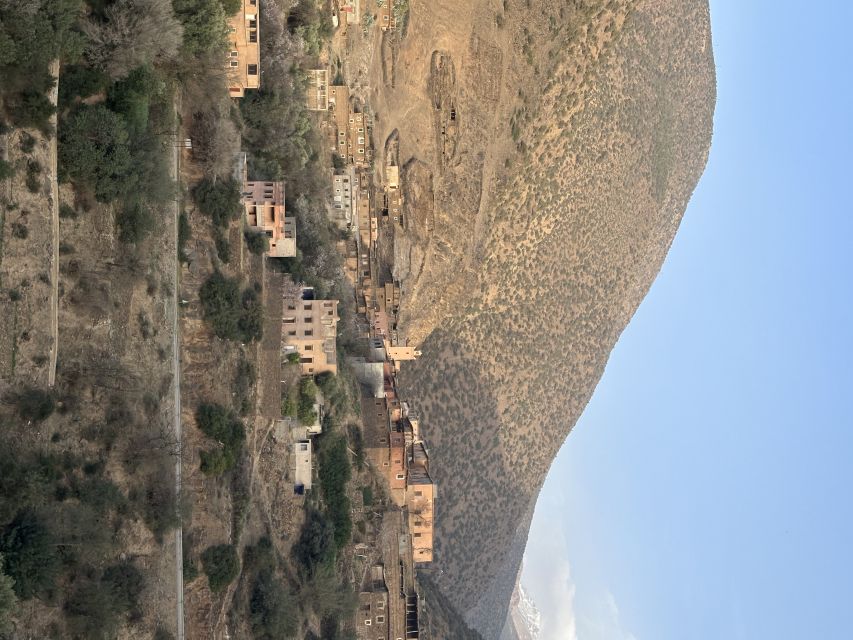
- Four days, three valleys: Walk through the Imnane and Azzaden valleys, with changing scenery, village paths, forests, and high passes.
- Daily hikes of about five hours: The route includes repeated climbs and descents, reaching passes around 2,300 to 2,500 meters.
- A mule carries your luggage: You hike with a lighter daypack while the mule transports cooking supplies and bags.
- Local meals are part of the experience: A cook prepares lunches and dinners, with Moroccan dishes, fresh tea, and plentiful portions.
- Simple village accommodation: Expect family-run guesthouses, blankets, and basic facilities rather than hotel comfort.
- A small-group format: The group can have up to 10 people, with Arabic, English, and French spoken by the guiding team.
Why four days is the right length for the Atlas
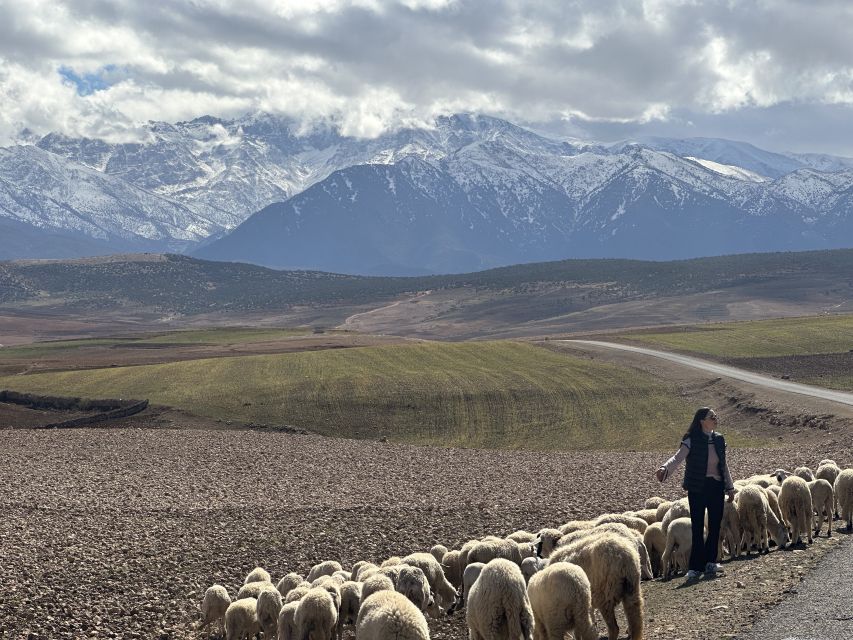
This trip is not a summit attempt on Mount Toubkal. Instead, it gives you a broad taste of the High Atlas, linking valleys and villages by old mountain paths. That makes it a good choice if you want mountain walking and cultural contact without signing up for a technical climb.
The route reaches several passes, including Tizi N’tamater at about 2,300 meters and Tizi Mezik at about 2,500 meters. One person estimated roughly 50 kilometers over four passes. Exact distances can change with weather, group pace, and route conditions, but the effort is substantial.
I like the rhythm of the plan. Each day has a clear walking goal, a meal stop, and a village guesthouse at the end. You are not rushing from one photo stop to another. You have time to notice terraced fields of corn and barley, walnut and cherry trees, river valleys, and small settlements scattered along the slopes.
The four-day option also gives you a better look at how the valleys differ. The Imnane Valley has its own village pattern and mountain views, while Azzaden is often called the red valley because of its warmer tones. Forest sections add shade and a cooler feel, especially around oak and juniper trees.
More Hiking Tours in Marrakech
- From Marrakech: Ouzoud Waterfalls Guided Hike and Boat Trip
★ 4.7 · 33,630 reviews - Berber villages : Atlas Mountains Day Hike from Marrakech
★ 5.0 · 14,007 reviews - 3 Days Desert Tour From Marrakech To Merzouga Dunes & Camel Trek
★ 5.0 · 10,125 reviews
Day one: Imlil to Tachdirt by way of Tizi N’tamater
Your transfer from Marrakech takes you toward Imlil, the main mountain starting area. The walking begins around Imlil, after the local team meets you and organizes the route, luggage, and day’s food.
The first section heads toward the Imnane Valley. You climb toward Tizi N’tamater, a pass at approximately 2,300 meters. This is the day to settle into the trip’s pace. Five to six hours on the trail can feel long if you arrive with little hiking practice, especially when the route rises and falls rather than following a flat valley floor.
Lunch is prepared outdoors by the cook. A three-course meal at a mountain pass is one of the small pleasures of this trip. You get a pause, a view, and a hot meal without having to carry all the cooking equipment yourself.
After lunch, you continue toward Tachdirt, a village in the upper Imnane Valley. The first night is in a guesthouse. Rooms are basic, but blankets are available, which matters during the colder months. Fresh mint or wild thyme tea is often served, and the muleteer or cook helps keep the evening meal moving.
The main challenge on day one is the change in altitude and the length of the walk. The reward is that you leave Marrakech’s traffic and noise behind quickly. By evening, you are sleeping in a mountain village where daily life still follows farming, herding, and the seasons.
Day two: Following the Imnane Valley to Imi Oughlad
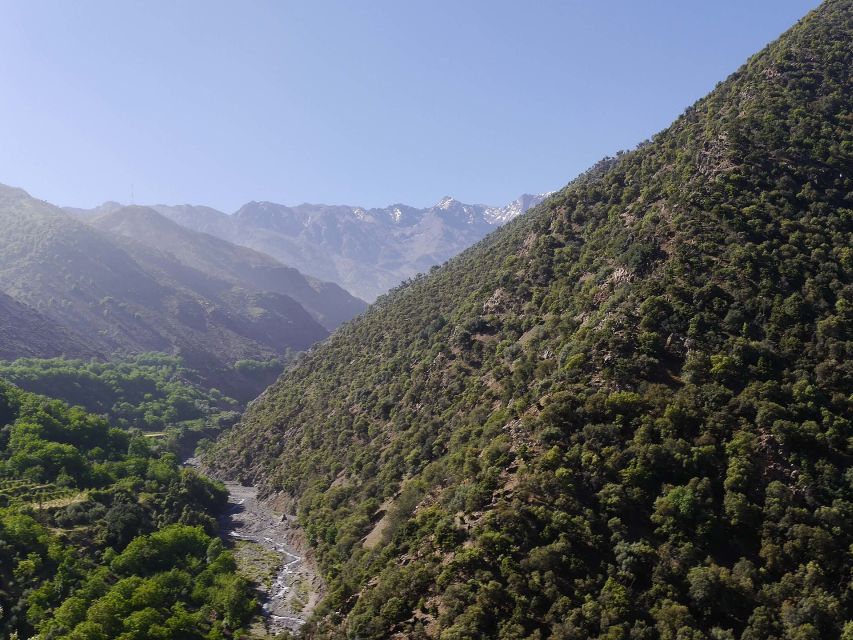
After breakfast, the path continues through the Imnane Valley toward Imi Oughlad. This is another roughly five-hour walking day, with several Berber villages along the way.
The guide adds real value here. Paths can be hard to follow without local experience, and communication in remote villages may be limited if you do not speak Arabic or French. Guides including Houssain and Mohamed Bewajamor have been praised for explaining village customs, local history, farming, and the surrounding mountains in a clear, personal way.
You will see terraced plots planted with corn and barley, along with groves of walnut and cherry trees. These are not decorative gardens. They are part of the food and work of the valley communities. A guide can help you understand how the villages use narrow strips of fertile ground beside streams and slopes.
Imi Oughlad provides the second overnight stay in a local guesthouse. One appealing detail is the chance to help the cook prepare dinner. It is a modest activity, but it gives the evening a more social feel than simply arriving at a hotel and ordering from a menu.
The accommodation can feel rough around the edges. Hot water, towels, and other comforts are not guaranteed, so bring a small towel and keep your expectations practical. You are paying for access to a remote walking route and local hospitality, not polished rooms.
Day three: Oak trees and the red Azzaden Valley
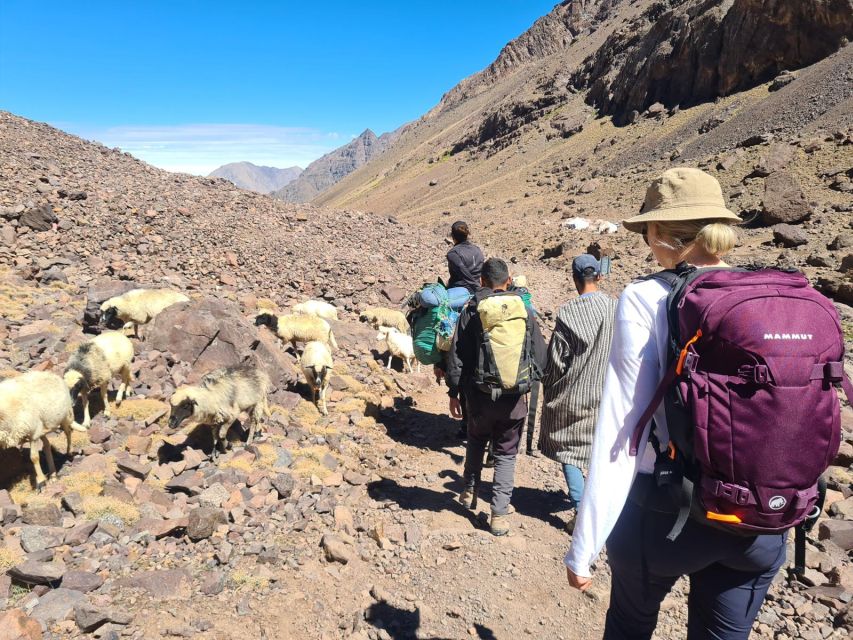
Day three changes the colors and character of the walk. From Imi Oughlad, you head toward Tizi Oussem and the Azzaden Valley, often known as the red valley.
The trail passes through an oak woodland before climbing toward Tizi n’Lbour. Lunch is served outdoors near the pass. This is another day of about five hours, with a long climb followed by a descent toward the evening stop.
Azzaden feels different from Imnane. The valley’s red tones give the route a new look, while the mountain walls and village terraces keep the walking varied. You are not simply repeating the same track each day. The change in trees, rock, and valley shape is one of the strongest reasons to choose four days instead of a shorter outing.
The night is in a guesthouse in Tizi Oussem. If you want an extra local touch, a Berber hammam may be available for about €4. You need to tell your guide ahead of time if you are interested. This is an optional extra, not part of the tour price.
This night may be especially welcome after the climbing. Still, do not expect a spa. The hammam is offered as a basic local experience, and the guesthouse remains simple. In winter, evenings can be very cold. Pack warm layers, even if Marrakech feels mild when you leave.
More treks around Marrakech:
- From Marrakech: Atlas Mountains Full-Day Hiking Trip w Lunch
★ 4.8 · 7,417 reviews - Marrakech: Ourika Valley Trip with Waterfall Hike
★ 4.6 · 6,792 reviews - Marrakech: Ourika Valley Trip with Waterfall Hike & Lunch
★ 4.9 · 5,303 reviews - Marrakech: ourika valley lunch & guided hike to waterfalls
★ 4.9 · 3,737 reviews
Day four: Tizi Mezik, juniper forest, and the return to Marrakech
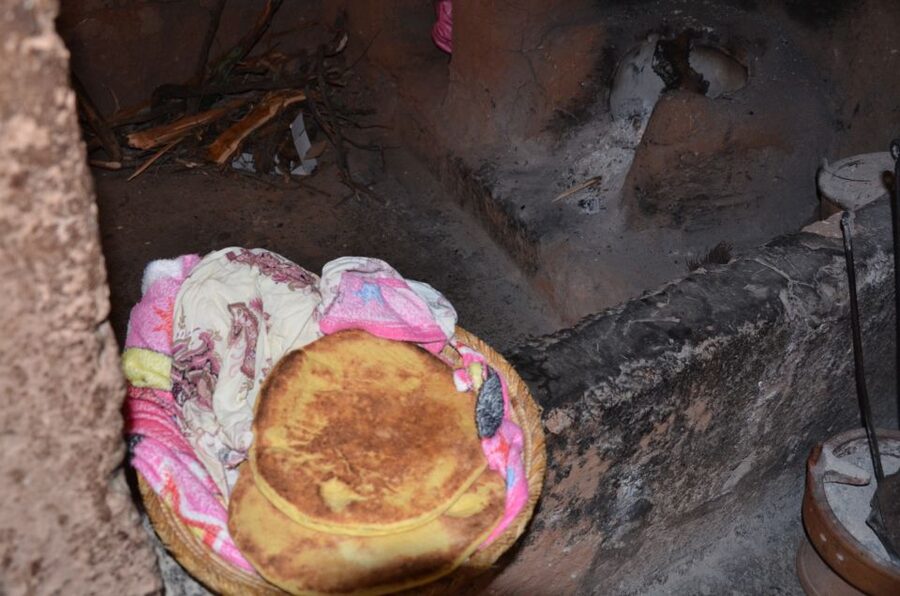
The last day brings you back toward Imlil. Some sections are more demanding, with loose rocks and slippery footing. Good grip matters more here than fashionable hiking clothes. A pair of proper hiking shoes is a much better choice than smooth-soled trainers.
The trail passes through a broad juniper forest. You might see local people with herds, and the route gives you one more chance to watch how mountain communities use these high valleys. The mule and support team continue to carry equipment, so you do not need to carry four days of food and luggage on your back.
Lunch is served at Tizi Mezik, around 2,500 meters. The descent to Imlil follows. For some people, going downhill is harder than climbing because loose stones can make each step uncertain. Your guide is there to set a safe pace and alter the route if weather or trail conditions require it.
After the walk, you return to Marrakech by vehicle. The provided pickup and drop-off are useful, particularly if your riad is in a narrow medina lane where a car cannot reach the door. In that case, the operator says it will confirm a nearby meeting point by WhatsApp or email before departure.
The guide, cook, and mule make a real difference
The support team is one of the strongest features of this trip. Your local guide leads the walk, handles route decisions, explains Amazigh culture, and helps with communication in the villages. The listed languages are Arabic, English, and French.
Several guides have been singled out for their calm manner and care with pacing. Mostafa is noted for patience and clear communication. Houssain is praised for his warmth and cultural explanations. Mohamed Bewajamor is known for sharing information about village life and adjusting the route to suit the group. Other guides named by participants include Kamal, Hamid, Ibrahim, Hassan, and Mohammed.
The exact guide depends on the departure, so you should not assume you will get a particular person. What matters is the team structure: a guide for the walking, a muleteer, and a cook who follows the route with supplies.
Food is a major part of the value. Lunches are cooked along the way, while breakfasts and dinners are served at the guesthouses or prepared by the support team. Meals have included generous portions, varied Moroccan dishes, and plenty of tea. After five hours on foot, a hot plate and a pot of tea are worth more than a fancy dining room.
The mule carries luggage and cooking supplies. You still need a small daypack with water, warm clothing, sunscreen, and personal items, but you avoid hauling everything from Marrakech. Clarify in advance how much luggage is included and how it will be transported, since one booking involved confusion about luggage and payment for a final hotel night.
What the guesthouses are really like
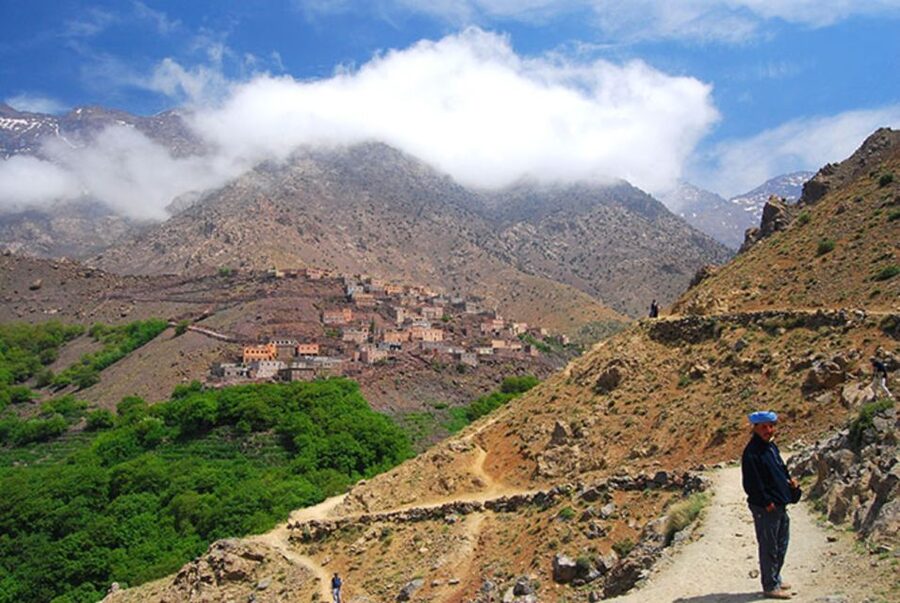
The accommodation is part of the rural setting, but it is not luxurious. You sleep in guesthouses in villages such as Tachdirt, Imi Oughlad, and Tizi Oussem. Some are very rustic, while others are more comfortable, and all are described as welcoming.
Blankets are available, yet winter nights can still be cold. Bring thermal layers, warm socks, and a lightweight sleeping bag if you are sensitive to cold. A towel may not always be supplied.
Bathrooms and other facilities are basic. That is not a flaw in itself, but it is important to know what you are buying. The guesthouses let you stay in remote communities and hear the quiet of the mountains at night. If you need dependable hotel standards every evening, this trek will test your patience.
Dress with local customs in mind, especially in remote villages. Clothing that covers the knees and shoulders is a respectful choice. It also gives you useful protection from sun, wind, and cool evenings.
Fitness, footwear, and changing weather
The route is described as non-technical, which means you do not need climbing equipment or mountaineering skills. It does not mean the walk is easy. Most days run about five hours, and the route repeatedly climbs to a pass before descending into another valley.
A reasonably active person should find the walking manageable at a controlled pace, but you should not book it if you are very unfit. One family found it enjoyable, while also noting that the hiking can be hard. Another group with limited experience felt safe because the guide slowed the pace and offered more challenging route choices when suitable.
Trail conditions vary. Loose rocks can make sections slippery, particularly on descents. Bring hiking shoes with good grip, comfortable clothing, warm layers, and a walking stick if you use one. Mountain gear is not included.
Weather deserves attention before booking. Snow can affect the route in winter. One January departure encountered deep snow and cold nights and changed the planned route, while still reaching higher peaks. You should treat the published path as a guide rather than a promise that every turn will be identical in poor conditions.
The tour is not suitable for pregnant women or wheelchair users. A passport is listed among the items to bring.
Is $176 good value?
At $176 per person, the price covers four days of guiding, accommodation, meals, Marrakech pickup and drop-off, a driver or transfer service, and a mule for luggage. That works out to about $44 per day before considering the included transport and food.
I consider that strong value if you want a supported multi-day hike. You do not have to arrange three nights of mountain lodging, find meals in remote villages, hire transport, or carry all your supplies. The price also buys local knowledge on trails where a guide is useful.
The tradeoff is comfort. You are not paying for a luxury lodge, private rooms with guaranteed amenities, or a fixed hotel-style schedule. Tips, hiking shoes, walking sticks, and warm clothing are extra. The optional hammam costs about €4.
Group size is limited to 10, though some departures may be much smaller. A small group makes it easier for the guide to adjust speed and route. It also gives you a better chance to talk with the cook, muleteer, and fellow walkers during meals.
Who should book this trek?
I would choose this trip if you want mountain scenery tied to village life. It suits families with older children who can handle several hours of walking, couples, friends, and solo hikers who like a social but small-group setting.
It is also a good first multi-day mountain walk if you want support. The guide, mule, cook, and arranged guesthouses remove much of the planning burden. You can focus on walking and paying attention to the valleys.
I would choose a shorter trip if five-hour hiking days sound tiring or if you have only a little time in Morocco. I would also hesitate if basic guesthouses, cold nights, and changing plans would spoil the experience for you.
The four-day route may be more than you need if the itinerary changes and you reach Imlil earlier than expected. One person found the final portion less worthwhile because a guide adds less value in Imlil itself than on remote paths. Confirm the day-by-day plan before departure, especially if you are comparing this with a three-day option.
Should you book the Atlas Mountains four-day hike?
Book it if your priority is quiet mountain walking, local meals, and time in Amazigh villages rather than polished accommodation. The strongest parts are the changing valleys, generous cooking, luggage support, and guides who can explain the people and places you pass.
Do not book it as a casual sightseeing tour. You need proper shoes, warm clothing, and enough fitness for repeated climbs and descents. If that sounds fair, $176 buys a lot: four full days in the High Atlas, three village nights, several high passes, and a close look at rural Moroccan life that a day trip from Marrakech cannot provide.
FAQ
How long does the Atlas Mountains hike last?
The experience lasts four days and includes three nights in mountain guesthouses.
How many hours do you walk each day?
The first day takes about five to six hours. The second, third, and fourth days are each listed at about five hours.
Where does the hike begin?
The transfer takes you from Marrakech toward Imlil, where the local team meets you and the walk begins.
Which valleys does the route visit?
The route follows the Imnane Valley and later enters the Azzaden Valley. The trip description also refers to exploring three green, deep valleys in the Atlas region.
How high are the mountain passes?
The route crosses Tizi N’tamater at about 2,300 meters and Tizi Mezik at about 2,500 meters. Tizi n’Lbour is another pass reached on day three.
Is luggage transport included?
Yes. A mule transports your luggage and the cooking supplies, so you do not need to carry everything during the daily walks.
Are meals included?
Yes. All meals are included, with a local cook preparing lunches, dinners, and other meals during the trek.
What languages do the guides speak?
The guiding service is available in Arabic, English, and French.
Is the tour suitable for wheelchair users?
No. The experience is not suitable for wheelchair users. It is also not suitable for pregnant women.
What should I bring?
Bring a passport, comfortable clothing, hiking shoes or walking shoes with good grip, warm clothing, and a walking stick if useful. A towel and lightweight sleeping bag may also be helpful, particularly in colder months.
More 4-Day Experiences in Marrakech
- From Marrakech 4 Days Tour To Morocco Sahara Desert
★ 5.0 · 553 reviews - From Marrakech: Merzouga 4 Day Luxury Tour w/ Optional Quad
★ 4.8 · 332 reviews - From Marrakesh: 4-Day Private Atlas Mountains & Desert Tour
★ 4.8 · 197 reviews - 4 Days Desert Tour From Marrakech to Fes via Merzouga Dunes
★ 5.0 · 169 reviews
Recently reviewed around Marrakech
- 4-Days Marrakech to Marrakech Désert Tour★ 5.0 · 17 reviews
- Camel ride at sunset in Marrakech palm grove★ 5.0 · 17 reviews
- Agafay camel ride★ 5.0 · 20 reviews
- Camel riding in marrakech★ 4.5 · 17 reviews
- Marrakech to Atlas Mountains and 4 Valleys Day Trip★ 5.0 · 17 reviews
- Agafay Desert Adventure, Culture, and Relaxation, From Marrakech★ 5.0 · 25 reviews
- Quad excursion to the Agafay desert near Marrakech★ 5.0 · 44 reviews
- Camel ride and dinner Agafay desert★ 5.0 · 25 reviews
Atlas Mountains Day Trips, compared.
Atlas Mountains, Ourika Valley, Waterfall & Lunch
Read our review →
Berber villages : Atlas Mountains Day Hike from Marrakech
Read our review →
Ourika Waterfalls, Atlas Mountains, Guide + Lunch
Read our review →
Atlas Mountains & Agafay Desert Tour w Camel Ride
Read our review →
Atlas Mountains, Waterfalls, Ourika Valley +Lunch
Read our review →
Atlas Mountains & 5 Valleys Tour from Marrakech – All inclusive –
Read our review →Browse the lists this tour appears in