
Reviewed · 3-DAY EXPERIENCES
From Agadir: 3-Day Desert Tour to Marrakech
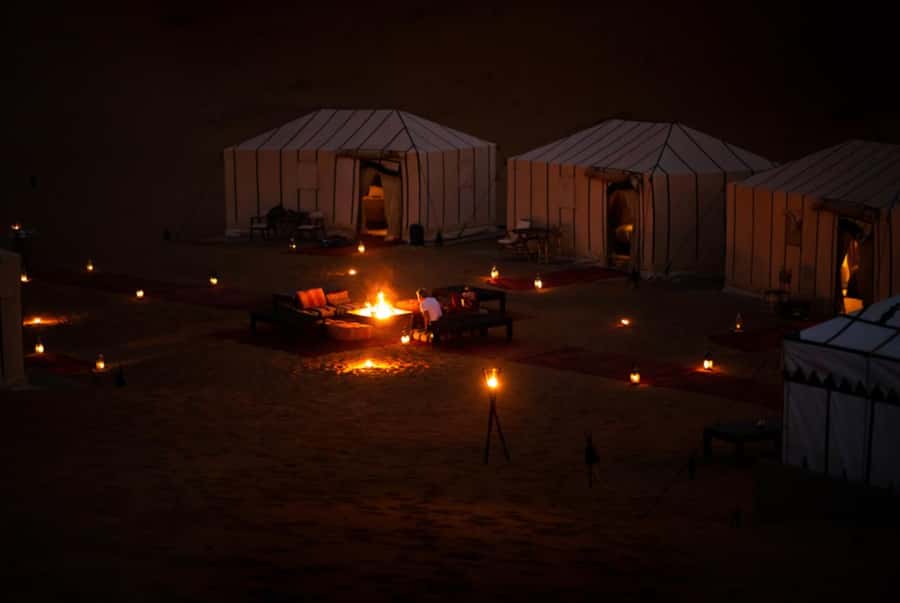
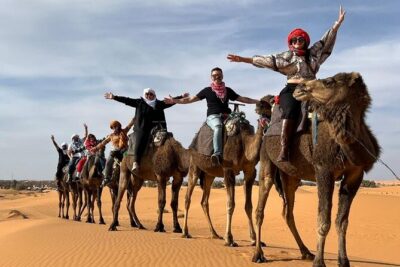
The Sahara camp at Erg Chebbi is the main event: ride a camel over the dunes, watch the sun sink into the sand, eat dinner by a fire, and wake for sunrise beneath a sky full of stars. The route also brings you to Ait Ben Haddou, Todra Gorge, the Rose Valley, and the Draa Valley.
I like the sheer variety packed into three days, and I like the care shown by drivers such as Abderrahman, Ali, Hamza, Hicham, and Youssef. They are often praised for safe driving, clear explanations, and help with small problems. The catch is simple: you spend many hours in the vehicle, especially on the last day from Merzouga to Marrakech.
In This Review
- Key points to know before booking
- Why this route works from Agadir to Marrakech
- Day one: Ait Ben Haddou and the Road of a Thousand Kasbahs
- Day two: Todra Gorge, palm groves, and the Sahara
- The desert camp: standard comfort or a private bathroom
- Day three: sunrise, Rissani, and the long road to Marrakech
- Transport, group size, and the guide experience
- What to pack and how to handle the daily pace
- Is $172 good value?
- Who should book this three-day desert tour?
- Should you book it?
- FAQ
- How long is the tour?
- Where does pickup take place?
- Which languages are available?
- What accommodation is included?
- Are meals included?
- Is sandboarding included?
- Can I cancel the booking?
Key points to know before booking
- Camel ride into Erg Chebbi: Reach the desert camp by camel, with sandboarding available before sunset.
- Ait Ben Haddou and Todra Gorge: See two of southern Morocco’s most memorable sights, with time for guided visits.
- A packed three-day route: You cover roughly the country’s southern interior, so expect long road stretches and frequent stops.
- Standard or luxury desert camp: Standard tents use shared bathrooms, while the luxury option can include private bathing facilities and air conditioning.
- Good value at $172: Transport, two breakfasts, two dinners, accommodation, camel excursion, sandboarding, and music are included.
- Bring cash for lunch: Lunches and drinks are not included, and planned meal stops can cost about 120 to 130 Moroccan dirhams.
Why this route works from Agadir to Marrakech
This is not a slow desert holiday. It is a fast-moving road trip across southern Morocco, designed to connect Agadir with Marrakech while adding the country’s best-known desert sights along the way.
You begin in the Atlantic-side city of Agadir and finish inland in Marrakech. Between them, you cross mountain passes, palm-filled valleys, old kasbah towns, canyon country, and the Sahara. That variety is the tour’s great strength. In three days, you get a useful first look at how sharply Morocco changes from one region to the next.
At $172 per person, the price is strong for what is included. You are paying for air-conditioned transport, hotel pickup in Agadir, a driver-guide, two nights of accommodation, two breakfasts, two dinners, the camel transfer, sandboarding, luggage service, Berber music, and hotel drop-off in Marrakech.
The price does not cover lunches, drinks, or a local guide at Ait Ben Haddou. A local guide there is available for €2 per person. Since lunch stops are planned rather than freely chosen, carry enough cash and do not expect to compare several restaurants at every stop.
More Marrakech trips worth a second look
- From Marrakech: 3-Day Merzouga and Sahara Desert Tour
★ 4.9 · 15,308 reviews - From Marrakech: Merzouga 3-Day Desert Safari with Food
★ 4.7 · 12,232 reviews - 3 Days Desert Tour From Marrakech To Merzouga Dunes & Camel Trek
★ 5.0 · 10,125 reviews
Day one: Ait Ben Haddou and the Road of a Thousand Kasbahs
Pickup is scheduled for around 7:00 AM from your Agadir accommodation. Some departures can involve an early transfer to meet the main group, so keep your phone available for the exact pickup message sent the day before.
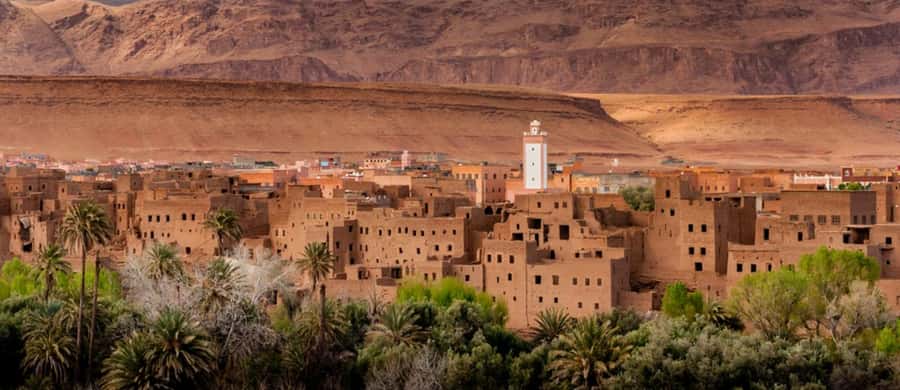
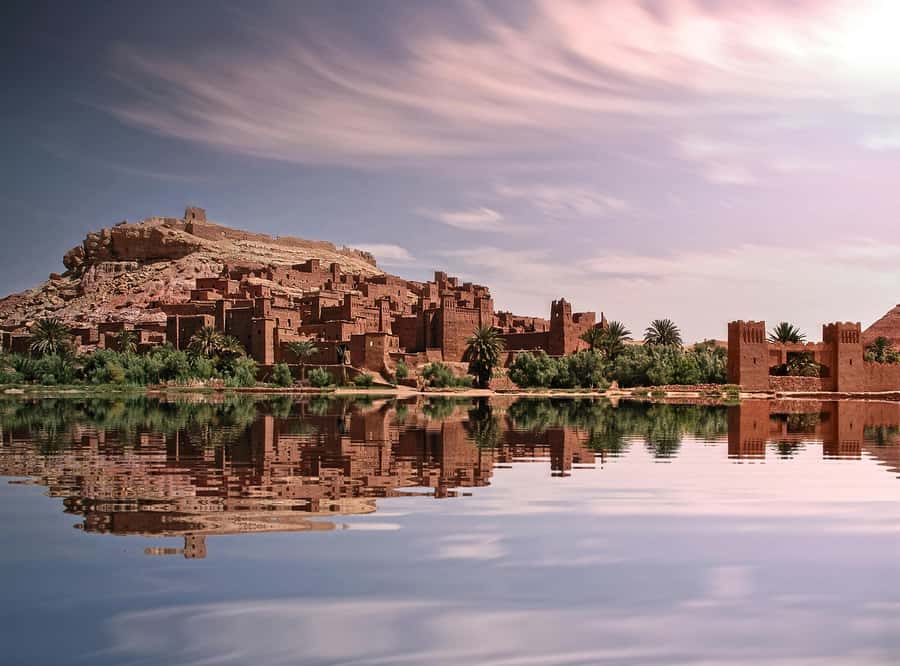
The first major stop is Ait Ben Haddou, a fortified earthen village and UNESCO World Heritage Site. Its packed-clay buildings rise above the surrounding country in a way that makes the place easy to recognize from film and television. You get time for lunch and exploration here.
A local guide is optional, but I would consider paying the small extra fee if you want more than photographs. The layout can look simple at first, yet the lanes, gates, homes, and upper viewpoints make more sense when someone explains how the settlement worked.
Ait Ben Haddou is also one of the more touristic stops on the route. You may encounter shops, local guides, and groups arriving at the same time. Still, the site earns its place on the itinerary because it gives you a clear introduction to southern Moroccan architecture before the road grows wilder.
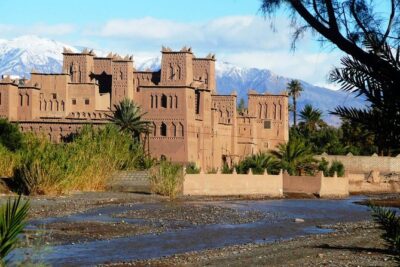
After Ait Ben Haddou, the vehicle follows the Road of a Thousand Kasbahs through the Rose Valley and Dades Valley. The name is not just decoration. You pass old fortified houses, Berber villages, dry hills, and changing bands of color as the road moves toward the eastern interior.
This is a scenic afternoon, but it is also a long one. You stop for viewpoints and short visits, yet you should not expect hours to wander alone. The schedule is built to reach Tinghir, or on some departures Kalaa M’Gouna, for the first overnight stay.
Accommodation is described as a comfortable hotel or riad. Standards can vary by departure, and one stay in Kalaat M’Gouna was described as less impressive than the desert camp. Pack a small overnight bag so you do not need to unload everything from the vehicle.
Day two: Todra Gorge, palm groves, and the Sahara
After breakfast, you continue through the Todra Valley toward Merzouga. The route passes palm groves and Berber communities, giving you a different view of life in the dry interior. The greenery is concentrated around water, making each oasis feel especially striking beside the surrounding stone and dust.
Todra Gorge is the day’s main natural stop. Towering cliffs close in around the road and valley, producing one of southern Morocco’s most dramatic views. You have time to walk and take photographs, though the exact amount of free time can vary with traffic, group size, and the day’s schedule.
The journey then continues through places such as Tinjdad, Melaab, and Erfoud. These are useful names to know because they show how far you travel across the interior. The route is not a direct sprint to the dunes. It links villages, valleys, and old trading areas before reaching Merzouga.
Some departures include extra cultural stops, such as a Berber carpet workshop or a nomad-house visit. These can add useful context, but they may also feel sales-oriented to some people. Keep your expectations clear: the tour includes cultural stops, yet it is not a private, unhurried study trip.
By late afternoon, you reach the Erg Chebbi dunes near Merzouga. Here the road experience changes character. You leave the main vehicle, meet the camels, and ride toward the desert camp.
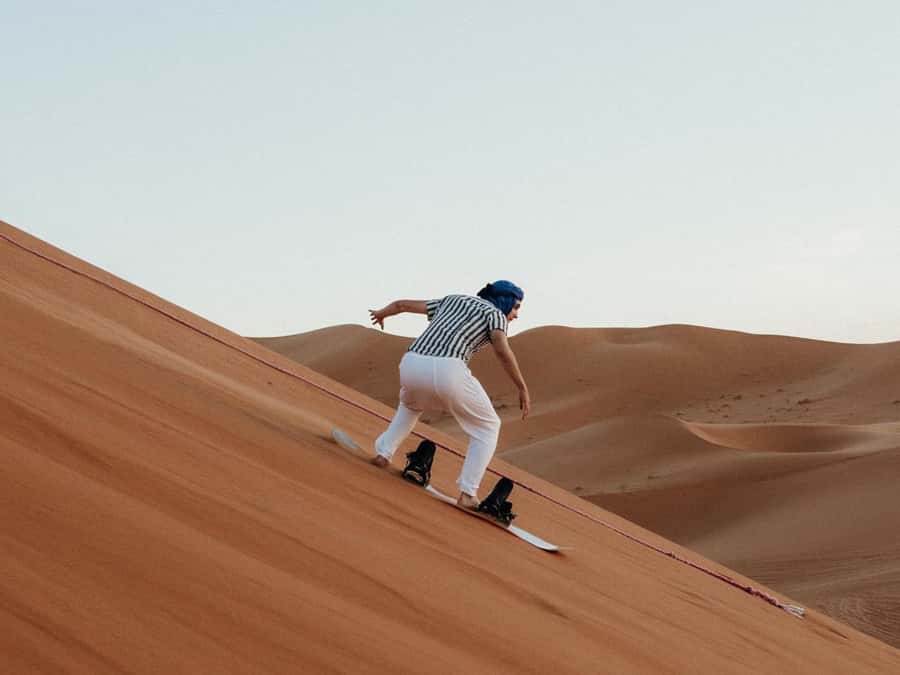
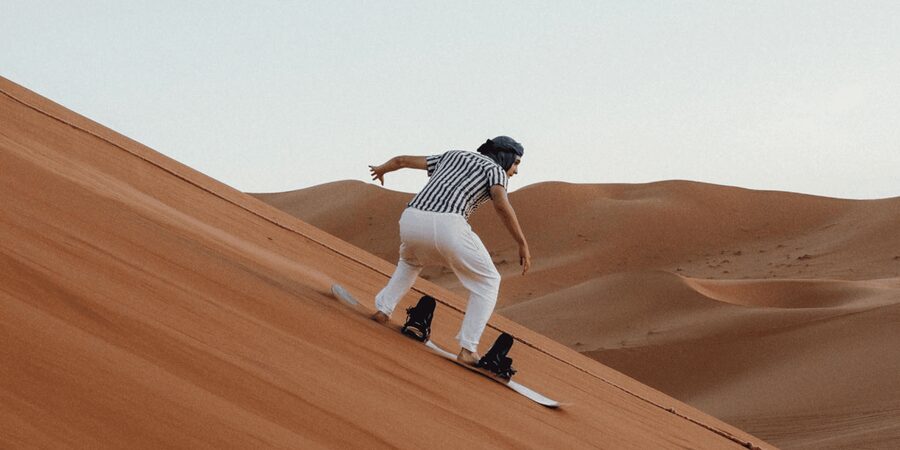
A camel ride is not the same as a smooth horse ride. The animal rises and sits in stages, so hold on during those movements. The ride is a classic desert experience, but it can be uncomfortable for anyone with back problems. Sandboarding is also included, usually giving you something active to do while waiting for sunset.
The best light comes late in the day. From the dunes, the desert turns gold, then orange, then gray as the sun drops. This is the moment many people are really paying for, and it is worth keeping your camera ready while also giving yourself time to simply look around.
The desert camp: standard comfort or a private bathroom
The standard camp uses private tents with shared bathrooms. One useful detail from recent departures is that standard facilities can include showers and warm water, especially at camps near the edge of the dunes. That means you are not choosing between a desert night and basic hygiene.
The luxury option is the better fit if private bathing facilities matter to you. One booking in the luxury category included a private bathroom and air conditioning, which also helped during a cold night. Ask carefully what your selected camp category includes before paying the supplement, since facilities differ between standard and luxury setups.
Dinner is included, followed by Berber drumming and music around a campfire. The evening has a social feel, particularly if you are traveling alone or with a small group. Food is generally based on Moroccan dishes, and the meals included in the camp package are considered decent to good, though some people would prefer more variety across the trip.
The stars are the other major attraction. Away from city lights, the sky becomes the evening’s main show. Bring warm clothing even if your trip takes place in a hot month. Desert temperatures can drop sharply after sunset, and warm layers are specifically recommended.
A different kind of day out, same corner of Morocco:
- Marrakech: Agafay Desert Sunset, Camel Ride, and Dinner Show
★ 4.6 · 35,119 reviews - From Marrakech: Ouzoud Waterfalls Guided Hike and Boat Trip
★ 4.7 · 33,630 reviews - Marrakech: Agafay Desert Quad & Camel Rides with Dinner Show
★ 4.8 · 27,382 reviews - Marrakech: Agafay Desert Quad Biking Tour with Dinner-Show
★ 4.8 · 16,569 reviews
Day three: sunrise, Rissani, and the long road to Marrakech
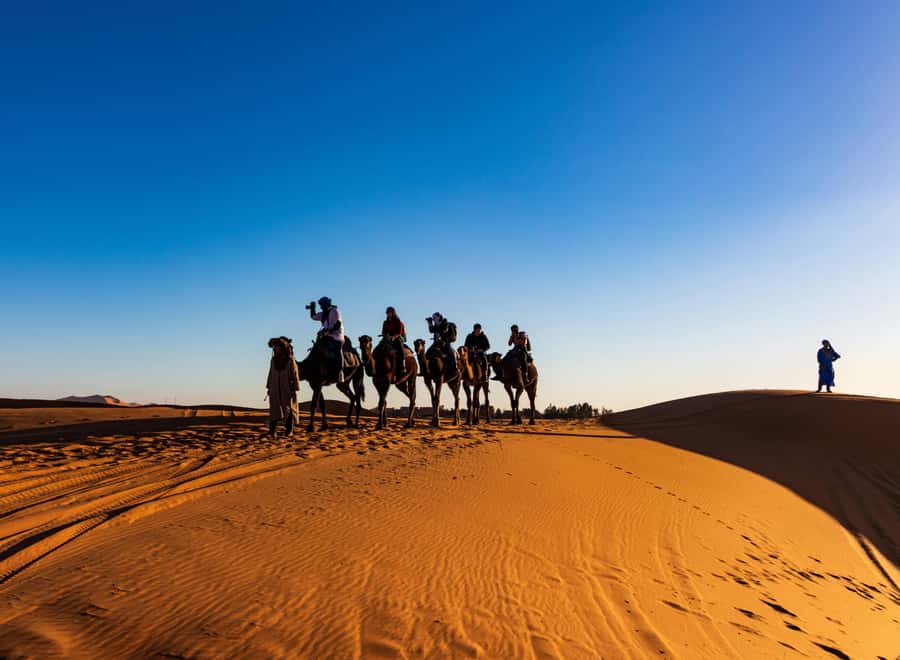
Wake early for sunrise over the dunes. This requires a tired start, but it is one of the strongest parts of the trip. The sand changes color again, and the quiet before breakfast gives the desert a completely different mood from the lively campfire evening.
After breakfast, you return to Merzouga and begin the long drive west. The route passes through Rissani, Alnif, Tazarine, and N’kob before reaching the Draa Valley. This is the day to judge your tolerance for road time honestly.
The Draa Valley brings back the date palms, kasbahs, and villages seen earlier in a different form. Its long palm groves are a reminder that settlements here depend on narrow ribbons of water and cultivated land. The valley is not one single attraction with a gate and a queue. It is a broad sequence of views from the road, with stops that help you understand the region.
You continue toward Ouarzazate, where lunch is scheduled before the final mountain crossing. Lunch is extra, and the planned stops can be relatively costly for what you receive. Bring snacks, water, and enough dirhams so this part does not become a source of stress.
The High Atlas crossing supplies the last major change in scenery. The road climbs through rugged mountain country before descending toward Marrakech. Views can be excellent, but the winding route may be tiring after two full days. Arriving in Marrakech in the evening makes this a useful transfer tour, but not a restful one.
Transport, group size, and the guide experience
You travel in air-conditioned transportation with an English-speaking driver-guide, though French, Arabic, and Spanish are also offered. Group size varies. Some departures have around eight people plus the driver, while another had roughly fifteen participants. A private group option is available if you want more control over stops and pace.
The driver matters a great deal on this route. Abderrahman is repeatedly singled out for safe driving, good timing, toilet stops, towels at the camp, and making sure the group reached meal stops before queues grew. Ali, Hamza, Hicham, Youssef, Abdu, Jawad, and several other named drivers are also praised for being friendly, careful, and helpful.
You should not assume one particular driver will be assigned to you. The practical point is that the company uses drivers who do more than steer. They explain the schedule, help with luggage, retrieve forgotten belongings, and keep the group moving when the route becomes complicated.
Communication before pickup has been less consistent than communication during the trip. Some people receive clear WhatsApp details the day before, while others have had trouble getting answers until close to departure. If you have a tight connection or an early morning plan, keep the day before pickup flexible.
Pickup is included within about 4 miles, or 7 kilometers, of central Agadir. If your riad is in the Medina and vehicles cannot reach it, you may be directed to the nearest car-accessible point. Confirm that meeting place rather than assuming the vehicle will stop at the riad door.
What to pack and how to handle the daily pace
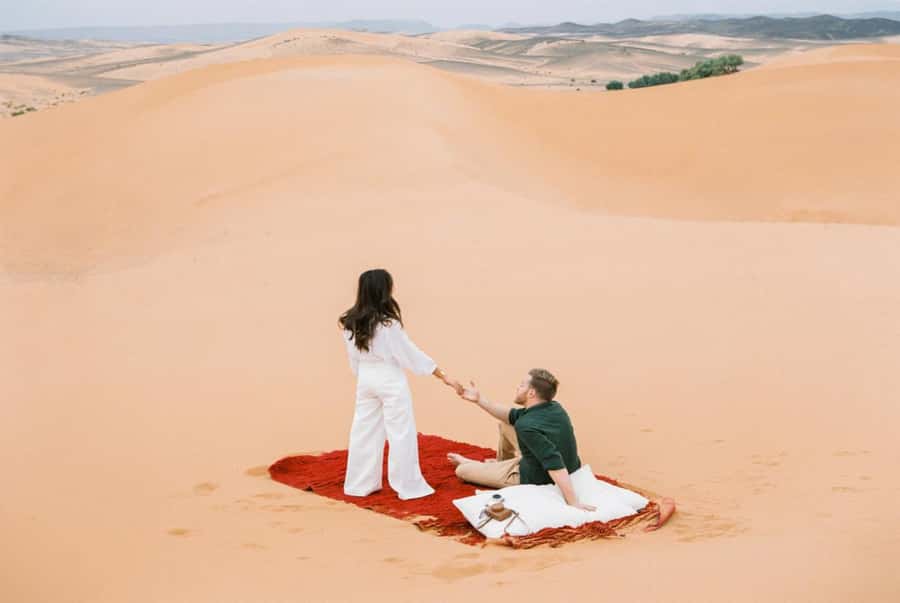
Wear comfortable shoes for Ait Ben Haddou, Todra Gorge, and the desert camp. The ground changes from paved roads to rocky paths and soft sand, so lightweight shoes with a secure fit are more useful than dress shoes.
Bring a hat, sunscreen, a camera, and water. Add warm clothing for the desert night and early sunrise. A scarf can help with sun or wind, and one departure found a purchased head covering unnecessary because a personal scarf worked just as well.
Pack snacks for day one. Breakfast is not included on the first morning, and the opening stretch can involve several hours of driving before a proper food stop. Lunches are also not included, so carry cash and a small supply of food you know you will eat.
Smoking is not allowed in the vehicle. The tour is not a good choice if you have serious back problems, given the camel ride and long road hours. The supplied information also lists people prone to seasickness as unsuitable, though the activity itself is land-based.
Is $172 good value?
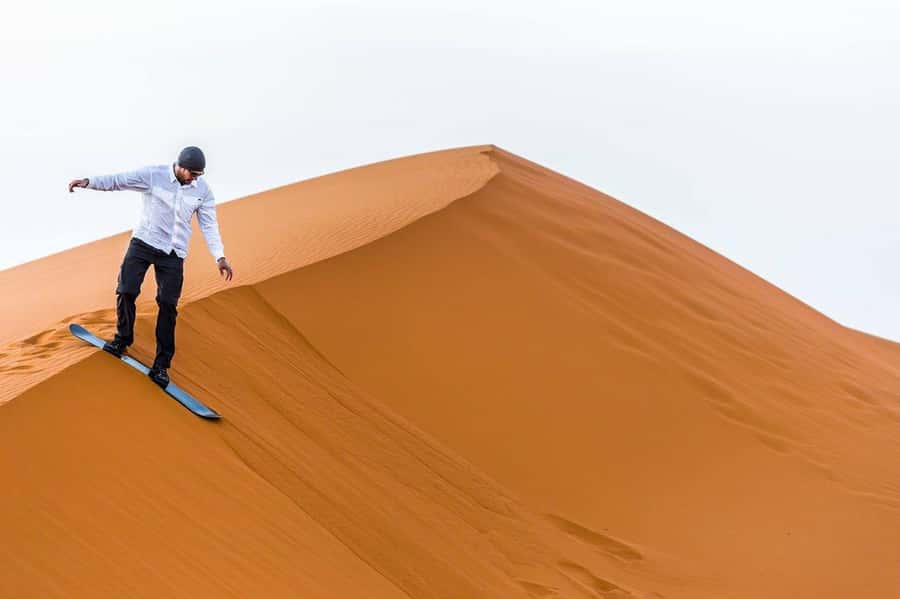
For a three-day crossing with this many included elements, $172 is good value if you want to see a lot in a short time. You would otherwise need to arrange transport between Agadir, the valleys, Merzouga, and Marrakech, then book accommodation and organize the camel camp separately.
The tradeoff is control. Included lunches would make the trip easier, but the absence of lunch coverage also lets the operator keep the headline price down. You should budget for two lunches, drinks, snacks, and any optional guide or desert add-ons.
The luxury tent upgrade can be worthwhile for cold weather, privacy, or a more comfortable night. The standard camp still offers beds, dinner, showers, and music, so the basic package is enough for many people who mainly want the desert setting.
Who should book this three-day desert tour?
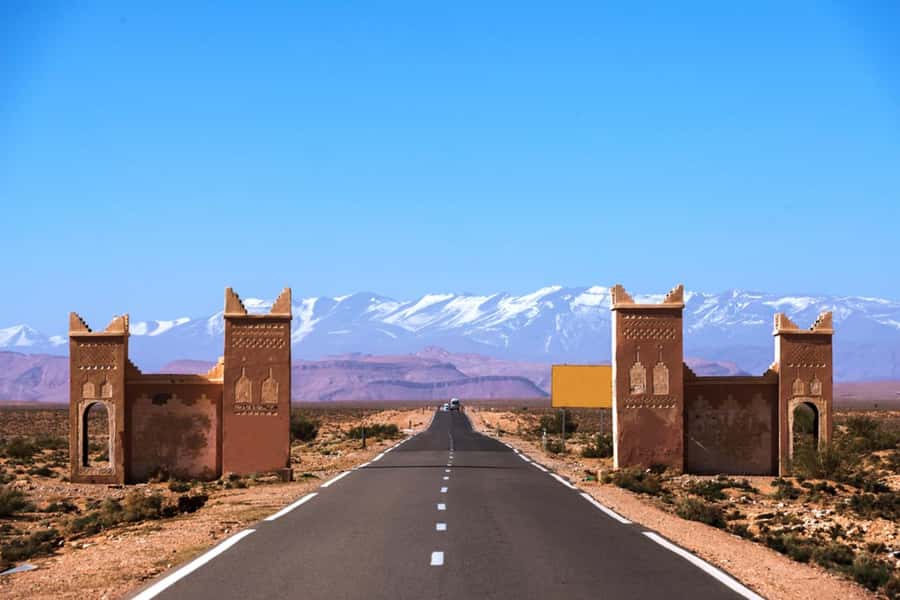
I would choose this tour if you have limited time and want a strong first taste of Morocco beyond Agadir and Marrakech. It suits solo visitors, couples, and social small groups, especially people who enjoy moving through several regions rather than staying in one place.
It is also a good fit if you want a transfer to Marrakech with major sights built in. The itinerary gives you Ait Ben Haddou, Todra Gorge, the Draa Valley, the Atlas Mountains, and the Sahara in one organized trip.
I would hesitate if you dislike long drives, fixed meal stops, early starts, or group schedules. The first and third days are demanding, and the final road from Merzouga to Marrakech is particularly long. You get many stops, but not much unplanned time to sit in one valley or town.
Should you book it?
Book this tour if the camel ride, desert sunset, campfire music, and sunrise are your priorities, and you accept that the Sahara comes with serious road time. At $172, the combination of transport, lodging, meals, activities, and a Marrakech drop-off makes practical sense.
Choose the luxury camp if private facilities and warmth matter. Choose the standard option if you want the desert experience at the lowest price. Bring snacks and cash, confirm the Agadir meeting point, and go in rested. With those details handled, this is a very efficient way to connect Morocco’s Atlantic coast, southern valleys, and Sahara in one memorable trip.
FAQ
How long is the tour?
The tour lasts three days and ends with drop-off at your accommodation in Marrakech.
Where does pickup take place?
Pickup is included from accommodations within about 4 miles, or 7 kilometers, of central Agadir. Medina riads may require a meeting point at the nearest location accessible by car.
Which languages are available?
The tour is offered with live guides speaking English, French, Arabic, or Spanish.
What accommodation is included?
You receive one night in a comfortable hotel or riad and one night in a private tent at a desert camp. Standard tents use shared bathrooms. The luxury option can include private bathing facilities and air conditioning.
Are meals included?
Two breakfasts and two dinners are included. Lunches and drinks are not included, so you should carry cash for planned lunch stops.
Is sandboarding included?
Yes. Sandboarding is included along with the camel excursion to the Merzouga desert camp.
Can I cancel the booking?
You can cancel up to 24 hours in advance for a full refund. A reserve-now-and-pay-later option is also available.
Recently reviewed around Marrakech
- 4-Days Marrakech to Marrakech Désert Tour★ 5.0 · 17 reviews
- Camel ride at sunset in Marrakech palm grove★ 5.0 · 17 reviews
- Agafay camel ride★ 5.0 · 20 reviews
- Camel riding in marrakech★ 4.5 · 17 reviews
- Marrakech to Atlas Mountains and 4 Valleys Day Trip★ 5.0 · 17 reviews
- Agafay Desert Adventure, Culture, and Relaxation, From Marrakech★ 5.0 · 25 reviews
- Quad excursion to the Agafay desert near Marrakech★ 5.0 · 44 reviews
- Camel ride and dinner Agafay desert★ 5.0 · 25 reviews
3-Day Experiences, compared.
3 Days Desert Tour From Marrakech To Merzouga Dunes & Camel Trek
Read our review →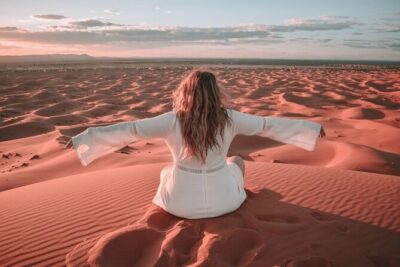
3-Day Marrakech to Merzouga Desert Tour: Camel Rides & Overnights
Read our review →
3-Day Marrakech to Fes Sahara Desert Tour via Merzouga
Read our review →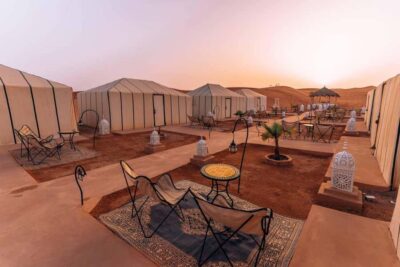
3-Day Merzouga Desert Experience Camel & Meals
Read our review →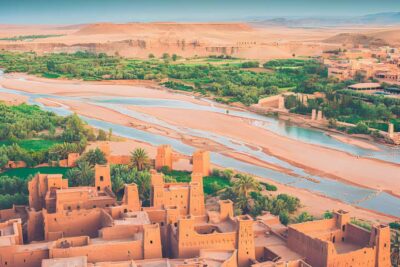
3-Day Tour to Merzouga Erg Chebbi with Food & Camel Trek
Read our review →Browse the lists this tour appears in