
Reviewed · MEDINA & SOUK WALKS
Fes: Medina Guided Tour with Local
Fes is easiest to understand from inside its maze, and this walking tour puts Mohammed, a Fes-born licensed guide, in front of you as the city’s interpreter. He leads you from the Blue Gate through the old medina’s tight lanes, historic schools, markets, fountains, mosques, and working craft quarters. The best part is not simply finding the sights. It is learning how they fit into daily life.
I like two things here. First, the route covers nearly all the major sights in a compact half-day, while still leaving room for questions and local stories. Second, Mohammed’s approach is unusually clear about shopping: you can see artisans at work without being pushed into a purchase. The full-day option adds the Jewish Quarter, King’s Palace, pottery, and wide views over Fes.
The main caution is practical: this is a long walk over uneven lanes with plenty of standing, crowds, and steps. It is not suitable for people with mobility impairments, and the half-day route can run longer than three hours when you stop for photos, questions, or craft demonstrations.
In This Review
- Key points to know before you book
- Why a local guide matters in Fes Medina
- From the Blue Gate to Talaa Kebira
- Bouanania Medersa and the water clock
- Kairaouine, the Andalusian Mosque, and Nejjarine
- Henna Souk and Attarin Market
- Place Seffarine and Fes’s metalworkers
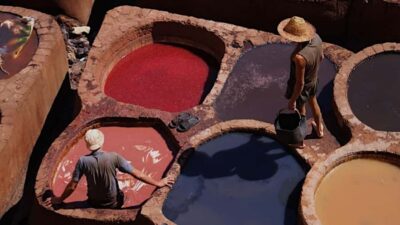
- Chouara Tannery, Fes’s most famous working sight
- What the full-day option adds
- A tour built around questions, not a script
- Price, group size, and who gets the best value
- Should you book this Fes Medina tour?
- FAQ
- How long does the Fes Medina tour last?
- Where does the tour meet?
- What sights are included on the half-day route?
- What does the full-day option add?
- Are entrance fees included?
- Is the tour private or shared?
- Is the tour suitable for people with mobility impairments?
Key points to know before you book
- Start at Bab Boujloud: The famous Blue Gate gives you an easy visual beginning before the lanes narrow into Talaa Kebira.
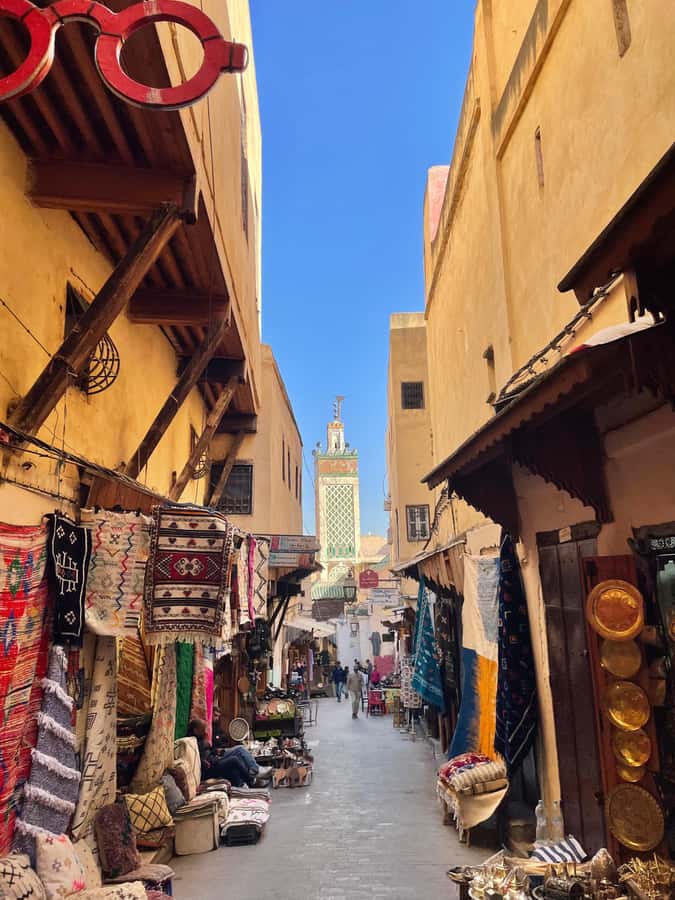
- See working crafts, not only monuments: The route includes bronze work at Place Seffarine, the tanneries, pottery, mosaic, plaster, and local souks.
- Mohammed guides without a shopping agenda: You can ask for buying advice and help with bargaining, but the tour is designed around seeing Fes rather than visiting salesrooms.
- Choose the longer route for wider context: The full-day plan adds the Jewish Quarter, King’s Palace, a pottery factory, Bab Guissa, and the Marinid Tomb viewpoint.
- Allow extra time for the old city: A scheduled three-hour walk has sometimes lasted four or five hours, which is useful if you are not racing to another appointment.
- Bring cash for entries: Food and drinks are not included, and the Madrasa and museum entrance fees are listed at about €4.
Why a local guide matters in Fes Medina
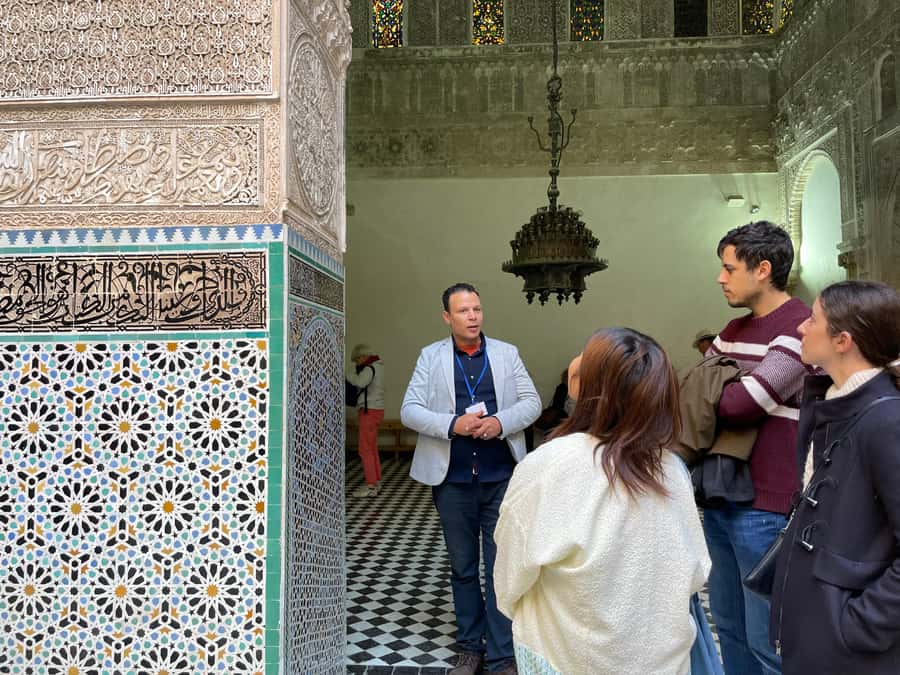
Fes El Bali is not a place where a map tells the whole story. The old city is made up of many lanes, markets, workshops, religious buildings, and neighborhood corners. A guide who grew up in Fes can do more than point out a doorway. He can explain what you are seeing, why it matters, and how the old city still functions.
Mohammed’s strength is his personal connection to the medina. He knows the main route, but he also knows smaller passages and artisans working away from the most obvious tourist stops. His conversations with people in the lanes help you see the medina as a living neighborhood, not an open-air museum.
That local contact also changes the pace. You can stop to ask about Moroccan customs, architecture, craft methods, or everyday life. Several parts of the tour can be adjusted around your interests, and Mohammed has been praised for answering detailed questions without rushing people along.
This is especially useful on a first visit. Fes can feel confusing at first, but once you have walked the main spine with someone who knows the shortcuts, later wandering becomes far less daunting. I would book it early in your stay, then use what you learn to explore independently afterward.
More Medina Walks in Fez
- Fez Medina Guided Tour
★ 4.6 · 2,079 reviews - Fes: Museum, Al Attarine Madrasa & Tannery and Medina Tour
★ 4.6 · 1,655 reviews - Explore Fes: Unforgettable Guided Walking Tour of the Medina
★ 4.7 · 1,339 reviews
From the Blue Gate to Talaa Kebira
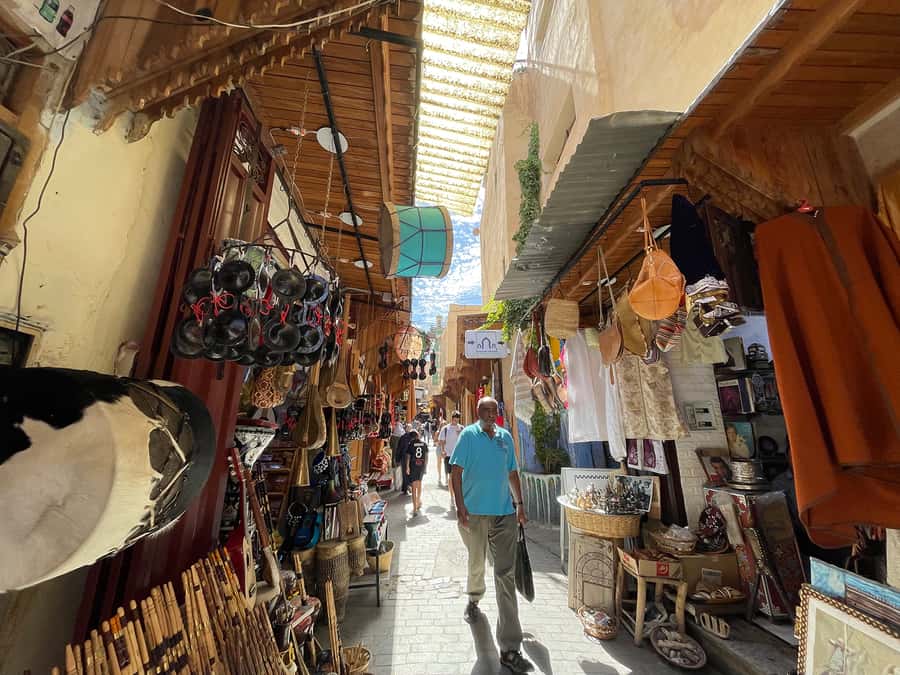
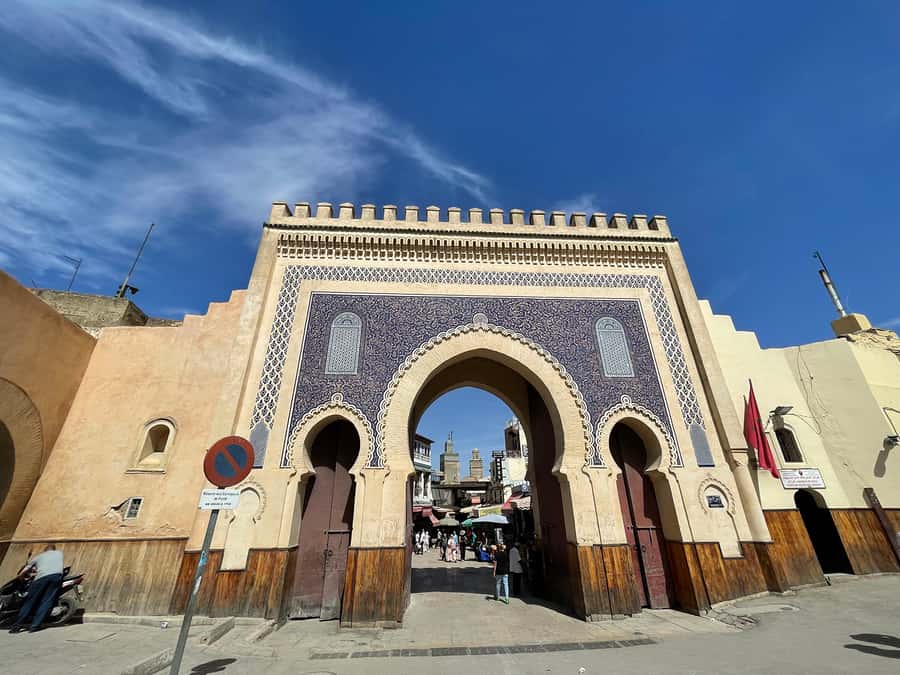
The tour begins at Bab Boujloud, usually called the Blue Gate. It is a sensible meeting point because it is one of the most recognizable entrances to Fes Medina. From there, you cross into the old city and turn onto Talaa Kebira, the principal street.
The first few minutes give you a useful introduction to the rhythm of the medina. You pass local souks, herbal shops, and handicraft stalls, with the street gradually drawing you farther from the open space by the gate. The route is lively, but it is also narrow, so you need to stay aware of people moving in both directions.
This is where a guide is most useful. Instead of stopping at every shop or getting pulled into a sales pitch, you can keep your attention on the buildings, trades, and street life. Mohammed’s role is to explain what is worth noticing and to help you move through the lanes with purpose.
The meeting point is at Dar Sunrise, house number 10, in the alley beside the Made in M cafe on Talaa Kebira. From Bab Boujloud, turn left at the first street and walk for about three minutes. From Ain Zliten Parking, enter Talaa Kebira and walk uphill for about a minute. Save the directions before setting out, since finding a specific house in the medina can take patience.
Bouanania Medersa and the water clock
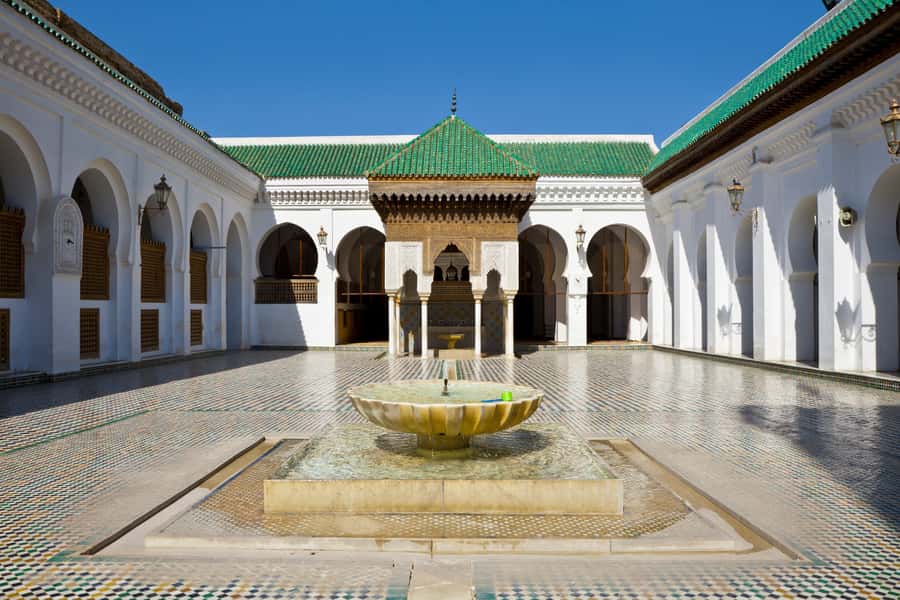
The water clock and Bouanania Medersa are among the early historic stops on the half-day route. They give you a first look at the design language that makes Fes so memorable: carved plaster, tilework, wood, and carefully planned decorative detail.
Bouanania Medersa is one of the tour’s paid stops. The listed entry cost for the madrasa and museum is €4, so keep some cash with you. The interior is more than a quick photo stop. Take time to look at the workmanship and ask Mohammed how the different materials were used.
This is one area where his craft background adds value. He is also an artisan, with a particular interest in mosaic and plaster work, and he can explain the labor and skill behind details that are easy to glance past. You might otherwise see a wall of patterns. With context, you begin to notice the order, geometry, and handwork.
The water clock is a smaller attraction, but it helps show how the medina’s public life once depended on practical systems as well as grand religious buildings. The stop works well early in the walk because it introduces both the architecture and the story of how people used the old city.
Kairaouine, the Andalusian Mosque, and Nejjarine
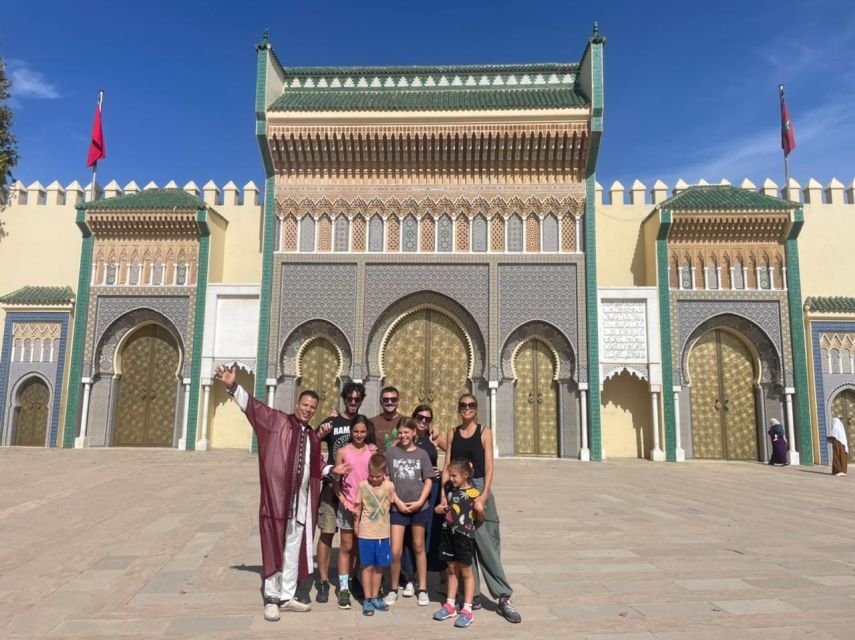
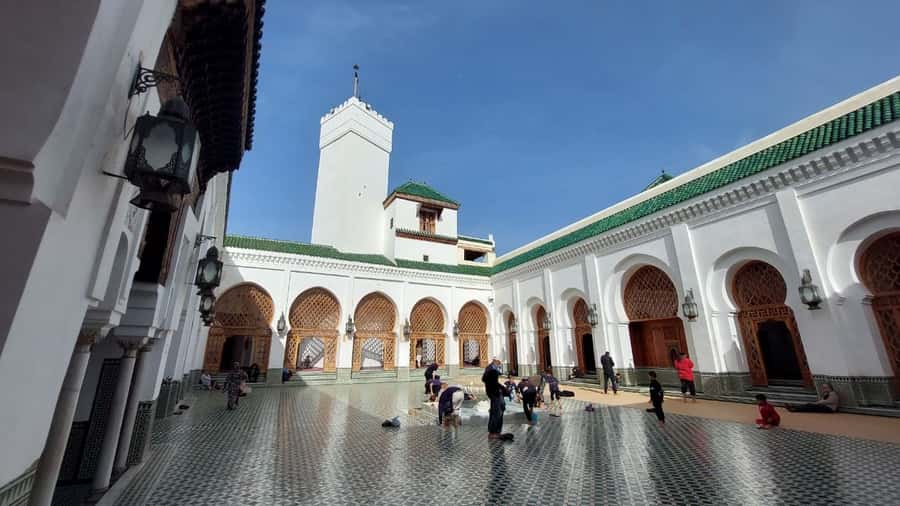
Farther down the route, the focus shifts to some of Fes’s best-known religious and civic landmarks. You visit the Mosque and University of Kairaouine, the Andalusian Mosque, Nejjarine Fountain, and the Nejjarine Museum.
Kairaouine is one of the central landmarks of the medina and an important place to hear about Fes’s role as a center of learning and faith. Access inside religious sites can be restricted, so the value of the stop is often in the setting, explanation, and surrounding streets as much as in entering the building itself.
The Andalusian Mosque adds another layer to the city’s story. Its name points to the connections between Fes and communities from across the western Islamic world. Mohammed can help place the building within the wider story of Moroccan culture rather than treating it as an isolated monument.
Nejjarine Fountain is a fine pause in the middle of the walk. Its tilework and public purpose make it a good example of how decoration and daily needs meet in Fes. The nearby museum requires an entrance fee, listed with the madrasa at about €4, and is worth considering if you care about traditional woodwork and domestic craft.
You will be walking through active streets between these stops. That is part of the appeal, but it means you should not expect a silent museum visit from one sight to the next. The route is full of movement, conversation, and changing views.
More Fez trips worth a second look
- Exclusive Fez Medina Walking Tour with Private Guide
★ 5.0 · 392 reviews - Fez: Guided Walking Tour of the Historic Medina
★ 5.0 · 359 reviews - Fez Medina 4-Hour Guided Walking Tour
★ 4.5 · 248 reviews - Fez Guided Tour
★ 5.0 · 213 reviews
Henna Souk and Attarin Market
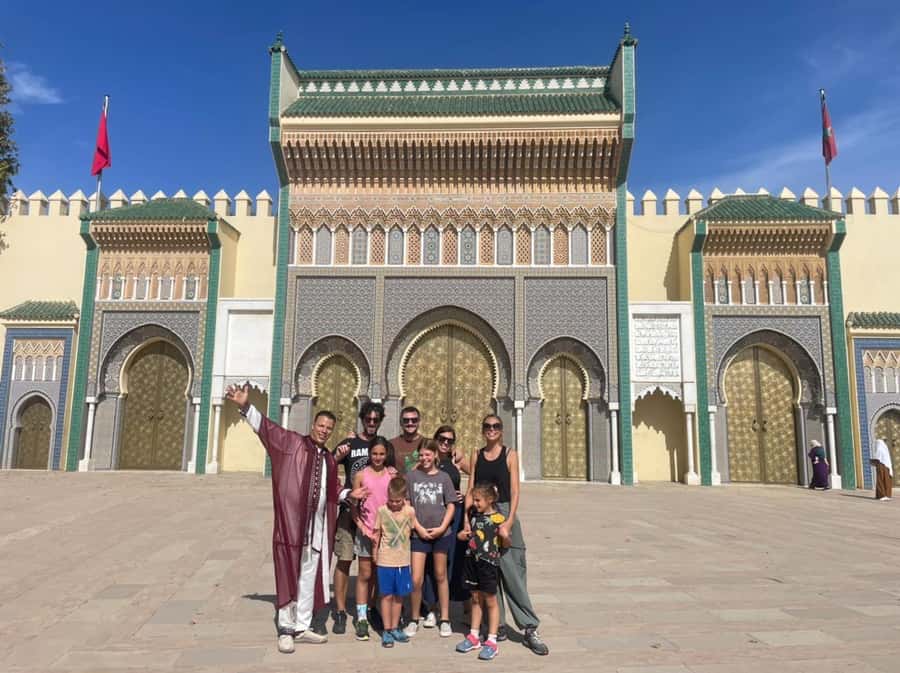
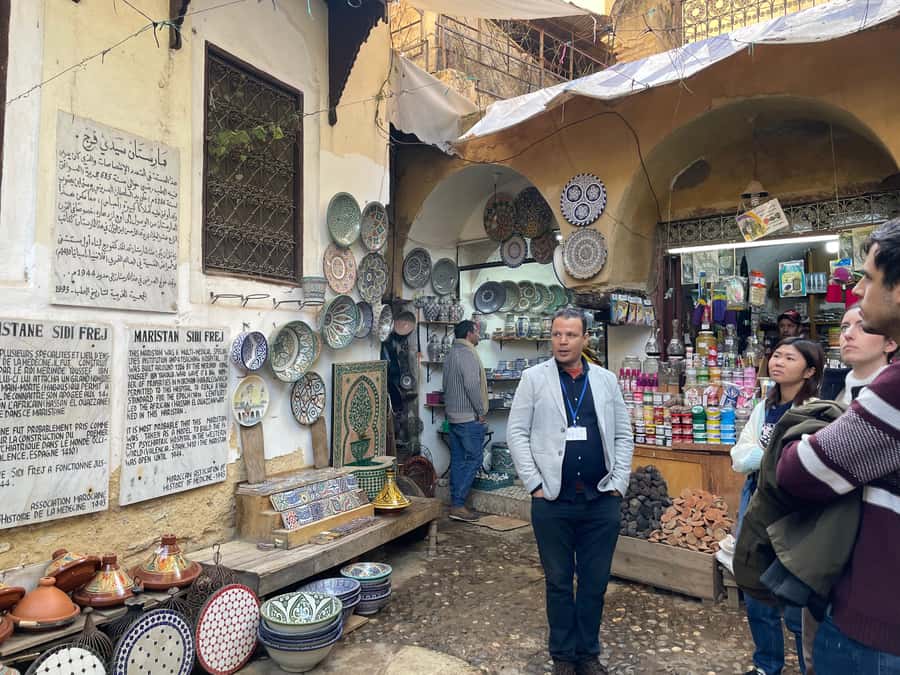
The souks are where the tour shifts most clearly from monuments to ordinary commerce. The Henna Souk and Attarin Market show how the medina remains a place to buy useful goods, ingredients, remedies, and handmade products.
Herbal shops can be especially interesting if you ask direct questions. You can learn how plants, oils, and traditional products are presented in Moroccan daily life. As with any market, be alert to sales pressure and buy only what you actually want.
The same applies to handicrafts. Mohammed’s style, according to the experience details and the strong pattern of feedback, is to explain the work and give buying advice when you ask. He does not build the route around taking you from one commission-based shop to another. That matters if you want cultural context without feeling that every stop has a price tag attached.
You can still shop. Mohammed has helped visitors understand prices and bargaining, and he can offer practical guidance if you decide to purchase something. The useful difference is control: you choose when shopping becomes part of the tour.
Place Seffarine and Fes’s metalworkers
Place Seffarine is one of the most memorable stops because you can see bronze workers producing traditional pieces. The sound and activity here offer a direct connection to the skilled trades that have shaped Fes for centuries.
This is not just a market display. The point is to watch production and understand the work behind the finished object. Mohammed can introduce you to the craft and explain why particular designs and methods matter. If you like handmade goods, this may be one of the tour’s most rewarding sections.
The nearby Saffarin Madrasa adds an architectural counterpoint. After watching metal being worked in a public square, you return to the detail and calm of a historic religious school. The contrast helps make the day feel varied rather than like a long sequence of similar buildings.
You should expect the walking surface around the medina to be uneven, and the lanes may be crowded. Wear shoes with good grip, keep your valuables secure, and avoid carrying more than you need.
Chouara Tannery, Fes’s most famous working sight
Chouara Tannery is the big visual stop. It is the largest tannery in Fes and one of the city’s most recognizable working sites. From above, you can see the vats and the process that gives the quarter its strong smell and unmistakable character.
The tannery is not a polished attraction. The odor can be intense, and visits often involve nearby leather shops. That is where Mohammed’s no-pressure approach becomes important. You can ask to see the work, learn how leather is handled, and leave without treating the stop as an obligation to buy a bag, belt, or jacket.
If you dislike strong smells or sales attention, tell your guide early. The tannery should not be missed if you want to understand Fes’s traditional trades, but it is also the stop most likely to test your comfort. A sprig of mint may be offered or useful near the tannery, but it does not erase the smell.
The route returns toward Kairaouine before the half-day tour ends. This gives you a final point of orientation in the central medina rather than leaving you in an unfamiliar side lane.
What the full-day option adds
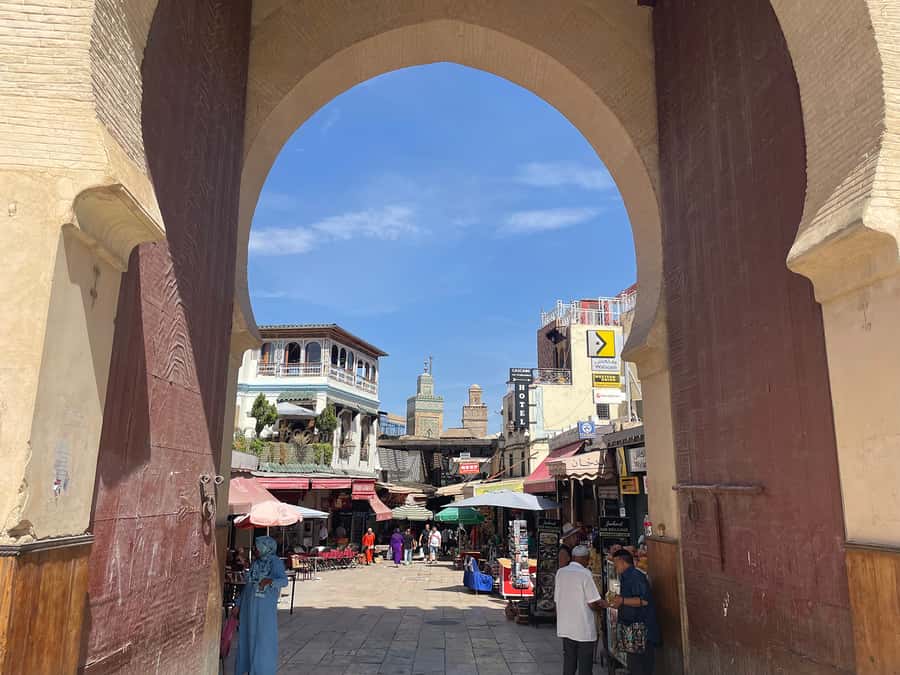
The longer version begins with the medina route, then widens the frame beyond Fes El Bali. You visit the Jewish Quarter and King’s Palace, a mosaic and pottery factory, and viewpoints from Bab Guissa and the Marinid Tomb.
The Jewish Quarter adds social and architectural context that the half-day route cannot cover. It helps you see Fes as a city shaped by different communities and traditions, not only as a collection of Islamic monuments and souks.
The King’s Palace is another change of scale. After hours among narrow lanes and compact workshops, the palace area gives you a different sense of royal space. The visit may focus on the exterior and surrounding area, so ask Mohammed what access is available on your date.
The pottery and mosaic factory suits anyone interested in Moroccan design. You can connect the patterns seen on fountains, schools, and houses with the people and processes that produce them. This is also one of the places where shoppers may feel tempted. The distinction is that the stop is tied to craft education, while buying remains your choice.
The day finishes with broader views from Bab Guissa and the Marinid Tomb. These overlooks are valuable because Fes Medina can be hard to understand from within. From above, you can see how the old city sits among the surrounding hills and neighborhoods, and the dense maze below begins to make geographic sense.
Allow six hours for the full-day version, and perhaps more if you want a slower pace. The advertised range is three to six hours, but several tours have run beyond the planned time when the group had questions or stopped often.
A tour built around questions, not a script
The strongest reason to choose this experience is the guide’s conversational style. Mohammed combines dates and architectural facts with personal stories, local anecdotes, and explanations of Moroccan customs. His English is described as strong, and he learned it independently through books and films.
That does not mean every minute is a formal lecture. You can ask about the people you pass, the meaning of a design, where locals eat, or how to handle shopping. The route can be tailored to your interests, and the pace is generally suited to stopping for photographs and discussion.
Hospitality is another part of the experience. Dar Sunrise is the meeting point, and tea has been offered before departure. Some visitors have also been invited to the guide’s home or workshop, but do not treat that as a guaranteed part of the standard tour. A cooking class at his home is a separate experience, not included here.
The reviews also include a tour led by Rachid, so guide assignment may not always be identical. If meeting Mohammed specifically matters to you, confirm the guide after booking.
Price, group size, and who gets the best value
At $22 per person, this is a strong-value introduction to Fes Medina. You are paying for a licensed official guide and several hours of walking through a place that is difficult to read on your own. The value improves if you choose a private or small group, since questions and route changes are easier.
Food and drinks are not included. Entry to the madrasa and museum is also extra, listed at €4. The full-day option adds more time and sites, so it makes sense if Fes is a main purpose of your visit or you want an overview in one day.
I would choose the half-day tour if you have limited energy, a tight schedule, or plan to explore the souks alone afterward. Choose the full-day route if you want the broader city story, craft production, viewpoints, and the Jewish Quarter without arranging separate transport or guides.
This is not a good fit for anyone who cannot manage several hours on foot. The route passes through narrow lanes and markets, and you may stand for explanations or wait while craft is demonstrated.
Should you book this Fes Medina tour?
Book it if you want Fes explained by someone who treats the medina as home rather than as a string of sales stops. Mohammed’s local ties, interest in tile and plaster work, humor, and willingness to answer questions give the tour more substance than a simple checklist of monuments.
Book the half-day option early in your stay if you want to get your bearings. Book the full-day version if you want the Jewish Quarter, palace area, pottery, and hilltop views in the same outing.
Skip it if you prefer to wander without a guide, cannot manage uneven walking, or have no interest in markets and traditional crafts. For most first-time visitors who want history, daily life, and practical help navigating Fes, the $22 price is hard to fault. Just wear sensible shoes, bring cash for entries, and leave your schedule flexible.
FAQ
How long does the Fes Medina tour last?
You can choose a half-day tour of about three hours or a longer option lasting about three to six hours. The walk may take longer than scheduled if you stop for questions, photographs, or craft demonstrations.
Where does the tour meet?
The meeting point is Dar Sunrise Fes, at house number 10 in the alley beside the Made in M cafe on Talaa Kebira. From Bab Boujloud, turn left at the first street and walk about three minutes.
What sights are included on the half-day route?
The route begins at Bab Boujloud and includes Talaa Kebira, the water clock, Bouanania Medersa, Kairaouine Mosque and University, the Andalusian Mosque, Nejjarine Fountain, Nejjarine Museum, Henna Souk, Attarin Market, Place Seffarine, Saffarin Madrasa, and Chouara Tannery.
What does the full-day option add?
After the medina, the longer tour visits the Jewish Quarter and King’s Palace, a mosaic and pottery factory, and panoramic viewpoints from Bab Guissa and the Marinid Tomb.
Are entrance fees included?
No. Food and drinks are also not included. Entrance fees for the madrasa and museum are listed at €4.
Is the tour private or shared?
Private and small-group options are available. Check the selected option when booking.
Is the tour suitable for people with mobility impairments?
No. The experience is listed as unsuitable for people with mobility impairments because it involves extended walking through the medina.
Recently reviewed around Fez
- day trip from fez to middle atlas mountain★ 5.0 · 17 reviews
- Discover the city of Fes on foot with the best guides★ 5.0 · 27 reviews
- VIP TOUR OF FES- Medina by local guide & Rempart by car-FULL Day★ 5.0 · 74 reviews
- Private Fes Medina Walking Tour★ 5.0 · 25 reviews
- Fes to Chefchaouen Day Trip★ 5.0 · 20 reviews
- fes medina guided tour★ 4.5 · 60 reviews
- Fes to Middle Atlas Private Day Trip★ 5.0 · 48 reviews
- Fes to Volubilis, Moulay Idriss and Meknes Private Day Trip★ 4.5 · 26 reviews
Medina & Souk Walks, compared.
Bahia Palace, Saadian Tombs, Souk and Medina Tour
Read our review →
Saadian Tombs & Bahia Palace, Medina Guided Tour
Read our review →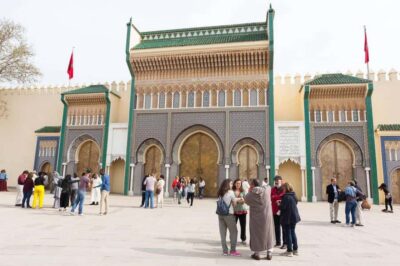
Museum, Al Attarine Madrasa & Tannery and Medina Tour
Read our review →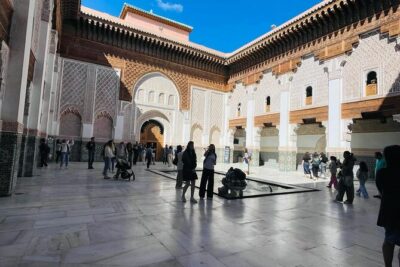
Bahia Palace, Madrasa Ben Youssef and Medina Tour
Read our review →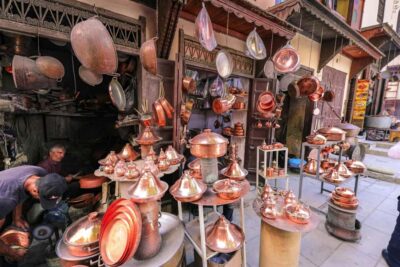
Explore Fes: Unforgettable Guided Walking Tour of the Medina
Read our review →
Madrassa Ben Youssef, Secret Garden & Medina Tour
Read our review →Browse the lists this tour appears in