
Reviewed · ATLAS MOUNTAINS DAY TRIPS
3 Day Trek in the Atlas Mountains and Berber Villages from Marrakech
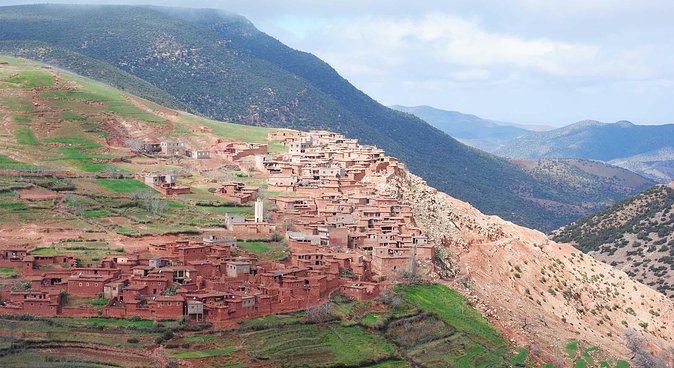
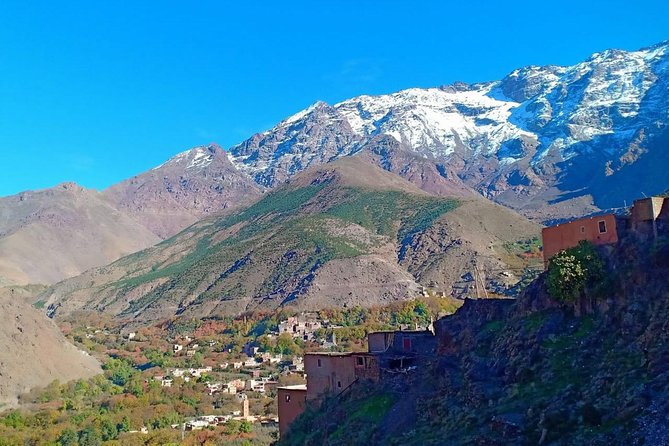
The best part of this trip is the change of pace. Within a few hours of leaving Marrakech, you are walking past terraced fields, mud-brick villages, and sharp mountain ridges, with mint tea in a Berber home instead of traffic and shopkeepers. The route links Imlil with villages such as Tachddirt, Tinghourine, Matat, and Ait Aissa.
I like the small-scale village contact and the warm, filling cooking, often tagine, soup, bread, and tea. I also like that the guide can adjust the pace. Guides named Abdul, Omar, Mohamed, Marwan, and Driss have helped people of quite different ages and fitness levels manage the route.
The main caution is uneven organization. Some departures have had unclear pickup details, mixed groups, altered routes, and confusion over lunch. The walking and mountain scenery can be excellent, but you should confirm the exact plan, luggage arrangements, and meal inclusions before setting out.
In This Review
- Key points to know before booking
- Leaving Marrakech for Imlil at 9 a.m.
- Day one, Tizi n’Tamatert and Tachddirt
- Day two, four to five hours through the neighboring valleys
- Lunch, water, and the price of the trip
- Day three, waterfall, Mzik Pass, and the return to Imlil
- What the village stays are really like
- Guides, route changes, and group size
- What to pack for the High Atlas
- Who should book this three-day trek
- Should you book it?
- FAQ
- Where does the trek begin and end?
- What time does the tour start?
- How much walking is involved each day?
- How high do the mountain passes reach?
- Are meals included?
- Where will I sleep?
- Is the tour private?
Key points to know before booking
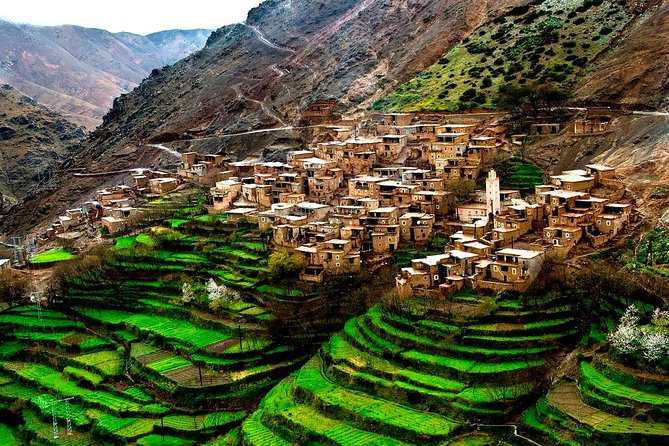
- Mountain passes, not just village walks: The route reaches Tizi n’Tamatert at 2,300 meters, Oudit Pass at 2,200 meters, and Mzik Pass at 2,500 meters.
- A real cultural stay: You sleep in village guesthouses and eat food prepared by local hosts, with opportunities to drink tea in a family home.
- Three effort levels are offered: Choose a 4 to 5 hour daily hike or ask about a gentler option using a mule ride.
- Lunch needs checking: Breakfast and dinner are included, but lunch is described separately in the practical details and may cost about 60 Moroccan dirhams.
- Guides make a big difference: Abdul, Omar, Mohamed, Marwan, Driss, and others have been praised for pacing, route changes, and village information.
- Pack for cold nights: Even when days are sunny, mountain evenings can be cold. Warm layers, proper walking shoes, sunglasses, and sun cream matter.
Leaving Marrakech for Imlil at 9 a.m.
Your day begins with private transport from your Marrakech hotel at about 9 a.m. That is a useful start time: early enough to reach the mountains with good walking hours ahead, but not so early that you need to organize a pre-dawn departure.
The drive brings you to Imlil, the main starting point for many walks in the Toubkal National Park area. Here you meet your local guide, have a welcome drink, and sort out the first part of the walk. The private vehicle is a real advantage because your group does not need to follow a large coach schedule.
Imlil is more than a transport stop. It is a mountain village surrounded by valleys and high ridges, and it gives you your first proper look at rural life in the Atlas. From here, the route quickly leaves the main village behind and follows paths through smaller Berber communities.
One point deserves attention before you go. Several departures have had poor communication about the pickup location, and some people were initially placed with a one-day group. Contact the operator ahead of time to confirm the driver, meeting point, number of nights, and the route planned for your particular departure.
More Hiking Tours in Marrakech
- From Marrakech: Ouzoud Waterfalls Guided Hike and Boat Trip
★ 4.7 · 33,630 reviews - Berber villages : Atlas Mountains Day Hike from Marrakech
★ 5.0 · 14,007 reviews - 3 Days Desert Tour From Marrakech To Merzouga Dunes & Camel Trek
★ 5.0 · 10,125 reviews
Day one, Tizi n’Tamatert and Tachddirt
The first walking day is a fine introduction to the region. After leaving Imlil, you pass a series of Berber villages and meet local people along the way. After roughly an hour, the planned stop is a traditional Berber home for mint tea with a family.
That tea stop is one of the most useful parts of the trip. It gives you a glimpse of village hospitality without turning the visit into a staged attraction. Your guide can explain what you are seeing, from the farming terraces to the layout of the houses and the paths linking the communities.
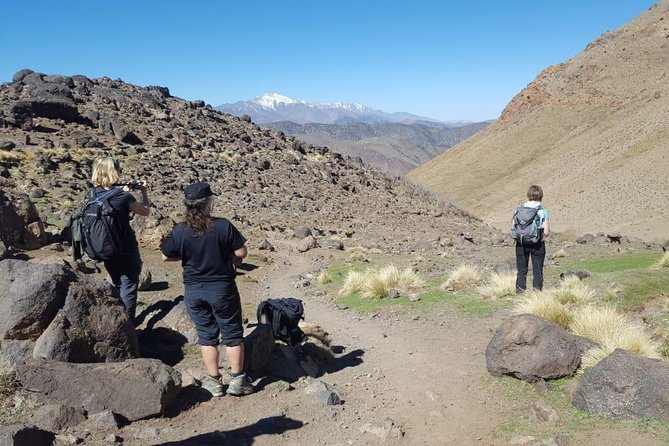
The route then climbs toward Tizi n’Tamatert, at about 2,300 meters. This is a proper mountain pass, so the walk is not a flat stroll. The reward is a wide view over the valleys and scattered villages below. The exact effort will depend on the route and your pace, but the pass is the first clear test of your legs.
Lunch is planned near the pass before you continue toward Tachddirt, also written as Techdirt or Tinghourine in the tour details. You spend the night in a village guesthouse. Accommodation is basic rather than luxurious, but several departures have had clean rooms, hot water, blankets, and a private room on the first night.
The names can be confusing. Tachddirt, Tinghourine, and Tinghourin appear in different descriptions of the same section of the route, so ask your guide to explain the overnight village and walking plan when you arrive in Imlil.
Day two, four to five hours through the neighboring valleys
The second day is usually the longest sustained walking section, with about four to five hours on foot. You travel from Tinghourine or Tachddirt toward Ikkis, Aguersiwal, Matat, and Ait Aissa, passing more villages and crossing the Oudit Pass at approximately 2,200 meters.
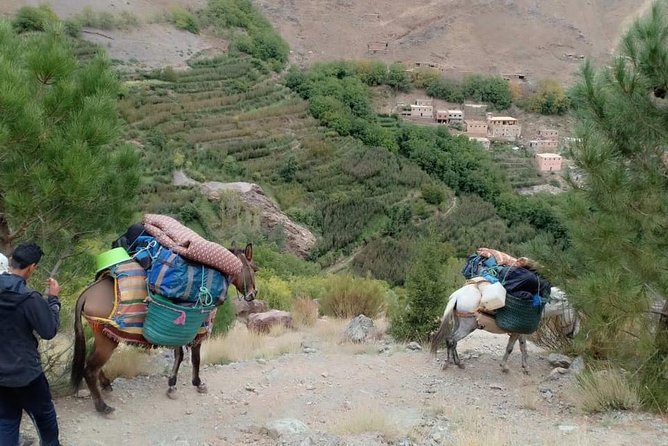
This is where the trip feels most like a village-to-village trek. You are not simply driven to a viewpoint and returned to Marrakech. The paths connect communities that are spread along the mountain folds, and your guide provides the local context that turns a long walk into something more than a series of photographs.
A good guide also sets the right rhythm. Mohamed, Omar, Abdul, Marwan, and Driss have been singled out for keeping a comfortable pace, explaining village life, and adjusting the route for older walkers or mixed fitness levels. One 76-year-old participant had the plan modified to suit his abilities, while another group included a 60-year-old father and his 22-year-old daughter.
That flexibility does not make the route effortless. Some sections are steep or rough, and one person described the walk as moderate to slightly difficult rather than beginner-level. If you rarely walk for several hours, choose the gentler option if available and tell the operator about your fitness before arrival.
You spend the second night in Ait Aissa, in a simple gite. A hammam, or steam bath, may be available there for an extra touch of comfort after the day’s walk. The accommodation is communal and plain, but hot water has been available on some departures. Bring patience and warm clothing rather than expecting hotel standards.
Food is a strong part of the overnight stay. Home-style meals commonly include tagine, lentil soup, bread, and mint tea. One cook named Mohammed was praised for preparing fresh meals and vegetarian options, sometimes using a mule to carry the bags and kitchen supplies ahead.
Lunch, water, and the price of the trip
At $145 per person, the tour can offer good value if the advertised transport, guide, two nights of lodging, breakfast, dinner, and mule assistance are all delivered. Private transport alone makes the start and finish easier, while a local guide gives you access to village paths and explanations that would be hard to manage on your own.
The price is less clear around midday meals. Breakfast and dinner are included, but lunch is not clearly included in the practical details. Some people were served lunch and later charged around 60 dirhams per meal, while others expected lunch to be part of the package. Soft drinks are also excluded, and you should budget for water.
I would ask three direct questions before booking: Is lunch included on each day? Is a mule definitely assigned to carry your luggage? Which two villages provide the overnight accommodation? The tour information includes a mule for bags, but one departure reported having no donkey support. That conflict is worth settling in writing.
The low headline price may be attractive, but it should not lead you to pack too lightly. Carry money for lunch, drinks, and water. Also keep your day bag small, since the point of luggage assistance is to let you walk without hauling a full pack.
More treks around Marrakech:
- From Marrakech: Atlas Mountains Full-Day Hiking Trip w Lunch
★ 4.8 · 7,417 reviews - Marrakech: Ourika Valley Trip with Waterfall Hike
★ 4.6 · 6,792 reviews - Marrakech: Ourika Valley Trip with Waterfall Hike & Lunch
★ 4.9 · 5,303 reviews - Marrakech: ourika valley lunch & guided hike to waterfalls
★ 4.9 · 3,737 reviews
Day three, waterfall, Mzik Pass, and the return to Imlil
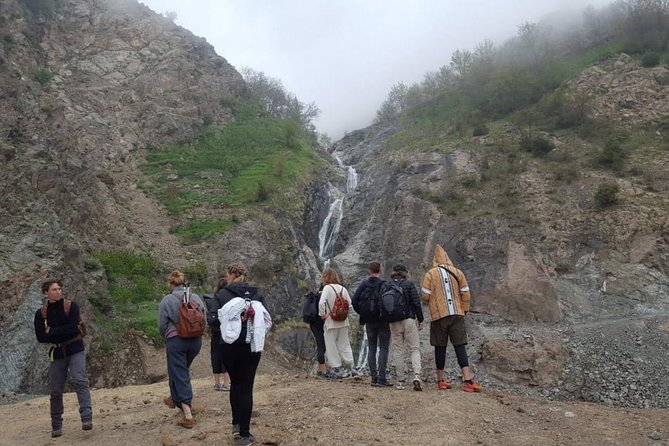
The final day takes about four hours and begins with a visit to the biggest waterfall in Toubkal National Park. The waterfall adds variety after two days of passes and villages, and it is a good place to slow down before the last climb.
From there, the path rises over Mzik Pass at about 2,500 meters. This is the highest named point on the stated route, with views across the Ait Mizan Valley. You should expect the ascent to feel demanding, especially if your legs are tired from the previous day.
After the pass, you stop for lunch in Mzik and then walk downhill to Imlil. The descent can be easier on your breathing but harder on knees and ankles, so walking poles may be useful if you normally use them. The trek ends in Imlil, where private transport takes you back to Marrakech.
The return timing can vary. One departure was hurried at the end because part of the group had a different transport schedule. If you have a dinner reservation or a flight connection in Marrakech, do not plan it too tightly around the advertised three-day duration.
What the village stays are really like
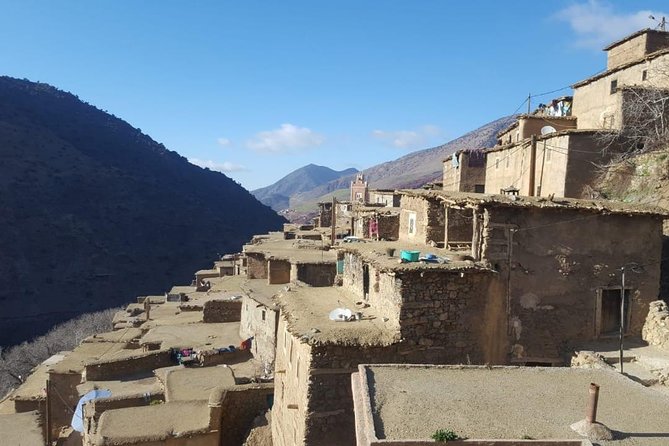
The accommodation is part of the appeal, but it helps to set expectations correctly. You are staying in a gite or guesthouse, not a resort. Rooms may be private on one night and shared on another, and facilities are simple.
That simplicity works well with the setting. You are close to the villages, eating local food, and sleeping near the paths you will walk the next morning. Hot water and plenty of blankets have been available on some departures, but night temperatures can still be low.
Pack a warm layer or light down jacket, even if Marrakech is hot when you leave. October nights have been especially cold for some people. A fleece, warm socks, and a compact rain or wind layer are sensible additions, though the supplied information does not promise any particular weather conditions.
The family visits are not guaranteed as a formal program at every stop, but the route includes tea in a traditional home, and some guides have invited groups to a family meal or tea. These moments are valuable because they show village life at close range without requiring a separate cultural show.
Guides, route changes, and group size
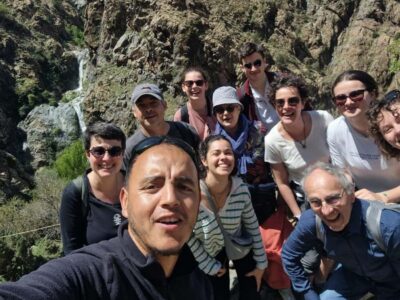
This is a private tour, so only your group participates. That gives you more control than a large scheduled departure, at least in theory. You can discuss pace, rest stops, and route difficulty directly with the guide.
The guide is the person who can make the trip work. Abdul has led walks around Imlil and through the neighboring valleys. Omar has explained Berber village life and adjusted the pace. Mohamed has been praised for kindness and local knowledge, while Marwan has managed groups with different walking speeds. Driss has also been noted for looking after individual needs.
Those names do not mean you can select a particular guide unless the operator confirms it. They do show why it is worth telling the company what you need. Give your age range, hiking background, dietary needs, and preferred pace before the trip.
The route may also change. Some departures have combined people booked on different programs, producing a first day that did not match the expected plan. A flexible guide can still create a rewarding walk, but you should not assume every departure follows the written schedule hour by hour.
What to pack for the High Atlas
The official advice is sensible but too brief for a three-day mountain trip. I would bring:
- Sturdy walking shoes with good grip
- Warm layers for cold evenings
- Sunglasses and sun cream
- A reusable water bottle and money for refills or purchases
- A small daypack
- Personal toiletries and any needed medication
- A camera, if you want one
Walking shoes are more important than fashionable travel footwear. The passes and village paths can be uneven, and the descent into Imlil puts extra pressure on your feet.
Do not rely on the phrase baggage assistance to mean you can bring an unlimited suitcase. A mule may carry your main bag, but you still need to carry what you require during the day. Keep valuables, water, sun protection, and warm layers with you.
The minimum age is listed as three, but that should not be confused with the route being easy for every child. The 4 to 5 hour walking days and high passes require an adult to judge the child’s ability. Ask about the gentler version and mule ride before booking for a young child.
Who should book this three-day trek
I would recommend it to you if you want mountain scenery and village contact without arranging transport, guides, meals, and accommodation yourself. It suits people who enjoy several hours of walking and who are happy with simple lodging.
It is also a good choice for mixed-age groups if everyone accepts a flexible pace. The guide can modify sections of the route, and the private format makes that easier. People who want the strongest cultural element should ask for time with a local family and a stop in the guide’s home village when possible.
I would hesitate if you need exact scheduling, polished administration, or hotel comforts. The communication problems are not minor if you need a confirmed pickup, a fixed route, or a clear list of included meals. This is a mountain outing with local arrangements, not a tightly managed package.
Free cancellation is available when you cancel at least 24 hours before the start time. Changes or cancellations inside that window are not accepted, and local time determines the cutoff.
Should you book it?
Book this trek for the mountains, guides, food, and village contact, not for flawless administration. The best departures offer peaceful paths, excellent views, warm tagine, mint tea, and a guide who adjusts the route to your ability.
Before paying, confirm the pickup point, the two overnight villages, lunch costs, water arrangements, and mule support. If those details are clear and you can handle moderate walking with high passes, $145 is appealing value for a three-day escape from Marrakech. If you want certainty above all else, choose a provider with a more detailed written plan.
FAQ
Where does the trek begin and end?
The activity begins in Marrakech, with pickup from your hotel, and ends back at the Marrakech meeting point after transport from Imlil.
What time does the tour start?
The stated start time is 9:00 a.m.
How much walking is involved each day?
The itinerary describes about four to five hours of trekking on the second day and about four hours on the third day. The first day includes walking from Imlil over Tizi n’Tamatert to Tachddirt or Tinghourine.
How high do the mountain passes reach?
The route goes over Tizi n’Tamatert at about 2,300 meters, Oudit Pass at about 2,200 meters, and Mzik Pass at about 2,500 meters.
Are meals included?
Food is included for three days, with breakfast and dinner specifically listed. Lunch is not clearly included in the practical details, and some departures have charged about 60 Moroccan dirhams for it. Soft drinks are not included.
Where will I sleep?
You stay in village accommodation, described as a guesthouse or gite. The first night is in Tachddirt or Tinghourine, and the second is in Ait Aissa or the stated route’s comparable village accommodation.
Is the tour private?
Yes. Only your group participates. A local guide, private transport, accommodation, food, and a mule to carry bags are listed as included, though you should confirm mule support before departure.
More 3-Day Experiences in Marrakech
- From Marrakech: 3-Day Merzouga and Sahara Desert Tour
★ 4.9 · 15,308 reviews - From Marrakech: Merzouga 3-Day Desert Safari with Food
★ 4.7 · 12,232 reviews - 3-Day Marrakech to Merzouga Desert Tour: Camel Rides & Overnights
★ 5.0 · 8,734 reviews - 3-Day Marrakech to Fes Sahara Desert Tour via Merzouga
★ 5.0 · 6,546 reviews
Recently reviewed around Marrakech
- 4-Days Marrakech to Marrakech Désert Tour★ 5.0 · 17 reviews
- Camel ride at sunset in Marrakech palm grove★ 5.0 · 17 reviews
- Agafay camel ride★ 5.0 · 20 reviews
- Camel riding in marrakech★ 4.5 · 17 reviews
- Marrakech to Atlas Mountains and 4 Valleys Day Trip★ 5.0 · 17 reviews
- Agafay Desert Adventure, Culture, and Relaxation, From Marrakech★ 5.0 · 25 reviews
- Quad excursion to the Agafay desert near Marrakech★ 5.0 · 44 reviews
- Camel ride and dinner Agafay desert★ 5.0 · 25 reviews
Atlas Mountains Day Trips, compared.
Atlas Mountains, Ourika Valley, Waterfall & Lunch
Read our review →
Berber villages : Atlas Mountains Day Hike from Marrakech
Read our review →
Ourika Waterfalls, Atlas Mountains, Guide + Lunch
Read our review →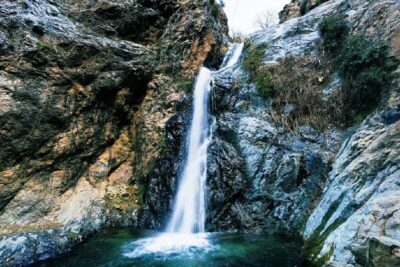
Atlas Mountains & Agafay Desert Tour w Camel Ride
Read our review →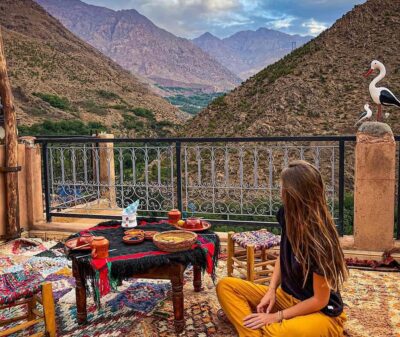
Atlas Mountains, Waterfalls, Ourika Valley +Lunch
Read our review →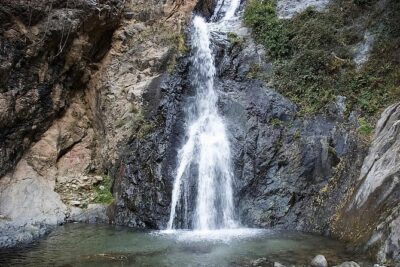
Atlas Mountains & 5 Valleys Tour from Marrakech – All inclusive –
Read our review →Browse the lists this tour appears in