
Reviewed · CASABLANCA TOURS
15 Days Morocco Private Grand Tour From North To South Starting From Casablanca
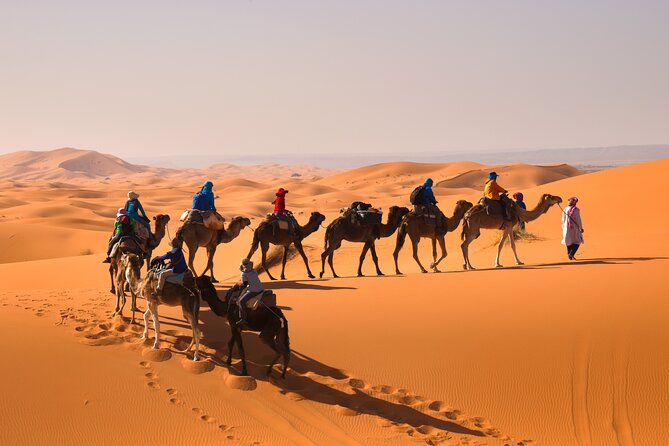
The most memorable part of this 15-day Morocco tour is the change from city streets to open desert. You can watch sunset from a camel, sleep in a private tent with a toilet and shower, then wake early for sunrise over the Erg Chebbi dunes. That single night gives the trip a strong sense of place, not just another hotel room.
I like the wide range of stops, from Chefchaouen’s blue lanes and Roman Volubilis to the souks of Fez and Marrakech. I also like having a private vehicle and driver-guide, since Morocco’s long distances and winding mountain roads are much easier when someone else handles the route.
The main drawback is the pace. You cover much of Morocco in two weeks, which means several long driving days and some brief visits. The price also excludes many entrance fees, lunches, most dinners, drinks, tips, and personal spending, so your final cost will be higher than the headline figure.
In This Review
- Key points to know before booking
- Casablanca starts with the Hassan II Mosque
- Rabat and Asilah bring history to the Atlantic coast
- Tangier, Tetouan, and the blue streets of Chefchaouen
- Volubilis, Moulay Idriss, and Meknes on the road to Fez
- Fez el-Bali requires a local guide
- Across the Middle Atlas to the Erg Chebbi dunes
- Merzouga adds a full day beyond the camel ride
- Todra Gorge and the kasbah country of the south
- Ait Ben Haddou leads toward Marrakech
- Marrakech brings palaces, souks, and Jemaa el-Fnaa
- Essaouira slows the pace beside the Atlantic
- Safi, El Jadida, and the final night
- What the $1,825 price really covers
- Is this Morocco grand tour right for you?
- FAQ
- How long is the Morocco Grand Tour?
- Where does the tour start and finish?
- Is this a private tour?
- Which meals are included?
- Is the desert camp included?
- Are local guides included?
- Can the tour be extended?
Key points to know before booking
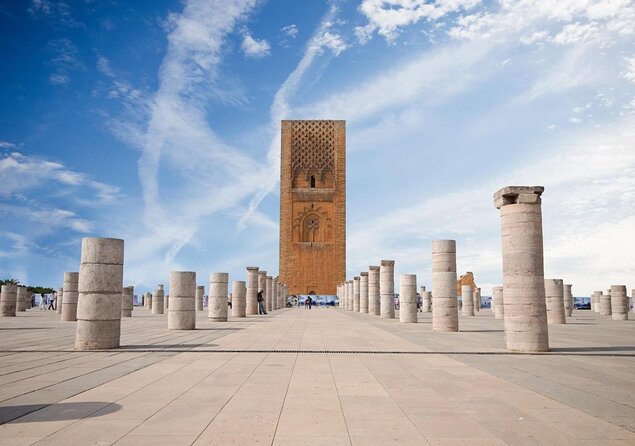
- One night in the Sahara: Ride a camel toward camp, watch the sunset, enjoy dinner and traditional music, and sleep in a private tent with a shower and toilet.
- A true north-to-south route: The journey links Casablanca, Rabat, Asilah, Tangier, Tetouan, Chefchaouen, Fez, the desert, Marrakech, Essaouira, and the Atlantic coast.
- Private travel by air-conditioned vehicle: Your group travels together, with pickup and drop-off at the airport or your hotel.
- Two important guided medinas: Local guides lead you through Fez and Marrakech, where a guide helps you read the maze of lanes and historic buildings.
- A good mix of culture and nature: Add Roman ruins, mountain waterfalls, cedar forests, kasbahs, gorges, markets, and coastal towns to the city visits.
- Fourteen nights included: Accommodation is in hotels and traditional riads, with 15 breakfasts and three dinners included.
Casablanca starts with the Hassan II Mosque
Your arrival day begins in Casablanca, Morocco’s modern coastal and economic center. Depending on whether you arrive through Mohammed V Airport or the port, the exact order of the first activities can change, but the main plan remains similar.
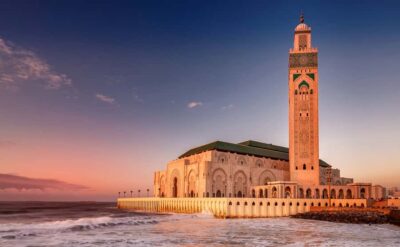
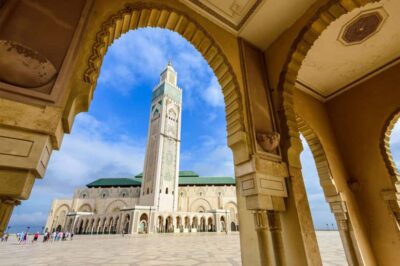
The Hassan II Mosque is the right opening sight. Its position on an Atlantic outcrop gives you sea views, while its 210-meter minaret makes it impossible to miss. It is also one of the few mosques in Morocco that permits non-Muslim visitors inside.
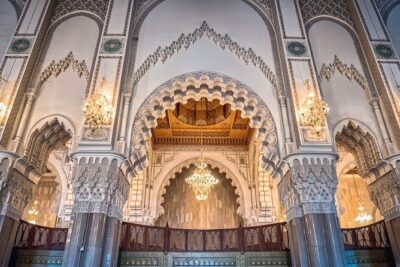
The guided visit is not included in the tour price, so budget separately for admission. I would make room for it rather than treating the mosque as a quick photo stop. Its carved stone, tilework, and other examples of Moroccan and Islamic craftsmanship give you an early lesson in the details you will see again in riads, palaces, and religious schools.
You spend the first night in a hotel. This is a practical start after an international arrival, though Casablanca itself receives less time than the smaller cities later in the trip.
More Casablanca trips worth a second look
- Private Tour of Casablanca with Hassan II Mosque Entry Ticket
★ 5.0 · 1,102 reviews - Private Guided Tour of Casablanca Including Mosque Entrance
★ 5.0 · 395 reviews - Casablanca: Private Guided Tour
★ 4.7 · 384 reviews
Rabat and Asilah bring history to the Atlantic coast
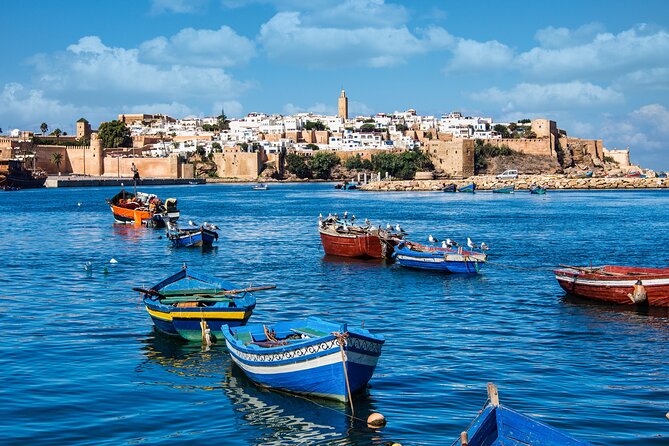
After breakfast, you head north to Rabat, Morocco’s capital and one of its four imperial cities. The Chellah Necropolis combines Roman and Islamic remains in a medieval fortified setting. It is a calmer place to begin than the main medinas, with ruins, gardens, and old walls to explore at an easy pace.
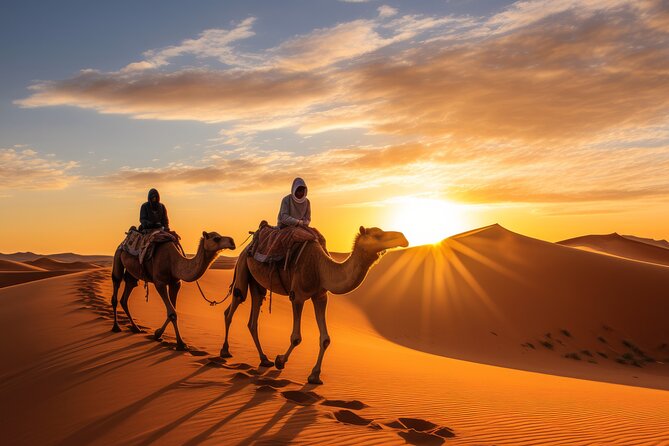
The Kasbah des Oudaias leads you into Rabat’s original city center. Walk through the grand entrance, then take time in the Andalusian Gardens. The Hassan Tower and the nearby Mausoleum of Mohammed V complete the visit. The tower belongs to an unfinished 12th-century mosque, a reminder that even major royal projects could be abandoned before completion.
Later, the vehicle continues to Asilah. Its medina sits behind old fortifications beside the Atlantic, with Portuguese remains dating from the 15th century. The ramparts and Raisuni Palace provide the main historical points of interest.
You sleep in a hotel or traditional riad. Asilah is a useful stop because it breaks up the northbound route, but the schedule gives you one day for both Rabat and Asilah. You should expect highlights rather than a slow study of either city.
Tangier, Tetouan, and the blue streets of Chefchaouen
Tangier has a different feel from Rabat and Asilah. It has long been a point of entry from Europe, and the newer marina area contrasts with the compact old medina. You can walk through the Kasbah from Bab Haha to Place du Mechouar, following the signs, or arrange a guide at your own cost.
If time permits, Cap Spartel and the Cave of Hercules are about 15 to 20 minutes from Tangier. Allow roughly an hour to appreciate the cave and coastal setting. The opening is said to resemble the shape of Africa when viewed against the Atlantic, but the main appeal is the setting itself.
A café in Zoco Chico makes a good pause before the tour moves on. The day is not only about monuments. It gives you time to watch the city’s public life and see how Tangier mixes old quarters with newer development.
The next morning takes you through Tetouan toward Chefchaouen. Tetouan’s old medina is a UNESCO World Heritage Site at the foot of the Rif Mountains. You explore it independently, using recommendations from your driver, and have lunch on your own.
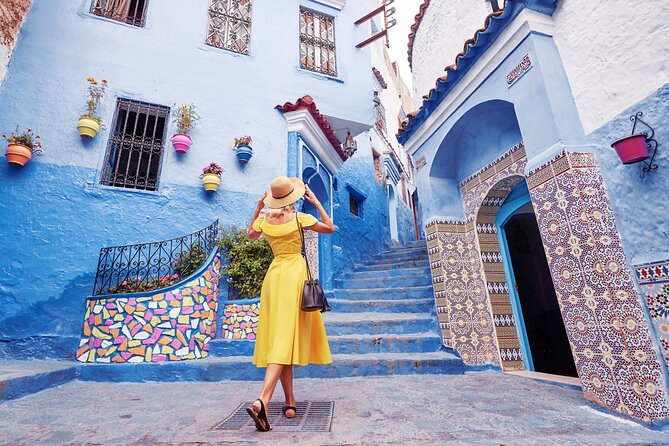
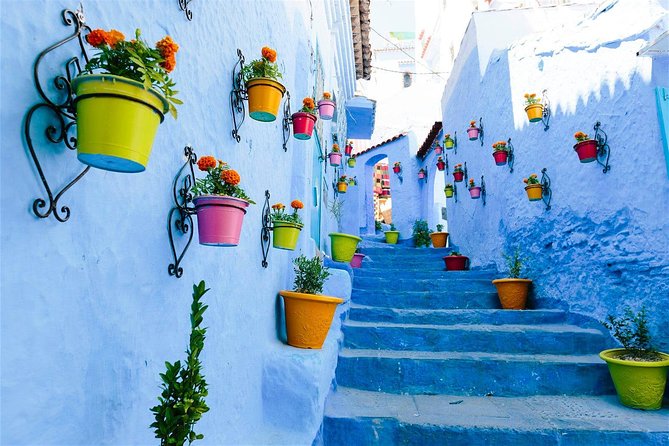
Chefchaouen is one of the trip’s most photogenic stops, but it is more than blue walls. The paint covers doors, stairways, windows, and narrow lanes, shifting from pale sky blue to stronger shades. After checking into a riad, you can explore at your own pace or sit in Outa el Hammam, the main square.
I recommend getting up early the next morning. The nearby Spanish Mosque gives you a view over the town and mountains at sunrise, before most shops open. Later, you head into the Rif Mountains toward the Cascades d’Akchour. The walk leads through cedar country to a waterfall, with smaller falls along the way.
The outing can include a refreshing swim if weather permits. You may also choose the steep route to God’s Bridge, a natural rock formation, or follow the canyon for a view from below. This is one of the few active portions of the tour, so bring suitable footwear and be ready for uneven paths. After returning to Chefchaouen, you have time for the market and a relaxed evening.
Volubilis, Moulay Idriss, and Meknes on the road to Fez
Day six is a full touring day. You leave Chefchaouen and head south toward Fez, stopping first at Volubilis. Morocco’s best-preserved Roman ruins spread across a large open site, where you can see merchant homes, heating systems, temples, and well-preserved mosaics.
Plan on about two hours at Volubilis. Guides are usually available to hire at the site, and your driver can help arrange one if you want more context. Without a guide, the scale and mosaics still make the visit worthwhile, but the details of Roman daily life are easier to understand with help.
Moulay Idriss is next. Founded in 789 CE by Moulay Idriss, it became Morocco’s first Islamic capital and the base of the Idrisid dynasty. From a distance, the town is said to resemble a seated camel. It also has Morocco’s only round minaret.
You can eat lunch in Moulay Idriss or wait until Meknes. Meknes has a smaller medina than Fez, which makes it easier to explore without feeling pressed by shopkeepers. The Ville Impériale includes Bab al-Mansour, the Mausoleum of Moulay Ismail, gardens, palaces, and the Royal Stables.
Keep an eye out for Roman columns reused in later buildings. Materials from Volubilis were brought here, so the two stops are linked in a very tangible way.
You finish in Fez and stay in a riad in the medina. That location is convenient for the next day, though a riad in the old quarter may mean narrow access and a quieter, more enclosed room than a standard hotel.
A different kind of day out, same corner of Morocco:
- From Marrakech: Casablanca Tour with Hassan II Mosque Visit
★ 4.7 · 4,756 reviews - Casablanca: Hassan II Mosque Premium Tour with Entry Ticket
★ 4.5 · 2,971 reviews - Casablanca City Tour with Hassan II mosque ticket
★ 5.0 · 2,480 reviews - Casablanca: City Tour with Hassan II Mosque Entry Ticket
★ 4.6 · 1,137 reviews
Fez el-Bali requires a local guide
Fez is one of the tour’s most important cultural stops. Fez el-Bali is a large medieval medina with narrow, winding lanes, and it is not a place where I would want to rely only on a phone map. The local guide leads you along Talâa Kebira and into the older and newer medina quarters.
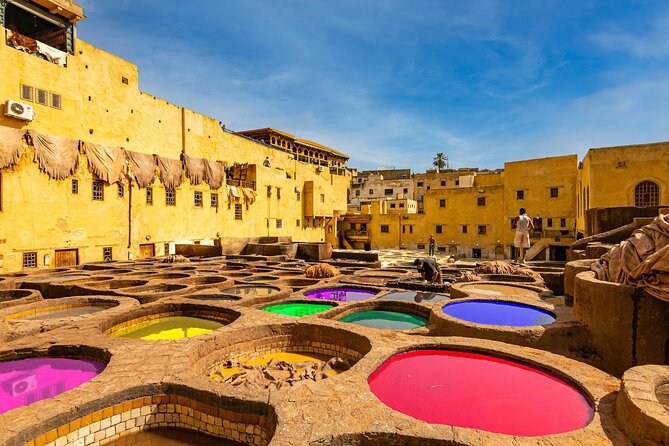
The Chouara Tannery is a key stop. From a nearby leather shop rooftop, you look down on the workers and the traditional process. The smell can be strong, and the shop setting may include an invitation to browse, so keep your bearings and remember that purchasing is optional.
You also visit Al-Qarawiyyin University, founded in the ninth century, and the Al Attarine Madrasa, where tile, carved plaster, and woodwork show the level of Moroccan craft. The tour includes the major sights, but the real pleasure is the movement through the lanes: workshops, food stalls, old doors, and sudden glimpses into courtyards.
A local guide matters here. You still have some independence, but you are less likely to lose half the day looking for one entrance. This is also where the private format pays off, since your own group can ask questions and set a comfortable walking pace.
Across the Middle Atlas to the Erg Chebbi dunes
The desert transfer is the longest stretch of the trip, so start early. You cross the Middle Atlas through Ifrane and Azrou, with a possible stop in the cedar forest near Cèdre Gouraud. Barbary macaques live near the road, and you may see them in the trees.
Lunch is planned around Midelt, a high, cold plateau known as Morocco’s Apple City. The Moulouya River supplies water for orchards before continuing toward the Mediterranean. From here, the terrain changes sharply as you cross mountain ranges, valleys, and narrow passes.
The route follows the Ziz Valley, once part of the Saharan trade network. Fortified houses, or ksars, appear along the way, built to protect goods such as gold, salt, and spices. Near the Ziz Gorge, you begin to see the first dunes and older methods of moving water from mountain areas to farmland.
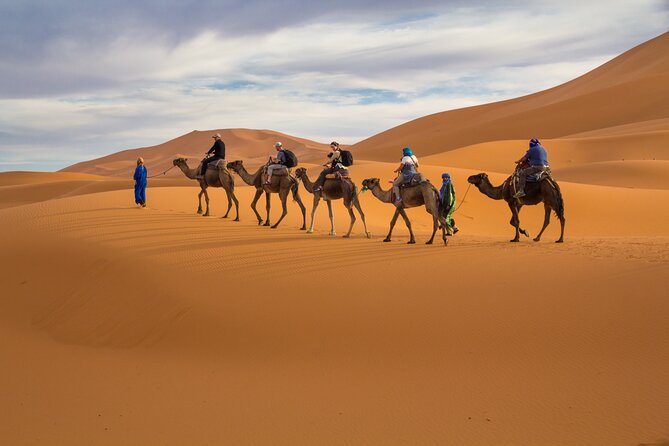
At Merzouga, you prepare for the desert camp. A camel ride takes you toward camp in time for sunset, although the exact timing depends on the day’s conditions. From the dunes, the changing light is the main event.
The camp includes a private tent with a toilet and shower, dinner, and traditional music. It is a more comfortable version of desert camping, but you should still expect a remote setting and a night shaped by weather and the open sky.
Merzouga adds a full day beyond the camel ride
The desert portion is not limited to one sunset. Early risers can watch sunrise over the dunes, then set out by vehicle to see more of the Merzouga area.
The excursion includes Lake Merzouga, where exotic birds may be present, and a visit with nomads over tea. You also follow the route used by the Paris-Dakar Rally and visit the Mifis mines, once exploited by France.
At Khamlia village, you hear music and learn about a community whose people originally came from areas including Mali and Niger. This day adds human and historical context to the desert. Without it, the camel ride could feel like a short scenic add-on. With it, you see the desert as a lived-in region, not an empty backdrop.
Todra Gorge and the kasbah country of the south
After breakfast, you leave the desert for Rissani. If your visit falls on a Tuesday, Thursday, or Sunday, you can explore the regional souk. The market is the largest in the area, but admission is not included, and the stop depends on the day of the week.
Erfoud follows, with its date festival and fossil workshops. At an artisan collective, you can see how fossil-bearing rock is cut and turned into decorative objects. This is a useful stop for understanding local craft, though factory-style visits can encourage shopping, so buy only if you genuinely want something.
The route then reaches the Todra Valley and Todra Gorge. Vertical cliffs rise about 300 meters on both sides of the narrow passage, making this a dramatic stop for photographs and a favorite area for climbers. You continue toward the Dades Valley, with mud kasbahs and the rock formation known locally as Monkey’s Fingers.
The day combines long driving with short walks and viewpoints. It is rewarding for scenery, but you should not expect a full hiking program.
Ait Ben Haddou leads toward Marrakech
The following day brings Rose Town, where rose petals are collected each spring for rosewater and perfume. If you visit in May, the Rose Festival may be taking place. In Skoura, palm groves surround some of southern Morocco’s finest kasbahs.
The route continues to Ouarzazate, known for its film studios, then to Ait Ben Haddou. This UNESCO World Heritage site is Morocco’s most famous kasbah, and you have free time to walk through the village and stop for lunch.
Ait Ben Haddou rewards a slow uphill walk through its earthen buildings and passages. The visit is self-guided in the plan, so ask your driver for practical advice before setting out. Afterward, the route continues toward Marrakech, where the next day focuses on the old city.
Marrakech brings palaces, souks, and Jemaa el-Fnaa
Marrakech is best tackled with a local guide. The medina’s lanes can feel confusing, and the guide connects the souks, Mellah, and palaces into a clearer story.
You visit Bahia Palace and El Badii Palace, then the Saadian Tombs and Majorelle Gardens. The souks display djellabas, babouches, pierced lanterns, and spices, but the shopping can be persistent. Decide your budget before entering and do not feel obliged to buy.
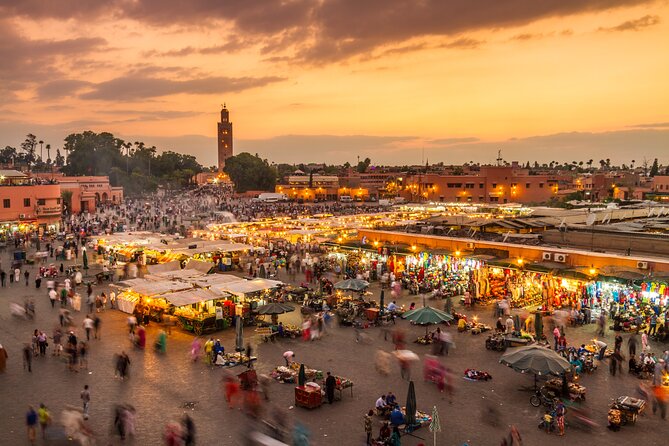
Jemaa el-Fnaa changes as the afternoon becomes evening. Musicians, storytellers, acrobats, dancers, and snake charmers fill the square, while food stalls serve meals, fruit drinks, dates, and snacks. I prefer watching from a café above the square if you want a calmer view, then stepping down for a closer look.
Entrance fees for several Marrakech sights are not included. The same is true of the Hassan II Mosque visit, so carry a little extra for admissions throughout the trip.
Essaouira slows the pace beside the Atlantic
After the intensity of Marrakech, Essaouira offers a welcome change. The drive passes through rolling plains and argan forests, with an optional stop at an argan oil cooperative. Goats in argan trees may be visible along the route, though sightings are not guaranteed.
In Essaouira, walk through the harbor and watch fishermen sell their catch from traditional blue boats. The fortified Scala and Bab al Mersa provide strong ocean views and photographs, while the old city is another UNESCO World Heritage site.
You have a full day here, which gives the trip a better rhythm. Essaouira is not just a transfer point. It is a chance to enjoy sea air, a smaller medina, and a less hurried evening before the return to Casablanca.
Safi, El Jadida, and the final night
The return drive to Casablanca takes about four to five hours, with optional coastal stops. Safi is known for pottery and ceramics. You can visit the 16th-century Castle of the Sea, then walk up for views over the port and ocean.
El Jadida adds a striking Portuguese cistern, old ramparts, and the Church of the Assumption. These stops break up the final drive and show another side of Morocco’s Atlantic past.
Back in Casablanca, you can visit more of the Old Medina and walk along the Corniche. Rick’s Café, a restaurant and bar influenced by the classic film Casablanca, is available for a meal, though food there is at your own expense.
The final day is reserved for airport transfer. If you need more time, the route can be extended to 20 days or more, including southern coastal areas such as Taghazout, Agadir, and Legzira.
What the $1,825 price really covers
At $1,825.27 per person, this tour offers solid value if you want a private trip with transport and accommodation arranged in advance. The price includes 14 nights, private air-conditioned transport, fuel, airport or hotel transfers, a driver-guide, bottled mineral water, 15 breakfasts, and three dinners.
The desert night is also included, with a camel ride and private luxury tent. Local guides lead the Fez and Marrakech medina visits, which are the two places where professional help is most useful.
You still need to budget for lunches, most dinners, drinks, entrance tickets, tips, hotel and restaurant staff gratuities, and personal purchases. Hassan II Mosque, Bahia Palace, and other paid attractions may require separate payment. At this price, the tour is not all-inclusive, but it does remove the largest planning burden: vehicles, route planning, hotels, and intercity transfers.
The private format is best for families or friends who want to travel together. Group discounts may be available, and only your group participates. Confirmation is provided at booking, pickup is offered, and the tour allows service animals and most participants.
Is this Morocco grand tour right for you?
Book it if you want to see a great deal of Morocco without arranging every hotel, transfer, and desert connection yourself. It suits first-time visitors, families, couples, and small groups who value a private vehicle and want both major cities and less urban stops.
Do not book it if you want long stays in each place or dislike extended road days. The route is ambitious, and the reward is variety rather than an unhurried stay in every city.
I would especially choose this tour if Chefchaouen, Fez, the Sahara, and Ait Ben Haddou are all on your wish list. The combination is hard to organize efficiently on your own, and the desert excursion, riads, local guides, and coastal return route give the trip more substance than a simple city-hopping plan.
Free cancellation is available up to 24 hours before the local start time. Weather-related cancellations offer a different date or a full refund, while changes or cancellations inside 24 hours are not refunded.
FAQ
How long is the Morocco Grand Tour?
The tour lasts approximately 15 days and includes 14 nights of accommodation.
Where does the tour start and finish?
It starts in Casablanca and finishes with a transfer to Casablanca Airport. Pickup can be arranged from the airport or a hotel.
Is this a private tour?
Yes. Only your group participates, and private transportation is provided.
Which meals are included?
The package includes 15 breakfasts and three dinners. Other meals and all drinks are not included.
Is the desert camp included?
Yes. The package includes a desert adventure with a camel ride and one night in a private luxury tent with a toilet and shower.
Are local guides included?
Local city guides are included for the medinas of Fez and Marrakech. Guides at Volubilis can usually be hired separately, with assistance from the driver if needed.
Can the tour be extended?
Yes. The itinerary can be modified to 20 or more days, including additional southern coastal destinations such as Taghazout, Agadir, and Legzira.
Recently reviewed around Casablanca
- Casablanca Airport Transfer from hotel in Casablanca★ 5.0 · 18 reviews
- Amazing airport pickup/ drop off in Casablanca/ safe&easy★ 5.0 · 218 reviews
- Your Private Casablanca Transfer★ 5.0 · 52 reviews
- Chefchaouen the Blue City Full-Day Trip from Casablanca★ 4.5 · 79 reviews
- Sunset Camel Ride in the Palm Grove Of Marrakech★ 5.0 · 34 reviews
- Exclusive tour of Casablanca with access to the Hassan II Mosque★ 5.0 · 205 reviews
- 14 Days From Casablanca- Morocco Grand Tour★ 5.0 · 24 reviews
- Marrakeck City tour from Casablanca all the day around trip★ 5.0 · 35 reviews
Casablanca Tours, compared.
Hassan II Mosque Premium Tour with Entry Ticket
Read our review →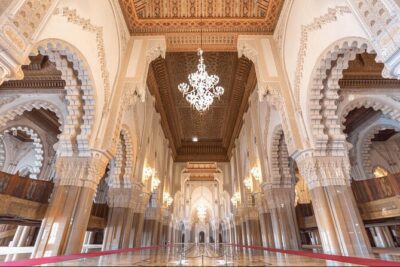
Casablanca City Tour with Hassan II mosque ticket
Read our review →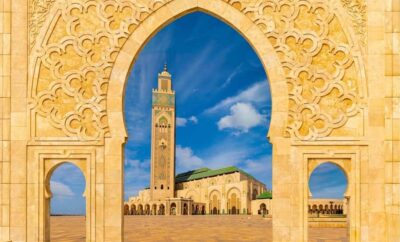
Private Tour of Casablanca with Hassan II Mosque Entry Ticket
Read our review →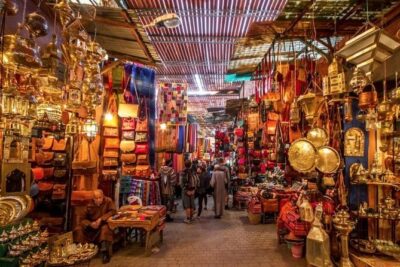
Marrakech Day Trip with Camel Ride from Casablanca
Read our review →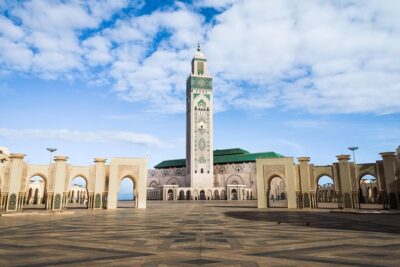
Browse the lists this tour appears in