Reviewed · GUIDED
Shared Half Day Guided Fes Tour with Local Guide
Fes is easiest to understand on foot, and this tour takes you straight into its old medina through Bab Boujloud, the famous blue gate. Guide Idriss, also written as Idrees, brings local insight to the maze of lanes, explaining the city’s architecture, food, customs, and working crafts. I like the route’s strong mix of landmarks and ordinary street life, from copper workers at Place Seffarine to leather workshops near Chouara Tannery.
I also like the price: at $17.45, you get three to four hours with an English or French-speaking guide, which is good value if Fes is new to you. Idriss is praised for giving clear history, useful restaurant suggestions, and practical help in the medina. The main consideration is pace. This is a walking tour through crowded, uneven lanes, and the two museum admissions cost extra at 20 dirhams each.
In This Review
- Key points to know before you book
- Why this Fes walk is useful
- Bab Boujloud and the first step into the medina
- Bou Inania Medersa and Talaa Kebira
- Chouara Tannery and the working medina
- From leather streets to Place R’cif
- Fes el-Bali, Moulay Idriss III, and the main souks
- Nejjarine Museum and the Henna Souk
- Mint tea and copper work at Place Seffarine
- What the guide adds to the experience
- Is $17.45 good value?
- Who should book this walk?
- Should you book the Shared Half Day Guided Fes Tour?
- FAQ
- How long does the Fes tour last?
- Where does the tour begin?
- Where does the tour end?
- What languages does the guide speak?
- How large can the group be?
- Are the Bou Inania Medersa and Nejjarine Museum admission fees included?
- Can I cancel for a full refund?
Key points to know before you book
- Bab Boujloud makes an easy starting landmark: The tour begins at Rue de la poste and enters the medina through Fes’s grand Blue Gate.
- Idriss adds local context: Expect explanations of architecture, Moroccan history, food, and daily life, not just a march from one sight to the next.
- The route covers working craft areas: Chouara Tannery, the dyers’ souk, leather shops, mirror stalls, and Place Seffarine give the walk a strong sense of place.
- Two useful interiors cost extra: Bou Inania Medersa and Nejjarine Museum each require a 20-dirham admission fee.
- Small-group size helps in tight lanes: The maximum is 15 people, though the tour is still shared rather than private.
- The walk returns to its starting point: You finish near the meeting point, with time to find a late lunch by the Blue Gate.
Why this Fes walk is useful
The old medina of Fes can feel like a puzzle made of narrow streets, covered markets, workshops, mosques, and small squares. A map helps, but a local guide gives you something more useful: a sense of what you are looking at and why it matters.
This tour is built for that first layer of understanding. It does not try to cover every major sight in the city. Instead, it links a handful of important stops with the streets between them. That matters because the route itself is part of the experience. You pass food stalls, cafés, clothing, jewelry, leather, wood, copper, and dye work as you move through Fes el-Bali, the oldest quarter of the medina.
The advertised length is about three to four hours. That is enough time to get your bearings without giving up an entire day. I would see it as a strong first morning or afternoon activity, especially if you plan to return to the medina later for shopping or independent exploring.
The group can include up to 15 people. That keeps the cost low, but it also means this is not the same as a private walk. In narrow lanes, you may need to stay close to the guide so you do not lose the group. The tour is available in English and French.
More Fez trips worth a second look
- Fez Medina Guided Tour
★ 4.6 · 2,079 reviews - Explore Fes: Unforgettable Guided Walking Tour of the Medina
★ 4.7 · 1,339 reviews - Exclusive Fez Medina Walking Tour with Private Guide
★ 5.0 · 392 reviews
Bab Boujloud and the first step into the medina
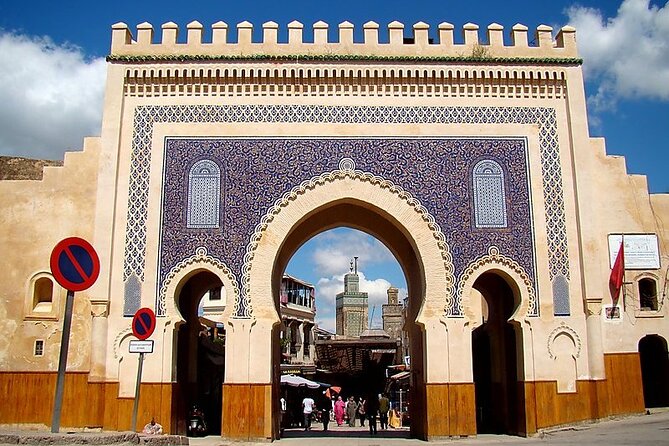
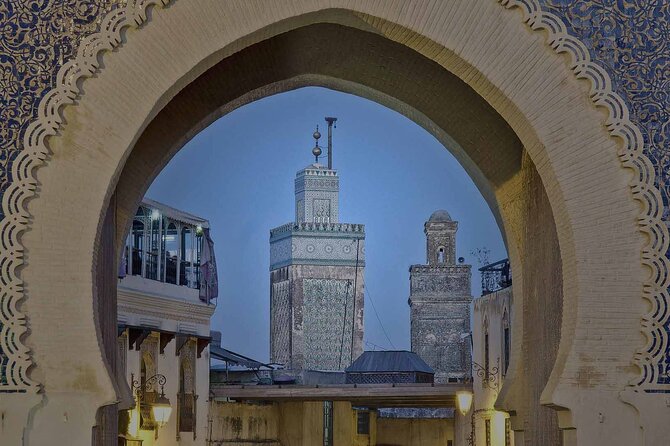
The meeting point is on Rue de la poste, with the walk beginning at Bab Boujloud on the west side of the medina. This gate is often called the Blue Gate, although its design includes more than a simple blue facade.
The original entrance dates to the 12th century. The gate you see today was reconstructed in 1913 during the French period, with three arches that give it a more formal and imposing look. The tour allows about 30 minutes here, including the opening explanation and the transition into the old city.
I like starting here because it gives you a clear reference point. Once you pass through the gate, the medina quickly becomes a network of smaller routes. Beginning with the city’s history and layout helps you pay attention to the details rather than simply follow the crowd.
Bab Boujloud is also a practical meeting point. If you want to return on your own later, you have an obvious landmark to aim for. The walk ends back at the meeting point, and the plan includes finding a place for a late lunch nearby.
Bou Inania Medersa and Talaa Kebira
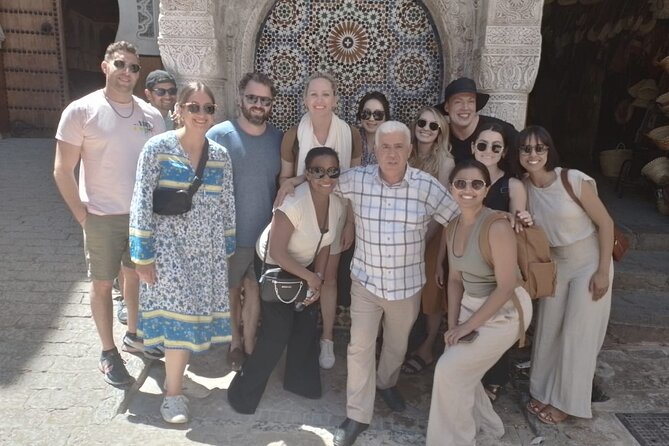
After entering through the gate, the route turns toward Talaa Kebira, one of the main streets through the medina. You pass stalls and cafés before reaching Bou Inania Medersa, a theological school built in the 1350s.
The medersa is one of the most important architectural stops on the walk. It includes a mosque and gives you a chance to see the decorative style of a major religious school from the period. Your guide can help explain the function of the building and the way its design fits into Fes’s religious and civic life.
Admission is not included. The fee is 20 dirhams, listed as about 2 euros per person. You should carry enough local currency for this and the Nejjarine Museum later in the route.
The visit is scheduled for about 20 minutes. That is enough for a focused look, but not a long architectural study. If ornate tilework, carved plaster, and historic schools are high on your list, you may wish you had more time here. The advantage is that the tour keeps moving and does not let one sight consume the whole morning.
Chouara Tannery and the working medina
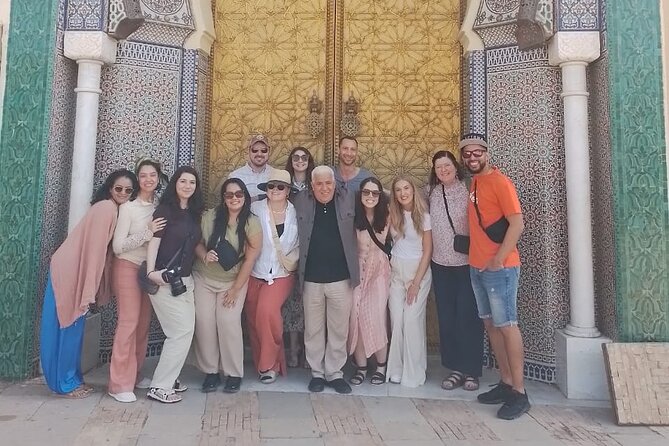
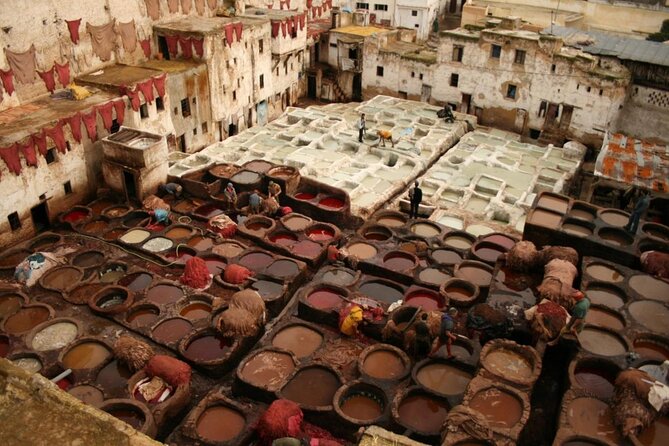
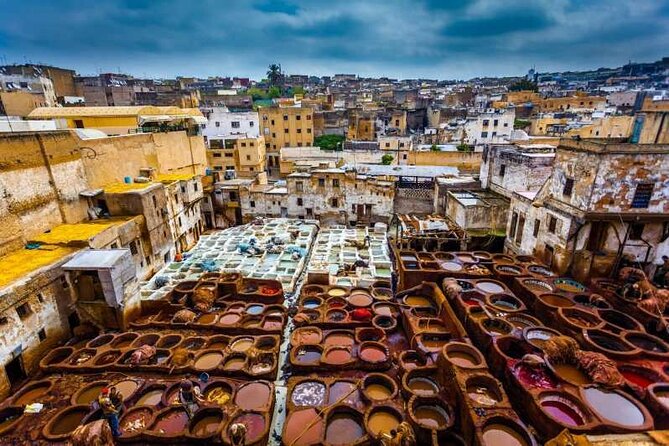
Chouara Tannery is in Fes el-Bali, the oldest quarter of the city, near the Oued Fes and Saffarin Madrasa. It is one of the best-known stops in Fes, but its value comes from seeing a working craft area rather than simply checking off a famous view.
The tannery is connected with the city’s leather trade. Your route brings you into the part of the medina where leather work and related shops shape the street scene. The stop is planned for about 30 minutes, and admission is included.
This section may be the most memorable part of the tour for many people, but it can also be the most intense. The smells and activity are part of the reality of the place. I would not expect a polished museum visit. You are seeing an active trade area, and the experience is better if you approach it with curiosity and realistic expectations.
A guide is especially useful here because the surroundings can be confusing. Idriss has been praised for knowing people around the medina and for explaining what you are seeing in a direct way. That local connection can make the tannery feel less like a quick photo stop and more like part of Fes’s working economy.
A different kind of day out, same corner of Morocco:
- Chefchaouen Day Trip from Fez (Shared Group Tour)
★ 4.6 · 2,394 reviews - Fes: Volubilis Roman Ruins, Mouly Idriss, & Meknes Day Trip
★ 4.6 · 2,375 reviews - Blue City magic: Affordable Day Trip from Fez to Chefchaouen
★ 4.6 · 1,960 reviews - From Fez: Sahara Desert 2-Day Tour with Merzouga Camp Stay
★ 4.8 · 1,716 reviews
From leather streets to Place R’cif
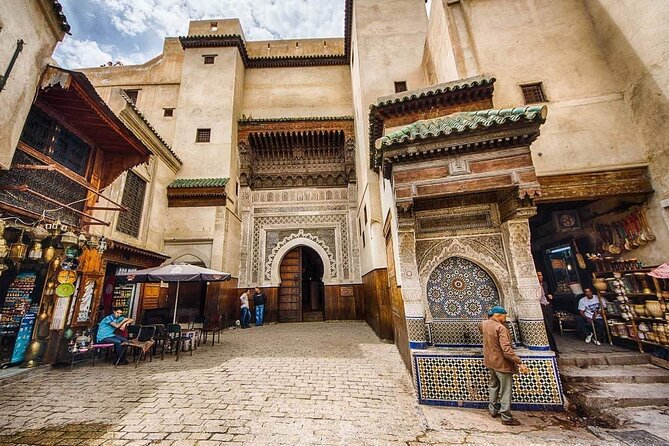
After the tannery, the walk continues through the dyers’ souk and past mirror stalls along Leather Street. The route information names Place R’cif at this stage, while the description also points toward Place Seffarine. Both squares are part of the planned walk, so you should expect the route to connect several craft and market areas rather than follow one perfectly straight line.
This is a good stretch for watching the medina change from one trade to another. Fes is not arranged like a modern shopping district, with every store clearly marked. Different crafts often cluster along particular streets, and the guide can help you notice those patterns.
The tour allows about 30 minutes around this part of the route. That time includes walking, brief explanations, and stops to look at the shops. You may see goods that tempt you to buy, but the purpose here is broader than shopping. You are learning how the old quarter functions as a living center of trade.
If you prefer quiet, open streets, this section may feel crowded and enclosed. If you like seeing ordinary work carried out in traditional settings, it is one of the strongest parts of the walk.
Fes el-Bali, Moulay Idriss III, and the main souks
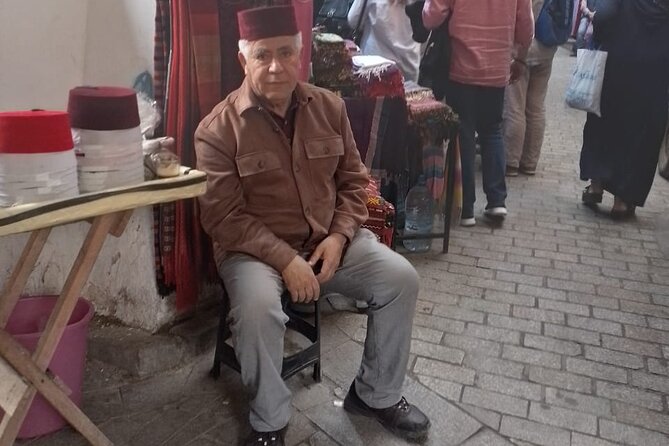
The route then returns to the main shopping streets of Fes el-Bali. Souk el Attarine is known for clothes and jewelry, and the street is beside the ornate mausoleum of Moulay Idriss III, built in 1323.
This area is described as the heart of the medina, and it provides a useful contrast with the tannery and metalworking areas. Here, the focus shifts toward shopping, decoration, religious buildings, and the flow of people through the main lanes.
I would use this section to ask questions. If you want to understand local food, restaurant choices, or the role of different buildings, this is a good time to speak with Idriss. His strongest value is not simply pointing out landmarks. It is connecting the physical details to how the city works.
A few practical cautions help. The souks are not an ideal place to wander far from the group, especially if you stop to examine merchandise. Keep the guide in sight, and save serious shopping for after the formal walk if you want to compare prices without holding everyone up.
Nejjarine Museum and the Henna Souk
The walk includes the Henna Souk and Nejjarine Museum of Woods, Arts and Crafts, located in a restored fondouk at Place an-Nejjarine. A fondouk was traditionally a place where merchants and goods could be housed, so the building itself is part of the story.
The museum focuses on wood, arts, and crafts. That gives the tour another useful angle. You have already seen leather, dye work, copper, clothing, and jewelry. Nejjarine adds a closer look at the skill and materials behind Moroccan craft traditions.
Admission costs another 20 dirhams, or about 2 euros, and is not included. The scheduled visit is about 20 minutes. As with Bou Inania, that is a short introduction rather than a full museum visit.
From here, the route follows Talaa Seghira and works back toward Bab Boujloud. This return section is helpful because it brings you back to a familiar part of the city and leaves you near the meeting point for lunch. You will not be stranded at the far end of the medina when the tour finishes.
Mint tea and copper work at Place Seffarine
Place Seffarine is planned as a 20-minute break. At Crèmerie la Place, you can have sweet mint tea on the pavement and watch metal workers shape copper pots and pans.
This is one of the best details in the route because it creates room to pause. Many walking tours rush from one sight to another. Here, you have time to sit, watch, and listen to the steady work of the craftsmen.
The tea is not described as included, so plan to pay for it yourself. The stop is also listed with admission included, but it is an open public square rather than a formal ticketed attraction. Think of it as a break built into the walk.
Place Seffarine gives you a more grounded view of Fes. Bou Inania shows ceremonial architecture. Nejjarine presents crafts in a restored building. At Seffarine, you watch a trade being carried out in the open. That balance is one of the tour’s real strengths.
What the guide adds to the experience
The guide is the key reason to choose this walk instead of simply following a map. Idriss is described as friendly, supportive, and well informed about Fes. He explains the medina’s history, Moroccan food, architecture, and the purpose of different buildings.
He also gives restaurant suggestions, which can be useful at the end of a long walk. The feedback about his ability to explain architectural style and function is particularly important. In Fes, a carved doorway or tiled wall can look beautiful without being easy to interpret. A guide helps you see more than surface decoration.
The tour can also adapt to some interests. Information about the experience indicates that Idriss has taken people to extra places such as carpet shops and restaurants when requested. I would treat this as a possible benefit, not a guaranteed part of the fixed route. The advertised stops remain the safest way to plan your time.
The strongest praise centers on his friendly manner, clear explanations, and local connections. One person with very little time in Fes found that he could give a concise account of the city and its medina. That suggests this tour works well when you want useful orientation without committing to a full-day program.
Is $17.45 good value?
At $17.45 per person, this is an inexpensive guided walk for three to four hours. The value is strongest if you are new to Fes and want a local person to explain the medina while you see several major areas.
The price includes the English or French-speaking guide and the Chouara Tannery stop. It does not include the 20-dirham entrance fee for Bou Inania or the 20-dirham fee for Nejjarine. Mint tea and lunch are also separate expenses.
Even after adding the two admissions, the total remains modest. You are paying mainly for orientation, interpretation, and the time saved by having someone lead you through the old city. If you already know Fes well, or if you enjoy getting lost and figuring out the medina alone, the value may be lower.
The maximum group size is 15. That is small enough to remain manageable, but it does not promise a quiet or personalized private tour. For a private experience, you would need to confirm a different arrangement with the provider.
Who should book this walk?
I would recommend it for a first visit to Fes, especially if you have only a short stay. It covers architecture, shopping streets, working crafts, a museum, and a relaxed tea stop, all without taking up a full day.
It also suits people who want local food and restaurant advice. The guide’s suggestions can help you make better choices after the walk, when you are ready for lunch or dinner.
You should be comfortable walking for several hours through old-city streets. The route includes narrow market lanes and active craft areas. The tour is not designed for someone seeking a slow, private architectural study, and the short museum visits may feel brief if you want extensive time inside each building.
Confirmation is provided when you book, and most people can participate. You can cancel for a full refund up to 24 hours before the local start time. Cancellations or changes within 24 hours are not refunded or accepted.
Should you book the Shared Half Day Guided Fes Tour?
Book it if you want a low-cost, well-shaped introduction to Fes with a local guide who can explain the medina in plain terms. Idriss’s friendly manner, practical food advice, and grasp of architecture add real value, while the route gives you both famous sights and working craft districts.
Skip it if you want a private tour, long visits at each museum, or a flexible day built entirely around shopping. For most first-time visitors, though, the combination of Bab Boujloud, Bou Inania, Chouara, the souks, Nejjarine, and Place Seffarine makes this a sensible way to begin.
FAQ
How long does the Fes tour last?
The tour lasts approximately three to four hours.
Where does the tour begin?
It begins at Rue de la poste in Fès, Morocco, with the walking route starting at Bab Boujloud.
Where does the tour end?
The activity ends back at the meeting point.
What languages does the guide speak?
The guide speaks English and French.
How large can the group be?
The shared tour has a maximum of 15 participants.
Are the Bou Inania Medersa and Nejjarine Museum admission fees included?
No. Each entrance fee is 20 dirhams per person, or about 2 euros.
Can I cancel for a full refund?
Yes. You can cancel at least 24 hours before the experience start time for a full refund. Cancellations made less than 24 hours before the start time are not refunded.
Recently reviewed around Fez
- day trip from fez to middle atlas mountain★ 5.0 · 17 reviews
- VIP TOUR OF FES- Medina by local guide & Rempart by car-FULL Day★ 5.0 · 74 reviews
- Discover the city of Fes on foot with the best guides★ 5.0 · 27 reviews
- Private Fes Medina Walking Tour★ 5.0 · 25 reviews
- Fes to Chefchaouen Day Trip★ 5.0 · 20 reviews
- fes medina guided tour★ 4.5 · 60 reviews
- Fes to Middle Atlas Private Day Trip★ 5.0 · 48 reviews
- Fes to Volubilis, Moulay Idriss and Meknes Private Day Trip★ 4.5 · 26 reviews
Guided, compared.
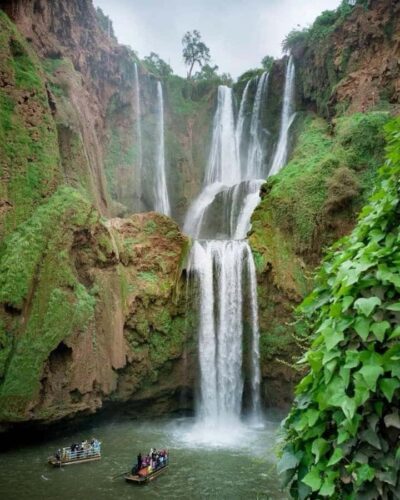

Ouzoud Waterfalls Guided Trip with Boat Ride
Read our review →
Ourika Waterfalls, Atlas Mountains, Guide + Lunch
Read our review →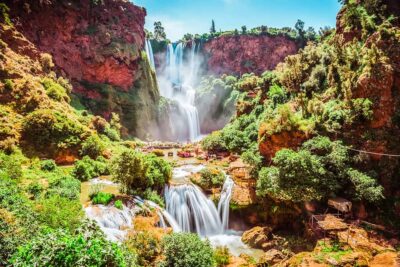
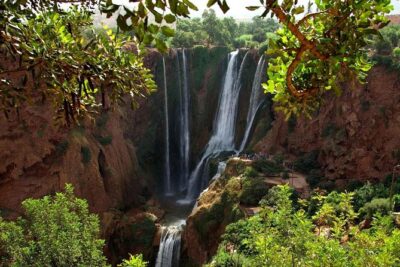
Ouzoud Waterfalls Guided Day Trip with Boat Ride
Read our review →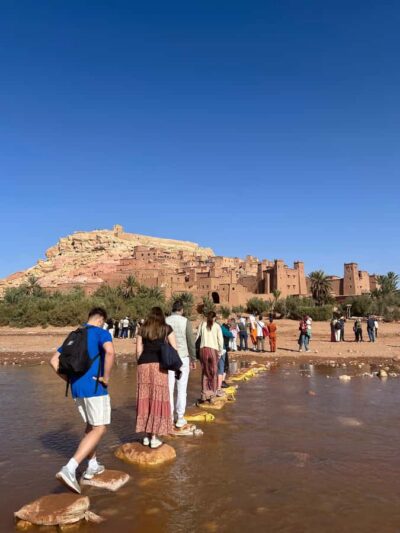
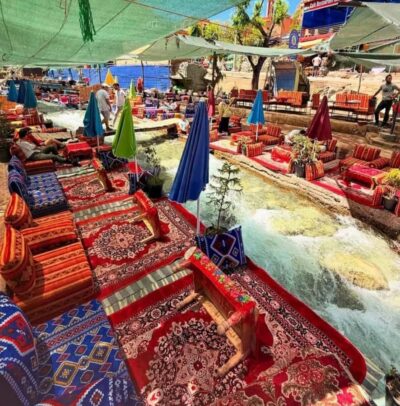
ourika valley lunch & guided hike to waterfalls
Read our review →