Reviewed · PRIVATE
Marrakech: Private Tour w/ Locals – Highlights & Hidden Gems
Marrakech makes more sense when someone local helps you read it. This private three-hour walk links Bahia Palace, Bab Agnaou, Mellah Square, and the souks with quieter corners, artisan workshops, and stories about daily life. Guides such as Hassan, Jaafar, and Adil have also taken guests to herbalists, rug makers, and places they might not have found alone.
I like the private format, which lets you ask questions and adjust the pace within the short schedule. I also like the local tasting, plus practical help with souk shopping, food, and finding your way around the medina. The main catch is that three hours passes quickly, and Bahia Palace admission costs extra.
In This Review
- Key points at a glance
- Why three hours works well in Marrakech
- Meeting at Koutoubia Mosque
- Bahia Palace and the royal quarter
- Bab Agnaou and Mellah Square
- Reading the souks with local help
- The included local tasting
- The guides make the difference
- What the $68 price really buys you
- Who will enjoy this walk most
- How to prepare for the three hours
- Should you book it?
- FAQ
- How long is the Marrakech private tour?
- What language does the guide speak?
- Is the tour private?
- Where does the tour meet?
- Is hotel pickup included?
- Is entry to Bahia Palace included?
- Is food included?
- Is the tour suitable for wheelchair users?
Key points at a glance
- Private walking tour for up to eight people: You get direct time with an English-speaking local guide rather than joining a large group.
- A smart first morning in Marrakech: The route covers major sights while giving you useful orientation for the rest of your stay.
- Local life beyond the main monuments: You may visit artisan workshops, a herbalist, or quieter parts of the medina.
- One local drink or tasting included: This adds a small food stop without turning the tour into a full meal.
- Strong guide praise: Hassan, Jaafar, Adil, Redouan, and others are described as friendly, flexible, and well informed about the city.
- Plan for walking: Comfortable shoes matter, and the tour is not suitable for wheelchair users or people with mobility impairments.
Why three hours works well in Marrakech
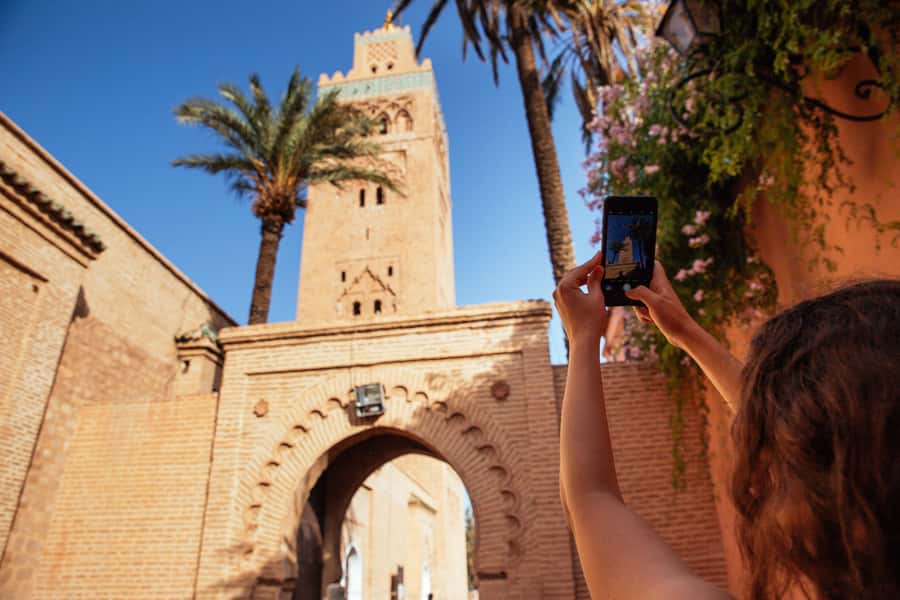
I see this tour as a city orientation with real character, not a full historical tour of every major monument. Three hours is enough to connect the main sights and learn how the medina fits together, but it is not enough for long visits inside every stop.
That short format is useful at the beginning of a stay. Marrakech can feel confusing at first, especially around the souks, where lanes turn quickly and familiar landmarks disappear. A local guide can help you understand where the major districts sit and show you how to return to places you want to visit later.
The private setup makes the time more useful. If you want more history, you can ask for it. If you are keen on crafts, food, shopping, or local customs, you can steer the conversation in that direction. The group limit is eight people, so this is not designed for a large coach party.
You should still expect a walking tour rather than a vehicle-based city circuit. Wear comfortable shoes, and do not assume that every listed sight receives a long interior visit. The attraction is the mix of places and explanations.
More Marrakech trips worth a second look
- From Marrakech: 3-Day Sahara Tour with Private tent & Meals
★ 4.8 · 1,652 reviews - Private Chauffeur & Premium Transportation in Marrakech
★ 5.0 · 1,649 reviews - Marrakech: Private Guided Half-Day City Tour
★ 5.0 · 1,249 reviews
Meeting at Koutoubia Mosque
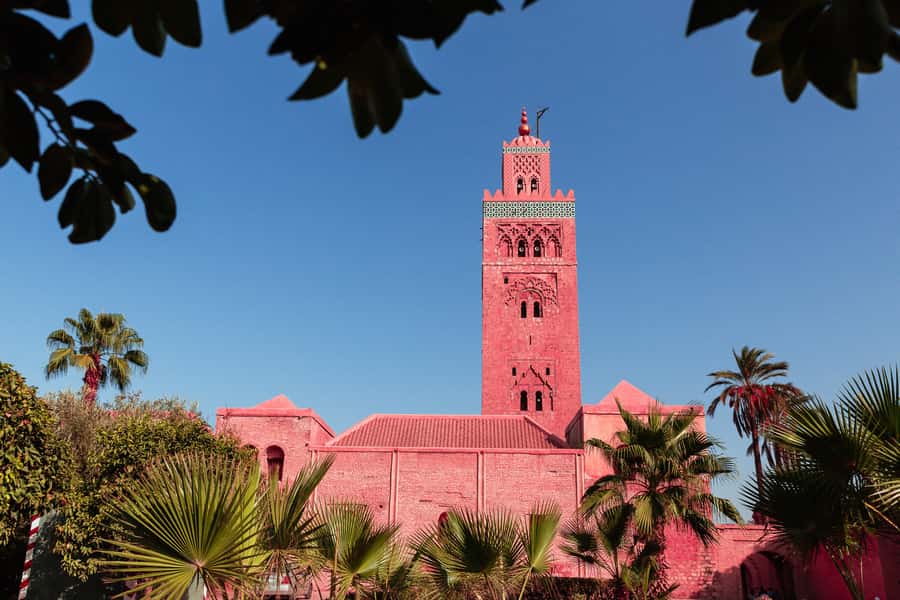
The tour begins at the Koutoubia Mosque, next to the white dome by Mohamed the 5th Avenue. This is a practical meeting point because the mosque is one of Marrakech’s clearest landmarks and sits near the old city.
You will need to arrive with enough time to find the exact spot. The guide does not provide hotel pickup or drop-off, so you are responsible for reaching Koutoubia Mosque and making your own way back afterward.
Starting here also gives your guide a natural way to explain the city’s layout. From this part of Marrakech, the walk can lead toward the medina, the royal quarter, and the souks. The mosque itself is a major visual reference point, even though this experience does not promise an interior visit.
Bahia Palace and the royal quarter
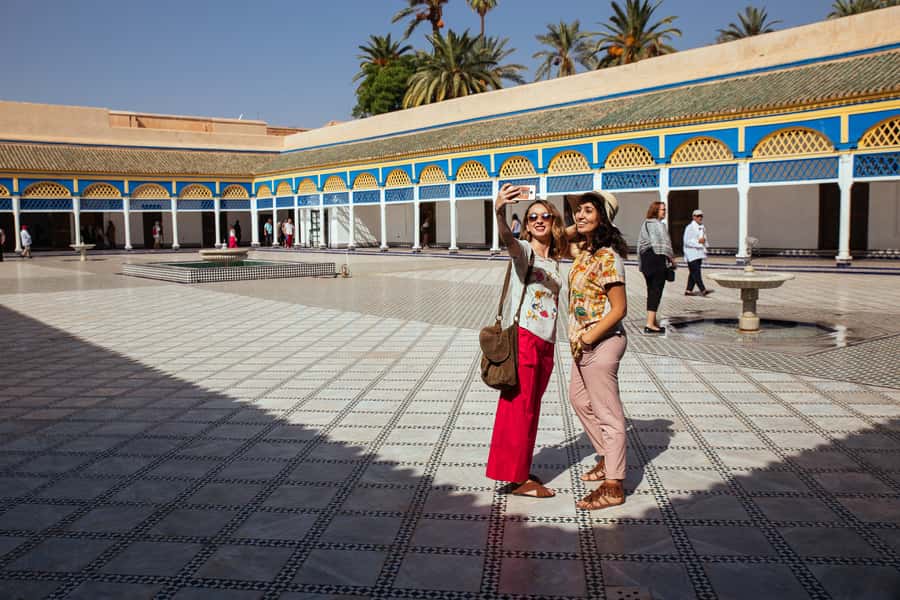
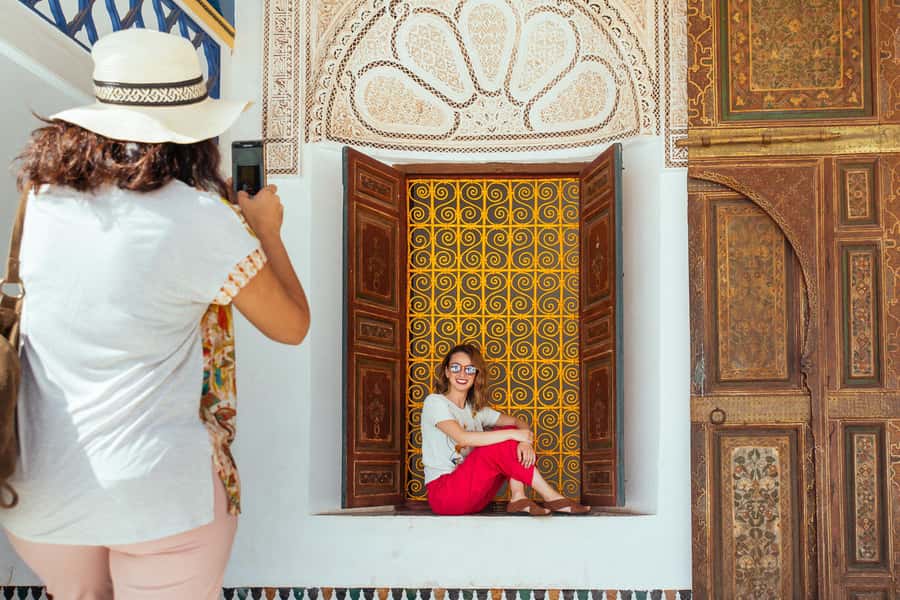
Bahia Palace is one of the tour’s headline stops. Its courtyards, rooms, tilework, painted ceilings, and decorative details offer a concentrated look at Moroccan palace design. The tour price does not include the entrance ticket, so keep that extra cost in mind when comparing the total value.
The palace matters because it gives context to the rest of the walk. After seeing carefully planned spaces built for wealth and power, you can better understand the contrast with the narrow commercial lanes outside. A local guide can point out details and explain the role of the site within Marrakech’s past.
Time is the consideration here. The whole experience lasts only three hours, and the route also includes Bab Agnaou, Mellah Square, the souks, and local stops. If you want to examine every room slowly or take extensive photographs, you may need to return independently.
I would ask at the start how much time the guide expects to spend inside Bahia Palace. That simple question helps you decide if you want a broad city walk or a longer palace visit.
Bab Agnaou and Mellah Square
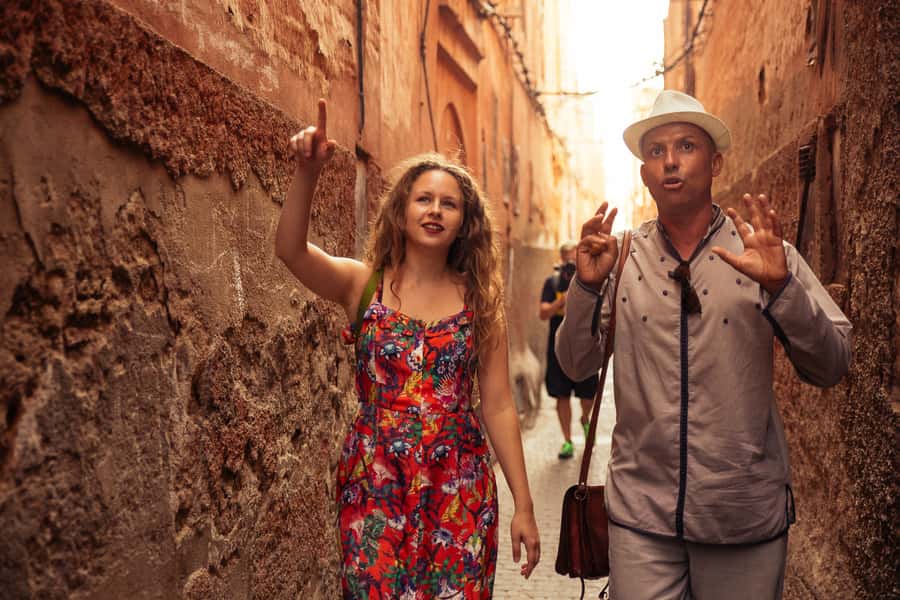
Bab Agnaou is one of Marrakech’s notable historic gates and a striking marker of the old city. It gives the walk a sense of scale, showing how the former royal district connected with the wider medina.
Mellah Square adds another layer. This area is linked with Marrakech’s Jewish quarter, and it helps broaden the tour beyond the usual palace and market route. The value here is not only the sight itself, but the chance to hear how different communities and districts shaped the city.
I like that these stops break up the market portion of the walk. Marrakech can otherwise become a blur of shops, signs, and lanes. Gates and squares give you fixed points, while the guide’s stories help you place them in time and space.
Do not expect a long standalone lecture at each location. The guide has several stops to cover, and the experience is built around movement. You will get the most from it by asking questions as you go.
A different kind of day out, same corner of Morocco:
- Marrakech: Agafay Desert Sunset, Camel Ride, and Dinner Show
★ 4.6 · 35,119 reviews - From Marrakech: Ouzoud Waterfalls Guided Hike and Boat Trip
★ 4.7 · 33,630 reviews - Marrakech: Agafay Desert Quad & Camel Rides with Dinner Show
★ 4.8 · 27,382 reviews - Marrakech: Agafay Desert Quad Biking Tour with Dinner-Show
★ 4.8 · 16,569 reviews
Reading the souks with local help
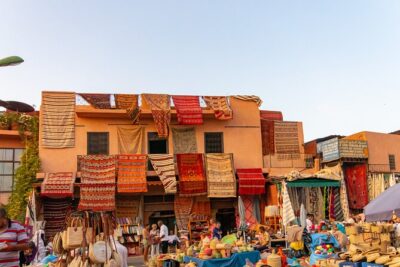
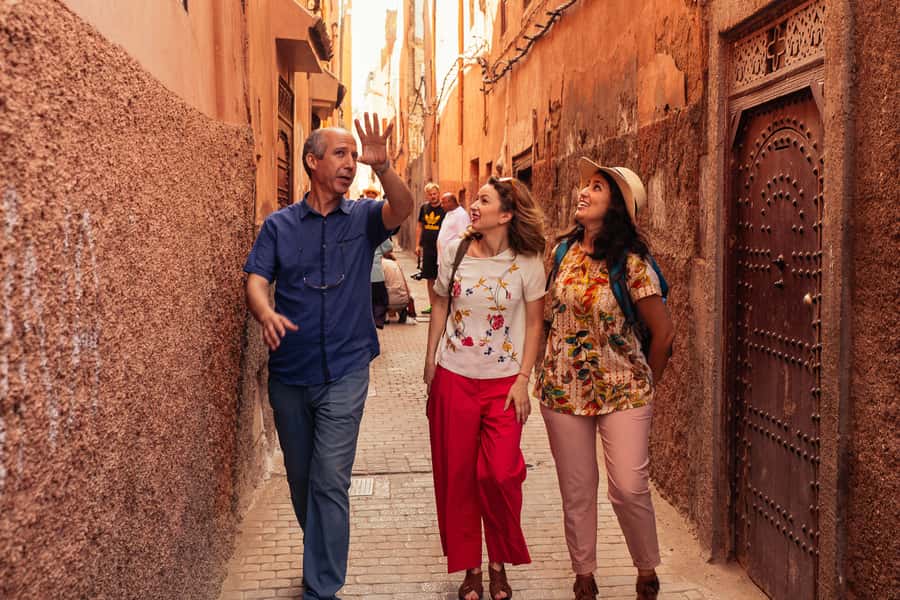
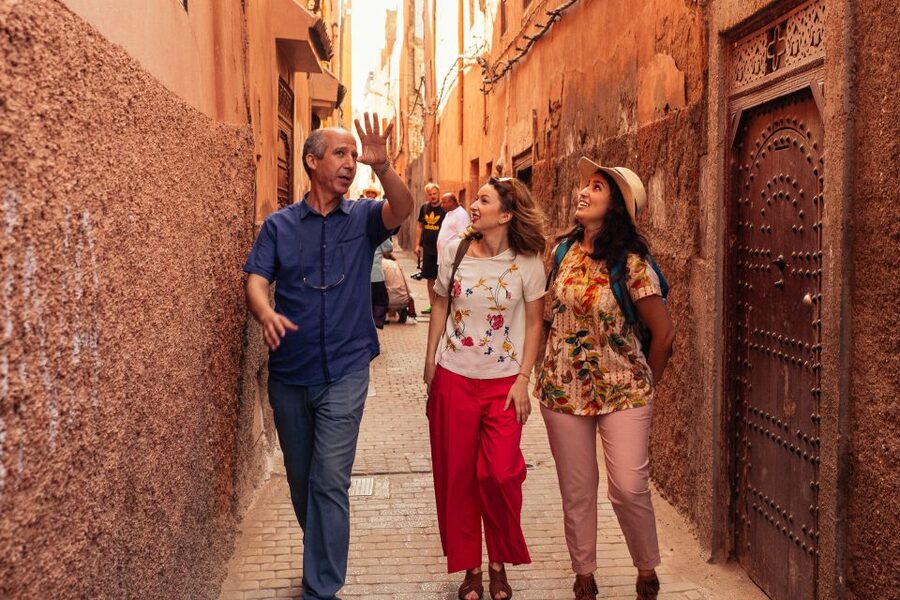
The souks are where local guidance becomes especially useful. You can expect narrow lanes filled with shops and workshops, along with advice about where certain products are made or sold. The walk may include local artisans who make traditional bags, scarves, or rugs.
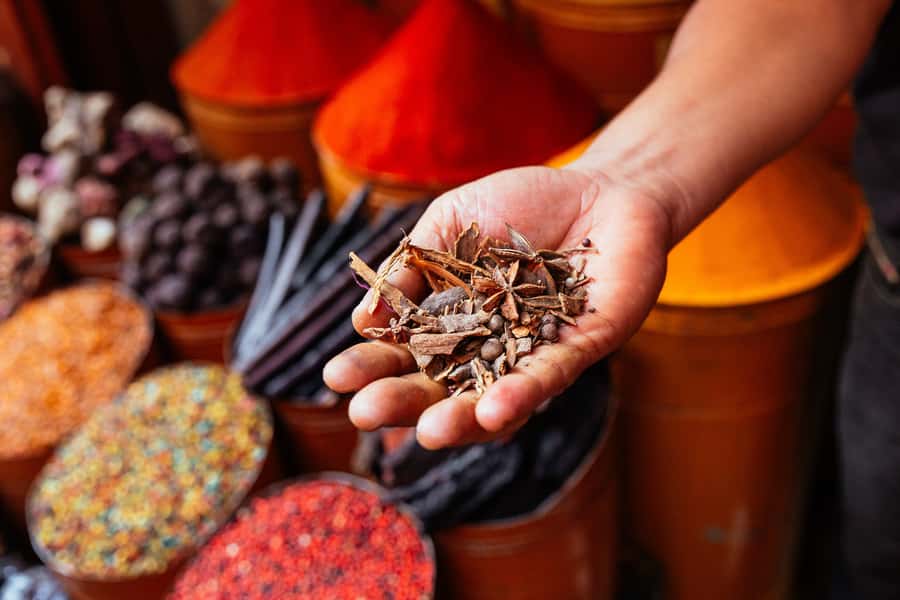
Several guide experiences have included explanations of how rugs are made and visits to artisans and herbalists. A stop with a herbalist may include trying different argan oils, which gives you a closer look at local products than simply seeing bottles on a shelf.
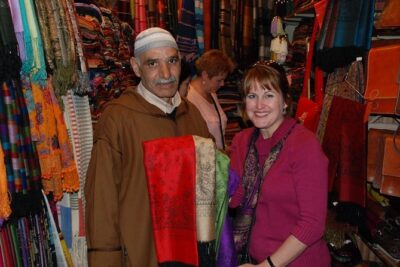
This can be a genuine advantage if you are new to Moroccan markets. A guide can explain what you are looking at, help you understand local customs, and offer practical advice about bargaining. One guide, Adil, also gave useful tips on shopping, food, and further places to see after the walk.
Keep your expectations sensible. A workshop or herbalist stop can also function as a shopping opportunity. You are not required to buy anything based on the information provided, but you should be ready for products to be presented for sale. If you are interested, ask questions. If not, tell your guide clearly and politely.
The private format helps here. You can spend longer at a craft stop if it interests you, or move on if you would rather focus on architecture and city history.
The included local tasting
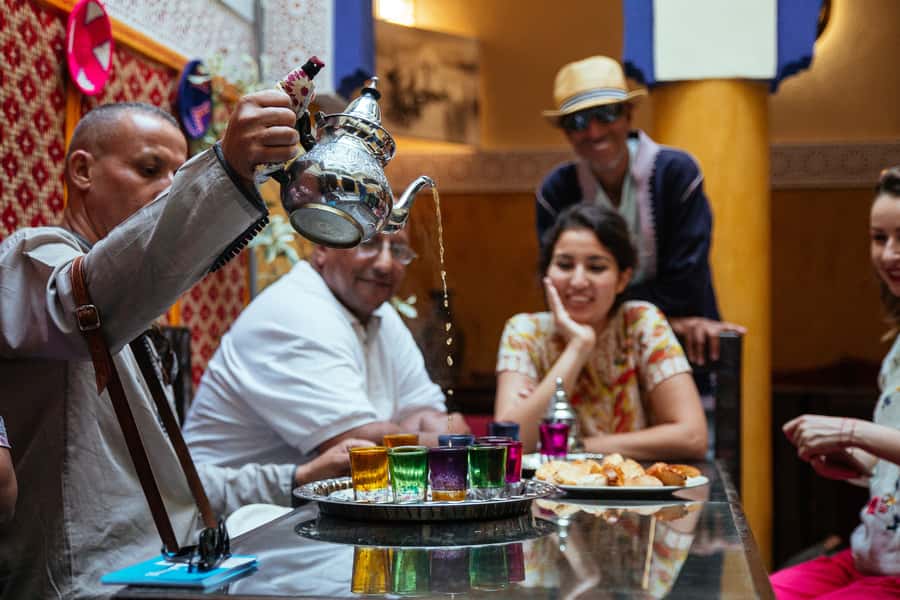
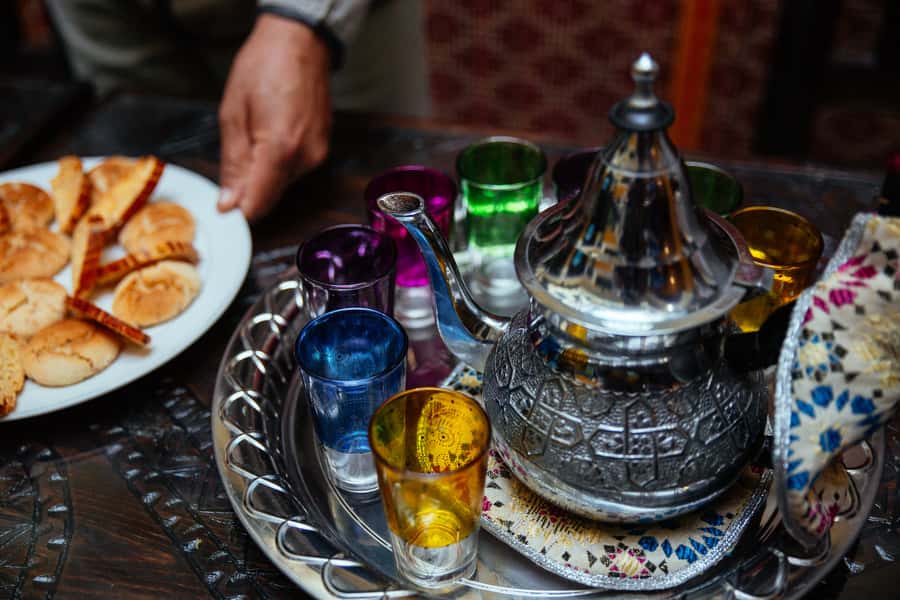
One local drink or tasting is included in the price. This is a small detail, but it changes the feel of the tour. Instead of walking past every food stop, you get at least one chance to pause and try something local.
The exact item is not specified, so I would not book this expecting a full meal or a set food menu. Additional food and drinks are not included. Some guides have introduced guests to sweet treats or local places to eat, but the formal inclusion is one drink or tasting.
That distinction matters for planning. Eat beforehand if you need a proper meal, and carry water unless you plan to buy drinks along the way. The tasting works best as a cultural sample and a pleasant break, not as lunch.
Food advice can also be one of the most useful parts of an orientation tour. You can ask your guide where to eat later, what sort of place suits your budget, and which local specialties you should look for.
The guides make the difference
The guide is the main reason to choose this experience over a standard sightseeing route. Named guides include Hassan, Redouan, Jaafar, Adil, Med, and Mohammed. Their strongest qualities are warmth, flexibility, clear explanations, and a strong feel for Marrakech’s local life.
Hassan has taken guests to famous sights as well as craft workshops and a herbalist. He is also described as explaining traditional bags, scarves, and argan oils. Jaafar has been praised for explaining both earlier daily life and modern city customs, while answering detailed questions from a group of eight.
Adil has been especially useful for first-time visitors because he combined history with photographs, sweet treats, shopping advice, and restaurant suggestions. Redouan also showed flexibility when a previous activity ran late, moving the start time back by an hour and spending longer than planned with the group.
Those details tell you what kind of guide-led experience to expect. You are not simply being marched from monument to monument. You can ask about religion, rug making, food, shopping, and ordinary life. Guide quality can vary on any date, but the names and feedback associated with this activity point to a strong emphasis on personal contact.
If you have a special interest, tell your guide early. Three hours is short, so a clear request helps the walk feel more personal.
What the $68 price really buys you
At $68 per person, this is not the cheapest way to walk through Marrakech. You are paying for a private English-speaking guide, a tailored experience for up to eight people, and one local drink or tasting. Entrance to Bahia Palace and any extra food or drinks cost more.
The value depends on your group. For one person or a couple, the price is a premium for privacy. For a group of four to eight, the cost becomes easier to justify because you are sharing the guide fee while keeping the experience private.
I think the strongest value comes from using the tour early in your visit. Advice about the souks, food, bargaining, and local customs can save time and reduce uncertainty during the rest of your stay. The orientation is part of what you are buying.
If your main goal is to spend a long time inside Bahia Palace, this may not be the best use of $68. You would be better served by a longer monument-focused tour or an independent visit. If you want a compact introduction that combines sights with local contact, the price is more defensible.
The booking terms also reduce some risk. You can cancel up to 24 hours before the start for a full refund, and you can reserve now and pay later.
Who will enjoy this walk most
I would recommend this tour to first-time visitors who want to understand Marrakech quickly. It is also a good match for couples, families with older children, and small groups that prefer to ask questions without strangers listening in.
You will get the most from it if you enjoy walking, market scenes, architecture, craft traditions, and conversation. It suits people who want practical help as much as formal history.
It may be less suitable if you have limited mobility. The activity is not suitable for wheelchair users or people with mobility impairments, and no alternative transport is described. You should also think twice if you dislike shopping areas or prefer a quiet, museum-style visit.
The group cannot exceed eight people. That is useful for larger families or friend groups, but you should not assume a bigger party can be accommodated.
How to prepare for the three hours
Wear comfortable shoes. That is the one item specifically requested, and it makes sense for a route through the medina and souks.
I would also bring a small amount of water, sun protection, and a phone for the meeting point and guide contact details. These are sensible walking-tour habits, though only comfortable shoes are formally required.
Arrive at Koutoubia Mosque with the white dome and Mohamed the 5th Avenue in mind. Since hotel pickup is not included, allow time to reach the meeting point. If you are late, contact the guide as soon as possible. Redouan’s flexibility in one case suggests that some guides may try to help, but you should not count on a delayed start.
Use the tour as a first look rather than trying to complete every sight in one morning. Note the places you want to revisit, ask for food recommendations, and save shopping questions for the souk portion.
Should you book it?
Book this tour if you want a private introduction to Marrakech that combines major sights with local stories, craft work, shopping advice, and a small tasting. The repeated praise for guides such as Hassan, Jaafar, and Adil points to a warm, personal style, and the route gives you useful bearings in a city that can be hard to read at first.
Skip it if you want a slow, detailed visit to Bahia Palace, a fully accessible route, or a food tour with several included dishes. For everyone else, especially first-time visitors with only a few days in Marrakech, this is a practical way to get oriented while seeing more than the standard postcard sights.
FAQ
How long is the Marrakech private tour?
The tour lasts three hours.
What language does the guide speak?
The live guide language is English.
Is the tour private?
Yes. It is a private group experience, with a maximum booking size of eight people.
Where does the tour meet?
Your host meets you at Koutoubia Mosque, next to the white dome by Mohamed the 5th Avenue.
Is hotel pickup included?
No. Hotel pickup and drop-off are not included.
Is entry to Bahia Palace included?
No. The entrance ticket to Bahia Palace is not included in the tour price.
Is food included?
One local drink or tasting is included. Additional food and drinks are not included.
Is the tour suitable for wheelchair users?
No. The activity is not suitable for wheelchair users or people with mobility impairments.
Recently reviewed around Marrakech
- 4-Days Marrakech to Marrakech Désert Tour★ 5.0 · 17 reviews
- Camel ride at sunset in Marrakech palm grove★ 5.0 · 17 reviews
- Agafay camel ride★ 5.0 · 20 reviews
- Camel riding in marrakech★ 4.5 · 17 reviews
- Marrakech to Atlas Mountains and 4 Valleys Day Trip★ 5.0 · 17 reviews
- Agafay Desert Adventure, Culture, and Relaxation, From Marrakech★ 5.0 · 25 reviews
- Quad excursion to the Agafay desert near Marrakech★ 5.0 · 44 reviews
- Camel ride and dinner Agafay desert★ 5.0 · 25 reviews
Private, compared.

Private Chauffeur & Premium Transportation in Marrakech
Read our review →
Private Tour of Casablanca with Hassan II Mosque Entry Ticket
Read our review →
Private Horseback Tour in the Palm Grove with Tea
Read our review →
Private Transfer – Marrakech Menara airport (RAK)
Read our review →