
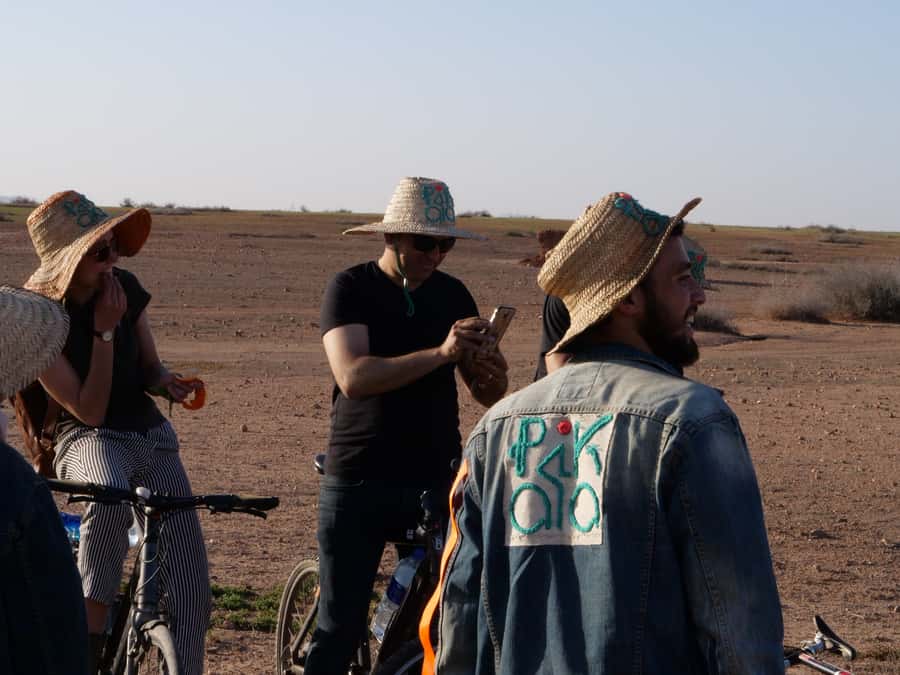
Reviewed · BIKE TOURS IN MARRAKECH
Marrakech: Cycling Tour in Palm Groove with Local Breakfast
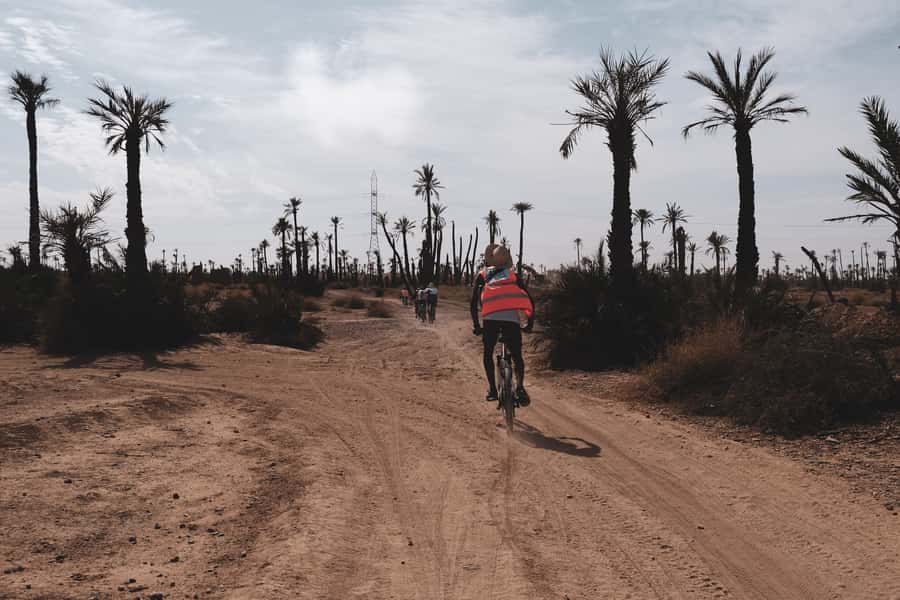
The most interesting part of this Marrakech cycling tour is the quick change from city streets to the old palm oasis. In about 15 minutes, you leave the central streets behind and reach a quieter world of palm trees, village paths, grand villas, and small working ateliers.
I like the way the tour connects local life with practical history, especially the old irrigation system and the village oven. I also like the relaxed breakfast with Aziz, where tea, fresh bread, butter, olive oil, olives, and Moroccan pastries turn a simple stop into a real meeting place. The main consideration is cycling in and out of the Medina. Guides help you through it, but the opening and closing section can feel busy if you are not used to city riding.
In This Review
- Key points to know before you book
- From Pikala Bikes to the edge of the Medina
- The Palmeraie, where villas meet village life
- Water channels and the work of keeping an oasis alive
- Tea and breakfast with Aziz
- The village oven and the value of bread
- Zellige tiles in small working ateliers
- What the guides add to the ride
- How difficult is the cycling?
- What the $34 price delivers
- Timing, language, and practical planning
- Who should book this Palmeraie ride?
- Should you book it?
- FAQ
- Where does the cycling tour begin?
- How long does the tour last?
- How far do you cycle?
- Which languages are available?
- Is breakfast included?
- What cultural stops are included?
- Is the Water Museum included?
- What is included in the price?
- Can I cancel for a refund?
Key points to know before you book
- A 17-kilometer ride on mostly flat ground: The route is gentle overall, though the Medina section requires more focus than the palm oasis.
- A personal breakfast stop with Aziz: Expect tea or juice, Moroccan pastries, fresh bread, butter, olive oil, and time to hear local stories.
- A look at working village traditions: You visit a bread oven and small zellige tile ateliers rather than only passing scenic viewpoints.
- Young local guides lead the ride: Guides including Ahmed, Yassim, Ayoub, and Khawla have been praised for care, patience, clear communication, and cultural insight.
- The tour takes about 150 minutes: It is long enough to reach the oasis and make several stops, but short enough to fit into a busy Marrakech visit.
- Pikala Bikes is the meeting point: Hotel or riad transport is not included, but bikes, water, and suncream are provided.
From Pikala Bikes to the edge of the Medina
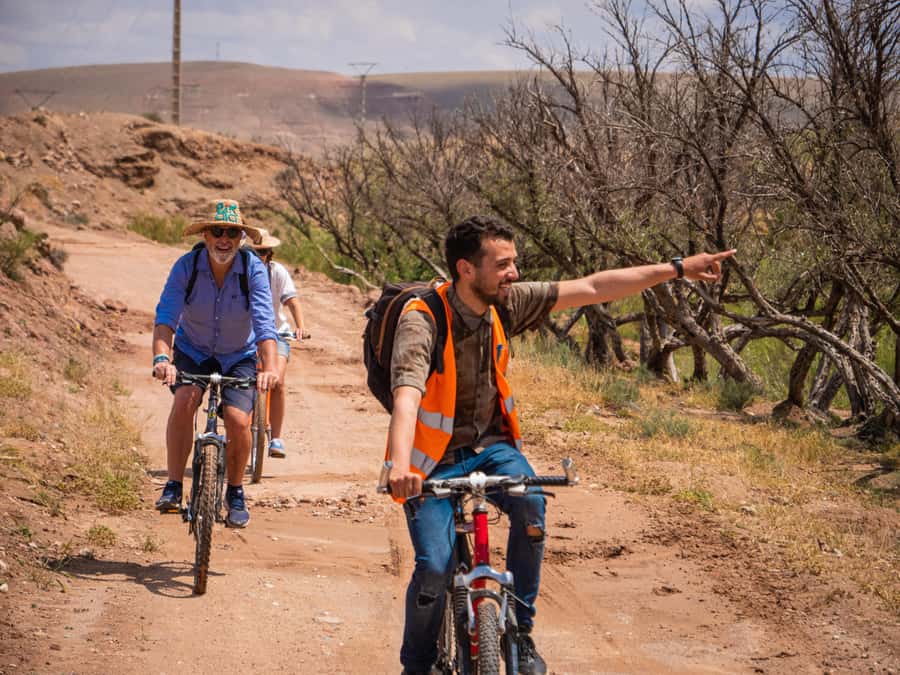
Your ride begins at the Pikala Bikes headquarters. You do not get hotel or riad pickup, so allow time to reach the meeting point on your own.
The first 15 minutes are the least peaceful part of the outing. You cycle out from the city centre and through the Medina, where narrow streets and changing traffic conditions call for care. This is not a serious athletic challenge, but it is not a fully traffic-free ride either.
That opening section matters because it gives you a better sense of Marrakech than a car transfer would. You see how quickly the city shifts from tight lanes and urban movement to open paths and palms. If you feel nervous about cycling in the Medina, tell your guide at the start. Ahmed has been praised for patience and careful attention, while Yassim has helped regular cyclists handle the city section with practical advice.
The bikes are described as good quality, which helps on a ride that mixes city streets with off-track roads. The route is generally flat, and one account puts the total at about 17 kilometers. You should still be comfortable riding for more than two hours, getting on and off the bike at stops, and managing uneven surfaces.
More Bike Tours in Marrakech
- Marrakech: Agafay Desert Quad Biking Tour with Dinner-Show
★ 4.8 · 16,569 reviews - Marrakech: Quad Bike Tour to Palm Oasis and Jbilat Desert
★ 4.8 · 11,831 reviews - Marrakech Quad Bike Experience: Desert and Palmeraie
★ 4.5 · 9,509 reviews
The Palmeraie, where villas meet village life
Once you reach the Palmeraie, the tour changes character. You pass large villas and huge castle-like properties, then turn toward small villages where people still live and work within the palm oasis.
This contrast is one of the strongest parts of the experience. Marrakech is often presented through palaces, riads, and grand architecture. Here, you see another side: homes, workshops, ovens, water channels, and daily routines shaped by the oasis.
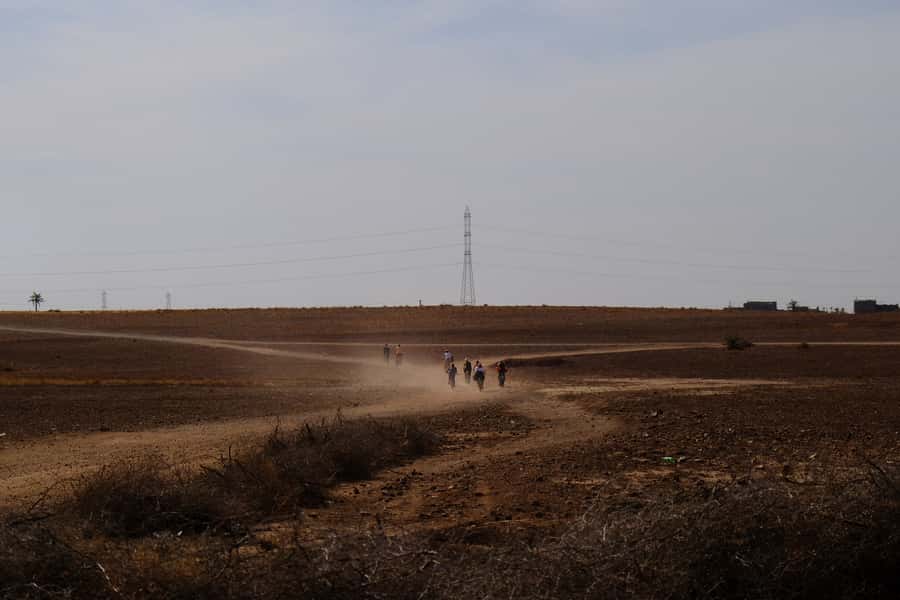
The route uses off-track roads and small village paths. That makes the ride feel less like a standard city sightseeing loop. At the same time, the surface may not be as smooth as a paved road, so keep your attention on the path rather than trying to watch every palm tree while riding.
The palm trees are not just scenery. Your guide explains their importance to the oasis and to local culture. The tour also shows how communities have adapted to a difficult geographic setting, where water is precious and access to it shapes daily life.
You will not be sitting through a long lecture. The information comes in short explanations at several stops, with room for questions. Khawla, one of the guides named in the feedback, was especially praised for explaining culture and architecture with enthusiasm. The guide on your date may be different, but the tour is offered in English or French.
Water channels and the work of keeping an oasis alive
One of the most useful stops is an old irrigation water system. This adds substance to what might otherwise be a pleasant bicycle ride through palms and villages.
The irrigation system helps explain why the Palmeraie exists and how people have managed water in a dry region. Your guide introduces the community’s methods for moving and sharing water, along with the challenges of maintaining life in the oasis.
This stop is valuable because it turns an attractive setting into a place you can understand. The palms, gardens, homes, and workshops are linked to water management. You begin to see the oasis as a working system, not simply a backdrop for photographs.
The separate Water Museum is not included. If that museum is important to you, you would need to arrange it independently. For most people, the irrigation stop gives enough context to make the water story meaningful without adding another formal museum visit to a short tour.
Tea and breakfast with Aziz
The food stop takes place at the atelier of Aziz, a local host. It is a peaceful break from the road and one of the more human parts of the outing.
You can expect Moroccan tea or juice, pastries, fresh bread, butter, olive oil, and other simple breakfast items. The setting is not described as a restaurant meal, so think of it as a generous local snack and cultural stop rather than a full hotel-style breakfast.
The bread is central to the experience. You get time to see how it is prepared and to hear Aziz’s stories in his own space. That makes the stop more personal than grabbing food at a tourist café.
If you like food experiences tied to place, this is a strong reason to book. You are not only tasting Moroccan staples. You are learning how bread, tea, and shared food fit into everyday social life.
The exact menu can vary, and the supplied details do not promise a particular dish beyond the listed bread, butter, olive oil, tea or juice, and pastries. If you have dietary restrictions, ask before booking rather than assuming the breakfast can be adjusted.
More rides around Marrakech:
- Marrakech: Dunes of the Palmeraie Quad Bike Ride with Tea
★ 4.8 · 5,112 reviews - Marrakech: Agafay Desert Dinner Show with Quad Bike & Camel
★ 4.9 · 5,058 reviews - Agafay Desert Package, Quad Bike, Camel Ride and Dinner Show
★ 5.0 · 4,244 reviews - Agafay Desert Package, Quad Bike, Camel Ride and Dinner Show
★ 4.7 · 2,755 reviews
The village oven and the value of bread
The local oven is another memorable stop. You watch villagers bake bread in a traditional setting and learn why bread carries such importance in Moroccan culture.
This is a small experience, but it gives the tour weight. Bread is not treated as a decorative food sample. It is part of the daily economy and a shared household staple. Seeing the baking process makes the earlier breakfast stop easier to understand.
You may also find this stop more observational than hands-on. The information says you will visit the oven and learn about bread’s cultural value, but it does not promise that you will bake bread yourself.
The tour works best when you stay curious about ordinary tasks. The oven, the water system, and the tile ateliers are not grand monuments. They are working parts of village life, and that is precisely why they offer a useful change from Marrakech’s famous sights.
Zellige tiles in small working ateliers
Several stops introduce Moroccan handcrafts, including zellige tile work. Zellige is the detailed Moroccan tile art seen in many courtyards, fountains, palaces, and religious buildings.
At the small ateliers, you learn about the craft and see the setting where tile work is made. The tour description does not promise a formal workshop or a chance to create your own tile, so treat this as a viewing and explanation stop.
The value here is context. After seeing grand villas and Moroccan architecture elsewhere in the city, you get a closer look at one craft behind that visual style. The guide can connect the tile patterns and production process to Moroccan design.
Do not expect a large showroom or a long shopping session. These are described as tiny ateliers. That usually means a more direct look at the work, but it may also mean limited space and a brief visit.
What the guides add to the ride
The guides are young, local, and trained by Pikala Bikes. Their role is not simply to lead the route. They help you manage the Medina, explain local customs, answer questions, and introduce people and places along the way.
Ahmed has been praised for being humble, patient, attentive, and clear in communication. Yassim has been described as open about the area, culture, and his own experience growing up in Morocco. Ayoub and Khawla have also led outings, with Ayoub noted for his pleasant manner and Khawla for her enthusiasm about culture and architecture.
These details matter because the quality of a cycling tour depends heavily on the guide. A flat route can still be stressful if the leader rushes you through traffic or gives little direction. Here, the strongest pattern is careful support, especially during the city section.
Your guide may vary, and no specific guide can be guaranteed from the available information. Still, the focus on local young guides gives the tour a more personal tone than a scripted bus excursion.
How difficult is the cycling?
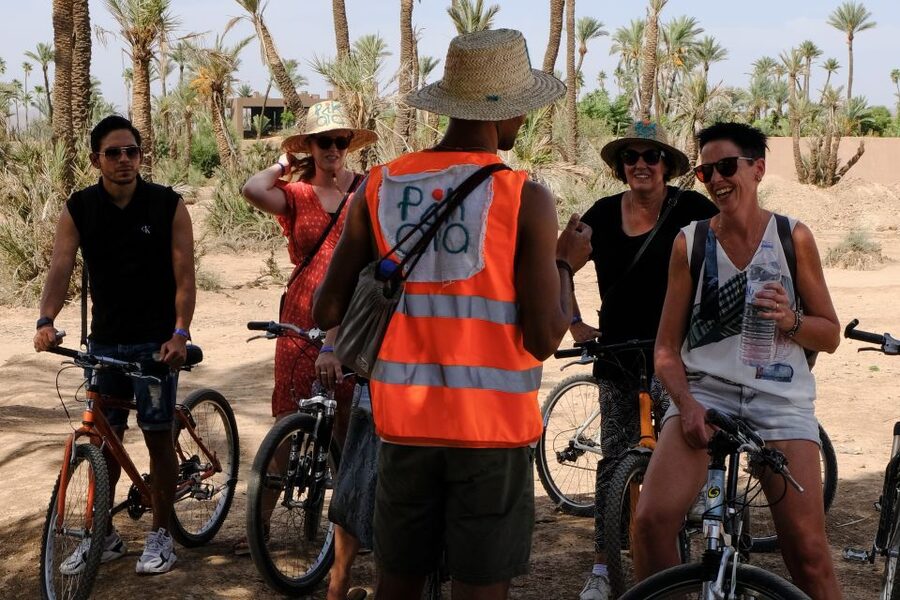
The ride is described as a gentle, flat route of about 17 kilometers. That puts it within reach of many casual cyclists, but you should not confuse gentle with effortless.
The most demanding section is likely the route through the Medina, where you need to steer, watch for movement around you, and follow your guide’s signals. Once out toward the Palmeraie, the ride is calmer, but off-track roads can require more care than smooth pavement.
One useful tip is to arrive ready to ride rather than treating this as a sightseeing trip with occasional pedaling. Wear comfortable clothing and shoes, and expect sun exposure. Water and suncream are included, which is helpful, but you should still dress sensibly for the conditions.
People who cycle regularly may find the distance easy. If you rarely ride a bicycle, the tour can still work, but the Medina section may feel more challenging. Tell the guide if you need a slower pace or extra help.
What the $34 price delivers
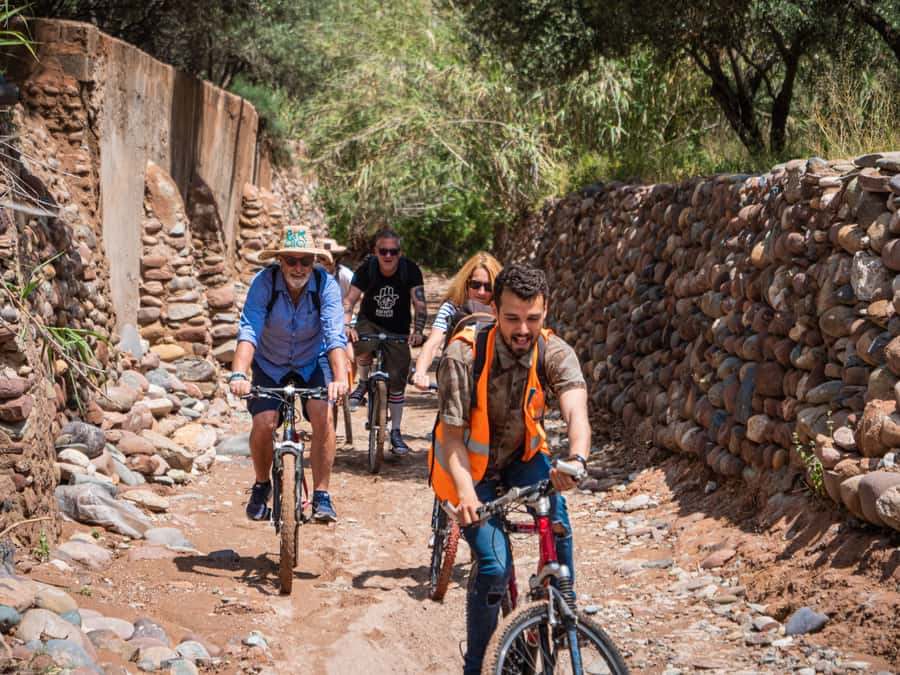
At $34 per person, this is a good-value half-day-style activity if you want more than a bicycle rental. You receive a bike, water, suncream, a live English or French-speaking guide, the village route, several cultural stops, and the breakfast visit with Aziz.
The price also covers access to experiences that would be difficult to arrange neatly on your own. Finding the irrigation system, village oven, and small zellige ateliers independently would take time, local contacts, and a willingness to navigate unfamiliar paths.
The tour is not the best value if your only goal is a long countryside bike ride. A portion of the 150 minutes is spent leaving and returning to the city, and the breakfast is simple rather than elaborate. You also pay separately for getting to Pikala Bikes, and the Water Museum is excluded.
For me, the strongest value comes from the combination of transport and interpretation. The bicycle gets you between places, but the guide explains what those places mean. You see how water, bread, palms, and craft fit together.
Timing, language, and practical planning
The activity lasts 150 minutes, with starting times depending on availability. A morning departure may suit you if you want cooler conditions and breakfast earlier in the day, but the supplied details do not guarantee a particular departure time or temperature.
Guiding is available in English and French. The guide’s ability to answer questions is an important part of the experience, especially if you want to ask about local customs, architecture, or daily life.
The meeting point is Pikala Bikes headquarters. Since pickup and drop-off are not included, check the location carefully when planning your morning. Build in enough time to arrive without rushing, since the cycling begins from the headquarters rather than from your accommodation.
Free cancellation is available up to 24 hours before the activity for a full refund. You can also reserve and pay later, which helps if your Marrakech schedule is still changing.
Who should book this Palmeraie ride?
I would choose this tour if you want to see Marrakech beyond the Medina and major monuments. It suits curious cyclists who enjoy meeting local people, learning how traditional systems work, and accepting a little city riding in exchange for a more genuine route.
It is particularly good for:
- Couples or small groups looking for an active morning
- Families with older children who can manage a 17-kilometer ride
- Regular cyclists who want a gentle route with cultural stops
- Visitors interested in food, craft, architecture, and local customs
- Anyone who wants to support a community-focused bicycle operation
I would think twice if you dislike bicycles, have trouble with uneven roads, or want a polished sightseeing experience with private transport from your riad. This is a working-area visit, not a luxury excursion. The charm comes from the simple breakfast, small workshops, and village paths, not from comfort at every moment.
Should you book it?
Yes, if you want a reasonably priced way to connect Marrakech with the Palmeraie and local village life. The strongest reasons are the careful guides, the irrigation story, the bread oven, and the unhurried breakfast with Aziz.
Book it with realistic expectations. You will cycle through the Medina, ride for about 17 kilometers, and visit modest working places rather than grand attractions. If that sounds like the kind of morning you want, this tour offers more substance than a standard city loop and gives you a useful view of how the oasis still functions.
FAQ
Where does the cycling tour begin?
The tour begins at the Pikala Bikes headquarters in Marrakech. Hotel or riad pickup and drop-off are not included.
How long does the tour last?
The tour lasts 150 minutes, or two and a half hours.
How far do you cycle?
The route is described as about 17 kilometers. It is generally gentle and flat, although the Medina section requires extra attention.
Which languages are available?
Live guiding is available in English and French.
Is breakfast included?
Yes. The stop with Aziz includes tea or juice, Moroccan pastries, fresh bread, butter, olive oil, and other listed breakfast items.
What cultural stops are included?
The experience includes a local irrigation water system, a village bread oven, and small Moroccan zellige tile ateliers.
Is the Water Museum included?
No. A visit to the Water Museum is not included in the tour price.
What is included in the price?
Bikes, water, suncream, the live guide, and tea or juice with Moroccan pastries and food at Aziz’s place are included.
Can I cancel for a refund?
You can cancel up to 24 hours in advance for a full refund. Reserve-now, pay-later booking is also available.
Recently reviewed around Marrakech
- 4-Days Marrakech to Marrakech Désert Tour★ 5.0 · 17 reviews
- Camel ride at sunset in Marrakech palm grove★ 5.0 · 17 reviews
- Agafay camel ride★ 5.0 · 20 reviews
- Camel riding in marrakech★ 4.5 · 17 reviews
- Marrakech to Atlas Mountains and 4 Valleys Day Trip★ 5.0 · 17 reviews
- Agafay Desert Adventure, Culture, and Relaxation, From Marrakech★ 5.0 · 25 reviews
- Quad excursion to the Agafay desert near Marrakech★ 5.0 · 44 reviews
- Camel ride and dinner Agafay desert★ 5.0 · 25 reviews
Bike Tours in Marrakech, compared.
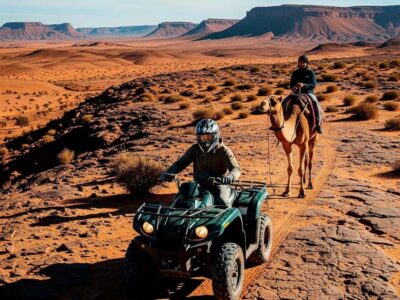
Agafay Desert Quad Biking Tour with Dinner-Show
Read our review →
Quad Bike Tour to Palm Oasis and Jbilat Desert
Read our review →
Marrakech Quad Bike Experience: Desert and Palmeraie
Read our review →
Dunes of the Palmeraie Quad Bike Ride with Tea
Read our review →
Agafay Desert Dinner Show with Quad Bike & Camel
Read our review →
Agafay Desert Package, Quad Bike, Camel Ride and Dinner Show
Read our review →Agafay Desert Package, Quad Bike, Camel Ride and Dinner Show
Read our review →
Agafay Desert: Dinner + Show with Quad Bike & Sunset Camel Ride
Read our review →Browse the lists this tour appears in