Reviewed · MARRAKECH TOURS
Marrakech: Bahia Palace, Saadian Tombs, & Koutoubia Mosque
Marrakech makes more sense once you understand how its palaces, tombs, mosques, old gates, and market streets fit together. This three-hour walk links several of the city’s major sights, beginning around the royal Kasbah and ending at Jemaa el-Fna, so you get both famous monuments and a useful first look at the medina.
I like the clear historical route, which moves from the Koutoubia Mosque and Bab Agnaou to the Saadian Tombs, Mellah, and Bahia Palace. I also like the guides’ personal approach. Names such as Ahmed, Abdul, Rachid, Charif, and Abu appear often among the guide team, and the strongest guides explain not only buildings but also Moroccan religion, daily life, and local customs. The main drawback is that the two paid monuments cost extra, and long lines at the Saadian Tombs can force a change of plan.
In This Review
- Key points at a glance
- What this three-hour Marrakech walk is really like
- Koutoubia Mosque and the first view of Marrakech
- Bab Agnaou and the Kasbah in five-minute glimpses
- Saadian Tombs: exquisite work with a possible queue
- The Mellah and Marrakech’s Jewish Quarter
- Bahia Palace and its quiet courtyards
- Finishing at Jemaa el-Fna
- The guides are the main reason to book
- Price, extra fees, and overall value
- Timing, crowds, and practical comfort
- Who will get the most from this tour?
- Should you book the Bahia Palace and Saadian Tombs walk?
- FAQ
- How long does the walking tour last?
- What sites are included?
- Can I enter Koutoubia Mosque?
- Are entrance fees included in the tour price?
- Is hotel pickup available?
- What languages are offered?
- Can I book a private group?
- What should I bring?
- Can the guide help with ticket lines?
Key points at a glance
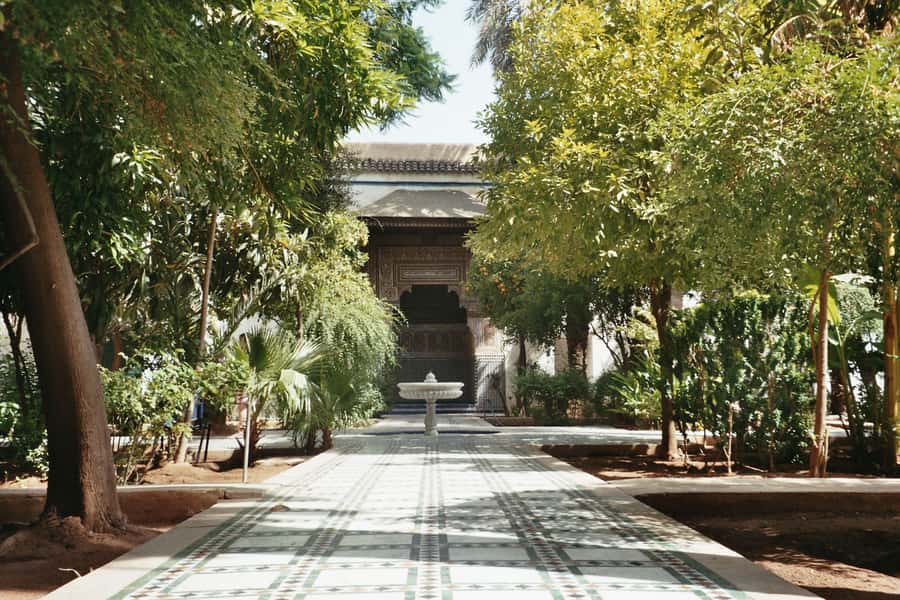
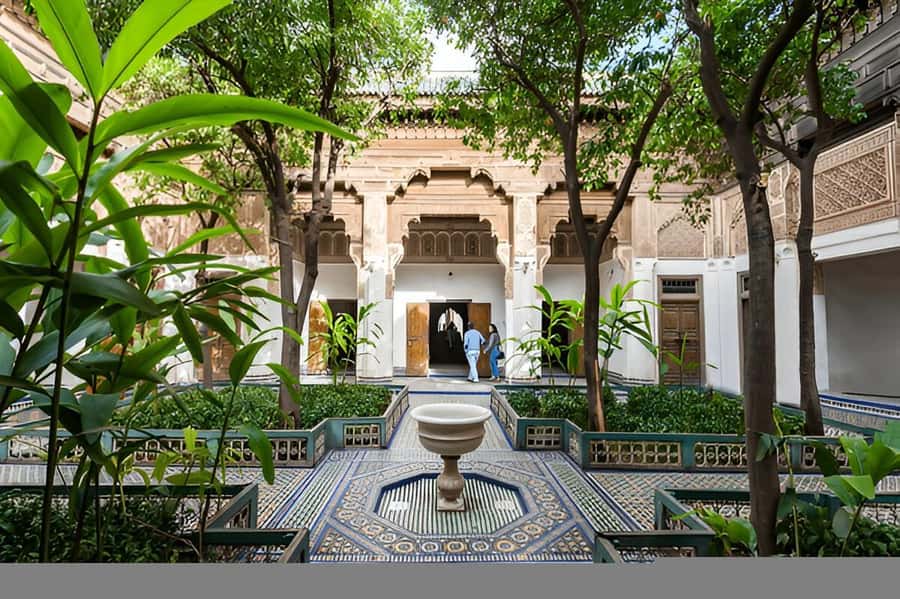
- Bahia Palace takes center stage: Give yourself time to notice the tilework, courtyards, painted ceilings, and quiet garden spaces.
- The Saadian Tombs are beautiful but line-sensitive: Your guide can help with the first ticket queue, but the interior may still have a wait.
- Koutoubia is an exterior visit: You can admire the mosque and minaret, but entry is restricted to Muslims.
- Mellah adds cultural depth: The old Jewish Quarter includes historic synagogues and a look at Marrakech’s religious diversity.
- Jemaa el-Fna is the natural finish: The tour ends near the square’s food stalls, storytellers, and market activity.
- The guide makes the difference: Ahmed, Abdul, and other guides are praised for humor, patience, clear English, and useful advice about the city.
What this three-hour Marrakech walk is really like
This is not a museum-by-museum bus tour. You walk between the sights, passing through parts of southern Marrakech and the medina as your guide explains what you are seeing. That matters because the city’s layout can feel confusing at first, especially around the narrow lanes near the Kasbah and souks.
The advertised duration is three hours, though the actual pace can vary. Some groups finish close to schedule, while others spend longer at a monument or add a short detour when a queue causes trouble. You need comfortable shoes, cash, sun protection, and enough energy for a steady walk.
The tour can be booked with or without hotel transportation. If you choose pickup and drop-off, transport is included and the guide confirms the pickup time. Without that option, your meeting place depends on the booking selected. Drop-off is listed at Café de France or nearby in Marrakesh, placing you right by Jemaa el-Fna and the medina.
Other Marrakech days travellers weigh against this one:
- Marrakech: Agafay Desert Sunset, Camel Ride, and Dinner Show
★ 4.6 · 35,119 reviews - From Marrakech: Ouzoud Waterfalls Guided Hike and Boat Trip
★ 4.7 · 33,630 reviews - Marrakech: Agafay Desert Quad & Camel Rides with Dinner Show
★ 4.8 · 27,382 reviews
Koutoubia Mosque and the first view of Marrakech
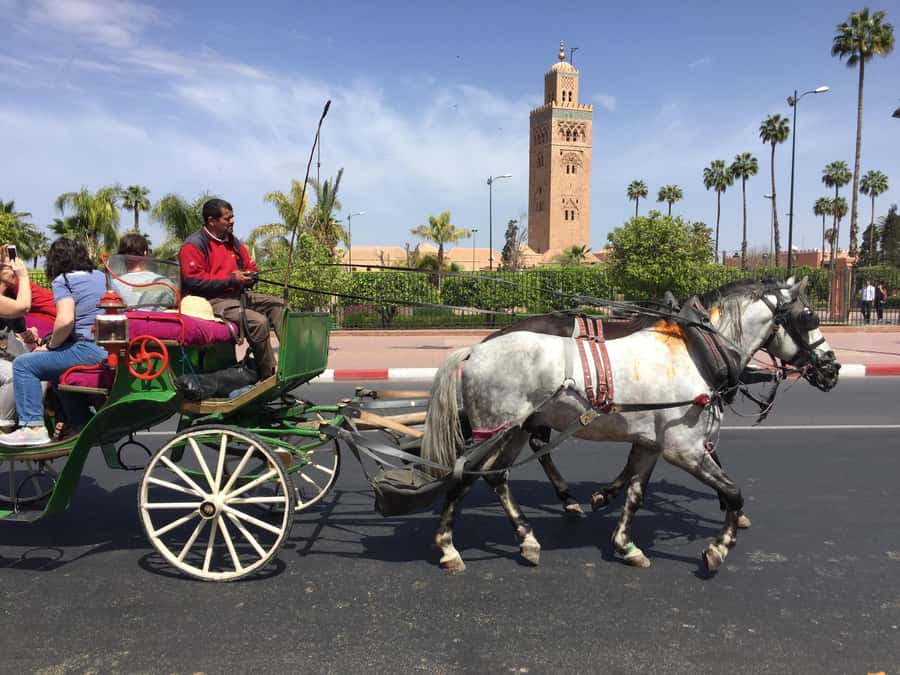
The Koutoubia Mosque is usually the opening sight, with about 25 minutes for a guided visit and photographs. You do not go inside. Entry is restricted to Muslims, so the value of this stop comes from the exterior view, the minaret, and the explanation of the mosque’s place in Marrakech.
The minaret gives the city one of its most recognizable outlines. Your guide can help you read the building’s Almohad design and explain its religious importance rather than leaving you with a quick photo stop. This is also a useful place to get oriented. From here, you are close to the old city, Jemaa el-Fna, and the route toward the Kasbah.
I would not book this tour expecting an interior mosque visit. If seeing the outside of Koutoubia feels like enough, the stop works well. If entering historic religious buildings is your main goal, you will need to adjust expectations before booking.
Bab Agnaou and the Kasbah in five-minute glimpses
The short stops at Bab Agnaou and the Kasbah provide context for the royal district. Each is listed at roughly five minutes, so think of them as guided outdoor pauses rather than full visits.
Bab Agnaou is one of the important gates associated with the Kasbah area. Your guide points out the gate’s form and position, then leads you onward. The Kasbah stop gives you a quick look at the quarter’s historic character before the longer visit to the Saadian Tombs.
These brief stops are useful because they connect the monuments. On your own, you might see a gate, take a photograph, and move on without knowing why it matters. Here, even a few minutes can turn an attractive doorway into part of a larger story about Marrakech’s rulers and fortified districts.
The tradeoff is obvious: five minutes is not enough for a detailed examination. If you want extended photography or time to wander independently, you will need to return later.
Saadian Tombs: exquisite work with a possible queue
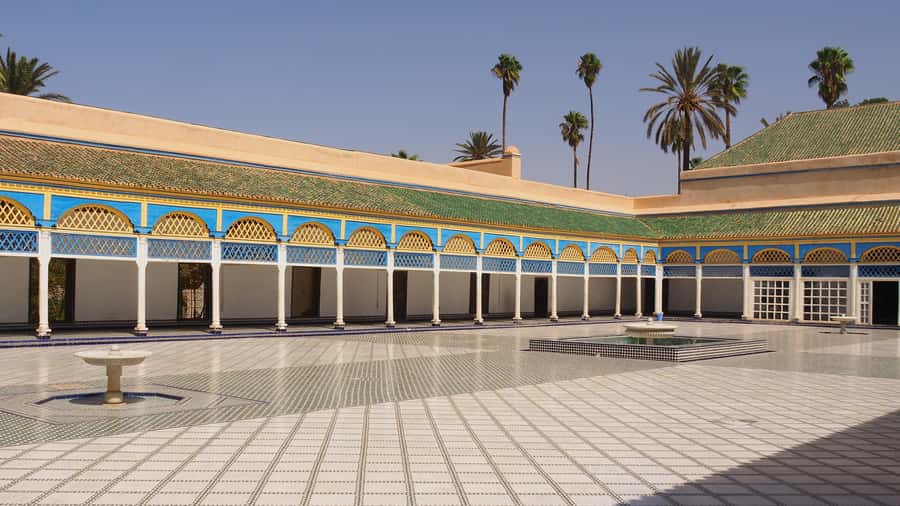
The Saadian Tombs receive about 30 minutes, including a short break, photographs, and explanation. This is one of the tour’s most striking stops, but it is also the one most affected by crowd levels.
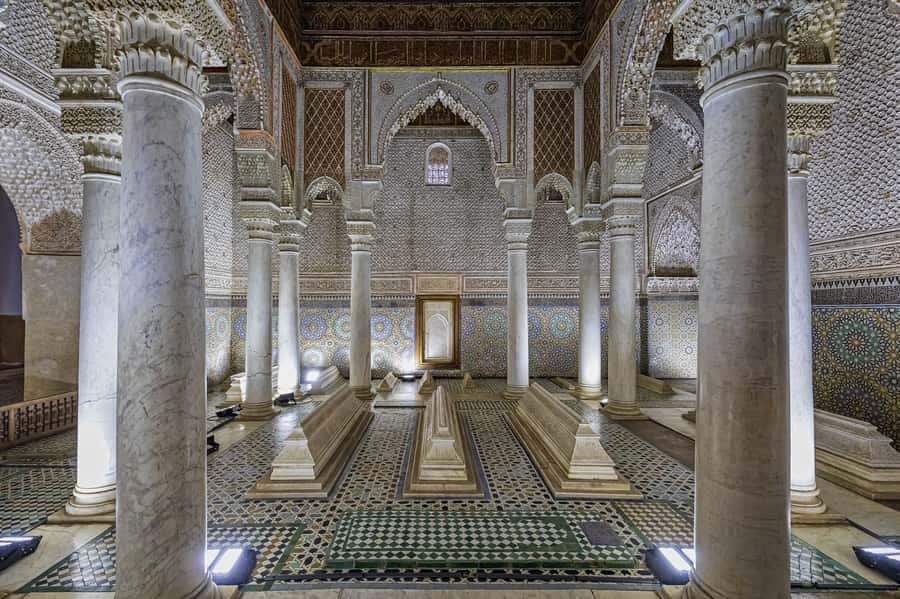
The tomb complex is associated with Sultan Ahmad al-Mansur and his family. It was hidden for centuries and rediscovered in the early twentieth century. Inside, the Hispano-Moorish decoration is the main attraction: patterned tiles, carved details, and calm courtyards create a sharp contrast with the busy streets outside.
The central burial chamber is the detail many people most want to see. Yet the queue can be long, especially at busy times. Your guide may help you get past the initial ticket line, but that does not guarantee a quick passage once inside. One group chose to skip the tombs because the wait was too long, and the guide filled the time with other sights and conversation.
That flexibility is valuable. You should still decide how much waiting feels worthwhile. If the tombs are high on your list, ask the guide about the queue when you arrive and be ready to adjust the rest of the visit. The tour is better when you treat the schedule as a framework, not a stopwatch.
A different kind of day out, same corner of Morocco:
- Marrakech: Agafay Desert Quad Biking Tour with Dinner-Show
★ 4.8 · 16,569 reviews - Marrakech: Atlas Mountains, Ourika Valley, Waterfall & Lunch
★ 4.8 · 15,834 reviews - From Marrakech: 3-Day Merzouga and Sahara Desert Tour
★ 4.9 · 15,308 reviews - Berber villages : Atlas Mountains Day Hike from Marrakech
★ 5.0 · 14,007 reviews
The Mellah and Marrakech’s Jewish Quarter
The walk through Mellah takes around ten minutes, but it adds an important human dimension to the route. This was Marrakech’s historic Jewish Quarter, and the tour introduces the community that once lived and worshipped there.
You may visit historic synagogues and hear about the Jewish presence in the city. The point is not simply to add another neighborhood to the checklist. Mellah helps you see Marrakech as a place shaped by different religious and cultural communities over time.
This stop also breaks up the succession of royal and religious monuments. You move from tombs and palaces into an area tied to ordinary community life, trade, worship, and neighborhood identity. Guides are also able to discuss modern Moroccan culture and daily life, which can make this short walk more meaningful than a purely architectural tour.
The supplied details do not promise access to every synagogue on every departure, so think of the Mellah portion as a guided neighborhood visit with synagogues included in the plan, subject to local conditions.
Bahia Palace and its quiet courtyards
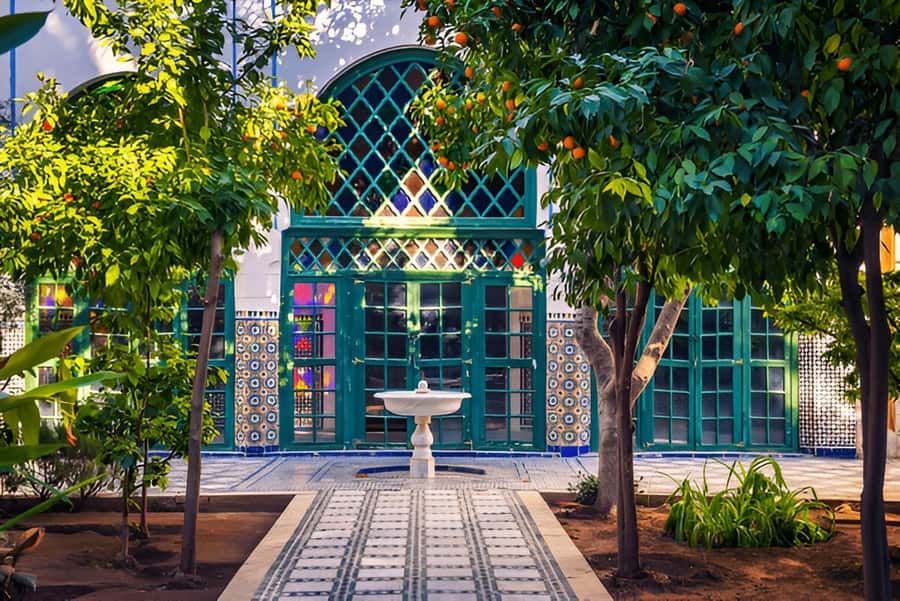
Bahia Palace is the longest scheduled stop, at about 45 minutes. That is sensible. The palace rewards slow looking, and a rushed pass through its rooms would miss much of what makes it special.
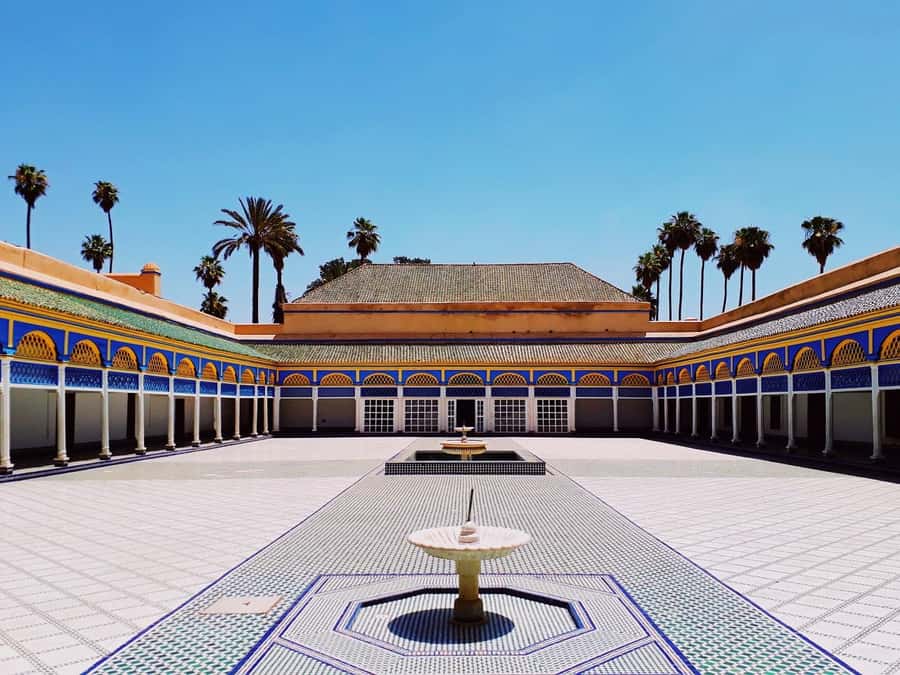
You walk through courtyards, tiled chambers, and decorated interiors linked to the grand viziers who lived here. The palace uses geometry, color, carved surfaces, and open space to create a cool, restful setting. After the streets outside, the transition can feel dramatic.
I like having a guide here because the palace’s beauty can otherwise become a blur of arches and tiles. A good guide points out how the rooms relate to one another and adds the human stories behind the decoration. Ahmed, Abdul, and Rachid are among the guides praised for explaining the sites clearly and answering questions beyond the basic facts.
You also get free time at the monuments. Use it at Bahia Palace. Look upward, examine the zellige tile patterns, and take photographs without trying to follow every word of the commentary. The palace is the place where the tour’s architecture-focused side comes together best.
The entrance fee is 100 MAD per adult, paid separately. Bring cash. Some departures and local ticket points may not accept cards, and keeping Moroccan dirhams ready saves time.
Finishing at Jemaa el-Fna
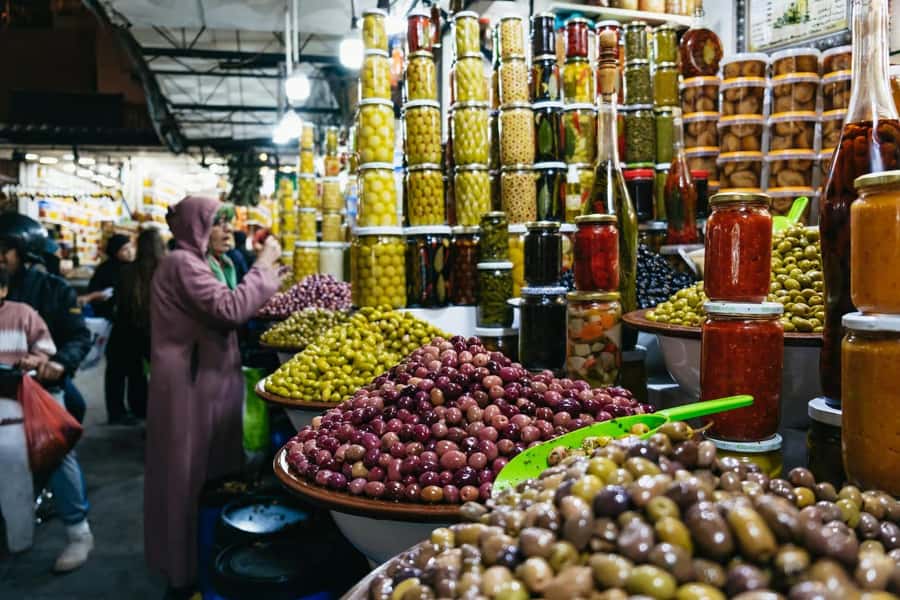
The route ends at Jemaa el-Fna, Marrakech’s great central square. This is a practical finish because you can continue exploring, find food, return to your accommodation, or use the square as a reference point for the medina.
The square is known for storytellers, market stalls, and changing street activity. Your guide can help you understand what you are seeing and may point out places to continue on your own. Several guide accounts also describe stopping for snacks or offering directions to a next destination, though these extras depend on the guide and the group.
Do not expect the tour to include food or drinks. The square is your opportunity to make your own choices after the walking portion ends. If you are tired, arrange a simple break. If you still have energy, the surrounding souks are close by, though their narrow lanes are easier to handle after you have gained some orientation.
The guides are the main reason to book
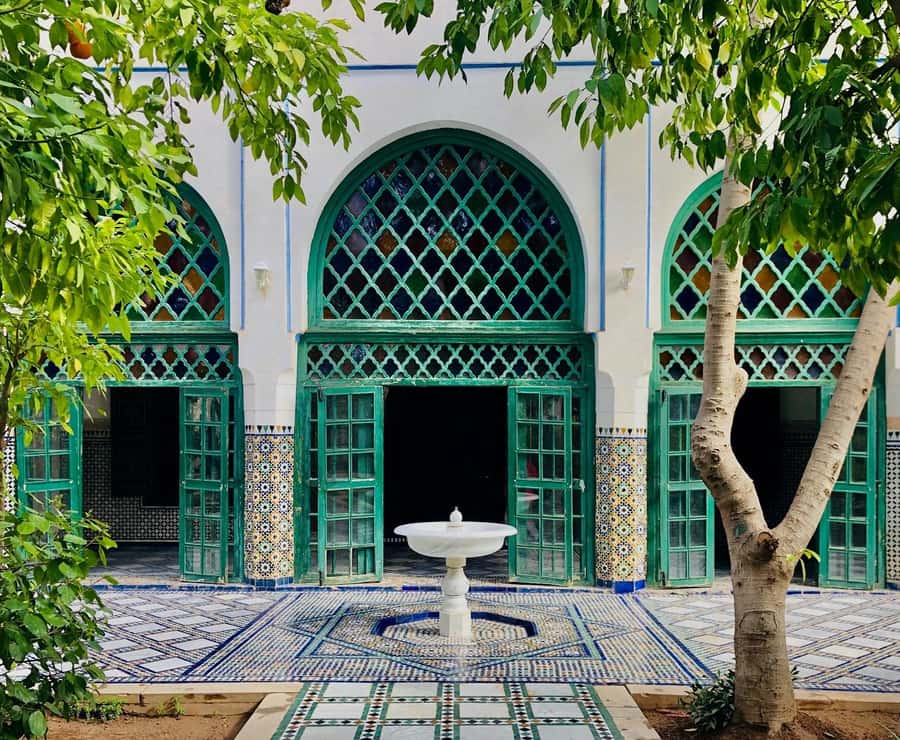
The strongest feature of this experience is the guide. Across the available guide team, Ahmed and Abdul receive especially frequent praise, while Rachid, Charif, Abu, Abdou, Aoud, Juaad, and Mohammad are also named positively.
The common strengths are clear:
- Explanations are detailed without needing to feel like a classroom lecture.
- Guides answer questions about buildings, Islam, Moroccan culture, and daily life.
- Humor keeps the history moving.
- Guides adjust the pace for slower walkers.
- Small groups can feel more personal and easier to manage.
- A guide may suggest alternatives when a queue makes one stop impractical.
You should not assume a specific named guide unless your booking confirms one. Still, the repeated pattern suggests that the operator’s value lies in its local guiding rather than simply escorting you from gate to gate.
A particularly useful feature is the willingness to adapt. One guide changed the plan when the Saadian Tombs queue became too long. Another adjusted the ending to leave a group near a museum. Such flexibility can make a short tour feel more useful than a rigid schedule.
Price, extra fees, and overall value
The advertised price is $19 per person. That is a fair starting price for a three-hour guided walk through several major sights, especially if you are new to Marrakech and want help navigating the medina.
You must add the entrance fees to Bahia Palace and the Saadian Tombs. At the stated rates, that is 100 MAD per adult for each site, or 200 MAD total. Koutoubia Mosque is viewed from outside, so there is no interior admission for this stop.
The extra fees make the true cost higher than the headline price, but they also keep the booking price easy to compare. I would prefer seeing the monument fees included, since one visitor specifically found the separate charges inconvenient. On the other hand, paying on site makes the costs visible and gives you more control if you decide to skip a long queue.
The value is strongest for a first or second day in Marrakech. You get a route, local context, help with ticket lines, and a safe way to reach sights that can be awkward to find in the medina. If you already know the city well, you may prefer visiting independently and spending longer at fewer places.
Timing, crowds, and practical comfort
Peak season can make the monuments crowded. The guide helps with the initial lines and keeps the group together, but no guide can remove every queue. The Saadian Tombs are the main pressure point, so keep your schedule flexible afterward.
The walk is manageable for many people, but it is still a walking tour. Wear shoes you can use on uneven streets and bring water, even though food and drinks are not included. Sunscreen and a hat help in hot weather, while a light jacket makes sense in cooler seasons.
A small group is worth choosing when available. It is easier to hear explanations, ask questions, and keep a steady pace. The guide team has also shown patience with slower walkers, but you should tell the guide early if someone in your party needs more time.
The meeting area may be busy, with several groups gathering at similar points. Arrive prepared with the exact meeting instructions and the guide’s contact details from your booking. If you choose hotel pickup, wait for the confirmed pickup time rather than heading to a separate meeting point.
The tour is offered in English, French, German, and Arabic. Private groups are available, which may suit families or parties that want to set the pace themselves.
Who will get the most from this tour?
I would choose this experience if you want a compact introduction to Marrakech’s royal, religious, and community landmarks. It is especially useful if the medina feels confusing, you want historical explanation rather than only photographs, or you have limited time in the city.
It suits first-time visitors, couples, families with older children, and anyone who likes to ask questions while walking. The mix of palace rooms, burial architecture, city gates, a Jewish quarter, a mosque exterior, and a famous square gives you a broad first impression.
I would hesitate if you dislike walking, want long independent visits, or need guaranteed access to every site without waiting. The schedule is full, and the Koutoubia stop is exterior only. You also need to budget the two separate admission fees.
Should you book the Bahia Palace and Saadian Tombs walk?
Book it if you want orientation plus context in one concentrated outing. The $19 price is attractive once you understand that 200 MAD in monument admissions comes separately, and the guide support can save you time and confusion in the medina.
Choose a departure when you have room to continue exploring afterward. That way, a queue at the Saadian Tombs will not ruin your day, and you can return to any site that deserved more time. Ask for a small group or private option if pace and personal questions matter to you.
I would make this tour an early Marrakech activity, not the final item of a short visit. It gives you the city’s major landmarks, a helpful route through the southern medina, and enough local explanation to make the rest of your stay easier.
FAQ
How long does the walking tour last?
The scheduled duration is three hours, though the timing can change if the group spends longer at a site or adjusts the route because of queues.
What sites are included?
The route includes Koutoubia Mosque, Bab Agnaou, the Kasbah, Saadian Tombs, Mellah, Bahia Palace, and a finish at Jemaa el-Fna Square.
Can I enter Koutoubia Mosque?
No. The mosque is viewed from outside because entry is restricted to Muslims.
Are entrance fees included in the tour price?
No. Bahia Palace costs 100 MAD per adult and the Saadian Tombs cost 100 MAD per adult. These fees are paid on site.
Is hotel pickup available?
Hotel pickup and drop-off are available only if you select the transportation option. Otherwise, you meet the guide at the designated meeting point.
What languages are offered?
The tour is offered in English, French, German, and Arabic.
Can I book a private group?
Yes. A private group option is available.
What should I bring?
Bring comfortable walking shoes and cash. Sunscreen, a hat, or a light jacket may also be useful depending on the season.
Can the guide help with ticket lines?
The guide can assist with skipping the initial ticket lines at Bahia Palace and the Saadian Tombs. Queues may still remain inside, especially at the Saadian Tombs.
Recently reviewed around Marrakech
- 4-Days Marrakech to Marrakech Désert Tour★ 5.0 · 17 reviews
- Camel ride at sunset in Marrakech palm grove★ 5.0 · 17 reviews
- Agafay camel ride★ 5.0 · 20 reviews
- Camel riding in marrakech★ 4.5 · 17 reviews
- Marrakech to Atlas Mountains and 4 Valleys Day Trip★ 5.0 · 17 reviews
- Agafay Desert Adventure, Culture, and Relaxation, From Marrakech★ 5.0 · 25 reviews
- Quad excursion to the Agafay desert near Marrakech★ 5.0 · 44 reviews
- Camel ride and dinner Agafay desert★ 5.0 · 25 reviews
Marrakech Tours, compared.
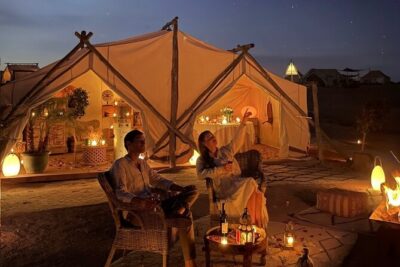
Agafay Desert Sunset, Camel Ride, and Dinner Show
Read our review →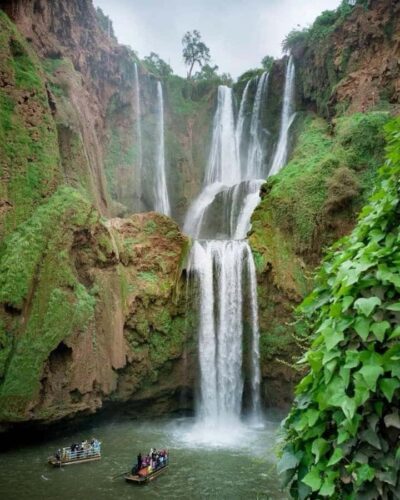
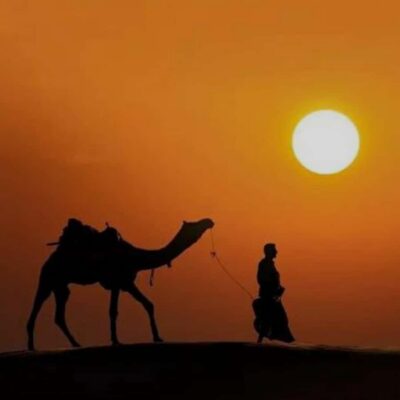
Agafay Desert Quad & Camel Rides with Dinner Show
Read our review →
Agafay Desert Quad Biking Tour with Dinner-Show
Read our review →
Atlas Mountains, Ourika Valley, Waterfall & Lunch
Read our review →
Berber villages : Atlas Mountains Day Hike from Marrakech
Read our review →