
Reviewed · BERBER VILLAGE TOURS
From Marrakesh: 3-Day Trip to Berber Villages
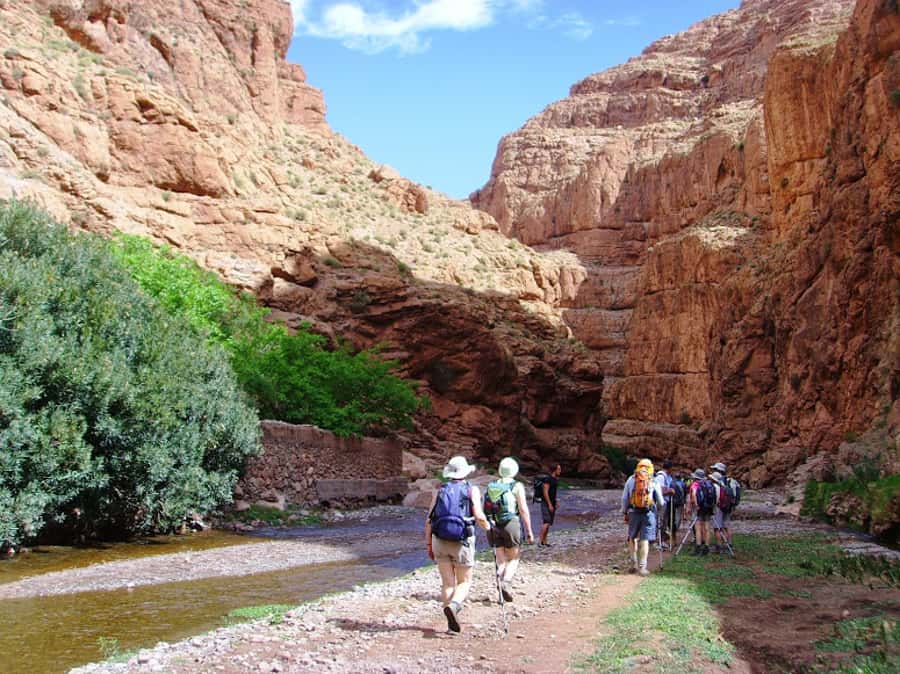
The best part of this trip is that you move through the High Atlas Mountains on foot, sleeping in small Berber villages rather than returning to Marrakesh each night. You cross high passes, eat meals cooked along the route, and spend time in places where daily life still follows the rhythm of the mountains.
I like two things right away: the small-group format, limited to 10 people, and the mule that carries your luggage. Guides such as Hassan, Hamid, and Ibrahim have helped past groups walk at a comfortable pace, while the cook prepares generous meals, sometimes in the middle of the mountains.
The trade-off is clear: this is not a soft adventure. Day two lasts six to seven hours, paths can be rocky, and village lodges may have little or no electricity. Bring good shoes, warm layers, and a willingness to give up city comforts for a few days.
In This Review
- Key points at a glance
- What this High Atlas trek is really like
- Day one: Imlil, Tamatert, and the first mountain pass
- Day two: the Imnane Valley and the longest walk
- Day three: Tizi Mzik and the return to Imlil
- Berber lodges and the value of simple accommodation
- Food cooked beside the trail
- The guide makes a large difference
- What $353 includes, and what it does not
- Who should book this trek
- Should you book From Marrakesh: 3-Day Trip to Berber Villages?
- FAQ
- How long is the walking each day?
- Where does the trek begin and end?
- Do I climb Mount Toubkal?
- Where do I sleep?
- Is luggage carried for me?
- Which languages can the guide speak?
- Are food and drinks included?
Key points at a glance
- Three days from Imlil: Walk a mountain route that begins and ends in Imlil, with transport from and back to your Marrakesh hotel.
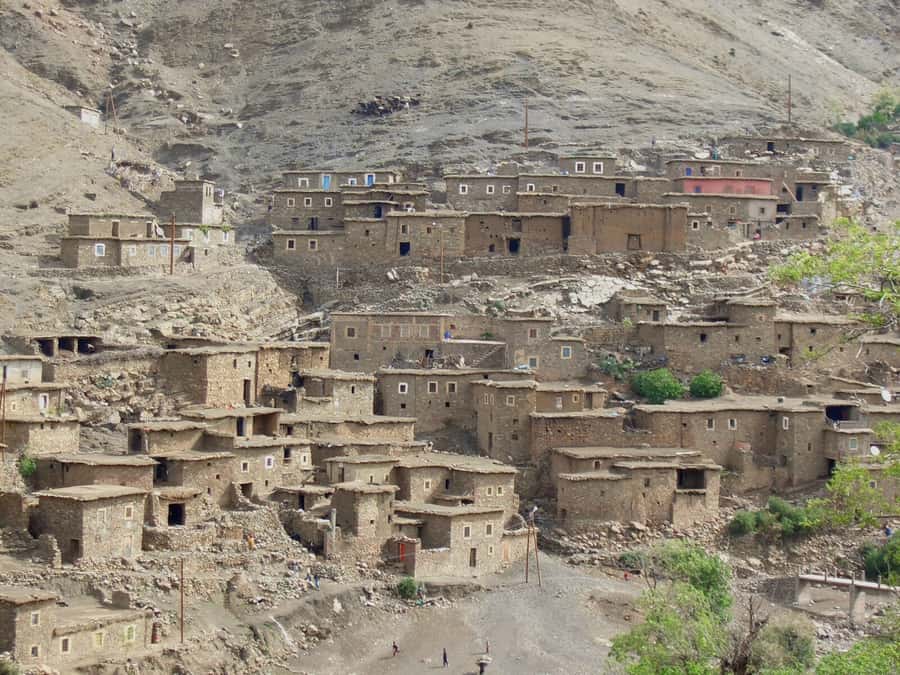
- A real Berber village stay: Sleep in local lodges in Tinerhourhine and Aït Aïssa, where comforts are basic but the setting is personal and direct.
- The hardest day is day two: Allow six to seven hours for the Imnane Valley, Ikkiss, Tizi n’ Aguersioual, Matate, and the approach to Aït Aïssa.
- A mule carries your luggage: You still walk with a daypack, but your main bag does not have to come over every pass on your back.
- Meals are part of the experience: A chef travels with cooking equipment and prepares breakfast, lunch, and dinner, including mountain lunches.
- Good value at $353: Transport, guide, mule, food, cooking gear, and two nights of lodge accommodation are included.
What this High Atlas trek is really like
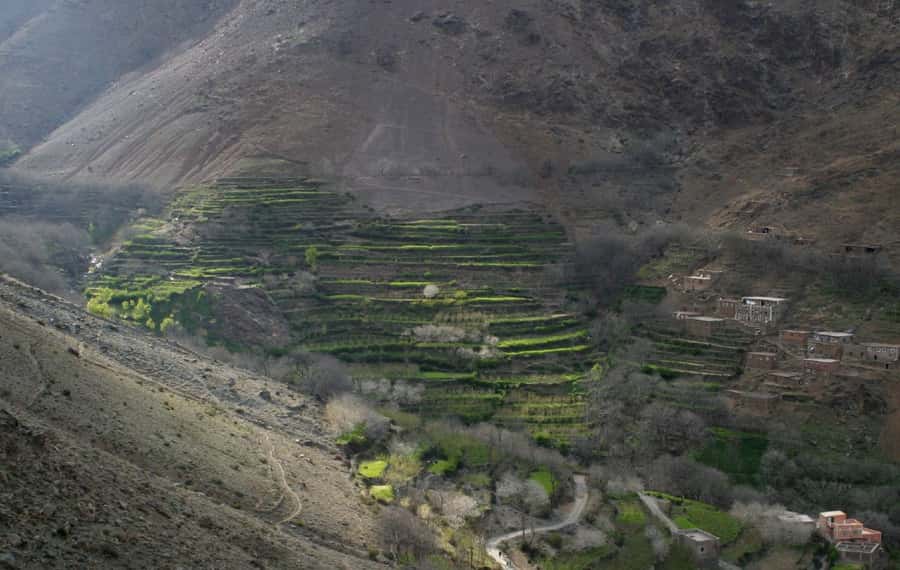
This is a walking trip first, a sightseeing trip second. You are not ticking off monuments from a vehicle. Instead, you spend three days crossing passes, following valleys, and linking villages by foot.
The route is based around Imlil, a mountain village south of Marrakesh. From there, it climbs through the Atlas foothills and higher valleys before returning to Imlil on the third day. Mount Toubkal, Morocco’s highest peak, appears as part of the mountain scenery, but this trip is not presented as a summit attempt.
The walking totals about 14 to 15 hours across the three days. One past departure covered roughly 48 kilometers, so the exact distance can feel substantial even though the daily walking times are listed as about four hours, six to seven hours, and four hours.
You will have a local guide, a cook, and a mule for the luggage. That combination matters. The guide handles route-finding and explains local customs, while the cook can prepare food away from a restaurant or village kitchen. You get more support than you would on an independent walk, without the feel of a large coach tour.
More Marrakech trips worth a second look
- From Marrakech: Day Trip to Ouarzazate and Ait Benhaddou
★ 4.7 · 9,447 reviews - From Marrakesh: Essaouira Full-Day Trip
★ 4.6 · 8,137 reviews - From Marrakech: Small Group to Essaouira & Sekkala Day Trip
★ 4.9 · 6,671 reviews
Day one: Imlil, Tamatert, and the first mountain pass
Your day starts with private transport from Marrakesh to Imlil. This removes one of the awkward parts of arranging a mountain walk yourself: getting from the city to the trailhead and finding the right starting point.
In Imlil, you begin walking toward Tinerhourhine. The route passes through Tamatert and continues to Tizi n Tamatert, a high mountain pass where lunch is served. This first lunch is more than a convenient meal stop. It gives you a chance to sit down in open mountain country while the cook prepares food with the group’s equipment.
The walking time is about four hours, but that should not be read as a flat afternoon stroll. The route includes mountain climbs and stony paths, and the pass gives the day its main effort. If you have spent most of your time in Marrakesh, the change in pace can be striking. You trade traffic and city noise for quiet trails and long views.
After the pass, you continue through Ouanesekra-Tamguist before reaching Tinerhourhine. Your overnight stay is in a local inn. Earlier departures have found village accommodation simple, with some lodges lacking electricity, though warm water and hot meals have been available on some trips.
That is the right way to picture these nights: useful shelter, not a mountain resort. In winter, nights can be very cold. Travelers who joined in December reported sunny daytime conditions but freezing evenings, with thick camel-hair blankets helping inside the lodge. Pack warm clothing rather than assuming the bedding will do all the work.
Day two: the Imnane Valley and the longest walk
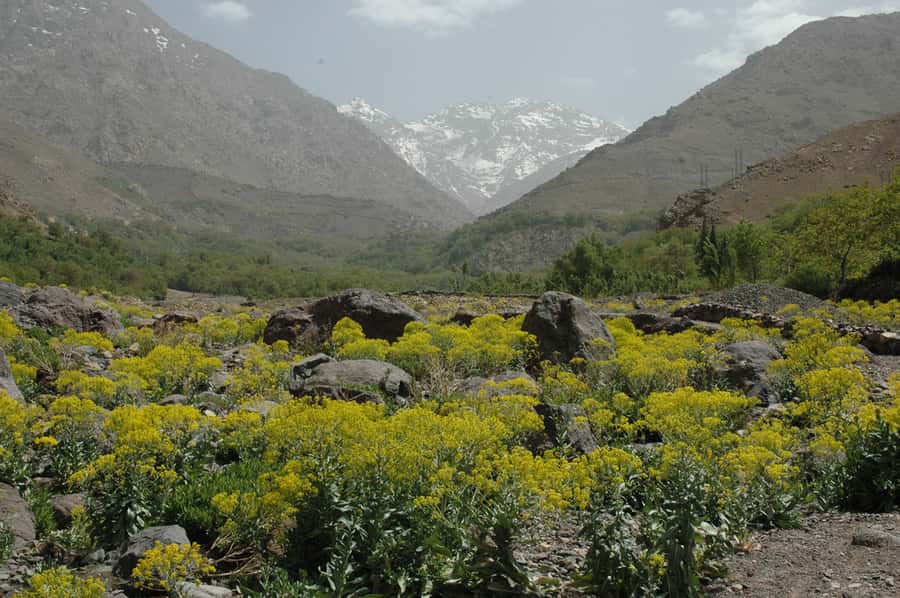
Day two is the main test of the trip. You leave Tinerhourhine and follow the Imnane Valley, passing through the Berber village of Ikkiss before continuing toward Tizi n’ Aguersioual.
The valley section lets you see how villages fit into the mountain terrain. Houses, paths, and fields are connected by routes that are far more practical to local residents than to a visitor carrying a camera and a full bag. The guide can also provide context about Berber customs, which adds meaning to the villages beyond simply photographing them.
This is also the day associated with views toward Mount Toubkal, Morocco’s highest peak. The exact sightlines depend on conditions, but the mountain setting is the point. You are walking through the same larger High Atlas region that draws climbers, while taking a route built around villages and passes rather than a summit.
The walk lasts six to seven hours. That makes pacing important. A guide such as Hassan has been praised for allowing people to walk at their own speed, including groups who preferred to say little and enjoy the quiet. That kind of flexibility is useful here because the group may contain people with different levels of mountain experience.
Lunch comes at Matate, followed by the route toward Aït Aïssa. The cook may reach the lunch place ahead of you and prepare the meal before the group arrives. This is one of the trip’s small pleasures: a hot plate of food in a place where you would not expect a kitchen.
You spend the night at another local inn in Aït Aïssa. By then, your legs will have done the hardest work of the three days. If you are not used to long walks with climbs and rocky footing, this is the day to take seriously. The trip is suitable for active hikers, but it is not a casual village walk.
Day three: Tizi Mzik and the return to Imlil
The final day takes you from Aït Aïssa toward Tizi Oussem. You then pass Tizi Mzik and the village of Mzik before reaching Imlil again.
At roughly four hours, this is shorter than day two, which gives you room to enjoy the surroundings without spending another full day on the trail. It also gives the route a satisfying shape: you start in Imlil, travel through mountain villages and valleys, and finish back where the trek began.
Tizi Mzik provides another pass crossing, while Mzik gives you a final village setting before the return. The walk is still mountain walking, so do not expect an effortless descent. Loose stones and uneven paths can be tiring after two days outside.
Once back in Imlil, private transport takes you to your Marrakesh hotel. That final transfer is included, so you do not need to arrange a taxi from the mountain village after finishing the walk.
A different kind of day out, same corner of Morocco:
- Marrakech: Agafay Desert Sunset, Camel Ride, and Dinner Show
★ 4.6 · 35,119 reviews - From Marrakech: Ouzoud Waterfalls Guided Hike and Boat Trip
★ 4.7 · 33,630 reviews - Marrakech: Agafay Desert Quad & Camel Rides with Dinner Show
★ 4.8 · 27,382 reviews - Marrakech: Agafay Desert Quad Biking Tour with Dinner-Show
★ 4.8 · 16,569 reviews
Berber lodges and the value of simple accommodation
The accommodation is in Berber lodges rather than standard hotels. That is central to the experience, not a minor detail.
You should expect basic rooms and village facilities. Some past departures found no electricity, while warm water was available in certain lodges. The setting may be remote, and one lodge was described as hard to find, though the local team was able to contact the hotel and locate the group.
The upside is direct contact with village life. You are not sleeping in a polished base designed only for tourists. The downside is that privacy, heating, and power may not match what you are used to at home or in Marrakesh.
Pack toilet paper, warm clothes, and a sleeping bag if you have one. Sleeping bags are not included. In winter, this advice becomes especially important because the nights can be cold even after bright, sunny days.
The lodges are a good fit if you see comfort as a warm bed, a meal, a shower when available, and shelter from the night. They are a poor fit if you need dependable heating, hotel-style bathrooms, or constant electricity.
Food cooked beside the trail
Food is one of the strongest parts of this trip. A chef travels with cooking equipment and prepares the included meals during the trek.
Past guides and cooks have included people named Ali, Hamid, and Mohammed. Their work is practical and visible: carrying supplies, making tea, and preparing meals in the lodges or outdoors. Lunch may be ready when you reach a mountain stopping point, which feels remarkably welcome after a climb.
The meals are described as generous and tasty, with three meals a day provided on some departures. The important point is not just quantity. In a remote mountain area, a cooked lunch gives the day structure and saves you from carrying several days of food.
Bring money for soft drinks and mineral water. Those are not included. You should also plan ahead for personal snacks and confirm your own water needs before setting out, since the provided information does not specify a refill system.
The guide makes a large difference
A local guide is included, and the language options are English, French, and Spanish. The guide’s role goes beyond leading the path.
Past departures have included Hassan, Hamid, and Ibrahim. Hassan was described as funny and able to speak very good English, while Ibrahim was praised for handling the practical details and helping throughout the walk. Other guides have explained Berber customs and answered questions about village life.
The most useful quality is pace management. You do not want to rush a pass because the fastest person in the group sets the speed. With a group capped at 10, there is a better chance of receiving direct attention, and the small size also keeps the village stays and trail conversations more personal.
Still, a small group is not the same as a private trek. You may be walking with up to nine other participants, and the pace will depend on the group. The private transport is from and to Marrakesh, while the walk itself is described as a small-group activity.
What $353 includes, and what it does not
At $353 per person, the price is not simply paying for three days of walking. It covers private transport from Marrakesh and back, a local guide, a mule for your luggage, a chef, cooking equipment, food, and accommodation at Berber lodges.
That is a solid package for a remote trek. If you arranged each part separately, you would need to find transport to Imlil, hire a guide, organize village accommodation, carry or transport food, and solve the luggage problem. Here, those pieces are handled together.
The price is strongest for people who value support and local logistics. The mule means you can walk with a lighter daypack, and the cook means you do not have to rely on packaged food. The lodge stays also keep you in the villages rather than adding hotel transfers each evening.
The exclusions are modest but worth noting. Soft drinks, mineral water, and sleeping bags cost extra or must be supplied by you. You also need to provide your own suitable clothing and footwear.
The trip offers free cancellation up to 24 hours before departure for a full refund, and you can reserve now and pay later. Starting times vary, so you need to check availability for your dates.
Who should book this trek
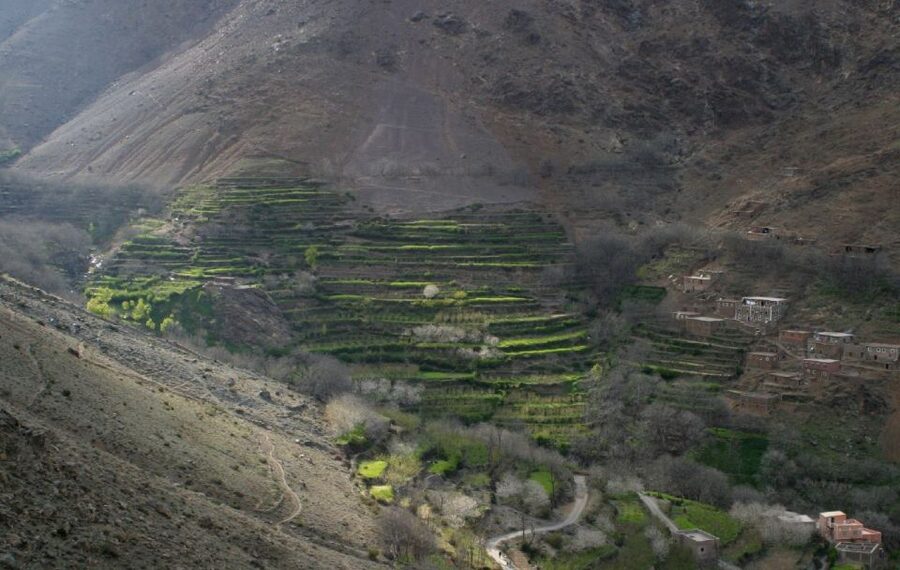
I would choose this trip if you want a real mountain experience without carrying all your equipment or planning every village stay yourself.
It suits you if you:
- Regularly walk for several hours at a time
- Are comfortable with climbs and rocky paths
- Want village contact rather than polished resort facilities
- Enjoy quiet scenery and do not need constant conversation
- Like having a guide who can explain local customs
- Prefer a small group to a large sightseeing tour
I would think twice if you dislike cold nights, simple bathrooms, or uncertain electricity. I would also avoid booking it without preparation if a six-to-seven-hour mountain day sounds daunting.
Good footwear is essential. In winter, bring warm clothing, and do not forget a sleeping bag if you prefer more insulation than the lodge blankets provide. A small daypack, water, personal snacks, and toilet paper are sensible additions.
Should you book From Marrakesh: 3-Day Trip to Berber Villages?
Book it if your idea of a good Moroccan trip includes mountain passes, home-style meals, village lodges, and time away from the city. The strongest features are the local guide, the mule-supported walking, and the cook who can produce a proper lunch far from a restaurant.
Skip it if you want an easy excursion with hotel comforts. The route has real climbs, day two is long, and the lodges are basic. At $353, the trip offers good value for an active visitor who wants the High Atlas handled by a local team, but its value drops sharply if you are mainly seeking rest.
FAQ
How long is the walking each day?
Day one includes about four hours of walking. Day two lasts approximately six to seven hours, and day three takes about four hours.
Where does the trek begin and end?
The trek begins in Imlil after transport from Marrakesh. You return to Imlil on day three and are then taken back to your Marrakesh hotel.
Do I climb Mount Toubkal?
The route offers views from the Mount Toubkal area, but the provided information does not describe a summit climb of Mount Toubkal.
Where do I sleep?
You spend the first night in a local inn at Tinerhourhine and the second night in a local inn at Aït Aïssa. The accommodation is in Berber lodges and is basic.
Is luggage carried for me?
A mule is included to carry your luggage. You will still need a small daypack for items you want during the walk.
Which languages can the guide speak?
The live guide service is offered in English, French, and Spanish.
Are food and drinks included?
Food, a chef, and cooking equipment are included. Soft drinks and mineral water are not included, and sleeping bags are also not provided.
Recently reviewed around Marrakech
- 4-Days Marrakech to Marrakech Désert Tour★ 5.0 · 17 reviews
- Camel ride at sunset in Marrakech palm grove★ 5.0 · 17 reviews
- Agafay camel ride★ 5.0 · 20 reviews
- Camel riding in marrakech★ 4.5 · 17 reviews
- Marrakech to Atlas Mountains and 4 Valleys Day Trip★ 5.0 · 17 reviews
- Agafay Desert Adventure, Culture, and Relaxation, From Marrakech★ 5.0 · 25 reviews
- Quad excursion to the Agafay desert near Marrakech★ 5.0 · 44 reviews
- Camel ride and dinner Agafay desert★ 5.0 · 25 reviews
Berber Village Tours, compared.
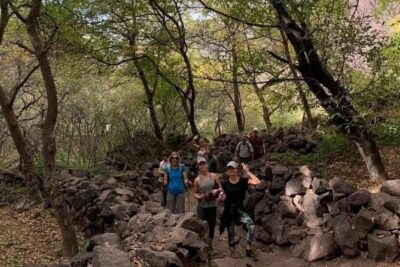
Berber villages : Atlas Mountains Day Hike from Marrakech
Read our review →
Balloon Flight, Berber Breakfast & Certificate
Read our review →
Majorelle Garden, YSL, and Berber Museum Entry
Read our review →
Hot Air Balloon Flight with Berber Breakfast
Read our review →
Atlas Mountains, Berber Villages and Three Valleys all inclusive
Read our review →
Atlas Mountains Hot Air Balloon Ride from Marrakech with Berber Breakfast and Desert Camel Experience
Read our review →
Atlas Mountains, Berber Villages, Agafay & Camel Ride
Read our review →
Balloon Flight, Berber Breakfast, and Camel Ride
Read our review →Browse the lists this tour appears in