
Reviewed · MEDINA & SOUK WALKS
Fes: Royal Palace, Madrasa, Tannery & Souks and Medina Tour
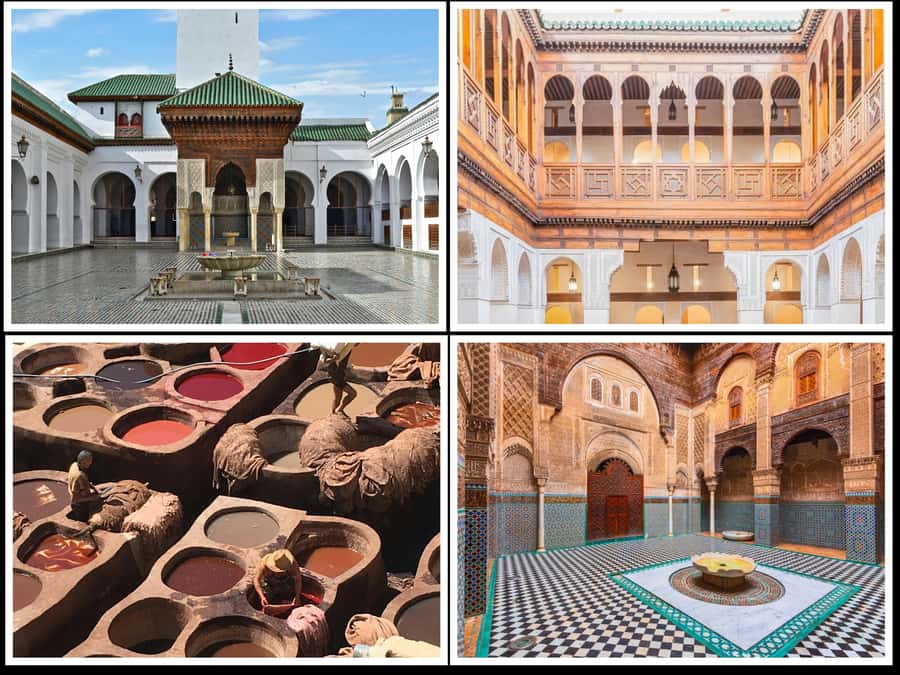
Fes is easiest to understand from inside its old Medina, where a guide can lead you through narrow lanes to a tannery, bakery, rug workshop, metalworker, and centuries-old school. This four-hour tour also begins at the Royal Palace gates, giving you a useful first look at the city’s grand royal side before the streets tighten and the craft shops take over.
I like the way the route mixes major sights with ordinary working life. I also like the value: at $15, you get a local guide, free time, and help finding places that are genuinely difficult to locate alone. The catch is that shopping is part of the route, and some sales stops can feel pushy, especially at the leather workshop.
In This Review
- Key points at a glance
- Why a guide matters in Fes Medina
- The Royal Palace gates and the short transfer
- The Mellah, Fes’s Jewish Quarter
- Bou Inania and Al Attarine Madrasa
- Qarawiyyin Mosque and University from outside
- Chouara Tannery: memorable, smelly, and commercial
- Artisan workshops beyond the main sights
- Walking the Medina and reaching Bab Boujloud
- Pace, group size, and guide quality
- Is $15 good value?
- Who should book this Fes walk?
- Should you book it?
- FAQ
- How long does the Fes tour last?
- Where is the meeting point?
- Is the Royal Palace open during the tour?
- Are the monument entrance fees included?
- What languages are available?
- Is the tour suitable for wheelchair users?
Key points at a glance
- The Royal Palace gates provide a striking opening photo stop, though the palace itself is not open to the public on this tour.
- The Mellah and Qarawiyyin add social and intellectual context beyond the usual souk walk.
- Chouara Tannery is memorable, practical, and very smelly. Mint is provided to help with the odor.
- Local guides make the Medina manageable, especially around the tannery and its maze of side streets.
- Artisan workshops may include leather, rugs, pottery, fabric, wood, copper, silk, and argan oil.
- The $15 price is excellent, but bring Moroccan dirhams for monument admission and keep control of your shopping time.
Why a guide matters in Fes Medina
Fes Medina is not simply a market with a few monuments scattered through it. It is a tightly packed web of lanes where directions can be hard to follow and important workshops may sit behind an unmarked doorway. The tour’s main practical benefit is having someone lead you through that maze while explaining what you are seeing.
Guides assigned to this experience have included Abdul, Abdoul, Khaled, Hassan, Youssef, Mundir, and others. The style can vary from one guide to another, but the strongest guides are local, friendly, and flexible. Several have adjusted the pace, answered questions about Moroccan life, helped with food and water, or shown an extra craft stop after the formal route.
That local help matters most when you want more than photographs. A good guide can explain how the Medina is arranged, point out where different crafts are made, and help you understand the difference between a working artisan space and a shop set up mainly for sales.
The tour begins in front of Riad Palais de Fès Suites & Spa. You receive the guide’s name and meeting details by WhatsApp the day before, which is useful in a city where finding the correct entrance can take time. Allow for a possible five to ten minute delay if someone in the group is late.
More Medina Walks in Fez
- Fez Medina Guided Tour
★ 4.6 · 2,079 reviews - Fes: Museum, Al Attarine Madrasa & Tannery and Medina Tour
★ 4.6 · 1,655 reviews - Explore Fes: Unforgettable Guided Walking Tour of the Medina
★ 4.7 · 1,339 reviews
The Royal Palace gates and the short transfer
The first stop is the Royal Palace of Fez, usually reached from the meeting point as part of the opening section of the route. You see the palace from outside only. The main attraction is the grand set of golden gates, framed by detailed tilework and carefully arranged geometric decoration.
This is a photo stop rather than a palace visit, so set your expectations correctly. You will not walk through the royal compound or see its interiors. Still, the gates make a strong introduction to Fes because they show the formal, polished side of the city before you move into the crowded lanes of the old quarter.
One practical detail is that the tour is described as a walking tour, but one account of the route included a short drive to the palace. The exact order and transport between sections may depend on the guide and meeting arrangements. Ask at the start if you want to know how much of the opening section will be on foot.
The Mellah, Fes’s Jewish Quarter
From the palace area, the tour continues through the Mellah, the historic Jewish Quarter. The stop is brief, around ten minutes in the stated schedule, but it adds an important layer to Fes that can be missed on a standard market walk.
Your guide can explain the quarter’s cultural role and its place in the city’s past. Look closely at the architecture as you walk. The Mellah gives the tour a different feel from the religious schools and commercial lanes later in the day, and it helps you see Fes as a city shaped by several communities.
Because this is a short stop, do not expect a long museum visit or an extensive architectural tour. Its value is in the explanation and the change of setting. If this subject interests you, ask your guide to spend a little more time on it, since the tour is described as flexible.
Bou Inania and Al Attarine Madrasa
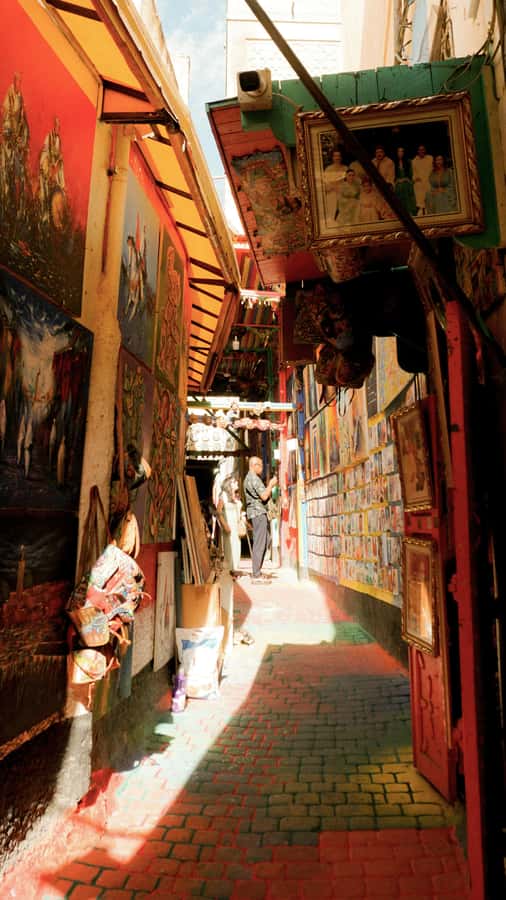
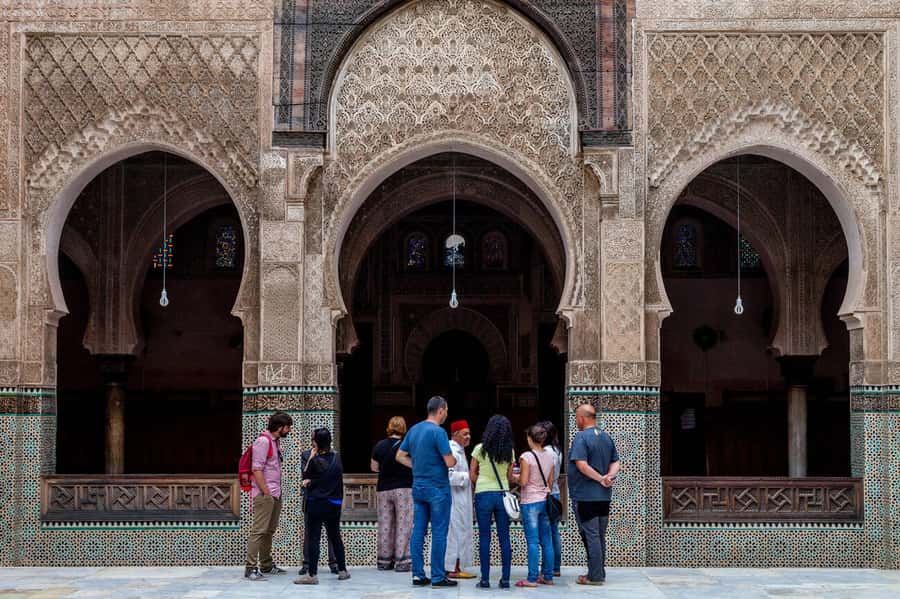
The madrasas are among the finest stops for visitors interested in Moroccan design. Bou Inania Madrasa is included as a visit, while Al Attarine Madrasa is also on the route. These religious schools are known for the details that reward a slow look: carved plaster, tilework, wood, and repeated geometric patterns.
Bou Inania is the one with a clearly stated admission charge of 20 Moroccan dirhams for adults. That fee is not included, so carry local currency. The tour includes skip-the-line entry to the monuments where that arrangement applies, but it does not mean every admission is covered in the price.
Al Attarine is especially useful as a counterpoint to the palace gates. The palace shows public royal decoration on a large scale, while the madrasa brings the detail closer to eye level. Your guide’s explanation can help you notice the structure and decorative choices instead of seeing the building as just another pretty doorway.
The schedule gives Bou Inania about 15 minutes and does not specify a duration for Al Attarine. That is enough for an introduction, but not for a quiet architectural study. If you want time for close photographs, say so early. The guide may be able to adjust the pace, though the Medina, tannery, and final walk still need to fit into four hours.
A different kind of day out, same corner of Morocco:
- Chefchaouen Day Trip from Fez (Shared Group Tour)
★ 4.6 · 2,394 reviews - Fes: Volubilis Roman Ruins, Mouly Idriss, & Meknes Day Trip
★ 4.6 · 2,375 reviews - Blue City magic: Affordable Day Trip from Fez to Chefchaouen
★ 4.6 · 1,960 reviews - From Fez: Sahara Desert 2-Day Tour with Merzouga Camp Stay
★ 4.8 · 1,716 reviews
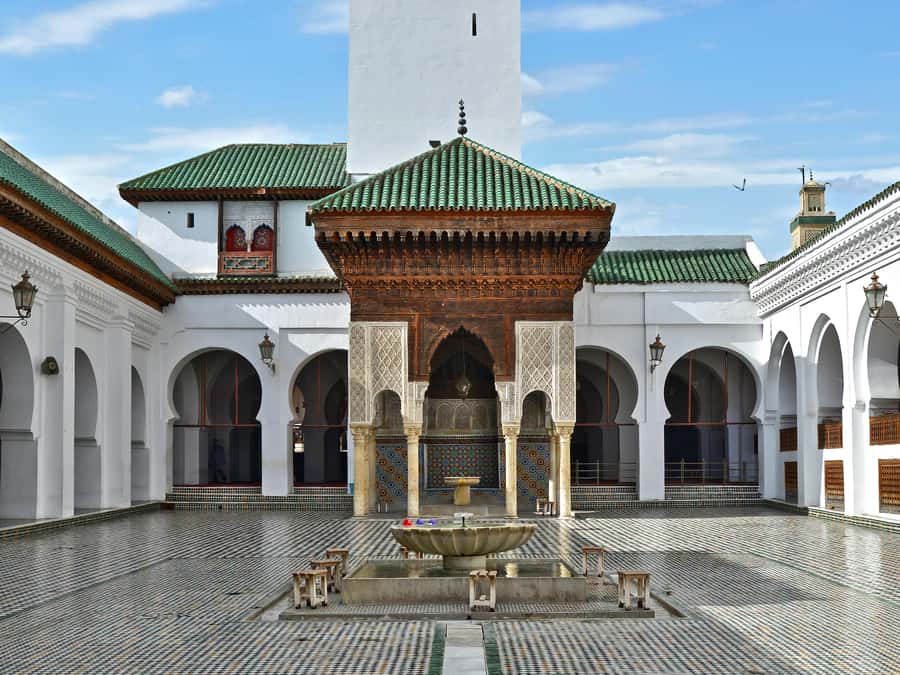
Qarawiyyin Mosque and University from outside
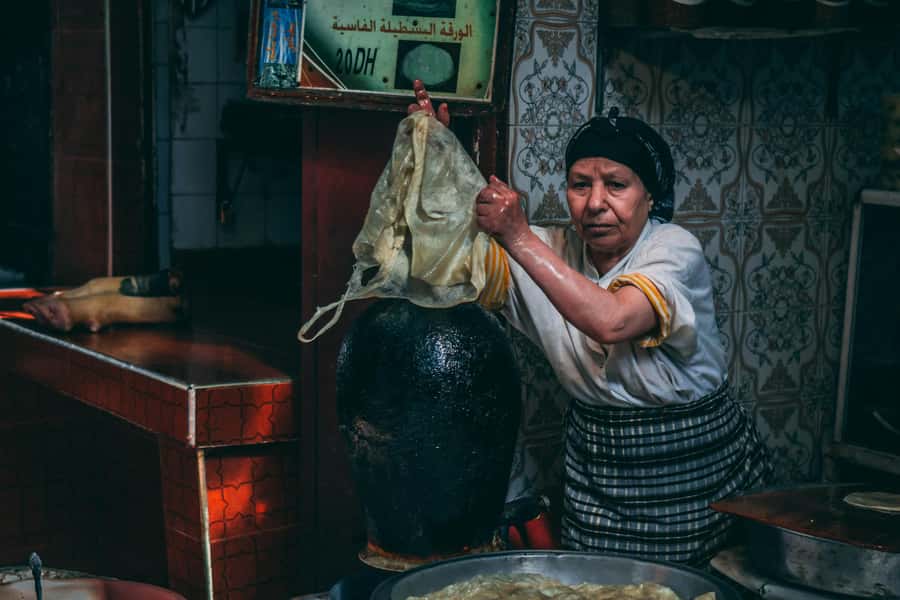
The route then reaches Al-Qarawiyyin Mosque and University, described as one of the oldest centers of learning in the Islamic world. The mosque and university are viewed from outside only on this experience, as is the Qarawiyyin Library.
That limitation is important. You are not signing up for an interior religious or library tour. The stop works best when your guide explains the institution’s place in Fes and points out what you can see from the surrounding lanes.
The scheduled stop is about 20 minutes. It offers a pause from shopping and a chance to connect the city’s educational life with its religious architecture. Dress respectfully and follow your guide’s instructions around the mosque area.
Chouara Tannery: memorable, smelly, and commercial
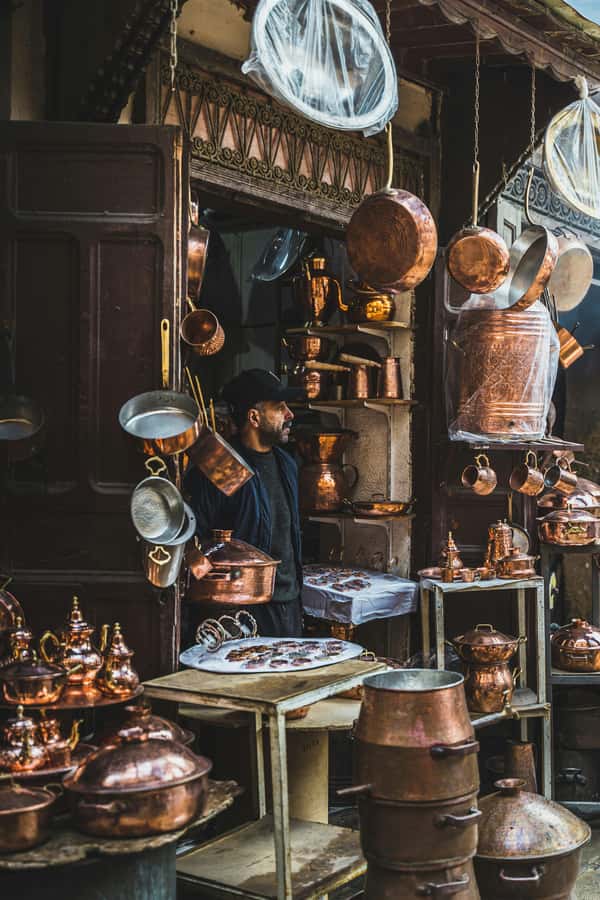
Chouara Tannery is one of the tour’s most distinctive stops. From an upper viewing area, you can look down over the working vats and see leather being processed using traditional methods. The sight is striking because the work remains visible as part of daily craft production rather than being presented only as a museum display.
The smell is strong. The experience provides mint to hold near your nose, and you should take that offer seriously. The tannery stop is listed at about 15 minutes, though shopping afterward can make the visit feel longer.
This is also where you need to manage expectations about sales. The viewing area often connects to a leather shop, and the commercial part can be more forceful than the cultural part. You may see bags, slippers, belts, jackets, and other goods, but you do not have to buy anything. A polite but firm no thank you is enough.
I would treat the tannery as a chance to see a working craft process, not as an obligation to purchase leather. If the sales pitch becomes uncomfortable, tell your guide. Several guides on this route are praised for keeping shopping optional, but the experience can differ by stop and by salesperson.
Artisan workshops beyond the main sights
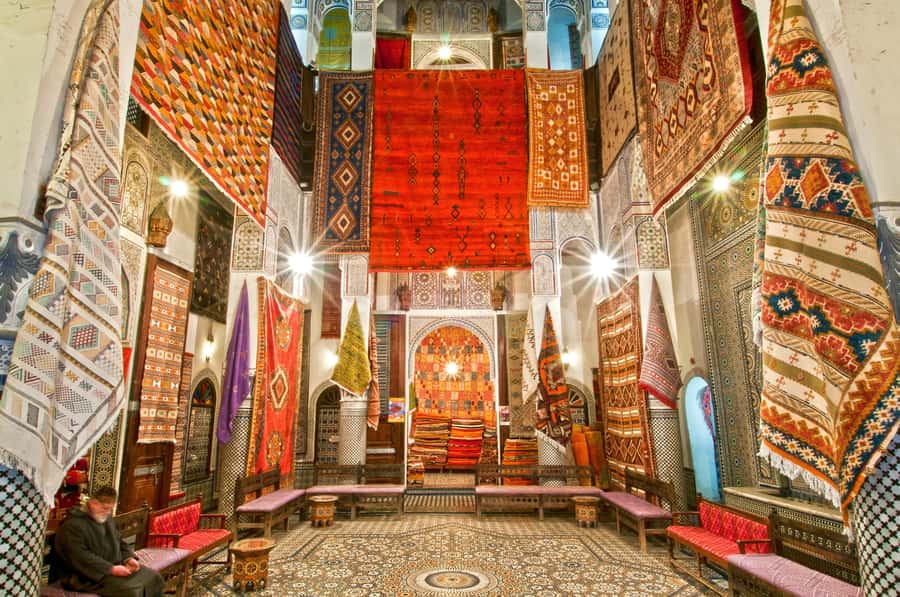
The most enjoyable part of the tour may be the craft quarter between the formal monuments. The route can include woodwork, metalwork, leather, ceramics, fabric, rugs, silk, and argan oil. You might see people shaping, weaving, painting, or finishing goods by hand, depending on which workshops are open and where the guide takes you.
These stops give you something a self-guided walk often lacks: an explanation of how an object is made. Watching rugs being produced or seeing pottery work in person can make the Medina feel like a living workplace rather than a collection of souvenir shops.
One particularly useful feature is the chance to ask direct questions. You can ask how long an item takes to make, which materials are used, or how to tell handmade work from mass-produced goods. You may also learn where to shop later if you decide to buy.
Some guides add small local encounters along the way. The route has included a mint tea visit, a bakery stop with warm bread, and extra pottery or fabric visits. These additions are not guaranteed, so consider them pleasant possibilities rather than fixed promises.
Shopping remains part of the route. Go in with a plan. Decide before you enter a workshop whether you are browsing or buying, and agree with your group how much time you want to spend. The tour is good at showing you crafts, but it is not a no-shopping cultural walk.
Walking the Medina and reaching Bab Boujloud
The tour’s central section takes you through the Medina of Fes, with around 40 minutes listed for exploring and shopping. In practice, this is where the route feels most local and least predictable. You move through narrow passages, market streets, and artisan lanes while your guide keeps the group together.
Wear comfortable shoes. The walking is not described as especially difficult, but four hours on foot, with uneven surfaces and frequent stops, can tire you. One practical way to enjoy the route is to save serious shopping for the end. That keeps your hands free and lets you focus on the buildings and workshops.
The final major point is Bab Boujloud, the famous blue gate. The itinerary gives this section up to an hour, making it one of the longer parts of the tour. It is a natural place to finish because it is easier to recognize than the inner Medina and useful for getting your bearings afterward.
Your guide can also help you return toward the starting point or arrange a taxi after the tour. The stated route returns to Palais de Fès Suites & Spa, but hotel pickup and drop-off are not included unless you book the private option. Do not assume the guide will collect you from your hotel.
Pace, group size, and guide quality
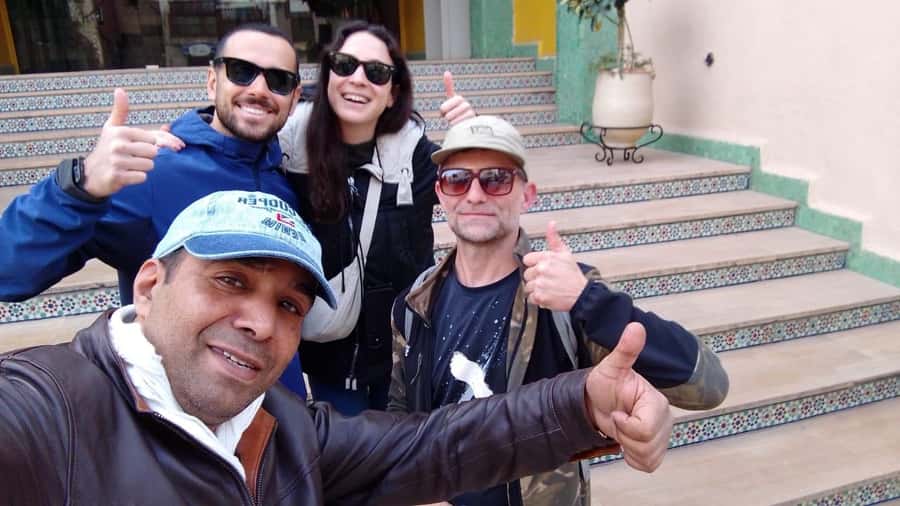
The standard tour lasts four hours and offers live guiding in Arabic, French, English, or Italian. A private group option is available. Group size is not fixed in the information provided, but some departures have been very small, even only three people, which can make the walk feel almost private.
The best guides bring humor as well as facts. Abdul, often identified by the nickname Abdul Cous Cous, is praised for adjusting the route and helping people with practical questions. Abdoul is noted for clear English, steady navigation, and making sure people had water and food. Khaled is described as someone raised in Fes who knows the old Medina closely, while Youssef is praised for meeting people at the train station and adding local contacts to the walk.
Those names are not a guarantee of who you will receive. The guide is assigned rather than selected in advance, so think of them as examples of the range of guiding styles available. Send a message if a particular language or special interest matters to you.
The pace is generally relaxed, but the route covers a lot. One account found parts of it rushed, especially when moving past several sights. If you want extended time inside a madrasa or a long photography stop, tell the guide early instead of waiting until the last hour.
Is $15 good value?
At $15 per person, this is unusually inexpensive for a four-hour guided introduction to Fes. You are paying mainly for local orientation, historical explanation, monument access arrangements, and the time saved by not searching for the tannery and craft quarters yourself.
The price is strongest for a first visit. You can see the city’s major talking points, learn how the Medina works, and get suggestions for places to return to on your own. It also makes sense if you have only half a day in Fes.
Budget separately for admission to Bou Inania, listed at 20 MAD for adults, and carry Moroccan currency. Shopping, food, drinks, and hotel transport are not included. The tour may include small local tastings or tea depending on the guide, but do not book it expecting a full meal.
The real cost can be time rather than money if you are not interested in buying. Sales stops are a normal part of the route, and one leather stop has been described as uncomfortable when the group declined expensive purchases. You can still make the tour good value by treating the workshops as demonstrations and setting clear boundaries.
Who should book this Fes walk?
I would choose this tour if you are visiting Fes for the first time, want help navigating the Medina, and prefer a broad introduction over a single-site museum visit. It suits people who enjoy craft, architecture, local stories, and a fair amount of walking.
It is also a good fit for families with older children who can manage four hours on foot. The bakery, rugs, pottery, and tannery offer more variety than a lecture-heavy historical walk. Ask the guide for breaks if your group needs them.
You may want another option if you require step-free access, since the experience is not suitable for wheelchair users. It may also disappoint if you want to enter the Royal Palace or Qarawiyyin, because both are external visits only.
Free cancellation is available up to 24 hours before the tour, and reserve-now-pay-later booking is offered. Those policies help if your Fes schedule is still shifting, but the practical details still matter: confirm the meeting point, bring local cash, wear good shoes, and watch your belongings in crowded lanes.
Should you book it?
Yes, if you want a low-cost way to get oriented in Fes and you accept that the tour includes workshops and shopping. The strongest reason to book is not just the list of monuments. It is the guide’s ability to connect the palace, Mellah, madrasas, tannery, and working craft lanes into one understandable walk.
Book with realistic expectations. You will see the Royal Palace and Qarawiyyin from outside, pay separately for at least the Bou Inania admission, and may encounter persistent sellers. If you are comfortable saying no, this is a very good first-day tour. Afterward, you will know which Medina lanes deserve a second, slower visit.
FAQ
How long does the Fes tour last?
The guided tour lasts four hours, including the Royal Palace area, Mellah, madrasas, Qarawiyyin, Chouara Tannery, the Medina, and Bab Boujloud.
Where is the meeting point?
Meet the guide in front of Riad Palais de Fès Suites & Spa. The guide’s name and meeting arrangements are sent by WhatsApp the day before the tour.
Is the Royal Palace open during the tour?
No. The Royal Palace is an external visit only, focused on the ornate golden gates and outside architecture.
Are the monument entrance fees included?
No. Adult admission to Bou Inania Madrasa is listed as 20 MAD and is paid separately. Carry entrance money in Moroccan currency.
What languages are available?
Live guides are available in Arabic, French, English, and Italian. A private group option is also available.
Is the tour suitable for wheelchair users?
No. The experience is listed as not suitable for wheelchair users. Comfortable shoes are recommended because the tour involves several hours of walking.
Recently reviewed around Fez
- day trip from fez to middle atlas mountain★ 5.0 · 17 reviews
- Discover the city of Fes on foot with the best guides★ 5.0 · 27 reviews
- VIP TOUR OF FES- Medina by local guide & Rempart by car-FULL Day★ 5.0 · 74 reviews
- Private Fes Medina Walking Tour★ 5.0 · 25 reviews
- Fes to Chefchaouen Day Trip★ 5.0 · 20 reviews
- fes medina guided tour★ 4.5 · 60 reviews
- Fes to Middle Atlas Private Day Trip★ 5.0 · 48 reviews
- Fes to Volubilis, Moulay Idriss and Meknes Private Day Trip★ 4.5 · 26 reviews
Medina & Souk Walks, compared.
Bahia Palace, Saadian Tombs, Souk and Medina Tour
Read our review →
Saadian Tombs & Bahia Palace, Medina Guided Tour
Read our review →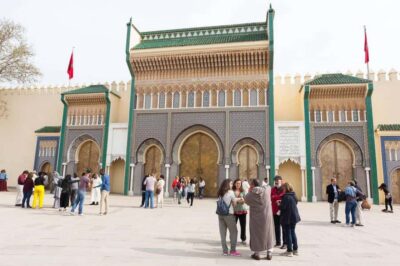
Museum, Al Attarine Madrasa & Tannery and Medina Tour
Read our review →
Bahia Palace, Madrasa Ben Youssef and Medina Tour
Read our review →
Explore Fes: Unforgettable Guided Walking Tour of the Medina
Read our review →
Madrassa Ben Youssef, Secret Garden & Medina Tour
Read our review →Browse the lists this tour appears in