
Reviewed · MEDINA & SOUK WALKS
Fes: Attarine Madrasa, Museum, Tannery, Souk and Medina Tour
Fes is easiest to understand from inside its maze of lanes, where a wrong turn can lead to a tannery terrace, a spice stall, or a centuries-old workshop. This tour packs the city’s major sights into a three-and-a-half to four-hour walk, beginning at Bab Boujloud and ending near Hotel Batha.
I like two things here. First, the tour gives you a useful mix of grand monuments and working craft districts, rather than only a parade of photo stops. Second, the guides, including Houssine, Mouanis, Youssef Elbargui, Amin, Jamal and others, are praised for clear explanations, local stories, patience, and skill at finding the way through the medina. The main consideration is the walking: narrow lanes, uneven ground, crowds, and frequent stops make this a poor fit for anyone with serious mobility limits.
In This Review
- Key points at a glance
- Why a guided walk makes sense in Fes
- Bab Boujloud and the first steps into the medina
- Attarine Madrasa and Marinid design
- Al-Karaouine and the scholarly heart of Fes
- Chouara Tannery from the terrace
- Nejjarine Fondouk and wooden craftsmanship
- Souk Sabaghine, Souk El Attarine, and Hammam Seffarine
- Pottery, zellige, and the detail behind Moroccan decoration
- Timing, walking effort, and the end point
- What the $12 price really buys
- Who should book this Fes tour?
- Should you book it?
- FAQ
- Where does the Fes Medina tour begin?
- How long does the tour last?
- Which languages are available?
- Are monument entrance fees included?
- Does the tour visit inside Al-Karaouine Mosque?
- Is transportation included?
Key points at a glance
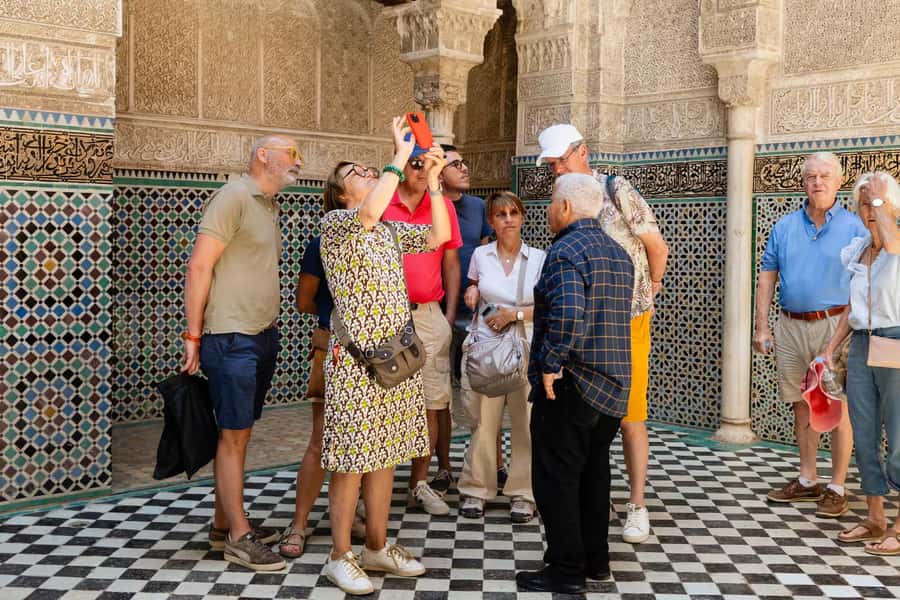
- Attarine Madrasa: See Marinid tilework, carved cedar, marble columns, and a former Quranic school dating from the early 14th century.
- Chouara Tannery: Look down on the famous dyeing pits from a terrace and watch traditional leather work continue by hand.
- Fes Medina: Follow a guide through the world’s oldest medieval living city, where the route itself is part of the experience.
- Craft traditions: Visit the Nejjarine Museum, textile and spice souks, copper workshops, pottery makers, and zellige tile workers.
- Strong guide service: The most praised feature is the clear, friendly guiding, especially for first-time visitors trying to make sense of the medina.
- Low headline price: At $12 per person, the tour is a strong value, though the two main museum and madrasa tickets cost extra.
Why a guided walk makes sense in Fes
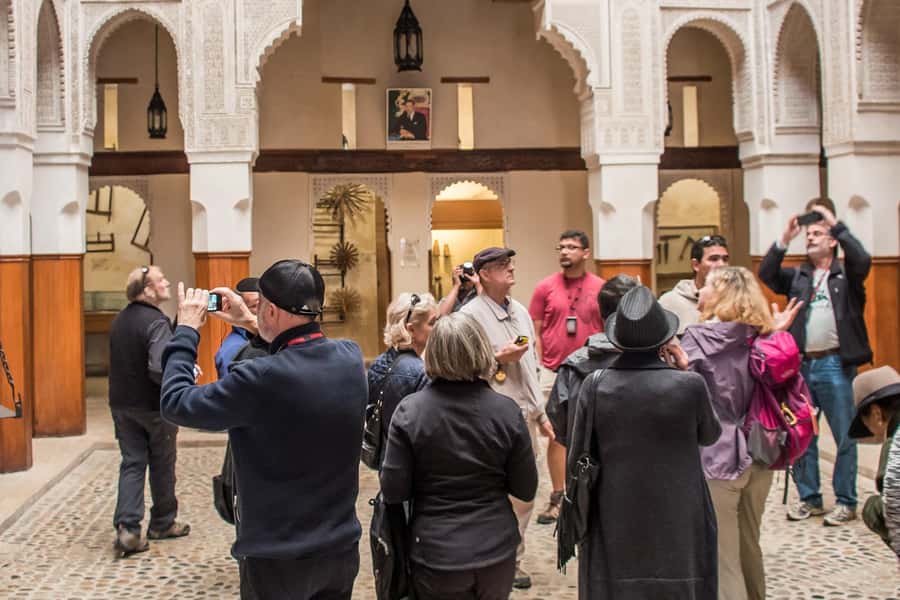
Fes Medina is not a museum district arranged for easy sightseeing. It is a living old city, with homes, shops, workshops, shrines, food stalls, and narrow passageways packed into a historic maze. You can certainly walk in alone, but a guide gives the streets a storyline and keeps the day from becoming a hunt for landmarks.
The tour starts at Bab Boujloud, the famous Blue Gate. It is a natural meeting point and a useful place to get your bearings before entering the old city. Depending on the option you choose, you may be collected from your riad inside the medina. If you stay outside the old city, meet the guide in front of Hotel Batha on Avenue de la Liberté.
The route is offered as a private or small-group walk. That matters in Fes. A large group can clog a lane and make it harder to hear, while a smaller group can pause for photos without blocking the flow of people, carts, and local traffic. One particularly useful feature is the guide’s ability to point out side lanes and less obvious corners instead of keeping only to the main shopping streets.
The strongest part of the experience is the human guide. The names vary by departure, but Houssine, Mouanis, Youssef Elbargui, Amin, Jamal, Rachid, Reda, and others have received warm praise for their history, humor, language skills, and patience. Guides speak English or French, and some have also assisted visitors in Italian.
More Medina Walks in Fez
- Fez Medina Guided Tour
★ 4.6 · 2,079 reviews - Fes: Museum, Al Attarine Madrasa & Tannery and Medina Tour
★ 4.6 · 1,655 reviews - Explore Fes: Unforgettable Guided Walking Tour of the Medina
★ 4.7 · 1,339 reviews
Bab Boujloud and the first steps into the medina
Bab Boujloud is more than a pretty entrance. It marks the shift from modern Fes into the old city, and its blue and green decoration gives you an immediate visual sense of the city’s style. The stop is short, about ten minutes, but it helps you meet the guide, gather the group, and begin with the broad story of Fes.
From there, expect a walking route through lanes that quickly become narrower and busier. Your guide explains how the medina works, points out important buildings, and helps you read the city’s layout. The value is not only avoiding a wrong turn. It is learning what you are looking at when a doorway, fountain, market, or workshop would otherwise pass in a blur.
The medina has a working rhythm. Donkeys, handcarts, shopkeepers, residents, and shoppers all share the same tight streets. Comfortable shoes are essential, and you should carry water, sunglasses, a sun hat, and some cash. Keep your belongings close and leave room for the people who live and work here.
Attarine Madrasa and Marinid design
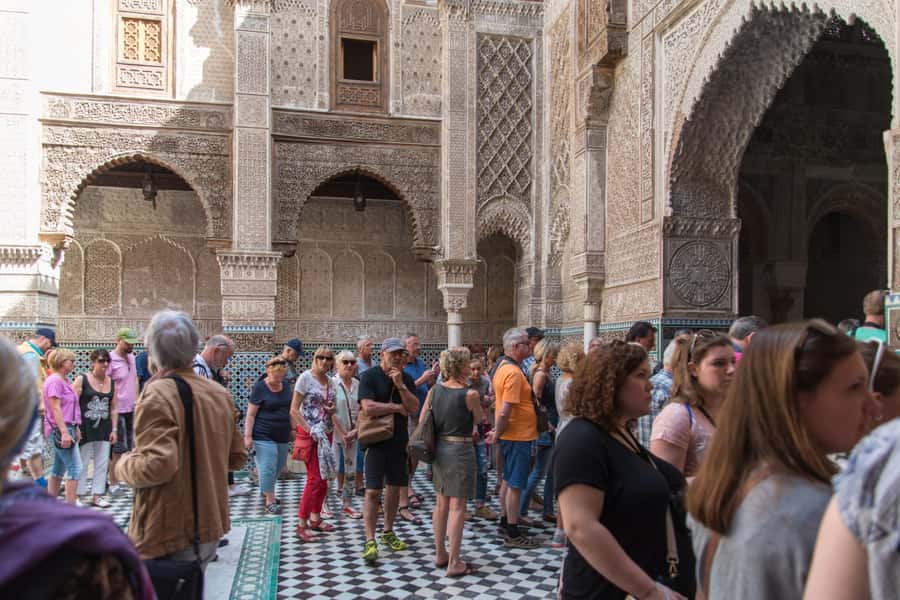
The Al Attarine Madrasa is the tour’s first major interior monument and one of its finest. Built in the early 14th century under Sultan Abu Sa’id of the Marinid dynasty, it once served as a Quranic school and remains one of the clearest places to see the precision of Fes craftsmanship.
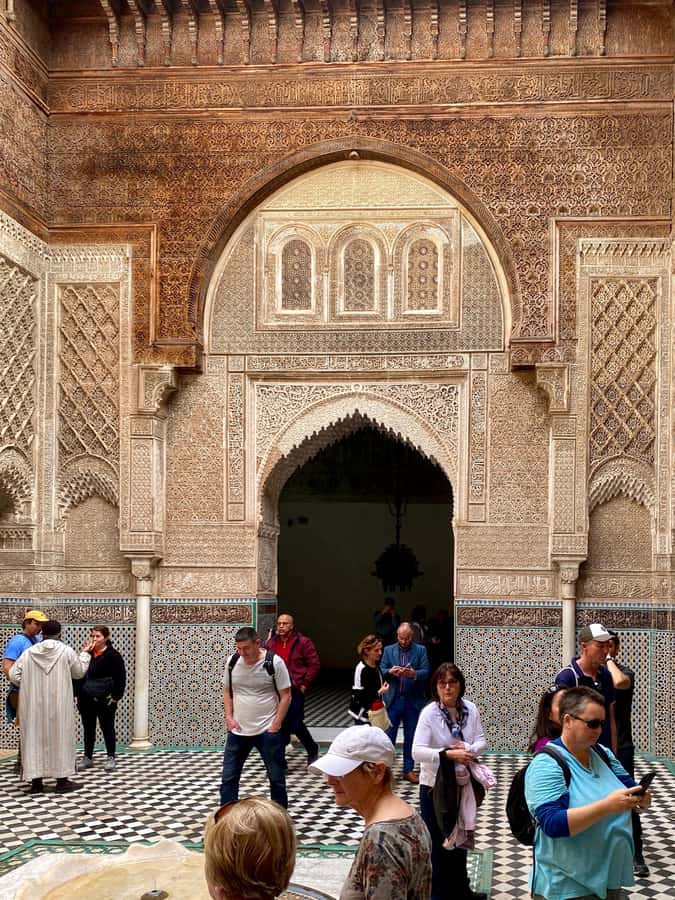
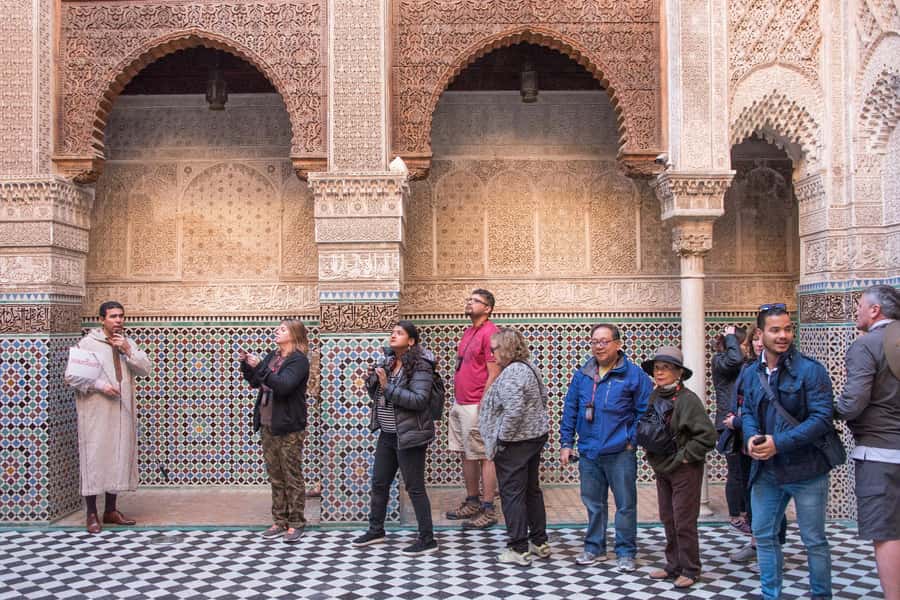
Allow about 35 minutes here. The courtyard brings together the details you came to Morocco to see: zellige tile patterns, carved cedarwood, marble columns, and carefully balanced decoration. Look upward, then closer. The building rewards both the wide view and the slow inspection of individual pieces.
Your guide adds useful context about the madrasa’s religious and educational role. Without that explanation, it is easy to treat the building as a beautiful shell. With it, you get a better sense of how architecture, study, faith, and royal patronage met in Marinid Fes.
Admission is not included. The stated cost is 20 MAD per adult. The tour includes skip-the-line access to selected monuments, but you should still carry cash for this fee. If you are watching every dirham, factor in both this ticket and the Nejjarine Museum admission before judging the $12 price.
Al-Karaouine and the scholarly heart of Fes
The route continues to the Mosque and University of Al-Karaouine, founded in 859 by Fatima al-Fihri. It is recognized as one of the world’s oldest universities and remains central to Fes’s religious and scholarly identity.
The visit is primarily an exterior look. You can see the green tiled roofs and monumental doors, while the guide explains the institution’s place in the city. This is an important distinction for anyone expecting a full interior visit. Non-Muslim visitors should plan on appreciating the complex from outside rather than entering the mosque prayer space.
The stop lasts about 30 minutes, including walking, viewing, and explanation. It gives the tour a useful change of pace after the decorative madrasa. Attarine shows you the beauty of a school courtyard. Al-Karaouine shows you the continuing importance of a major religious and learning center.
More Fez trips worth a second look
- Marrakech: Majorelle Garden, YSL, and Berber Museum Entry
★ 4.6 · 5,168 reviews - Marrakech: Palace, Museum, Madrasa & Medina Highlights Tour
★ 4.7 · 706 reviews - Fes: Bou Inania Madrasa, Museum, Tannery, Souk & Medina Tour
★ 4.7 · 74 reviews - Marrakech: Majorelle Garden, Museums Tickets, & Audio Guide
★ 4.6 · 38 reviews
Chouara Tannery from the terrace
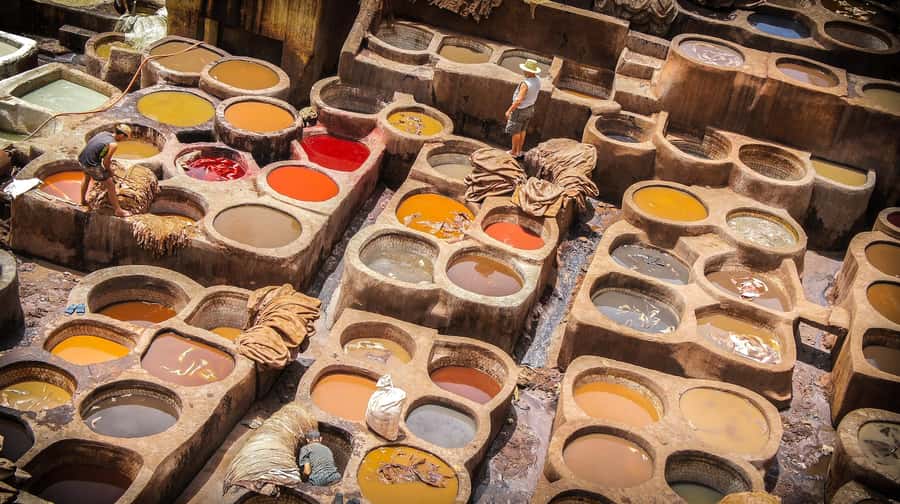
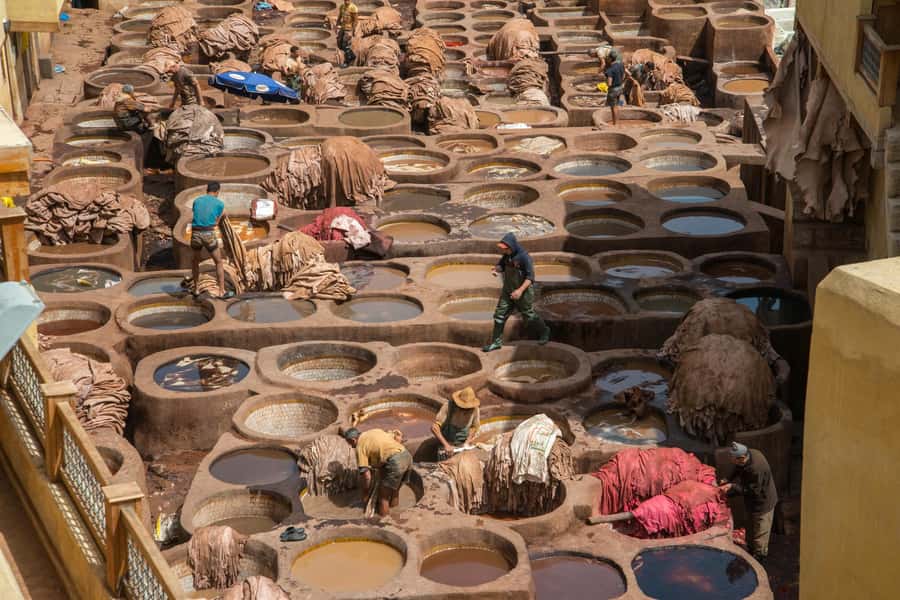
The Chouara Tannery is one of Fes’s most memorable sights, and also one of its most sensory. From a panoramic terrace, you look down at round dyeing pits where leather is treated and colored using traditional methods. Natural dyes named for the craft include saffron and indigo, and the work has continued through generations.
You will spend roughly 35 minutes at the tannery. The guide explains the process and helps you make sense of the workers, hides, pits, and surrounding shops. From above, the arrangement of the dyeing vats is striking. At ground level, the smells are stronger, so be prepared for a very direct encounter with the trade.
This stop usually includes access through a leather shop or terrace, and the wider tour includes several opportunities to shop. The available information indicates that saying no is respected, so you can look without buying. Still, if you dislike commercial stops, know that the tannery visit and craft shopping are closely connected.
If you do want leather goods, ask questions about the item, its material, and how it was made. The guide can help with local context and may point you toward particular shops. The point is not to rush through a display of bags and slippers. It is to see the production behind one of Morocco’s best-known crafts.
Nejjarine Fondouk and wooden craftsmanship
The Nejjarine Fondouk houses the Museum of Wooden Arts and Crafts in a restored caravanserai. A fondouk traditionally provided space for merchants, animals, storage, and trade, so the building itself is part of the attraction.
The stop takes about 20 minutes and includes time for photos, explanation, and browsing. Inside, you can see wood carving, marquetry, antique furniture, and other examples of Moroccan woodworking. The museum helps balance the tannery visit by showing a quieter, more precise side of local craft.
The admission charge is 20 MAD per adult and is not included. The fee is modest, but it is worth knowing in advance because the headline price does not cover monument tickets. If the museum is especially important to you, confirm that it is open and included in your selected departure arrangements.
Souk Sabaghine, Souk El Attarine, and Hammam Seffarine
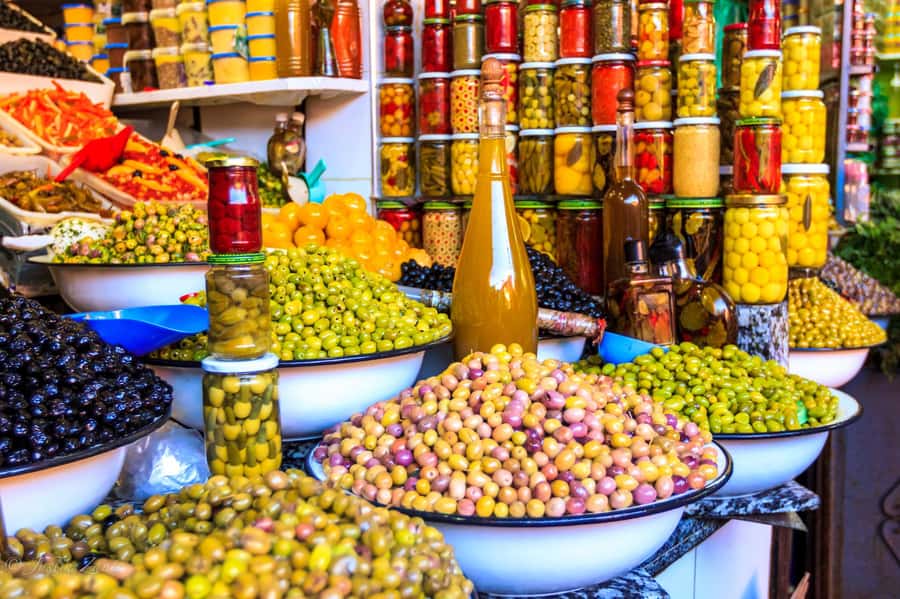
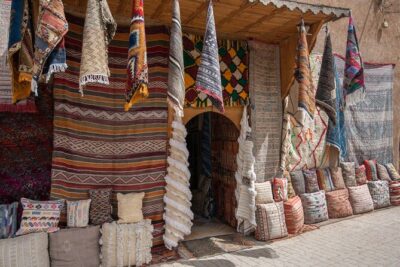
The souks are not a single market. They are a collection of streets and specialist areas, each with its own feel and products. Souk Sabaghine is associated with handwoven textiles and traditional fabrics. Souk El Attarine is filled with spices, perfumes, and herbal remedies.
This is where the tour becomes less about individual monuments and more about daily life. You can stop for photos, ask how a product is used, and watch the guide identify objects that might otherwise look alike. The route also brings you near Hammam Seffarine, where copper workers use rhythmic hammering to shape metal.
The sound of the copper workshops is part of the charm, but the lanes can be tight and noisy. Stay close to your guide and be ready to pause when local work takes priority. Fes is not a staged show. The craftspeople are working, and your group is passing through their workplace.
Shopping is built into this part of the walk, but you control your spending. Some guides are especially helpful if you want to buy textiles, spices, leather, or other goods. If you only want to look, be direct and polite. One useful quality noted about guides such as Houssine is that visitors did not feel forced to purchase items.
Pottery, zellige, and the detail behind Moroccan decoration
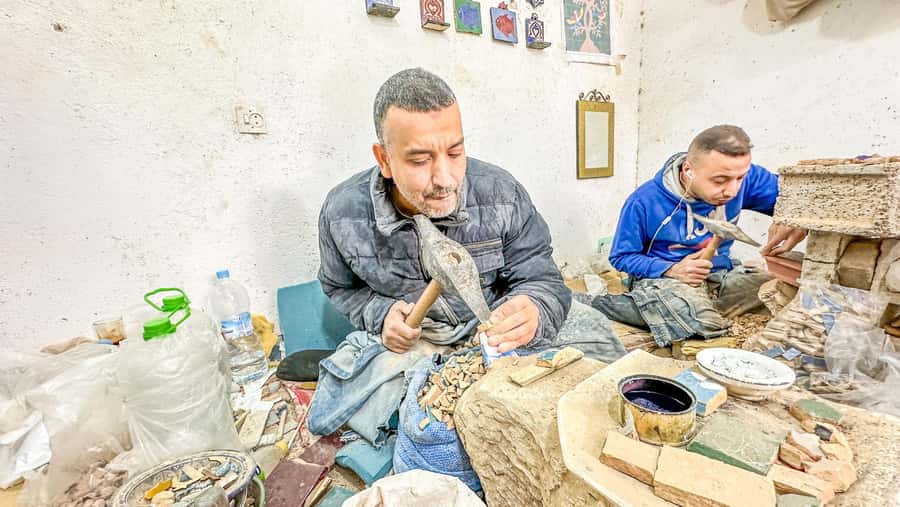
The final craft element is a pottery and zellige workshop. Here you can watch artisans shape clay, paint ceramics by hand, and cut small tiles for mosaic patterns. Zellige is not simply a printed surface. The designs are assembled from individually cut pieces, which helps explain the exactness seen in Fes’s courtyards, fountains, palaces, and mosques.
This stop gives you a practical way to understand the decoration seen earlier at Attarine Madrasa. Instead of viewing tilework as a flat pattern, you see the labor behind each small piece. Pottery also adds a different material and process to the day, after leather, wood, cloth, spice, and copper.
Workshops can include shopping, so use the same approach as at the tannery. Look carefully, ask about the craft, and buy only if you find something you genuinely want to carry home. The guide’s local advice can be useful, especially when you are comparing quality and price.
Timing, walking effort, and the end point
The advertised duration is 210 minutes to four hours. The itinerary adds up to a compact route with about 10 minutes at Bab Boujloud, 35 minutes at Attarine, 30 minutes at Al-Karaouine, 35 minutes at the tannery, 20 minutes at Nejjarine, and 45 minutes exploring the medina, plus walking between stops and a final return toward Bab Boujloud.
The exact pace depends on the group, photo breaks, questions, and shopping. Reviews describe both three-hour and four-hour experiences, so do not schedule a tight appointment immediately afterward.
The listed finishing point is Hotel Batha. One practical warning is important: at least one booking ended away from the starting point, leaving the participant to find a way back. Confirm the final drop-off point with your guide, especially if you expect to return to a hotel outside the medina.
This is an active walk. The tour information calls it wheelchair accessible, but it also says it is not suitable for people with mobility impairments. Those details do not sit comfortably together. The narrow alleys, uneven surfaces, stairs or tight interiors, and long period on foot mean you should discuss your needs with the provider before booking.
What the $12 price really buys
At $12 per person, this is unusually inexpensive for a guided four-hour introduction to Fes. The price includes a licensed local guide, a private or small-group format depending on your choice, free time at the monuments, local advice, and a WhatsApp reminder with the guide’s name and meeting point.
It does not include transportation, food, drinks, or the 20 MAD admission fees for Attarine Madrasa and Nejjarine Museum. Even after those charges, the cost remains low for the amount of ground covered.
The value is strongest if you are new to Fes and want a reliable orientation on your first day. A guide can save you time, explain the sites, and reduce the strain of finding your way through the medina. It is less ideal if you want a slow, unstructured shopping day or prefer to spend an hour at each monument.
Private groups are available. Pay extra for privacy only if you care about setting the pace, asking many questions, or accommodating family members. A small group may already provide the right balance of cost and flexibility.
Who should book this Fes tour?
I would recommend it to first-time visitors, solo travelers, couples, families, and anyone with only a short stay in Fes. The route covers the city’s major visual attractions while also showing working crafts and market streets. Families may appreciate guides such as Ami, who have been praised for cheerful explanations and a welcoming approach.
It also suits visitors who want history explained in plain language. Guides are described as engaging and able to discuss the city’s food, culture, infrastructure, and Jewish influence, not just dates and architectural labels.
You should think twice if you dislike walking, shopping stops, strong tannery smells, or crowded passageways. You should also avoid assuming that the exterior visit to Al-Karaouine means you will enter the mosque.
Cancellation is free up to 24 hours before the tour, and you can reserve now and pay later. Starting times vary, so check availability before planning your day.
Should you book it?
Book this tour if you want a low-cost, guided introduction to the main sights of Fes Medina and you value a guide who can explain what you are seeing while keeping you oriented. The mix of Attarine Madrasa, Al-Karaouine’s exterior, Chouara Tannery, Nejjarine Museum, souks, copper work, pottery, and zellige gives you a broad first look at the city.
The best reason to choose it is the guiding. Names and assignments vary, but the strongest pattern is clear: visitors praise patient, friendly guides who answer questions, adjust the pace, and move confidently through the old city. Just wear good shoes, bring cash for admission and purchases, and confirm the finishing point. For most first visits, the price makes this an easy choice.
FAQ
Where does the Fes Medina tour begin?
The standard meeting point is in front of Hotel Batha on Avenue de la Liberté in Fes. If your riad is inside the medina and you select the private pickup option, the guide can collect you from your accommodation’s reception.
How long does the tour last?
The tour lasts from 210 minutes to four hours, depending on the selected departure and the group’s pace.
Which languages are available?
Live guiding is available in English and French.
Are monument entrance fees included?
No. Entry to Al Attarine Madrasa costs 20 MAD per adult, and entry to the Nejjarine Museum of Wooden Arts and Crafts costs 20 MAD per adult.
Does the tour visit inside Al-Karaouine Mosque?
The experience includes an exterior visit to the Mosque and University of Al-Karaouine. You should not book it expecting a full interior visit.
Is transportation included?
No transportation is included. Pickup is available from a riad inside the medina for the private option. If your accommodation is outside the medina, meet the guide at Hotel Batha.
Recently reviewed around Fez
- day trip from fez to middle atlas mountain★ 5.0 · 17 reviews
- VIP TOUR OF FES- Medina by local guide & Rempart by car-FULL Day★ 5.0 · 74 reviews
- Discover the city of Fes on foot with the best guides★ 5.0 · 27 reviews
- Private Fes Medina Walking Tour★ 5.0 · 25 reviews
- Fes to Chefchaouen Day Trip★ 5.0 · 20 reviews
- fes medina guided tour★ 4.5 · 60 reviews
- Fes to Middle Atlas Private Day Trip★ 5.0 · 48 reviews
- Fes to Volubilis, Moulay Idriss and Meknes Private Day Trip★ 4.5 · 26 reviews
Medina & Souk Walks, compared.
Bahia Palace, Saadian Tombs, Souk and Medina Tour
Read our review →
Saadian Tombs & Bahia Palace, Medina Guided Tour
Read our review →
Museum, Al Attarine Madrasa & Tannery and Medina Tour
Read our review →
Bahia Palace, Madrasa Ben Youssef and Medina Tour
Read our review →
Explore Fes: Unforgettable Guided Walking Tour of the Medina
Read our review →
Madrassa Ben Youssef, Secret Garden & Medina Tour
Read our review →Browse the lists this tour appears in