
Reviewed · BERBER VILLAGE TOURS
3-Day Desert Tour to Fez: Ouarzazate and Berber Village from Marrakech
The best part of this three-day crossing from Marrakech to Fez is the sheer change of scenery. You go from High Atlas farm country to mud-brick kasbahs, rose fields, palm oases, red desert dunes, cedar forests, and Berber towns without having to arrange a string of separate transfers.
I like the mix of major sights and smaller stops, especially the walk beside the Todgha River and the visit to a rose cooperative in Kelaa Mgouna. I also like that the tour ends in Fez rather than returning to Marrakech, saving you a long backtrack.
The main drawback is the pace. Three days is short for this much ground, and several days involve long hours in a shared minibus. Lunches, drinks, and some local guides cost extra, so the $230.30 price is not the full trip budget.
In This Review
- Key points to know before booking
- From Marrakech over the Tizi-n-Tichka Pass
- Ouarzazate, Skoura, and the Valley of Roses
- Your first night near the Dadès Valley
- Day 2: the Road of 1,000 Kasbahs
- Todgha Gorge and the road to Merzouga
- Camelback to the Erg Chebbi camp
- Sunrise, the Ziz Valley, and the Middle Atlas
- Vehicles, group size, and the long hours
- What the $230.30 price really covers
- Who should book this desert crossing?
- Should you book the Marrakech to Fez desert tour?
- FAQ
- How long does the tour last?
- Where does the tour start?
- Where does the tour end?
- Is the camel ride included?
- What accommodation is included?
- Are meals included?
- Do I need to bring a sleeping bag?
- How large is the group?
Key points to know before booking
- Camel ride into Erg Chebbi: Reach the Sahara camp by camel and watch the sunset over the dunes.
- Aït Benhaddou with a guide: Walk through the famous fortified village near Ouarzazate, a UNESCO-listed site used for films and photo shoots.
- Valley of Roses and Skoura oasis: See rose farming, palm groves, olive trees, and Kasbah Amridil.
- One-hour Todgha River walk: Visit Berber villages and see how water supports palms and olive trees in the Tinghir oasis.
- Marrakech to Fez route: Cross the Ziz Valley, Midelt, and the Middle Atlas cedar forests instead of retracing your route.
- Small group potential: The maximum is 15 people, while the Fez-bound replacement van on the final day holds no more than six.
From Marrakech over the Tizi-n-Tichka Pass
Your pickup begins around 7 a.m. at your Marrakech hotel or at a nearby point if the minibus cannot reach your riad. That early start matters because Day 1 packs in the High Atlas, Aït Benhaddou, Ouarzazate, Skoura, and the Valley of Roses.
The road climbs through the Tizi-n-Tichka Pass, where Berber farmers still work mountain plots. You will want a seat with a view, but the group vehicle and winding road mean comfort can vary. Bring water, a light layer, and something small to eat even though lunch is planned later.
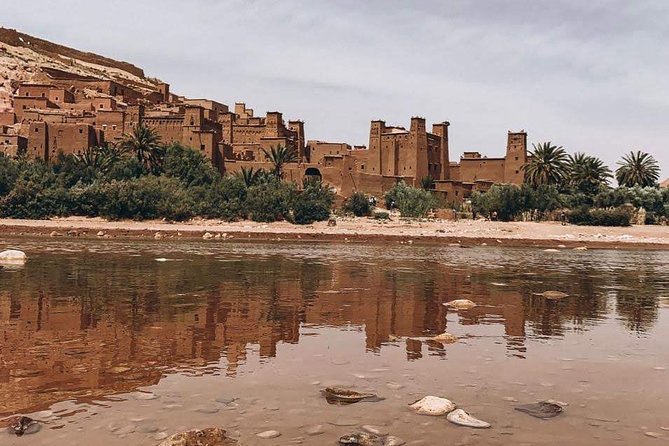
The first major stop is Aït Benhaddou, a fortified village built from earthen materials. A guide leads you through its lanes and explains the construction and the films and photo shoots connected with the site.
This is a valuable guided visit because the architecture can look like a beautiful wall of clay from a distance. Inside, the lanes, towers, and clustered buildings make more sense when someone points out how the settlement was built and used. Wear shoes with a firm sole, since the walking portion is more important here than the vehicle stop suggests.
Lunch at Aït Benhaddou is not included. That gives you some choice, but it also means you should keep extra Moroccan dirhams available for meals, drinks, and snacks throughout the tour.
More Marrakech trips worth a second look
- From Marrakech: 3-Day Merzouga and Sahara Desert Tour
★ 4.9 · 15,308 reviews - From Marrakech: Merzouga 3-Day Desert Safari with Food
★ 4.7 · 12,232 reviews - 3 Days Desert Tour From Marrakech To Merzouga Dunes & Camel Trek
★ 5.0 · 10,125 reviews
Ouarzazate, Skoura, and the Valley of Roses
After Aït Benhaddou, the route reaches Ouarzazate, often called the Gate of the Sahara. The town works mainly as a transition point, shifting the mood from mountain roads to dry valleys and desert-edge settlements.
You then pass through the Skoura oasis, where palms and olive groves provide welcome shade. The contrast is striking: a green agricultural belt runs through an otherwise dry region, showing why oasis water has always shaped settlement and trade here.
Kasbah Amridil adds a more focused cultural stop. Your guide explains its construction and history, giving you a chance to see how a traditional kasbah functioned rather than simply photographing its exterior.
The route continues to Kelaa Mgouna in the Valley of Roses. A visit to a rose plantation and cooperative connects the scenery with local work, including the processing and sale of rose products. The stop is listed as about an hour, enough time to look around without turning the tour into a long shopping session.
The rose season can affect what you see in the fields, but the cooperative visit remains a useful way to understand why this valley is known for flowers. If you prefer unhurried visits, keep your expectations realistic: the day has several more hours of road ahead.
Your first night near the Dadès Valley
The first night is spent at Kasbah Dades Amazigh or Kasbah Chems Dades, with the itinerary also placing you in the Dadès Gorge area. Breakfast is included the next morning, and one property is noted as having a pool, a welcome surprise after a day on the road.
Accommodation is part of the value here, but you should not expect a luxury hotel standard. This is a practical overnight stop that breaks the Marrakech to Sahara journey into manageable sections.
The Dadès Valley is known for its route lined with kasbahs and dry mountain scenery. The charm comes from the old earthen buildings and the changing colors of the valley, but the schedule leaves limited time for independent wandering.
One useful tip: pack an overnight bag rather than planning to open your main luggage every time. You will be moving on quickly, and a small bag with warm clothing, toiletries, and a phone charger makes the evening easier.
Day 2: the Road of 1,000 Kasbahs
After breakfast, you follow the Road of 1,000 Kasbahs through the Dadès Valley. The name is poetic rather than a promise that you will count a thousand buildings, but you will see repeated examples of the earthen architecture that gives the route its identity.
A traditional kasbah visit provides historical context from your guide. This stop works best for people who enjoy seeing how local buildings fit into regional history, not just ticking off viewpoints from a vehicle window.
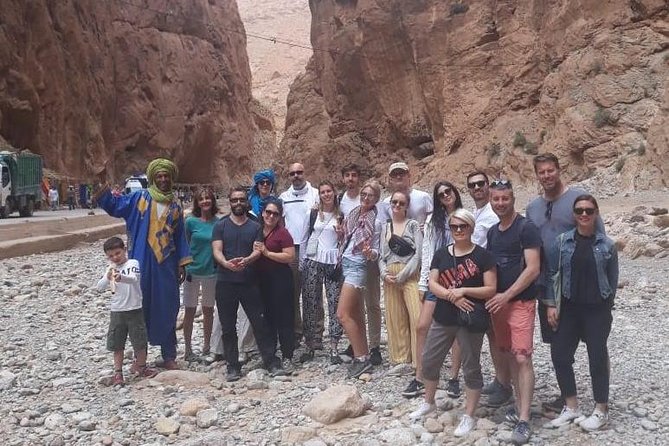
The drive then reaches Tinghir, an oasis town in the High Atlas foothills. Here, the tour includes a walk of about one hour along the Todgha River.
I consider this one of the strongest parts of the itinerary. The river supports palms and olive groves, and the walk gives you a closer look at daily life in the oasis than a roadside photo stop would. You also visit Berber villages and meet one or two local people with your guide.
The walk is not described as difficult, but good walking shoes are recommended. The combination of uneven ground, sun, and a full day on the road makes comfortable footwear and sunscreen sensible choices.
A different kind of day out, same corner of Morocco:
- Marrakech: Agafay Desert Sunset, Camel Ride, and Dinner Show
★ 4.6 · 35,119 reviews - From Marrakech: Ouzoud Waterfalls Guided Hike and Boat Trip
★ 4.7 · 33,630 reviews - Marrakech: Agafay Desert Quad & Camel Rides with Dinner Show
★ 4.8 · 27,382 reviews - Marrakech: Agafay Desert Quad Biking Tour with Dinner-Show
★ 4.8 · 16,569 reviews
Todgha Gorge and the road to Merzouga
After the river walk, you continue into mighty Todgha Gorge. The gorge provides the day’s most dramatic rock scenery and a useful change from the open valley views.
Lunch here is at your own expense. As with the first day, drinks are not included, and drinking water is not automatically supplied. You can buy water along the route, but I would still start each morning with a filled bottle.
From Todgha, the road heads through Erfoud and Merzouga. These oasis towns mark the approach to Erg Chebbi, where the paved-road portion gives way to the desert experience that many people book this tour to see.
The schedule includes a visit to holy Rissani as well as the oasis towns of Erfoud and Merzouga. The exact time at each place may feel brief because the camel departure is tied to the camp schedule.
Camelback to the Erg Chebbi camp
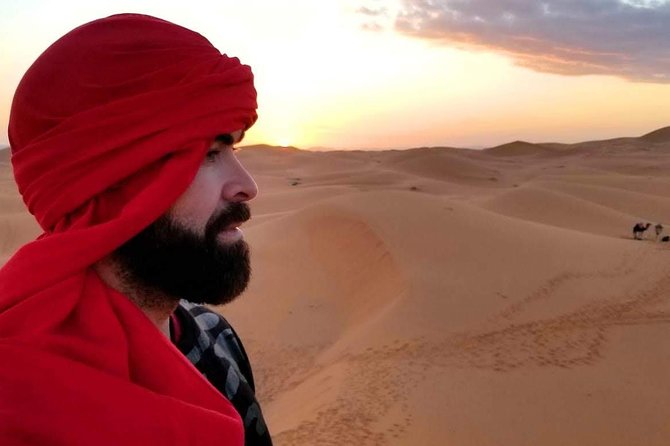
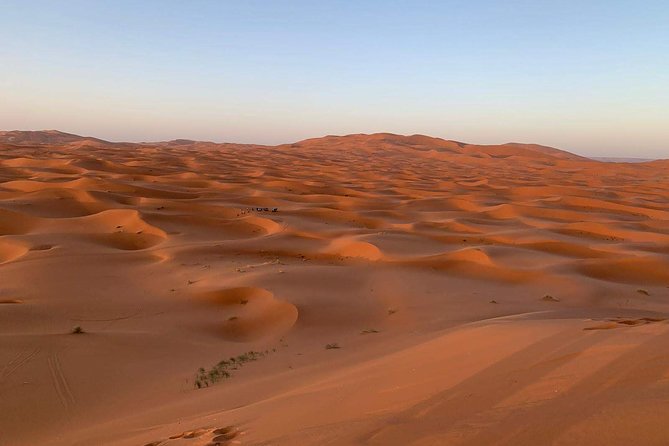
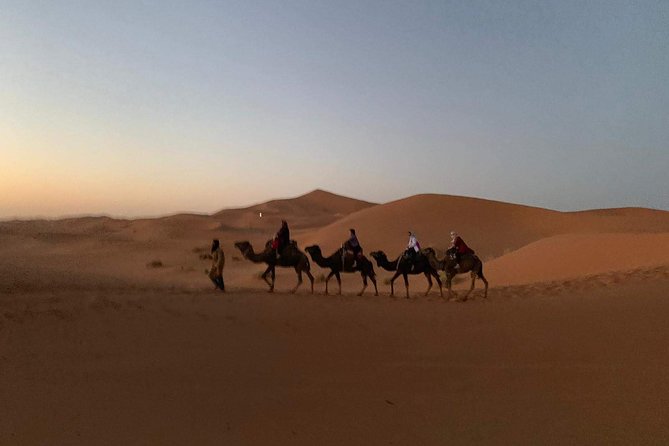
At Erg Chebbi, you meet the camel train and ride into the dunes. The camel ride is the tour’s signature moment, but it is not a full-day expedition. It is a practical transfer to the desert camp, paired with views of the dunes and the setting sun.
Wear long trousers. The saddle can rub your legs, and loose, comfortable clothing is more useful than shorts. The desert cools quickly after sunset, so take a warm layer even if Marrakech was hot when you left.
Dinner is included at the camp, as is the overnight stay. You sleep in a private tent with shared bathroom facilities, and bedding is provided, so you do not need to bring a sleeping bag.
That arrangement gives you privacy for sleeping without promising private bathrooms or hotel-style plumbing. If those details matter to you, this is the point to decide if the desert night fits your comfort level.
The appeal is simple: after a long road day, you are no longer looking at the Sahara through a minibus window. You are in the dunes, eating dinner at camp, and looking up at the night sky. The experience is basic by design, and the shared facilities are the tradeoff for reaching this setting without arranging a separate desert trip.
Sunrise, the Ziz Valley, and the Middle Atlas
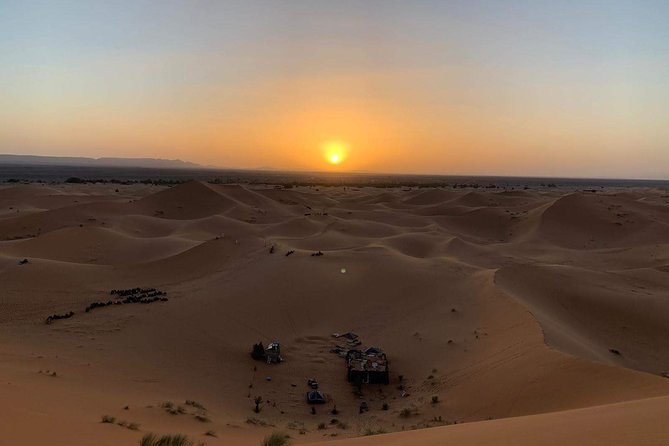
Day 3 starts early for the desert sunrise. The timing depends on the camp and season, but you should expect a pre-breakfast start and a cool morning. Keep your warm clothing close rather than buried in your luggage.
After breakfast, the route moves away from the dunes and toward Fez. You cross the Ziz Valley through Errachidia, the capital of the Tafilalt region, then continue toward Midelt.
Midelt is a practical lunch stop, with lunch at leisure and about 20 minutes listed for the stop. That timing suggests a break rather than a sightseeing visit, so plan to eat efficiently and stretch your legs when you can.
The final stretch crosses the Middle Atlas Mountains. Cedar forests and Berber towns such as Imouzzar and Ifrane replace the palms and sand. This sharp change is one reason the route works well as a one-way trip: the journey keeps giving you a new setting instead of repeating the same road.
Arrival in Fez is expected late in the afternoon, around 8 p.m. Your driver drops you at your Fez riad or hotel of choice. The late arrival is convenient for ending the transfer, but you should not schedule an important evening activity in Fez.
Vehicles, group size, and the long hours
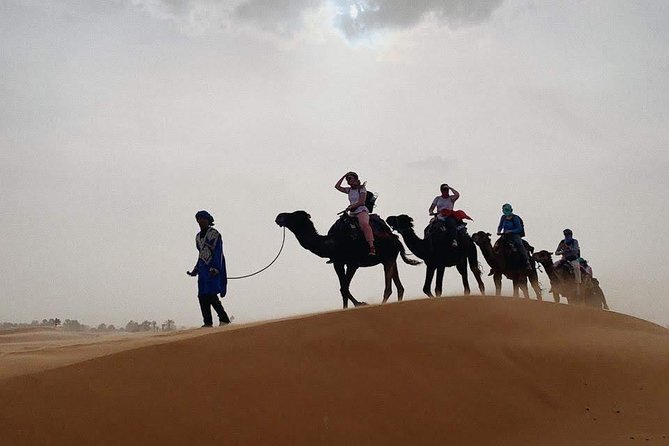
The maximum group size is 15 people. That is small enough to feel more personal than a large coach, but your actual comfort depends on how full the minibus is and how much luggage people bring.
On the final day, you say goodbye to the group returning to Marrakech and move into a new van with a maximum of six passengers for the drive to Fez. This vehicle change is important to understand before booking. The tour is not one continuous vehicle arrangement from start to finish.
The route is long, especially on Days 1 and 3. Stops break up the driving, and one positive feature is that you get several chances to leave the vehicle, but this is still a road tour rather than a slow village stay.
Guide service can shape the experience. Rarhib is specifically praised for being present and willing to help with individual needs. If you are assigned a different guide, the operator is Ando Travel SARL, and the quality of communication may depend on the person leading your departure.
There has been at least one booking communication problem involving an incorrect telephone number for the local operator. I would confirm the pickup point and time directly before departure, especially if your riad is tucked into the medina and cannot be reached by minibus.
What the $230.30 price really covers
At $230.30 per person, the tour offers a lot of transport for a three-day one-way journey. The price includes the camel trek, two breakfasts, two dinners, the first night near Dadès, the desert camp, and the transfer from Marrakech to Fez.
You are also paying for the convenience of combining several hard-to-link places: Aït Benhaddou, Ouarzazate, Skoura, the Valley of Roses, Todgha Gorge, Erg Chebbi, Rissani, the Ziz Valley, Midelt, and the Middle Atlas.
The extra costs are clear but easy to underestimate. Lunches and drinks are excluded, and additional local guides are not included. Bring enough spending money for two lunches, drinks, and any optional guide fees or purchases at cooperative stops.
The tour has a strong overall rating of 4.8 out of 5 from 150 ratings, with 96 percent recommending it. That supports the idea that the combination of scenery, transport, and organization works well for most people, but it does not change the basic tradeoff: you exchange free time for a wide range of sights.
Who should book this desert crossing?
I would choose this trip if you want to connect Marrakech and Fez while seeing the Sahara along the way. It suits you if you value variety, guided visits, and a ready-made route more than long stays in each town.
It also works well for a first visit to southern Morocco. You get a useful introduction to kasbah architecture, oasis farming, Berber villages, desert camping, and Atlas mountain routes in one package.
I would hesitate if you dislike long drives, shared vehicles, early starts, or simple accommodation. The camel camp has shared bathrooms, the final arrival in Fez is late, and the day-by-day schedule leaves little room for delays or spontaneous detours.
Children under two are not recommended. Most people can take part, but you should be comfortable walking for about an hour, sitting in a vehicle for long stretches, and riding a camel in long trousers.
Dress conservatively, keeping shoulders and knees covered. Pack sunscreen, sunglasses, sturdy shoes, and warm clothing for the desert night and mountain crossings. Free cancellation is available up to 24 hours before the start time, but changes or cancellations inside that window are not accepted for a refund.
Should you book the Marrakech to Fez desert tour?
Book it if you want the practical value of a one-way desert route and can accept a busy schedule. The best features are the variety of stops, the guided Aït Benhaddou visit, the Todgha River walk, and the memorable camel ride to Erg Chebbi.
Skip it if you want a relaxed desert holiday with long afternoons, private bathrooms, and flexible meal stops. Before paying, confirm your pickup details, budget for lunches and water, and prepare for the change into a smaller Fez-bound van on the last day.
FAQ
How long does the tour last?
The experience lasts approximately three days, beginning with a 7 a.m. pickup in Marrakech and ending with a late-afternoon or around 8 p.m. arrival at your Fez riad or hotel.
Where does the tour start?
Pickup is offered from your Marrakech accommodation. If the minibus cannot reach your riad, pickup takes place at a nearby accessible location.
Where does the tour end?
The tour ends with drop-off at your chosen riad or hotel in Fez.
Is the camel ride included?
Yes. A camel trek in Erg Chebbi is included, taking you into the Sahara desert camp.
What accommodation is included?
The package includes one night at Kasbah Dades Amazigh or Kasbah Chems Dades and one night at a Sahara desert camp. The camp provides a private tent with shared bathroom facilities and bedding.
Are meals included?
Two breakfasts and two dinners are included. Lunches and drinks are not included unless specifically stated.
Do I need to bring a sleeping bag?
No. Bedding is provided at the desert camp, so you do not need to bring a sleeping bag.
How large is the group?
The tour has a maximum of 15 participants. On the final drive to Fez, the replacement van holds a maximum of six passengers.
Recently reviewed around Marrakech
- 4-Days Marrakech to Marrakech Désert Tour★ 5.0 · 17 reviews
- Camel ride at sunset in Marrakech palm grove★ 5.0 · 17 reviews
- Agafay camel ride★ 5.0 · 20 reviews
- Camel riding in marrakech★ 4.5 · 17 reviews
- Marrakech to Atlas Mountains and 4 Valleys Day Trip★ 5.0 · 17 reviews
- Agafay Desert Adventure, Culture, and Relaxation, From Marrakech★ 5.0 · 25 reviews
- Camel ride and dinner Agafay desert★ 5.0 · 25 reviews
- Dinner Show & camel ride with sunset views★ 5.0 · 192 reviews
Berber Village Tours, compared.
Berber villages : Atlas Mountains Day Hike from Marrakech
Read our review →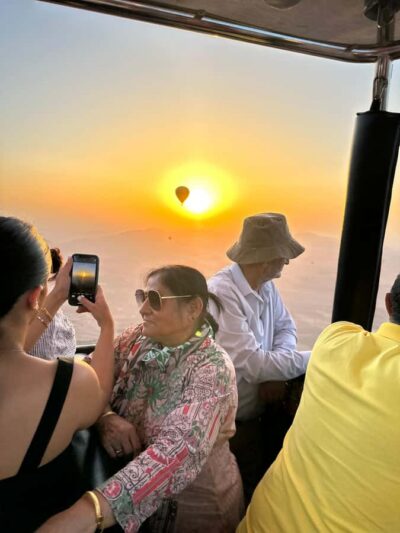
Balloon Flight, Berber Breakfast & Certificate
Read our review →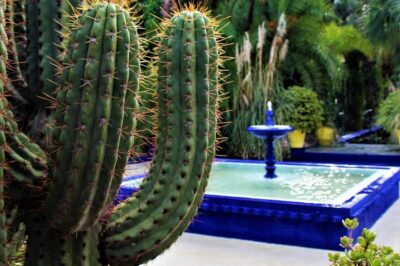
Majorelle Garden, YSL, and Berber Museum Entry
Read our review →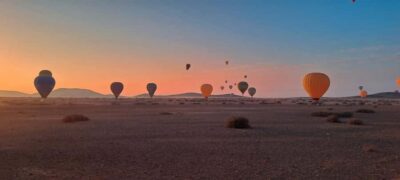
Hot Air Balloon Flight with Berber Breakfast
Read our review →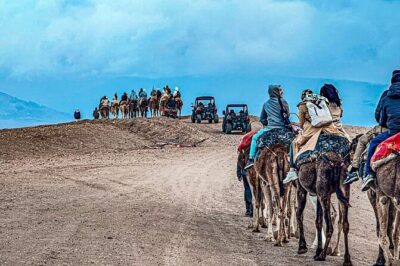
Atlas Mountains, Berber Villages and Three Valleys all inclusive
Read our review →
Atlas Mountains Hot Air Balloon Ride from Marrakech with Berber Breakfast and Desert Camel Experience
Read our review →
Atlas Mountains, Berber Villages, Agafay & Camel Ride
Read our review →
Balloon Flight, Berber Breakfast, and Camel Ride
Read our review →Browse the lists this tour appears in