
Reviewed · CASABLANCA TOURS
10 Day Desert Tour From Casablanca via the Imperial Cities
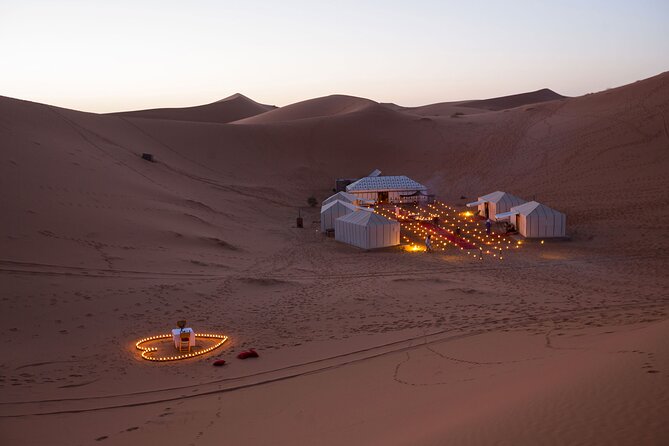
Morocco’s biggest reward here is variety. In ten days, you move from the Atlantic coast and Rabat’s royal monuments to Chefchaouen’s blue lanes, Roman ruins, Fez’s medieval alleys, and the Sahara dunes. The camel ride into Erg Chebbi at sunset, followed by sunrise from the camp, is the emotional high point.
I like the practical mix of city touring and desert time, and I like that the price includes transport, nine nights of lodging, breakfasts, three dinners, camel rides, and sandboarding. Guides and drivers such as Hassan Amiri and Yassine are repeatedly singled out for their warmth and care. The tradeoff is clear: several days involve long drives, and camel riding can be uncomfortable.
In This Review
- Key points at a glance
- Why this route works for a first Morocco trip
- Casablanca and the Hassan II Mosque
- Rabat’s royal monuments and Chefchaouen’s blue lanes
- Volubilis and the old city of Fez
- Fez, where the medina becomes the main event
- Crossing the Middle Atlas to Merzouga
- Two nights around Erg Chebbi
- Rissani, fossils, and the Dades Gorges
- Dades, Skoura, and the road to Marrakech
- Marrakech monuments, gardens, and Jemaa el Fna
- What the price includes, and what it leaves out
- Who should book this Morocco tour
- Should you book it?
- FAQ
- Where does the tour start?
- How long is the experience?
- What is the maximum group size?
- What accommodations are included?
- Are camel rides included?
- Is sandboarding included?
- Which city tours are included?
- Are meals included?
- Can the tour be canceled for a full refund?
Key points at a glance
- The route covers Morocco’s biggest names: Casablanca, Rabat, Chefchaouen, Fez, Volubilis, Merzouga, the Dades Gorges, and Marrakech.
- The Sahara portion has real time built in: You spend a full day around Erg Chebbi, visit Khamlia and nomadic villages, and sleep in a luxury tent.
- Camel rides happen at both sunset and sunrise: That gives you two chances for the desert light that most people hope to see.
- Fez and Marrakech include city tours: An English-speaking guide leads you through the main monuments, medinas, palaces, gardens, and souks.
- Transport is the backbone of the trip: The vehicle, fuel, and professional driver are included, but some transfers last six or seven hours.
- The small group limit is useful: The maximum is 14 people, a more manageable size for a multi-day road trip.
Why this route works for a first Morocco trip
This is a grand circuit rather than a relaxed stay in one region. You get Morocco’s major cultural centers, mountain roads, desert scenery, Roman remains, kasbah country, and two famous imperial cities without having to arrange each leg yourself.
The route also moves in a logical arc. Casablanca introduces modern Morocco and the Atlantic coast. Rabat adds royal history, while Chefchaouen changes the mood with its blue-painted streets. Fez brings the most concentrated old-city experience, then the road turns south through the Middle Atlas toward the desert.
After Merzouga, the route continues through Rissani, Erfoud, the Dades Valley, Skoura, the Valley of the Roses, and Marrakech. That last stretch matters. You are not simply being driven to a desert and back. You see how the dry eastern part of the country gives way to valleys, palms, and mountain country.
The cost is $1,394.61 per person. That is not a bare-bones bus trip. It covers a private-style road program with a professional driver, nine nights in riads or four-star hotels, a luxury desert camp, breakfasts, three dinners, two camel rides, sandboarding, and guided touring in Fez and Marrakech. You still pay for many lunches, some dinners, drinks, monument tickets, tips, personal purchases, and the optional 4×4 desert tour.
Other Casablanca days travellers weigh against this one:
- From Marrakech: Casablanca Tour with Hassan II Mosque Visit
★ 4.7 · 4,756 reviews - Casablanca: Hassan II Mosque Premium Tour with Entry Ticket
★ 4.5 · 2,971 reviews - Casablanca City Tour with Hassan II mosque ticket
★ 5.0 · 2,480 reviews
Casablanca and the Hassan II Mosque
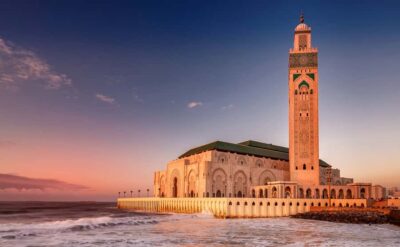
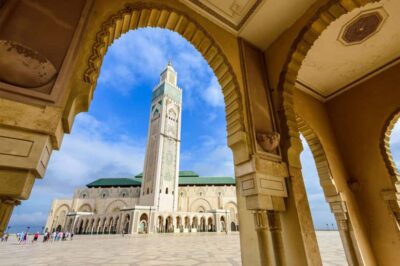
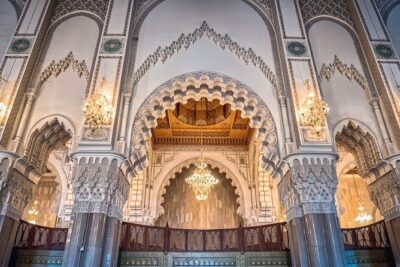
Your first day begins with airport pickup and a hotel transfer, followed by a visit to Hassan II Mosque. The mosque is one of Morocco’s defining sights, and its position beside the Atlantic gives the opening day a strong sense of place.
The schedule allows about five hours, including the transfer and visit. That makes this a gentle start after an international flight, though the exact balance depends on your arrival time. The tour description lists admission as free, but monument entrance fees are generally not included in the package, so you should confirm the current arrangements before booking.
Casablanca itself is more modern and spread out than Fez or Marrakech. That contrast is useful. You see the country’s working commercial side before moving into old medinas and smaller towns.
Rabat’s royal monuments and Chefchaouen’s blue lanes
Day two begins with Rabat and the Kasbah of the Udayas, Hassan Tower, and the Mausoleum of Mohammed V. These are compact but important stops. The kasbah offers old lanes and coastal views, while Hassan Tower and the mausoleum show the formal side of Morocco’s capital.
The drive then continues to Chefchaouen, known for its blue-painted buildings and steep lanes. This is one of the most photogenic places on the route, but the appeal is not only visual. A night here gives you time to walk without treating the town as a quick roadside stop.
The day is listed at about five hours, but that figure may not reflect every driving segment and visit in a simple way. Morocco’s intercity roads can make a day feel longer than the timetable suggests. Wear shoes with good grip for uneven streets, and keep your first evening flexible.
Volubilis and the old city of Fez
On day three, the road heads to Fez via Volubilis, the remains of a Roman city. The ruins provide a welcome change from Moroccan Islamic architecture. You can see the scale of the ancient settlement and look for the surviving mosaics and stonework while hearing about the area’s Roman past.
Arrival in Fez is expected around 4 p.m., followed by a night in a riad. A riad is a traditional house organized around an interior courtyard. It is a fitting place to sleep before the next day’s old-city walk, though rooms and facilities can vary more than in a standard hotel.
The drive is listed at about six hours. This is an important pattern on the tour: the vehicle gets you to places that are difficult to combine independently, but the reward comes with substantial time on the road.
A different kind of day out, same corner of Morocco:
- Casablanca: City Tour with Hassan II Mosque Entry Ticket
★ 4.6 · 1,137 reviews - Private Tour of Casablanca with Hassan II Mosque Entry Ticket
★ 5.0 · 1,102 reviews - Marrakech Day Trip with Camel Ride from Casablanca
★ 5.0 · 740 reviews - Casablanca: Hassan II Mosque & City Highlights Tour
★ 4.5 · 573 reviews
Fez, where the medina becomes the main event
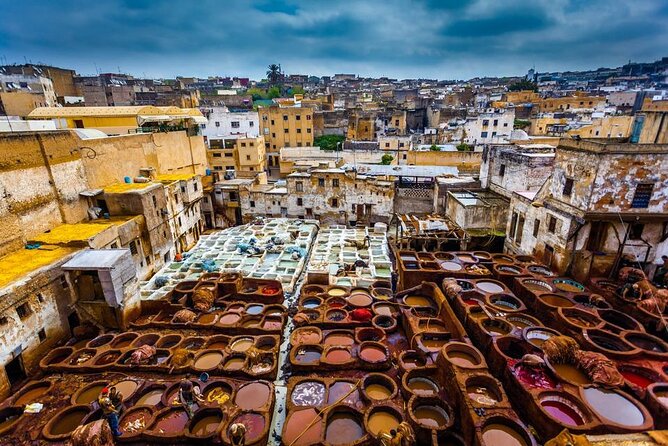
Day four is devoted to Fez with an English-speaking guide. The old medina, protected by ramparts and narrow lanes, is a UNESCO World Heritage Site. It is the kind of place where a guide adds real value because the streets can feel confusing and the major buildings are easy to miss.
The visit includes Bou Inania Madrasa and Al-Attarine Madrasa, both built in the early 14th century. You also see the Karaouine Mosque, the Nejjarine marble fountain, the decorated Bab Boujloud gate, and the royal palace. Some sites are viewed from outside, and entrance fees for monuments are not included, so ask which admissions are part of your day.
After lunch in a Moroccan restaurant, the tour continues through the souk. This is where Fez feels most alive as a working craft center, with leather goods, copper objects, pottery, jewelry, and other handmade items. You should expect some shop visits and sales pressure in the old market area. Keep your pace patient, and do not feel obliged to buy.
The itinerary labels this portion as three hours while also calling it a full-day guided tour. That is a point worth clarifying with Morocco Global Adventures. Fez deserves more than a rushed circuit, and you should know how much time is planned inside the medina.
Crossing the Middle Atlas to Merzouga
Day five is the first major road day. You leave around 8 a.m. and cross the Middle Atlas, a mountain range stretching roughly 350 kilometers from southwest to northwest.
The route passes Ifrane, often called Moroccan Switzerland because of its house design, and Azrou, associated with Amazigh, or Berber, culture. You then continue through Midelt, the Ziz Valley, the Ziz Gorges, and Erfoud before taking a desert track toward Merzouga.
The drive is listed at about six hours, though stops and road conditions shape the actual day. This is one of the tour’s best scenic transfers, but it is still a transfer. Bring water, snacks, sun protection, and something warm for changing temperatures.
You spend the night in a hotel near the desert entrance. That is a sensible arrangement because the full desert program begins the next day rather than trying to force every activity into one arrival afternoon.
Two nights around Erg Chebbi
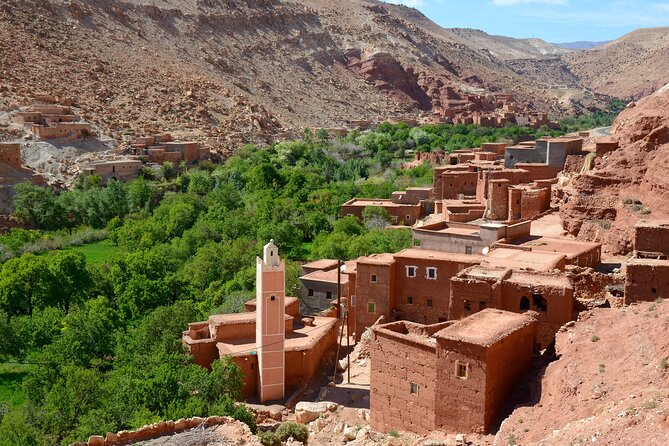
Day six gives you the best chance to enjoy the Merzouga area instead of simply arriving for a photograph. The route includes nomadic villages, oases, and the dunes of Erg Chebbi. You also visit Khamlia, a village known for Gnawa music and the descendants of people brought from Africa as slaves.
The music visit adds cultural depth to the desert stop. It is easy for a Sahara program to become only a camel ride and a tent, but Khamlia gives you contact with a distinct musical tradition.
At dusk, you ride a camel to the camp. Each person receives one camel for the sunset and sunrise rides. Sandboarding is included as well, though the schedule does not specify how long you get for it.
The camp is described as a luxury desert camp with luxury tents. Expect a more comfortable version of camping, not a normal hotel room. Dinner is included on this night, and the desert setting is the reason many people choose the whole journey.
The strongest practical warning is the camel itself. Riding over dunes can be physically demanding, and sitting on a camel can become painful, especially for anyone unused to it. Loose clothing, a scarf, water, and a willingness to take breaks will help. The sunrise ride is worth considering even if you find the first ride hard.
A 4×4 desert tour is not included. If you want to reach more distant desert points by vehicle, that costs extra.
Rissani, fossils, and the Dades Gorges
After the desert, day seven moves through Rissani, the capital of the Tafilalet region. The animal market and souk offer a more local commercial scene than the major city markets. It can be an interesting stop, but it may also feel rougher and less polished than the tourist centers.
The road continues through the Ziz Valley to Erfoud, where you visit a fossil quarry and see fossils made into tables, washbasins, and decorative pieces. This is another place to watch your budget. The tour includes the visit, but personal purchases are not included.
The day ends at the Dades Gorges, with dinner and a hotel night. The drive is listed at about six hours. You will want a seat with a good view, but you should also be ready for long stretches between stops.
Dades, Skoura, and the road to Marrakech
Day eight starts with the Dades Gorges themselves. The valley begins with green oases fed by the Dades River, then narrows between tall limestone walls. The scenery is one of the tour’s strongest road sections, especially after the more open desert around Merzouga.
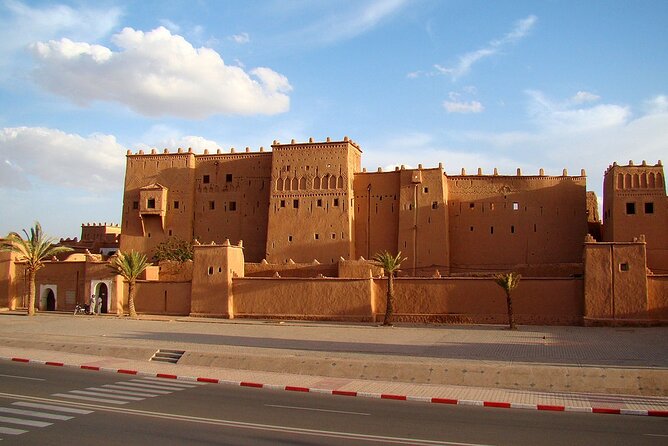
The route then follows a mountain track for about 12 kilometers over the Amgoun area, continuing through the Valley of the Roses and the palm groves of Skoura. Skoura is known for its kasbahs, and the combination of palms, old fortified buildings, and dry hills gives this day a different feel from the Sahara.
You reach Marrakech in the afternoon and transfer to your hotel. The day is listed at about seven hours, so this is not the right evening for a demanding independent plan. Treat the arrival as a chance to settle in before the next morning’s city tour.
Marrakech monuments, gardens, and Jemaa el Fna
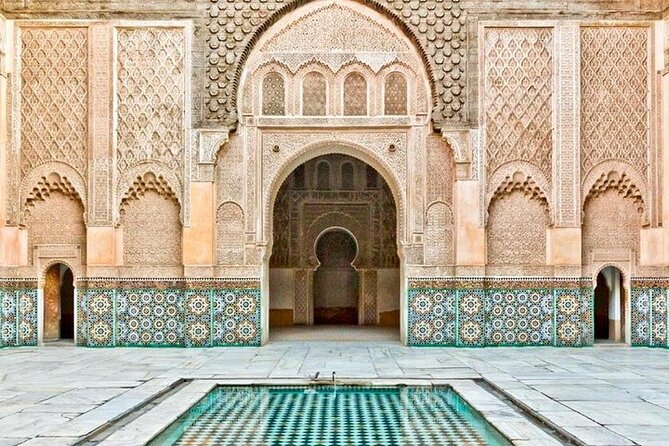
Day nine covers Marrakech’s major sights. The Saadian Tombs have detailed Granada-style decoration, while Bahia Palace is known for its rooms, courtyards, and ornament. Ben Youssef Madrasa and the Koutoubia Minaret add major architectural stops.
Lunch is planned at Ksar el Hamra, followed by the Majorelle Garden late in the day. The garden provides a calmer contrast to the medina and square.
The final stop is Jemaa el Fna. In the evening, the square becomes a public stage of acrobats, drummers, pipe musicians, dancers, storytellers, comedians, and fairground acts. It is crowded and theatrical, so keep your belongings close and agree on a meeting point if you wander.
The itinerary says the airport transfer may happen that evening or on day ten, depending on your flight. Do not book a tight onward connection without confirming the plan. Day ten is reserved for a transfer to Casablanca or Marrakech airport and is listed at about 20 minutes, but the actual airport journey depends on where you are staying and which airport you use.
What the price includes, and what it leaves out
At $1,394.61, the value depends on how much you want handled for you. The biggest cost savings come from having one vehicle, driver, fuel arrangement, hotel plan, desert camp, city tours, and intercity route organized together.
Included are:
- Comfortable vehicle and fuel
- Professional driver
- Nine nights in riads, four-star hotels, or a luxury desert camp
- Breakfasts listed for all ten days
- Three dinners
- Camel rides at sunset and sunrise
- Sandboarding
- Guided city tours in Fez and Marrakech
You pay separately for lunches, several dinners, drinks, tips, personal expenses, monument admissions, and a 4×4 desert tour. Drinks are listed from 1 euro upward, but your total depends on what you order.
There is a small inconsistency worth checking: the package says nine nights of accommodation but also lists ten breakfasts. That may simply reflect breakfast on the final morning or a wording issue. Confirm the exact hotel nights and meal count before paying.
Who should book this Morocco tour
I would choose this trip if you want a broad first look at Morocco and prefer a planned route to arranging trains, drivers, hotels, and desert transfers yourself. It suits people who value cultural stops, old cities, and scenery more than long stays in one place.
It also works well for a small group of friends or couples who want a social road trip. The maximum group size is 14, and the people leading the trip are a major part of its appeal. Hassan Amiri is repeatedly praised for being friendly, attentive, and good at keeping the group comfortable. Yassine and Hicham are also associated with helpful driving and guiding.
I would think twice if you dislike long car rides, need a slow pace, or want complete control over every meal and hotel. The itinerary packs in a lot. Some days will feel like a sequence of stops connected by road time, and food quality can vary. Accommodation is described as suitable for the price, not as a uniform luxury hotel experience.
Free cancellation is available up to 24 hours before the start time. After that cutoff, refunds are not provided, and late changes are not accepted.
Should you book it?
Book this tour if the Sahara is your priority but you also want Fez, Marrakech, Chefchaouen, Rabat, and Volubilis in the same journey. The sunset and sunrise camel rides, luxury camp, Gnawa music, Dades Gorges, and old-city tours give you a strong spread of Moroccan experiences for one price.
Skip it if you want a restful holiday or dislike being in a vehicle for six or seven hours at a time. Before booking, confirm the day four Fez timing, the exact lodging plan, the airport transfer on day ten, and which monument tickets are extra. If those details suit you, this is a well-priced way to see a large and varied slice of Morocco.
FAQ
Where does the tour start?
The tour starts in Casablanca, with airport pickup and transfer to your hotel on the first day.
How long is the experience?
The experience lasts approximately 10 days.
What is the maximum group size?
The maximum group size is 14 people.
What accommodations are included?
The package includes nine nights in riads, four-star hotels, or a luxury desert camp, depending on the arrangement.
Are camel rides included?
Yes. Camel rides are included for sunset and sunrise, with one camel per person.
Is sandboarding included?
Yes. Sandboarding is included in the tour price.
Which city tours are included?
Guided city tours in Fez and Marrakech are included.
Are meals included?
Breakfast is listed for all ten days, and three dinners are included. Lunches, dinners in Casablanca, Fez, and Marrakech, drinks, and other personal food costs are not included.
Can the tour be canceled for a full refund?
Yes, if you cancel at least 24 hours before the experience start time. Cancellations or changes made less than 24 hours before the start are not refunded or accepted.
Recently reviewed around Casablanca
- Casablanca Airport Transfer from hotel in Casablanca★ 5.0 · 18 reviews
- Amazing airport pickup/ drop off in Casablanca/ safe&easy★ 5.0 · 218 reviews
- Your Private Casablanca Transfer★ 5.0 · 52 reviews
- Chefchaouen the Blue City Full-Day Trip from Casablanca★ 4.5 · 79 reviews
- Sunset Camel Ride in the Palm Grove Of Marrakech★ 5.0 · 34 reviews
- Exclusive tour of Casablanca with access to the Hassan II Mosque★ 5.0 · 205 reviews
- Marrakeck City tour from Casablanca all the day around trip★ 5.0 · 35 reviews
- Private full day trip to chefchaouen from Casablanca with lunch★ 5.0 · 20 reviews
Casablanca Tours, compared.
Hassan II Mosque Premium Tour with Entry Ticket
Read our review →
Casablanca City Tour with Hassan II mosque ticket
Read our review →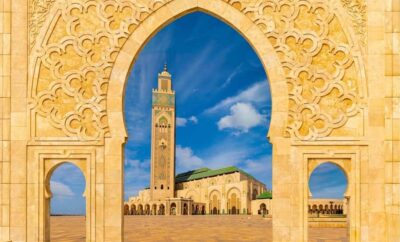
Private Tour of Casablanca with Hassan II Mosque Entry Ticket
Read our review →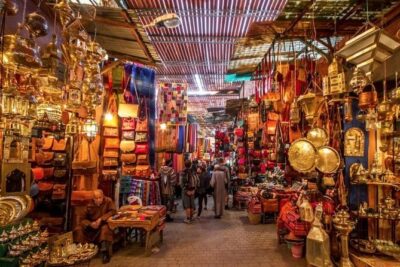
Marrakech Day Trip with Camel Ride from Casablanca
Read our review →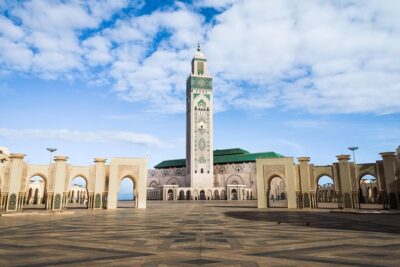
Browse the lists this tour appears in